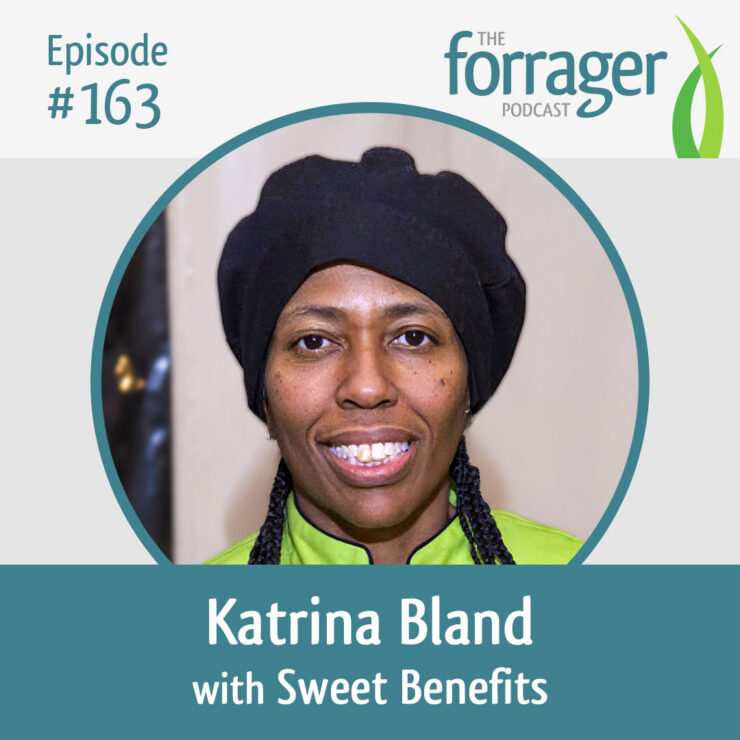
David Crabill: Welcome to the Forrager Podcast, where I talk with cottage food entrepreneurs about their strategies for running a food business from home. I’m David Crabill, and today I’m talking with Katrina Bland.
But first, I wanted to talk about your cottage food business website. I recently researched all the free website builders out there and found that the best one for cottage food businesses is Square Online.
So I created a brand new free tutorial that walks you through the steps you need to take to build a nice and powerful e-commerce website for your cottage food business for free. Now, you might be thinking, what’s the catch? There isn’t one. Square Online is a really incredible tool that I personally use for my own business, and I’m constantly amazed that cottage food entrepreneurs still use other website builders like Wix, Squarespace, and GoDaddy.
So if you wanna learn more, you can watch my free tutorial by going to forrager.com/website. All right, so I have Katrina on the show today. She lives in Catonsville, Maryland and sells allergy friendly baked goods with her cottage food business, Sweet Benefits. Katrina has run her baking business since 2012, but it wasn’t until she invested in coaching a few years ago that it really started to grow.
Since then, she created a website and started getting large corporate orders. Surprisingly quickly. She has now had many orders that are well over a thousand dollars each. What’s really fascinating is that Katrina did not need to improve or change her products at all to make her business more successful.
Instead, she changed how she marketed her business to get her products in front of the right people, and that made all the difference. Let’s see how she did it. Welcome to the show, Katrina. Nice to have you here.
[00:01:51] Katrina Bland: Thank you for the invitation. I’m excited to be here.
[00:01:55] David Crabill: Well, Katrina, take me back. I know you’ve been doing this for a while. How did this all get started?
[00:02:01] Katrina Bland: Well, I’ve always been interested in baking. I grew up baking with my mom, who was a really good baker, home baker. She didn’t do it professionally. It was just her way of giving back to family and friends on holidays. So I was always in the kitchen and I was always, what we call now, like the little sous chef.
So I was always the helper. I tested the batter. I got the pans together. So it was just for me at that time, just an opportunity for me and my mom to be together. It never knew that it would actually become like something that I would do as a business.
[00:02:39] David Crabill: So when did you actually think about starting to sell your baked items?
[00:02:46] Katrina Bland: I’ll tell you, I initially started because my background is in exercise physiology. I’m a personal trainer. So I started making honestly, healthy treats for my clients because I was always given them what I said would be the ingredients for a healthy treat. And they were just like, if you could make us something like then we know it is, it is something that we should have.
So I actually started making granola and energy bars for clients and that kind of morphed into me going to culinary school and then doing baking.
[00:03:25] David Crabill: Well, definitely not a typical starting point, you know, to start as a personal trainer and then go down a path of selling baked items. So it’s interesting you don’t sell granola bars or energy bars now, so did you. You think that your business was gonna look different when you started it?
[00:03:45] Katrina Bland: Actually, I really only thought that I would do that for clients initially in the beginning, but I always had this love of baking and chocolate. So I think once I already had that bug and then I ended up going to culinary school because I live a vegan lifestyle and it was always difficult in the beginning, in the early stages of when I became a vegan of finding baked goods.
So I always was in the kitchen experimenting. So I had the idea like, now I’m gonna go to culinary school, I can get the science behind this. And I thought that it would make my baking easier because. I assume there were some grand dose products for vegan bakers that we just didn’t know about? Actually that wasn’t the case as it turned out, just at that particular time, it just wasn’t mainstream.
So most of the products that I got, I got from like vegan websites or at that time, like a fresh fields or like a Whole Foods is what we call it now. So there were specialty stores that I ended up having to go to to get particular products. And I thought that going to culinary school would help me with knowing the science behind things work, and then I could then find the alternative ingredient. So that’s really how the baking came about for as far as cakes and cupcakes and things like that, I wanted to be able to provide vegan, non-gluten containing and also regular baked goods. I went to culinary school because I, I wanted to get it straight from the source.
[00:05:21] David Crabill: So if I’m hearing you correctly, you went to culinary school to try to learn more about how to bake vegan products, but it did not actually teach you that.
[00:05:31] Katrina Bland: it did not actually, no, it gave me the science, but I had some wonderful chefs and a wonderful French chocolatier. I learned a lot about chocolate. Always had an affinity to chocolate. But in that field, people aren’t. They’re like, dairy is what it’s gonna give it. Its tenderness, you know, sour cream.
They’re like, no, you need these things in baking. So they actually couldn’t understand why they wanna use eggs. They’re like, why would you not wanna get use eggs? These are the things that’s gonna give it, its leavening. And so I learned a lot from them as far as regular baking too. I also learned a lot about technique, which I appreciate, and I wouldn’t have done things differently.
But in retrospect, I ended up learning the substitutions that would work in those baked goods. But I also had some valuable, valuable, valuable lessons as far as technique and ingredients and how to decorate products through culinary school.
[00:06:30] David Crabill: So about what year was this when you went to culinary school?
[00:06:34] Katrina Bland: I graduated from culinary school in 2011.
[00:06:39] David Crabill: And then how long after culinary school did you start to sell baked products?
[00:06:47] Katrina Bland: So I would probably say 2012 is when I decided that I really wanted to do it as a business. I didn’t know at that time that whether would be full-time or part-time, but I really knew that I wanted to do it as a business and I started doing farmer’s markets. And I said, well, I will bake. I’ll offer these items, and then I would let the customers tell me if it’s something that they wanted or they enjoyed.
And this was an opportunity for me to get feedback. So I did the farmer’s market for that entire summer the first time. So I was there every Saturday. And so I would see the same people come back and I started to build like a little clientele of people and they were able to tell me, oh my goodness, this was really good.
I’ve never had this, I didn’t know that I could have it this way. So the farmer’s market is where I really decided that this is what I wanted to do. I wanted to do it as a business. I think the farmer’s market helped give me the confidence and the marketplace to know that there is a need for it.
[00:07:52] David Crabill: Well, I’m thinking about Maryland’s cottage food law. They initially passed a law in 2012, maybe fortuitously, and it only allowed sales at farmer’s markets and public events. Is that why you chose to go the farmer’s market route? Because of what the law was allowing at the time?
[00:08:11] Katrina Bland: Absolutely. That is exactly right. and that was also my first introduction to a commercial kitchen because at the farmer’s market, you had to have a commercial or access to a commercial kitchen in order to even participate in a farmer’s market, which ironically is also how after that I started finding out information about cottage food and I stumbled upon the Forrager.
[00:08:37] David Crabill: Okay, so you actually didn’t start from home when you initially started your business?
[00:08:41] Katrina Bland: Yeah. well, what I did was when I wanted to get into the farmer’s market because in the beginning it, the law and the websites are very. In my opinion, they weren’t as clear only because I had never ever had to bake under this particular umbrella. When you’re doing it just for family or friends or at that time for clients they were just getting things personally for me.
But when I decided that I wanted it to be a business, I wanted to make sure that I was doing it the correct way. So yes, my first introduction to the farmer’s market, they’re the ones that kind of told me, oh, well you need a commercial kitchen. Oh, well you need to have access to a commercial kitchen. You need to, you can’t just come to the farmer’s market.
There’s certain way things has to be set up at the farmer’s market. This is what you can sell. This is what you can’t sell. And that was really my first introduction to the business.
[00:09:36] David Crabill: Yeah, not too surprising to hear because it was such a new thing at the time, and even probably the health department didn’t really know about the new laws and everything. So I know you’re a licensed home baker now. When did you make that transition?
[00:09:51] Katrina Bland: so after I did the farmer’s markets for a while, probably I knew in 2012 this is what I wanted to do. It was more so probably 2013 I went and filed and got my LLC I even changed the name of the business because I knew I wanted it to really be focused towards just everybody. I wanted to encompass everyone I wanted to take my business into a direction where Anybody I felt that had or was living a particular lifestyle should have access to birthday cakes, to cupcakes, to brownies. And I wanted everybody to be able to do that under one bakery. So it was probably when I fought for my LLC and I went online some more and found out that there was a cottage food law.
And I found out what things you could do and what things you couldn’t do. And once I became licensed with the college food law I started to bake from home at that point. And I still bake from home.
[00:10:57] David Crabill: So you changed your name to Sweet Benefits, which is what it is now. What was it before?
[00:11:04] Katrina Bland: It’s actually funny. The name before was, Not Just Desserts. And so for me it was a play on, because I started with my granola and my energy bars. wanted you to be able to have something sweet, but I wanted to be as nutrition packed for my clients as possible. So that’s why I came up with the name, Not Just Desserts.
So this was more than just a dessert, although it was tasty and palatable. It’s also something that was good for you. So I included ingredients that at that time I felt like my clients needed because they were exercising. So I made sure it had healthy fats in it. I made sure it had chia seeds, I made sure it had nuts in it.
So not just desserts is what it started as. And then I transitioned once I filed for my LLC and my EINI went to Sweet Benefits. So they’re sweets with benefits.
[00:12:01] David Crabill: Not Just Desserts is, I mean, sounds to me like a decent business name. Do you feel like that name would’ve held you back over time?
[00:12:10] Katrina Bland: Actually, no, I don’t. I really liked that name in the beginning. I had a different logo. I had like a person running. So it was really based at that point around getting healthy desserts for people that were also into fitness. I think what happened was, I can’t remember. I wanna say that maybe somebody had that name or something similar to it.
There was a reason why I changed it to Sweet Benefits. If I think back about it, there may have been another, not just desserts. So the name, I didn’t wanna cause confusion with anyone
[00:12:49] David Crabill: Now, I saw that you had some help from college students back in the day with them coming up with a business plan and everything. Tell me about that.
[00:13:02] Katrina Bland: Yeah. So the thing about me is once I wanna do something, I, I always try to go to where I think that I can get the help because, so I went to the community college, to get, an associate’s degree in business. Once I wanna do something, I wanna go straight to the the horse. I’m trying to cut out as many middle people as I can, and I, try to get there, I guess, in a quicker fashion.
So I went to CCBC, which is our community college, and I went to business school. Because I told my professor at that time that I had a business that I wanted to start. So they had a program there where they had students that would actually part of their degree is to find a business.
They kind of would do like feelers just to see if there’s a person or if your business idea is something that people would be interested in. So in their [00:14:00] classes, they had to go through and see are people interested in vegan desserts? Are people interested in healthy granola? Are people, so that was kind of their, and actually those students actually came up with that logo.
So I had the name and they actually came up with the logo, which I thought was really sweet. they helped me do my business plan. They actually went out and did questionnaires about are people really looking for this?
And they came back and said, actually people are interested in desserts. They’re interested in healthy desserts. There is a community of people that need vegan. There’s a community of people that need non-gluten containing. That was a great experience for them and for me.
[00:14:46] David Crabill: So this was a business competition and then they picked up your business idea essentially and kind of helped flesh it out and made a business plan for it. Do you feel like that changed the direction of your business at all?
[00:14:59] Katrina Bland: No, I think what it did was let me know that there was a business out there for me. I think it helped me really decide that there’s a need, there is a problem out there, and you have a solution. there’s a need for this. People are looking for it. They don’t know where to go to find it, and you could close the gap for them.
[00:15:22] David Crabill: All right, so just to kind of recap, so far you have this love of baking that was inspired by your mom, and then you. Start to sell items to your clients and then eventually decide to go to culinary school in 2011. And then 2012, you decide to start selling. So what were those early days like? can you remember what your first sale was or first sales were at the farmer’s market, and how did your business grow?
[00:15:53] Katrina Bland: Yes. So I remember that a lot. So that was a great experience for me because it, it allowed me to know what my community was looking for. and I actually got some clients from that. So I sold my granola there. I sold energy bars. At that time I sold blueberry muffins. I had some gluten-free cookies that I sold.
So from that, I actually got a health food store who wanted me to provide the energy bars to her store. So that actually was the first time that I, I was able to like, put my product into a store, which was the first time I’d ever done something like that. I also had a community college who dealt with special needs kids and some of the kids, had a diet, lived a lifestyle where they needed non-gluten containing things.
So I actually, for probably a year or two, whenever they had events, for the kids, I would bake the cookies for them. I would do the regular ones, and then I would also do non-gluten containing cookies for them. So it was really a great experience. I actually got two of my first big clients from the farmer’s market.
[00:17:06] David Crabill: And at that time, the cottage food law didn’t allow wholesale, but you were selling from a commercial kitchen, which enabled that. So how do you think your business would’ve gone differently if you had not chosen to start from a commercial kitchen?
[00:17:22] Katrina Bland: I think that eventually it would’ve started. I think that, it just would’ve taken me longer just because I feel like Maryland’s law, even to date, they are just. It’s 2026. I just think that they’re behind the curve on it. I feel like they don’t offer enough of information. I feel like the people that are even in the health department, just there needs to be, in my opinion, a separate department solely just for cottage food laws.
I think that the information that’s on the site, you don’t get to talk to the people that are abreast that really know about the law. So you’re, you really get taught a lot of times, or you really get referred back to the website. It’s like, oh, whatever the website says, that’s what you can do. If it’s not on the website, you can’t do it.
But I felt like if there was a department, especially now in 2026, when there are so many. Cottage food bakers and the laws are changing for so many different states, and they’re including so many different things. I think that it would’ve gone further a lot sooner.
[00:18:34] David Crabill: Yeah, I would agree with that, that Maryland definitely doesn’t have the best law there, but at least they do allow wholesale in certain cases now. And they have a decent law. They have a decent law, but, it is still kind of confusing. I did wanna ask you, I know you’re a licensed home baker.
Do you operate under the cottage food law or did you get a home kitchen licensed from home.
[00:19:00] Katrina Bland: Now I operate as a cottage food baker.
[00:19:02] David Crabill: Okay. Yeah. Cause you’re talking about the limitations of the law, but these are limitations you live with. I do, I do because I, I’d like to see it, well, it is not my goal, or it’s not a passion for me to have a storefront, so I like being a cottage food baker. I love that. I’ve learned a lot about it. I’m also grateful for your platform because you, teach so many people that never knew that it was an option, because had I not find your platform, David, I didn’t even know that it was an option. Just Googling how to bake from home, and you actually came up as like a number one resource outside of what my state was offering. So I’m really grateful for your platform because I still have a sticky note up here that I took when I first went to your website and it just talks about Maryland cottage law, create an LLC food, business insurance, food inspection, food handling, food handler training course.
[00:20:14] Katrina Bland: So even years, years later, I think it’s because of your platform. I felt like I would be supported in what I really wanted to do.
[00:20:25] David Crabill: Oh, thank you for saying that. Yeah, I mean, back in 2013 when you’re looking into this, at that time it wasn’t even Forrager. It was cottage foods.org and it, it probably was the only place that you could find information about Maryland’s law. I don’t know how comprehensive Maryland’s Health Department page was about that at the time, but oftentimes back then they were not very comprehensive at all.
Nowadays though, a lot more information out there, generally speaking, so a little bit easier to find that info. but that’s sweet of you to say that. Okay, so you started in 2012. You learned what people liked at the farmer’s market, and so how has your menu changed over the years?
[00:21:08] Katrina Bland: My menu has changed a lot. I wasn’t really doing a ton of cakes at that time, although, cakes is what I did initially with my mom, but I had. Never done ’em as a business. So I feel like once I got the information that I needed, I almost kind of let my customers help me with my business.
So I knew being, somebody that lived a vegan lifestyle that We wanted to celebrate our birthdays just as much as anybody else. But we also wanted cakes, we wanted cupcakes, we wanted cookies. So my menu really came about just knowing what people want when they have a celebration, what companies are looking for when they have a celebration, when they want to celebrate their employees, or if they want to gift something to, a client.
So I thought about things that people would like to be able to gift. ’cause my business really big on gifting things. It’s really big on providing desserts for, corporate offices, businesses, and also for people that want to be able to have celebrations for people that live a different lifestyle. So my menu really came about from the things that people were looking for when they wanted to celebrate.
[00:22:25] David Crabill: And in the first five years of your business, how significant of a business was this? Was this something you were putting a lot of time and energy into? Was it very much a side thing? Was it slow growing? Was it surprising you in how quickly you were getting orders? What did the first five years look like?
[00:22:45] Katrina Bland: The first five years was slow. It was slow. I kind of had, developed certain clientele, like people that knew from my classes that I baked. So if they ever had a celebration, it was really word of my mouth a lot from my customers. So that helped a lot. I still had some relationships with people from the farmer’s markets, although I weren’t doing the farmer’s markets anymore, I had really given my cards out and talked to a lot of people.
So I was really getting business from people who, were already familiar with me and knew that I was baking. It’s come a long way since then just because I’ve made other investments in my business. So the first five years were slow and it was really word of mouth and referrals.
[00:23:34] David Crabill: Was that disappointing to you?
[00:23:37] Katrina Bland: It wasn’t because it was not my full-time job. It was still my passion and I knew that once I continued to invest in myself and my growth in the business, I felt like the business will grow.
[00:23:51] David Crabill: Throughout this time, were you still a personal trainer or are you still a personal trainer today?
[00:23:57] Katrina Bland: I am, and I was. Yes.
[00:24:00] David Crabill: And I know you named your business Sweet Benefits because there are sweets that have these benefits, like having nutrients in them, being vegan, gluten-free, non-dairy. But you also sell regular baked goods too. Correct?
[00:24:16] Katrina Bland: Correct. I, I, I’ve talked with a lot of people that, you know, they they just won’t sell something.
[00:24:23] David Crabill: They won’t eat, you know, they won’t sell something that’s not vegan because they’re vegan. Why did you choose to sell things that don’t necessarily fall into your own personal diet or lifestyle?
[00:24:37] Katrina Bland: Because it’s not about me. I wanna be able to bake so that everybody can enjoy. Because my lifestyle’s not your lifestyle. You know what I mean? That was a personal, journey for me. but it may not be for you, but I feel like you still should be able to enjoy bake goods.
I feel like you still should be able to, celebrate. So I said I’m not eating it. I don’t have to partake in it. if it’s. You know something that’s a regular baked good, and so I wanted to be a one-stop shop. I don’t think you should have to go to this bakery for vegan.
You gotta go here for non-gluten containing. You have to go there for regular baked goods. I wanted my menu to have something for everyone
and I tell you another thing, David, sometimes people won’t include those people. cause I found that I was in corporate for a long time and whenever we had like a celebration, the person that was vegan or non-gluten, you got the same thing every holiday. no matter the celebration, somebody would bring in a angel food cake. Like they were like, oh, this is safe. Get the angel food cake. the vegan person or the non-gluten person, or the person that is an angel food cake that I, I wanted people to have options and I felt like if my bakery offered everything, then you would take the time to ask, is there anybody in the office that’s vegan?
Is there anybody in the office that’s non-gluten? ’cause we’re gonna order from this bakery. And what she does is she has baked goods for everybody’s lifestyle. So that’s why I, I bake for everybody.
[00:26:11] David Crabill: I love that concept that you know, the business is not about yourself, right? It’s for your customers. Is that something that took time for you to learn, or do you feel like you had that vision from the beginning?
[00:26:23] Katrina Bland: I feel like I had it From the beginning. I felt like, because now I wasn’t all, I didn’t grow up vegan. It was something that I adopted after a time in my life. So regular baked goods are good too. It is just that I decided to live a different lifestyle where I decided to just eliminate dairy for, you know, my own personal reasons, and animal products.
But before then, I enjoyed baked goods, and so I just felt like I wanted to give people options. Everybody I feel like should have the option, but I also wanted everybody to be included. I didn’t want anybody to feel left out. So, no, I’m not just a vegan bakery. I’m not just a non-gluten bakery almost all of my products on my menu can be made for every lifestyle.
[00:27:11] David Crabill: So you had this vision of being inclusive to everyone. Is that how a lot of orders actually go? Like do you end up getting orders that have both types of products or multiple types of products in the order? Well, I will tell you for corporate, yes. When I do corporate orders, yes. When I do, larger companies and my corporate clients, yes, I’ll get regular baked goods. There’s always usually somebody there that’s vegan or somebody there that’s gluten free. Yes, absolutely. Now when I do individual people, sometimes I’ll get people that are just vegan and they have found me because they know I bake vegan goods and they’re having a party for their child or for their spouse or for themselves, and they want a vegan cake.
[00:28:02] Katrina Bland: And I always ask, you know, do you need other baked goods? Is it for party where you can just, have something for yourself, but do you want to be able to serve your guests regular baked goods? And a lot of times they’re like, yeah, sure. Because if I tell ’em this cake is vegan, they won’t even try it. So I’m like, yeah, well we can accommodate that.
[00:28:25] David Crabill: So let’s think about the last 14 years that you’ve been doing this. You said it was slow at first. was there like an inflection point in your business that like really changed the business and helped it grow?
[00:28:39] Katrina Bland: So I invested in baking for business with Chef Amanda, and what I learned is marketing the use of CEO, doing different things in your business on actually the backend that actually will bring business to you. So, Baking for Business because I knew I wanted to do this as a business.
When I made that investment into myself and my business, it really helped my business to grow because there’s some things behind the scenes, there’s business things and baking that bakers need to know about in order to elevate, in order to get their business to the next level.
[00:29:24] David Crabill: So you invested in coaching from Chef Amanda Schoenberg. She was on episode 80. And what year was that? When did you make that investment?
[00:29:35] Katrina Bland: I’ve been with, Baking for Business. I think this is probably my third year or going on my third year.
[00:29:43] David Crabill: Okay, so, so relatively recently, you know, you’ve been at this for 14 years. Was there a period of time when you kind of dropped the business or has it been a side business for the whole time since you started it?
[00:29:57] Katrina Bland: Well from the beginning. It was a side business. It wasn’t something that I was doing on a full-time basis. It was always a side business, I would say in the last couple years. And I feel like since getting coaching, it has become more, mean, I still have another job, but it still has become more of a main business than just a side business.
I get way more customers now, than I did before.
[00:30:25] David Crabill: And why did you decide to invest in coaching in the first place? You know, after all this time, what caused you to make the jump?
[00:30:33] Katrina Bland: Well, I wanted to make sure that my business was running as a business. There were questions that I had in reference to getting the correct website for having a baking business. There were questions that I had, about using social media with a business, so I felt like getting coaching would help me answer those questions because through, Baking for Business, I was able to get the website that I really wanted.
And that’s also where I learned about using, SEOs that will help your business on the back end. So being able to structure my business where it felt more like a business and would allow people to find my business is what really helped me. I think at that point, say, if you’re gonna do this as a business, there are things that you don’t know that you need to know in order for your business to strive. And there are things, like I said, that happen on the back end outside of just baking. ’cause the baking part I got down. It was the other stuff that I felt like I needed a little bit of help with.
[00:31:43] David Crabill: I just wanted to pause for a quick moment to talk more about Chef Amanda Schoenberg’s, entrepreneurial community. I can’t think of a better business coach than Amanda, and as you’re hearing from Katrina, her guidance can help you take your business to the next level. I have reviewed her community portal, and I must say it is the real deal.
It’s community plus content plus coaching, and in my opinion, it’s worth far more than what she’s charging. To learn more about Amanda’s community, go to forrager.com/amanda . Now back to the episode.
[00:32:20] David Crabill: Let’s talk about SEOA little bit, ’cause that’s something that jumped out to me. When I looked at your website, a lot of keywords on there. What did you change about your website when you really started to be intentional with it?
[00:32:37] Katrina Bland: Well, first of all, I got one because I used to really be able to take, orders just like from Square. Like I just had a Square website. I actually didn’t have, the website that I have now. So I wanted to be able to have pictures of my product on the website. I wanted to be able to have a menu. I wanted to know how people would be able to find me on my website.
So getting the website in my opinion, really helped elevate it oh, and also a thing that I did, David, the SEO really helped me with other people being able to find me, without me having to do, always putting myself out there. People will find you based on the words that are used in your website.
I never even knew that was a thing.
[00:33:29] David Crabill: So what are some words that you used or things you put in there to help yourself get found locally?
[00:33:37] Katrina Bland: Catonsville, Catonsville Baker by me, Maryland Corporate Baker Yelp, Baltimore, because I’ve done events, so I’ve used words that will bring people one in my area to me because I am in Catonsville, Maryland. And I found that not just put in like. Cake [00:34:00] or vintage cake or cupcakes. If I use my city or my state, then people looking for something in my city and state will help them find me much easier if they’ve never heard of me .
[00:34:14] David Crabill: And how often do you get orders from people that find you through Google or or search engine?
[00:34:22] Katrina Bland: 90% of my orders come from there.
[00:34:25] David Crabill: And how long did it take for you to start getting orders from your website when you created it?
[00:34:33] Katrina Bland: Almost immediately, I would say within three to six months. And I’m talking about from people that I don’t know,
[00:34:42] David Crabill: So you put out the website, did you link the website to anything else? Did you put yourself on Google Maps? Did you put yourself on Yelp? Did you start linking to this from social? Like did you do anything to help expose the website elsewhere?
[00:34:59] Katrina Bland: Absolutely. So I set up a Google Business page, which I think is also very instrumental in people in your area, finding you not only people in your area, finding you, but people that don’t live in your area, but want to give products to people in my area. And that has been huge for me. So I think my Google business page, Yelp has helped doing events with Yelp has also helped. And then my social media linking my website. Putting it in my bio, I think helped people in my area or people looking to get bakers or people in my area, find me.
[00:35:40] David Crabill: So you got 90% of your new customers coming from your website, and can you estimate like how many of those. When they order order something that’s diet specific, like, can you tell how many of those were looking for those keywords? Like vegan, dairy free, gluten-free. A lot of them, they’ll they’ll stay for other things, but the majority of the calls that I get outside of corporate are because someone’s looking for vegan. Someone’s having an event and the speakers they just found out is vegan or is. Non-gluten. So those keywords have helped bring a lot of people to my business looking for that lifestyle.
Yeah. ’cause I’m, I’m trying to, to make sense of it all because you know, say it’s maybe 2022 that you’re launching this website and that was during the pandemic when, you know, things were going crazy in this area. But, but even still like. Launching a website and getting orders within a few months and, and a substantial amount of orders from people that don’t know you.
That’s actually pretty uncommon. But especially in an area like Catonsville, which is near Baltimore. You know, you got a lot of people around you, a lot of bakeries around you, a lot of competition, right? So that’s why I’m asking about the diet specific thing, because there might not be as many bakeries that cater to all the things you cater to.
And then of the ones that do, maybe they don’t have a website set up or whatever, maybe they’re not in Ville specifically, you know, so it kind of sort to makes sense where, you know, you, you just had to get your name out there and of course your products look phenomenal. I mean, if anyone looks at the gallery page on your website, they’ll see like, you, your products speak for themselves, you know?
So, yeah. So it’s, it is really fascinating to see how you’re able to kind of pick up that business almost out of thin air.
[00:37:41] Katrina Bland: I think the key words I’m telling you of the SEO, for me, at least for me and my business, has helped a lot because although I do regular baked goods, I think because I always mention that I also do, gluten-free and vegan and, you know, Baltimore is a big city, but either they aren’t using those keywords, maybe they do, but they don’t use it.
And so that’s a benefit for me because using it, if somebody searches it, I’ll come up and I appreciate that. So I, I think it’s important to use keywords in your business for whatever it is that you do. Like, I also try to use, corporate and, you know, I get a lot of corporate orders because people are on Google, They Google everything. And so if you using a key word for something that you want in your business or you want more business from, use that particular key word and it, it’ll help bring that traffic to you.
[00:38:39] David Crabill: Let’s talk about corporate orders a little more. I, I agree that typically corporate orders oftentimes come from those Google searches. What kind of corporate orders have you gotten so far?
[00:38:52] Katrina Bland: Even the companies I’ve gotten Amazon, I’ve gotten the hospitals, I’ve gotten BGE, which is our electric company here. I’ve gotten Constellation energy. I’ve gotten, financial. Businesses. I’ve gotten, Real estate people. I have people that are in some of the schools, the country schools and surrounding schools in our area and the colleges. I’ve gotten orders from the colleges
[00:39:25] David Crabill: What percentage of the orders you’re getting through your website are corporate orders?
[00:39:32] Katrina Bland: I would probably say, out of a hundred percent easily 85% of my orders are corporate.
[00:39:41] David Crabill: So this is a pretty big change for you, right? Because it sounds like you went from maybe like not doing hardly any corporate orders for the first 10 years of your business to then creating this website and shifting to, sounds like largely a corporate order business.
[00:40:01] Katrina Bland: Yep. And I think because see, the, the thing is I was always there, but if you have a business and nobody knows that you’re there, they can’t support you. So I think it’s important that when you start a business that your website is important, having a website is important. It makes you more professional, professional people look for certain things. Setting up a Google business I think has been really instrumental in that because you can also use your SEO keywords there. Your chambers in your state are important. It’s always important to be a part of those. Also, I think doing the community events, even though I started with the farmer’s markets and I don’t do ’em as much anymore, I appreciate that experience.
I met a lot of people from my community through there that I might not have met
[00:40:54] David Crabill: What’s the largest order you’ve done?
[00:40:58] Katrina Bland: I think the largest one I’ve done, I have two probably. Amazon is usually my largest, and there’s a spice company in our state. I did 600 cake jars for them once. So them and Amazon are probably my largest. I do pretty large ones with the cupcakes between five and $600, especially when it comes to like Amazon, and like a spice company.
Yeah. So those two corporate orders are probably my largest that I’ve done.
[00:41:33] David Crabill: You said 600 cake jars. I see on your website your cake jars cost $8 a piece. Is that the price they’re paying?
[00:41:42] Katrina Bland: Yeah. Well, and for actually the spice company, if you look on my page, they decided to do the regular cake jars are eight ounces. They decided to do four ounce cake jars for so many people, so they pay half, almost $5 a jar for them.
[00:42:02] David Crabill: Well, 600 times five is still $3,000. That’s a pretty, pretty big order.
[00:42:09] Katrina Bland: Yes. Yep. Plus I also did, labeling for them, so they wanted customized label.
[00:42:18] David Crabill: Well, it’s great to get the new customers, but a business is built on repeat customers, are a lot of your corporate orders coming back?
[00:42:28] Katrina Bland: Yes. Yep. And I appreciate that.
[00:42:31] David Crabill: And what do you feel like you do to retain an order or a client?
[00:42:38] Katrina Bland: Well first of all, I talk to everybody that places an order. I think my customer service has a lot to do with it. I’m always willing to listen to what my customer needs. I make suggestions. I always try to go above and beyond. I think the experience that they provide for them, like, I’m always adding little extra touches because I would like it if I was receiving something.
So I think it’s the experience and the customer service that I give to my customers that keep ’em coming back.
[00:43:13] David Crabill: I definitely wanna talk about pricing because. You have some pretty high pricing on your website, so, uh, I see a, regular two layer, six inch cake is $125. Were you able to increase the price of your products when you started taking on these corporate orders, or is that the way it was before?
[00:43:36] Katrina Bland: The increase in the prices came from when the eggs and the chocolate and everything went up. Like I couldn’t continue to, so I, I feel like economics is what caused the increase in the prices. The prices weren’t much off of that in the beginning, but the increase definitely came from being able to get the supplies.
For sure, and the products I use, quality ingredients, and the cost of chocolate and eggs. At one point was you can’t make a profit, like you literally cannot make a profit.
[00:44:11] David Crabill: Well, and I did want to clarify. I said regular, but like even your quote unquote regular sheet cake looks amazing. I mean, the, Piping work that you can do is truly impressive. It seems like you can do just about any style of piping work that’s out there. So, you know, you got the skill, you got the skill to back these prices up.
[00:44:32] Katrina Bland: Thank you. Yep.
[00:44:34] David Crabill: Was there any part of you though that resisted setting a price that is, I mean the, there’s a definitely significantly higher prices than what probably a lot of bakeries are charging.
[00:44:47] Katrina Bland: No. Mm. I feel like for what I provide, I feel like the quality of the product, like you said, my piping, I feel like I give you your money’s worth and more. I also have the, the skill in the background for it. So I am a pastry chef. I did go to culinary school for that. And so you pay for the quality, you pay for the experience, you pay for my expertise. And there’s nothing that my clients pretty much like you said, for piping or just for decorations that they’ve asked for that I can’t achieve for them. And so that definitely costs because it takes a lot more product to be able to pipe those flowers and it’s a different kind of buttercream.
So it’s beautiful and it’s edible, but it costs in order to achieve that look.
[00:45:42] David Crabill: So you’re taking on some pretty big orders here. Are you doing this all by yourself?
[00:45:49] Katrina Bland: If I need help, I always have family that can help me. But I’m pretty good at managing my time. I also, at least for my corporate orders, my [00:46:00] corporate people are pretty good at not placing last minute orders like they already know ahead of time when they’re having an event. They also wanna secure, whatever it is that they need so they can take that off their plates.
So I usually get their orders at least sometimes two weeks ahead of time. So a week to, 10 days ahead of time allows me to be able to use my time wisely. If there’s elements to a particular, order that I don’t have, it allows me to be able to order it and get that in a timely fashion.
[00:46:35] David Crabill: It’s interesting to me that you do everything yourself because your website kind of makes you sound bigger than you are. I mean, I, I am looking at your website right now and it says, everything is handcrafted by me and my team. So why have you positioned yourself that way on your website?
[00:46:56] Katrina Bland: Because I feel like if I need assistance, I have the assistance to be able to get it. You know, I have access to people that can help me with the assistance. But I’ve been doing this a long time and I know how to manage my time, my, so, saying that there’s a team also, I think.
We’ll let my customers know that it’s not just me, like you don’t, don’t not place an order because you feel like one person won’t be able to handle that. Actually. She can and she has been and she does. And if she needs help, she can get it.
[00:47:34] David Crabill: One thing that I do see on your website is. They, you do have an about page and, and also looking on your social media. You do have a couple posts about yourself, but if I know Chef Amanda, your coach, she probably would say, you need to put more about yourself out there.
[00:47:52] Katrina Bland: Definitely. She would. She definitely would. And I’ll work on that. I think one of the things in my business is I struggle with being in front of the camera. I’ll do voiceovers and I’ll always post, but I do make sure that there is a picture of me, on my website so that people can say there is a real person.
We’ve seen her. And then of course if you’re a local, you, you see me anyway. I think the people that don’t really see me as often, at least my face, you’ll hear my voice, you might see my shoes, you see my hands, you’ll see me, doing things. But yeah, she would definitely say that I need to be more, visual on my page.
She would, I, I’m working on it.
[00:48:37] David Crabill: So what’s holding you back?
[00:48:40] Katrina Bland: I just am not a photo person. I’m just not someone that likes to be in front of the camera. I enjoy being behind the camera. I’m the one that, wants to get things done. And I’m usually busy and filming content on top of running the business is, it’s a lot. It’s a lot. And trying to remember to get your content is enough than trying to put myself on there while I get it.
So I’m working on that. Look for more of me in 2026.
[00:49:15] David Crabill: Do you feel like it’s held your business back at all?
[00:49:18] Katrina Bland: Not at all. Which is, I’m grateful for that, but I think because, I meet a lot of my customers face to face, whether you’re getting a pickup or delivery, I’m the one doing it. So they’ve met me and they know what I look like, and we have developed a rapport. The only people that haven’t are people on social media and most of my business does not come from social media.
[00:49:46] David Crabill: Why do you put any focus into social media? Because you do, I mean, I can see on Instagram you do, you post you post it looks like a hundred percent reels. But it sounds like it’s, is that, effort paying off?
[00:50:00] Katrina Bland: For my business, I really use social media, David, for like a gallery for customers. If you are ever wondering, you need an idea, you wanna see something that I’ve done, that’s what I use social media for. You can always go to my page and you’re like, oh, I’m having a graduation. Oh, I’ve, I’ve done some graduation cupcakes. Oh, some, custom logo cookies for, my business for a team that, you know, my, my C-suite actually, if you like, I can send you some examples or if you’d like to stroll through my social media page, if you see something on there, that you like, we can replicate that or we can add or take away.
So I really use that for a gallery.
[00:50:47] David Crabill: Is there anything you feel like. It is challenging to you today and holding your business back.
[00:50:54] Katrina Bland: I do, I think I would like to see more third party entities really embrace cottage food businesses more. ’cause there are some third party apps where if you have a brick and mortar you can get on their platforms and when you don’t have a brick and mortar you can’t. So I would really like those platforms to really start to embrace. Cottage food businesses because we are businesses and we’re thriving and although we don’t have a storefront, it doesn’t mean that we’re less of a business. So I would really like to see a shift in a change in that.
[00:51:36] David Crabill: So you’re talking about like DoorDash, Uber Eats, GrubHub.
[00:51:39] Katrina Bland: Mm-hmm.
[00:51:41] David Crabill: You’d like to be getting orders from those types of platforms.
[00:51:44] Katrina Bland: Right.
And other catering platforms. Yeah. I would like to see them to be able to embrace cottage food businesses, but they tend to only do brick and mortars.
[00:51:57] David Crabill: Yeah, I’ve heard that. And I do think it maybe depends on the area. Have you tried to get on those platforms?
[00:52:03] Katrina Bland: I have and one has recently changed and has decided to not use cottage food. They did initially, and they’ve decided now not to do cottage food. They only want brick and mortars.
[00:52:19] David Crabill: Do you offer delivery yourself?
[00:52:22] Katrina Bland: I do.
[00:52:24] David Crabill: So would that, wouldn’t that be about the same, or you just feel like you would get more potential leads from these platforms and that’s what you’re going for?
[00:52:34] Katrina Bland: Right. Yeah. As far as business goes, I just would like to see more embracing of cottage food. I don’t think that you should always feel like you have to get, a brick and mortar. A lot of people get brick and mortars and then they aren’t successful. You know, buildings are a lot of overhead, and so for me, I, I’d rather be mobile, where I can take it to you.
When you’ve got a brick and mortar, you’ve gotta be in a location that’s gonna have traffic You need people to come to you. I like that I can go to people that I can meet people for whatever their need is, and I don’t have that extra overhead. So I just would like to see more embracing of cottage food laws.
I am grateful for all the states that now have cottage food laws and have so much advancement for it. I think that’s awesome. And I think that they are allowing people to be able to do more with their cottage food business, and I love that.
And I’m excited for where it’ll go in the future because I’m hoping that it even gets even bigger.
[00:53:40] David Crabill: Well, so looking ahead, where would you like things to go in the future?
[00:53:45] Katrina Bland: For Sweet Benefits, I would really like to do more like, in person corporate events or baby showers, more person event planning items. So I’m looking to do like, a baking cart so that, you know, you can have that at your event. So we’ll do like, we can do cake jars or we can do cakes or cupcakes and then, you know, you can kind of pick your toppings.
It’ll be more interactive for your customers and I would like to either see people choose to have that done, even if they just wanna do it for vegan or non-vegan or gluten-free, just as another aspect to your event. I also like to see sweet benefits get into digital products. So that’s something that I’m looking forward to in 2026.
[00:54:37] David Crabill: What would you recommend to somebody who’s just getting started with their cottage food business?
[00:54:44] Katrina Bland: I think one of the most important things is if you’re gonna be a professional, I think you have to decide if your cottage food business is just gonna be a high before you, or if you want it to be a business. I think you have to show up as a professional once you decide that you want it to be your business full-time or even part-time.
I just think that you wanna be able to, give people a certain experience. I think that it’s important that. People are able to find you. So a website puts you in a certain light professionally. So I think it’s super important that if you wanna do this as a business, that you definitely have a website, whatever platform that you use, as long as you have one. I would always recommend doing Google Business because you’d be surprised how people will find you. And of course, also, get out in your community. ‘ Cause that was a starting point for me, and I think my community told me really what it was that they wanted. I already knew what I wanted for certain things, but it’s not always about you, the business owner.
You wanna make sure that you’re meeting the needs of the community or whoever it is that you look to serve.
[00:56:00] David Crabill: You had mentioned earlier that you don’t really have a desire to get into a brick and mortar, anything. What is your ultimate goal for this business? Like what, what keeps driving you forward?
[00:56:13] Katrina Bland: Being able to provide the experience for people, I do it really for that. One of the sole reasons why my mom baked was because she got joy out of providing baked goods for events and. That was her way of giving back. So I still get joy when people pick up their birthday cakes or when I deliver a birthday cake, or someone who, I just had an order recently where she’s in Barbados, but her grandson goes to the country school here. And it was his birthday and I was able to take him and his classmates desserts for his birthday as a surprise from her. So I love that, like, I love to be able to give people edible gifts like that. And I don’t know, that makes me happy that it made somebody else happy. Like for me, it’s more than just like the cupcake.
It’s the whole experience. Like, you know, your sister is vegan and you’re in Atlanta and she’s here and it’s her birthday and you wanna send her something. I get to deliver it to her. Like, what? And she is like, oh my God. Like that for me is why I do it. I do it. I love the experience of being able to give people edible gifts, and I like it.
I wanna continue to do it. I love baking. I’m a creative person, so I like to be able to, to decorate. Maybe I’ll get in more into teaching, people how to do that, how to pipe, how to decorate. I have a couple eBooks, one that I have out in one that I’m working on, so I know I like to be able to give that experience to people.
[00:57:53] David Crabill: Awesome. Thank you so much, Katrina. Now, if somebody would like to learn more about you, where could they find you or how can they reach out?
[00:58:04] Katrina Bland: They can find me on Instagram at Sweet Benefits. I’m also on Facebook, not as much, but I do have a Sweet Benefits page there. You can also check out my website at www.sweetbenefitsmd.com. If you’re ever looking for desserts, you can also, our number is also listed there.
If you ever just wanna give us a call and chat to find out if there’s something that you think you’re interested in, whether we can do it, whether we can’t do it, we try to be as accommodating as possible.
[00:58:37] David Crabill: Awesome. Well, thank you so much for coming on the show and sharing with us today. Appreciate you. Thank you.
That wraps up another episode of the Forrager Podcast.
For more information about this episode, go to forrager.com/podcast/163.
And if you feel like you’ve gotten a lot of value from this podcast, I have a favor to ask you could you take a quick moment right now and leave me either a review on Apple Podcast or a rating on Spotify. It’s truly the best way to support this show, and it’ll help others like you find this podcast.
And finally, if you’re thinking about selling your own homemade food, check out my free mini course where I walk you through the steps you need to take to get a cottage food business off the ground to get the course, go to cottagefoodcourse.com.
Thanks for listening, and I’ll see you in the next episode.