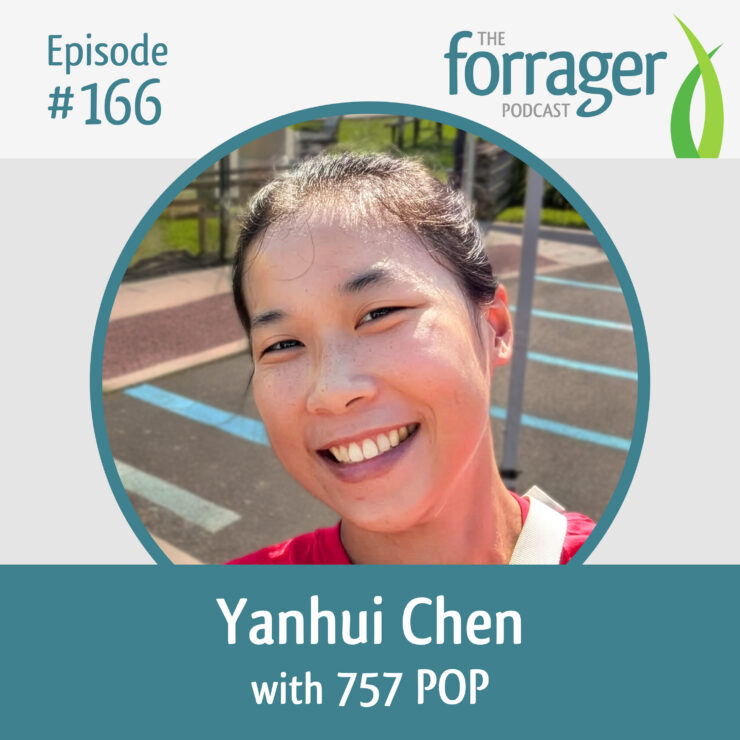
David Crabill: Welcome to the Forrager Podcast, where I talk with cottage food entrepreneurs about their strategies running a food business from home. I’m David Crabill, and today I’m talking with Yanhui Chen.
But first, we need to talk about email, and especially email marketing. If you’re not sending emails to your customers on a consistent basis, then I think you’re missing a big opportunity for sales.
I really love using Kit to manage email for my fudge business, and they recently introduced the best free tier that I have ever seen in an email marketing platform, which allows you to send emails to up to 10,000 subscribers for free. So if you still haven’t hopped on the email marketing bandwagon, now is a great time to do so.
To get started and learn more, you can watch my free email marketing tutorial at forrager.com/email. All right, so I have Yanhui Chen on the show today. She lives in Virginia Beach, Virginia, and sells popcorn with her food business, 757 Pop. Chen started selling homemade popcorn back in 2023, but her business didn’t take off like she hoped.
In fact, even after a whole year, her business was still growing very slowly. But Chen stayed resilient and kept trying new things until she found the right events and customers for her products. Just over a year ago, she invested in a food truck, and since then her business has really taken off.
Ultimately, Chen’s journey is about how she used her state’s cottage food law to more easily start a food business until she was ready to make the leap and go commercial with it. And with that, let’s jump right into this episode.
Welcome to the show, Chen. Nice to have you here.
Yanhui Chen: Thank you for having me.
David Crabill: Well, can you take me back, I know you’ve been doing this for maybe two and a half years. How did this all get started?
Yanhui Chen: Yes. This year is gonna be the third years of we running our business, 757 Pop. In the beginning I was feeling stress at my work because I was serving in the US military for nine years and it really giving me a lot of stress every day. And I realized that is not the lifestyles that I want.
So I was looking for ways that for me to start my own business so I can work for myself. I could have a better work and life balance. So that’s how I came across to learn about the cottage law in Virginia. And that’s how I found out this podcast too. And learn about how other small business owner run their own cottage law business.
So for me, at first I was thinking about do cookie, ’cause that is something like very common, but I realized a lot of people is doing cookie that is really high competition business. So another option that I could have is popcorn. And especially for me, I never worked on any food business before. So popcorn, it could be something that easy to start.
So I first got a popcorn machine from Facebook Marketplace. And also I learned how to make flavor popcorn by watching the YouTube video and taught myself how to make different flavor of popcorn, kind of experience it and see how I like it. And about two or three month of preparation, I applied for my first local event. It was a craft fair in a school and after that I was slowly doing more. Local events in my area. And in 2025 I got my first food truck and I turned it into a popcorn truck. And from that on, I started applying for events as a food truck owner.
David Crabill: Yeah, we definitely wanna get into your whole food truck thing ’cause that’s a pretty crazy part of your story. But I first wanna learn how you got there. ’cause you said I was in 2025 that you did the food truck. When did you do that very first event?
Yanhui Chen: The very first time I saw a popcorn, it was in a school in their craft fair. And it was a indoor event, so it wasn’t really high traffic events. But for me, I think that is a learning experience for me. I just had one table. I think I have like maybe 20 or 30 bags of popcorn I make for that event.
It is a really small setup and since then I learned every day a little bit about how to run my business and how much I should prepare for the event and where I need to find the local events and how to apply for the events.
David Crabill: So when did that event happen? The first one.
Yanhui Chen: I think is November 2023.
David Crabill: Okay, so the end of 2023 is kind of when you started the business and, what led you to start a food business in the first place? Like why did you decide you wanted to start a food business?
Yanhui Chen: Uh, Definitely. ’cause I love food. I think food make people happy. So that’s why I, when I was thinking about startup business, I wanna do something related to food. And also I love to shop in the local events. I love going to like the farmer’s market. So I think that is a good location for me to start.
David Crabill: But it sounds like you didn’t really care what kind of food business you started. Like you just mainly wanted to have a food business and were trying to find something that worked.
Yanhui Chen: Yes, that is too. Like I said, I never have, I never worked in a food business before, so I wanna look for something that is easy to start with. So popcorn, I think that is a good option for me.
David Crabill: You said you haven’t had any food business experience before this, right? Have you had any business experience? Like what? What’s your background?
Yanhui Chen: So I do not have any business background. So like I say, I served in the military for nine years and I joined the military after I graduated from high school. So I did not have other jobs. So I kind of, learning is also my first time being a business owner. So a lot of stuff that I have to figure out myself a hard way, like how to register your business and how to file taxes and a lot of stuff that you need to learn to run a business.
I have to learn it myself.
David Crabill: And what part of the military were you in?
Yanhui Chen: I was in the US Navy and I was a electrician on the boat.
David Crabill: And so was this something right after you exited the Navy that you were looking to do something different? Or was there something in between your Navy experience in this?
Yanhui Chen: Running my own business is something that I did after I transition out of the military. And also I’m, at the same time, I’m also going to school right now.
David Crabill: What are you going to school for?
Yanhui Chen: So I’m studying for the social media marketing.
David Crabill: Okay, so you’re, you’re studying entrepreneurship.
Yanhui Chen: Yes, that too.
David Crabill: And so were you going to school to learn how to better run your business or did the business come from going to school and wanting to apply some of the things you’re learning there?
Yanhui Chen: I think I wanna go back to school ’cause if you go to my social media, you will see I post a lot of like different content. I post a lot like, funny video just to market my, own business and promote my product. And when I was doing this, I found myself have interest on the social media marketing.
So that’s another reason why I wanna go back to school to learn more. That’s another way for me to support my business better.
David Crabill: Are there things that you’ve learned in your social media, classes in college that you’ve been implementing in your business? Like Do you have any social media tips for entrepreneurs?
Yanhui Chen: I think one thing you definitely need to do is post content regularly. And you have to know how you want people to see your brand. Like me, like I sell popcorn, right? It’s a fun food. So I wanna let people see my brand as fun. That’s why I post a lot of funny video, just like something that make people laugh.
So you have to define your language and define your voice, how you want to talk to people behind your brand.
David Crabill: Yeah, I did see like you’ve got this cute and fun brand, right? With the little, popcorn bucket face and everything, and you have different versions of the [00:09:00] popcorn. I don’t know you have a name for this guy or anything?
Yanhui Chen: I don’t, uh, it’s just 7, 5, 7 pop. It’s just a logo for our business. cause I wanna make my business brand as let people think about fun when they see my logo or when they see my business.
David Crabill: And 757 Pop kind of a, a unique name. Where’d that come from?
Yanhui Chen: I’m not good at giving a. thing, a name. When I first wanna start a business, I have no idea what I wanna name my business. So 757 is the area code for us. So I just give it 757 Pop. and I think it’s easier for people, for the local community to remember my, brand.
And also sometime it’s so funny that like people don’t know my name. but they know my face by following my social media account. So sometime when they see me they’ll be like, oh, you are the 757 Pop. Yeah, they just called me 757 Pop or the popcorn girl. That’s how they call me.
David Crabill: I feel like some people get so caught up. With their business name, think they need to have the very perfect, most perfect name in order to succeed. And honestly, like you can probably make almost any name work. Right. And your name is short and it’s memorable. You know, So I think it’s great.
Yanhui Chen: Yeah, and especially my target customer, they’re mostly the local people. So seven, five Sam Pop is uh, easy for them to remember. Not like, oh, there’s a popcorn shop. I don’t remember the name. if they’re local from the local area, they know, oh seven 5% pop. That is easy to keep in their mind.
David Crabill: Well, Before we move on, I did wanna ask about your background because you told me that English is not your first language. So where are you from?
Yanhui Chen: So I was born in China and in 2012, me and my brother and my mom, we moved to California. So I was in high school in California for three years and after that I joined the military and that’s how I moved to Virginia. ’cause I got a older in Virginia. And since then I started living in Virginia.
David Crabill: What was it like to move here?
Yanhui Chen: It’s very. Different than my lifestyle in China. ’cause the food’s different and the language different. I have a really, big challenge when I first moved to here ’cause I don’t really speak fluent English. So a lot of the time, even though you see me, I can talk a lot right now.
I made a lot of funny video. But at first when I moved here I was very shy. If you talk to my friends from high school, they probably gonna tell you that I barely say anything ’cause it just because my language barrier. So I wasn’t good at express myself until I joined the military. I met more different people and from a different culture background or from different location and I start meeting more people and that’s how I slowly learning how to, speak English more fluently. So now I can express myself better.
David Crabill: And I know you started by doing a lot of events. Were you at all concerned that the language barrier would get in the way of being able to socialize and sell?
Yanhui Chen: It definitely does because sometime that like, I wanna say something, but it’s hard to express myself verbally. So that’s why I also use body language. Or sometime I have to pull up the translator to translate to another person tell them what exactly I wanna say. But most of the time people are understandable.
They know that English is not my first language, so they’re really patient with me.
David Crabill: Well, I mentioned this before we hopped on here, but you do better than you give yourself credit for. I feel like you do a great job with English.
Yanhui Chen: Thank you.
David Crabill: Well, so I mean, we talked a little bit about the disadvantages potentially of coming from another country. Do you think there are any advantages, like anything you’ve learned or taken from the experience of immigrating here that has helped you as you’ve tried to build this business?
Yanhui Chen: I think one thing that I learned from where I grew up with is definitely hardworking and we spent a lot of time to build what we have right now, and that’s what my parents taught me since I was young. So when I have get into any problem or have a hard time, that’s how we come across the problem.
David Crabill: So what I hear you saying is that business is not always easy.
Yanhui Chen: No, it’s not like it might look easy, like easy money making, but there’s a lot of stuff that you don’t see behind. The scene like I said earlier, you have, we have to learn how to file the paperwork to register your business and file taxes and get inventory and have to figure out how much you have to make, how much you need to prepare for the event so you can have enough inventory through the date.
That is a lot of stuff that you have to learn, but either your customer doesn’t see that.
David Crabill: I think any entrepreneur would agree with that statement. So
Yanhui Chen: Yes.
David Crabill: There’s so much more behind the scenes than people realize. Well, Let’s go back to the beginning. You know, You started with popcorn, you made that decision. What we’re you using to make popcorn at the very beginning?
Yanhui Chen: So at the beginning, let’s say, I wasn’t sure if this idea is gonna work, so I tried to like, keep my costs low in the beginning. So I got the popcorn machine from Facebook Marketplace and I was like getting some inventory from like Amazon. I also kinda like learning how to make popcorn from like YouTube video or like, other online recipe and trying to figure out experience myself, how I like the flavor.
David Crabill: So when you say you got a popcorn machine, what kind of popcorn machine did you get?
Yanhui Chen: So that is a home feeder popcorn machine that is very cheap. You can get it from like online for like three or $400. I got it cheaper ’cause I, got used one.
David Crabill: So are we talking about like, you know, I don’t know. How much popcorn could it pop at a time?
Yanhui Chen: I used to use a smaller bag size for the packaging. So each batch, maybe I can make four bags of popcorn.
David Crabill: So pretty small. And I saw those older bags and they’re not huge,
Yanhui Chen: They’re very tiny and small.
David Crabill: Yeah. Okay. So that’s, that’s quite a lot of work, a lot of labor to keep turning this machine through. And how, like how did the first event go, or the first month go when you started to sell?
Yanhui Chen: So I wanna say it wasn’t really great ’cause this is my first one and I, at first I wasn’t really confident about my product, so I still made a couple sales, but I still have some like, leftover at the end of the event. So at the end of event, I kind of like just give it away to the vendor during the event and also build a connection with them.
‘ cause I wanna know other vendor who’s been doing local events and build, have a network myself here. So I gave it out to them and let them try my popcorn.
David Crabill: So your first event would, I guess we’d say, was not really a success, right? You didn’t have as many sales as you wanted. Did you think that this business idea is not gonna work? Like Were you feeling defeated after that event? Because there’s a lot of entrepreneurs that, you know, their first time they try something, it doesn’t work that well.
Yanhui Chen: Well, at first the sales wasn’t as good as I thought, but it was a new experience for me. So I wasn’t really upset. And since this is the first time, you never know, right? So, I still wanna keep doing couple more time and see what I can do to improve myself. Even though the first time it is not a great turnout, but I wasn’t really like feeling sad ‘ cause I still need to like apply for more event to try out my popcorn idea.
David Crabill: So that was in maybe November of 2023, that first event.
When do you remember going to an event and it really worked well?
Yanhui Chen: I think that was around March or April. we have a cherry blossom festival and for that event I made a special flavor. It is called cherry berry. So it’s pretty much cherry flavor of popcorn alongside with other regular popcorn flavor that I have, like the kettle corn, cheddar cheese, and pickle flavor.
And that was the most successful events I can remember. two years ago. And I sold out all my popcorn in like two hours and I still have people coming back to me and ask me that, Hey, are you gonna have refill later for today? I was like, I’m so sorry. That’s all I have for today.
David Crabill: Do you think it was because you had the special cherry flavor or do you think it was just that event had enough people to like bring the sales?
Yanhui Chen: I think it’s because the popcorn flavor that I have, and also another big reason I have so much good sell is because the location and it’s a big event, so I have more explosion from different people and it’s really high traffic. Location too is inside park. So they have a lot of kids and also families, walking around the park. So I got more people coming to try my popcorn as well.
David Crabill: What did you learn from that event that you then used to keep moving your business forward?
Yanhui Chen: So definitely I learned that I have to find the right events that will like able to target the right customer for me. For example, for popcorn, I think this will work well for events that has more kids and also family friendly. so from that on, I’m trying to look for events that will match my popcorn, the events that will make sure I will sell more popcorn.
David Crabill: [00:20:00] We’re really talking about almost a year and a half after you started the business that you really found your groove. So what was the first year like?
Yanhui Chen: The first year, definitely starting slow. Especially, I wasn’t like doing events. Every week. ’cause I, at that time I was still active duty, so I still have other things that I have to do. So I was only able to have time to work on my business on the weekends. So I think that’s also another reason why I was growing slow in the first years.
’cause I wasn’t able to put my, all the time and effort to work on my business. But yes, I do sometimes feeling down because the business wasn’t like going as good as I thought it could be. and I kind of, sometime I compare to myself with other people that I see online, like other people have a really successful cottage business running the business from their [00:21:00] home, or they have a farm stem.
So I do feeling like down, like. sometime I do doubt myself. Do I pick a wrong product? Should I start maybe like doing cookie ‘ because it’s more common. But. I still keep doing what I started with. So I just keep doing the popcorn.
I told myself I’ll give myself a little bit more time, maybe a year or two, because the food business is not a investment that you can see return in a short time. business is something that you have to keep constantly doing it so that’s why I give myself at least like one or two more years to try out my idea and see if it’s really work out or not.
So I don’t wanna say, oh, this is not a good idea. I should quit. When, right now, in the first year or the second year, I think that is too early to tell.
David Crabill: Okay, so, let’s just clarify here, ’cause you, you’re saying March of 2025 was when you had your first really successful event,
but I could see from your social media that you were selling quite a bit of popcorn before this. I mean, that might have been when you had a huge event, but you were doing a lot of events during 2024, correct?
Like, I feel like you sold quite a bit of popcorn during that first year.
Yanhui Chen: But the thing is, so in 2024, I was only doing a table set up and I was only like doing small amount of the popcorn. So, Whatever I sell, it doesn’t cover the cost that I spent on the inventory. So even though you see in the 2024, you may see that I sell a lot of popcorn, but the thing is, it is not gonna support my business.
David Crabill: So this is interesting because I know that you purchased the food truck at the end of 2024.
Yanhui Chen: Yes, But, I was like spending a couple months to, converted to the popcorn truck and also there also couple months of the waiting period to submit my food permit and plan review to the city.
So it also took a couple months before the food truck is up and running. That’s why I have to wait until March, 2025 to start running the popcorn truck.
David Crabill: Yeah, so it was about a year ago that you actually were able to use the popcorn truck, but still at the end of 2024, you made an investment in your business in a food truck and. You said you weren’t really making money from the business leading up to that period of time . Like what, what caused you to make that investment or justify it?
Yanhui Chen: So another reason I wanna get a popcorn truck is because when I was doing a prepackaged popcorn, it’s hard to estimate how much popcorn you have to prepare. That is the thing like, you can’t tell how much people’s gonna show up the next day. You don’t wanna make too much that at the end of the event it doesn’t sell off them. And you also don’t wanna make too little, you’re gonna sell out really quick and the rest, of the time you just sit there, there’s nothing else you can do ’cause you can’t make popcorn on site.
That’s why I have the idea to spend my saving to put on this big investment to make a popcorn truck so that I can make popcorn on site. And another thing that I wanna do it because when you make popcorn, people will smell the popcorn. And that’s also what can attract more people coming to you.
’cause they will smell it.
David Crabill: so this is interesting because, you know, popcorn is something that’s allowed under the cottage food law. I don’t often see people using the cottage food law for popcorn. ’cause it, it really is well tailored to an event setting. You know, Normally if you could see popcorn in an event, it’s being made on site.
There’s also a volume issue, like popcorn has a lot, it takes up a lot of space. and also it has a very like, short shelf life, generally speaking, right? Like it’s not gonna last very long after you make it. Would you agree with all those things?
Yanhui Chen: I think it depends how you storage it. So I have tried the popcorn that I make, so I have a, sipper bag and I put the popcorn there and keep it in the cool area and kind of see how long it will last. And surprisingly, some popcorn is still the popcorn. It still tastes good in a month or two months.
I think it also depends on how you storage your popcorn and make sure that is airtight in a cool environment.
David Crabill: And also a lot of your popcorn is coated right in flavorings.
Yanhui Chen: Yes, yes. I like to do a different flavor popcorn. So I have like kettle corn, which is just like sugar oil and the kernel that is a very common flavor for some people. So, And also it is vegan friendly, so that is one of my most seller.
David Crabill: Well, you decided to get a food truck in order to be able to make it on site, but that’s not the only option, right? Like you could have made it on site in a kettle, right? Or, Or set yourself up. Why did you decide not to like, kind of step towards the food truck by doing like, onsite like, setup? You know, Why did you decide to jump straight to the food truck?
Yanhui Chen: I think because the food truck is uh, easier to set up for me. So sometime that if I’m by myself, I can still able to move all the equipment. ’cause I all, I have everything on the truck so I can just drive it with the truck. I don’t require too much like, movement, moving the equipment around.
And sometime if the. Event is not like really high traffic or it’s not crowded. I can handle everything by myself inside the truck. So I think because it’s easier to run the food truck by myself instead of setting everything, setting up the tent, setting up the popper during the events.
David Crabill: Well, it is easier for sure. It is also a lot more expense. Right. I mean, getting a food truck is an investment. So what did you have to invest to get your food truck up and running?
Yanhui Chen: Interestingly, I found this food truck from someone who’s locally. So I was able to get a very cheap price. it was like $12,000 for the food truck itself.
David Crabill: I’m just gonna clarify here. I saw a picture of this food truck and it looked not great. Like this is clearly a very rundown food truck. Probably had like all the, the, the good foundation in it. But you look at this food truck and it doesn’t look like much, right? So that’s why you got it for a cheap price of $12,000, right?
Yanhui Chen: Yes. I pretty much do the work inside by myself, so I was able to save the labor costs by hiring other people. So I also kinda like, watch. The YouTube video to see how other people convert their vehicle to the food truck. And I was doing most of the work by myself and I was like installing the breaker box by myself and install the outlet inside the truck. So that’s how I was able to keep my cost low for the food truck.
David Crabill: Because you were an electrician in the Navy, right?
Yanhui Chen: Yes.
David Crabill: You had some skills that not everyone would have in order to convert this over. And then I, I saw you obviously painted it. I, I mean, It looks amazing now.
Yanhui Chen: That’s another thing I do for the food truck. I got the spray paint and I got the paint from the Home Depot and I just paint everything myself instead of doing the wrapper. That’s another thing to keep my cost low. ’cause I know that the average price to. Wrap the food truck is at least cost over a thousand.
So what I did is I got the paint from Home Depot. I do it myself.
David Crabill: and, and it looks amazing. It really looks great. I actually didn’t even realize it wasn’t wrapped. I mean, it’s just, it’s this nice, bright orange color. You know, you, You do a good job with your colors and your branding and everything, so you spent $12,000 on just the food trek itself.
How much more do you think you spent in order to actually get it? Running,
Yanhui Chen: So there’s also some repair that I have to do for the truck. So I have to like, spend some money to take it to the auto shop. And on top of that, I also need to get the generator, other than that, I just also get a bigger commercial of popcorn machine. So I wanna say maybe $8,000 or less than $10,000 over there. So I think my total cost for the food truck from like the cost of buying the food truck to like, converted to the popcorn truck, I wanna say probably around like $20,000.
I think that is a very cheap cost for a food truck.
David Crabill: I would agree with that, that you did well with the cost there. I mean, still obviously a very large investment. Did you take out a loan or anything in order to be able to do this?
Yanhui Chen: That is the saving that I have from last couple years.
I’m really saving, so like every time I got a paycheck I just save it up. that’s how I was able to support my business in the first year
David Crabill: And I will say I probably you could sell that food truck today for at least $20,000, right? Like, yeah. And you said you invested in a larger popcorn machine when you made this transition. So it looks to me like that’s like the one that you’d find in a movie theater. Like it’s a legitimate machine.
How much did that cost?
Yanhui Chen: So that is also a used one. Let’s say I like to keep my costs low, so I usually will search for a used machine and that commercial popcorn machine that I have it probably cost me like six 50 for a brand new one. It’s, I know for sure it’s gonna cost over $1,000 or $2.000.
David Crabill: Okay. So you made this investment out of savings, and then you had the food truck, which I know you got that running at around March of 2025, about a year ago. Is it coincidental that it happened to be at the same exact time that you had this big event,
the Cherry Blossom Festival? Like you said, that was your biggest event. Did you have the food truck at that event?
Yanhui Chen: No, I didn’t apply. I I wasn’t able to sign off the food truck for that event because a lot of the events, they have a deadline for the application. So I kind like signing up for that event the last minute. So I was only able to do the table setup. that’s why I sold out the first two hours because I don’t have my popper with me.
So I can’t, like constantly making more popcorn. I have very limited inventory for that day when I have a table set up.
David Crabill: That’s interesting that you, invested in this food truck like four months before, and then coincidentally, just about the time when you had the food truck ready to go, you found like the first event that worked really well. So you like made this investment in yourself and in your business, and then.
Kind of coincidentally, you started to find your rhythm with finding the right events around the same time. And this has all been in the last year, and your business has, grown a lot in the last year.
Yanhui Chen: Yes, because ’cause last year I finally like, slowly transitioning out the military. That’s why my business slowly like growing more because I was able to put more time and effort to run my business. I was able to like applying for more events. Last year in 2025, I think I almost have events every single weekend.
David Crabill: Yeah. And I saw in some cases you had six events in a week.
Yanhui Chen: Yes, that’s how I learned that I don’t think I can handle six events in a week. So I slowly like limited myself, the hours that I, I will work. ’cause I don’t wanna overwork myself again. ’cause the whole idea for me to run a business, because I wanna have more life and work balance.
So that’s why this year, if you look at my schedule I mostly have my event on the weekend as well.
David Crabill: [00:34:00] I mean, you did a lot of events last year. Do you feel like you’re able to actually make enough money to offset the investments you’ve made already? Or do you feel like that’ll take a few years?
Yanhui Chen: I think it probably still gonna take at least one or two more years.
David Crabill: So if we go back to, you know, March of 2025, I feel like this is like an inflection point in your business that changed a lot. Do you feel like it wasn’t just the event, like the Cherry Blossom Festival itself, do you feel like the food truck gave you a level of confidence about your business? Like you started to see your business as more of a legitimate business because you had the food truck and like you were actually projecting more confidence at the event.
Do you think that had anything to do with your boost in sales?
Yanhui Chen: I think so honestly. ’cause like now I have a food truck, I feel like there’s more committed to the business right now. I actually see myself a business owner and with a food truck and people can recognize me more.
David Crabill: So do you just sell popcorn with your business?
Yanhui Chen: We also have lemonade and iced tea along compare with the popcorn as well. So we also have a lately I also provide a combo deal. You can get a bag of popcorn and a cup of drink for cheaper price so that’s how we increase ourselves a little bit more.
David Crabill: When did you add the lemonade and the iced tea?
Yanhui Chen: That was when we had first have the food truck, cause when I was only doing the table setup. there’s no way for me to do drink or add any other like, drink option. But now since I have a food truck now, so I was able to add more item to my menu. So I will start doing lemonade and iced tea and they do really well during the summertime or when it’s hot outside.
David Crabill: Yeah, I mean, with you getting a food truck, you could go in a lot of different directions. Why did you choose to start with lemonade and iced tea
Yanhui Chen: Lemonade and iced tea. I think that is also a good pair with the popcorn. And another thing, if you think about it, is also a low cost and easy to make as well.
David Crabill: And how do you make the lemonade?
Yanhui Chen: So for the lemonade, we have a juice machine on our truck so we can use the juice machine and squeeze the lemon and at ice sugar and also the flavor or syrup that the customer want and just shaky up. And that’s very easy process to do the lemonade. And there’s a really bestseller during the outdoor event during the summertime.
David Crabill: So you have a lemonade machine. I feel like there’s a lot of equipment investments that have been involved in this business. Do you remember how much the lemonade machine costs?
Yanhui Chen: The lemonade machine, I wanna say is about $600-ish but that’s also a commercial grade machine as well. So it will last me for a while.
David Crabill: I mean, Are there other machines you’re interested in, in getting, like are you looking to, to expand into other things?
Yanhui Chen: For now, I think I wanna keep it simple like popcorn machine. I already have a popcorn machine. I have a juice machine to make the lemonade. So right now I kind of wanna keep the menu item simple, but I do wanna like provide more different flavor of the popcorn and maybe add more flavor of the lemonade for people to choose.
David Crabill: Have you ever had an event where people just come for the lemonade?
Yanhui Chen: Yes, I do have some events that people, the lemonade is doing so good. I will nonstop making lemonade, but the popcorn not so much.
David Crabill: Well, you have obviously popcorn that makes people thirsty and now you have lemonade that quench the thirst. Right?
Yanhui Chen: Yes.
David Crabill: But for the most part, you are a popcorn truck. I mean, That’s what you’re branded as, that’s what you’re making. I, I saw you got a lot of different flavors. So what are some of the flavors that you offer?
Yanhui Chen: We usually have the kettle corn and the cheddar cheese. The cheddar cheese is the kid’s favorite flavor. And we also have dill pickle. That sounds a little bit like weird, but it actually is not that bad. we also have a butter flavor popcorn or a movie theater type of popcorn.
And depends on the different theme of the events. Like say during the Cherry Blossom Festival we have the cherry berry and strawberry festival. We do the strawberry flavor. During the Christmas season, we have the cherry berry and the green apple flavor. So it’s the red and green color popcorn.
So mix it up, kind of give you like Christmas vibe.
David Crabill: I was keeping track as I looked through your social media and I saw over 25 flavors that you have done since the beginning. You’ve done a lot, a lot of flavors. Are you rotating flavors in and out? Like, is that part of your business model?
Yanhui Chen: Yes, I wanna keep the flavor interesting. So like, beside the regular flavor that we have like I said, the kettle corn, we like to keep the kettle corn cheese, 1D pickle and butter flavor on the menu constantly. And also on top of that, we also wanna do like special flavor. And so that like when people come, they will see we have a different flavor so they can try our sample and see how they like it.
If we have a lot of good feedback about the special flavor that we have, we might bring it back in a couple month or so.
David Crabill: And where do you get your flavorings from?
Yanhui Chen: Yes, there’s a, gold medal. There are a popcorn wholesaler there. That’s how I also get my machine too. But the flavor, I try different suppliers. So we, I have a supplier that do seasoning. That’s how I do my savory flavor of popcorn. So It’s pretty easy to make the savory flavor of popcorn.
So like, I just pop the popcorn and while the popcorn is still like fresh and hot, I kind of like coat it with the seasoning that I want and coat it evenly and make sure the popcorn have a season and coated. And another way that we make the popcorn is we also use The cotton candy sugar. That is one secret that we also use on our sweet popcorn. So the cotton candy [00:41:00] sugar is already have like the flavor and the coloring in it. we add it to the popcorn when it pops. So that’s how it give the flavor and the coloring to our popcorn. So we kind of have like different ingredient that we try to make the different flavor of the popcorn.
David Crabill: All right, and also obviously with a popcorn business, one of the big considerations is the popcorn kernels themselves. What kind of kernels do you use and where do you get them from?
Yanhui Chen: So there’s two type of different kernel. One is the butterfly and one is the mushroom popcorn. The butterfly popcorn is what you will commonly see in the movie feeder. And the one that we use the, is called the mushroom popcorn. That is the one that it’ll, the popcorn will pot like a ball shape.
in my opinion, I like the mushroom popcorn better, but some people prefer to the butterfly popcorn because it, it’ll taste better when you use it for the but popcorn
David Crabill: Because it’s gonna trap a lot more butter ’cause it has more surface area.
Yanhui Chen: Yes. That’s why there’s a two different flavor. But for me, I use the mushroom popcorn. we have a local supplier that we got and we order the kernel from them.
David Crabill: Well, I, I saw a picture of a pallet of corn kernels. This is coming from the local supplier.
Yanhui Chen: Uh, that’s that’s a different supplier that I got before, and they are also a family owned farm. So I was trying to order it but lately I, stay with our local supplier just because the shipping, ’cause the kernel is very heavy, so. when I order that from a family owned farm, they’re from a different state, so I have to pay more for the shipping just to get a kernel from them.
That’s why right now I stayed with the local supplier just because I can save a little bit more on the shipping.
David Crabill: The palette was impressive to see. Do you know how long it took you to go through that much corn?
Yanhui Chen: I can’t remember, honestly. I wanna say at least eight month for me. I think I order like 25 bags of kernel. that’s like 50 pound each.
David Crabill: And this is delivered to your house.
Yanhui Chen: Yes.
David Crabill: Yeah, it’s impressive. People think about the corn with a popcorn company, but oftentimes what people don’t think about that is a really big cost. Is the oil correct?
Yanhui Chen: Yes,
David Crabill: So what, where do you source your oil and what kind of oil do you use?
Yanhui Chen: We use the corn oil and also for the butter flavor of popcorn. We use the coconut butter flavor oil. And those are from like the restaurant depot.
David Crabill: Okay, so you’re using Restaurant Depot, so you’re using kind of a wholesale supply company and [00:44:00] then packaging is always a consideration. I see your package has changed over time. So what do you feel like you’ve learned there?
Yanhui Chen: So the packaging, definitely, I don’t wanna go back to the small packaging anymore, just because in the time and labor that we spend on bagging the small bag that’s gonna take us longer if we use the small bag. That’s why right now the bag size that we use is seven inch by 16 inch.
David Crabill: and what are you charging for it?
Yanhui Chen: We usually sell them like $7 a bag. they can also get it like two for $12.
David Crabill: Okay. $7 for a bag. And like volume wise, like do you know how many cups are in a bag of popcorn or,
Yanhui Chen: I wanna say it’s about 12 to 13 cups of popcorn in the bag.
David Crabill: okay, so it’s a pretty large bag and you’re charging. Two for 12. So $6 each if they buy more.
What do most people do? Do most people buy two bags or do they buy one?
Yanhui Chen: I think it’s half and half too. And sometime I do have people like ask me to do a, half and half in one bag. So like they can get two flavor in one bag. So I, we can also do that too. ‘ cause some people think that is the two big of size for them. So they were like, oh, can I do a half bag of this and half bag of that? We can also do that too.
David Crabill: And then you mentioned having like a popcorn lemonade deal, right? Where they can buy both. What’s that deal?
Yanhui Chen: So the compote is also $12. So like get the $12, you can get any flavor of popcorn and any flavor of the drink of your choice.
David Crabill: And then what does a lemonade cost by itself?
Yanhui Chen: So the lemonade, I also sell it for $7, like a different flavor. They’re also $7, Because we use a bigger cup is 30 ounce cups. So that is the bigger and the popcorn is also $7. If you get both together, you get it for cheaper for $12,
David Crabill: And that’s a pretty big lemonade. Have you experimented with like doing a 16 ounce cup for $5 or something like that?
Yanhui Chen: Not yet, but we do have some people asking can, they get like a smaller size, but we don’t have a smaller size. All our drink are, the same size, but if they ask for it, I can do a, like maybe half cup of lemonade for them for a cheaper price.
David Crabill: So you’re able to make on site now, so I assume you’ve never like run out,
Yanhui Chen: There one time that we ran off kernel. I wanna say the last 15 or 20 minute we were at a beer festival. So like a lot of people come over to our truck like the last couple hour. We got a lot of people coming, so I nonstop making popcorn. So like I have a whole bucket of kernel with me, but it ran out the last 15 minute of the events.
David Crabill: And you said we, do you have employees or any help?
Yanhui Chen: Not employee, but my boyfriend’s helping me on the weekend.
David Crabill: So you, you’ve got your boyfriend helping you, but for the most part it’s just you two. You don’t have any other help.
Yanhui Chen: Most of the time I’m the one that doing a scheduling and all the planning and stuff, and then when I need my boyfriend, he’ll come over to help me during the weekend.
David Crabill: Do you feel like you’re at a point where you could tackle a state fair?
Yanhui Chen: I don’t think so. Not at this point. ‘ cause a state fair is that is like talking about really like over a foot traffic. I don’t think I can handle that yet. If I think for the state fair, I probably need to need more like people to help me out. So I don’t think I’m at that point yet.
David Crabill: Is that a goal for you at some point?
Yanhui Chen: To be honest, I think stay fair takes too much work to it. So I would love to try it, but at the same time, I don’t think my, body can handle that high traffic work. So I am not sure honestly.
David Crabill: Well, what are your goals for the business?
Yanhui Chen: So right now my business besides doing the food truck, I’m also looking for another way to sell my product. So, I recently submit another application for a food permit, which will allow me to sell my product in the retail store and also allow me to like ship my product to a different state, different location.
’cause like currently I am running a food truck. I have the food truck permit, but. The limit is, I can only sell my popcorn for like, in-person events or doing a local delivery. For now, I’m not allowed to like ship my popcorn to other states. So my plan right now is, I would like to find more ways to sell my popcorn so I’m not just relaying on like, selling popcorn in the local events.
Right. ’cause for the outdoor event, it really depends on how’s the weather, if it’s raining I can do anything. Right. And also during the winter time, especially after Christmas and before February or March, during the winter time, usually during that month, not much events going on and people will just wanna stay home.
So I would love to find another way to sell my popcorn. That’s why I try to get a different food permit that will allow me sell in different location even though I’m not there in person.
David Crabill: Here’s an interesting question. You know, If we think about last year March, you had invested in this food truck and you had not yet actually started to use it. You did the Cherry Blossom Festival, you found a festival or an event that worked well for you, but you were just bringing popcorn to that event already made.
What if you had not actually invested in the food truck? And then say a year ago you found the Cherry Blossom Festival. Where do you think your business would be today if you had not made the food truck investment?
Yanhui Chen: That’s a good question.
David Crabill: Because it was clearly, you clearly found something that was starting to work. You, it was growing even without the food truck, so I’m sure you would’ve found more events like that. and I, I’m trying to understand like how viable is a popcorn business for a cottage food entrepreneur?
You know, Do you feel like you could have grown the business substantially from home? Or do you feel like you really needed to have a food truck or onsite production in order to make the business work?
Yanhui Chen: To be honest like, I’m just like doing popcorn from home and just doing prepackaged one Without the food truck, I don’t think I can grow that much yet, just because there’s a lot of prepping I have to make at home. And also, like, it’s hard to predict how much you will sell during the event.
At least personally for me, I think it’s gonna be hard for me to make a good profit from the business. And that’s the reason why I wanna get a food truck. If I don’t get a food truck I probably will get a popper and pop it on site. But that is a different food permit regulation.
So there’s a lot of different regulation for food cells here.
David Crabill: So you’re saying that You don’t know how much it’s gonna sell, you don’t know how much you can prepare. But you had mentioned that your popcorn can stay fresh for even like a month. Right. So, Theoretically, like you don’t have to completely predict how much you’re gonna sell. You just have to make enough in advance and bring enough, and then if it doesn’t sell, you could sell it at the next event.
Right?
Yanhui Chen: You may, but for me, I don’t feel comfortable selling people like the popcorn that over a week or two weeks. So usually if I have events I’ll prefer to like, make it like a couple days before the events instead of like have a popcorn make couple weeks ago and just back it before the event.
And that’s just for me.
David Crabill: And then there’s also, you’d mentioned it earlier, but it’s, it’s a really important thing to note is that when you’re making it at an event, there is that smell right there.
Yanhui Chen: Yes, yes. The smell definitely. ’cause like people will smell it even though they don’t see your truck, or they don’t see your popcorn, but they smell it. They’re wondering, oh, where’s the popcorn? It smells so good. I think that’s another thing that you can let people buy popcorn from me.
’cause the smell.
David Crabill: So why are you running the business and what, like what keeps moving you forward in this business? You’re talking about wanting to get another permit to be able to sell in stores or to ship nationwide. Like why are you running this business? Why do you care about it?
Yanhui Chen: Okay. One thing is definitely I wanna work for myself. Yeah. I have a mental burnout when I was serving in the military. So I would love to find another way that I can work for myself and even though I’m not like working, in a office or have a nine to five job. And another thing that I think I, I love running this business because I feel the belonging to my community.
Because I was born in China and I was in California for like three years. So I only been in Virginia since 2016, so yeah, I wasn’t originally from Virginia. But I feel like since I start doing more events, I know my local community more. I talking to people who are living in the local area.
I also talk to like the local vendors and stuff like that. So it made me feel like I belong to this area.
David Crabill: So as you think back on the last couple years of this business, are there any stories that are particularly memorable for you?
Yanhui Chen: like couple month ago. I think it’s January this year. I applied for a three day event and it is happening in the local convention center. So it’s a indoor event, so I can’t bring my truck inside the building.
So that’s why I have to prepackage the popcorn for that event. And. The first day of the event, we have everything set up and we have the popcorn display on the table and then the event organizer come over to tell me that, okay, you guys have to leave right now. Because the city doesn’t want us to be in the convention center because they already have a concession stand in the building.
So they are telling the food vendor to leave. And I was so upset because I have prepped so many popcorn. I wanna say at least I make like at least three or 400 bags just prepare for that events. ’cause it’s supposed to be a really high traffic event.
so I post the video on my social media and I was telling my followers that, Hey, this what happened. And I have a lot of popcorn and I don’t know what to do with it.
And the next day I was surprisingly there’s a lot of people and my fr friends that I know from like previous events, they come to me and show up to support and they get some popcorn from me.
I also got a lot of people reach out to me, like ask me like, Hey, what’s going on? I’m so sorry. Like. That’s how I feel like I got a lot of support from my community. So at that point, I feel like it’s not just doing business. It’s also a connection between me and the community that I live in.
David Crabill: [00:56:00] That’s a really cool story, and it’s a good reminder that when we have like problems that we face in our business that, we can always like, share that story and try to make it like turn lemons into lemonade. Like, you do with your, literally with your business.
Right. So why did you choose to like, put that story out there? Because you’re basically sharing a failure with people, right? Like what caused you to think like, oh, I could maybe turn this into a success.
Yanhui Chen: Well, at first I, I wasn’t thinking about too much. I just wanna tell people that, Hey, I have extra popcorn. You can get it half price. I just wanna like, do as much sales as possible. I didn’t even know that. Like I have so many people coming and, reach out to me. So that was kind of surprise. And I, I’m very grateful for all the people who like support me and my business.
And yeah, at first I didn’t think about too much. I just want, I don’t think that it’s a failure, it just, something happened. ’cause like I share a lot of stuff on my social media. I think just another way to let people, to see what I’m doing, what I’m in, what I’m selling, you know?
I don’t think it’s a failure. It’s just showing people how our business is.
David Crabill: Well, thank you so much for coming on. Now, if somebody would like to learn more about you, where could they find you or how could they reach out?
Yanhui Chen: Okay. They can find me on Facebook, Instagram, and TikTok, and we are 757 Pop.
David Crabill: Yep. And 757pop.com. thank you so much for coming on the show and sharing with us today.
Yanhui Chen: Thank you.
David Crabill: That wraps up another episode of the Forrager podcast.
For more information about this episode, go to forrager.com/podcast/166.
And if you feel like you’ve gotten a lot of value from this podcast, I have a favor to ask you could you take a quick moment right now and leave me either a review on Apple Podcasts or a rating on Spotify.
It’s truly the best way to support this show and will help others like you find this podcast. And finally, if you’re thinking about selling your own homemade food, check out my free mini course where I walk you through the steps you need to take to get a cottage food business off the ground. To get the course, go to cottagefoodcourse.com. Thanks for listening, and I’ll see you in the next episode.