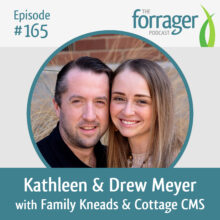
David Crabill: Welcome to the Forrager Podcast, where I talk with cottage food entrepreneurs about their strategies for running a food business from home. I’m David Crabill, and today I am talking with Kathleen and Drew Meyer. But before we begin, I’d like to tell you about the Simply Bread oven. As you hear today, Kathleen and Drew invested in a Simply Bread oven only two months after launching their cottage food business, and they said it was life changing.
And now less than a year later, they’ve relied on it so much that they’ve already considered buying a second one. But the Simply Bread oven isn’t just reliable, it’s also practical and futuristic. It combines traditional baking techniques with cutting edge technology. You can use it to bake breads, desserts, and more.
It can bake up to 15 loaves in just 40 minutes. You can connect it to wifi control. Each of its three baking decks separately from each other, plus many more features designed to help you get the perfect bake every single time. Simply Bread also has a growing line of high-end baking accessories because their mission is to make the world’s highest quality baking products accessible to everyone.
So if you’re looking to upgrade your baking game from beginner to professional, they simply have the right products for you. I encourage you to check them out, and I think you’ll be impressed too. To learn more, go to forrager.com/simplybread. All right, so I have Kathleen and Drew on the show today.
They live in Bernie, Texas and sell sourdough bread and other baked goods with their cottage food business Family Kneads. As you’ll see, they have an amazing story. They had the idea for this business only a year ago, and in less than three weeks they launched their business and started making sales. They did almost $3,000 worth of sales in their first month alone, and within the past year, they’ve now done over $55,000 of sales and they reached profitability in their business within six months.
Now, these numbers are certainly not typical for a new cottage food business, but as you’ll see, their success wasn’t random luck either. It’s a fascinating story, so let’s jump right in and learn how they did it. Welcome to the show, cat and Drew. Nice to have you here.
Kathleen Meyer: It’s so nice to be here. Thanks for having us.
Drew Meyer: Yeah, thank you.
David Crabill: Can you take us back to how this all got started? I know it’s only been like a year since you started the business.
Kathleen Meyer: Yeah, it’s, uh, yeah, we’ll have a year in, um, in April. And so let’s rewind to, uh, August, 2024. Drew worked for a company, a tech company for like 20 years, and then everyone got laid off, so he kind of just took that time to relax. And then, um, fast forward few months later, um, December was working. I had been working for a, um, luxury, like tiny home resort place in Fredericksburg. I was the regional event coordinator. I was the only coordinator there. And it was just really, really, I had just had kinda had enough. It was kind of fun at times, but they just, they threw so much at me.
Drew Meyer: Yeah. You ended up managing like seven resorts across multiple states.
Kathleen Meyer: Yeah, and I just, I, I just couldn’t do it anymore. Um, and he encouraged me, like just to, just to quit. And I’m like, but you don’t have a job. Like I, I, I’m right now, I’m the only one that’s bringing in some money. Um, and he said, just don’t worry about it. Well, if we’re gonna figure it out. So, um, I quit in December and then we, and then I took some time.
So together we just kind of enjoyed life for a little bit. And then, um. Like, so I guess it was like March. He said, I, it’s time to, I think we need to like like considering doing something and we should do something together this time. And I’m like, drew, I don’t know what you want me to do. I’m like, I’m not gonna do paralegal stuff because I in another life, I did that for a long time.
I’m like, I’m not doing paralegal stuff. I’m not touching any kind of event coordination stuff. Um, I’m like, and what I had been doing the last few months and since I had quit, I just baking. Um, ’cause I’ve always baked and cooked and I’ve always loved it and I was just playing with my sourdough and, he’s like, let’s, let’s, uh, start a, a bakery.
And I’m like, I’m like, who’s gonna buy my stuff? Like that was a legitimate like, concern for, I’m like, who’s gonna buy my stuff? and all my life, people always, like, they’ve always told me like, you should sell your stuff. But I’m like, that’s just people being nice. Alright. Um, people are just being really nice. um, he’s like, no, like seriously, let’s, uh, let’s, let’s start this bakery. So we had spent some time like thinking about some names and we came up with Family Kneads um, thanks. Yeah,
Drew Meyer: Thanks in part to AI. Yes, which can help you speed up the, you know, your, your ability to, to, to begin your business dramatically.
Um, but yeah, we, we just like sat there in the bed and we were just talking to AI and we were just like, you know, we’re, you know, you know all of this stuff about us and this is what we wanna do. And so it. It didn’t come up with the name, but it, it, it led us to the name. Yeah. So,
Kathleen Meyer: and then it was just, I remember we were sitting in bed and Family Kneads was like the idea we had and all we, like, we, we were able to get the tags for it.
We, it just felt like mm-hmm. Everything lined up perfectly. Yep.
Drew Meyer: The, the domain, the social handles, like everything. There, there was almost no competition. Like when you searched it on Google, it was like, it, it was completely untouched.
Kathleen Meyer: Right. And so then we’re like, okay. ’cause we had a neighborhood garage sale that was gonna come up in like three weeks. So we’re like, all right, let’s, uh, let’s set the goal. Like we’re gonna do our first bake. That, um, our, that, what was it? I think, I think it was April 5th. Yeah. April 5th. April 5th. Um, and see, normally I’m like a perfectionist, so I would’ve probably just like kicked that thing down. I, I never would’ve started. Um, but we’re like, no, like, we’re gonna do it this date. And so with that in mind, we like rushed to get the packaging. We got the table, we got the, you bought stickers. We got like, just. In record time, we were up and running. We actually got pre-orders. I, we, we had pre-orders for that mm-hmm. For that bake.
And then we had a number of people that, um, just were coming to the, the, like as part of the garage sale type thing. So yeah, like that, that’s how it started. And here we are now and it’s incredible. Like, I, I’m still like, I, I feel like a, it’s like a dream, um, because I still think back to telling ’em who’s gonna buy my stuff.
And here we are. We have three wholesale partnerships we have made. Um, at this point, what, what’s the gross sales?
Drew Meyer: I mean, it’s, it’s over 50 5K in sales in about 11 months. Um, 650 direct customers that we’ve served plus done a number of events. Um,
Kathleen Meyer: we’ve only, we’ve only done Like, so two, two events.
Yeah. Two events as Family Kneads and two garage sales. Yeah. And two garage sales. Uh, everything else has been pre-orders. which I think is incredible because you hear a lot of cottage bakers say that you have to do markets or, you know, markets, markets, markets. And we did do like one, so our farmer’s market wasn’t, they were not taking anymore bakers, um, which at the time felt like, it felt like, how are we gonna grow then?
Like, you’re supposed to do markets. So we were able to go to that market, but through the kids, like, ’cause they, they do once a month, they do this thing where the kids can have a booth. And so we didn’t bring like things made by us, we actually had the kids bring their products and we got to see like what a market was kind of like. after that experience, I was like, I don’t wanna do markets. Like I, I’m like, I don’t care how, like, how long it takes us to grow, but I don’t wanna do markets. I don’t like having to load up the car, bring product and, and not sell possibly product. I don’t like waste. So, um, we, the markets that we have done, it’s because it’s more just for the connection.
We just bring very, very little product. But. Like I said, we’ve only done, uh, now like four and every now everything’s pre-order and yeah, uh, we have the three wholesales and one just reached out last night. Uh, so, so we have a potential fourth in the pipeline and it’s, it’s, it’s like we haven’t even hit it year yet, so it’s just, it feels wild. Yeah.
David Crabill: I see, I see the emotion there. Um, you said you’re a perfectionist. You probably would’ve delayed starting. Was it the financial pressure that caused you to start so quickly or was it something else? I know you were both outta jobs for like at least 3, 4, 5 months at that point. Right.
Drew Meyer: yeah. It was going between like six and eight months. Um, I would say definitely some of the financial pressure. Um, you know, I just look at things in terms of runway and I’m like. Once I get below a year of runway, I start feeling the pressure to kind of increase my runway. Um, so yeah, I was kind of like, Hey, it’s time to start thinking about what our next steps are. and I would love to, um, work to chase our own dream rather than someone else’s dream. which is what we’ve essentially done our whole lives. So, chasing our own dreams was, was, was always a dream.
And so, you know, I saw this as, as sort of the, the pathway to that.
Kathleen Meyer: Yeah, we needed, we needed to do it financially, but I also kind of viewed it as like, well, even if this like kind of fails, at least we’re gonna show our kids. We’re gonna show them, well, a couple things.
Like our oldest, she’s very, at the time she, I don’t know how she feels these days, but she, she’s 15 and she. Said she possibly wanted to be a chef. And so, um, I just kind of thought this as an opportunity to one, show them, what it’s like to kind of work in that industry. Um, like just, I knew that it would be a lot of work, a lot of late nights, early mornings. Uh, and so I wanted her to see all that. And I, I, and I thought, well, they’ll also just, they’ll learn sourdough. Like, so this is gonna be the, this is how we’re gonna, it’s just gonna be all like, educational in many different ways. So, um, that’s why I jumped on board with it. Um, and I kind of thought, well, maybe it’s, maybe it’s not gonna be the thing we do, but Yeah.
Well, we gotta start some.
Drew Meyer: Yeah. And I, I, I do remember, uh, before we started, I, um, I got a little like teary-eyed, uh, talking to her and I was just like, you know what? Like, I love all these, like all this time that we’ve spent together, um, over these last few months. And, and like. Doing life together and not being stuck behind a desk, um, with like a typical nine to five.
And I’m like, I would really like to like, like, continue doing life together and, and not get dragged back to a job. Um, especially knowing that so many, um, many businesses were, we’re doing like the return to office stuff and I’m like, I don’t know if I’m gonna be able to find something that’s as flexible as my last job where I, I was here in the home.
So, um, I was like, you know, let, let’s do something that we can do together so we can stay together.
David Crabill: So talking about doing life together, you have quite a history together, right?
Kathleen Meyer: we do. Yeah. Yeah. Uh, we, uh, we met in eighth grade. Uh, we were teacher’s assistants for, um, for a PE class, and we kind of just got to know each other. We just kind of friends. We kind of kept talking over the summer, come high school,
Drew Meyer: uh, AOL instant messenger was, uh, was, was the, the technology at the time that, um, that really connected us.
David Crabill: We must have been similar ages ’cause that that’s what I was using in high school to talk to my friends. AIM.
remember it well.
Kathleen Meyer: yeah. Yeah. And so that we, you just talked all summer, um, September kind of girlfriend, boyfriend, and
Drew Meyer: Yeah. September of 2001. Mm-hmm. Um, it was, it was our, our first year of, of high school. And, uh, I, I asked her to be my girl. I, I, I hacked into her computer. Yes. Um, I, I installed like a, like a Trojan virus on her computer. I had a little command and control center and, uh, I, I overtook her computer with the whole matrix writing that drops down the screen. And I put a little popup in the middle and it said, will you be my girlfriend? And it said, yes. Uh, no. And maybe, and then on my side, I got a thing that said, user replied.
Yes. Yeah. And I was like, just
So, yeah. Um, more, more than half of our life has been spent together. Um, you know, we, we, we did high school and then we moved in with each other after high school and, got married a number of years later, had kids a number of years later, and, uh, yeah, five, five kids later and, uh, out of state move and, um, now building some businesses together.
Yeah.
David Crabill: Let’s talk about the kids I know you homeschool them, right?
Kathleen Meyer: Yeah. Yeah,
David Crabill: That, that, that normally could, could be a full-time job in and of itself.
Kathleen Meyer: yeah, yeah. Yes. Uh, yeah, we have, uh, five kids. We have a 15-year-old, a 12-year-old, 11, seven and five, four girls, one boy, the boys the 7-year-old. So, um, yeah. Um. Homeschooling. It’s, it’s a, it’s a wonderful thing, just it’s allowed us to kind of tap into like really be able to understand their learning style, um, figure out what works for them and, and also just follow those passions that they have.
I think they’re, they’re all very, very creative, um, in their own, like different ways. And so it’s been really cool with the homeschooling to be able to like fuel those, those passions and just see the incredible things that they’re able to build.
David Crabill: Well the, the growth of your business is obviously amazing, but growing as quickly as you have in the last year, I mean, how has that affected your family, your kids family life?
Drew Meyer: It’s definitely shifted things, you know, like we have to be very intentional with our days. Like there are certain days that are like, you know, the dough days and you know, like the, the, the actual like baking days and stuff. And so we have to be very intentional about structuring Yes. Like lesson time and, you know, making sure that, that we have them enrolled in, in proper classes at the co-op.
So, so we can make sure that any areas where, where we have to pull back, we have to ramp up somewhere else. Mm-hmm. And so, you know, like we just make sure that they’re enrolled in the courses where maybe we can’t. Um, do it as well. Um, you know, so it’s just, it, it’s about tweaking the, the knobs and, and, and making sure that everything stays in balance.
Kathleen Meyer: Yeah. And I think with all the sourdough, what’s beautiful about sourdough is that like I, I could wake up early, I could start the mixing of it, and then whether I’m just teaching between like, stretch and folds or just during that whole like, bulk fermentation part, they, it’s, it’s, and, and then the older ones will help teach the younger ones too.
So like, sometimes I’ll be like, Lindsay or Natalie, uh, Mike, I need you to sit with Thomas and have him read you this book and, um, can go over his, uh, sight words. Um, and so it’s just, it’s just a whole big, like, family, learning experience, teaching. It just, it’s cool to do life together.
David Crabill: it all worked out, but I, I could tell there’s some kind of risk or fear. When you started this thing, why did you choose to go in the sourdough direction?
Drew Meyer: There, there are plenty of sourdough bakers around us as there are in, in almost every area.
And, you know, honestly, they make, they make a great product that they pour their heart and soul into and, and, and people like to buy from them. Um, we just couldn’t find anything that, that was, um, what we were used to and what we grew up with. And, um. You know, wanted to bring some of that to our community.
Kathleen Meyer: Yes. Yeah. And so that’s what we, we did, we, uh, we, we found a, a sourdough that my, my sourdough is what, I’m used to and from San Diego and, We, we started finding that a lot of our customers are actually like, kind of from like California they’re, they were just very like, happy to have found bread that they were used to.
So it’s just kind of cool to kind of like connect with other people that were like searching for the same thing that I was, because when my youngest was like really little, but maybe like first moved here, I wasn’t making my own sourdough. I mean, I knew how to make it, but I wasn’t really taking the time to do it because. a lot of work. And so I was just buying, uh, sourdough [00:16:00] from like a, a local food buying club, and it, it, it tastes good. It just, it wasn’t the sourdough that I was used to. Um, and, and so when she was a little older and a little like more independent, I’m like, all right, let’s, let’s start like making our sourdough.
Mm-hmm. All, all the flavors, all the, the classic and the jalapeno cheddar and just all the things that we liked,
Drew Meyer: but despite, despite going in the sourdough direction, um, we, we have an extremely extensive menu. I think we, we have, we offer something like over 80 products on rotation. Um, all of which she executes exceedingly well. Um, but, you know, we, we have found, uh, really high demand for scones and high quality cookies, um, within our, our area. Um, we don’t, we don’t go the, the sort of like crumble cookie route and topping things with Oreos whatever. Um, we just do like classic cookies. We do, you know, um. Sourdough chocolate chip.
We do snickerdoodles, we do, uh, cho you know, chocolate walnut cookies, just like the classics that, that, that people are, are used to. Um, just, uh, at a, at a, at a bakery quality level, you know, large four ounce, you know, big. Giant cookies, um, that, you know, make your heart happy when you bite into ’em.
Kathleen Meyer: Yeah. So I guess it kind of goes like, so yeah, so you asked me about, um, like why go the sourdough route? And so I did start doing that and I, and kind of going back to what we were talking about earlier. So because of the whole like financial, like situation that we were in, I was like, we’re growing this sourdough thing, but like, I, I gotta do more.
And I remember he, he kind of, he didn’t like that he, you, you’re like, I’m like, no, no, no. I, I, like, I need to grow faster. Like, I, I gotta, I gotta do more. So that’s when I started introducing other things that were, because I, I make a lot of sourdough products, but not everything that I make is sourdough. So like, the scones are not sourdough.
I, I, I, you know, you can put some discarded, but I don’t think it’s really necessary. So I do, I do scones, I do the cookies, um, cakes. I just started like, I’m gonna find what works. And so some things, I mean, in the beginning I don’t do anymore because I, I was like, I did a lot of trial and error and then I, I think one of the best things I started doing was doing like the little sampler boxes. then once I started in the sampler boxes, I was able to really kind of figure out, like, ’cause we, it would include like a cinnamon roll and a scone and
Drew Meyer: Yeah, it was just, it was like, it, yeah. She, she had come up with this idea, um, but like, you know, we did like a, we called it like a morning sampler and it was just like, like a square box and it would have four items that we would rotate out, um, each week. So, you know, we, we were able to introduce like, um, double chocolate biscotti and, uh, different scone varieties and a bagel and all these different things. And so people would like to try this morning box and, you know, people would buy it every single time. We would do a bake and, and they’d give us their, their feedback on, on what they liked in there.
And then we would introduce those as, as like full menu items. Mm-hmm. Um, and yeah, like.
Kathleen Meyer: I think that helped really, because a lot of, like, we got a lot of people that would be new that would try that because they’re like, oh, you have such a, you know, like this, this menu, and I didn’t know what to choose.
And so I love this little box. And so I think that that really kinda helped like, like push, like mm-hmm. Get us growing real quick.
Drew Meyer: Yeah. And we also made it affordable. We, we, when, when we priced it out, we, um, we made it one of our lower margin products just to, just to make it, um, highly affordable for people to try, um, and sort of get hooked on our stuff.
David Crabill: So what I’m hearing is that you started with this idea of sourdough kind of from this, like lack of having the kind of sourdough that you liked in California, but also that you didn’t care really that much about what you sold. You just were focused on whatever. Worked, right, like you’re willing to, to shift depending on what the demand was.
Kathleen Meyer: Yeah, because, um, I guess I just love to, I love to bake. I love to cook. I mean, if I, like, I’m not allowed to do certain things like under Texas, like cottage laws. I can’t like work with meat products. So, um, you know, if, if I, it’s like, if, if I would probably do it, I probably would’ve done more of the cooking route had I’ve been able to do that.
But like under Texas law, I could, you could do like vegetarian stuff now. Yeah. Now in September. Yeah. But, um, in the beginning it was, you were, it was pretty limiting, so it was just baked goods. I’m like, and I, I, I love baking, so I don’t, I didn’t really feel like I had to just be sourdough. Like we we’re, we’re, we’re like, I know some people just do the one, but like, I’m just, I just wanna, I just wanna bake. Um, and I just, I think there’s just like such beauty in all of it. It’s like, there’s like this science behind like being able to like throw all these ingredients together and then just make it this delicious.
Drew Meyer: Yeah. I also think that one of the, one of the kind of cool things is, um. It sort of has this interesting, I don’t know the right word, I wanna say, like network effect, but, but um, it, like, the more you produce and the more you produce, well, people are going to, uh, recommend you word of mouth more often because someone will go like, you know, they’ll, like, let’s just say you have 80 products, a a across 12 categories of, you know, you have scones, cakes, cookies, bread, different types of pastries, all this stuff.
And then as people go out into their lives and they’re at their jobs or they’re, they’re in social gatherings, um, and it’s like someone mentions something, they go, oh, Kathleen over at family needs, or, or, you know, Kat does that really well. And then people come to us and they’re like, you know, oh, so and so, um, you know, uh, gave me a bag of your bagels, and they were fantastic.
And then someone’s like, oh, so and so brought scones to our ladies night. So-and-so was like, oh, I, you know, I, I, I got a dozen cookies and handed ’em out of the office and everyone loved ’em. So it’s like, you know, if we just did sourdough, then it’s like, okay, well people are only gonna talk about it when sourdough comes up.
And, and how often does sourdough come up in conversation outside of our circle, you know, yeah.
David Crabill: It’s interesting, you, you not only were willing to flex your menu based on demand, but also you even flexed the entire concept of your business just based on what the cottage food law allowed, right? Because you said you probably would’ve preferred to do, you know, maybe more prepared meal items, right?
Hot items or whatever.
Drew Meyer: Mm-hmm.
David Crabill: Did you ever talk about like going the commercial route to do what you like were more passionate about? Or was it like, oh, we, we gotta stay at home from the beginning?
Drew Meyer: . That, that puzzle piece just doesn’t fit with, with, with our homeschooling life, um,
Kathleen Meyer: with the, the traveling that we do. Um, it, there’s just a lot of things that like maybe, maybe someday like, and that’s a big, maybe like maybe someday. but I, I, I’m not really interested in having like a storefront doing like a commercial kitchen or, um, just ’cause it’s just, it’s just, it doesn’t fit.
Drew Meyer: Yeah. And, and it definitely feels like it was sort of like a meant to be kind of thing that right when we started the whole, um, SB 541 was championed and signed into law and, and made, because like, we were definitely thinking a lot more about the commercial angle in the beginning because we were like, you know, we’re gonna be hitting this 50K cap really quick, which we, we already have exceeded.
And, and we’re at the 11 month mark. So, um, we were very blessed and felt like it was like this, this. know, God wink telling us, Hey, you know what, here you guys, uh, I’m, I’m opening the door for you to, to expand more on this cottage front. And, you know, it’s been, it’s been an incredible blessing. Um, it is tough, you know, to, to scale like this within a home environment. you know, being able to, to the kind of ovens that you need and, and just all that stuff, you know, like we, we were very blessed. We, um, we were gifted, um, and an oven from, uh, from my parents. Um, and so, you know, we just. it up on some blocks and, and you know, we have an extension cord running across the kitchen to have that one plugged in.
So, you know, we have extra ovens. but, you know, it’s hard and we would definitely love to have a better space. You know, maybe even something built in our backyard. Our, our backyard’s small. Like we, we live on a, on a very small property. so we don’t have a lot of yard space to be able to, to, to make like an additional structure.
But yeah, I mean, it’s, the thought has always crossed our mind, but it’s just not something that is, um, just doesn’t fit, uh, in a lot of different aspects of our life. Mm-hmm.
David Crabill: You know, looking at some pictures of your kitchen space, uh, it kind of looks like a commercial kitchen to me. You know, like it’s pretty hard to tell that, that it’s a, a residential facility.
Kathleen Meyer: So that’s our dining room, um, that you see in the pictures. We, uh, like we. We have this, it’s kind of like little nook we kind of pull the table out and we, we put a stainless steel table there and our, we have a simply breaded oven. ’cause like a month into doing business, we’re like, we, we need to get a, we need to get a bread oven. So, um, and, and now honestly, we’re at a point where like, we need this. We need another one.
Drew Meyer: Yeah, yeah, yeah. It’d be helpful to have four of those
David Crabill: So let’s step back to when you started the business because you know, I know you had this idea like in March of 2025, and then like two, two and a half weeks later you launched, started selling. So what was that two weeks like? Like what did you do within that time to get ready to.
Drew Meyer: She did a lot of recipe development. Um, you know, uh, I ate a lot of happy calories. you know, she’s like, she’s like, you gotta try these cookies. And I’m like, you don’t have to ask me twice. Um, I love cookies. Yes.
Kathleen Meyer: We’re very, we’re very lucky. We have a lot of like, great people around us, and they’re all, they’re super, super supportive. Uh, so I would come to them and be like, you know, can you try this?
Let me know, gimme your feedback. Like, you’re not gonna hurt my feelings if you don’t like it. Just like, just please, like, don’t let me put something out there that everyone’s gonna hate. Um, yeah, it was just a lot of testing, a lot of taking pictures and then, um, just, uh, grabbing like the packaging we, we were looking at, uh, getting boxes and the bags. Um, yeah, I, I would say, so I, I I will say on, we’re really big on packaging. Like, we get the comment a lot that, um, we have very beautiful packaging So I, I think it’s just like, just kind of really putting the thought into that, uh, the presentation of how we were gonna present these, these items.
Drew Meyer: Did some, some print. Yes. Um, I, I got like a, like a rack card, uh, printed that had our story and our family’s photo on it and a QR code on the back. we’re like really big on, on print, like high, like high quality print. Um, it is somewhat of an investment, but I think that, um, it, it goes a long way and in leveling up your professionalism and way that you sort of present your, your story and your brand and all that. So, um, but yeah. Um, on, on my side of things, um, I, I built the website.
Um, I got us started with hot plate. Um, that, that kind of was like the first platform that popped into, into our realm. Um, and it was very easy to get started on there. We made a lot of investments, I guess. Uh, we, we bought a lot of, uh, cast iron Dutch ovens. We bought a lot of, um, banton baskets. We bought a lot of, you know, I wanna say we spent about $5,000 in.
Two, two and a half weeks on everything that we needed to get started.
Kathleen Meyer: Which, which kind of hurt, you know, when you’re not really making money yet. It kind of hurt, kind of scary You Like what? Like what, what are gonna do if like this flops?
Drew Meyer: Yeah. I just kept saying like the, the, the, the old adage, right, you gotta spend money to make money. so I was like, you know, rather than, rather than struggling every single day to like, get done the stuff you need to get done. Let’s have the proper equipment, let’s have what you need, like, let’s, let’s get the buckets and buy the baskets and, not, not use kitchen towels, but get actual, like, proper stuff, you know, and, and just, um, yeah, just e every aspect we just, yeah.
We treated it like a business and not a side hustle. had to Yeah. Because we wanted it to be a business. We did not want it to be a side hustle.
Kathleen Meyer: Yeah. And he just kept telling, like, ’cause I, I, again, I’m, I’m kind of like cautious with the money, so I’m like, okay. He’s, he, he kept assuring me like, like he, because he, he does a lot of investing, so he was trying to say, well, this is, this is like, for the first time I’m like investing in some, like, investing in a business that we’re building. So,
Drew Meyer: yeah. Yeah. I, I, I, was like, I was like, you, you have seen me throw $10,000 at a company of people that I don’t know. Um, because I believe in the concept of what they’re building, and this is the first time in my life I’m, I’m able to invest in, in you. she’s like, well, but this is, this is gonna be both of us.
And I’m like, yeah. But ultimately we’re the, the soul of this business is, is her. I’m, I’m there to support it in the best way that I can. But ultimately, like is the face of it. She is the person that, that interacts with the customer. Um, she pours her heart and soul into every recipe that gets developed. It’s, it’s that, that people are, are paying for, you know? So, yeah.
David Crabill: Yeah. Well that is pretty interesting that you spent like $5,000 before you’d even made a single sale. And like, that’s pretty risky, right? Because like, what if people are like, you know, not, we don’t like the sour dough, but you know, we love the cinnamon rolls, or, or we love the cookies, right? And then you end up spending all this money on, you know, Dutch ovens and baskets and everything that you don’t end up needing.
So was there some kind of, was there some kind of research that predicated that to make you feel like, oh, you know, we, we can justify this investment.
Drew Meyer: No, I think, I think a lot of it comes down to like intuition. Um. Just the, the sort of feedback that we’ve gotten over the years. You know, like so many people that, that try her stuff, you know, ’cause she, she’s had this passion for cooking and well, we and, and creating.
Kathleen Meyer: Yeah. And we’ll, we like host a lot. Um,
Drew Meyer: yeah. We’d have people over and, and you know, just, people are always like, wow, like you’re, you’re, you’re, you’re so great at flavor development and, you know, presentation and this, that and the other thing. And you know, just, it was sort of like, Hey, you know what, um, I feel like I have pretty decent taste. Uh, and so I’m like, um, you know, I try her stuff and I’m like, it’s fantastic.
And she’s like, well, you’re just saying that ’cause you’re married to me. And I’m like, no, I’m not. I’m like, this is fantastic. And, you know, um, it’s just kind of one of those things where you kind of have to go off intuition a little bit. Um, you know, or you can give your stuff to people for free and, and hope that they’re giving you genuine feedback.
You know Yeah. To, to, to source that, that feedback. But you kind of have to trust your own debt sometimes. Yeah.
Kathleen Meyer: So it was a lot of money. I mean, that like five grand, that’s, that’s a lot of money. Um, but it’s like all the stuff that we got though, I mean, because like the print Yeah. Was expensive. That was, that was like, I would say print, usually anytime we’d get print it’d be like two, $300. Yeah.
Drew Meyer: And we spent almost a thousand dollars on Facebook ads. . That, that was, that was about a fifth of it.
Kathleen Meyer: but I, I don’t feel like anything that we bought was like. Not really practical, like the Dutch ovens. Well, at the time, like I wouldn’t lodge Dutch ovens. They were kind of more on the, the affordable side. And I kind of thought, well, worst case scenario, like you can, you can probably sell ’em, like people, people buy that kind of stuff. So a lot of the things, like, I know like I’ll take a loss on it, but I, I can, I can resell ’em if I really have to.
I, I won’t really be able to re sell like, packaging. Um, but we were always very conservative, like with how much like packaging we, we bought like that, at least in the very beginning. Now we’re, now we’re buying like a ton of packaging at a time. Yeah.
David Crabill: So you spent a thousand dollars on Facebook ads within the first month. So what did you learn from that?
Drew Meyer: We learned the sort of demographic set of our audience, we were able to then take that information, um, you know, seeing what people, um, our ads resonated with and then say, okay. Um, so, you know, we would take a screenshot of the data and we would say, okay, so based on this sort of cohort group of people that are engaging with our content, um, what, what sort of products may appeal to these folks? and so, you know, we, we would introduce new products, um, based on sort of generalizations about, um, time periods within people’s lives and what things certain people enjoyed, uh, during their upbringing. Um, and, you know, uh, we found that when we would introduce these, these products that, that, that we would research, there was a ton of engagement and people were like, wow, like this is incredible.
Like, I, I, I can’t find, I, you know, I’ve never been able to find this anywhere around here. Um, you know, especially like in the way that you’re doing it. So, um, the ads really helped us figure out who our customer base was, um, who was not our customer base. Um, and it sort of, it flew in the face of all of the advice and stuff that we had read on the different Facebook groups about, you know, you gotta do this and you gotta post all the time on social media and you gotta join your local moms groups and you gotta do this and you gotta do that.
And it was like, that wasn’t what the, the empirical data showed at all. And so we, we leaned into what, um, the actual objective truth was, uh, from that spend and it’s, it’s paid for itself, you know, many times over.
Kathleen Meyer: Yes. Like, look real quick, like on that. Um, so with the ads, yeah, we found like our original customers, like that’s how we, ’cause we first, I kind of announced in our, in our neighborhood that we, we were starting this, um, micro bakery and have great neighbors.
A lot of them are like super supportive and those are some of our like first pre-orders. Um, outside of that, then we, then I started posting in some of the local Facebook groups. ’cause that’s what a lot of cottage bakers tell you to do. Like, Facebook, you gotta post on socials, you gotta do this and you gotta do that. Um, yeah, it’s, it’s very, it was, it felt, again, very defeating. Um, because I would post and I wouldn’t really get any bites like at all.
Like for some, in some areas I think it will work for co like Cottage Bakers, they can post in those local mom groups or whatever groups and they’re gonna find their customers. But that wasn’t the case for me. So I, I wanted to say that. So other people understand that. Don’t get like defeated, like just try other outlets.
And so I, so what I ended up finding is a lot of our customers come from Nextdoor. the other thing that I think helped launch us is that we started offering delivery. So we did delivery. Um, we, we would say if you had a $35 order or more, you’d get free delivery within eight miles. And in the beginning that was kind of hard because we’re in Texas and so, uh, everything’s
Drew Meyer: eight, eight miles is 45 minutes. Sometimes. Like, it, it, you know, ’cause there’s all these little back roads and all the, you know. Yeah, delivery, um, delivery was, was a huge win. Um, she, she was like, I don’t know, like, this sounds crazy.
And I’m like, just, just kind of trust me here. Like, let’s just roll with it for a bit. Um, and so we did the delivery stuff, you know, so we would do the porch pickups and then we would have our delivery orders and we’d go out and do those. Sometimes we’d be out driving around for hour to two hours, um, doing deliveries.
Um, you know, we’d get six to 10 delivery orders per week, sometimes more. Um, that’s now the holidays. Yeah. And then we started upping our minimum, you know, we went from 35 to 50 and then 50 to 75. And then for holidays it was like over a hundred and people kept showing up and, and choosing delivery. Then we had to kind of pull back on that. ’cause we started getting two bids. Yeah. under the law. Uh, we, we can’t hire anyone. Um, our, our oldest daughter is not old enough yet to, to drive these around for us. But maybe once she gets her license, we can employ her to be our delivery driver. But yeah. Yeah.
David Crabill: well, I know that when. Started the business and grew the business that you used AI a lot. You already talked about how you used it to help come up with the business name. Where else have you used AI to kind of speed up the launch and the growth of your business?
Kathleen Meyer: Um, I’ve, I’ve used it a lot, for scaling. I have like my recipes like all kind of fed in, into, I use Claude, I use Claude AI and,
Drew Meyer: Yeah. It has a great tool to get you 90% of the way there, but you still need to, you, you still need to carry that, that 10% of, you know, human intuition and intellect.
Yeah. Um, you, you can’t just trust it blindly. Um, you’re gonna end up with a lot of wasted product.
Kathleen Meyer: Yeah. Yeah. And so I’ll use it for, um, helping me create product descriptions. Um, I’ll ingredient labels. Yes. You have the labels. Like, not like actually the, I use Canva for my, for my labels, but like, for content, yeah, yeah, yeah.
For like, put on there, like, it help me that with like the, like, um, the ingredient stuff, the pricing I’ve used it for. ’cause I, with Claude, they have these projects and there I have these, like within the projects folder, I have like all the, um, all my ingredients and how much they cost me. Um,
Drew Meyer: so then we can, we can literally just take any recipe, um, you know, handwritten or PDF or website or whatever. Um, and then just paste in the, the. The ingredient list. Um, and then just say, um, our packaging for this is going to be, you know, 45 cents plus a 5 cent sticker and, you know, uh, help me come up with retail pricing. You know, give me, give me three different prices at, at, at different margins. Um, and, you know, it’ll, it’ll spit out, uh, some math for us, you know, without us having to calculate it by hand. you know, you gotta know what the market will bear too. So, you know, it’s helpful to look at what other people are doing. Um, but you gotta be careful not to into the trap of, um, setting your prices based on others pricing. Um, we have people in the area that offer sourdough bread, um, for. in, in, in, in both extremes, like super cheap to the point where like, we’re wondering like there’s no way you’re valuing your [00:39:00] time into this. Like you’re looking at raw ingredients and you’re, you’re, not looking at this as, you know, like as a business or, or something. And so, you know, you were just starting and then you come across that person’s pricing and you go, oh, they’re charging $7 for a loaf of bread.
Maybe I should charge six ’cause I’m new here. And it’s like, no, no. Like you, you, you can’t do it that way. Like you need to, you need to use real,
Kathleen Meyer: yes, you need to value your time. And then, ’cause here’s the thing, you, you could always come down in price too. You could always come down if it. It’s already to go up.
Yes. You go up like you’re, you’re gonna, you’re potentially gonna lose customers that they were like, well, your cookies were $2 for these four ounce cookies, and now suddenly you’re charging $4. Uh, that’s a crazy increase. So like, I, I just, I, and, and I remember, so I, I would would’ve fallen victim to that because I remember when we first started some of the things I wanted to like, price lower.
And you’re like, no. Like, no. And then yet he made that point that drew me that point that, like, you, it’s, it’s easier to come down. Like you can’t, you can’t like wanna raise it later. That’s, that’s just gonna upset some people.
Drew Meyer: Yeah. Yeah. So, yeah, so we covered like, um, using AI for, for that kind of stuff. Um, and then also when we first started out, um, I built the website using AI. Um, so, you know, I just wrote kind of a, a basic prompt about what I was looking for and, um, you know, told it that I wanted to. To build this, this website. And, um, you know, it came up with a very nice website, kind of made a couple tweaks to it here and there, but I, I would say for the most part, um, I got, I think I got the website done in a day. and you know, obviously I have the technical know-how to, to execute something like that. Um, a lot of people will go in there and they’ll, they’ll have it designed something, but they don’t know how to take it into a environment to actually be hosted to people and actually be functional and all that kind of stuff.
Um, and then, you know, I used it to, to add the, the, the, the blog component to our website and all that kind of stuff. Um, and
David Crabill: Would you recommend that like the average cottage food entrepreneur use AI to build their website? Like obviously you’re a technical guy, so you know.
Drew Meyer: no, I, I would say, uh, so I have met a number of folks that are in this industry that come from similar backgrounds as me, but they’re few and far between. So I would say if you have somewhat of a, of a, uh, a relatively deep, like you would consider yourself maybe intermediate, technically, um, then you could totally do it. Um, however, I will caveat that by saying that having a website that’s just like a pretty thing and having something functional are two totally different things. So building an ordering platform, for example, into your website is a much deeper lift, than just building like a basic template that Yeah, like a contact. Yeah, yeah, yeah. Like, um, building a, a, a, like a landing page with your photos and a contact form, um, I would say everyone should just take a shot at it. You know, try it like go in. Get yourself a, a free plan or a $20 a month AI subscription and try to build yourself a website. Um, know, it’s a fun learning experience, but, um, you have to value your time. And, um, you know, it’s, it’s definitely an investment of, of time and energy. Um, and it could be a lot of headache too, because maybe you make something and then six months down the line it breaks, there’s a bug. Um, or you know, you go to your website and it’s like a database connection error, and you’re like, what? I don’t even know where to begin. How do I start troubleshooting that? You know? and so it’s like you have to commit, a lot of energy if you’re gonna go that route.
David Crabill: This is leading us to talking about Cottage CMS, right? Like, uh, can you talk, talk about what you built there?
Drew Meyer: When we committed to starting this business, like I said, she’s the heart and soul of family needs, and I’m there to support her, um, in all the ways that I can. Um, you know, I, I man the ovens, I do all the stuff and, you know, I, I help facilitate that business as sort of, um, an unpaid laborer, right? but I come from, I come from a rich technical background and, um, you know, I spent a lot of years in software development and I was just like, you know, I feel like I need to build something for this space because everything that was out there felt either antiquated or engineered for a different class of user, or I don’t know, like we, we started feeling like we were so quickly outgrowing Hot Plate, for example.
It’s also hard to build your brand. You can’t tell your, you can’t tell your story very well with a hot plate. Yeah, your hot plate is a, is a good storefront for, impulse buying behavior, but it doesn’t allow you to, you know, there’s no pages to tell your story about your business and tell your story about your family and so much of cottage foods. is your customer connecting with you on a deep personal level? And so I was like, you know, I would like to take all of the things that are great about hotplate and all the things that are great about some of these other platforms and just build something better. And so, this was August of 2025, when I first started kind of doing it and, came back. And then by October, um, I had, a full order system built in, um, connected to Square. Um, and then just, it’s been a ton of feature development. Um, you know, I have a great community of, of users, members. I did this kind of creative bootstrapping phase in the beginning where I introduced like a lifetime plan, um, and I introduced, uh, the founder’s club.
And so I got cottage bakers to, to sort of join me, in, in the belief of what I was building. Um, and they became sort of my core. My core membership group, and they’re like the cohort that I go to first, um,
when, when I have, um, ideas, um, or, you know, when I need my initial feedback. And so, those people are fantastic.
they, they so believe in the mission of, of what I’m building, that, you know, like on on the cottage food groups, they’re always recommending cottage CMS and, you know, they’ll answer questions and share their websites and do all kinds of stuff. Um, and so fast forward to today, um, Cottage CMS hosts, I think I just broke 720 websites, um, about, 170 of those are, um, pro plan users. and yeah, I just, I, it’s, it’s, it’s amazing like what you can build, like I. would not have been able to do this. Pre ai. AI has played a, a, an amazing role. Like I know how to write software, but like to do it in the amount of, in, in the condensed amount of time, um, as a solo founder and, and someone who doesn’t have a team of, of engineers, or support people. yeah, it’s pretty remarkable.
David Crabill: Also, you know, we’ve talked about this Drew, but kind of fortuitous that like right around the same time, Cast Iron shut down. Right? And then there’s My Custom Bakes, remove their free tier from their platform. Right? So two of the big platforms that people had been using were then like having to find a, an alternative.
Drew Meyer: Yeah. It was, it was just a stars aligned kind of thing. Like, um, I, I didn’t even know about MCB removing their free tier until like three or four months after I built my platform. Um, and, you know, I wanted to offer from, from the start, I wanted to offer something free. Um, you know, because, because we came from the hot plate world. Hot plate is free ish. Right? Like they get you in the door because ultimately our customers are the product to them. Right. And so,
Kathleen Meyer: but you could, you could switch it, but then you’re paying the fee, but you’re already like, yeah, e either way they’re making a ton of money. Which is why you built it. ’cause it’s just, we started doing the math on how much money?
Drew Meyer: Yeah, I mean in, in, in like in one sale, where, where we did a thousand dollars in transactions, um, we saved our customers $70. Across all of those orders, um, the amount of money that, that they would’ve paid, the hot plate would’ve been $70. So yeah, if you’re doing $4,000 in sales a month, um, hot Plate is earning about 240 to $280 fees from your customers. and these customers are supporting you because they wanna support local. They don’t wanna support some, um, company and San Francisco gets VC funding because those VCs see dollar signs in the volume that, that they’re pulling through their system and power to ’em.
Like, I, I, you know, we, we used it. We loved it. But it costs too much money and I can’t in good conscience, um, continue down that path of, of having my customers fork out hundreds of hundreds of dollars a month, for a platform that is pretty limiting to be honest. So,
David Crabill: Just to, to clarify, you know, you’re talking about your customers forking over this money because that’s the hot plate model, right? Which is they say. It’s free to you as the business owner, but then oh, we also tack on a fee to the customer that they only see. Right. So it’s like, it’s, it’s a model that’s worked, you know, like it, it has worked at getting a lot of business owners to sign up, but like at the end of the day, you know, whether their customer’s paying it or you’re paying it, like it’s still like, means your pricing has to be lower to accommodate that fee.
Drew Meyer: E either lower or you can drag the slider bar, eat the fees, and then raise your prices. But either way, someone’s paying it. Yes,
Kathleen Meyer: and, and whoever is paying it. It just i. You’re looking at it as like a monthly cost, like whether that’s like. To your customers or you’re taking on that cost, that’s when it depends on your volume, but your potentially, like in our situation, it, it, it could have easily been hundreds of dollars. So I, I, that’s why I was like, as we’re growing, I’m like, you need to build something. I need to get off of this. This is like, this is insane how much money and, and the fact that I, I can’t actually, like, I, I like to send emails and so with, with that system, I can only send an email, um, when I have an event and I can only do one email and it’s like so poorly formatted. So I, yeah, there’s, there, you can’t do line breaks. You can’t do, like, it’s literally just a little text, a blob of text. It’s like hard to read. So you can’t format it. There’s no headings, there’s no, there, there’s, uh, their, their email system is very limited and I get it because they’re, they’re largely focused on the text message angle, um, text messages.
Uh, I, I will, I, I’ll say to those that are listening, that love text messages. Um, there is, there, there are no text messages, um, in the system at the moment. Um, we have email notifications and also push notifications. texting is something that I would love to introduce. Um, however, it is extremely cost prohibitive.
Like I’ve done the math on the amount of texts that we would send through hotplate. Um, and it’ll often be, um, $20 to $40 a month in texting fees for the amount of text volume that we would send. So offering a, uh, a free plan or a $20 a month solution not going to cover. You know, there, there, there’s a re there’s a reason why hotplate able to do it.
It’s ’cause they’re, they’re earning hundreds of dollars from your customers, from the volume that you’re putting through the system. so they do have a very brilliant model. It feels very. Amazing to the business owner, but when you really sit down and think about what’s happening there and, and the costs, it’s pretty like enlightening. Yeah.
David Crabill: So the million dollar question is, does family needs use Cottage CMS?
Kathleen Meyer: Yeah. We do, we do. Yeah, we do. Um, we do, I, I what’s really cool is that now just like I wanted. People have realized they can order the scones and they can order the things that, like, even though I don’t have my scheduled bake, um, they’ve ordered the scones. Like I think on Monday I have like three or four orders of scones, um, that are just, they’re outside my bakes because, um, people Yeah.
Drew Meyer: Yeah. I’ll, I’ll sort of highlight that, that aspect of it. So, so something that, that I, um, disliked very early on about the hot plate model, which, um, simply Bread app has, has fixed this in a, in a recent, uh, release that they did, um, the ability to showcase your full menu despite having, not having an active bake. um, hot plate, you have to have an active bake in order for people to see what you offer. from the start, I was like, okay, well I wanna build the system where people can see our full menu. for a couple reasons. One, um, SEO uh, search engine optimization is very important to this whole model, and it’s something that you don’t get, with, with a hot plate type system. hotplate essentially takes all of the credit for, you know, it, things get indexed under hotplate.com. Um, people can find your storefront as long as you, as long as you put the correct words in there. but it’s just, it’s not optimized for, you know, people like it. We, we wanted someone to be able to come and type, you know, German cake, German cake, uh, German chocolate cake or carrot cake near me and find us as a baker. you know, which wasn’t gonna happen within hot plate. Um, hot plate also doesn’t, um, don’t have your reviews in like structured data, so the reviews never get out into the world. So yeah, there, there’s like a number of limiting factors there, but being able to showcase your full menu, and just having a better experience when people kind of come to see what it is that, that you have to offer. Yeah. Um, you know, I think was a WW. Is, is one of the biggest wins of moving away from a system like that.
Kathleen Meyer: Right. So like now, like for example, the wholesale, uh, partner or potential fourth one that we’re talking to, um, she reached out and, uh, I got back to her last night and said like, well, it’ll depend what, what you’re interested in.
And, you know, I’ve kinda limited time, but let’s, let’s chat. And so she, I can tell she’s gone to the website. She’s like, I’m interested in the cinnamon rolls and the, and the bagels. And I mentioned these are all things that were not really like on my, well, I, I don’t have a bake on hot plate. Well, I guess there’s, there’s something on there, but it’s like, it’s just a kind of a placeholder. Um, but she’s able to see that I have all these things and these are the things that she wants at her bakery. Mm-hmm. Um. So that’s,
Drew Meyer: and you know, with, with, with a system that is a website builder, you can build pages that are specific, right? So like, you know, you can have a wholesale page. Um, if, if your state allows you to do wholesale, obviously, um, not a lot of states do, but Texas does now.
Kathleen Meyer: Well meaning like, so we have a wholesale page. We have a page that says like, you know, inter like, are like, are you looking for a wholesale partner? Like, you know, reach out, we’ll set up a time, we’ll we’ll meet with you, we’ll discuss. So I, I think things like that I think have been like very, uh, ’cause all these wholesale deals, we haven’t like sought these out.
These, that’s, uh, that’s kind of important to they, these, they all like fallen in our laps.
David Crabill: You mentioned wholesale, and it’s kinda interesting, you know, we talked about all the, the AI and the tech that, you know, you kind of brought into this business and how it’s enabled you to do pre-orders and avoid having to go the market route. Um, but then, you know, I know in the last few months you picked up some wholesale accounts, as you said, and, and that’s kind of like moving, I would assume moving away from tech, right.
You know, you’re just kind of doing in-person partnerships. Well, I mean, you tell me maybe, maybe there’s a, a lot of tech that went into helping foster those wholesale accounts, but tell me about that growth of your business.
Kathleen Meyer: um,
So first off, SB 5 41, which again, like, it feels like it’s always like, it’s like a, just a blessing. Yeah. It’s just been this, like, it’s opened up so many doors for us.
Like it’s been, when we first started wholesale was not possible in Texas. And now it suddenly is. And I just still thought that farm connection wouldn’t take a home baker. Like, even though it’s like allowed, I kind of just thought they, I’m, I’m just me. Like I’m just this home baker. There’s just no way they’re gonna like, but they, that that. That happened. And then after that, um, one of our customers, ’cause I, so I, we do the porch pickups, we do the delivery. I consider myself a, an introvert. I don’t really like, I like socialization actually kinda really drains me. So, um, but with my porch pickups and the delivery, I make it a point to, um, to my customers and meet them. I do feel like my, me, with my customers has led to our growth. Um, because, um, I, I just, I talked to them all and they get to know me.
And so all, I think all these things are really important for like a cottage baker to, to like, put yourself on Google.
Like, I know some people don’t wanna like, list their address, but I, I, I think there’s a way of just putting like your city, but you should, you should definitely have your business on Google. You should encourage your customers to, you like a review. Um,
Drew Meyer: yeah. I, I can I, for, for those that are listening that have maybe been afraid to get onto, um, Google, uh, like doing like a Google My Business, uh, because you don’t wanna give up your address, uh, when, when you create your location, set yourself up as a service business with a service area, um, and you do not have to disclose your address.
Um, if you put yourself in there, um, you know, like we’re, we’re in there, with our address because we’re.
Kathleen Meyer: Well, her address is already like everywhere. So just, yeah, just why not? So we just, we had the address. Now you don’t have to go, like now you can register with, um, DHS, but we still just, I dunno, we just have kept it that way. Um, we’re, we’re, we’re, we’re okay with that. Um, but yeah, I think it’s like the website and the, um, the Google that is, I think it has helped the wholesale.
Yeah. Let’s, let’s, let’s talk about that though. So we have a lot of people that buy from us directly.
Yeah. That we’re, we’re, we’re still committed to. Um, you know, so we’ve, we’ve tried to stack all of our wholesale, um, opportunities into the same delivery days. So then we’re just working on those projects. Without having a whole bunch of overlap where it’s consuming our entire week. Yeah. And then we have the family time, so that way, so we try right now to have it like just Monday through Wednesday, so that way like Thursday.
We’ll currently we’re, we’re at co-op, so we’re Thursday we’re like the kids teaching. Yeah, yeah. I’m teaching, uh, with them, like they’re with them. So we’re, we’re, we’re all there at co-op. Um, and Friday, Saturday, Sunday is kind of just like, relax, you know, relax, maybe restock on stuff. But, um, that’s kind of how we have structured, uh, our, our lives.
And that, that way with the direct sales, we, we, we, I still want to do them, but it’s just, it’s no longer the every Sunday like I used to. It’s, it’s more like every other week or maybe every three weeks. Just ’cause I, it’s, it’s a really hard thing for me to wanna give up. ’cause these are the people that help, like build us. I really love my customers, so I, I don’t really wanna give that up. Like, I, I really, even if I had to like limit the menu, um, I, I can’t maybe give that crazy, like, we we’re always complimented on our extensive menu, but I, I, I might have to just limit it, but I just, I, I, I love the direct sales.
David Crabill: I noticed that you, have, you recently posted that you’re doing over 200 English muffins alone in wholesale per week. So I mean, I, I was wondering like, uh, you know, is, or do you see this wholesale kind of taking over and becoming the majority of your business? I understand you don’t want to give up the direct sales, but does this seem to be the direction that it’s leading you?
Kathleen Meyer: What I’m feeling like is right now, the, the, the wholesale is even just at its current rate, it, it, it has taken over.
Like it is, like we have this Monday through Wednesday thing that we have to do, uh, that is the primary source now of, of our, uh, of our income. Um, and then the direct sales, it, I will still do ’em just less frequently. It just like a, yeah, yeah.
Drew Meyer: Every, every two to three weeks. Yeah. Um, we, know, we’ll basically commit to, to, to doing like a weekend bake for our direct sales. Um. yeah. Less, less frequency on that side. ’cause you know, you, you, you’re time doesn’t come from, you know, it like, it’s like a you have to pull back someplace. Yeah, yeah. You gotta pull back someplace. And so in order to offer more on the wholesale side, um, you have to, you have to give up some of the direct sales side, um, at least.
And until, or unless you can scale your operation, which obviously we can’t hire people under the law. Um, we can scale our, our space. Like if we grow into our garage and, you know, we can, we can do some additional, um, ovens Yeah. Work there. But, um, ultimately, I, I see it being something where it, it came down to the consistency of the, of the revenue. Um, obviously we make less margin, um, when we’re, when we’re selling to wholesale. ’cause we have to offer a discount. I know there’s a lot of people that are, that are, um, I see that question posted in, in the cottage food business group all the time. People are like. do you handle wholesale? What do you do for your pricing?
And for some reason, I always see a lot of people comment and they’re like, no discount, don’t discount at all. And I’m like, in, I either you’ve never done wholesale or like, I, I don’t, I don’t really understand that. ’cause we’ve never encountered a, a partner. Um, even like with Farm Connection, they have like mandated 30% discount because they need to make money for, for their location, right?
They need to make money to pay their employees. Um, it costs money to run a business. And so, you know, we, we offer, um, discounts to our wholesale partners to, to make sure that they have room to make money and to grow as well. Um, so it’s harder for us to, to make really good money, but it’s also very consistent and, and, uh, the, the flow of the orders, like we don’t have to worry about the unpredictability.
Like with, with with direct sales, you know, you’ll have periods where like, uh, with Spring with, with spring break, bunch of people go on vacation, they go out of town. so if suddenly, you know, we’re used to, uh, you know, uh, a thousand to $1,300 in sales, and then that drops to 300 because everyone’s on vacation.
It’s like that, that, that sucks for us. But the with with the wholesale, they, they continue to order and, you know, we get the, the sort of consistency from that.
Kathleen Meyer: I think we have like 650. customers is like, not, not all at once, but like, so at this particular growth, when we do a bake, we, it is pretty consistent. Like we, we know we’re gonna like a grand or more is like what it’s gonna be in sales. Um, but again, like when we were first starting, um, it was like, it was very kind. Like we, we, we maybe had like three, 400, like oh yeah.
Drew Meyer: I mean, it’d be like one weekend, it’d be 250 bucks and then 500 bucks and then 300 and then six 50, and then. and you know, like I was tracking it on a spreadsheet and we did see consistent growth, but it, it was always like a zigzag pattern, right? Um, and then, you know, we, we would do certain events and stuff and, and we would make some good money and, um, it just, it seemed like we saw the growth, but we were like, you know, this, this would be really hard to manage because you don’t know how to like, prepare for, for that.
Um, you, you may have too much product on hand and then you do a sale and then it doesn’t meet expectation and now you have possible waste or you just bought too much stuff and, and you fronted too much money on, on future goods and all that kind of stuff. So, um, I, I like the wholesale a lot. I wish that more states would allow it.
Um, ’cause I think it creates a much more wholesome community experience when small cafes and stuff can partner with locals and not have to ship stuff in from Cisco or US Foods or these, these big. You know, these big food conglomerates, um, people should be able to get local products. Um, and yeah, I this.
Mm-hmm. Yeah.
David Crabill: When I think about like the past year for you, you’re we’re seeing a lot of, uh, of evolution of your business, right? Like, you know, you kind of started on a whim. You had this idea of starting something together, and then you launched within like two to three weeks with this concept that maybe you would do markets and markets didn’t work out, and then you kind of switched to pre-orders.
And then, you know, the pre-orders did work. But at the time that you started, Nick Wholesale wasn’t even an option, right? Because the law hadn’t changed yet. And so you never could have planned or predicted that there would be this like, possibility of having a wholesale business. And then that opportunity came up and you’ve transitioned into it.
And so, um. Like the importance of being flexible and being adaptable, being able to pivot is like what I am getting from your story here. And so as you look forward and you look ahead, like what do you see as, you know, the future? I know you couldn’t have predicted being here today a year ago, but like if you’re looking ahead, what, what are some of your goals?
Kathleen Meyer: Well, so first off, just, just to kind of remind, um, so I, I would say I’m not really a person that, um, I don’t like to be a, I am kinda like a creature of habit. I, I don’t like change. but I also like in the last few years, have like lived by a motto, which is a. comfortable in the uncomfortable. I think that is gonna help with the growth.
But, um, yeah, so I am just adapting, like with the growth, figuring things out. But where do I see myself? Um, I would like to stay cottage for as long as I can. I, ’cause that fits with our, with our, with our lifestyle. Um. But a, like a dream of mine would be to just be able to have like a facility, like some kind of like one of those like kind of, I guess, warehouse type things where I can have like more kitchens and like, I just, I love to teach and so I would love to be able to teach other people.
Like, I would love to be able to hire out, like, like have like workers, like, like just like maybe like, um, like high schoolers or something. Like, like, because with the baking, because I, we don’t do that like every day. Like I feel like it could be something where it’s just like I’m helping train, like train the youth to like, these like skills, which I think are like very valuable skills, like learning how to, how to bake and how to just like run a business.
Like all these kind of skills I think are very valuable. So I, I would, I would love to see ourselves, at some point in a bigger space. It’s maybe not like really a storefront, but I, I guess it still would be like commercial, but it’s like, I would like to at some point, but for now, just we stay at cottage as long as we can. We, uh, we convert the garage, maybe we get another. Uh, simply Bread Oven.
Drew Meyer: Yeah. The, the subtext here is we are looking for angel investors. Yeah, yeah, yeah. We are. Yes. Um, anyone out there, uh, looking to, uh, invest in our dream, please contact us.
Kathleen Meyer: Yeah, yeah. But yes, the long term, the very like end goal would be, um, what’s kind of funny is that like, so in San Diego there was this, this bread company called Bread and Sea, I remember, I, I, I would always say to Drew like, it’d be really cool to be the bread and sea of like, of Bernie Oh yeah.
Of Bernie San Antonio kind of thing. And it now of like, it starts to feel like, not very farfetched, but I’m still just like, single time like this, like this wholesale, like these, these, like that email that like, I just, I, it’s really, really hard for me because I. I’m just like, I’m just me. Like, I’m just me.
I can’t, I can’t believe people are like trying to buy, like, and, and they, they want more English muffins. I feel like we’re reaching the cap Yeah. Of English muffins. uh,
Drew Meyer: yeah, some, on your podcast recently, um, you were talking to them about like, um, impostor syndrome, um, and, you know, we, we, we definitely feel that way sometimes as well, um, in, in both aspects of the business honestly, with family needs, with, with Cottage CMS. Um, I, you know, it, it’s hard to not be self, self-critical, when it comes to what you provide the world and when people continue to praise you for it. It, it’s, it’s, it’s really hard sometimes, like, like certain people have like a big ego and that fuels them and, and, and they, and, and they really thrive on that.
But like, for us it’s like very much like, you know, um, I mean, just follow the steps. Yeah. We just we’re, you know, we’re, we’re just doing what we’re doing.
David Crabill: You, you mentioned angel investors. Do you feel like a big bottleneck for you is just the finances, like the money, like that’s what’s holding you back right now?
Drew Meyer: Yeah. I mean, if we, if I won the lottery tomorrow you know, or I had some sort of, um, you know, some, some family member that wanted to invest in, in growing us or whatever, um, I definitely think that we would figure out how to change what we’re doing and, and, uh, lean into that growth opportunity. Um, we like, as we sort of said from the, from, from the beginning, this is, this is not a side hustle for us. This is, this is our family’s, um, dream that we’re chasing together and we wanna grow this into an actual business and, um, have it sustain our, our family. Um, and you can’t do that running it as a hobby.
Like you, you, you must be able to grow it and. Sometimes the, the scary things are the, you know, like, like, like what, what she was saying, um, getting comfortable and the uncomfortable. It’s like, it’s very uncomfortable for us to think about growing out of our space and Change things up. Just, just having to change things up.
There’s so much uncertainty there. Um, it could be very anxiety provoking to, to sort of let your mind wander on all the things that would need to change, but at the same time, um, you can’t get growth. Um, you can’t grow without, without making sacrifices and, and doing things. So it’s like, you know, we wanna continue to grow as much as possible in, in the space that we’re in within the com comfort and confines of our own home. very thankful for, for cottage laws, um, to, to allow us to do that. Um, but yeah, we, we, we would not be afraid of, of, um, chasing growth. Yeah. If the financial bottleneck was not there, I don’t think it would take long to find some talent to like help, like, you know, this is how we work the dough and, and, and just like mm-hmm. Have this, you know, I’d be able and then, and then I’d be able to kind of, oh, I don’t, I know, I don’t, I, uh, I, I had heard Alina, like, she, she had said something like, yeah, like, it would be really hard for me not to like, yeah, like, um, like on the, on the podcast that you had with, um, Alina, um, Eisenhower, she, she was saying something about how she had a really hard time letting go.
Um, ’cause she’s like a perfectionist by nature and, and it’s very, it’s very difficult for her to, um, to, to step out of, of the business. Um, and that’s the same with, with her. Yeah. I feel like, yeah, she, she’s very, um, she’s very controlling of her processes and, and she likes things to go according to plan and. Um, you know, if I’m not washing dishes, um, I, um, might get hit over the head with a frying pan. So, um, you know, like if, if we moved into a space and, and, and we had, um, it additional talent, it would, it would take a while.
David Crabill: Well, I mean, what’s, what are your thoughts about getting a traditional business loan? You know, you say it takes money. That’s obviously an option too, right?
Drew Meyer: Being less than a year old business, we don’t have, um, we, I mean we will very shortly have tax returns, but it won’t be the full year of us being in business.
So we won’t have, um, that information yet. Um, we don’t have a year of financials. Um, you know, having customers in the way that we do is good, but having, having committed wholesale partners, um, will help like the whole business, uh, loan underwriting process. so yeah, I think once we hit the one year mark and then kind of heading into maybe even year two to be able to have some tax return history, uh, showing. growth and, and, uh, proof of, of income there, um, I think will open up those doors for us.
David Crabill: Well, um, a, as you think back on last year, you obviously took a significant risk, kind of bet on yourself, bet on you as a team. What has this business journey meant to you?
Kathleen Meyer: What it’s shown me is that we should have done something a long time ago. Like, it, it shows me that like he, that we, when we were pouring our, like all those hours I’ve done with like either event coordination stuff or before when I used to, like I, I used to do paralegal stuff, all those, like late hours, all those I, I, I should,
David Crabill: Do you, do you have regret for not making that choice sooner?
Kathleen Meyer: I, I do. Um, just because I, I, all of those other jobs, I feel like they took, they would pull me away from like my family.
Drew Meyer: And so, um, just yeah, like that, that, that like the eclipse, um, the, um, incredible eclipse was occurring and like, it, it, it was literally happening and she’s like, like on a phone call and I’m like, get off the call.
You’re gonna miss this. Like, yeah. You know, it’s just like when, yeah, there, um,
Kathleen Meyer: There’s a lot of regrets. I just, like a lot of these, like, there’s just a lot of times I felt like, like that the work took. Away from, and now it’s like, it’s just different. Like I, for example, I told the wholesale partner for like, for next week, uh, one of them, uh, that does like the bagels, uh, the farm connection.
I just said I, next week I’m, I’m not doing it. Like I, and so it’s just kind of cool. It’s like, it’s on my time now. Like I, I get to decide what I wanna do. Um, so I, I like kind of being more in charge and doing what’s right for, like, it, it, it just, it’s my life and we’re gonna like, we’re gonna [01:14:00] have it like fit our schedule.
Mm-hmm.
Drew Meyer: Yeah. And, and from, from my perspective in terms of what it’s meant for me is as a, as a husband and, and father, um, I get to be a lot more, um, involved and, and present with all the things. So, you know, I get to take ’em over to their co-op and I get to go to the park with ’em and, you know, enjoy lunch and, um, you know, we get to do things together as a family because we’ve, we’ve committed to all this stuff and despite the fact that this business takes a lot of our, um, mental energy and it does take a lot of our physical time, um. It’s, um, at the end of the day, it, it, it is something that we’re pursuing together for, you know, for the sake of our family. Um, and so because it’s not time divided and it’s, it’s time taken away for something that is not um, it doesn’t cause like a lot of drama. It doesn’t cause a lot of stress, you know, like, it’s not like, uh, her in her previous jobs where it’s like, you know, she, she’s sitting there talking about these things that are completely unrelated to our life and, you know, all these things are just, you know, yeah.
The someone else is right. Controlling your mental space and you’re, you’re everything about it. I dunno. It’s, it’s, it’s tough, right? Like, you wanna do, you wanna pursue things, you know, it’s like, uh, what is like that saying? Like, like, do something you love and you’ll never work a day in your life. I think that’s especially true when you’re pursuing something that’s like your own passion. Something that you’re truly doing for yourself and someone’s not telling you what to do.
David Crabill: Well, Kat and Drew, thank you so much for coming on and sharing your story with us. So can you share where people can find you, where they can find your Family Kneads stuff and Cottage CMS, and also how, how they could reach out to you.
Kathleen Meyer: Yeah. So, um, well, well there’s the website, this family needs.com, if you wanna see the website. We’re also on social, it’s just family needs. So F-A-M-I-L-Y, uh, K-N-E-A-D-S. Um, so, yeah, but on Facebook, Instagram, um, I think there’s a TikTok too about, I’m not, I’m not active on that. And then our, not yet. And, um, yeah, uh, then we have Cottage CMS.
Drew Meyer: Cottage CMS, cottagecms.com. if you want a simple approach, definitely check out Cottage CMS. And yeah, that’s, that’s about it.
David Crabill: Awesome. Well, thank you both so much for coming on and sharing with us today.
Drew Meyer: Yes, thank you.
David Crabill: That wraps up another episode of the Forrager Podcast.
For more information about this episode, go to forrager.com/podcast/165.
And if you’ve been enjoying this podcast, I have a favor to ask you. First off, could you subscribe to this podcast wherever you’re listening, whether that be Apple Podcasts, Spotify, or YouTube. And also, could you take a quick moment to lead me a review on Apple Podcasts or rating on Spotify? It’s truly the best way to support this show and will help others like you find this podcast.
And finally, if you’ve been thinking about selling your own homemade food, check out my free mini course where I walk you through the steps you need to take to get a cottage food business off the ground to get the course, go to cottagefoodcourse.com.
Thanks for listening, and I’ll see you in the next episode.