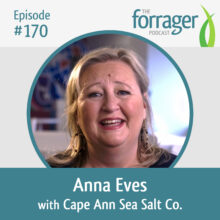
David Crabill: Welcome to The Forrager Podcast, where I talk with cottage food entrepreneurs about their strategies for running a food business from home. I’m David Crabill, and today I’m talking with Anna Eves. But first, we need to talk about email and especially email marketing. If you’re not sending emails to your customers on a consistent basis, then I think you’re missing a big opportunity for sales.
I really love using Kit to manage email for my fudge business, and they now have the best free tier that I have ever seen in an email marketing platform, which allows you to send emails to up to 10,000 subscribers for free. So if you still haven’t hopped on the email marketing bandwagon, now is a great time to do so. To get started and learn more, you can watch my free email marketing tutorial at forrager.com/email.
All right, so I have Anna on the show today. She lives in Cape Ann, Massachusetts, and sells sea salt with her home food business, Cape Ann Sea Salt Company. Anna has long had a fascination with making sea salt, and when the pandemic hit in 2020, she turned her hobby into a business. She started selling at her local farmers market and her business quickly grew.
She has now expanded into many wholesale locations, and as of last year, started focusing on this business full time. Anna’s product is very unique and therefore the challenges she’s faced have been quite unique as well. In this episode, you’ll see many of the smart decisions she made that helped turn this opportunity into a big success.
And with that, let’s jump right into this episode
Welcome to the show, Anna. Nice to have you here
Anna Eves: Well, thanks for having me, David. I’m happy to be here
David Crabill: All right, Anna, can you take me back? How did this all get started for you?
Anna Eves: Oh, this all got started quite a long time ago. I grew up like most of us, you know, uh, uh, familiar with Morton’s Salt. That’s all I knew. I was on a trip to Paris and, uh, we needed some salt for our, our picnic. So I went into a store and the woman handed me this jar, uh, a glass jar of some very strange looking salt.
It was French gray salt, and if people aren’t familiar with how that looks, it looks a little grainy, it’s gray, and it’s a little wet. So I didn’t wanna say anything, so I took it. We had our picnic and I was blown away by the taste of the salt. I mean, I… Like I said, I grew up with Morton’s Salt like a lot of us, and so the taste of real good sea salt was a revelation.
Uh, so I moved to Rockport, Massachusetts on the coast. Um, later on had [00:03:00] kids and everything. You know, we made salt a few times with the kids, but it was just always an obsession that I had. I feel like we all have that thing that we sort of doom scroll, v- you know, videos and things like that. Like, my husband wants to do like, you know, kit cars and these, you know, scrolling Mustangs and stuff.
For me, it was salt making. So I would like, just wa- watching video after video after video and, um, COVID hit in 2020 and, uh, I saw my chance. I– We didn’t know what was happening or if our other business was going to thrive and survive. So I told my husband, I said, “I have an idea. Go get a bucket.” So in the end of March, in the cold Atlantic, he went in and got a bucket of water.
We built evaporator tables and we started making sea salt and I decided y- I was gonna launch a sea salt company, so that was at the end of March. By July, I was selling at our local farmers market. I had all my permits and did all my, all my stuff, and, uh, launched in July of 2020 at the Rockport Farmers Market
David Crabill: Okay, so you said this is in March of 2020, so obviously right at the beginning of the pandemic. So was this correlated to the pandemic in any way, or was that a coincidence?
Anna Eves: Oh, absolutely, yes.
I mean, we, um, have a fine art printing company, Cape Ann Giclee, in, in Gloucester, and we had no idea the governor shut the state down. We were like, “What’s gonna happen?” So I think at times of panic and things like that, I like to create something. So I, I think creating, uh, a new company was also, um, a way to deal with the pandemic.
It gave me something positive to focus on and to do and put my energy into.
David Crabill: Yeah, ’cause you said this is not your first business, right?
Anna Eves: Correct. It’s my first food business. It is not my first business. I’ve been in the taxi business, insurance, fine art printing, things like that, yes, but it’s my first food business
David Crabill: So have you always been an entrepreneur?
Anna Eves: I have, yes. Uh, I’ve had two j- two employed jobs my entire adult life. mostly it started because of necessity. My have a– My oldest son has Down syndrome, and he had health issues, and there was no Family Medical Leave Act when he was young. So I had to, uh, you know, work on my own in order to be able to also care for him and earn a, a living
David Crabill: So is this something that comes from your parents? Did you have to, like, learn entrepreneurship on the fly?
Anna Eves: I definitely
I definitely had to learn it. My parents were not self-employed [00:06:00] at all. Um, so it was definitely a learning experience in many ways, yes
David Crabill: So, having done a lot of entrepreneurship, having many businesses, what do you feel like you knew coming into this business that kinda gave you a leg up?
Anna Eves: Well, I think I knew, you know, how to structure a business. I know– I knew, you know, you need the permits, you need a business structure, you need, you know, insurance, all of those kinds of things. but I, I think, you know, it was just, having the experience of also how to market a product, how to do packaging, and the labels and those kinds of things was really helpful to do a, like a, you know, present the, the salt. Although the first, uh, farmers market and display was very, uh, rudimentary and, and not very fancy.
Our packaging has [00:07:00] remained the same since the beginning, um, of when I launched the, the company. The labels are still the same. The packaging is still the same. S- And people really comment favorably on our graphics and packaging, so that was good. Right out of the gate, we got it right. So that’s I think that, that is due to experience.
David Crabill: Yeah, that definitely stood out to me. I mean, your branding stands out, would stand out to anyone as being super professional. I mean, I know you have like a fine art printing company, right? So the– You have some, some design background, I’d imagine. But, you know, like the fact that it was that way on day one is really significant.
You haven’t needed to change it. I mean, the product, I know you’ve expanded, but the product looks exactly the same, right? So you maybe had a simpler setup, but the product itself has looked extremely professional from day one
Anna Eves: Thank you. And I th- I… That is due to, I think, prior business experience and [00:08:00] having, um, companies and having to market and present those companies to customers
David Crabill: know, I thought it was funny ’cause, you know, you, you literally started this business by hauling buckets out of the ocean, right? And that’s kinda like a business metaphor, like, you know, don’t haul buckets, build pipelines, right? But you, you had to start it by, by hauling buckets.
Anna Eves: Absolutely. Yeah. Absolutely
David Crabill: But did you have experience making salt before this? Was this something like there was a
Anna Eves: Oh, yes. Yes. No, I did have– I, yeah, I had experience, before that as well, not as a business, just as a, you know, we live in Rockport, isn’t it fun to, you know, make salt and, you know, use it and things like that. Um, but not at, on the scale of a business. And I did know too that I wanted to do a solar evaporation process because if anybody has ever tried to make sea salt, uh, it’s very fossil fuel intensive.
Um, like [00:09:00] I don’t like to leave a room without shutting the light off and just having like water boiling, boiling, boiling. Um, I was like, “Wow, this is not, this is not great.” Um, I think that’s where my YouTube obsession about watching sea salt videos came from, ’cause I was like, there’s– you know. I mean, we’ve been making sea salt for centuries in, you know, open air salt beds.
Um, you know, there’s gotta be a way for me to do it without boiling water and using all these fossil fuels, which doesn’t make any sense to me, um, in, in terms of my personal beliefs, um, to take ocean water that we’ve all worked really hard to keep clean and, you know, pass all these regulations so that people like me can make sea salt from it, and then to pollute the environment by using fossil fuels to make sea salt just, um, seems a little strange.
So I definitely knew I wanted to do a solar evaporation process.
David Crabill: Yeah, I mean, that [00:10:00] adds complexity too though. I mean, obviously you’re getting the, the seawater for free. You are, you know, using the sun to evaporate it. That’s free. Um, but, uh, it takes a lot more time,
Anna Eves: does. It’s, it’s time and unpredictability. Um, you know, we don’t know what the weather’s gonna do. So I call it the salt farm, because it, it, it is more akin to farming than anything, um, because you are at the whim of Mother Nature. Like this past winter was great for sea salt making because it was really cold, and when it’s cold you can skim the ice off the top, um, to help concentrate the brine.
The winter before was horrible for sea salt making because it was very mild and wet. summertime is obviously a good time unless it’s a very rainy summer. it’s definitely more challenging in some ways because it’s more unpredictable. So that’s been really the greatest challenge of running this business is [00:11:00] expanding and, and having enough, um, you know, greenhouses and a place to, to evaporate so that when the weather turns, um, I have enough supply.
And we’ve pretty much gotten there, though I would like to expand some more. Um, there’s always room for more for, you know, for me.
David Crabill: Yeah, I know it’s complicated, right? ‘Cause you got a significant lead time between when you actually pull the ocean water out and then when you actually have a finished product ready to sell. And I know it depends on the time of year and the weather and everything, but generally speaking, how long is it taking for you to go from ocean water to, you know, salt in a bottle?
Anna Eves: so in the summertime it can be anywhere from five to seven weeks. In the wintertime it’s about six to 10 weeks. Um, so that is definitely a challenge. There’s been times where, you know, it’s been a nail-biter. [00:12:00] You know, I’m checking the greenhouses every day like, “Come on, come on.” Like, “Let’s go.” But, um, so far it’s worked out.
We’ve had a few times where we did run out of, we did sell out of s- of salt. Um, so that’s a definitely a consideration, and we’re trying to fix that by adding more greenhouses and, and having more capacity. I started with 50 gallons. We’re now up to 450, and hope to be at 800 by the end of the summer.
David Crabill: Yeah, so what are the, the limits? You know, like, do you have a limit of table size? You know, like how many gallons it can hold, or you have a limitation on greenhouses? Like what, what is the limiting factor in your business right now?
Anna Eves: Right now it’s greenhouses. Uh, I have room to put more greenhouses up, so hopefully we will, uh, when I say we, my son also, my son and my husband help me out. So hopefully we’ll remedy some of that this [00:13:00] summer, um, because I do have, I, I can about double what I have right now. Um, and hoping to get that done this summer so that we can increase production.
That’s always, that’s always the been the problem, and it’s still the problem. It’s really the only problem with, um, this business is, uh, h- increasing production. I sell everything that I make. Um, there’s no, like, sea salt from two years ago lying around. It’s all out there in people’s hands. Hopefully they’re enjoying them. So that’s really the biggest issue
David Crabill: Well, it’s a good problem to have.
Anna Eves: It is, I, I, yeah, it is a good problem to have. It’s, nice to create a product that people really like and, uh, use a lot, so
David Crabill: So did this business come out of the pandemic? Like, if it weren’t for the t- pandemic, would you have the business today?
Anna Eves: You know, that’s a good question. I’m [00:14:00] not sure. I think it was always something that I wanted to do, uh, so I’m hoping that I would’ve found time to do it. But I think, you know, it was definitely, you know, spurred me on to, to create something,
David Crabill: So I mean, you started this kind of when the pandemic, everything was shutting down. You obviously had to wait for the salt to actually, you know, uh, dry and cure and get ready, and then you said it was around July that you went into your first farmers market. So how did that go?
Anna Eves: It went really well actually. We borrowed a tent. You know, I had a, a table, um, a folding table that we had in the garage and threw a tablecloth over it. We did have, um, a display that we made with like wooden crates and, um, we printed out some stuff. So it actually, it looked, you know, it looked okay. And, uh, we got the word out that we [00:15:00] were gonna be…
We have a fantastic podcast in Gloucester called Good Morning Gloucester, and my husband’s actually a contributor to it. And, um, they got the word out for us. We, we, you know, they, they said, “Go to the farmers market. You know, Anna and James have started this new business and go check it out.” So we pretty much almost sold out that first farmers market.
David Crabill: So, uh, I mean, you, um, borrowed a tent, right? You, you got free, free saltwater. I don’t know if you had the greenhouse already. Obviously, you had this printing business, so you’re able to print some banners or whatever for I imagine very low cost. So what would you say was your initial investment to get the business actually off the ground?
Anna Eves: ‘ So we did, we did build evaporator tables, so they were like sort of like individual tables. we had like 10 of those, and, that was the biggest cost. So it was like the buckets, the packaging, [00:16:00] um, the, you know, the permits, the ServSafe, the, you know, all the Board of Health inspection, like all of those things were, you know, the cost.
But we– It, it was about $1,200 total to start the business, which b- and it wa- it was also one of those things like, okay, it’s COVID, we don’t know what’s gonna happen, so, you know, my parameters were you can’t throw a lot of money at this. It’s g- you know, it’s gotta be a minimal investment, and then it’s gotta work.
David Crabill: Yeah. And I was thinking this is a very unique business. I mean, I haven’t seen a business quite like it before, and a lot of people would not be able to start the business. For one, obviously, you live like 1,000 feet away from the ocean, right? So you can get seawater pretty easily. And then also you need to have land for the greenhouses, , , right?
So, you were well set up for this business, but it probably wouldn’t work for just anyone, right?
Anna Eves: Correct. Yeah. I, I, it definitely, th- those are definitely factors that, that affect it. [00:17:00] Um, I know, you know, there’s, there’s salt makers who use the boil method who in a commercial kitchen, you know, ha- um, boil saltwater and make salt that way, um, you know, if they don’t have land. We- I’m fortunate that I do have, um, a larger property than most, and I’m able to put greenhouses up and, and, and do that, and also live by the ocean.
So yeah,
David Crabill: are there any unique challenges about getting ocean water? ‘Cause I mean, obviously it’s free to get ocean water, but also, I mean, you know, ocean water, I, I’m sure there’s some cleanliness there, but obviously there lives a lot of animals living in it, right? So like what do you have to do to make sure it’s actually like food safe or whatever?
Anna Eves: So I work with the state and also, um, like I, I never harvest salt within… I mean, water uh, within, like three days of a rain. And if it’s a really torrential, you know, a lot of rain, [00:18:00] I’ll wait longer. if there’s red tide anywhere on Cape Ann, I won’t harvest water. Um, I sh- call the shellfish constable’s hotline before I go and, and harvest water.
I have specific places that the state has said, “This is, you know, where you can take water from.” And then I also double filter it through, um, one micron filters. Um, so it’s filtered when it go- because now we’re not doing buckets anymore. We’re, we’ve got a pump and we’ve got a, a tank, um, that we put on a trailer, and, um, so it’s filtered when we take the water from the location, and then it’s filtered again when it goes into the greenhouses.
Um, people ask me a lot of the time like, “Oh, doesn’t that, isn’t that a smelly thing?” Like you’re, you’ve got all this seawater and n- no, because we filter out anything that would cause the, like, you know, any little, any little critters, um, and, you know, seaweed and things like that gets, that [00:19:00] gets filtered out and that’s what causes, you know, the odor.
I’ve had people tell me like, “Oh, I’ve tri- I tried to make sea salt but all I ended up was like a bucket of green slime.” I was like, “Yeah, you… That’s, you didn’t do it right.” I mean, there’s, it’s, it’s one of those things that it’s really easy to do, but then there are nuances to it that make it more challenging to do than just getting a bucket and, you know, letting it sit out in the, you know, putting it in a bin and letting it sit out in the sun.
Um, there are, there are things that you need to, to know, like all of our, our hoses, you know, everything that we use is food safe. It all has to be food safe.
Actually, it’s funny, the, Board of Health guy in Rockport lives right next door to me. He’s my neighbor. So he’ll, you know, “Hey, I’m gonna pop over at noon.” “Yeah, come on over.” So he sees like the greenhouses and everything. I was at a farmers market, and this woman was like, “Well, like, where do you get your water from?
Is this [00:20:00] okay?” And he was standing right there. He was buying some salt. And, um, I said, “Well, the Board of Health guy is standing right next to you, you know, and he’s my neighbor, so, you know, ask him about it.” And he just went, he went– like gave the sign of the cross over my salt, like, “I sanction this sea salt.
It is fine.”
I think that’s sometimes the thing that people are like, “Well, you know, is this okay?” And I’ll be like, “Where do you think sea salt comes from?”
Like It comes from the ocean. And I’m filtering it. Like, if you buy French gray salt or, you know, Sicilian, um, sea– It’s not filtered. It just comes into the salt bed and, you know, that’s not filtered. So anyway,
David Crabill: right.
So, um, you know, you, you go through the process of making the salt, and then I know at the first market you also had, like, flavors. I’d imagine you were selling pure sea salt, right? But you… And you do flavors. Like, that’s a big part of your [00:21:00] business, right? So what did you bring to the first market?
Anna Eves: The first market was the pure lemon and herbs de Provence. and now I have a lot more so- flavors because it’s so much fun to make flavors. That’s one of my favorite things to do is to come up with new flavors and, you know, and, and see how people like them. And some of them have sort of faded away.
You know, some are, you know, not as popular as others, but still, it, it’s just, it’s fun to have a variety.
David Crabill: So what are your most popular flavors?
Anna Eves: The most popular are probably the, uh, pure, Herbes de Provence, rosemary black pepper. Uh, I have a dipping blend, which is herb-heavy. Um, uh, that’s really popular. and the dried chili are probably my top sellers, and that’s sort of the, the regular flavors.
And then I [00:22:00] have some very different flavors, um, like an edible flower flavor, um, a Merlot wine flavor, um, coffee, garam masala. Uh, I make a sweet and salty one with granulated maple syrup and vanilla powder. So there’s all different ki- you know, all different kinds of salts. Um, mostly people buy the, the regular ones, but there’s, you know, adventurous people who like to try the other ones, and regular customers who also like, “Oh, this is new,” and, you know, want to try it out, so.
David Crabill: Yeah, I, I saw you have your, like, flavor sheet where you have recommendations, right? For, like, how people use the salt. I, I mean, ’cause a lot of people probably haven’t seen flavored salt or at least these flavors of salt around before, right? So you kinda have to guide them
Anna Eves: Yes, and I’m gonna actually have to redo that [00:23:00] graphic and add a bunch more to it. And I’m also working on, uh, recipes for the website as well. So there are some… The, the, our packaging hasn’t changed, and unfortunate- which is good because people like it, but unfortunately our website hasn’t changed, and it needs to.
So this year the website will, will be getting upgraded to include like recipes and, um, more things like that to help people figure out how to use the sea salt.
David Crabill: all these different flavors, and as you said, your packaging hasn’t changed. So what sizes do you have?
Like, what, what do you sell in terms of, like, quantity for the salts?
Anna Eves: Oh, oh, I mean, I have them right here. Do you wanna see them?
David Crabill: That’d be awesome, yeah
Anna Eves: So this is the largest one. This is a three-ounce jar. That is the pure salt, and then it, it says on the top of it, it says pure. So, um, that’s the three-ounce [00:24:00] size. And then this is, this is a rosemary black pepper, and this is the… I’m trying to get it on the camera.
There we go. That’s the two-ounce size, and then it says rosemary black pepper on top. So we distinct, like, so with the f- the flavored salts, like, the pure just has that kind of a label. And then the
rosemary black pepper, we add a band and then a little dot at the top. And then this is a new flavor. This is the Thai Fire.
This is a one-ounce jar of sea salt. So those are the… And then I, I do have, um, salt flights, um, with… So it comes with, like, four one-ounce jars, and we have a hot flight with our spicy salts and then a classic one with four of our most popular sea salts in it. And that’s pretty much it. I do have, um, also I sell, I don’t have a sample, I have little pocket salts.
Um, those are half-ounce containers [00:25:00] because I take my sea salt with me wherever I go. If I go to a restaurant, I have my salt with me so I don’t have to use their table salt which is probably Morton’s or something like that. So, and, uh, so I was, I had this once in my purse and that didn’t end well. So I started carrying my own salts in these pocket salts and then somebody said, “Oh, you should sell those.”
So I have pocket salts as well
David Crabill: So that’s interesting. You, you literally don’t eat any other salt, right? Other than the salt you create. Is that
Anna Eves: No, I mean, unless, I mean, if it’s already in the food,
yeah. But no, I don’t use any other salt besides my own sea salt. I mean, I do u- like I’ll buy some, like I use the, like, you know, um, interesting salts from other places just to like ta- taste them and, and, and see what they’re like. But generally speaking, yeah, this is the only salt that I use
David Crabill: have you found some customers [00:26:00] are coming like that too? Like they’re like, “This is the only salt I’ll ever use now”?
Anna Eves: Yes, definitely. Um, I think– And I think there’s been a, a shift in people’s understanding of sea salt. I think it was one of those, um, you know, everybody knows where– Or not everybody, but people try to know, like, where their tomatoes come from, where their– Even n- like you have locally grown beef and, and all those kinds of things.
And I think now it’s, you know, like, “Oh, I can have local salt as well.” So I think people are, are shifting that and also understanding that salt has a, has different ways of, of being made and that natural sea salt contains, you know, potassium and chloride and, and magnesium and all of those kinds of things where, you know, like a, a, a different kind of salt is, um, you know, more mass-produced commercially, you know, produced sea salt.
Actually, a lot [00:27:00] of that, the, those minerals are stripped out through a, a, you know, reverse osmosis process and, um, you know, anticaking agents are added and things like that. So I think that people are becoming more aware of sea salt and, and, you know, the, the benefits of using sea salt.
David Crabill: does the fact that your salts don’t have any anticaking agents in them cause them to, like, bind up over time? Do, do they have a shorter shelf life?
Anna Eves: They… No, uh, the shelf life is not shorter, but like today we’re having a very hot day here in Massachusetts. If you leave your jar open and it’s hot and humid outside, it attracts water. So, it might get a little soupy, but there is a, a remedy for that.
I always tell people, like, if your salt gets a little, like you left the top off, and it gets a little wet and clumpy, you know, if you bake something in the oven, you know, put the, your [00:28:00] salt that’s a little, you know, into like a glass dish and when you pull, you know, when you, when you shut the oven off, you’re done cooking, put that glass dish into the oven and let it sit and it’ll, you know, it’ll get rid of the water and, and you’ll have, you know, a drier salt again.
So, yeah.
David Crabill: cause I know your salt’s not actually dry, right? That’s, that’s something very unique and, and it was surprising to me ’cause we’re all used to, you know, completely dry salt. Um, is that something that’s surprising to your customers
Anna Eves: some of them, yes. If they’re not familiar with solar dried sea salts, because it’s not just my salt, it’s solar dried natural sea salts have more, um, water in them. It, you know, if you buy a bottle of French gray salt, you know, and it’s, it’s gonna have like, you’re gonna see that there’s more moisture in it.
Um, so yeah, some people are, are, are a little surprised by it, but, um, it, [00:29:00] that’s just one of the things. It, it is a natural solar dried sea salt, and it’s going to have more moisture to it
David Crabill: Now, you had mentioned that people are, you know, becoming more aware of, like, where things come from, like maybe even where their salt comes from in this case. Um, I also know, like, people are definitely becoming more aware of, like, sodium content, right? Like, I don’t have to tell you this. Like, people are becoming more cognizant of how much sodium they’re, they’re intaking.
Has that been an issue at all? Because I… You know, generally speaking, you hear people that are wanting to reduce their sodium in their lives,
Anna Eves: Yeah, absolutely. Well, so I, I mean, I can’t reduce the sodium in, in the sea salt. That’s just not in my purview. But what I tell people is if you want to reduce your sodium, actually a, a all-natural sea salt used as a finishing salt is perfect. Like, you know, don’t, don’t use processed foods or, or things, [00:30:00] you know, use fresh, natural ingredients and then put this on top before you eat it, and you’ll get that salty kick that you want without adding a lot of salt to your food.
Um, you know, if you’re using a lot of processed, packaged foods, you’re gonna get a lot of sodium that you don’t need or, you know, or want. Um, so that’s a great way to reduce so- sodium is actually to, you know, use whole, natural ingredients and then use a natural sea salt as a finishing salt
David Crabill: So what I’m gathering here is that your salt, a little goes a long way,
Anna Eves: Definitely, yes. Uh, it d- and, and it actually does, like, people, you know, are like, “Oh, this is a little jar that, you know…” It l- it’ll last you, like, quite a while because you don’t have to add a lot of the salt to m- to make the, your food taste good.
David Crabill: I mean, that’s almost, like, necessary, right? Because your pricing, I, uh, the, the salt’s not cheap, right? And it shouldn’t be ’cause it takes a long time to [00:31:00] produce. But, um, you know, I, I notice that, you know, they’re they’re not cheap salts, especially if you’re comparing them to Morton’s. So, um, so what- where are your prices at?
Like, what, what do you sell
Anna Eves: So my, my… Well, so the one ounce is $10, the two ounce is $15, and the three ounce is $25, and that’s for all the flavors. I don’t make any of the flavors more expensive than others. And I mean, generally speaking, I got my pricing from c- you know, competitive companies who do, are doing the same thing as I’m doing.
We’re all pretty much priced around the same amount, um, for the sea salts. So mine’s about average for a solar-dried artisanal sea salt. And I… You know, it’s funny, I actually thought I would get more pushback on the price, but I don’t get, uh, um, very much [00:32:00] pushback on my pricing at all. So, and I have repeat customers and, and things like that.
So, um, I think we’re positioned pretty well, especially for the amount of time and labor that it takes to, to make it
David Crabill: Yeah, so, uh, if you’re paying attention there, right, you sell one ounce for $10, and then a second ounce, you know, two ounce jar would be an extra $5, but then going up to three ounces, you’re adding another $10, right? So
Anna Eves: Yes. Be- and that has to do with packaging. So people love the cute little jars. You know, they buy these as gifts, stocking stuffers. I do weddings, things like that. And then this is the, you know, this is sort of the plain Jane workhorse
jar of the, the two ounce. And, and I do, and I tell people, you know, when they ask for pricing, I said, “This is your, the best buy.”
Um, you know, the two ounces for 15. And then when I sell this jar to my [00:33:00] customers directly, um, the three ounce, so it’s a cute little jar, and it comes with, um, a bag, a m- um, a muslin bag and a wooden spoon, and, um, you know, so it’s, it’s a bit of a fancier, like, you know, people like to put this on their counter kind of a, a jar.
So that’s basically where the, the pricing came from is, you know, price per ounce, but then also packaging, um, makes a difference
David Crabill: I’d also imagine that $25 3-ounce jar is your, like, gift item, right? If people are buying it to give to someone else
Anna Eves: They do. They buy that a lot to give to other people. They also buy it a lot for themselves. Um, and some of my regular customers ask for… They’re like, “Are you gonna come out with a larger jar than, than this one?” You know. So, um, yeah, it makes… I mean, people use it for themselves and then, you know, as a gift.
So they’ll buy one for themselves and buy one as a [00:34:00] gift kind of a, kind of a thing. But yeah, it’s, um… I mean, I like this three ounce. I think the three ounce jar is really cute
David Crabill: It, it, it looks amazing. Now, obviously, uh, glass, a lot more expensive than plastic for
Anna Eves: Yes, it is. It absolutely it is.
David Crabill: decision
Anna Eves: Um, because I, I like all of my packaging to be reusable or recyclable. Again, you know, it, it harks back to that whole, you know, not using fossil fuels, um, choice. Um, because, I mean, we’re trying to keep plastic out of the ocean. I don’t- I’m not trying to get a bunch of, you know, plastic jars out in the world.
The only thing that I have is this. This is a plastic top because I tried the metal, um, before I started selling it, and, uh, three weeks of a metal jar on this, and the, it, the top wasn’t looking so good. It wasn’t… Like, it, when I [00:35:00] hand it to a customer, it would’ve looked great, but three weeks later, um, you know, the rust and things like that was not a good look. So that does have a plastic top on it.
But the gla- and
for a lot of my customers, too, a deciding factor in buying from me is because it’s in glass jars. They like that. They recognize that it’s not a plastic jar, and they do appreciate that
David Crabill: I mean, it also positions yourself as a premium brand, right? I mean, you know, it, it looks nicer, it feels nicer, um, and so you’re able to attain that, you know, $10 for a one ounce price point. And you also, interestingly, you know, your pricing has not changed since day one, right? So, you know, obviously we’ve had a lot of inflation over the past six years.
So, uh, why have you decided to keep your pricing the same?
Anna Eves: Well, actually my, um, my jar pricing has not gone up in six years. I’ve actually managed also to get some of my [00:36:00] pricing on my jars down a little bit, um, over the past couple years. You know, different supplier or, or, um, things like that, and also just buying, um, buying more in bulk. Um, so I’m not, I’m not s- I haven’t seen a huge increase in the, the price for the, for the jars and things like that,
David Crabill: You did say that you sell out, right? And you’ve sold out of everything you make, so do you feel like there’s room to increase the price further?
Anna Eves: I don’t think it’s necessary, and I think that, you know, I have a, I have loyal customers, and I really like my loyal customers, and th- whether that’s, you know, individual customers who buy directly from me or the stores that carry my salt for wholesale and then sell it to their customers.
Um, I’m not, I, I don’t see a price increase coming, uh, anywhere in the near future, unless, you know, the price of jars doubles or, or something. But, [00:37:00] uh, I don’t really, I don’t see that happening.
David Crabill: Yeah.
So I know you started at the market, right? The farmers market, and this is a new product for a lot of people, right? So how… Like, I, I imagine you did samples, right? Do you just sample it directly?
Do you sample it with anything?
Anna Eves: So that’s a challenge. So, um, you know, sampling sea salt is very, very challenging. Um, in the beginning, actually during COVID, there was… You couldn’t do samples. Um, so maybe that was a saving grace. But, um, because that, that is one of my challenges. I actually, last year or the year… I t- I started doing, um, caramel popcorn, ’cause I make a really good all-natural gourmet caramel popcorn.
And I don’t sell it, but I thought, “Well, that’s great. I can put the sea salt on and they can try it.” Well, people are like, “Where do you sell the popcorn?” Like, “Are you selling the popcorn?” “No, I’m not selling the popcorn.” “Oh, you should sell the popcorn.” So that became very distracting. Um, sometimes I’ll [00:38:00] make crackers, like homemade crackers, like especially with the Herbes de Provence or the rosemary black pepper.
Um, my dipping blend is easy because I can just do oil and bread, and people can sample that. Um, but it, that, that’s a challenge for, for a sea salt. When I did the hot sauce festival, it was easy because people were looking to, like, have something spicy to, to eat, so they didn’t mind just samp- Like, we were just giving out samples of the plain, you know, of the sea salt, and they were tasting that directly.
So you can do that, but that can be also a turnoff because some, uh, because it’s salt. Like, you know, if you put a bunch of salt in your mouth, I don’t care how good it is or what you flavored it with, it’s, it’s gonna be a shock to your palate. So it’s not always like a, it’s not always a great thing to, like, just hand out the salt.
But yeah, sa- sampling is, is definitely a challenge
David Crabill: So [00:39:00] why didn’t you go in the direction of people asking you for selling popcorn or maybe selling your crackers? I don’t know. But like, why have you decided to stay the course and not deviate off of, you know, adding more product, especially since it’s the audience saw, you would think that adding products might be a good
Anna Eves: Yeah. I’m not opposed to adding more product. Actually, I’m working on, right now I’m working on a hydration, um, powder using my sea salt. So it’s, um… And, and that’s actually, I’ve actually had a few customers tell me like, “Oh, you should make like, you know, a, a, a hydration powder, um, using the sea salt.” So I’m actually formulating one right now.
Um, we’re taste testing it. So I’m not opposed to adding, um, more products. Um, but I, I think if I were add- adding product, it would be more like products that I could use a co-packer for, because the sea salt keeps me busy enough. [00:40:00] Popcorn is great, but in order to do it, like, on any kind of scale, you need like, you know, you need the machines and all sorts of stuff, to do it.
So, that’s really the issue for me is, the amount of resources and space that I have is a little bit limited in terms of like kitchen space and stuff, so.
David Crabill: Well, I, I see you do sell magnesium oil. That’s like a separate product, byproduct
Anna Eves: That i- that’s true. So the sea salt is so rich in minerals, m- magnesium, potassium chloride. So when I put the sea salt onto final screens to dry, the water that drips down is so rich in magnesium, it’s slippery. So magnesium oil isn’t actually an oil. I don’t want people to get scared like, “Oh my God, there’s oil in the…”
No, there’s no oil in the water. Um, it’s, it’s the high concentration of magnesium that makes the water feel slippery. That’s why they call it [00:41:00] magnesium oil. So I do sell that as a topical treatment for aches and pains, muscle cramps, restless legs, um, things like that. Um, ’cause it’s a really good… It’s like, you know, I always tell people it’s like, you know, how our, our, our, our grandmothers s- soak their feet in Epsom salts because it…
Or athletes get into an Epsom salt bath because the magnesium and the minerals help to soothe muscle pain. So the magnes- it’s like an Epsom salt bath in a jar that you can just, you know, put where it, um, where you’re having an ache and pain instead of getting into a whole Epsom salt bath
David Crabill: Was there anything That you had to do with the health department because this is now like a health product kind of thing?
Anna Eves: It’s not really a health product. We don’t tout any sort of like health benefits to it. Um, people who are basically familiar with magnesium oil will buy the magnesium oil from me. Um, but we don’t make [00:42:00] any claims as to, you know, what, um, you know, like if somebody says like, “Oh, you know, will this work on my knee?”
And I’ll say, “Here, try it.” Like I’m not saying, “Oh yeah, that’ll help your knee.” But, um, so we don’t make any, any medical claims about that.
David Crabill: All right, so you started in the summer of 2020 at the farmers market, and then take me forward from there. Like, how has your business grown over the past few years?
Anna Eves: So yeah, so we started at the farmers market in Rockport, and like I said, we had about a 50-gallon capacity at that time, um, to, you know, to make sea salt. We’ve expanded that. Um, I was not wholesaling when I first started, so about two years in, I got my wholesale license from the state so that I could sell to stores.
So I retail to, uh, to stores [00:43:00] and, um, I also took a lot of, um, like accelerator programs. Um, I went to… I– A lot of people don’t know this, but Sam Adams Beer has an entire division of their company dedicated to helping, um, food and beverage entrepreneurs. It’s called Brewing the American Dream. And, um, I went to their first boot camp in, I think it was 2024.
Um, so they help you with marketing and things like that. And, um, I also did Santander has a program called Cultivate Small Business, which is basically like a program where you write a business plan for your food business, and you go through all of the, the different things. So I think doing those things, um, helped to professionalize my, you know, my business so that, uh, you know, people– you want people to take you seriously.
You’re going to a [00:44:00] store and saying, “Hey, you know, you wanna carry my sea salt on your shelf.” You have to, you know, you have to know what you’re, you’re talking about. So, um, I think it’s just, you know, it’s grown. I’ve grown as a, a business person with the company as well. So I think those are the changes, you know, to the business over the last few years.
Adding more flavors too, obviously. Things like that.
David Crabill: That’s interesting. I mean, you, you have been an entrepreneur for the longest time, right? You have a very popular product, and your, your sales grew, like, 250% in 2021. Um, so what caused you to, like, actually go to a boot camp, right? ‘Cause I feel like a lot of people in your position would’ve been like, “Well, I’m doing pretty well. Like, I don’t necessarily need to, to go seek more training.”
Anna Eves: well, see, I’m of the mindset that you- there’s always something to learn. You can always learn something new. Um, and e- and, and in those spaces too, [00:45:00] it’s about, it’s not just about the program, it’s about i- interacting with the other food entrepreneurs. I mean, I love food people, so, you know, connecting with them.
Like, I have a chocolate maker in Rhode Island who uses my sea salt in her chocolates or, you know, we get ideas from each other. We help each other out. Um, so that’s a, a benefit of that as well. But I always think that there’s something… I still do, like, little, like, business seminars. Like, if there’s, you know, my local chamber or Center for Women & Enterprise or, or something like that has a webinar on something that, oh, I’m interested in that, or I think I need to get a little better at something, I, I, I’m up to, you know, to, to learning always.
I think you’re, you know, the, the minute you say like, “Oh, I know everything. I’m done,” like, I think you stagnate. So I think it’s, it’s, you know, having that drive to always learn something new helps keep the business fresh and, and moving forward.
David Crabill: [00:46:00] Yeah, it’s a very unique product. Uh, do you feel like you have any competition? Like, is– do you have competitors?
Anna Eves: There are actually more and more, um, solar salters popping up. Like there are, in Massachusetts there are four that I know of.
Um, in Maine there’s at least one, um, maybe two. There’s a guy in New Jersey, God bless him, um, he’s doing it. Um, South Carolina, Virginia, like, you know, there’s, there’s solar salters all, you know, all over the place
David Crabill: Well, still, I mean, this is like nothing. You know, you talk to a cookie person and they’ve got, you know, 100 or something in their local area, right? So
Anna Eves: Yes. So I am the only solar salter, the only salter on the North Shore of Boston, um, that I, that I know of. Um, so yeah, so it, it makes it a lot easier too when you have a unique product. Like, I [00:47:00] always feel bad for the cookie people ’cause they’re, you know, trying to get into a market and it’s like, “Well, we already have three cookie people,” you know.
But like, “Oh, I’ve got salt.” They’re like, “Oh yeah, come on in,” because, you know, they’re, they don’t have anybody else who’s making sea salt.
So yes, that makes it easier and, you know, directly, locally, there’s no other competition
David Crabill: I saw somewhere you said that you can’t be afraid to pivot in your business, and I, I thought that was interesting because I know that your product has pretty much stayed the same. You know, you’ve added flavors, but you’ve… it’s pretty much stayed the same since you started. So I was just wondering, like, how do you feel like you have pivoted, or what challenges do you feel like you’ve faced in your business over the past few years?
Anna Eves: Well, like I said, we started, so we started with these evaporator tables that we constructed, and I was like, “Yeah, we can’t, like we’re, we can’t grow with these, you know, these, these tables.” [00:48:00] Each one held, you know, about 10 to 12 gallons of water. Like, this is, you know. So that’s, you know, I made the move to, to greenhouses, and I wasn’t familiar with greenhouses, but now I am.
And, you know, so that was a pivot. We were… You know, we started out harvesting the water by hand with buckets. Now we have, you know, a pump and a tank. Um, I think you just have to be, flexible in your business
you know, I thought like, “Oh, I’m just gonna get customers from farmers markets.” You know? I didn’t really go into it expecting to wholesale. And then, you know, it was like, “Oh, okay.
Now I’m ready. I’m gonna, I am gonna wholesale. I’m gonna explore all of that and everything.” And that’s been a great pivot too to, to get the sea salt out there and, um, into stores and everything. So, you know, I think you just kinda keep, keep growing and, and keep going.
David Crabill: You know, it’s interesting. I mean, you know, your, your business has grown a lot. I know you [00:49:00] have this, like, printing business. I imagine you still have it. Um, did you expect the salt thing to be, like, totally a side project? Like, has it been taking over or, like, become bigger than you expected it to be?
Anna Eves: Well, I think I, you know, always went into it hoping to grow it, but I did, uh, in the last year I have pretty much left our, uh, our printing company and I’m doing this full time because it, it be- it did become too much to juggle both, you know, both businesses and sort of, uh, keep everything straight in my head.
So I am now concentrating full time on the Sea Salt, which is also another pivot too. You know, it, it was a little, um, scary for all of us for me to leave the printing business and to do this full time. But, uh, it’s been, um, it’s been more positive because now I can concentrate fully on growing this business.
David Crabill: Well, as you look ahead, [00:50:00] where would you like to see it grow? Like what, what are your goals?
Anna Eves: So, um, my goals are to continue to expand, which also may include, um, at some point renting some more land and things like that. Um, I’d love to have like a, a, a better, um, space f- um, for the business. Um, maybe that I could even do like, you know, farm to table dinners for people, like have chefs come in and use just all local ingredients and, and do some, uh, cooking for people like that.
Um, so just continuing to expand. Again, you know, the hydration powder, I’d like to continue, um, formulating that and get that out to people. Um, and that will be with a co-packer ’cause I don’t have the bandwidth to, um, do all that myself. But, you know… And may- who knows too, maybe finding a co-packer for some caramel popcorn using my sea salt.
[00:51:00] Um, I mean, there’s a lot of different directions that it can go in. Right now I am concentrating on, uh, uh, getting some more wholesale accounts. I’ve got some really good wholesale accounts and looking for more of those. Um, so I’m just sort of also letting, you know, seeing where it takes me, and again, not being afraid to pivot if, if an opportunity opens up somewhere, um, you know, taking that opportunity and just, you know, continuing on.
The most important thing to me is giving my customers a quality product that they enjoy and like and come back for. Because if people aren’t gonna come back for your product and they don’t like your product, you’re not gonna be able to, to grow and, and, and do anything. I mean, that’s sort of a… So that’s always where my focus is.
I’m always so appreciative, uh, when people buy the sea salt or they’ll, you know, come by and, “Oh, I used it on this and it was so good,” and you know, um, “I gave it to some friends and they love it.” [00:52:00] Um, you know, like I had this, I had this woman who, um, she was house-sitting in this house in Ohio and they had some of my sea salt in the house, and she used it.
And she actually called me up and she was like, she told me the story, like, “I was house-sitting and, you know, I wanna order your s- your sea salt.” And I said, “Sure, just, you know, go online and, and order some.” But… And she’s a, yeah, a repeat customer. But I just thought that was so, you know, so incredible where your, your stuff can end up too and, and how people, um, you know, it l- how they enjoy it and everything.
I mean, I, that’s, that’s really the base of my business is, you know, making a good salt, a good quality sea salt that people will enjoy. And I’m just gonna keep doing that and see where it takes me.
David Crabill: As you think back on the past few years, what has this business meant to you?
Anna Eves: Uh, it’s meant a lot because I feel [00:53:00] like it’s really like a passion project. It was something I was really, really passionate about personally, and it also embodies, um, you know, my personal beliefs about sustainability, you know, and, and things like that. Um, and, and, you know, meeting other food people, like, food people are awesome.
I don’t… You know, I don’t think there’s a, a funner business to be in than, like, food businesses. Like, people just wanna feed– Like, you know, we’re– We like to feed people. We like, we like to feed people good food. So, you know, to be surrounded by other food makers and getting to know people, that’s been a really, a really fun part of it.
I, I’ve really, uh, enjoyed that so much. And, you know, and, and then looking at the importance of, like, farmers’ markets as business incubators and, and having done some boot camps and stuff like that, like, you know, like, I’m always talking to other food [00:54:00] entrepreneurs, and we’re always helping each other out about things.
So I think that’s really, um, that’s been a lot of fun to, to be part of that whole food world. Um, it’s a really… It’s a great little niche to be in. Like, you know, it’s… I mean, if you’re, if you’re a angry person selling cookies, like, you’re probably not gonna… Like, you know, these food people are, like, generally, like, happy, nice people, like, putting out a product.
Sure, we get stressed and everything like that, but in the end, like, if we all got together and threw a party, there’d be really good food and, like, you know, it would be a good, good thing. So that’s been, um, that’s been one of the things that I didn’t realize too, like, that I would enjoy so much is, is interacting with other food people and being at farmers’ markets and interacting with customers who are looking for good products.
I’m on the board of my local farmers’ market, you know, helping that grow because I really do feel very strongly that [00:55:00] farmers’ markets are great incubators for small businesses. Um, you know, we all start at our, our kitchen tables, and then the next step is we try our local farmers’ market and see if our, our f- you know, our food is going to, to appeal to people there.
So, um, that’s been a, a really fun part of it, is just watching s- you know, small businesses around me thrive and my business thriving and, and getting to know, um, what everybody else is up to, ’cause it’s really cool stuff
David Crabill: Well, thank you so much, Anna. Now, if people would like to learn more about you, where can they find you or how can they reach out?
Anna Eves: Well, I’m on Facebook, Cape Ann Sea Salts, Instagram, Cape Ann Sea Salts, and then my website, capeannseasalt.com. So it’s, it’s pretty easy to, um, to find me. You can always email me at info@capeannseasalt if you have any questions and things like that. I’ve
David Crabill: Awesome. Well, thank you [00:56:00] so much for coming on the show and sharing with us today
Anna Eves: Well, thank you, David. I appreciate it
David Crabill: That wraps up another episode of the Forrager Podcast.
For more information about this episode, go to forrager.com/podcast/170.
And if you enjoyed this podcast episode, I have a favor to ask you. If you are watching this on YouTube, could you please subscribe to my channel and also like this video? And if you’re listening to this on a podcast player, if you could leave me a review on Apple Podcasts or a rating on Spotify, I’d really appreciate it, and it will help other people like you find this podcast.
And finally, if you’re thinking about selling your own homemade food, check out my mini course where I walk you through the steps you need to take to get a cottage food business off the ground. To get the course, go to cottagefoodcourse.com.
Thanks for listening, and I’ll see you in the next episode.