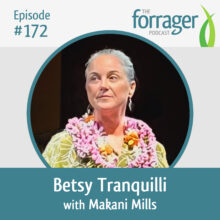
David Crabill: Welcome to the Forrager Podcast, where I talk with cottage food entrepreneurs about their strategies for running a food business from home. I’m David Crabill, and today I’m talking with Betsy Tranquilli. But real quick, I wanted to talk about your cottage food business website. I have researched all of the free website builders out there and found that the best one for most cottage food businesses is Square Online.
So I created a free tutorial that walks you through how to set up a nice and powerful e-commerce website for your co
ttage food business for free. Now, you might be thinking, “What’s the catch?” There isn’t one. Square Online is a really powerful tool that I personally use for my own fudge business. So if you wanna learn more, you can watch my free tutorial by going to forrager.com/website.
All right, so I have Betsy on the show today. She lives in Waimea, Hawaii, and sells sourdough bread and other baked goods with her cottage food business, Makani Mills. Betsy is extremely passionate about sourdough and is very unique in that she incorporates local plants from Hawaii into her baked goods.
She does weekly pre-orders and often sells out of certain items within one hour. Because she works full-time as a teacher, she has found a way to make her cottage bakery work around her busy schedule.
But it hasn’t been a straight path to get to this point. Betsy has had to find what works best for her, which often deviates from what other entrepreneurs might recommend. This episode is a good example that every cottage food business is different, and you need to find what works best for you, too. And with that, let’s jump right into this episode.
Welcome to the show, Betsy. Nice to have you here.
Betsy Tranquilli: Aloha. Nice to be here.
David Crabill: [00:02:00] Well, Betsy, I know you’ve been making bread for a long time. How did you get started on your bread-making journey?
Betsy Tranquilli: Oof. Um, uh, Someone gave me a starter for my birthday, and I always tease her that she ruined my life. Um, I, I, I d- I had to Google what is sourdough. Like, I, I had no, um, idea. And I think I baked for a good year of just not really understanding what was going on or what was at play. And, I actually joined Sourdough Geeks. That’s the first and probably only online group. It just, like, came up on my feed. Um, and that’s kind of where the shift happened, where I started becoming very curious about what was happening.
I’m a former journalist and, um, so the re- the, the curiosity and the research, um, capabilities that, like, I, I kind of come into anything with, [00:03:00] um, when- once that kicks into gear, I mean, everything else in the world kind of falls around me and I get very, very locked in and dedicated, um, to getting better at something.
Um, I love that process. I love the process, and I’m a teacher now, but I love the process of learning and I love the process of, um, developing skills over time. And what I love about sourdough, it’s kind of like a bottomless pit. You, you never get there. Um, and I love that.
David Crabill: Yeah, you know, I, I thought I saw that you do– did have big background in being an newspaper journalist, investigative journalism. You’re very passionate about that. Is that something you thought you were gonna do for the rest of your career?
Betsy Tranquilli: Oh, absolutely. Oh, absolutely. Absolutely. Um, it’s the only thing I ever wanted to do in my life. but
I had a good day when bad things happened to people. [00:04:00] That was a good day of, at work for me. So, like, you’d sit there with a police scanner on your desk, and you’d hear, uh, a code go off, and you’re, you know, “Oh, it’s a car accident. I hope it’s a rollover.” And it’s like that’s, that, that mentality over a while, that’s just the life you live in.
So you… There was just a moment of awareness for me, and it didn’t come till, like, I moved here. I got hired at a newspaper here, and then we had a major earthquake here. Um, in 2005, there was, um, a very large earthquake. Um, and I actually lost my home that I was in in it. I was, like, only one of a few places that were red-tagged on the island, where I, I could not live there anymore.
And it was a Sunday morning, and I was the Sunday reporter that day. Um, so I was up getting ready to go to work, and when the earthquake hit, and being from Connecticut, that is not an [00:05:00] experience that I was very familiar with. Um, but I, I just remember once it stopped, you know, and you run out of the house, I, I only grabbed my, my reporter’s pad.
And I just went out and started interviewing people, and then working the story all day long. And at some point, I stop back at my house, and I go walk in, and I’m like, “I, I can’t live here. There’s big holes in the ceiling, um, walls coming apart. Like, where am I sleeping tonight?” And that’s when I went to, finally got down to the, the newsroom, and everyone’s like, “Oh, my favorite mug fell off the wall,” and this and that.
“How’d you make out?” And I’m like, “I’m homeless.” Like, I don’t know where I’m going. Um, Red Cross ended up, um, putting me up for a little while. Um, I got money from FEMA, ’cause we just lost all of that. And that was, like, the big… That was the catalyst, I think, for me to be like, you know, [00:06:00] I, I, I need to move on.
And I didn’t know what I was moving on to, but, um, when you become the story, um, it, it just didn’t feel good on that side, and I just needed to, like, recalibrate from that point, and, you know, I, I, I do say though, like I wish, sometimes I wish I can go back to that work now, having the understanding of this place, um, and the connections to people here. I would be a very different reporter than when I first came. And, um, I think it’s important as a baker to establish your identity.
Um, who you are or actually who you want to become as a baker. Um, I think that part often is overlooked, and I think it’s really important to under- what kind of bread do you wanna make? What kind of baker do you wanna be? What kind of belief system do you wanna have? Um, and for me, early on [00:07:00] before I, I got into the business side of things, the, the thing that’s, the people that I were drawn to, the bakers that I were drawn to, were ones that, um, were very connected to their community, um, and utilizing local grains. Um, that’s the stuff that fascinated me and the people that were doing those kind of things. The problem is in Hawaii is that we don’t have a local grain economy.
we don’t grow wheat here. We won’t grow wheat here. Um, so as someone looking at what I do and someone that cares about this place, um, it did not sit right with me that 100% of my ingredients had to come from outside of here. And that just, that little bit for me is what sparked, um, what is still an ongoing journey to [00:08:00] learn about and utilize the things that have been sustaining people here for centuries and generations,
David Crabill: Yeah, so let’s get into that. Like, you know, you- you’re talking about being more connected to Hawaii and what grows there. So what have you done? I mean, we, it, we know wheat doesn’t grow there, right? So w- what are you actually using in your products that connects you to your culture?
Betsy Tranquilli: It, it, I, I really need to be clear about that. It, it is not my culture, and I understand that. And that understanding has actually been, um, really important to where I’ve– how this has evolved for me, because it’s coming from that lens of this is not my culture. Um, these plants, canoe plants in particular, um, kalo, um, ‘ uala, ulu, um, olena, these are, [00:09:00] these are crops that were brought over by the first Polynesian voyagers here.
Um, and this is still the staple part of a lot of people’s diets, but there’s also spiritual and cultural connections to these things. So as somebody that’s not of this place, and that it did not grow here, up here, and did not grow up eating these things or understanding the significance and the spiritual connections.
I mean, Hawaiians trace their origin story to the kalo plant, and it, it’s, it is that important to them. So for me, it’s, I di- I, I did not want to just take ingredients that I didn’t understand or have a cultural connection to and shove them in bread and sell it. That’s not what I was interested in.
So it wasn’t about just shoving things in. Um, I had to develop a relationship with this plant, these plants, these multiple plants.
And what’s happened [00:10:00] because of that is I’ve developed a relationship with this place, the ‘aina, the, the land, and the people that care for it, and the people that have those generational ties
Mm-hmm.
David Crabill: how important do you feel like that community connection has been to the success of your business?
Betsy Tranquilli: um, I tried early on, when you’re fumbling around with, um, your business and, uh, when you first start, um, I tried to do all of the things that we see people everywhere doing. I tried the markets and the special events and this, that, and the other. And, um, very quickly it realized, like, this didn’t fit with what I’m doing.
Um, the people that were coming into these events and markets weren’t who I envisioned my customers to be.
David Crabill: So are you [00:11:00] talking about tourists? Is it because they were tourists?
Betsy Tranquilli: Yeah. I mean, you know, I, there was one market I did, um, and there was a lot of, um, “What’s olena? What’s, um, you know, ulu?” And things like that. And, um, the person that was helping me was like, “Maybe we should use the English names on these.” And I was like, “Absolutely not. Absolutely not.” Like, it was grown here.
We use the name of this place ’cause it was grown here. And I was like, i- after that, I was like, you know, I pulled out for the rest of them, and I was just like, “You know what? This is, these, these are not my people.” This is not who, who I’m looking towards. And it’s, it’s interesting and scary if you’re looking at a business that isn’t catering to tourists in Hawaii.
Like, that’s just traditionally the path in order for you to be suc- successful. You’ve gotta cater to that market. Um, so I, I think for anybody out there, whether you’re in [00:12:00] Hawaii or not, I, I very early on was able to say no to things and not pursue paths that didn’t feel r- that they aligned with my mission and my vision for my business.
And I think we get so excited early on, and selling, and people are buying, and you want even more.
You know what I mean? You get very, very caught up and excited, and next thing you know, you’re taking on more orders than you have equipment for, and you’re doing markets and things that don’t… They, there’s, there’s no vision. You’re just doing, right? And, and for me, that’s, I’m playing the long game a little bit, and, um, which meant slow and controlled growth.
And it gave me the time to really allow who I am as a baker and who, what this business is to grow and become more [00:13:00] clear. Um, I, I didn’t get yanked around because I allowed things to progress at a slow rate intentionally. Um, and through that time, it’s allowed me to really come into myself and, and really clarify what I believe in.
And what I believe in is building community. And, and I have a business that, um, there are ways to, to engage in that, and that also means that my success will look different than what we traditionally see in cottage bakeries, I think. And I have to remind myself of that when I see people that are going out and doing, oh, they’re in this store now, and they’re at this market, and they’re this.
And I’m like, “I should’ve been doing that.” And I’m like What I come back to every time when my ego gets in the way is, that’s not your path. That’s not ever been what you’re trying to do. You keep doing what you, you believe is right [00:14:00] and, and the right things will happen, and the right experiences will, um, and opportunities will come your way.
Um, and my focus is, is building community and being a link in that food chain, um, between farmer and land and the people, um, in my community. Um, and, and that’s what I s- how can I use that to help support and build community, um, around these things?
David Crabill: Yeah, it’s kind of fascinating because, you know, you’re, you’re talking about your story, and you’re also maybe thinking about other cottage bakers, but, like, this actually, y- you’re kind of speaking to me personally because, um, I’ve had to do the same thing with Forrager. Um, i- in this, in this industry, in this world, like, you know, the money is in the commercial bakeries, right? Not in the cottage food startups. And so, you know, it probably would’ve been very much [00:15:00] easier for me to pursue a path where I’m supporting commercial businesses that have more money and have more spending power or whatever, but that’s not what I’m passionate about, right?
I’m passionate about supporting cottage food entrepreneurs, and, uh, so very in a similar way, I’ve had to kind of keep reminding myself to stay on the path, the path that, you know, where I’m passionate. Um, but it’s, it’s not always easy to do, right? Because, you know, you’re talking about the markets, and what you didn’t mention is that I know you were selling out at those markets, right?
I mean, it
would’ve been a financially very lucrative path for you to follow, correct?
Betsy Tranquilli: Oh, yeah. There are so many more financially lucrative paths. I mean, really, if finances were about it, I wouldn’t have been a journalist, I wouldn’t have been a teacher, and I certainly would not have been a baker. If, if, if my goal has ever been financial, I have picked… I’m very bad at picking occupations and professions for [00:16:00] that.
Um, but yeah, could I have done better? Um, you know what, though? Actually, being somebody that works two jobs, um, uh, I have a full-time job. This is not it, and my full-time job is teaching, which means I have a schedule that I’m not here 7:30 to 3:30, 4:00, Monday through Friday, and at a private school, too, where You know, you pulled all hours and to do all sorts of things.
Um, that shaped too, that slowed me down quite a bit too. I, I, I feel like maybe I’m portraying it as like this altruistic intention that I had, but some of it really revolved around how do I make this work with my job job? And, um, I don’t care how much bread I’m, I’m selling, it’s not gonna replace that work, um, anytime soon.
So that, [00:17:00] I don’t wanna sit at the farmers market on Saturday for eight hours after working all week with five-year-olds, you know? So that kind of put caps on things and really, um, structured it m- how I had to make decisions about just the little logistics of my business. H- you know, are you a bake stand?
Are you porch pickups? Are you pre-orders? Are you doing markets? Um, how are you structuring your menu? Things like all of that had to work around, um, and make sense for the work, my job job. So that for, that really… The, the kind of that foundational structural part of my business was shaped very much by that.
But there was benefits to a giving me the time and the space to make mistakes, um, which are inevitable when you start this business and you start [00:18:00] small and you don’t try and grow too fast. You can make your mistakes and, um, I’m very grateful to my early, my early customers, many of which are still with me.
But you know, um, that were getting phone calls like, “Can I bring you bread tomorrow?” Or like, “Could you… Like it’s not gonna be ready today.” Um, you know, I was able to make… I had the space and the freedom to make mistakes early on and I’m, I’m really grateful for that. Um, and I didn’t do a lot first. It was like two breads and that’s it.
Like I didn’t do cookies, I didn’t do any of the other stuff. It was simple and I’m also grateful for that. There’s a lot of decisions that were made, um, early on that I look back on that I’m incredibly grateful that, um, either had to be made um, b- you know, for one reason or another, or I just felt was [00:19:00] best at the time.
And, um, it, it allowed me the space and the time to buy equipment o- o- over time and save and add piece by piece by piece and, um- you know, learn and grow and develop, um, at a, at an appropriate pr- um, pace. And I, my prices reflect that, reflected that big time. Like, I wasn’t gonna charge people a premium for my learning experience, and I think that’s, um, an important consideration when you’re entering this space is, um, it’s, it’s…
You see what the market is out there, but, you know, at my experience, um, at the time that I started my business, should not demand market value, to be honest. Um, and so I priced my things accordingly, and, um, that also gave me room over time to, to go up from that [00:20:00] as, as my experience and the quality, um, started becoming, um, of a place that’s worth market value.
David Crabill: Do you feel like your prices are at the right price now? Because it looked a little bit low to me,
Betsy Tranquilli: I am low. I am low. And, um
Ah, I, I have a hard time with that one. Um, I am low. My most expensive bread is my Challah bread, um, because I literally make the flour from, by hand, you know? Um, and it’s time-consuming to do that work. Um, but I mean, that might… It’s $16. Like, that is, um
David Crabill: Which for Hawaii is very low, right? You
Betsy Tranquilli: Yeah, I think
you, you look around at prices everywhere, and I’m starting to be like, ” Man, like, you’re getting that much for bread in Idaho?
Like, holy cow.” Um, you know, my husband disagree- [00:21:00] my husband’s right with you. We, um, but I, I, I- it was really important to me that I had, um, high quality, good, um, products that are accessible.
So yeah, my plain sourdough’s like $12. Um, which, yeah, I agree, it is low for Hawaii. And I just actually recently went up to 12. Like, th- that’s like a month ago I went to that. Um, but, I’ve been in business for three years, and I would say to be fair that, um, most businesses in those early stages of building are… Most operate at a loss, right? You know, I’m still paying off certain pieces of equipment. So if you wanna talk about whether I’m, like, paying myself, like, I’m paying for equipment, and I, and I’m in a, a particular stage of growth right now where I [00:22:00] need bigger equipment.
Like, I need a bigger mixer. I need a bigger fridge. Um, I can’t… The opportunities are coming my way that do align with my vision, and I can’t take them right now because, um, I don’t have the equipment to allow it to be efficient as one person with a full-time job. Um, so not having certain pieces of equipment is not hou- adding hours to my work, it’s adding days.
David Crabill: Well, more importantly, right? if you had priced your products more accurately, right, then you maybe would have the money to pay for some of this equipment and take some of these opportunities that align with your vision, right?
Betsy Tranquilli: Maybe. Um, for sure, maybe. Um, but I don’t, you know, you can play that game too of I, it might have taken me on a different path. Um, I might have been able [00:23:00] to grow faster than I needed to grow and lose sight of my vision of what it is that I believe in and what I wanna do. Um, and so sometimes, like, slowing down is not always a bad thing, um, in, in business, and staying intentionally small for a little while is not such a bad thing.
Um, you know, I, I, I, I’ve just started, um, last month, I don’t know if you saw this too, like, I, I’m starting to do these, um, commu- what do we call, community Pilina days, where literally people are co- I’m, I work all week to bake and all this stuff, um, and invite the community in to basically barter, um, to drop things that they grow or make off and take things from, from what I make and build community that way.
[00:24:00] I mean, from a busi- I, I would argue from a, a business standpoint, it’s very good business because especially where understanding where you live and how people think and, and believe and, um, the belief system of people here in Hawaii is, um, to support each other. I mean, I, I, there’s so few places I’ve ever been in my life that, um, shows up for each other the way the people here do.
And so when they wanna support people that are showing up for the community, they really do. So yeah, you can look at this stuff right now with a very narrow lens and look at the numbers from a three, six-month period and being like, “Eh, you know, is this…” But you know it, like, the, the long-term growth from doing those things, um, are quite significant, and that’s always been, [00:25:00] um, how things have gone for me is, again, you do the right thing and you stay true to your mission, the right opportunities will come your way.
David Crabill: I, I…
You know, there’s no question that you’re very successful. I mean, and you have this amazing relationship with your community, and you sell a ton of bread.
I mean, it’s… I, I mean, do you… H- how much bread do you sell on a weekly basis? I know you make a lot of products
Betsy Tranquilli: right now, usually anywhere, yeah, I mean, 40 to 50 breads a week right now. Um, and I’m, again, strictly pre-order. Um, so I, it don’t… It’s not a farm stand. It’s not market. Um, I’m strictly… I make people jump through a lot of fricking hoops to get bread uh, you know?
So I’m so grateful. Like, you gotta go to a website at a certain time, you gotta click things, you’ve gotta, like, show up at a certain place at a certain time. Like, it’s a lot to get a [00:26:00] loaf of bread, you know? So the fact that, um, I’m doing that much at this point… And again, I started at eight. I started at eight when I started this business.
That’s how many breads I took orders for, and I wouldn’t take any more. Um, so, you know, three years, I’m at 40, 50. You know, when you look at that, again, when you back up and look at your business, um, in that way and you’re like, “Okay, well, I… If that trend of growth continues,” you know, anybody would be thrilled with that.
David Crabill: Well, and I, I know you do more than just breads,
Betsy Tranquilli: Now I do. Yeah, I do a lot more, but I, I also have, um, I’ve developed over time partnerships with, um, private chefs, things like that. Um, I, so I have that work also woven in where, you know, I, I get orders for them that I, that I [00:27:00] do on the side, um, that are outside of what my weekly pre-orders are.
I’ve just joined, um, a, a food hub for their online marketplace. I’m doing, through them, in fact I have this weekend doing it, um, I’m doing, um, 200 breads that go into food boxes for, um, their Farm to Family program that, um, reaches 200, um, food insecure families on island. They’ve never done bread before. Um, I, I, I have 100 breads to do this weekend and 100 breads to do next weekend after my orders go out.
So, um, you know, what I do in pre-orders these days isn’t my only business. Um, so I, I have a lot of kind of my hand in, um, a lot of different outside, um, accounts and things like that. And again, like I have opportunities to add more, but now we’re [00:28:00] running into a, we’re trying to sort out the equipment to allow that to happen, so
David Crabill: yeah.
Well, I mean, I know you have done these community events, like these trade and barter events, which is, you know, somewhat of a gift to the community. Um, also, you’ve done a lot of fundraisers. You’re talking about providing bread to insecure families. So I mean, you can make a business case for it, but, I mean, do you feel like that’s what actually drives you to do these things, is to make it a better business?
Betsy Tranquilli: Oh, no. No, no, no. no. Um, that’s actually informed what the business is. Like, you know, I’ll tell you a story. I, I started Makani Mills in January of, um, 2023. Um, and
I wanted the name to, um, [00:29:00] connect to this place and, um, be reflective of what I’m doing and what I believe in.
And, um, Makani is wind, um, in Olelo Hawaii, and, um, wind is kind of significant. Um, every place in Hawaii has a s-specific name for the kind of wind they get there. Um, Kipuupuu would be kind of Waimea. It- it– I was like, “Oh, that’s gonna be hard for a website.” Um, you know? Um, but you know, Makani, Makani, the– my school’s mascot is Ka Makani, you know?
So there’s a connection. The wind is, um, a prominent feature of this place that I live in, and Makani Mills, I’m milling these plants and things. Windmill really is kind of the play. So it– but there was work around sitting down and thinking about mission and vision. I didn’t just [00:30:00] come up with the name and go from there.
Like, in order to reach the name, there was work done to sit down and think about who I am, what message I wanna send out about who I am and what I do, and the name kind of opened up for there. And from that moment on, as soon as the name happened, there was like a series of events that like happened that showed me like, okay, I’m– this is, this is w- the right thing.
This is a moving in the right direction. One of them, um, I got gifted like 40 pounds of kalo. It just showed up like on my door step. Um, that’s the most kalo I had ever had at one time to make flour out of. And, um, and it was gifted to me by someone in the community who like really was interested in what I was doing and, um, was so excited about it.
And I took it at the time as like, this is a sign that I am do– you [00:31:00] know, I have the right name and the right mission and that I’m going in the right direction. And then, um, the wildfire in Maui happened in August. And Um I ended up for that, it’s hard in Hawaii, um, to show up. You- everyone wants to show up, and if you look at any big event in Hawaii, the floods that we just had in March, um, the fire in Lahaina, um, it’s the community that rallies and takes care and feeds the people.
Um, it’s not the government, it’s not… The community does it. And so the, the fire… But it’s hard in a state like Hawaii where you’re geographically separated. Um, I mean, they were having, after the Maui fires, [00:32:00] having a hard time getting insulin in, and people were literally taking jet skis from Big Island to Maui with…
Because they couldn’t fly. There’s all this red tape with the government of what you can fly, what… All of that, you know? We will find a way. We will find a way, and we will stand in the water in a line and hand stuff down in a chain. Like, that is just who we are as a people in this place. And, um, so when that happened, I’m like, all right, how do you do something?
And the one gift I’ve been given in any situation to be helpful is the ability to make food. Um, I don’t have very many other gifts and talents to give in situations, but I can make food. I can make bread. And food is always needed in a time of crisis. And so I ended up doing my first fundraiser, and again, this is like August, so eight [00:33:00] months into just kind of selling eight breads, right?
Um, I decided to do a fundraiser and to only sell the taro bread, and I had just been gifted this like 40 pounds of kalo, um, to do that with. And when I tell you I used every last drop, like I was getting down to my last breads and I was like, “I am gonna have just enough to, to do this.” And to me, at the end of all that, we were, we donated all the proceeds to, um, the Maui Food Bank from that.
And for me, then it kind of became clear, oh, that kalo that showed up on the door, it wasn’t about me. It wasn’t about, oh, you, you’re doing the right thing. No, it showed up so I could do that work to serve the community. The kalo was there for the community. It wasn’t there for me personally, right? [00:34:00] Um, so to have that happen so early on in my business, um, continues to shape my, what I think this business should be And what my focus needs to be on.
It’s not how many stores can I get my, my bread on. Um, it’s how can I serve the community? We, we did, um, over the holidays, we, um, collected, um, donations and made donations to the local food bank. Um, we just did a fun- the first event I had out of this new bakery space was a fundraiser for the Hawaii Farmers Union to help for flood relief, um, from the series of storms that we had here in March.
Um, I’m now starting these community trade and barter days, not, not really a fundraiser, but in a way it, it is. It’s, it’s, um, tapping [00:35:00] into, um, the resources that we have with each other because I’ve seen too many disasters happen, and that’s not the time to foster those connections, right? I wanna build that community, um, before it’s, uh, an emergency, that we know each other and we know our talents and our resources, and we’re connected in that way and take care of each other, not only in bad times, but in good
David Crabill: so I know you, uh, you know, started the business in 2023, really, you know, got a vision for it. You know, you had some interesting experiences that happened that helped shape the direction of the business. And then moving into 2024, I know you tried out markets. It didn’t feel like it was working. When do you feel like, okay, this is really starting to work as a business?
Do you remember when that was?
Betsy Tranquilli: I don’t know if I could put it on one [00:36:00] moment. Um, I think it’s just been a collection of experiences that have added up to, where things are today. I bought my first bread oven when I was making 16 breads.
I certainly did not have the sales to justify such a purchase, right? Um, but you know, it sometimes in order to grow, you, you wanna get things that you can grow into, and that was a significant point in jumping, um, to ano- to another level from where I was, and the ability to offer products that I couldn’t do out of my home oven.
and then, you know, I don’t advertise. I don’t post on… Really, I have a newsletter that goes out on Sunday, and then my Instagram. That is it. I had a Facebook to start, and I actually closed that. Um, I don’t [00:37:00] post on Marketplace. I don’t put flyers up. I don’t, do any of those things.
Everything of where I’m at now has been word of mouth. And, um,
tell your story everywhere. Tell you, tell your story. Tell it to anybody who will listen to you, and, you know, I can talk.
You wanna get me on this topic and what I believe in, I’ll talk your ear off. And no one cares about, like, I could tell you about the h- the history of wheat grown in Maui in 1947. No one cares. No one cares. I care, and they don’t need to care because all they hear is passion. All they hear is somebody who, to an absolutely over-the-top way, cares about what they do, and that’s how…
That’s the word of mouth. That does more than a Facebook Marketplace ad, um, could ever do for me. [00:38:00] It’s just sharing my, my craziness with people and just allowing that natural passion to come through in as, much as possible.
David Crabill: Yeah. Well, I mean, I know that your business has been very successful. I mean, you say you, you know, you don’t, like, advertise or whatever, but, I mean, you don’t need to, right? I mean, you’re selling out of certain things within an hour of posting, right? I mean, it seems like you just kind of max out on your capacity
Betsy Tranquilli: Well, right, I leave money on the table, and th- this goes back to our conversation earlier. I, I’m well aware that I leave money on the table, um, by having strict, um, limits on what, how many orders I will take. Um, and I’ve always been that way, and comes down to my belief of, um, being okay with saying no.
I’m okay. I’m okay not being all things to all [00:39:00] people. Um, and I think that’s a trap people get into, is trying to be all things. This is the bread I make. I… You will not get a jalapeno cheddar bread from me. You won’t. And, and that’s not knocking that bread, but if that’s what you’re looking for, you can… I can throw a stone and hit six bake stands from my house.
Like, you, they have them. You can go there. Like, I don’t have to change who I am as a baker and, um, what I believe in, um, in order to be all things to all people.
And that means leaving money on the table right now, at this moment. Might not always, but I’ve always been always been very, very, um, good about, protecting my time and my energy and the quality of, um, product that I could reasonably put out.
And that’s why [00:40:00] some of the chefs, the personal chefs, um, or private chefs, um, that I work with, they don’t come to me for every event because I’m, I’m pricier and, um, for those things. When they can get it cheaper, um, elsewhere for certain events that they do, um, they do. But when they have the good events, the VIP events, the ones they have to sign NDAs to, to, in order to, um, do that work, that’s, they come to me for that.
And I, and I love that. I love being that quality, and that I’m who they turn to when they want something special and of that level.
David Crabill: So I know, you know, you’ve intentionally grown this more slowly, and you work full-time and, uh, and have limitations on what you can do, but that’s also allowed you to be more efficient. I mean, you have grown it. You do produce a lot of baked goods every week. [00:41:00] Um, I, I know you recently built out this kitchen space. I know that’s the space you’re in right now.
What did you do to build it that helps improve your workflow?
Betsy Tranquilli: Oh my gosh. Um, this place has been such a blessing. First of all, we’ve been planning this. It wasn’t meant to be a bakery when we started this process. Um, I
David Crabill: right?
Betsy Tranquilli: It’s, um… It’s a garage. It’s, it’s on my… We built a garage. And, um, it had never– the bakery was never supposed to be here. But mind you, I think we submitted our permit, our building permit in 20- early 2024.
I mean, I was barely into this business, and we just moved into it this past March. So it took a year and a half just to get the permit approved. So things out here are on their own timeline. And, um, through that time, again, right up [00:42:00] until the last moment, the bakery was never supposed to be out here. But things have taken over the house so badly that it just made sense to use this space to, like, pull to, to move into.
So once that decision was made, I was very, very intentional about this space. And one of the things, um, that I was very intentional about was ergonomics and bakery er- ergonomics, and plotting out the layout of things, and protecting my body for the long term, um, was really important.
And I mean, in the house, I had the, the oven in the back. I had the fridge outside on the front porch. Um, my loading trays did not fit on one table, so I’d have a loading tray o- over on the island, one over here. So and then you’re going out, I– And you’re just doing laps for three days. Like, my feet, [00:43:00] my feet hurt so badly after every week.
Like I, I was a fitness instructor. I’m a PE teacher. And there was nothing that hurt my body more than, than the baking routine. And, um, it had gotten to the point of a torn rotator cuff, and it had gotten to the point where the bakery work was really getting impacted just reaching into a mixer. Um, it, I wasn’t sleeping well at night, which also impacts all the jobs you do.
Um- And it’s funny, since building out the bakery and being… I’ve been down here now since the middle of March, and, um, closing it on the end of May. It was sometime like end of April where I was like, “I haven’t even thought about my shoulder lately.” I mean, I couldn’t put my seatbelt on, it hurt so bad. And all of a sudden it dawned on me, I was like, “I haven’t thought about my shoulder at all.”
And I was like, this has been going on for years. And I was like, “Oh my gosh, it’s the bakery.” It’s all that [00:44:00] stuff that I did and thought about and planned for in designing this space, it’s working. It’s working. And I, I, I mean, it’s still there, but, um, it was so eye-opening to me, so eye-opening. Um, the importance of efficiency of space and, um, intentionality of protecting your body through how you design a space.
David Crabill: What are some of the specific things you added to the space to improve the efficiency of it?
Betsy Tranquilli: It’s not a big space. I think I’m just around 300 square feet. So, um, you know, when I built out, I built my, um, workbench, and, um, I have it on retractable casters. So as far as ergonomics, the certain height was very important, um, to work on that works for me, the right height as a baker. So I wanted also the ability to move it around this space [00:45:00] as needed, but I didn’t want the casters to alter the height.
So I, there’s retractable casters out there. Let’s get those on. Um, I put up, um, folder- foldable, um, cooling racks. Um, and so that’s a space saver, but also I… The highest one I use is this high. Um, and I… So I’m never, like, constantly reaching up and, and stuff like that. Everything is at a level that I just…
it’s right next to the oven. I go from here, boom, here, boom. Um, it, it’s just the work- the workflow. I’m taking four steps instead of 400 to, to, to one thing. Um, but s- you know, so having everything in one space, in one little triangle, um, and things that are the right height [00:46:00] and, um, all of that. Um, we’re looking at m- putting in a new fridge, and my husband, we’re, like, trying to move things around, and he’s like, “I feel like I’m in, like, some sort of, like, Japanese, like, st-” Like, everything is just fit so exactly in spaces.
I’m like, “I know. I planned for that.” Like, every space is intentionally used. I have all my big buckets of flour on, um, movable, like, plant stands, like, roll- w- rolling plant stands, so they can just be, like, pushed around the bakery and not lifted and all of that. So yeah
David Crabill: so yeah, I know within the last year you invested in a new oven, right? So, you know, what, what oven did you get and how has your experience been with it?
Betsy Tranquilli: I got a My Forno. Um, and I mean, and I mean, from the first bake with it, um, I was almost mad. I was almost [00:47:00] mad when I pulled my, my first load out of that oven. I was like, “What do you mean it’s supposed to be that easy? What have I been doing all this time putting myself through? It’s that, it could be that easy, and the bread comes out this good?”
Like, what? Like, the absurdity of what I was doing before just hit me like a ton of bricks from the very first bake I had with this. So I, I could not have, um, been happier. I had the opportunity to meet the head person with My Forno, um, who kind of dreamed up this oven, um, Cesare Salemi from, um, Australia.
And to hear from him his belief system, and believing that we can change the world with our baking. Like, we, [00:48:00] micro bakeries are going to be the place that will change the world. Small c- small, just starting with your community and having that branch out. And, you know, listening to that I’m like, “Yes.
Yes, that’s what I believe. That’s what I’m trying to do.” And we can r- bake the world a better place,
David Crabill: Well, so you’ve come a long way in your business since you started just a few years ago. I mean, I know you started and grew slowly, but, you know, still, you’ve been scaling up. You have a lot of demand from locals. I feel like it’s only locals that buy from you for the most part.
As you look ahead, where do you want this business to go?
Betsy Tranquilli: I would love, um… People always ask, I think the, the, um, concept of how successful I am might, the image of that might seem bigger than, like, the [00:49:00] reality on paper, ’cause I, when the bakery got built, a lot of– I was getting a lot of messages from people like, “You’re gonna get to quit teaching now.”
And I’m like, “Oh, no, no, no, no, no. No no, I’m not. That’s… No, those numbers don’t line up.” Um, but I mean, ideally I would love at some point to be able to pull back a little bit from, from teaching. I’ll, I’ll be 20 years, um, in my teaching job next year, and, um, love it, but I would love to maybe do it part-time and, um, be able to have the space to do more of this and, um, continue to partner.
Partnerships are a big thing that I wanna, um, really do more of, um, as I grow, um, my partnerships with farmers in the community, my partnerships with other, um, locally made Hawaii products, [00:50:00] people, again, that have the same idea and same vision that I do. Um, our brands align really, really well, and that’s kind of what I wanna do.
I believe in supporting each other, and I believe that there’s room for everyone, and I believe in lifting everyone up and finding, um, maybe some really great and creative partnerships to, um, start doing, um, holding more events at my space, um, that I– now that I have it. Um, I wanna do a cookbook club, and that focuses on, like, rare, obscure cookbooks from Hawaii from, like, the turn of the century.
Like, really, like, s- you know? It’s just like, what do I… What, what gets me excited? And let’s just do that. And so yeah, that’s where I, I just want it to– wherever all that stuff takes, and it’ll take me to the right place as long as it’s all just coming from the intention, [00:51:00] um, of aligning with the things I believe in, and that is that we, in Hawaii, where we get 85% of our food shipped in, 99% of our carbohydrate sources are shipped in.
That’s insane, and it’s not sustainable. Um, one of my old– Again, I collect these rare vintage, um, cookbooks and stuff from Hawaii. I have one from, like, 1939 and, and they were talking about a shipping, um, strike that happened in 1931 where, um- Hawaii didn’t get any shipments in for four months. And when you– when the food was available, um, it was the 400 times the price of what it is normally because nothing was coming in.
And the book talked about how, like, we must never forget that, and what people did at that time is they learned to supplement with what’s being grown here, and [00:52:00] that really needs to be our focus. And here we are, that was r- you know, that book was from 1939. Here we are in 2025, same issue, same problem. We have not– We have forgotten that.
We are two barges away from a food disaster here, and, um, I’m very conscious of, of what my role can be in that and promoting and at least just being constantly a, um, show people, um, just having taro bread and ulu whatever. You know what I mean? Like, using what we have here, um, is in small ways, um, is just one more step to food sustainability and food sovereignty that we all need to, um, consider when we– in what we consume, what we buy, and what we make, and what we put out, um, as business owners.
David Crabill: well, if you think about someone who is just starting out today, you know, [00:53:00] maybe selling sourdough, has been making it for a while, wants to start a business, what advice you give to them?
Betsy Tranquilli: what I would advise, um, somebody new is to know who you are as a baker.
Um, or whatever you’re doing, um, in, in a small industry is establish your, your identity and, um It, everything you do should al- align to that and that belief system. And you need to kn- if you don’t know that starting, um, it’s very easy to never find it. And that’s why we see people copying others and like, you know, that’s, like, very prevalent.
I see people talking, and I’ve had it happen to me. And you know what? Y- I’m so grounded in, in who I am and what I’m doing and why I’m doing it, that noise doesn’t matter, um, to me because I know my voice is [00:54:00] authentic in, in that. And I came into this business with that. Um, and it has only strengthened and informed every decision that I make in this business going forward, and what I say yes to, what I say no to, and all of it.
Mo- what’s on my menu, who I source from, everything is centered on who I wanted to be as a baker, who I wanted to become, who I look to and wanted to become as a baker, and what I wanted then the business to reflect that. So I think if I were to take a different tact of giving advice is, um, spend, spend some time and sit down with that, um, and figure out how to make your work align and, and reflect that, those beliefs, and allow you to become that baker that you wanna become
David Crabill: [00:55:00] Well, thank you so much, Betsy. Now, if someone would like to learn more about you, where could they find you or how could they reach out?
Betsy Tranquilli: You makanimills.com is my website. it’s mostly just ordering right now, but we’re growing. And, um, that’s also my handle for Instagram, where I share most of my stuff. So, that’s another place to find and interact with me.
David Crabill: Awesome. Well, thank you so much for coming on the show and sharing with us today.
Betsy Tranquilli: Thanks, David.
David Crabill: That wraps up another episode of the Forrager Podcast.
For more information about this episode, go to forrager.com/podcast/172.
And if you enjoyed this podcast episode, I have a favor to ask you. If you’re watching this on YouTube, could you please subscribe to my channel and also like this video? And if you’re listening to this on a podcast player, if you could leave me a review on Apple Podcasts [00:56:00] or a rating on Spotify, any of those things would be super helpful and help other people like you find this podcast.
And finally, if you’re thinking about selling your own homemade food, check out my mini course where I walk you through the steps you need to take to get a cottage food business off the ground. To get the course, go to cottagefoodcourse.com.
Thanks for listening, and I’ll see you in the next episode.