Texas
Can you legally sell food from home in Texas?
Yes. This is one of the most flexible cottage food laws in the country.
 Written and kept current by David Crabill
Last updated
Overall score
Based on where you can sell, what you can sell, how few limits there are, and how easy it is to get started.
At a glance
To get started
Overview
What should you know about this law?
Texas passed their first (very restrictive) cottage food law in 2011 (SB 81). Over the years, they have faced massive resistance to improving their law, but they also have the largest cottage food advocacy group of any state. After passing major improvements in 2013 (HB 970), 2019 (SB 572), and 2025 (SB 541), they now have one of the best food freedom laws in the country.
Producers in Texas can sell most types of foods (including perishable foods) from almost anywhere in the state, and they can sell up to $150,000 of products per year. However, perishable foods can only be sold directly to a consumer.
Other than taking a basic food safety course, no licenses or permits are required, and a local government cannot regulate a cottage food business. However, there are a few instances where a business needs to register with the health department, such as if they want to sell perishable foods.
Overall, starting a cottage food business in Texas is extremely easy and flexible.
- Type of law
- Cottage Food
- What the law calls you
- Cottage Food Production Operation
- Who enforces it
- Texas Department of State Health Services
- Started
- September 2011
- Last changed
- September 2025
- Find another state
Selling
Where can you sell homemade food products?
Selling score
Missing shipping
- 8 allowed Confirmed by the law or the health department.
- 2 not allowed Confirmed that you cannot sell this way.
Home & delivery
AllowedSelling from your home, or delivering to your customers
- Home: allowed You can sell your products at home
- Delivery: allowed You can deliver orders to your customers.
Online & shipping
Some allowedTaking orders online, and shipping them
- Online: allowed Your products can be purchased online, but orders may need to be picked up or delivered in-person. Also, usually you cannot sell to someone in another state, unless they pick up the product in your state.
- Shipping: not allowed
- Interstate sales: not allowed You cannot sell your products in other states, or ship them to customers outside of Texas. Cottage food producers in other states also cannot sell or ship their products to you.
Markets & events
AllowedSelling face-to-face, away from home
- Events: allowed In some states, this only includes public events, like fairs and festivals
- Farmers markets: allowed Some states only allow sales at state-certified farmers markets
- Roadside stands: allowed Roadside or farm stands can usually only exist in certain areas (known as zones). Check with your planning division to learn where you can set one up. If you live in a developed neighborhood, you likely cannot sell in front of your house.
Stores & restaurants
AllowedSelling your products through other businesses
- Retail stores: allowed Grocery stores and other retail shops can sell your products. This does not include food trucks or mobile food vendors. Some states do not allow you to sell your products in food establishments, such as restaurants, coffee shops, etc.
- Restaurants: allowed Restaurants can sell your products and use them in their dishes. Some states require a disclaimer on their menu.
You can sell non-perishable products indirectly through retail stores and food service establishments, as well as through other businesses selling at farmers markets and farm stands. When you sell your products indirectly, you must add the production date to your labels, and the business selling your products must display a sign that says: “THIS PRODUCT WAS PRODUCED IN A PRIVATE RESIDENCE THAT IS NOT SUBJECT TO GOVERNMENTAL LICENSING OR INSPECTION”.
Before a customer pays online, you need to inform them of most labeling information.
Allowed Foods
What food products can you sell from home?
Food score
64 of 74 foods allowed
- 64 allowed Confirmed by the law or the health department.
- 1 gray area Not confirmed either way, so they might be allowed. Ask your health department before you sell them.
- 9 not allowed Confirmed that you cannot sell them.
Baked goods
AllowedBreads, cookies, and cakes that don’t need to be refrigerated
- Breads (allowed)
- Sweet breads (allowed)
- Rolls (allowed)
- Bagels (allowed)
- Tortillas (allowed)
- Cookies (allowed)
- Brownies (allowed)
- Cakes (allowed)
- Muffins & Biscuits (allowed)
- Scones (allowed)
Cakes & decorated treats
AllowedCelebration cakes and the things that go on them
- Cupcakes (allowed)
- Wedding cakes (allowed)
- Cake pops (allowed)
- Macarons (allowed)
- Buttercream frosting (allowed)
- Baked goods with alcohol (allowed)
Pastries
AllowedPies, donuts, empanadas, and other pastries
- Pies (allowed)
- Donuts (allowed)
- Other Pastries (allowed)
- Empanadas & Tamales (allowed)
Candy & chocolate
AllowedCandies, confections, and chocolate-covered treats
- Candies (allowed)
- Brittles (allowed)
- Cotton candy (allowed)
- Fudge (allowed)
- Chocolate (allowed)
- Chocolate-covered items (allowed)
- Marshmallows (allowed)
- Candied apples (allowed)
- Confections with alcohol (allowed)
Snacks
AllowedCrunchy, shelf-stable snacks
- Granola (allowed)
- Crackers & Pretzels (allowed)
- Popcorn (allowed)
- Nuts & seeds (allowed)
- Chips (allowed)
Dry goods
AllowedDried, packaged pantry foods
- Spices & Seasonings (allowed)
- Herbs (allowed)
- Mixes (allowed)
- Tea leaves (allowed)
- Coffee beans (allowed)
- Cereals (allowed)
- Pasta noodles (allowed)
- Dried fruit (allowed)
- Dried vegetables (allowed)
Jams & fruit preserves
AllowedHigh-sugar, fruit-based preserves
- Jams & jellies (allowed)
- Fruit butters (allowed)
- Other Preserves (allowed)
Honey, syrups & pantry items
AllowedSweeteners, oils, and other shelf-stable liquids
- Honey (allowed)
- Syrups (allowed)
- Vinegars (allowed)
- Oils (allowed)
- Nut butters (allowed)
- Extracts (allowed)
Pickles, salsas & sauces
AllowedFoods made safe by adding acid or fermenting them. This is where laws differ the most.
- Pickles (allowed)
- Salsas (allowed)
- Sauces (allowed)
- Ketchup (allowed)
- Mustards (allowed)
- Acidified foods (allowed)
- Fermented foods (allowed)
Perishable foods
Some allowedFoods that need to be kept cold, or that carry more risk
- Perishable baked goods (allowed)
- Prepared perishable foods (allowed)
- Chocolate-covered fruit (allowed)
- Juices (allowed)
- Frozen produce (allowed)
- Dairy products (gray area)
- Low-acid canned foods (not allowed)
Meat & seafood
Not allowedFoods made with meat, poultry, or seafood, depending on where it comes from
- Poultry (home-raised) (not allowed)
- Poultry (exempt) (not allowed)
- Poultry (inspected) (not allowed)
- Red meat (home-raised) (not allowed)
- Red meat (exempt) (not allowed)
- Red meat (inspected) (not allowed)
- Seafood (not allowed)
- Meat jerkies (not allowed)
Unlike most states that say which items you can sell, Texas specifies which items you can’t sell. All other products are allowed.
Your products cannot contain these items:
- Meat, meat products, poultry, or poultry products
- Seafood, including seafood products, fish, fish products, shellfish, and shellfish products
- Ice or ice products, including shaved ice, ice cream, frozen custard, popsicles, and gelato
- Low-acid canned goods
- Products containing cannabidiol or tetrahydrocannabinol
- Raw milk and raw milk products
To sell perishable items (like cheesecakes, soups, casseroles, etc), you must:
- Register with the health department
- Only sell them directly (not at wholesale)
- Keep the products at a safe temperature until the time of sale
If you sell acidified (pickled) or fermented foods, you must follow additional requirements.
Only high-acid or acidified fruit butters, which have a final pH of 4.6 or below, are allowed.
You can sell whole eggs at farmers markets, but there are some additional requirements in the egg law, which are summed up here. You cannot sell eggs elsewhere.
Freedom
How freely can you run your business?
Freedom score
$150,000 per year sales limit, no commercial equipment, home kitchen only, primary residence only
The sales limit will increase annually to account for inflation.
There are limitations for how much you can sell. You must keep a record of all sales.
Local restrictions
Not allowedCities and counties cannot add their own restrictions.
Texas’ law explicitly states that local governments cannot prohibit your cottage food business. Governments cannot license, permit, charge fees to, or regulate the production of your business, and if any member of local government knowingly tries to do so, they will lose their job. However, zoning laws might still prevent you from selling in a specific location.
TX Health & Safety Code 437.0192:
(a) A local government authority, including a local health department, may not:
- regulate the production of food at a cottage food production operation; or
- require a cottage food production operation to obtain any type of license or permit or pay any fee to produce or sell directly to a consumer or cottage food vendor, or to provide samples directly to a consumer, a food other than a food described by Sections 437.001(2-b)(A)(i)-(vi).
(b) Each local health department and the department shall maintain a record of a complaint made by a person against a cottage food production operation.
(c) A local government authority, including a local health department, may not employ or continue to employ a person who knowingly requires or attempts to require a cottage food production operation to obtain a license or permit in violation of Subsection (a)(2).
- Commercial equipment prohibited All of the equipment you use must be designed for residential use. This restriction is usually because home kitchens are not designed to properly clean large pieces of equipment.
- Commercial kitchen prohibited You cannot use an inspected, commercial kitchen to prepare your products. This usually means that you can only use your home kitchen for food prep.
- Primary residence You can only make your products in your primary residence. For instance, you cannot use someone else's home kitchen or a second home that you own.
Getting Started
What do you need to do to sell food from home?
Startup score
Basic training ($15), product testing, simple label
Food safety training
Basic food handler courseAbout $15
Before you can start selling, you must take a basic food handler course, which can be completed online within 2 hours and costs about $15.
We recommend ServSafe Food Handler, which you can take online.
Permit or registration
Not requiredYou do not need a permit or an inspection to start selling under this law.
Business license
Usually requiredDepends on your city, county, or state
Most places require a general business license for any home business. It comes from your local government (not the health department), so you may need one even if this law doesn’t require a permit. Check with your city or county before you start selling.
- Product testing
If you sell acidified (pickled) or fermented foods, you must follow additional requirements.
First, you must ensure that the pH of your items are at 4.6 or below. There are two ways to do this:
- You can use an approved recipe. The health department has listed some approved recipe sources on its website. If you want to use your own recipe, you can get it approved by either testing it in a laboratory, or having it approved by a process authority.
- You can check the finished pH of every batch with a calibrated pH meter.
Second, you must also add a batch number to each of these items, and keep records for 12 months that include:
- The batch number
- The recipe used
- The recipe source, or testing results
- The date the batch was made
Pickled cucumbers are exempt from all of these additional requirements.
Texas’ law explicitly states that local governments cannot prohibit your cottage food business. Governments cannot license, permit, charge fees to, or regulate the production of your business, and if any member of local government knowingly tries to do so, they will lose their job. However, zoning laws might still prevent you from selling in a specific location.
Labeling
How do you label cottage food products?
Your label must include
-
Allergens
There are nine major food allergens:
- Wheat
- Milk
- Eggs
- Peanuts
- Tree nuts
- Soybeans
- Sesame
- Fish
- Crustacean shellfish
You must list which ones are present in your product, either by including them in the ingredient list, or by including a separate statement like this: "Contains wheat, milk, eggs".
-
Business address
This is the address where the product was made -- it cannot be a PO box.
- Business name
- Product name
-
Statement
This is usually a disclaiming statement that specifies that the product was made in an uninspected kitchen. Most states have a specific statement to use, which can be found in the sample label. The statement should be clearly visible.
This law gives you a way to keep your home address off of your labels.
Sample label
Chocolate Chip Cookies
"THIS PRODUCT WAS PRODUCED IN A PRIVATE RESIDENCE THAT IS NOT SUBJECT TO GOVERNMENTAL LICENSING OR INSPECTION"
Forrager Cookie Company
123 Chewy Way, Cookietown, TX 73531
Contains: milk, eggs, wheat, soy
If you sell perishable items, those labels must also include:
- The production date
- This statement: “SAFE HANDLING INSTRUCTIONS: To prevent illness from bacteria, keep this food refrigerated or frozen until the food is prepared for consumption.” (if you’d like, you can provide this statement to the customer on an invoice or receipt instead of putting it on the label)
If you sell your products indirectly, you must add the production date to your labels.
If you don’t want to include your home address on your labels, you can register with the health department and get an identification number to put on your labels instead.
If you sell acidified (pickled) or fermented products, you must add a batch number to each item, and keep batch records for 12 months.
If you sell online, you must inform the customer of all labeling information (except for your home address) before you collect payment. Although you do not need to post your home address online, you still need to include it on the physical label(s) that comes with their order.
If you sell honey, there are some additional labeling requirements.
History
How has this law changed over time?
-
September 2025
SB 541
Increases the sales limit from $50,000 to $150,000 per year. Allows indirect sales of non-perishable foods, provided that certain requirements are met. Allows many types of perishable foods (e.g. cheesecakes, vegetable soups, casseroles, etc), as long as the producer adheres to certain requirements. Allows producers to exclude their home address on labels, as long as they adhere to certain requirements.…
-
June 2025
HB 2464
Allows no-impact home-based businesses to operate without unnecessary municipal interference.
-
September 2019
SB 572
-
September 2013
HB 970
-
July 2012
25 TAC 229.661
-
September 2011
SB 81
11 bills that did not become law
-
HB 3825
2025
Failed
Would have increased the sales limit from $50,000 to $150,000 per year. This bill was no longer necessary once SB 541 passed.
-
HB 2952
2025
Failed
Would have removed the annual sales limit.
-
HB 2588
2025
Failed
Although it didn't pass, it is very similar to SB 541, which did pass. Would have increased the sales limit from $50,000 to $100,000 per year, and would have continued increasing it to keep up with inflation. Would have enabled all types of allowed products to be sold indirectly, provided that certain requirements were met. Would have allowed many types…
-
HB 294
2025
Failed
Would have prevented homeowners' associations from prohibiting cottage food operations.
-
SB 1247
2023
Failed
Would have allowed in-state shipping of products.
-
SB 331
2023
Failed
Would have removed the home address label requirement, requiring producers to list their zip code and phone number on labels instead.
-
SB 328
2023
Failed
Would have allowed indirect sales of products at stores, restaurants, etc.
-
SB 329
2023
Failed
Would have removed the $50,000 sales limit
-
SB 829
2023
Failed
Would have been a massive improvement to their cottage food law. Would have allowed certain indirect sales through stores, restaurants, and at farmers markets and farm stands. Would have increased the sales limit to $100,000 per year. Would have allowed certain perishable baked goods (e.g. cheesecake). Would have removed the home address requirement. Would have allowed nonprofits to use the…
-
HB 1926
2017
Failed
Similar to HB 2600. Would have created a new category of home food business called a “home food processor.” Would not have changed the existing cottage food law. Would have allowed sales from any venue, including indirect sales. Would have permitted shipping within Texas. Would have expanded the list of allowed foods to include items such as perishable baked goods.
-
HB 2600
2015
Failed
Similar to HB 1926. Would have created a new category of home food business called a “home food processor.” Would not have changed the existing cottage food law. Would have allowed sales from any venue, including indirect sales. Would have permitted shipping within Texas. Would have expanded the list of allowed foods to include items such as perishable baked goods.
Resources
Where can you find more information about this law?
Links
Contacts
This law is enforced by the Texas Department of State Health Services
- Public Sanitation and Retail Food Safety Unit
- Department
- Texas Department of State Health Services
- [email protected]
- Phone
- 512-834-6753
- Address
-
1100 West 49th Street
Austin, TX 78756-3199
Watch this video to see how Texas’ initial cottage food law was created.
After extensive issues with local government entities restricting cottage food businesses, Texas is now the only state that has language in their law that punishes local government officials who don’t follow the law. It states that if a someone in government knowingly tries to regulate or prohibit a cottage food business, they must be fired.
A couple bills were introduced in 2015 (HB 2600) and 2017 (HB 1926), but they died in their legislative sessions. The bills were similar, and would have created a new type of home food business, termed a “home food processor”. It would not have affected the current cottage food law. Home food processors would have been able to sell from any venue (including indirect sales), ship within Texas, and make more food items (like perishable baked goods).
Cottage Food in Texas
Who is already selling homemade food here?
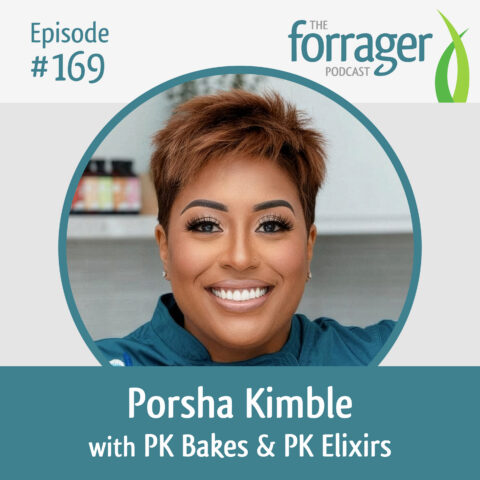 She Got Sued for a Wedding Cake… and Won (Porsha Kimble’s 6-Figure Baking Journey)
Porsha Kimble of Dallas, TX shares her 20-year journey including starting as a home baker, competing on the Food Network, teaching around the world, and building a 6-figure packaged food business
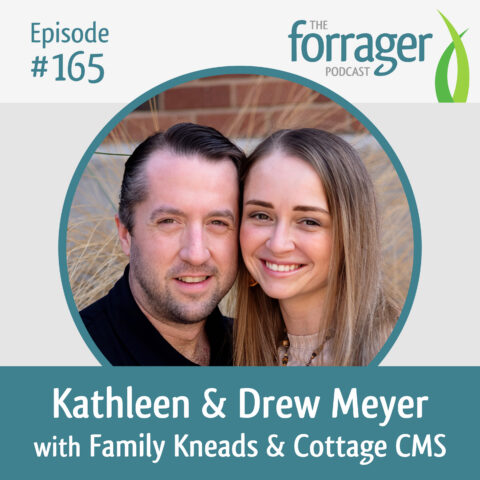 From Laid Off to $55K: The Cottage Food Business Success of Kathleen & Drew
Kathleen & Drew Meyer of Boerne, TX share how they reached over $55k in sales within their first year in business by staying adaptable, implementing efficient business systems, and leveraging AI
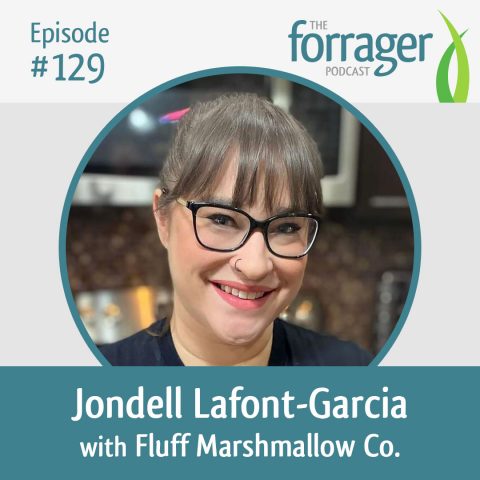 Jondell Lafont-Garcia with Fluff Marshmallow Co.
Jondell Lafont-Garcia of Pflugerville, TX is one of the foremost experts in the homemade marshmallow trend and shares how she built her cottage food business despite facing a major personal challenge