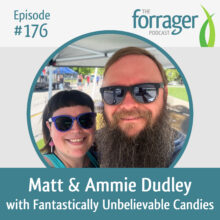
David Crabill: Welcome to the Forrager Podcast, where I talk with cottage food entrepreneurs about their strategies for running a food business from home. I’m David Crabill, and today I’m talking with Matt and Ammie Dudley. But before we begin, I want to talk about email and especially email marketing. In today’s episode, you’ll hear a strategy that Matt and Ammie use to grow their email list, and simply put, if you’re not sending emails to your customers on a consistent basis, then I think you’re missing a big opportunity for sales. I personally love using Kit to manage email for my fudge business, and they now have the best free tier of any email marketing platform I’ve ever seen, which allows you to send emails to up to 10,000 subscribers for free.
So if you still haven’t hopped on the email marketing bandwagon, now is a great time to do so. To get started and learn more, you can watch my free email marketing tutorial at forrager.com/email.
All right, so I have Matt and Ammie on the show today. They live in Collinsville, Illinois, And sell sour candies with their cottage food business, Fantastically Unbelievable Candies. A few years ago, Matt had one very specific craving, a sour candy that stayed sour the whole way through, not just the first bite. He couldn’t find it anywhere, so he decided to make it himself and spent three months of trial and error learning how to make candy from scratch. He never intended to turn this hobby into a business, but people who tried his candy kept asking for more. So at the beginning of twenty twenty-four, he jumped all in and invested $5,000 into equipment, ingredients, packaging, branding, and more before he’d even made a single sale.
Fortunately, the bet paid off. At Matt and Ammie’s first market, they made over four hundred dollars in sales, and then the next week they made over eight hundred dollars. Since then, their business has continued to grow. They have now trademarked their name and slogan and recently moved into a commercial kitchen space so they could start selling wholesale.
But what really stands out to me is Matt’s love for numbers and data analysis. I am quite certain that he tracks more business metrics than any guest I’ve ever had, and in this episode, you’ll hear how that data-driven approach has influenced their success. And with that, let’s jump right into this episode
Welcome to the show, Matt and Ammie. Nice to have you here
[00:02:37] Matt Dudley: Hey, David. Welcome. Thank you Thanks for having us
[00:02:39] David Crabill: it’s been a while. I know, Matt, you’ve been talking with me for, like, a couple years now, and I’m glad to finally have you on the show
[00:02:47] Matt Dudley: Absolutely. Li- uh, likewise. Really excited Thanks.
[00:02:49] Ammie Dudley: Mm-hmm
[00:02:50] David Crabill: Right. So I know, I know you’ve listened to the podcast a lot. Like, you know how it works. Like, take me back. How did this whole journey get started for you?
[00:02:57] Matt Dudley: So about five, five and a half years ago, um, was craving for some sour candy. Uh, you know, went to the grocery store, grabbed a pack of sour Skittles, tear your mouth up. You didn’t make anything quite sour enough, and so, uh, one day I was bored, laying on the couch, kind of flipping through my phone, uh, decided to look up how to make hard sour candies, and, uh, kind of went from there.
Uh, I looked it up, I was like, “Oh, this is pretty easy to do. I can do this.” And so, uh, started to order some, uh, ingredients to kind of figure out how to make a green apple. That’s my first flavor I ever made. Um, so it wasn’t good. It didn’t turn out well at all. Um, some of the batches didn’t set up, but it tasted okay, so I kept on kind of plugging away at it, and eventually, um, uh, started kind of, uh, experimenting with the, the acid side of things to make it sour because the things I was finding online wasn’t sour enough.
Um, so but still kind of same story. I kept on plugging away, had a little progress. I was getting a little, uh, happier with the results, and, um, finally one day I, I, I hit this, this ratio, this workflow that had that sour locked in all the way through, and I was just super excited. And so, um, from there I just kind of did it for friends and family and myself.
Um, and, uh, you know, you hear, uh, people say, “Oh, you should sell this,” and, uh, you know, you’re thinking, “Sure, you’re just friends and family. Great. Thank you.” Um, but after enough, hearing that enough times, you’re thinking, “Maybe I should try to do this.” And so I started looking about, uh, how that could happen, how can I sell at farmers markets, um, which is kind of a little bit of a journey ’cause that stuff was never on my radar at all.
I never attended farmers markets really. I mean, I have, but it wasn’t, like, part of my weekend ritual, ritual, you know? So, uh, just kind of necessity. I needed some sour candies, couldn’t find anything sour enough
[00:04:28] David Crabill: Yeah. No, uh, you’re very generous. You sent me a few of your tins and products, so I got to try it, and I can confirm they are quite sour. So, yeah, I’m used to, like, the, the candies or, like, I haven’t had ’em in a long time. Like the Warheads where you have that first punch of sour, like, punching you in the mouth, and then, you know, it goes to sweet, and it is sour all the way through.
So without, without question.
[00:04:57] Matt Dudley: Yeah. I always say we elevate sweet moments. Well, that’s our mission, is to elevate sweet moments by crafting sour treats that strike the ideal balance between intensity and enjoyment. So they’ve gotta be sour, but they must be good too. So, um, hopefully you kinda were able to taste the good part too, and not just the, the sour bam, you
[00:05:12] David Crabill: Well, yeah, I mean, it was very sour, but one thing that really stood out to me was the flavor. There was a lot of flavor in all three of the ones that you sent me, and, uh, that’s something that my wife tried them. She loves candy, and she, like, said, “Wow.” That was her first comment, actually, is like w- “It has a lot of flavor.”
Um, so that, that really shines through, too. So yeah, I know you’re trying to balance the sour with the, with the fun, with the flavor, right? So, um, so Ammie, what’s it like for you? I mean, it sounds like this is Matt’s hobby, right? And with no in- intention of it, like, k- taking over your life, right?
[00:05:49] Ammie Dudley: Yeah. Yeah. I mean, it has taken over our lives, but I’m, I’m for it. It’s great. It helps me get out of my comfort zone too when we, when we go to markets. Um, I really enjoy the markets, like getting to talk to people and see people. So it’s, it’s actually helped me a lot, so
[00:06:06] David Crabill: Yeah. One thing that wasn’t clear to me, like just from, uh, looking at your social feeds is, like, how you guys split up duties. Um, like, d- do you… Does… Matt, do you take over one side of the business and Ammie take over another? Like, how do you make that work?
[00:06:21] Matt Dudley: So like I said, this is kind of a, a hobby for me, and so I was in on it for a long time thinking about flavors before, you know, I was roping Ammie into this stuff. So I mean, I kinda, you know… Ammie’s got her f- or certified, she’s a certified f- food protection manager. Mm-hmm. So she does help in batches around, uh, like Christmas time and stuff.
But for most part, I’m in the kitchen making the syr- uh, syrup batches, and I’m kinda the one kinda talking to people at the markets. Um, obviously Ammie will sample too as well if I walk away for a few moments or whatever. But, um, yeah, uh, that’s kinda where I foc- mostly focus on is, is making the candy and, uh, sampling it out and, uh, kinda the back end of the business side of things.
I’m always kind of poking through numbers and, and all that kind of stuff and figuring out what our next potential move or unlock is, or bottleneck or whatever, you know?
[00:07:04] David Crabill: So it sounds like this was, Matt, your hobby for a few years before you actually turned it into a business, right?
[00:07:10] Matt Dudley: For sure. Yeah, like I said, it was, uh, something I just different friends and family and, uh, the kind of one thing that really kinda made me start thinking more seriously about it is I gave my buddy, uh, who was living out in San Diego at the time, I gave my buddy a little bag of candy to go home with, and he’s kind of a wild dude, and, uh, was giving candy to random people out on the streets of San Diego down in Little Italy.
And, uh, they were taking them. And, uh, s- the people were coming back through the neighborhood the next night and asking, “Hey, do you know about that sour candy stuff?” So, so like I said, yeah, it was a virtual hobby before I even started thinking about it as a, as a business, you know.
[00:07:38] David Crabill: So when did you actually get started with the business?
[00:07:41] Matt Dudley: the very first day was January 1st, 2000, uh, 24
[00:07:44] David Crabill: So, you know, obviously you had this as a hobby for a very long time. What do you think got you over the edge of actually deciding to start it as a business and try to make money from it?
[00:07:56] Matt Dudley: I think maybe just seeing how easy it really was to kinda get going. Um, candy is a very, like, low-risk category. Um, I don’t have to get, like, anything tested for pH. Um, I’m not trying to, uh, you know, it’s very lo- easy s- uh, s- uh, shelf stable. Mm-hmm. Um, so seeing, like, seeing the numbers on the spreadsheet that I had to work with to kinda see how much it actually cost me to make a batch of candy, uh, seeing how easy it was to kind of get going and then test this idea, like, I think wh- it was, it was that.
It was just seeing that, hey, this is possible, and it’s not super complicated and scary.
[00:08:30] David Crabill: Well, and one thing I did see was that you invested in, like, a pretty significant piece of equipment before you started it as a business, right? I mean, you have this, like, candy roller thing
[00:08:40] Matt Dudley: yeah, yeah. It’s a drop roller. Uh, thank you Ammie for the get that ’cause, uh, it was kinda like a expensive, uh, just a kitchen toy at that point ’cause I, like I said, it was just for fun. Um, but, uh, I did get that as I was kinda like, um, going through the, the training, the, the food protection manager training.
Uh, so I hadn’t… At that point I did, you know, I kn- I knew I was gonna n- you do a little make candy fast enough- Mm-hmm … that, that, uh, roller makes it such a difference. Because before I was rolling it out like a, like a big log, let’s say, and pulling out like a stick, cut it out by hand. Um, it would take like an hour and a half, two hours.
I’d be sweaty. I’d have to put the candy back in the oven kinda like, back- Right … back- ‘
[00:09:15] Ammie Dudley: Cause it was cooling too fast.
[00:09:16] Matt Dudley: Yeah. So. It was cooling very fast. Yeah. So, um, that drop roller is really, really awesome. Um, that tool is, uh, s- I’m looking at it right now. It’s, uh, super, uh, super helpful and, uh, like I said, without it, I don’t know if it’d even possible ’cause, uh, like I said, it’s so time-consuming to, uh, cut up three pounds of candy with a pair of scissors.
[00:09:32] Ammie Dudley: It was intimidating there ’cause it, it was expensive, but I feel like it was a, it was a great investment because of all of that. You know, like having to, to, to take the time and, uh, uh, t- take those, pull those, which we still pull the, the candy canes, which is still a lot, but those are small batches. Um, but yes, I, I think it was a great investment, um, even before the, we, we got going, you know?
[00:09:57] David Crabill: Yeah, ’cause there’s a legitimate risk, right? I mean, you don’t know if you’ve never sold it before. You know, like, people are saying it’s good, but you don’t actually know if it’s actually gonna take off. And obviously, I- well, I know that it did. You know, you’ve, you’ve made a lot of, uh, money from this so far.
Uh, but there was no guarantee of that. How much did you actually invest into that machine?
[00:10:18] Matt Dudley: So the machine itself was like, uh, at the time was like $1,300. And then, uh, to get it shipped, I didn’t trust to go with U- UPS. I just- I’ve had stuff get m- missing plenty of times, so I wanted, uh, robust tracking, so I went with DHL. So that added about $300 in shipping too. So, um, all said and done, like I said, it was, you know, actually I’m kind of fudging the numbers because I can’t remember exactly what it was, but it was 15 to $1,600 but yeah, like I said, I feel like it was gonna be worth it, uh, ’cause we’re gonna do this as a business. I need a way to make candy quickly. Like I said, at the very least I’ll have some equipment to make candy for myself and my friends still, so
[00:10:54] David Crabill: Well, all right, so you officially started the business at the beginning of 2024, and take me from there. Like, when did you start to make sales? Like, what was your, you know, what was your first kind of starting point of actually selling the candy?
[00:11:09] Matt Dudley: Yeah. So we, you know, uh, the whole first winter was very quiet. We didn’t have our first market until like May 11th or May 5th, or it was one of those days in 2024. It was the f- like first Saturday in May. That was our first sale, so quite a bit of time of nothing. Like I was posting, “Hey, we started this business.”
I posted a few little videos on our Inst- on Instagram, but other than that, nothing. I, I wasn’t, uh, I, uh, just wasn’t trying to do that. I, I was kind of figuring I would save it up for the market and, uh, and, uh, so that’s what happened. Yeah. Uh, our first sales happened in May, the first weekend of May
[00:11:39] David Crabill: Well, is that what you expected to happen? Like, did you expect to start selling in the wintertime, or did you think like, “Oh, you know, I’m starting it officially, but we won’t really get going until the summer”?
[00:11:51] Matt Dudley: Yeah, no, the whole plan was to get started this summer, and it’s kinda if we did make any sales, cool. It’s just because someone in the family or friends or family knew about it. But yeah, the whole plan was to kinda, you know, our official, uh, you know, we may have started in January, but our official, like, ribbon cuttings, uh, ribbon-cutting ceremony or announcement to the world that we’re out there was that first market in May.
[00:12:09] Ammie Dudley: Yep. The market, for sure.
[00:12:11] Matt Dudley: The Vine Street Market in O’Fallon. It’s a really cool market.
[00:12:13] Ammie Dudley: Mm-hmm
[00:12:13] David Crabill: All right. Well, so clearly this, you know, market was the real starting point. I mean, although I’m sure you invested time into, like, branding, packaging, and all that, but what was that first market like?
[00:12:26] Matt Dudley: I was, I was nervous. I wasn’t sure if we’re gonna make enough candy to cover the booth cost. I was like, “What am I gonna say to these people? Is someone gonna buy candy from me?” ‘Cause I got a pretty big beard. I just like, I don’t know. I’m sta- I– people… If I’m sitting there not smiling, I guess I could look unfriendly, but…
So it w- I was, didn’t know what to expect. Um, but, uh, we got our first customer pretty early, and it’s just kind of looking back, it’s kind of surprising ’cause that first hour of any market is nothing. Like, people aren’t trying to buy candy at 8:00 in the morning. They’re just not. So they want their, they want, they wanna get their produce and get on with it, so.
Um, but yeah, uh, our first customer was a guy named Ryan. Uh, super cool guy. He actually bought a whole bunch of candy that summer, and we still talk to him and know their family. Um, so it was exciting to see them. But yeah, uh, he came out and, and, uh, bought some. At the time we had the Mag Strip, so it was awkward because we couldn’t get it the, uh, z- uh, s- scanned correctly.
So it was like, “All right, dude, uh, thanks for your patience.” And, uh, but, you know, we, we got him checked out and, uh, got a picture with him. And, uh, yeah. And so we, uh, we ended up making more to cover the booth fee that for sure, and we actually almost covered the entire season’s worth of booth fees that first day.
Um, not quite, but pretty close. So with no, nothing to kind of gauge that against, I, I, we figured it was a suc- a success, you know? So, uh- Yeah … pretty happy. It was, it was pretty fun. Like I said, uh, going to the markets is something that wasn’t really on my radar before. I’ve been to farmers markets, but, um, I was pretty hooked.
It was pretty fun.
[00:13:47] David Crabill: Wow, so you know, made back, you know, almost all of your booth fees for the whole summer in one day. So what was the revenue of that first day?
[00:13:55] Matt Dudley: this will kind of give you a spitball. It had to be like, you know, 400-ish, $400. ‘Cause I think the whole booth fee for the whole summer was like 450-ish, something like that. So it wasn’t quite that much.
Um, but that next weekend though was the Strawberry Festival. Mm. Which is typically a really big day at the market. And, uh, so we, we, uh, definitely made all, all, all the booth fees back that next weekend for sure
[00:14:16] David Crabill: Yeah. Well, you’ve communicated with me over the past couple years and shared some of the numbers, and, you know, I s- I know you did, like, 63 sales, or at least sold s- 63 tins worth of candy the first one, and then 118 the second one. And, you know, I think you were selling even back then at $7 a piece. So, you know, 118 times 7, I mean, this is, you know, approaching $1,000 for your second market, right?
I mean, this is, uh, not normal, right? It’s, it’s, like, definitely, uh, kind of an explosive growth. So what did that feel like?
[00:14:53] Matt Dudley: It w- well, it was super validating, you know, hearing all these people say, “You should do this, you should do this.” I’m like, man, why I didn’t do this like two years earlier? Well, I know why I didn’t do it, because I was still working on it, you know? I didn’t wanna just like make a, my first successful batch of candy and be like, “All right, this is ready for customers,” you know?
So, um, yeah, it was just super exciting and then, uh, I, that- at that point it was just like, hey, what do we do next? How do we, uh, expand our offerings? And so the quickest way for us to do that was like think about the different flavors. And so, uh, that first season we did so many different flavors. Like every weekend there was a different flavor.
That’s a lot. Well, first, uh, at first it was like a flavor of the month, and then that was taking too long. I, I was getting antsy, so we started doing flavor of the week or whatever I felt like doing. Yeah. So, um, yeah, it was just like I said, uh, validation, confidence, uh, um, and ’cause like I said, I mean, that second weekend people were coming back and they’re like, “I’m already out of candy.”
I was like, whoa, that’s kind of crazy because, I don’t know, I feel like a hard candy is… something different about it compared to a gummy, you know? If you have a gummy, you can like hoss through a whole bag in like a sitting. Hard candy kinda makes you savor it a little bit more, enjoy it a little bit longer.
So to me, a tin can last like two weeks, you know? It’s, um, just as, you know, just if you have too much in one day, like you’ve mentioned Warheads earlier, if you have too many in a row, it will tear your mouth up. So I was surprised at people coming back buying more tins, so.
[00:16:03] Ammie Dudley: Right. That very next weekend.
[00:16:04] Matt Dudley: Yeah. So like I said, it was just kinda like, wow, you know?
[00:16:07] David Crabill: Ammie, what was your perspective of all this happening?
[00:16:12] Ammie Dudley: It was a whirlwind. Um, and I think, like he said, it, it was, we, we had our first market and it was successful, and then that second market was already the, the strawberry festival I think it was. And so that like launched it because everybody wants a, likes a good festival, right? So like there were more people there.
We had more foot traffic, so it was great. It was great. It was fun. It was nice to see him in his element too. Like he’s, uh, we, we, we still have people come up to me, like he- he’ll be up there handing out, uh, like samples and such, and then they’ll come back and, you know, talk to me and like, “Bye.”
But I, I hear this a lot. Um, “He’s such a salesman.” And I’m like, “He’s not a salesman though. He’s really passionate about what he does, and he likes to talk about it.” So that’s, that’s just what he does. He gives people samples, and then he talks about it, and I mean, it’s, it was, it was great to see
[00:17:08] David Crabill: Yeah. Well, so you started, you know, the first market was a success. The second market was a strawberry festival that was even more of a success, and then how did the rest of the summer go?
[00:17:21] Matt Dudley: Yeah, so we end up averaging, I, I know average is probably not the best metric, but we average about 52 tens a market. Um, but there are definitely like slow times too. I feel like, uh, at being our third season, like I can s- I know when the slow times are coming now. Um, so looking back we didn’t know it was slow, but when kids go back to school that’s, for whatever reason I guess, the market kind of quiets down quite a bit.
I guess kids are back in s- uh, school and, uh, they don’t have… Parents don’t have, you know, the summertime I think parents wanna get the kids out of the house to do stuff, you know? And so when the kids are back to school, they hang out with their friends. They don’t really go to the farmer’s market with their mom and dad, you know?
Um, so and I feel like ’cause of that, mom and dad don’t wanna come out to the farmer’s market either. They’re gonna do something else. So, um, I, I do feel like, uh, it went well and we, you know, like I said, over average. You- we average about 50 tens a market and, uh, there were slow periods there, but so, um, I will say it was enough of a success that I wanted to go r- uh, year two and, and see what we can do differently or how we can expand upon that
[00:18:17] David Crabill: Yeah, and I’m thinking about the $7 price point, you know, 52 tins would be like over $350 per market, you know, on average. So I mean, that’s very successful, e- especially for your first market season. Um, so y- do you feel like there were a lot of returning customers coming back every week, or were you just kind of finding new people at each week?
[00:18:40] Matt Dudley: Yeah, no. Uh, we, we, uh, do track I, I, I track the returning customer rate. Also, you can see that in Square as well. And so, uh, the numbers were really promising. Like, at, at an average market you would see that, that Square report, you know, that next day. Um, 50-some percent, 40-some percent, and that’s with what we could track there.
That didn’t count the, uh, the customers with cash. Mm. Um, and, uh, yeah, we definitely, uh, have repeat customers. And, uh, that’s kind of why I take the pictures too of our customers. Um, ’cause I feel like if you scroll through, like, oh, these people actually like it. If you kind of scroll through the pictures you see, like, repeat faces and people keep coming back.
And, uh, it’s pre- it’s pretty fun. Uh, uh, like I said, you, you kinda, like, learn more about strangers than you ever thought you would.
[00:19:22] David Crabill: well, so obviously it went super well, right? I mean, your business was very successful throughout that first market season, and it’s continued to be successful of course. But I saw that you invested, like dropped $3,000 into the business when you started it at the beginning of 2024. I mean, I don’t know if that was 3,000 in addition to the 1,600 you’d already spent on the candy roller.
Um, but still like pretty significant amount of money to be, uh, putting into a business that hasn’t, you know, been proven or tested or whatever. So, um, walk me through that. Like what did you spend the $3,000 on, and why’d you, why’d you make that initial investment?
[00:20:04] Matt Dudley: Well, uh, the initial investment w- it was actually more like $3,500. And the reason that amount was because that’s what it would be needed to buy the ingredients and everything, and then, and, and cover the booth fees and insurance. And insurance alone is like $300 a year. The booth fee was, you know, 450, whatever it was.
So almost, uh, you know, 700 bucks, you know, so getting close to 1,000. Um, so from there we bought, uh, I’m just looking at stuff right now. Ingredients, like I said, we stocked up on. I, I was really kind of confident. I don’t know why, but I bought like 100 pounds of sugar that first day. I was like, all right, I’m buying the sugar.
Bought like five gallons of corn syrup, so, um, you know, $100 there, $100 there. Uh, containers, um-
[00:20:38] Ammie Dudley: Yeah, storage.
[00:20:39] Matt Dudley: Yeah. For, for- Flavors … for the flavors. Uh, flavors for sure. Like that was, um, stock up all the flavors I wanted to do. I had a list, and that was probably like two or $300 worth of flavors alone. You know, just in, just the flavoring.
Um, but, uh, yeah, lists like that kinda, kinda adds up. You know, gloves, uh, silicone baking sheets, like all the little stuff you don’t think of. C clamps. Um, my, my drop roller, you can’t just like set that on a table and start cranking. It’s gonna be sliding all over the place, so you gotta clamp it to the table, you know.
So that was an expense I hadn’t, wasn’t on my radar at all. So, um, I figured w- uh, with that amount of money we could buy all the stuff that I think we need to run a food business from home and have a little bit of breathing room in case like something doesn’t work out, maybe we can go to another market or, uh, something, you know.
So, so the, you know, the idea was to have a few extra shekels put away at the end of the summer and see what happens. But, uh, it, it turned out pretty good. We were able to invest, reinvest in the business the entire time that first year. We did come out with like a 7% profit margin, which is pretty small, but it’s a small business too, so I was okay with that.
But I was really proud about it because that whole entire time we were reinvesting in the business. Um, that end of the year I bought a, a whole bunch of tins, a whole bunch of sugar and stuff ’cause I knew we were gonna do it again and, and need that stuff. And, and so, um, but yeah, no, it was like all, the initial expense, all kinds of little stuff you don’t think about, uh, at first, you know.
Uh, and, and all the stuff you do think about, so,
[00:21:54] David Crabill: So that 7% profit margin at the end of the summer, was that, like, factoring in all of those initial expenses?
[00:22:04] Matt Dudley: Yeah, everything. Uh, uh, uh, the, that wasn’t, I didn’t factor in the drop roller though, because I, I bought the dro- uh, I was thinking like, ’cause I, I was still on the fence. I hadn’t, I wasn’t, you know, certified. I didn’t have a food ca- you know, a cottage food permit or anything like that. I was still like, “This could be a, a fun hobby thing.”
So, um, I did not include that, but since then that money has been recouped. Uh, but yeah, uh,
[00:22:26] David Crabill: That, that’s, no, that’s really significant. I mean, you, you not only, you know, paid for that initial $3,500 investment, but you also, you know, made some money on top of it through the first season. So, um, I mean, I would not say that’s normal. Like, uh, if you’re dropping thousands of dollars into a new business, it’s probably you could get into year two at least before you start to pay it back.
That would be normal. Um, so, uh, w- would you say you were surprised? I mean, it sounds like you were very confident in this, like, going well. Like, were you surprised that it worked as well as it did? Or were you not surprised ’cause you just like, like, were so confident that this was gonna work?
[00:23:07] Ammie Dudley: I wasn’t surprised. I mean, um, I feel like he, he definitely ha- like, he has spreadsheets of stuff. Like, if I were to do it, I feel like it would be all scattered. There’s no way. But like, I feel like he’s very meticulous with being like, “This is, this, this is what we had in the beginning. This is where, this is the kind of the goal.
Like, let’s try to make this happen,” and he definitely made it happen. So, uh, was it technically surprising? Yes, because it was so fun. It, we, we made it work. That, that first year was just really, really good. But, like, from the standpoint of what he does, absolutely not a surprise because he, he has thought a lot of it out, like, now at least years, you know, like at least a year in advance, so.
[00:23:55] Matt Dudley: Yeah, when we did the… You know, I, I mean, it was confidence. Or I just wanted, when we started this, I wanted to kinda do it right, I guess you’d say. And so I, I went through and created a business plan. Uh, so that first summer I knew what… I told myself I knew what year three was gonna look like and year four and five and whatever.
So, um, yeah, so yeah, I guess to kind of circle back and answer your question, surprised, yes and no. I mean, I, I surprised myself for doing it, I guess, and actually sticking with it. Um, surprised that we had those initial buyers, but like I said, once you saw how successful those first few markets were and, and what people were coming, coming back, you know, and, uh, what we’re making per market and covering our costs like that, um, it wasn’t a surprise.
You know, I just, I just like knew like… It got to a point there, I was like, all right, we know, I can’t, you know, whatever the number is, you know, like, we gotta do this to be profitable. We gotta do this to make, you know-
[00:24:43] Ammie Dudley: You had data to use then …
[00:24:44] Matt Dudley: to be 8%, you know. If we can get this much, we’ll be at like 10%.
Yeah. And so every time that, that, those numbers are going up, I was kind of always paying attention to that. So once I had that data there, you know, it kind of really informed a lot of things. Um, you didn’t have to rely on gut as much, you know?
[00:24:56] David Crabill: I, I definitely wanna ask you about the data, the analytics, the numbers, because you’ve shared some of that with me. I know you’ve also built your own tool to, like, basically track all this at, like, an extremely high level. I would say, uh, you probably know your numbers better than any guest I’ve ever had on the show.
Um, and y- you said your background’s in software engineering and everything, and I, I, I understand that. Um, but, like, the numbers, you know, you, you track everything and, like, every percentage increase, every, every minute detail. Um, what do you think has been the most helpful numbers or analytics to track that you think other people should be tracking in their business?
[00:25:44] Matt Dudley: The big one is expenses. You have to track your expenses, and you have to categorize your expenses in a way that makes sense, so that you can identify marketing versus ingredients, whatever. Um, so, uh, you gotta do that, number one, because then you can start really down your, your price too. And that’s not really a metric you look for, but it is a metric that comes up.
And so if, you know, uh, so knowing your expenses so you can figure out your price. Um, I think knowing your, your return customer rate is huge. I think knowing, uh, uh, revenue concentration, so what percentage of customers does it take to make 80% of your revenue? Um, if you have a small percentage, uh, it’s not good.
You know, 10% of your customers make 80% of revenue, you lose one customer, and it’s a bigger hunk of your revenue. So you want a higher number there. So being able to identify that, uh, which everyone can do, it just takes you a little bit of messing around with Excel spreadsheets. But if you use Square, there’s so much data in those, uh, in those raw exports.
Um, so yeah, knowing that kind of stuff, um, you know, the revenue concentration is super helpful. Uh, I don’t know if it’s helpful, but it definitely gives you, like, more confidence in what you’re doing, you know, as far as, like, the health of your business, uh, versus just, like, a, a random day at the market, you know, a good day versus a bad day.
Um, like I said, you have that data, you can get more of a solid, like, feeling about your, um, about your, about your business. What other kind of metrics do I like to look at? ‘Cause like I said, like I said, I’ve got a tool and I, I look at it every single day and I use it all the time. Um, uh- I
[00:27:09] Ammie Dudley: think that the biggest thing for other people at markets is, like you first said, expenses.
I think a lot of people don’t factor those in.
[00:27:19] Matt Dudley: Mm-hmm. Uh, and I, and I feel like you, like, like not only, like you said, the categorization, uh, I feel like you need to categorize your expenses, uh, with some sort of, you know, category tree, I guess you’d call it. So you have your category, subcategory, and category segment.
Um, that’s how I kind of identify my products or my expenses, uh, sorry. So think, like, um, ingredients, sweeteners, uh, sugar versus ingredients sweetener, corn syrup. Um, you can break it down that way. And, um, yeah, like I said, just knowing that, um, kind of informs everything else I feel like, you know? Um, because if you’re, if you’re spending way more than you’re making, you know, like a lot of these other metrics, they do matter ’cause they can help you get to the right spot I feel like.
But, um, yeah, I just feel like that’s the super, the most valuable one. ‘Cause we were, we had a few, uh, fellow vendors at that first market and they expressed, you know, you’re chatting to people next to you and things come up, and a couple of them mentioned like, “Oh, I need to get better about that,” or, “I don’t do, don’t do that.”
And, uh, and they’re not at the market anymore, you know? So I don’t, who knows why, but I feel like to have a successful business you gotta know what your expenses are, like at a pretty good level, you know? You may, you know, maybe not recite it off the top of your head, but pull up your spreadsheet and, or whatever, and, uh, be able to tell someone what it is at least, you know?
[00:28:30] David Crabill: So you’re
Well, I do wanna dig into your numbers because I’ve seen your numbers, and they’re very impressive, in particular your profit margin. So break this down for us. You know, you’ve got a $7 price point. I don’t think that’s changed since day one. Um, what… how does that all break down?
[00:28:47] Matt Dudley: Yeah. Yeah. . So I mean, all said and done, uh, at $7, uh, we’re, um, about 74% profit margin. Um, that’s including the labor, the packaging, and the ingredients. Um, so pretty, pretty good, ’cause I feel like we need to h- we need to… The money, the business needs to make money, and so we, that, that number we felt like we were, was good with it.
It was kind of high, but not too high. and, at that price point, we knew we were gonna be making money. And then also at that price point, if I were gonna calc- uh, include, um, kitchen time, um, we’re still able to make profit. And not only us, but the, the wholesaler, uh, or partner, hopefully, you know, if we ever get that happening.
But, so, um, that’s what it kinda came down to, is that high margins up front, we knew that was gonna be a thing, and then lower margins later, but higher volume hopefully. Um, so, uh, that was the kind of number that we came to and it, it worked. So, um, figured kinda keep it there. I’ve talked about lowering the price, uh, before.
Um, but I still think, you know, I feel like we’ve got a kind of premium product I feel like, you know. Um, I always kind of say when I’m giving my spiel, like we don’t make the most sour candy, we make the best. And so, um-
[00:29:57] Ammie Dudley: There’s a lot that goes into it .
[00:29:58] Matt Dudley: And there’s a lot that goes into, you know, just, it’s not just throwing sugar and some flavor into a-
[00:30:01] Ammie Dudley: Right
[00:30:01] Matt Dudley: um, into a pot and hoping that it works out. You know, I used to say, uh-
[00:30:06] Ammie Dudley: Labor is the biggest expense, for sure.
[00:30:08] Matt Dudley: Yeah.
[00:30:08] Ammie Dudley: Of making it, yeah.
You gotta take every single tin, you know, put a label on it-
Mm-hmm …
[00:30:12] Matt Dudley: open the tin, put the candy in, put it back in. So people don’t see that, you know, uh, Most, most of it’s labor, but the, um, packaging’s more expensive than the ingredients.
but yeah, like I said, it, it, the, the, the margin’s, is working still, so I, I don’t see a need for us to kind of increase prices anytime soon at all.
I mean, um, people… I’ve been seeing online, you know, people talk about, uh, sugar, uh, spikes, uh, prices, you know, everything spiking, going up high, but our ingredients are pretty simple, you know, corn syrup, sugar, and our flavors, and those have been pretty, uh, pretty stable.
[00:30:42] David Crabill: Well, you said something interesting there. You said that your packaging costs are higher than your ingredient costs, and I’m actually not surprised by that. You know, we have this, you know, tin, very nice tin, um, that unscrews and you… But you don’t have to do this, right? Like, you could just have a clear plastic bag packaging or something that would let people see the product.
So, um, I wanted to ask why are you, you know, choosing to invest in these, you know, relatively expensive tins for the product?
[00:31:13] Matt Dudley: I have it written down in notes somewhere that y- there are three things that make a brand. It’s the product, people, and the packaging. And so I wanted this to be more than a cottage food operation. The cottage food operation is great. I love cottage food. If we blow up, we’ll probably always be at a farmer’s market somewhere, but I wanted it to feel like a- something you see on the shelf.
Um, and, and, uh, in practical reasons too, I feel like a tin is kind of carries easy. You can throw it in your purse, you can throw it in your pocket, you can throw it in your backpack, uh, versus like a bag, you know? Um, you can throw it in your truck, whatever. Um, so practical reasons, but also too, I, I, like I said, I wanted to, wanted it to feel like a, a real product in your hand, like something that’s awesome.
And so if we do like, you know, get wholesale or retail partners, you know, like it doesn’t change much. You’re gonna see the same… It’s gonna be like the continuity there between the, um, different, uh, ways we’ll be selling stuff. So yeah, it kind of comes back to that, you know, three things that make a brand, you know.
People, packaging, uh, product.
[00:32:08] David Crabill: well, one downside of the tin is obviously you can’t see the product, right? Like, it’s a metal tin. Um, so, you know, I, I could potentially see, I know, I don’t know if you’ve gotten into, you know, wholesale accounts or whatever, but I could potentially see where that could be a limitation, right? Like, when you’re at the market, you can, you know, you have these mason jars of samples, people can see the product.
But if it’s on a store shelf, you know, it’s like, what is it, right?
[00:32:35] Matt Dudley: Yeah …
[00:32:36] Ammie Dudley: right? We, and we have thought about it
[00:32:37] Matt Dudley: I have thought about this. And so at the market, you know, someone tries our candy, they usually buy our candy. And so I was thinking if we ever get like, we’re- we’ve got- we acquired a kitchen, it’s been approved by health department. It’s not going so well, getting the cooking going.
We can talk about that later if you want. But the idea w- uh, is to offer samples in those types of locations. So I bought a candy, a old school candy machine. Well, it’s not old school, it’s new, but a little candy machine the, uh, for the coins. But it doesn’t take coins though, it takes tokens. So the idea is that hopefully whatever kind of s- kind of small mom and pop shop is there, we can have our, our branded candy machine, free samples.
You can see what it is, you can taste what, what it’s like. And, uh, hopefully someone’s open to that idea because yeah, that is, that is, that is a, a concern. I feel like some people don’t really know what’s, what they’re getting.
[00:33:22] Ammie Dudley: Mm-hmm.
[00:33:22] Matt Dudley: And, uh, even still there’s sometimes there’s confusion, which is kind of surprising, that we’ll have our tins out there.
I’ll be giving samples out, and they’re like, “What are those?” I’m like, “Those are the tins we sell them in.” And so, uh, people, you know, it doesn’t really stop or create much friction really. People still buy the, the tins and all that kind of stuff. But yeah, um, 100% cold, uh, that is something that I’ve, I’ve thought about and hope that if we ever get out there, um, that candy machine might solve, uh, the problem.
Hopefully, we’ll see. I don’t know
[00:33:47] David Crabill: That, that is a creative idea that, you know, having this kind of like, uh, candy machine jar in the business and then they maybe, I don’t know, take a token from the registrar to, you know, to use it. And it, it adds a little bit of fun to it too, ’cause that’s one of your big things is, you know, stay fun, stay sour, right?
That’s a big, uh, like motto. Uh, and I know you’ve trademarked that motto. We’ll talk about the trademarking in a little bit. Um, but, but I’m thinking about that machine. It’s a g- I think it’s a great idea, but one thing I noticed, and, you know, it was like probably like the one piece of critical feedback that my wife had is, and you’re familiar with this obviously, is that they stick together, right?
Like, that is, that is a legitimate issue with the, the product. Um, we were able to, you know, chisel out, you know, the, the candies and, and, and have them. But I would say that would probably, you know, hold up the candy machine idea
[00:34:41] Matt Dudley: Yeah, so what I, I, I think there’s a couple problems with the tins. I, I, I put cornstarch on them. I try to, to kind of prevent them from sticking in the tins, but I cram those things so hard.
[00:34:52] Ammie Dudley: We put a lot in the tin- Yeah … and then, you know, l- putting that lid in there, it’s just, like, compounding it, and then-
[00:34:58] Matt Dudley: Yeah, I’m smashing them up.
Yeah. I tell people sometimes too, like, “This might be sticky, but, um- … they can break apart,” and, uh, I kind of give people tips. Like, if you see that tin right there, it’s all dented up, you know there’s a bunch of candy in that one right there. ‘Cause like I said, I, every single time I, I just try to put more than that’s, what’s you can fit in there.
I, I don’t want people to… Maybe I should, but I, you know, I don’t want people to s- take the tin and shake it around and hear things rattling around, you know, and think maybe it’s not filled up all the way, so-
[00:35:23] Ammie Dudley: Right … but- We wanna, we wanna give you a bang for your buck
[00:35:26] Matt Dudley: But it definitely, it definitely is a, it definitely is a problem though, too, like- Yeah
so, uh, ’cause especially s- now at those markets, you’re like, I mean, I don’t care what kind of candy it is, you know, you’re out in the hun- you know, 95 degrees in St. Louis here. Mm. St. Louis area, it’s super humid. So I mean, like, it’s a constantly attacking your candy. And with the citric acid and malic acid, that stuff, like absorbs moisture, like regardless, you know?
Mm-hmm. So it’s, it’s constantly trying to get, uh, trying to, trying to get sticky on each other. Yeah. So, um, still down with it, you know what I’m saying? I suppose that’s the part, that’s what the cottage food operation’s about, you know, to figure out what the product actually is and, and the workflows and stuff.
But, uh, yeah, no, that’s definitely something, uh, I’ve heard before and, uh, something I was aware of before, uh, day one even, to be honest. So,
[00:36:06] David Crabill: Well, another thing, you know, I know you started with these tins. Like, it sounds like that’s the idea you had in, in your mind. They’re two-ounce tins, and it seems like that’s all you sold. But I will say, having had one, like, one was enough. Like, that’s a lot of sour, a lot of flavor in one candy. Like, this would last us a long time.
Um, and I was thinking, you know, like, why not sell one ounce, right? And, you know, ’cause $7 is not huge, but it’s also not like, you know, it’s kind of a little bit higher price point. You know, like, one ounce for $5, I’m sure you’ve thought about this, right? Like, what, what are your
thoughts?
[00:36:45] Matt Dudley: honestly, the, the $7 pricing I said earlier is kind of because of the, the expenses and, and the profit margin we need to make to kind of suffer taking bigger cuts for kitchen time stuff later. Um, but they’re actually, you know, we’re not the only ones to kind of make this style of candy, I think. I mean, I haven’t tasted their candies, but they exist and, and so there’s a place out in Florida that sells, like, a three ounce for, like, $13.
Um, and so, uh, j- I, I think what came down to was, uh, just the labor, you know, of, you know, doing twice as many tins. It could be probably more lucrative to have, like, a, a cheaper price point like that-
[00:37:18] Ammie Dudley: Mm-hmm
[00:37:18] Matt Dudley: and, uh, for smaller items. But I actually go- I kind of did mess with that a little bit there. I tried to make, uh, suckers before. Um, and we did make them, but it was, it was, uh, it was hard to because that candy’s constantly cooling. And so, um, yeah, so like I was saying earlier about the hero product, you know, I feel like the tin, the $7 tin, that’s, that’s our hero product, and anything we introduce to our product line, um, should be less, like you were saying.
I’ve experimented with the idea of, um, because we break up the candy. We get a lot of, like… Not a lot, but we get a, it’s like candy- Fair amount. Yeah, it’s candy, uh, it’s almost, it’s just, like, pulverized, like, flavor, you know? It’s, like, sugar flavor, the sour. It’s, like, real fine dust, something you might put, like, a lick of stick in.
So I thought about doing that before. Maybe, like, offering, like, an ounce or so or maybe a bag at a smaller price point, um, that’s easier to g- to package, you know, and not the tins. Um, but B, just kind of like candy waste, you know? Um, but, uh, as far as, like, taking the tins themselves and, and putting them into a, a, a smaller thing, I haven’t really heavily entertained the idea too much.
But to be honest with you though, we get so busy e- during the, during the summer, um, it’s just, you kind of get, kind of grinding away, grinding out s- the two ounce tins, you know? Um, I did buy, I do have a, uh, in my closet I’ve got a, a big old box of, uh, four ounce tins, because the idea was to kind of make a, like, a, maybe a, maybe it’s a little higher price point but have two different flavors in there.
Or-
[00:38:36] Ammie Dudley: Like a multi kind of flavored pack.
[00:38:39] Matt Dudley: Yeah. And so what’s kind of held me back from that is that our candy pieces are small, but they’re not that small, and so I feel like to get a nice decent ratio in there I might have to do a little more measuring. It might take a little more time than I’d like. And so the idea would be kind of get a different kind of roller that makes smaller BB size pieces.
Maybe not BB, but smaller balls, and that way, um, can mix them up, have a little more, little more of a mix and not feel, um… I don’t know, I guess it’s more of my own, like, psychological, like, it just, I feel like for me it just feels, like, easier to just take a scoop of them and mix them in, you know, versus the bigger ones.
So, um, yeah, you know, I’ve thought about it, but like I said, once th- once the summer starts picking up it just kind of, make two ounce tins, you know?
[00:39:17] Ammie Dudley: Yeah. I haven’t had the time. Yeah.
[00:39:19] David Crabill: Well, I, I’m, you know, I know it would be more labor to have a smaller size. Um, also, you know, more profitable, right, if you can charge a higher price per ounce for it. But I’m also thinking about, you know, like, got a lot of flavors. It’s, it’s, it’s honestly a lot of candy. The two ounces is quite a lot of sour candy.
Um, and so, you know, I don’t know how many people, like, buy multiple flavors or whatever. $7 is kind of an awkward price point. I’m thinking if it was five, you know, you could do two for 10 and, you know, four for 20 or whatever. It’s kind of a little easier. But, I mean, I’d be interested in hearing, like, do people typically buy multiple tins?
Do they just typically buy one? Um, y- I know you know your, your numbers on that, right?
[00:40:02] Matt Dudley: Yeah. Yeah, actually, I, I can’t tell you the exact numbers off the, off the top of my head because I just, I’m, I’m a spaz right now. I’m really excited, so. Um, but I can show you later. But yeah, no, we, we, we do get a lot of people that just buy one. We get, um, a lot of people that buy more, too. Um, we’ve, uh… Last year we had this kinda deal bundle, but it was kinda like you had to know about it.
So if you’re like, “Hey, do you do any breaks?” Like, yeah, sure. Three for 20, uh, or buy five, get one free. Um, we used to do buy five, get five off. Um, but we, this year we put a sign on our d- on our, on our, uh-
[00:40:31] Ammie Dudley: Table …
[00:40:32] Matt Dudley: on our table, and we actually kinda promoted that, pushed that more. And you can actually see that, that our, uh, people are bundling more now because of our, um, because of our bundling.
The bundle now is, uh, three f- uh, three for, uh, 20, like I said a second ago. It hasn’t changed, but the buy five, get one free, um, that’s been a huge help, um, as far as, like, increasing the, the bundle size. You can actually see it going up. Um, and it’s also really cool. I’m talking about pricing. I’m kinda really excited about that bundle too because before we had, uh, like I said, the buy five, get five off, and so if someone had to sit there and like, all right, what’s…
They had to do the math and then subtract the five, and it just didn’t really seem like that great of a… It was just kind of a, it was kind of messy. You know, uh, for us it was $5 hit in revenue. Um, and it was just five bucks to the customer. But, uh, when we do that get one free, there’s a lot, the perceived value is greater.
The customer’s getting seven bucks off, and it doesn’t take us $5 to make a tin of candy. So, um, good for them, good for us. Uh,
[00:41:31] David Crabill: That’s really interesting. You know, so e- even just by making that small tweak, you know, from X number of dollars off to get something for free, you saw a noticeable difference in the effectiveness.
[00:41:44] Matt Dudley: Yeah. I, I mean, if you look at the averages, it’s not bunched because, you know, the, the season’s still going and compared to what we have, it doesn’t look like it’s moving up much, but it, it is. You know, I can look at the one given day versus a day last year and see that, yeah, people are generally buying three, um, at a time.
Um, people don’t always buy the five, but when people do, man, sometimes they, they… Uh, we had a guy a couple mon- uh, weeks ago, uh, it was like buy five, get one free. He bought like 10. Yeah. He bought 10 tins. He ended up, yeah.
[00:42:12] Ammie Dudley: Yeah.
[00:42:12] Matt Dudley: Co- So he was giving it to, uh, friends and, uh, uh, so yeah. Like I said, um, and then that’s kind of, you know, knowing your numbers, that’s what’s kinda, kinda good too.
Some of those metrics aren’t really like, you know, does it really help me to know that people are buying more? Other than feeling good, no. But it’s feel- it’s good to do. It does feel good to know that number though, uh, or know that that’s happening, you know? Um, seeing something you did, even as simple as a sign, putting a sign on the table, which is a no-brainer.
Y- you know, why wouldn’t I do that? But-
[00:42:39] Ammie Dudley: Right …
[00:42:39] Matt Dudley: um, there was a difference. There was before and after- Mm-hmm … and you could see it was happening after, so.
[00:42:43] Ammie Dudley: There was a s- uh, it was a simple tweak, um, and it, it definitely showed results, so yeah.
Not every, not every under- undertaking has to be like this big, like, “Oh, I’m gonna put all this money into marketing,” you know?
Like, well, or I could put this sign on the table. It was just easy for us, so.
[00:43:05] David Crabill: Well, I, I know we talked about the first market season went very well. Was 2025 kind of just the same? Was it a lot of growth? Was it, you know, just stable? What was 2025 like?
[00:43:19] Matt Dudley: So the, the average markets, the count looked pretty, pretty average, you know, I mean, pretty similar. Um, we, our, that, uh, opening day, we did have, that first opening day the second year, we did have more sales. Um, people knew us at that point, you know. Mm. Um, that’s, uh, Vine Street Market that, um, uh, not Vine Street, the, uh, Strawberry Festival, I’m sorry.
Mm. Uh, was really strong, you know, stronger than it was previously. Um, so, uh, we did a lot more flavors, uh, that second year. Um, and that was kind of, you know, just to be fun and attract people to come to our booth and stuff like that, but also to figure out like, hey, if we do get into resale or wholesale next year, what flavors are we even offering, you know?
So, um, yeah, it was, um, a better year obviously because we didn’t have as nor near as many expenses. Um, we had, uh, a little bit more brand recognition I guess you could say. People knew who we were. Um,
[00:44:08] Ammie Dudley: uh- Is that the year that we did the, the tote? Or was that 2024?
[00:44:12] Matt Dudley: Oh, yeah, yeah. So yeah, we did, we did a, we did some, we kinda experimented with marketing I guess.
[00:44:16] Ammie Dudley: Yeah.
[00:44:16] Matt Dudley: We had a, we did a, um, a free tote giveaway, like, you know, a grocery tote. Like a tote
[00:44:20] Ammie Dudley: bag?
[00:44:20] Matt Dudley: Yeah. Tote bag at Currant at the market. It was a brand, it had our, our branding on it, and it said, it had our logo and the tote bag was the tagline on there. Um, so, uh, that was fun. That was actually really cool too, ’cause, uh, that kinda goes back to what you kinda talk about a lot when hearing your, your podcast, is you always mention the email, um, uh, collect the emails because, uh, it’s like a permanent like connection to people who are actually interested in your product.
And so, uh, the first year we didn’t do any email. I had a, uh, a sign up on our website just because that’s what you do, you know. You need to collect emails a little bit. And so organically, without even telling anyone about it, we did manage to capture like 18 emails, which is okay, but, uh, not really… I wasn’t doing anything with it.
So the idea, uh, year two was to get email addresses. So, uh, we had a, um, a, a raffle we did. So, uh, just give me an email address and at the end of the summer we’ll raffle off this tote. And, uh, we ended up getting about 100 and, um, like 17 emails from that. And so, uh, I, I think that was pretty good because, uh, if you, this tote costs $16 to get made, and so if we look at the email list, you know, let’s say it’s 100, um, what would be the average, what’s the average order value of a customer, right?
So I figure, hey, if 3% of the email list responds, I’ve covered my, the b- my, I’ve covered the, uh, the marketing campaign- Mm-hmm … the tote, and made a few bucks. So I figured like if, if we could just do that, that’d be worth it. And so, um, it was fun. I, I really feel like that is a really kind of a, a, like a channel I don’t really try to reach out to enough.
I, I don’t reach out to my people enough. I, I usually send like one email at the end of the year saying, “Hey, thanks for stopping by our booth. Love you guys.” Uh, and, uh, but no, yeah, that, uh, collecting emails is kind of a different thing. Like I said, we, we, we got the, uh, trademarks in 2025. Um, uh, that was, uh… Actually, no, we got it this year. I applied for it last year, I apologize. Um, that was, the reason I did that is because I wanted to, um- I knew, I didn’t know, but if we were gonna get into hot- uh, wholesale retail, um, ’cause we, we live in southern Illinois. We’re right across the border from St. Louis, and so it’s frustrating to be so close and have these people who from St.
Louis come over to your market and be like, “Oh, I wanna take this stuff to St. Louis.” I’m like, “I can’t sell in St. Louis.” Right. So I, I figured if we’re gonna be expanding on different states, hopefully, you know, or just the, the area, to kind of pr- uh, get some sort of a, some sort of protection, you know, for, uh, our brand.
Um, and that was pretty, uh, I wouldn’t say interesting. It was pretty boring. Um, it was pretty easy, too. Um, if you’re listening to this and you want to trademark something, I’m not a lawyer. I can’t say, uh, do it yourself, but you can do it yourself. It is not hard, um, uh, to get a character trademark, which is just a phrase or whatever, you know?
Um, it’s like $350, and if you mess it up even, it’s like, I don’t know, $150 or $200 to fix it. So I figured if I mess it up five times, I’m still probably getting out ahead, you know? So, um,
[00:47:15] David Crabill: to
over like paying a, a lawyer, right?
[00:47:17] Matt Dudley: Yeah, yeah, yeah. Right? Yeah. You’ve… Yeah, you can mess up a bunch of times and still be cheaper than a lawyer.
And I’m not trying to say if you don’t feel comfortable doing it, don’t do it. But honestly, uh, if you go to the trademark website, uh, the p- the USPTO, whatever the web domain is, um, you can go through the process. It’s just like a checkout, like, you know, a checkout process. So you can go to the very last screen and not click checkout.
You know, you can go through the process to get comfortable with the questions you’re being asked and what you need to do. Um, it’s really quite easy. You just do, uh, make sure you’re not, you know, with a character trademark, make sure you’re not infringing on someone else’s trademark, which means you can’t use the same words pretty much.
I’m saying that can’t be like Matt and Ammie’s Ice Cream, you know, or be- or, I mean, that’s a pretty poor example, but you know what I’m saying. Uh, uh, so you do your search, make sure it’s, it’s unique enough, I guess is probably more a better way to put it. Um, uh, if you’re, if you’re confident with the uniqueness and, uh, and you like, you wanna spend 350 bucks at the trademark, it, uh, takes you like 15 minutes.
Super easy. I will say, if you’re trying to trademark something like Fantastically Unbelievable Candies, though, um, you can’t trademark the word candies. Uh, like kind of go back to Ben & Jerry’s, for example, you can’t really trademark the word ice cream. Um, so you gotta put a, uh, a, um, a disclaimer in, in, in the, uh, in the application.
And so that is kind of a little bit of a… It’s like a, it’s like one, it’s like one sentence, one or two sentences, but it is kinda like, it reads like legal. It’s very le- you know, very legalese, very, uh, very legal talk, you know? So that’s one thing I didn’t know, um, when I applied, but, uh, it didn’t slow us up at all.
The person who, uh, was, uh, I guess- Revealing … revealing or administering the, the trademark application, uh, was able to kinda identify that and say, “Hey, you need to adjust this. I can fix it for you. Just let me know if this is okay.” And I’m, “Yep, great.” And so, um, very, very smooth process, even with messing it up, like I said, and they didn’t charge me for that too, so I opened my, I saw the email, yeah.
[00:49:02] Ammie Dudley: That was nice of them. Yeah. Trademark 2026.
stay- Stay sour and be fun.
[00:49:04] Matt Dudley: Stay sour and be fun. Yeah.That
[00:49:05] David Crabill: So with the trademark thing, um, you know, I have heard of people who do it themselves and that it’s not too hard, especially when you’re just doing a, a phrase, like a short phrase. Um, gets a lot more complicated when you start to talk about brand assets, you know, like, you know, actual logo or imagery. Did you try to trademark any of that stuff?
[00:49:25] Matt Dudley: No, I, I figure we’re, we’re so, so small still and so new, like I didn’t wanna, I didn’t wanna… And I, even though I kind of leaned into like this brand, you know, as far as like the kind of the assets we’ve used, I didn’t know if it was gonna change later or, or, in that, you know?
So um, just kind of focused on the name and, and the, uh, and the name and the slogan and then whatever kind of style comes from that we can worry about later.
Um, yeah. Like I said, I, I, this is very new to us, so I wasn’t even sure if it was worth it or not, if it’s important.
[00:49:53] David Crabill: I mean, t- honestly, for me, to, it to, if, to me it feels early, you know, to be trying to seek a trademark for a brand that’s, you know, not even in stores. It’s not… I mean, uh, not to discredit, like, all the work that you’ve done, but generally speaking, yeah, we would see, uh, a business, you know, that is, uh… Has a much larger regional footprint.
[00:50:16] Matt Dudley: For sure. know, that’d be about the time when you’d start to, like, start to really look at a trademark, you know, on a national level. But, um,
[00:50:24] David Crabill: I know you’re, like, very thorough. You’re a planner. Like, you created this comprehensive business plan with probably, like, five-year goals. So, uh, I wanted to know, like, what was in your initial business plan? Like, you know, now w- like getting three years in, right? So, uh, what has… What, what did you, um, expect or hope for the business to become, and how has it surprised you?
[00:50:49] Matt Dudley: I think we’re pretty much on track for what I initially thought in that init- initial business plan. I, I needed to… I, I was trying to be real diligent and adjust it every year because things kind of change, but, um, it’s, it re- it’s remained larg- largely unchanged.
And so if I remember correctly, that plan said three to five years we should be getting into wholesale, and, uh, we’re kind of just now kind of doing that.
This is our th- second s- second half year, uh, in business. Um, and, uh, it’s been slow going, but we did get a kitchen space. Um, it’s a shared kitchen space. It’s, uh, Masons, uh, Lodge here in Council. And, um, like I said, it hasn’t been going well. So I was hoping by now once we got in there, we’d be, uh, trying to, you know, make some partnerships, meet people, just try to get our candy on the shelf somewhere.
Um, but, uh, yeah, w- what’s kind of hanging me up right now is I’ve been… I learned how to make candy on electric, electric range, and, uh, I severely underestimated the difficulty of going from electric to gas. Um, you know, these electric burners will get hot, and they’ll cool down, and, and then whatnot, and the gas just keeps getting hotter.
And so, um, I, I, I’m, I’m speaking with them. They’re gonna… I think we’re gonna be putting in an outlet, uh, for me to kind of put some equipment in there, uh, some electrical, uh, eq- cooking equipment. but yeah, I mean, s- even with that, uh, that, even with that hiccup, I think we’re kind of right where we’re at.
Um, we’ve definitely, uh, kind of, like, plateaued as far as what we can sell. I can make way more candy than I can sell, and it’s not because the candy doesn’t sell. It’s because I can’t be in two places at one time, and we do double up, uh, sometimes. I market sometimes, but I don’t wanna force Ammie to, like-
[00:52:20] Ammie Dudley: It’s me.
I’m holding us back. We actually have, uh, I’ve, I’ve gone a, a few times, like up to Edwardsville or like we have a place almost right in our backyard, um, that does like a, a fall type deal. Um, I’m not as good as all at, all the spiel that he is, so I feel like when we do separate, I don’t do as well. So,
[00:52:47] Matt Dudley: so as a result, like that, so, uh, so as a result, I feel like that’s why we kind of do the wholesale too, because
we’ve hit that plateau as far as like the market goes, so now we need to kind of get another sales channel in there, So I think, you know, um, the, the, the business plan had five years out getting to wholesale and figure how that works and, uh, that’s kind of where it stopped. Um, yeah, I haven’t thought too much further than that because I’m not really sure what kind of problems we’re gonna have yet, challenges, but uh, I’m sure there’ll be plenty.
[00:53:15] David Crabill: So, What is driving you guys to pursue the growth, right? I mean, ’cause it sounds like, you know, you have an income from your own job or jobs. Um, you know, like you’ve hit the limitations you feel like of like what you can accomplish in person at the market. You know, I know it’s a fun hobby and you’re excited about it, but why scale?
Like what, you know, that’s gonna cause obviously problems or whatever, you know, that you’re gonna face and challenges. Like, what’s pushing you to make this into a bigger thing?
[00:53:48] Matt Dudley: maybe it’s like my subconscious fear of AI taking my job, and then just being, being prepared for when it happens. Um, but even if not, I just feel like, you- when you look at the numbers and there’s, there’s… It’s profitable, it’s a profitable thing. And so, um, all we need to do, I feel like…
Well, obviously, there’s gonna be challenges as you grow and scale, but it should still keep working. And so, um, I said it was never my dream to kinda create a business that could replace our income. That’d be amazing if it could happen. We’re so far away from that though. But, um, I, I mean, the only reason that is is ’cause the, how we’re restricted to sell, you know?
So if we can, you know, figure out a way to make candy quickly and easily and, and, and, and get people who, you know, want a sour candy and it actually sells through, um, why not?
[00:54:34] Ammie Dudley: I think it’s because we, he’s… I feel like you’ve cracked the code. Um, it’s a great candy because, like you said, most sour candies are sour at the beginning and then they become sweet, and a lot of sour heads don’t want that.
They want it to be sour all the way through, and we have that, so I feel like that’s something that people want. And, uh, our product can, uh, give it to them.
[00:55:02] Matt Dudley: Yeah. So. I, I just feel like, yeah, like I said, so… I mean, ’cause we do have some fans, some, some pretty dedicated fans- … and they, they come back and they c- they say this stuff and, uh…
I’m not trying to call, uh, Ryan out, our first customer earlier, but he bought, like, 30-something tins that first year, you know what I’m saying? So, um, I’m thinking there’s a bunch more Ryans out there, you know? And so hopefully, uh, hopefully, uh, we can, you know, keep growing and not implode and, uh, and see what happens.
But like I was telling my friends too, like, uh, when they’re asking about this kind of stuff and how’s it going and, and what you do, I, I said earlier too, I didn’t want to kinda get fixated on an outcome because my original goal was to make sour candies, you know, for myself. So, um, I could always go back, back to that, you know, and, uh, maybe, you know, stop the business and maybe even go on a little vacation or something, a cruise or something like that, something silly.
And then maybe, I don’t know, buy some new siding. I don’t know. Fix the gutter. I don’t know. Something. So I just feel like, you know, it’s, um, as, as it became more real as far as even the numbers were small, it became more real, and so that kinda like, you know, I, I feel like, like I said here earlier, why not, you know?
Just keep, keep trying to grow it, um,
[00:56:06] David Crabill: well, you know, I know you have, you know, created this very comprehensive tool. I mean, I’ve seen, you know, screenshots you’ve sent me, and it’s like, uh, a kind of unbelievably complicated, uh, and comprehensive tool that you, you know, I know y- AI, AI helped you build it or whatever, but it’s also something you I think are thinking about, you know, letting other people use.
So y- you wanna talk a little bit about that?
[00:56:31] Matt Dudley: Sure. I mean, uh, yeah, actually we, uh… So background’s in software development. So I was working on this tool last year, uh, to replace my spreadsheet. you can upload your PDF, whatever, and it will, extract the data details out of that, add the expense. If you’ve got expense records that you, uh, don’t have categorized, we can use the, uh, AI tools to help categorize those.
We also have, uh, I’m, I’m calling them prep imports. So if you have, like, a… If you have your spreadsheet and you want to import it in the system, you can upper- uh, upload it as is. I’ve kind of broken it down into different things now. So we got kinda overall business health. We got sales dashboard, expenses dashboard, COGS dashboard, something I’m calling sweet spot pricing, which is kinda, kinda neat, feature I’m pretty proud of actually.
We, uh, listen to your podcast and others like How I Built This. You hear people talk about raise your prices, raise your prices, raise your prices. that’s easy to say, but h- how do you do that confidently, you know? So this, uh, algorithm I guess you can call it, uh, kinda takes a, takes a lot of d- different pieces of data and, uh, tries to calculate a, uh- A sweet spot score.
If you’re in that sweet spot pricing or your, your pricing’s in that sweet spot. it was kind of a tool to kind of, uh… a thing I worked on to kind of keep my portfolio up to date, and, uh, just kind of play with the new technology.
[00:57:39] David Crabill: Well, yeah, I know it’s, this tool is called Cottage Ops. Is it something that people can use or sign up for
[00:57:47] Matt Dudley: Yeah, absolutely. Yeah, it’s, it’s out, it’s out there now, uh, cottageops.com. so go down there and request access. I’ll give you an account. you should be able to log in, start using it immediately. we don’t charge you for the first month. Uh, it’s only $7 a month, but that first month’s free.
But yeah, people can get on there and use it, and, uh, I would love to, uh, onboard people, so if you know anyone, let me know.
[00:58:06] David Crabill: Well, so, you know, I know you’re, you’ve got… You’re trying to get the co- commercial kitchen figured out. You’ve, you know, eyeballing this wholesale possibility. Um, so that seems like kind of what’s, what’s next for you. But, you know, like, what, what are you looking at in the next year or, or so? Like, what’s next for, um, Fantastically Unbelievable Candies?
[00:58:29] Matt Dudley: Yeah. I mean, honestly, I, I, I, I want to like … That’s, that’s kind of the big thing, honestly. I, I feel like this kind of downtime with getting this, this electric to gas thing has kind of been a big thing and kind of slowing us up. But that’s still, like, very much where my head’s at is making that work. I, I want, you know, maybe the beginning of this year, maybe we can figure this out and get like a, a customer in before the end of the year.
I, I still see my focus being on that, but just maybe like four or five customers. You know, I, I, I just want to be able to serve, you know, get these retail partners and actually sell through and keep them happy and, and keep it working and then kind of figure out what the next three are. You know, what, what, what does 10 customers look like?
Uh, what is, you know, that, that kind of stuff. So, because like I said, I feel like that’s the only way we’re going to be able to grow and expand. Um, you- with other, with, you know, the exception of, like, getting another person to attend a market here in the area, um, we need to kind of be available in more places, but just got to see how it works out, you know.
But, uh, I can see my, most of my, my efforts going, uh, attention as far as the candy business goes is going to be focused on that, I’m thinking. Um, I do, I do want to introduce, uh, like I mentioned earlier, our candy $7 two-ounce tin is our hero product, and I, I want to introduce some more products because, you know, our mission is to elevate sweet moments by crafting sour treats, not just hard sour candies.
So I was looking at, I’m trying to figure how to make licorice, um, you know, uh, kind of like, uh, put that at the higher price point. I was … And then I was talking about the, uh-
[00:59:54] Ammie Dudley: Cotton candy …
[00:59:55] Matt Dudley: the cotton candy we’ve talked about, and also, like, the candy scraps, like the little broken up pieces- Oh … you know, that offer lower price point.
[01:00:01] Ammie Dudley: Mm-hmm.
[01:00:01] Matt Dudley: So, um, yeah, just figuring out ways to kind of keep that interesting and going, I guess, as far as, uh, different kind of products, but, um, yeah, focus on wholesale and just keep the business healthy and not burn out while I’m doing it.
[01:00:15] David Crabill: What about you, Ammie? I mean, what’s your perspective on this? It sounds like, you know, Matt’s driving it forward, but like, you know, how do you feel about it all?
[01:00:23] Ammie Dudley: I’m excited to get into retail. I think that we can expand that way. We’ll be able to sell more online if we do that too, um, in different states ’cause, like you said, in Illinois we can only sell in Illinois online. Um, yeah, it’s ex- it’s exciting. I, I can’t wait to try and get into retail or wholesale.
[01:00:43] Matt Dudley: Yeah. I, I think… But if you… Maybe, like, talk, like, so that’d be the goal, the main focus, but I think the day-to-day, to kind of make that actually reality, is gonna be figuring out the bottlenecks. You know what I’m saying? Mm. Like, we, we’re- right now we cook about three pounds at a time, which is very small. I feel like I can do six…
I do six pounds at a time sometimes. Um, but once we’re in that kitchen, you know, if I don’t change anything about the process, that’s gonna add about 60 cents to each tin. So the name of the game is gonna be, like, cranking out as much candy as we possibly can and, like, high as volumes as we can, you know, just, like, me, me and Ammie or, uh, just myself or me, whoever.
Um, so-
[01:01:17] Ammie Dudley: Sounds like I’m gonna be making candy.
[01:01:20] Matt Dudley: Grind out some candy. Yeah, so, uh, yeah. Yeah, but I guess it kind of falls in with what I was saying a second ago with making sure the wholesale’s working out because if we can’t satisfy the orders and stuff, uh-
[01:01:30] Ammie Dudley: Mm …
[01:01:31] Matt Dudley: we’re not gonna be able to do it. So hopefully there’s gonna be some orders, and hopefully, uh, we don’t get burnt out, and hopefully, uh, you know, it all kind of works out.
We can keep up with it. I, I think, I think so, ’cause like I said earlier, David, we do- I can make way more candy than I can sell right now, you know?
[01:01:42] Ammie Dudley: Right.
[01:01:42] Matt Dudley: Um, I mean, yeah, so, um, I think we’ll, I think we’ll be able to operate if we c- you know, provided we have customers i- in wholesale, I think we could operate probably a, a while just like that before you hit some real bottlenecks.
Um, but only time will tell, I guess.
[01:02:01] David Crabill: well, thank you guys so much. Now, if somebody would like to learn more about you, where can they find you or how can they reach out?
[01:02:07] Matt Dudley: So if you wanna find out more about us, you can go to our website, uh, fucandies.com. It sounds kind of aggressive, but Fantastically Unbelievable Candies is way too much for someone to spell. Um, Instagram, if you wanna get more about what we’re about, our vibe, uh, check out Instagram, same thing, instagram.com/fucandies.
And if you wanna connect, uh, with me, um, you can hit me up on LinkedIn. Um, uh, that’s fine. Uh, if you’re curious about cottage apps, check that out too, ’cause I do post on there about it.
Um, yeah, just, uh, LinkedIn for me. Fucandies.
[01:02:38] David Crabill: Awesome. Well, thank you both so much for coming on the show and sharing with us today
[01:02:42] Matt Dudley: No way. Thank you, David. Thanks for having us.
[01:03:00] David Crabill: That wraps up another episode of the Forrager Podcast. For more information about this episode, go to forrager.com/podcast/176. And if you enjoyed this episode, I have a favor to ask you. If you are watching this on YouTube, could you please subscribe to my channel and also like the video? And if you’re listening to this on a podcast player, if you could leave me a review on Apple Podcasts or a rating on Spotify, anything that you can do to help interact with the show will help others like you find this podcast.
[01:03:19] David Crabill: And finally, if you’re thinking about selling your own homemade food, check out my mini course where I walk you through the steps you need to take to get a cottage food business off the ground. To get the course, go to cottagefoodcourse.com.
Thanks for listening, and I’ll see you in the next episode.