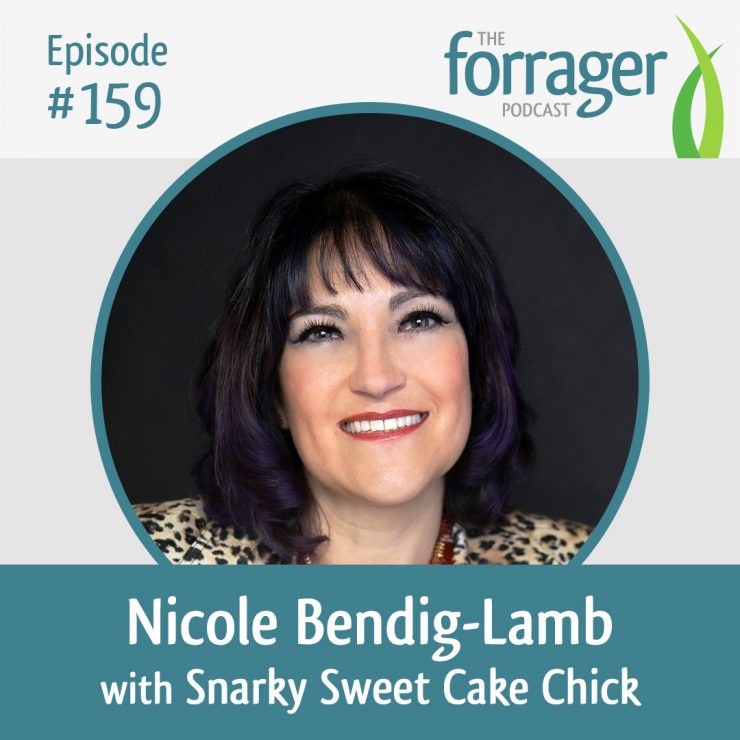
David Crabill: Welcome to the Forrager Podcast, where I talk with cottage food entrepreneurs about their strategies for a food business from home. I’m David Crabill, and today I am talking with Nicole Bendig-Lamb, who is going to be one of the speakers at CottageFoodieCon this April. Now, before we dive into her story, I need to talk to you about something that has never happened before.
For the first time ever, we are all getting out from behind our kitchen counters and meeting in person for a national cottage food conference. Now I know what some of you’re thinking. Uh, I’d have to travel, get out, hotel, take time away from my family and business, and I get it. It’s a big leap. But I also know how lonely this industry can feel when you’re doing it all yourself.
And there is magic that happens when you sit in a room with people who actually understand what it’s like to manage a cottage food business like yours. So I want to make it as easy as possible for you to say yes to your business growth. I talked with Matt who is hosting this conference, and we put together a deal exclusively for you. The listeners of this show, you won’t find this on social media or anywhere else. If you register for the full three day conference. We’re gonna give you 10% off your registration. Plus, and this is the big one. We’re giving you an entire year in my Cottage Food Pro membership for free. That means for the next 12 months you’ll have me in your corner. You’ll get our monthly group coaching calls, my personalized feedback on your specific business hurdles, and full access to my premium tutorials.
So the conference will get you the spark in the connections and the membership ensures you keep that momentum going for the rest of the year. But there is a catch. This offer expires this Friday, January 23rd. so you have just a few days to decide if 2026 will be the year you go pro.
Come meet me, meet Nicole and other podcast guests, plus a bunch of cottage food entrepreneurs just like you. To get the deal, go to cottage food econ.com, sign up for the full three day experience, and this is important. You need to use the promo code CF Pro 10 when you check out.
That’s C-F-P-R-O 10. Again, the deadline is this Friday, January 23rd. Let’s make this happen.
All right, so I have Nicole back on the show today. She was recently featured on episode one 50, and I’m looking forward to digging more into her story. Nicole lives in Arvada, Colorado and sells custom cakes and baked goods with her cottage food business snarky sweet cake chick. But she’s done a lot more than that.
She also runs a coaching business called Cake Business School. She’s the author of Baking Your Way to the Top. She’s appeared on the Food Network, hosts two podcasts and has a Facebook group with 23,000 members. And yet, for the longest time, Nicole resisted turning her cake decorating passion into a business.
Her story is a great example of how starting a cottage food business can lead to big opportunities. And with that, let’s jump right into this episode.
Welcome to the show, Nicole. Nice to have you here.
[00:03:27] Nicole Bendig-Lamb: Thank you for having me, I’m happy to be here.
[00:03:31] David Crabill: Well, Nicole, I know that you have been doing this for a very long time. Take us back. How did this all get started?
[00:03:40] Nicole Bendig-Lamb: So, Most of my adult life has been in public accounting as a staff accountant for many years.
So did mostly small business, monthly bookkeeping and financial statements and payroll, all that good stuff. And then also did tax return prep. So, I enjoyed it a lot. I really did. I love accounting. But it’s a pretty high burnout industry as you can imagine, especially, you know, tax season and, and all those things.
So it’s a lot of hours and, I’ve always just loved the baking thing on the side. I’ve been baking since I could reach the oven, and so I. Started making cakes for friends and family, like probably most people who have cottage food bakeries. And then it catches on and people would start asking like, oh, you know, a friend wants this, can you do it?
And then you start taking orders, and it just kind of morphed from there. But I just decided, I really wanted to, give it a, full go. And so I actually decided in 2017 that I wanted to try it as a, full-time rather than the side hustle. And so I worked with a cake business coach, which I didn’t even know that was such a thing back then.
And she helped me, uh. set the goal, kind of figure out like what I would need to do, even with an accounting background and working with small businesses. You know, this whole cottage foods thing was totally new to me, so there was a lot I, I just didn’t know. so I worked with her and set a goal to, leave my day job, which I was able to do in 2019.
So I officially left public accounting and, my tagline is I went all in on my sweet business dreams. So that’s kind of how it morphed.
[00:05:36] David Crabill: So you started the business in 2017. but you said that you have been baking forever. So when did you start to think about actually turning this hobby into a business?
[00:05:49] Nicole Bendig-Lamb: well, so it’s kind of interesting. So I actually used to have a different business name for my cakes before Colorado had past cottage foods laws. But I used to have to rent time in a commissary kitchen. And so I actually at one time had. The full blown food service license. I used, a bingo hall kitchen that was fully, certified with the health department. And so I had been doing it for a long time. But then it was a bit prohibitive cost-wise ‘ cause it was a bigger overhead and, you know, you had to schedule time.
And so that was a little difficult. And so I actually stopped selling cakes for a while and then when I found out that Colorado had enacted cottage food laws, I was like super excited. So. That’s when in 2017, I was like, okay, I’m gonna start this up again
[00:06:51] David Crabill: Okay, so this is something that you, you actually started before 17. You were selling cakes, you were using a commercial kitchen, and about what year or timeframe did that happen?
[00:07:03] Nicole Bendig-Lamb: Oh gosh. I’d been doing that in 2009, I think, so quite so it’s been a long time I’ve been doing it. Yeah.
[00:07:13] David Crabill: Okay. Yeah. And that sounds like it had been before Colorado passed their law. so when you started that, you know, you’re obviously jumping in quite a lot to be renting space from a commercial kitchen. Did you have big business goals? Were you just trying to make it legal? Like what was your thinking at that time?
[00:07:32] Nicole Bendig-Lamb: I had been, doing things for friends and family and they’d wanna pay me and I’m like, this is not on the up and up and I just, I was so scared that I, I didn’t wanna do it the wrong way, so. I looked into it, I’m like, okay, I knew the owner of this, bingo hall that had the kitchen, and they said, yeah, you can definitely rent some time in there.
I don’t know, I think I just wanted to give it a try. And what ended up happening was I started getting a lot of wedding requests and I connected with some other, food professionals. I, connected with a chef who had a catering company and he would use me for all of his wedding cakes.
And so I kind of got a taste for it, if you will, when I was doing it, out of a, commissary kitchen. But it was difficult for me to sustain that as just myself. and I wasn’t at a point in my life where I felt like I could. Do that full time. at the time I was a single mom.
I had two little boys, and it was just like, I got a taste for it. And then I really, I did have big business dreams. I mean, at one point I really wanted to have my own storefront bakery. But Now I just love having that flexibility and being able to do it from home. I turned 55 this year, so it’s like, eh, you know, I would love to retire in the next maybe five years. So starting something bigger just doesn’t fit for me right now, which is why I’m just so happy that, we are allowed to do certain things from home now.
[00:09:10] David Crabill: And then if you started selling with this commercial kitchen in 2009, when would you say you really started delving into the cake making and decorating hobby? about what year was that when you actually started this journey?
[00:09:27] Nicole Bendig-Lamb: Oh gosh. Okay. I know exactly it was, It was 1995. I bought my first kit of, it was a little box of like, oh gosh, it maybe had six Wilton tips and some piping bags, and just started going crazy. I just started practicing and making all kinds of things ’cause up to that point, you know, I’d always baked things like cookies and brownies, you know, even when I was just a little kid.
But this was really the first time when I started actually decorating and that blew my mind at the time. then I was hooked, for sure.
[00:10:09] David Crabill: Yeah. ’cause I did see that you like won a cake competition in like 2004, so that’s already like nine years into your journey. So you were doing this for a very long time and you were very skilled by the time you started selling in 2009.
[00:10:27] Nicole Bendig-Lamb: Yes. Yeah.
[00:10:28] David Crabill: And on episode one 50, you talked about how you doubted yourself and doubted whether or not you could make this into a viable business.
So was that. Before 2017 when you booted it up again as a cottage food business, or were you referring to back before 2009 when you started selling in the first place.
[00:10:51] Nicole Bendig-Lamb: Yeah, no, that was definitely kind of the 2017 era when I was like, could I do this? I don’t know. I keep hearing I should, and it was basically 2017 when I had that aha moment of the only person telling me, I can’t do this is me.
[00:11:10] David Crabill: What was that turning point for Because obviously you had all the skills, right? I
mean, it is a very rare for someone. To have the level of skill that you had in their craft when you restarted the business. I mean, You’re just about as good as almost any cake decorator out there. And I’m sure you, you can point me to people that are better than you, but like for the average person, right?
Like your work is off the charts good. So, you had the skills.
[00:11:42] Nicole Bendig-Lamb: Yeah. I think it was honestly I feel like the timing was finally right. so I remarried and my now husband is, so supportive of, my dreams. And I think it was really, him telling me like, if you wanna try this, why don’t you I think he was the first person to really challenge me on why don’t you wanna do this?
‘ cause, my sisters and my friends and my, everyone in my family was always, telling me that. But I guess. No one really asked me well, why don’t you think you can? And so my husband was really the first person to, to challenge me on that. And I, it was like, wow. I guess I don’t know how to answer that.
Yeah, why can’t I? And so, I think just knowing that I had someone in my corner, to, you know, he’s like, why don’t you just give it a go? See what happens, you know, if you don’t like it, you’ve obviously got a, a career that you can go back to at any time. ‘ cause it’s not like I hated my job or anything. I really enjoyed it.
[00:12:50] David Crabill: Well, As we said, it’s very rare for someone to have the level of skill that you had when you started. Do you feel like because of that you didn’t have to worry as much about marketing because your product was so good?
[00:13:06] Nicole Bendig-Lamb: In a way, but I will say marketing was probably the hardest part for me, partly because, I’d never really done marketing in my life before. I’d always just, I, I just wasn’t involved in that with any of the businesses I worked for. So I didn’t really know about marketing, but honestly, I think again, it was that mindset piece where
I was afraid to go out there and put myself out there and, ask for the business if you will. You know, That was hard for me, but mainly from a mindset place. And I feel like a lot of creatives struggle with this because our work is so tied to our passion. And so it’s almost like, oh, if somebody doesn’t want my cakes, then they don’t want me.
Like it’s tied to my identity. And so that really took self work, to get over that to where now I’m to the point where I’ll talk about my cakes anytime, anywhere. I’ll introduce myself to strangers like, Hey, I heard you chatting about an event.
I’m a cake designer. Which, 10 years ago I would’ve never done that. But now it’s, it’s just so different because, I guess I’ve proven to myself, okay, I can do this. I, I got this, and if they don’t want it, I’m okay with that.
[00:14:31] David Crabill: Well, between 2009 and 2017 I know was a pretty important event in your life, getting on the Food Network. Can you share how that opportunity came about?
[00:14:45] Nicole Bendig-Lamb: So it was 2012 and I had this janky little website that I had done myself. I didn’t know what I was doing. I just used, I think it was like a Yahoo template or something. It was, It was not anything to write home about.
But you know what? I was proud of it. I would put up some of my sculpted cake pictures and if somebody wanted to, contact me, they could just click a button, fill out a little form, and it would go to my email. So one day I was looking at my email and I got this email from a guy who said, hi, we came across your website and we’re casting a new show for Food Network and we are looking for new talent, and we wondered if you would like to audition. immediately I was like, yeah, right. this is a scam. this isn’t even possible. I ignored it and the next day I got a follow-up email. Same gentleman saying, Hey, I just wanna make sure you saw my email. would love for you to audition. Can you, get back to me and let me know if you’re interested. So at this point I’m like, okay, this is really persistent,
So I responded to the guy and I asked if he could gimme more information, and he said well, it’s easier if we just jump on a phone call so I can just go over everything with you.
[00:16:00] So I reluctantly agreed, we got on the phone and it turned out to be legitimate. And so it was the same production company that does cake Wars and Halloween Wars and Cupcake Wars and all that. So he gave me instructions on how to audition. So I had to film a, I think it was like a two minute audition video, and then I had to upload it to YouTube on a private link. I’m like, how, I don’t know how to do any of this, but I, I figured it out.
and I thought to myself kind of like, phew, okay well, it’s out there. I thought I’ll never hear back. But I was so excited like, what an honor to be asked. So maybe a few days after that, I got a phone call and he said, okay, we need to know what your schedule is. And he gave me this date range. And I, I asked, well, why, why do you need to know that? He said well, ’cause you’re gonna be on episode four. And I was like, what? Are you kidding me?
I couldn’t even believe it. And so I said I have to ask my boss if I can have the time off. And he said, I need to know now do you wanna do it or not? ’cause we’ve got a lot of people and we, and so I just, I said yes, yes, I wanna do it.
So I called my boss at home because this was you know, in the evening and told him, and he was like, yeah, do it. And thankfully it was not during tax season, the filming, so thank goodness. so what ended up happening was this whirlwind trip they flew me out to LA, had a car, pick me up at the airport, take me to a hotel drive me to set every day for filming.
Felt like a rock star. it was so surreal. Even still talking about it, I almost am like, did that really happen? So that’s how it happened and it was one [00:18:00] of the best experiences of my life.
[00:18:03] David Crabill: So you got on the show and what was the experience like for you?
[00:18:08] Nicole Bendig-Lamb: It was exhausting. Yeah, I mean, it’s a lot of work and exciting. I met some amazing people. It was really nice because most of the competitors were, we were all staying at the same hotel, and so in the evenings, we’d sit in the hotel bar and get to know each other and it really felt like a family to me.
It didn’t feel like cutthroat you know, everybody was just happy to be there. Actual filming day was intense. Because what’s interesting is you’re competing and you wanna do your best work, but you also have to understand that. You’re gonna have cameras in your face and you’re gonna have, directors and producers like stopping you in the middle of your doing something and say, Hey Nicole, that was great. Can you say that again with a little more volume? Or, we’re gonna reshoot that. And so it was kind of weird to like think well, I’m trying to create this showpiece for the competition, but also. They’re filming it and they want certain things because it’s a TV show first and a competition second.
So I will say spoiler, I was the disaster team, so I came in last. you know, things would go wrong and for those of you who want to do that and get on a show, just understand that it’s a TV show first and a competition second. you may not produce your best work because you’re under the gun.
It’s, timed. you know, if you were gonna do a showpiece like that for a client, you would never do it in six hours from start to finish, you know? So, it was. Exhausting. Amazing, wonderful. And I, do wanna really stress something, you know, I said I was the disaster team and I came in last. I’m not upset about that at all. At the time, I was, really sad because, you know, I told everyone, watch my episode, but I wasn’t allowed to say that I came in last. You have to keep that quiet until after it airs. But I look back on it now and it’s like, you know what?
I got the most airtime because I was the disaster. And that’s what people remember. I think, you know, you might remember who won, but really you, you think about, oh, that poor girl, you know, this fell over or nothing went right. And I was just happy to be there and honored and it was all good.
[00:20:40] David Crabill: Yeah, I think you’re a perfect example of how your level of experience has nothing to do with how you perform in a competition, right? Because at this point you competed in 2012, you had 17 years of cake decorating experience. You were a phenomenal cake decorator, and still every thing went wrong So it, it had nothing to do with your level of experience. and I think that’s something that might be a little easy to forget is that every single person competing on these shows is a phenomenal cake decorator, designer. What? Whatever.
[00:21:13] Nicole Bendig-Lamb: Yeah, exactly.
[00:21:16] David Crabill: Well, we haven’t talked about the rest of your business trajectory yet, right? So we know that you started trying to sell in 2009. You really. Dug in, in 2017, hired a business coach and got that off the ground. So can you just briefly walk us through like what the past eight years have been like since you really jumped into your cottage food business?
[00:21:41] Nicole Bendig-Lamb: Yeah, so it’s interesting the timing, I, I’m talking about timing a lot. So I left public accounting toward the end of 2019 to do baking full-time. I had attended my first big wedding expo in February of 2020. I was booked out with tastings. I also had other customer orders. I was booked through probably the first seven months of 2020 with cake orders.
Well, we all know what happened in 2020, so I had just left my day job. And then now we’ve got lockdowns and weddings canceled. Events canceled. And so, on all my list of things of why maybe I shouldn’t have left. At that time, global Pandemic was not on the list, and so
[00:22:34] David Crabill: Wait, wait. So you, you feel like you shouldn’t have left the accounting field at that time.
[00:22:40] Nicole Bendig-Lamb: I felt that in. March of 2020. I don’t feel that. Now, looking back, I don’t feel like that. But what I ended up doing was a bit of soul searching. Like, okay, I still wanna do this, so how can I stay in the industry? And I didn’t think that it was gonna be forever. I knew we would, you know, eventually things would return to some sort of normal.
So I spent 2020 basically creating content. To help other bakers learn about the business side of it. And I mentioned my cake business coach, and it was kind of funny because she, at the time had decided to move on to something else. she said, would you like to take over Cake Business School?
And so I ended up taking over Cake Business School and basically reworking all of her content to kind of make it my own and put my finance and accounting background into the content. So really digging deep into that part of it, but then still, teaching, all of the, pieces that you need to know to start a home-based baking business.
[00:23:57] David Crabill: Yeah, I know you do a lot of coaching and helping cottage food bakers now b before we dig into, some specific advice, I did wanna just ask you about. How your dreams have evolved over the years, because I read that, you know, it was your dream to get on the food network, and then you got on the food network, and then you’ve had this long time dream of opening up a successful cake business.
And then you did that, and then you had this dream of helping coach other bakers, and now you’ve done that. I just wanted to get your perspective on it because, you know, a lot of the listeners out there have a dream, but the dream is not the end, right?
So like, what have you learned about goals, dreams, and how your journey has affected your perspective on that?
[00:24:48] Nicole Bendig-Lamb: Yeah, I am a huge believer in smart goals. So the S-M-A-R-T, so specific, measurable attainable relevant and timely. And some of those acronyms can be like interchanged with different words, but it’s not enough to just have a goal or have a dream, you need to break it down into something that makes it easier for you to do it.
Because if I just say I wanna have a cake business. that’s great. But if you wanna turn that into something that’s a little more actionable, you wanna break it down into the steps of how you’re gonna actually do that. And so for me, I feel like having these big dreams in the emotion of it, it feels big and huge and, sometimes too much.
But if you can just step back and put it on paper, just write it down like, what’s the first thing I have to do? And then you break that into little steps. So honestly, I feel like dreams are just goals that you’ve broken down and done the work and made it happen.
[00:26:02] David Crabill: Well, you’ve talked a lot about your accounting background and so I can’t think of anyone better to talk about accounting for a cottage food business, but you probably don’t know this, but I have a background in website development, but when I educate people about how to build a website, I definitely don’t do it the way I would personally do it as a website developer. You know, I teach people what I think would work best for most cottage food bakers. So what would be your advice, not necessarily on how you do accounting for your own business, ’cause that might be a little bit too advanced, but what do you think is the best way for the average cottage food baker to manage the accounting in their business?
[00:26:45] Nicole Bendig-Lamb: So, The very first thing that is the most important, and a lot of people don’t really even think about it, is in accounting. We say if you’re a business owner, you shouldn’t co-mingle your personal and your business funds. So step one would be to make sure you have a registered business name so that you can open a separate bank account for your business.
um, that’s the first
[00:27:15] David Crabill: Just wait, wait, just one bank account. ’cause I saw you uh, recommend having like five bank accounts,
[00:27:22] Nicole Bendig-Lamb: Yeah. So that is part of the Profit First methodology, which is a book by Mike Michalowicz, I actually did go through the Profit First Professional training. So it’s, it’s a methodology that I strongly believe in to help you manage your books.
But at the very least, you gotta start with one account for sure, so that, that’s specifically for your business. So that’s kind of the first step as far as, don’t deposit your, cake money into your personal account ’cause it’s very difficult to unwind that when it’s all commingled.
Um, [00:28:00] I recommend that you use easy to use accounting software. I personally use QuickBooks online. However, there are other accounting softwares that are cloud-based that you could use that might be a little easier for someone who doesn’t have a bookkeeping accounting background. So you can use wave is one, zero is one, and I think it’s spelled XERO where they’re a little more simple for, basically you’re just making sure that you’re tracking your income and your cost of goods sold.
your other expenses on a regular basis. a lot of these softwares, most of ’em nowadays, you can actually connect with your business bank account and it will sync your transactions into the software. So you don’t have to manually post everything, you just have to make sure you’re categorizing it correctly so that you can generate a profit and loss statement, which is one of the three main financial statements.
And that’s basically it shows your revenue, your cost of goods sold. Then it, your regular expenses. So on the bottom line, you’re gonna get your net profit or net loss. Hopefully you’re gonna see a net profit if you are tracking everything properly and pricing effectively. so that’s kind of my quick answer to that question as far as, what a brand new business needs to do to keep track of the money piece and the bookkeeping and the accounting piece.
and then I do also recommend that you have a CPA or an enrolled agent that can help you with your income tax return at the end of the year. I could, oh, I could go on and on, but I think we’ll keep it at that, just to keep it simple.
[00:29:55] David Crabill: Well, i’d like to dig a little bit more into that aspect. Um, in terms of the income tax return. A lot of times people are very concerned about. What they need to do before they start a business. So can you shed a little bit of light on what does someone actually need to do and when do they need to be worried about it? do. They just need to be worried at tax time.
Are there things they need to do when they start their business, et cetera.
[00:30:22] Nicole Bendig-Lamb: with, as far as like income tax goes, there are some Different rules depending on what kind of business entity that you decide to register. I’m gonna give you an example for myself. So my cake business is snarky sweet cake chick. I am registered with the state of Colorado as an LLC, which is a limited liability company.
Now it’s just me. I’m the managing member. It’s a hundred percent owned by me. So this gets a little weird in the eyes of the IRS because it’s just me. I’m considered a disregarded entity, and all that means is. I’m the only person running it and taking ownership of it.
It is a separate entity, but it’s gonna just get reported on my personal tax return on a form called a Schedule C. And so what’s gonna happen is tax time. I report all my income cost of goods and expenses, so my net profit that’s taxable gets treated as you have to pay self-employment tax
So that’s how it fits into your personal tax return picture. I am willing to say that probably most cottage food businesses are very similar, where they are just a single owner, LLC. So they would do it on a Schedule C if you had. A few different owners who are not related, then it would be a partnership which requires a separate tax return, but any income or loss, from that would get reported on your personal tax return. basically, anytime you own a business, it will affect your personal tax picture in some way.
Just depends on the entity, type on how that gets reported. So what I tell people is you need to make sure that you are keeping track of your. Books on a regular basis because if you are making a profit, then you may need to pay in quarterly estimated income tax payments so that at the end of the year you’re not hit with a big tax bill.
And the IRS doesn’t assess an underpayment penalty,
[00:32:53] David Crabill: Are there any tax benefits to being an LLC versus having a regular sole proprietorship or DBA?
[00:33:03] Nicole Bendig-Lamb: They both would require that you pay self-employment tax. However having an LLC gives you a layer of protection from like separating your entity from you as a person, if that makes sense. So tax benefit wise? Not necessarily. And then there are different rules, like if you make over a certain amount, the self-employment tax can get a little higher than you would wanna pay.
And then there are tax benefits of you know, having yourself treated as an S corp, like s as in Sam, you don’t pay self-employment tax, but then you do have to pay yourself. A payroll. it gets a little more complicated at that point. again, that’s why I really recommend that either you have a CPA that, helps you do your tax return, or you at least, pay a CPA for an hour of their time to give you advice based on your personal situation to make sure that you are, operating at the best profitability for yourself, but then also being able to cover the tax liability that, you may or may not, you know, have to cover. Well, I’ll just add, you know.
[00:34:19] David Crabill: I’m not surprised to hear that you use QuickBooks. That is the most powerful tool out there as far as I’m aware. I personally have used Wave for everything that I’ve done and it’s been perfectly sufficient. And QuickBooks is a lot more expensive than Wave, which is the reason why I have used Wave. so yeah, so I have quite a lot of experience with Wave. I know you have quite a lot of experience with QuickBooks but I, I’ve always found Wave to be perfectly sufficient for my needs as a small business owner yeah, I would recommend that. so as you said, at the end of tax time, you know, you want to hopefully be seen a profit on your profit and loss statement.
And I know you, you’re a big fan of the Profit First Book. Can you share a little bit more about that methodology and how it’s helped improve your business?
[00:35:11] Nicole Bendig-Lamb: you mentioned earlier that I recommend, you know, the five five bank accounts. So the profit first methodology, the easiest way for me to explain it is. don’t know if, how many people listening would maybe remember this. I gave away my age earlier. But there’s a budgeting method that people used to use way, way, way back when, and it was called the envelope system.
think about your grandma or great grandma, she got her money and she’d have cash. And so what she would do is she would have, you know, all these different envelopes and they’d be labeled like household expenses, you know, food, entertainment. And what she’d do is she would take the money that she got, the big chunk of it, and she would put okay, I’m only gonna spend.
[00:36:00] $300 this month on entertainment or whatever it is. But you, put the cash in those envelopes and you would only use what was in there. So say you’re done with your $300, that means no more entertainment that month ’cause you’ve used that budget, right? And so the idea of it is to take the money that you have available to spend in your business and allocate it to certain accounts ahead of time based on a budget and what you know your expenses are gonna be so that you don’t run out of money.
So what happens is if you’re having just one bank account where everything goes in and everything comes out, it’s a little more difficult to actually on the fly c. Well, How much money do I have? It’s different to log into your bank and say, oh, I have this much money. Cool. Well, But is it all spoken for?
If you allocate to different accounts and the five accounts that are recommended in the Profit first methodology is your income account where everything goes in. So all your cake sales or treat sales go there. Then you have your profit account. That’s where you set aside money to reward you for taking on the risk of being the business owner.
You have a tax account and that’s where you’re gonna set aside money ahead of time so that when you need to pay your taxes, that’s already allocated. And then you will have an owner’s compensation account. This is where you pay yourself. This is your paycheck, which is different than the profit. This is your paycheck. And then the last account is your operating expenses. in the traditional accounting equation, which is sales minus expenses equals profit. profit is the last thing? It’s like, well, whatever’s left over is my profit. The profit first methodology, [00:38:00] as you can guess, we wanna take our profit before everything else.
So now we take the equation and say well, our sales minus our profit, is gonna equal our expenses. So what that’s doing is it’s allowing you to very quickly see if you take your sales and you subtract the profit that. You want to make and you don’t have enough to pay your expenses, that tells you very quickly you can’t afford your expenses, which means a few things.
Either you’re not charging enough, you might need to raise your prices, you may need to decrease your expenses, you may need to find better deals on cost of goods, all kinds of things. But, Uh, if you read the book, which I highly recommend, everyone reads this book.
there is a chart in the book that will tell you if your revenue range is within this dollar amount to that dollar amount, then a fiscally healthy business at that level will take X amount of percentage for profit.
And so, It’s actually pretty easy to implement the system itself. and it’s been life changing for me and many other business owners.
[00:39:19] David Crabill: And the million dollar question is, does Snarky Sweet Cake Chick actually have five business bank accounts for it?
[00:39:26] Nicole Bendig-Lamb: She absolutely does. Actually, I have six. I’m gonna tell you why. I also opened a sixth account that is my sales tax liability account. I just automatically take any sales tax revenue that I collect and put it right in there because sales tax it’s not really my money. it’s the jurisdiction’s money.
So I actually have six bank accounts.
[00:39:57] David Crabill: And a traditional business bank account has a cost. Are you using free online bank accounts or are you paying every month for every single account?
[00:40:08] Nicole Bendig-Lamb: And that is an excellent question and I’m super glad you asked. That’s one of the things that a lot of people are like well, that doesn’t make any sense because I have to pay a fee. Actually, there are a lot of institutions that you don’t have to pay a fee. But now there is a bank that is a official partner of Profit First professionals.
It’s called Relay, R-E-L-A-Y, relay Bank. You can have up to 20 bank accounts with no fees. they also have a built-in profit first allocation tool. So all you have to do is go in and set up your percentages based on, your business, and then you can have it automatically transfer the funds into the right accounts, like super easy, super quick.
[00:40:59] David Crabill: There are also some bank account systems that have a bucket system to allocate stuff. Do you think that having buckets would be enough or do you feel like it’s essential for them to be in completely separate accounts?
[00:41:15] Nicole Bendig-Lamb: I would say it’s better to have them in completely separate accounts. And the reason I say that is the Profit First methodology is really based on human behavior. And so you wanna make it so hard for yourself to spend money that you shouldn’t, if that makes sense. So you wanna protect, say, your tax account, because what happens a lot of times is, you know, if you have a bad month, you may be tempted to pull from somewhere else and you may need to, I’m not saying you can’t ever do that, but you wanna really have to think about it before you actually, take your profit or your owner pay to do something else.
It’s better to be really intentional with your money I’ve had people say well, I could just do it with spreadsheets. But are you gonna look up your spreadsheet? You know, I think most people do and he refers to it in the book, he calls it bank balance accounting, where business owners, they’re busy, they’re on the fly.
They’re like well, I gotta pay this bill. They just log in on their app, on their phone, look at their bank balance. Yeah, I got money. And then they’ll just do it. Versus if you’ve actually got your money bucketed in a separate account, you can still do the bank balance accounting, but you’re looking at a specific account, so opex, I’ve gotta pay this.
If you don’t have enough, you’ve gotta be really intentional about, okay, well what am I gonna do?
[00:42:42] David Crabill: Yeah, and just talking a little bit about the human behavior piece, part of the problem here is that. people’s expenses will grow to match the amount of money that they have, right? So what we’re essentially doing here is we’re shrinking down the amount of available capital that you could use for expenses.
[00:43:04] Nicole Bendig-Lamb: Yeah, absolutely. And when, somebody wants to implement Profit First in their business, the first step is for them to do an as a profit assessment where they’s a worksheet that they can, get for free off of profitfirstprofessionals.com.
And you just plug in your numbers and it’ll, tell you what percentages you’re. Running at like, say my operating expenses should only be 30% of my real revenue, but minor 65. So it’s like, whoa, what am I doing wrong? And it’s not like you would be able to, course correct.
Overnight. and this is all explained in the book. You would slowly roll out changes, bit by bit until you get from where you were to where you wanna be.
So what I do with my coaching students is to have them do an expense audit where they list every single thing that they’re paying for on a monthly basis for their home-based business, and then categorize each thing into three categories.
It’s. Absolutely necessary to run my business. It’s a nice to have, but maybe I could decrease the cost or pause for a bit. And then there’s the third category of, okay, I absolutely don’t need this right now so I can cancel it or stop it. And most of the time, about 10% you could cut just based on, Hey, I’m paying for stuff that’s nice to have, but I don’t absolutely have to.
And, if you do that periodically, it just helps you kind of protect your margins.
[00:44:45] David Crabill: Well, I did wanna ask you about your book which I know you published in 2022. How did that come about?
[00:44:53] Nicole Bendig-Lamb: it’s very funny because I had attended a. Zoom with Mike Mitz, who was the author of Profit First. And he’s a full-time author, that’s all he does now is write business books for entrepreneurs specifically. And he was doing a workshop on just what it was like to be an author.
at the end of the workshop I was so inspired that I said, you know what? I’m gonna write a book. And so I did, and I had it written and published. By the end of that year. So that’s kind of how it came about. so my book is called Baking Your Way to the Top, how to Start and Grow Your Own Home-Based Baking Business.
And it is part memoir, it’s a bit of my story, but really what it is, is a how to in a entertaining and easy way to get through it. So every chapter begins with a real life story of mine that was what I call a cake catastrophe. So something that I did in my early years of having a home-based speaking business that I.
Quote unquote screwed up because I didn’t know any better. And then the meat of the chapter is explaining the lesson. And then at the end of every chapter, I share a cake tastic story of how implementing the technique from that chapter turned out in a better way. So it’s a quick fun read, and it’s available pretty much anywhere.
You can get books online. It’s on Amazon and Barnes and Noble and Target. And then I just last year got it live on Audible, so I narrate it myself so they can find it there as well.
[00:46:51] David Crabill: So what were your goals when you decided to make the book?
[00:46:58] Nicole Bendig-Lamb: I really wanted to establish myself as an expert in the industry and also use it as I guess, a lead magnet to kind of help people find me because I offer so much information that I just really wanted to get it out there. And I love speaking. I’ve also, besides speaking at the National Pastry Convention, I actually got to speak at the International Baking Industry Expo a few years ago,
I just thought, if I have my book, that’s just a great way to kind of introduce myself spread the word a little bit more and help as many people as possible.
[00:47:45] David Crabill: So you got this book traditionally published, right? Like it’s not just an ebook, it’s in stores. So what was the process like to actually get a physical book published?
[00:47:58] Nicole Bendig-Lamb: I didn’t know, so I found a coach to help me. I really highly recommend that if you don’t know how to do something, there are people out there that do know and that can help you. So, Mike Mitz had a lot of resources where I could find information and I used a book publishing coach who was able to connect me with all the right. Things like you have to have, several different kinds of editors. You need a proofreader, you have to have cover design, you have to have someone format the book to actually get it on a publishing platform. And then I also hired a book marketing coach who helped me with the launch. it wasn’t something that I knew how to even do, but I did find the right people to kind of help me get that process going and then get it uh, ultimately published and done.
[00:48:55] David Crabill: One thing that I noticed throughout all of your business journey is a consistent focus on networking and working with others to achieve your goals. so what’s some of your advice about how entrepreneurs should network to improve their chances of success?
[00:49:15] Nicole Bendig-Lamb: Oh, definitely. when I first started out after I left public accounting and, and I was doing this full-time, I joined my local Chamber of Commerce, and then I joined a few other just business networking groups. I did overwhelm myself at the beginning where I think I, joined too many groups and then I was.
Networking, but then didn’t have time to actually do anything. So I pulled back and I focused on the one that I felt was giving me the best results, which I stayed with my Chamber of Commerce. And that I can tell you, I have actually done an analysis on clients that I’ve received and where they came from.
Over 95% of my baking business has come from being active in my local chamber of commerce. Now, I say that, but also I want people to know. Just because you join an organization or networking group, you don’t just pay your dues and then just sit back and expect everybody to just be knocking down your door.
I go to events. When they have events I go to, you know, when new businesses open, I’m there at their ribbon cuttings. I introduce myself and I ask how I can support them. I really feel like, the more you put into it, the more you’re gonna get out of it.
And so, networking has been huge for me.
And then as far as, connecting with other cottage food bakers. That has been huge. ’cause I don’t really believe in competition. Like I’m not for everybody and neither is everyone else. So there’s enough business for everyone.
I refer people to other bakers if I’m busy or if I feel like that’s just not an order that’s in my wheelhouse or I don’t, wanna do it for some reason, but I don’t wanna just leave them with no options. But I’ve found that. Connecting and, having that relationship with other bakers has helped my business too, because then they, they reciprocate, they do the same thing.
And so, , I feel like we’re all here to kind of help each other.
[00:51:26] David Crabill: You have so much to share about how to start a food business and how to help other bakers. We haven’t talked a whole lot about your specific business. I know it’s been very successful since you rebooted it in 2017 and, you went full time in 2019 and, I know you do, quite well with your business. but I specifically wanted to ask you about the trends in the cake making world because you of anyone would know, you started in 1995 before it was even a trend, right? And you’ve seen like the industry over the past.
30 years. Where do you think we are today are cakes still a really big thing? Are they becoming less of a thing? What have you noticed about how the industry has changed over that time?
[00:52:16] Nicole Bendig-Lamb: I definitely think that cake is still a big thing. I think it’s bigger now than ever and I would credit that to the competition shows, and then also, with social media as well, we’ve got, Instagram and TikTok and you can see people from all over the world and what they are doing. I would say that I feel like it’s, getting.
More and more outrageous, and that is, because of innovation in, the technology and it’s just easier for people to find different kinds of molds and tools and like the edible printing systems and you can just do so much with it. I just got the little blue printer from icing images and that’s actually where I’m focusing now. I’m stepping back from wedding cakes and only because, I’m just ready to take a break from it. It’s, a lot of work. and I’m launching a new line of edible swag. So I’ll be doing corporate branded, cookies, cake pops.
I printed on marshmallows the other day. just when you think things can’t get more innovative and amazing than they do. So, It’s a big changes from the days of just, frosted cakes with a piped border. It’s really gotten off the charts crazy, and I love it.
[00:53:48] David Crabill: so it sounds like that’s kind of your future plan for your own bakery. What else do you see yourself doing in the next few years? I mean, you, you have this cake business school as well. you know, what are your, overall plans?
[00:54:04] Nicole Bendig-Lamb: Last year I traveled quite a bit to some different, expos and things. Sharing, my knowledge as far as the business side of baking, I love to teach technique, but I wish more cottage food bakers would embrace the business education.
I do feel like It’s a bit of a hard sell and I don’t know why, but I do see, you know, the same group of people, taking classes on cake technique or cookie technique, which is great, but you know, If you’re gonna have it as a business, you know, at the very least get some, basic business education so that you can be sustainable because it doesn’t matter.
You could be the best, cake artists, the best sourdough bread maker in the world, but if you don’t understand the business side, it’s not gonna be sustainable. And you know, what a shame that would be for you to not be able to share your creations, you know, with everybody.
[00:55:11] David Crabill: I have to jump in here for a second because Nicole is so right. Technique is great, but the business education is what keeps you going, and that is exactly what we are focusing on. This April at CottageFoodieCon. It’s not just a meetup, it is three days of the exact business education. Nicole is talking about the stuff that ensures your talent doesn’t go to waste.
And remember, as I mentioned at the top of the episode, if you register for all three days of the conference by this Friday, January 23rd, you’ll get 10% off plus a full year of my Cottage Food Pro membership for free. go to cottage food econ.com and enter the promo code CF Pro 10 at checkout to get the deal. Now back to the episode.
[00:55:59] David Crabill: Well, you obviously could talk all day about this stuff and you have so much advice. I know you have a checklist or a guide that can kind of help people get started with their business and, and maybe, you know, get them to learn more about you and, and find your resources.
[00:56:18] Nicole Bendig-Lamb: Yeah. So I have a guide called The 10 Steps to Starting Your Cake Business, and it’s just a very straightforward, simple checklist of all the things that you need to do in order to set up your own, cottage food business.
[00:56:34] David Crabill: Well, I’ll put a link to that in the show notes. you know, it, you could have easily not gone this route, right? You could have just stuck with your accounting job, you know, you’re very successful with that. as you look back on it, what has entrepreneurship and pursuing this passion turning into business, what has that meant to you?
[00:56:58] Nicole Bendig-Lamb: I love working for myself. I probably put in way more hours than I ever did working in public accounting, which sounds crazy, but it doesn’t feel like it I just feel like I just play all day. It’s so fun. And it’s funny because my husband, just the other day out of the blue, I don’t know what I was doing, I was something in the kitchen.
But he said, you know what? This entrepreneur thing really suits you. And that just made me feel really good because I’m doing something that I love and that is also, I feel like enriching other people’s lives. And rather that’s through them ordering, a dessert or a cake or whatever from me or me sharing business knowledge because they wanna do it.
I mean, at the, at the root of it, my passion really is just helping other people, sharing things with other people that is gonna make their lives happier or better.
[00:58:04] David Crabill: Well, thank you so much, Nicole. Now, if someone would like to learn more about you, where can they find you or how could they reach out?
[00:58:14] Nicole Bendig-Lamb: Yeah, so they can go to cakebusinessschool.com and that will link them to pretty much everything that they can find on me as far as my baking business and also my coaching services. And I also have a blog site that they can link to as well, which has tons of free information, recipes, blog posts tips and tricks for having a home-based food business, specifically cake ’cause that’s what I do.
But a lot of the concepts apply to any cottage food business.
[00:58:55] David Crabill: Great. Well, we’ll link to that in the show notes and thanks so much for coming on the show and sharing with us today.
[00:59:02] Nicole Bendig-Lamb: Yes. Thank you for having me. It was a real pleasure to talk all things cottage foods with you.
[00:59:11] David Crabill: That wraps up another episode of the Forrager Podcast.
For more information about this episode, go to forrager.com/podcast/159.
And if you feel like you’ve gotten a lot of value from this podcast, I have a favor to ask you could you take a quick moment right now and leave me either a review on Apple Podcast or a rating on Spotify. It’s truly the best way to support this show and it’ll help others like you find this podcast.
And finally, if you’re thinking about selling your own homemade food, check out my free mini course where I walk you through the steps you need to take to get a cottage food business off the ground to get the course, go to cottagefoodcourse.com.
Thanks for listening, and I’ll see you in the next episode.