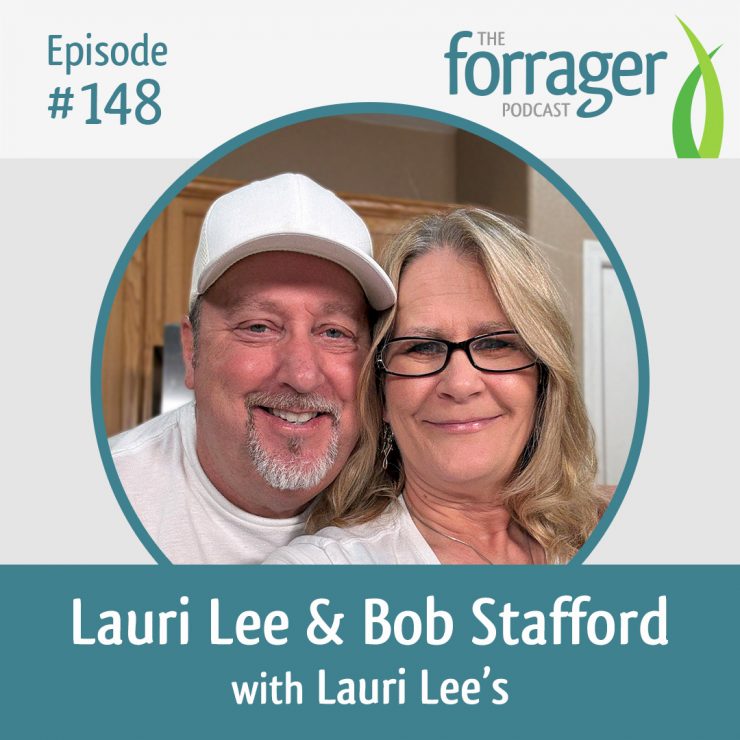
David Crabill: Welcome to the Forrager Podcast, where I talk with cottage food entrepreneurs about their strategies front, a food business from home. I’m David Crabill, and today I’m talking with Lauri Lee and Bob Stafford. But first I wanna talk about your cottage food business website. I recently researched all of the free website builders out there and found that the best one for cottage food businesses is Square Online.
So I created a brand new free tutorial that walks you through the steps you need to take to build a nice and powerful e-commerce website for your cottage food business for free. You might be thinking, what’s the catch? There isn’t one Square Online is a really incredible tool that I personally use for my own business, and I’m constantly amazed that cottage food entrepreneurs still use other website builders like Wix, Squarespace, and GoDaddy.
So if you wanna learn more, you can watch my free tutorial by going to forrager.com/website.
Alright, So I have Lauri and Bob on the show today. They live in Surprise, Arizona and sell low sodium spices and seasonings with their food business. Lauri Lee’s back when Lauri Lee invented her low sodium seasonings.
She had no intentions of selling them, but soon many friends and family were asking for them as well. So in 2023, Lauri Lee and Bob took a big leap of faith and pursued this business as their only source of income. And in just the past two and a half years, they’ve already sold over 20,000 containers of their seasonings.
In this episode, Lauri Lee and Bob share the strategies they’ve used to continue scaling their business by becoming a major presence at their markets, adding wholesale accounts, switching to a co-packer and more. With that, let’s jump right into this episode .
Welcome to the show. Lauri Lee. And Bob, nice to have your here.
[00:01:46] Lauri Lee: Good to be here.
[00:01:47] Bob Stafford: Good to be here. Thank you. Well,
[00:01:50] David Crabill: Can you take me back to the beginning, how this journey gets started for you?
[00:01:55] Bob Stafford: I’ll go ahead and start on that ’cause it was my fault in a way. In 2018 I had a medical emergency and wasn’t sure what it was. had Lauri drive me to the er and I was having a blood pressure spike, a really bad one, and they couldn’t get it under control, so they put me in the ICU and after a couple of days, they did get me squared away, but I went away from there with a bunch of new prescriptions.
And one of the things they said was, you need to cut back on eating so much salt. ‘
and we tried to do that and we found that there’s not really a lot of low sodium products out there. And the ones that are out there, not only do they not taste good as a rule, they’re not very low in sodium.
So I had a maximum of about 1500 milligrams of sodium per day that I was allowed to eat. And that’s really hard to do ‘ cause you can blow your entire budget out and then some in one Can of soup, So we were struggling with that and I just said, you know what?
I’m just gonna stop eating salt altogether, and Lauri’s such a wonderful person. She said well, I go where you go, so we’ll do it together. So we tried to just stop eating any salt and that takes care of the sodium problem, but it leaves you eating very bland food in your diet. So meal after meal was just terrible.
So after a while of doing that, I was moaning and groaning to her one day I can’t keep doing this all my life. I’m just going to eat the salt and not worry about it. And she said, no, no, no, I’ll take care of it. And a week or two later, she cooked me a meal and it was delicious. And I looked at her and I said, you salted this.
And she smiled and said, no, I didn’t. And so I said, what’d you do? And she held up like a reused bottle of seasoning that she had filled up with this adobo seasoning that she had invented. And it was delicious. And so I was kind of shocked and everything. And she also created a taco seasoning. Both of those had no salt in them at all.
So they were really good for the problem that I was trying to deal with. And they brought flavor back into our diet. So she started creating all kinds of recipes that could use these two seasonings. And there was joy again at our kitchen [00:04:00] table. So we did that for a couple of years or so, just eating meals with these.
Seasonings that she had created. They weren’t called Lauri Lees yet ’cause we hadn’t started a business on it. But we kept meeting people all the time that were in the same boat. And so at some point we decided that we really needed to start a business with this and get these products into people’s hands because they were going through the same thing we went through and they needed some help.
And so we both quit our jobs and started with a little money that we had saved up. Not really very much and started making seasoning in our kitchen and putting it in bottles. We designed all the labels ourselves, did everything ourselves, and started selling it. And it had worked out very well.
People started buying it more and more as we went along doing our little farmer’s markets outlets and different in-person events. and two and a half years later, it’s led us to where we are today, which is in a nice expansion phase. And we’ve sold well over 20,000 units of our products so far.
And people love ’em. So Lauri, how did you go [00:05:00] about inventing this seasoning? Did you find it online or was it just intuition?
[00:05:06] Lauri Lee: You know, I just started trying to. play with some things to bring flavor back. I did do a little bit of research to kind of see, you know, what I could do to kind of jazz things up a little bit. cause I, I’ll be honest, when he was struggling with the flavor and not having that, I was too, ‘ I did the same thing. I changed my diet. The same as, he did and stuff was very bland. So we really needed to fix that up.
[00:05:33] David Crabill: So what is the product? Is it just dehydrated or dried spices? Um, what did you do to, create the seasonings?
[00:05:42] Lauri Lee: Yep. So we, use all natural ingredients, herbs, and spices. No fillers, no junk, no dyes. Like some of them have, just all natural herbs and spices. So just blending great herbs and spices together to make amazing flavors.
[00:05:58] David Crabill: And clearly [00:06:00] when you started making these, you had no business ambition. So when did it start to become something you thought maybe we should start selling these?
[00:06:10] Lauri Lee: At the time, I was, in pharmaceuticals, so I was actually. The person sending out high blood pressure medications among other things around the country. So I know how much of that goes out every single day. like I said, when we started cooking with these, they were fantastic. And then we started cooking for our friends.
And our friends absolutely loved it. And knowing how much blood pressure medication goes out and how many people we spoke to that had the similar issues we started talking about, we need to bring these out ’cause they’re delicious and, people need them. So, At the end of 2019 I quit my job to kind of start getting the business put together
he was still working at the time but COVID hit, so of course that put everything on the back burner for a little while.
[00:06:53] Bob Stafford: But COVID actually was one of the things that really caused us to go ahead and start doing this because I worked at a [00:07:00] job where. They were going to require me to get a shot for COVID, and I worked from home.
I did not want to take the COVID shot, and so they were going to fire me if I didn’t take it. So I looked at that as a sign from heaven that it’s time to go ahead and quit my job and start this business. We had wanted to do a business for a long time, but never really landed on an idea. It was just a kind of a wishlist But when this happened and we had these wonderful seasonings right there, and people loved them and we loved them, and there was such a need, it was kind of obvious at that time.
So I went ahead and quit my job, gave up a, pretty nice paycheck and we just launched and went for it. So it was kind of a move of faith in, so far it’s paying off pretty good.
[00:07:44] Lauri Lee: Yes.
[00:07:45] David Crabill: Bob, do you feel like your background has helped you in the business?
[00:07:51] Bob Stafford: Well, I was a technical person, since the late nineties I worked in the IT field,
But My background in technical stuff [00:08:00] hasn’t really made much of a difference. In fact, I’ve become a lot less technical since I’ve been out of it.
You know, if you don’t use it, you can lose it. However, I have also a background in creative stuff. And so when Lauri Lee came along, we decided to just go in-house with things like packaging design and I handle all of our advertisements, graphics video stuff for commercials that we’ve made and those sort of things.
We do all that in-house. And so that part of my background has played very well into our business.
[00:08:30] Lauri Lee: Yeah. And I, I also have a similar background as far as creative. So I was a professional photographer for some time as well, so between the two of us, I mean, we photograph all of our food for all of our, our advertising. And we eat really good during those times when we’re doing those photo shoots and video shoots. So yeah,
[00:08:48] Bob Stafford: we were making a commercial together and,
I said, we need to put a bunch of different examples of the food that we cook in the commercial. So we made a meal, styled it up, videoed it, and ate the [00:09:00] models.
We did that for a couple of weeks straight while we filmed the, clips for the commercial. And we ate really good for those two weeks. It was awesome.
[00:09:08] David Crabill: So, Did either of you have any kind of background in entrepreneurship? Any previous ambitions, or is this just something that fell into your lap?
[00:09:18] Lauri Lee: I did not, I, did not expect to be running a business and especially a food type business. I look at it now and I’m like, okay, how did we get here? You know? But it, was a great thing that happened out of something that wasn’t so great at the time.
And when you look back at it now, you can see it was kind of laid out for us.
[00:09:36] Bob Stafford: And I had a couple of small businesses that I owned back in the early 1990s, and I was, in the furniture industry at the time. So I let go of that and then got a career in, IT, as I mentioned. And so this particular business, we had no background in anything related to a wholesale or retail food business.
None whatsoever. So everything that we do in this business, [00:10:00] we’ve had to learn by brute force. You know, we utilize the internet now, we utilize AI to learn stuff. And if there’s a task that has to happen to grow our business, we have to learn how to do it. So it’s quite challenging. You’re spending all of your time working and learning.
We don’t sleep nearly enough and we’ve worked seven days a week. So it, owning your own business and trying to be an entrepreneur is not for the faint of heart, but it’s been very rewarding. So we continue to learn all the time and gain skills and sometimes it’s a little frustrating to try to figure out what you don’t know.
Sometimes you don’t even know what you don’t know, so there’s a lot of research
involved . It’s awesome though.
[00:10:36] David Crabill: Yeah. So how have you kind of figured that out with the time management and then working together as a team and splitting up tasks?
[00:10:44] Lauri Lee: Working together as a team is actually pretty easy. We work really well together, so that’s really awesome. We both have a lot of overlap skills and then I have some skills that I do a little bit better and he has skills that he does better with. So, but [00:11:00] most of the time we overlap,
[00:11:01] Bob Stafford: Yes, Lauri is extremely talented in many, many ways. She’s incredibly intelligent and a gifted person. And so I find that I have to almost carve out areas for myself and say, Hey, that’s my job, because she’ll do everything. She’s really an awesome person. And to watch her grow into her role has been really enjoyable for me. I really loved seeing her excel and we get along really well. We spend all of our time together and we don’t get tired of each other.
And once in a while we might snap at each other or something, but it’s not very frequent and it’s very enjoyable to work together. So it kind of flows pretty organically.
[00:11:37] Lauri Lee: yeah. And the time management, I mean, That’s the challenging part is because there’s always so many things to do and so many different hats to wear. And during our, our super busy season, we’re busy. I mean, We have people say, gosh, we see you guys everywhere.
Yes. We’re trying to be everywhere. So we work a lot. You know, We’ve had days that are, 14, 16 hour days,
sometimes, almost
[00:11:59] Bob Stafford: every day. [00:12:00] Pretty, yeah. We, We work 10 to 14 hours a day, seven days a week. A lot of times, if you look at everything that we do now, not all of it is really hard work, but a lot of it is.
So, Like I said small business owning is not for the faint of heart. It’s definitely a challenge, but we enjoy the work together. I, can’t imagine doing this with anyone except Lauri Lee. She’s amazing
[00:12:20] Lauri Lee: and I agree.
[00:12:22] David Crabill: Why do you push so hard though? You say you’re doing multiple markets, seems like you’re doing as much as you possibly can, but it’s your business. You could decide to do fewer markets. So what’s causing you to, push as hard as you are?
[00:12:36] Lauri Lee: Well, we, took a leap of faith. I mean, we, both quit good jobs and this is what, pays the bills for one, and for two people need this. there’s so much stuff at the store that just has things in it that people don’t want. There’s a tide changing in healthy foods right now.
People are wanting healthier foods, healthier options, and we have that we can bring flavor back and bring a [00:13:00] healthier option. And like I said, people love it. So we wanna make sure that we can get this available to everyone in the country. We think it’s that important.
[00:13:07] Bob Stafford: And David, we are living in it. We started this business in. During the, cOVID period and things in the economy were changing drastically. And so when all of this happened we ended up in a situation like everybody in this area where the cost of living is very high. And so just to keep the lights on and everything, we need income to continue to flow. And one of the reasons we work really hard is we’re trying to get past that point. We work sometimes as many as I think our record is 29 in-person events in a month.
And that’s a lot of events. So you’re doing stuff most days. The economy being hard, people weren’t buying as much as they would in a better economy. So we’ve been fighting against those pressures to kind of overcome and we’ve done well from the beginning, but we’re not breaking records as far as sales and stuff. And it’s expensive to actually. Run a business. So all of those things [00:14:00] cause a a lot of pressure for us to stay busy. We work extra hard because we wanna build this into something where we don’t have to do that anymore.
Where we have, income that, flows into a level where we can relax just a little bit. And we figure three to five years it takes to build a, a successful business is the standard idea. So we haven’t hit three years yet. We’re about two and a half years in or so, and we’re having a good deal of success.
We’re known all over the place and people love our products all over the place and they’re very loyal to us. They tell their friends about our stuff. But it’s a matter of brand awareness and brand recognition across the country. Our goal right now that we’re pushing toward is we want to get our brand in front of a million people.
To start with, there’s a percentage of people that are always gonna be interested in a low sodium alternative because of whatever their health or lifestyle situation may be. And so those are the ones we need to reach. So if we reach a million people, there’s a particular percentage, it’s always gonna look for us.
And then other [00:15:00] people that love flavor are gonna find out as well. We have a lot of customers that aren’t really worried about salt or sodium intake at all, but they love our products because they taste great.
[00:15:10] Lauri Lee: Yeah. we started the farmer’s markets to build a foundation for our business to get our name out there to make sure we have a viable product that people love.
And we have found that they do. A lot of times when we’re at a market and we’re talking to somebody brand new who doesn’t know who we are and we’re, you know, we do samples and we’re talking about ’em and letting ’em smell the seasonings and all those things, we’ll have customers come up and actually start talking to those new customers and tell them how awesome the products are and that how they use them.
And, you know, I’m like, I can just sit back and let them do their thing. But that’s why we started the farmer’s markets. And we started with just three a week working together and last season we split up a little bit and started being able to double up and do two markets at a time. So yeah, we’ve been very, very busy with that.
[00:15:58] Bob Stafford: Yep. We are trying to [00:16:00] learn how to build a business past what we’re capable of doing with just the two of us in farmer’s markets. ’cause when we started our business, I told Lauri, I said, we wanna behave like a huge corporation as much as possible as far as our professionalism, because that’s what we wanna be.
And so that’s the way we’ve tried to approach it from that standpoint. So we mix those two kind of cultures a little bit together. We’re definitely a small business, but we do our best to have our product look like a, top flight product and certainly taste like one. We’re really big on customer service and taking care of our customers and also in the quality of our product.
So we make sure that we have a hundred percent clean label in every single thing that we do. And we don’t sell anything that we don’t love ourselves and we use the best ingredients we can find. We have Supplier that gives us black pepper. And I never knew there was a difference between peppers. I thought, well, black pepper is pepper, And come to find out that their pepper tastes better than any pepper I’ve ever had, which is really [00:17:00] cool. Especially something in something like our Lauri Lee’s lemon pepper. The pepper is a featured ingredient in that it’s definitely part of the flavor and the black pepper that we get is so good. So we worked really hard to find suppliers that we could work with that had the best ingredients and a great reputation and that sort of thing.
So all of those things go into the need to work hard and spend your time doing stuff. And since we’ve done everything ourselves we label our own bottles and we have to get those to our supplier, our co-packer, and have our, products packaged up for us and stuff so that in the FDA facility so that we can reach across state lines. That’s the law in Arizona. So all of that takes a lot of time.
[00:17:40] David Crabill: Yes, I know you’ve moved into the commercial space and, definitely wanna talk about that. But I do wanna touch a little bit more on your early days. Uh, I know that you started, what, seven years ago or so, making two different flavors, but you make more than that now.
So what is your flavor or product lineup look like today?
[00:17:59] Lauri Lee: [00:18:00] Yeah, absolutely. We have. Six seasoning blends and five party dip mixes. So we have an adobo seasoning That was our very first one that we made.
It’s one milligram of sodium per serving, You can find adobo at the grocery store, but it’s usually gonna be very high in sodium. The one I can think of right now is about 520 milligrams. So it’s quite a difference to go from 520 milligrams of sodium down to one. that was the first one.
The second one that we created was the taco seasoning. And our taco seasoning again, has no salt. So that one’s three and a half milligrams of sodium per serving. Good on shrimp and on fish, as well as on tacos so that’s a really good blend as well. Has a little touch of heat to it.
[00:18:43] Bob Stafford: one of the things we found when we tried to eat without salt, you’d look at recipe books and, you know, they’re wanting you to eat pecan encrusted, arugula, something or other, you know, just was not in our natural flow of, the way we like to eat.
So we like. [00:19:00] Comfort food and game time food and that sort of thing. Spaghetti chili, Italian food, Mexican food, those kinds of things we grew up with and really love.
And so we wanted to make seasonings that fit that sort of mold. Chili is one of those super high sodium things that I had to cut out of my diet if I wanted to keep to the low sodium regimen. And she created a chili seasoning that. When you put it in your tomato sauce, it instantly becomes chili. The color, the smell, the taste, everything. It’s everything you need to make your chili as far as the seasoning part of it.
we have a garlic and herb seasoning that’s really good. It actually flows into all kinds of things that we found. So making say garlic toast with our garlic and herb seasoning, it’s wonderful. And now we have garlic toast that doesn’t have any salt on it.
Well, it has just the tiniest little bit of sea salt mixed in our garlic and And so we have delicious garlic toast and it’s much better than what I used to eat all my life. So that’s kind of been our frame of reference for [00:20:00] inventing stuff is we invent products that fit in what we love to eat. So the flavor’s good to us, we go ahead and sell it.
[00:20:07] Lauri Lee: Yeah, we also have an All American burger seasoning. Typically we weren’t eating a whole lot of burgers, but with the burger seasoning we do now, we eat those probably at least once a week, sometimes twice a week, ’cause they’re fantastic. And we do have a lemon pepper seasoning as well that is pretty unique actually, of not, it’s definitely different than anything that’s on the market.
We don’t have any dyes, sugars, oils, like most of them do. So really delicious. And then of course we do have the party dip mixes. They come in a tub with enough for three 16 ounce batches of dip, and you mix them in any kind of a base. So sour cream or cream cheese, hummus, yogurt, that kind of thing.
So really delicious stuff.
And the, the dip mix we’re a happy accident product. Yeah. That was never a product for us. We were, you know, seasonings, but we were trying to figure out at a farmer’s market, how do we show off our seasonings?
You know, how
[00:20:58] Bob Stafford: can people sample them?
[00:20:59] Lauri Lee: [00:21:00] Right. So, you know, Putting seasoning in your hand and licking that off your hand, number one, it’s not really a great idea. And two, I don’t really quite know what to do with that when I have to taste seasoning. Like, I don’t get that method. So for us, I need it in a food.
And uh, Bob was brilliant and said well, let’s try it in a dip. And so we made dip.
[00:21:17] Bob Stafford: Yeah. I tried to make a dip. I said, let me make it. And I tried to make the dip and my version of a dip fell pretty flat. It wasn’t very good. And then Lauri said like, she always does, I’ll take care of it. And she created a really delicious dip mix.
[00:21:31] Lauri Lee: Yeah. we used to sample, we’d give people chips and give ’em a little dip on there and they’d try it out. And then every week they’d ask, Hey, how do we buy the dip? Can we buy the dip? And so now we have five flavors of dip that, you know, is it’s half of what we do.
[00:21:44] Bob Stafford: You know, We had one gentleman that followed us around for weeks
[00:21:47] Lauri Lee: Yeah.
[00:21:47] Bob Stafford: Saying, are you selling the dip? Yet he would show up at these different farmer’s markets, chasing us around to get the dip mixes. So I said, Lauri, to satisfy this guy. We’re gonna have to create some retail packages of this.
[00:22:00] David Crabill: [00:22:00] But you selling the dip mix, right? And I know you use a kitchen facility now and even now, Arizona has a food freedom law. Have you considered selling actual dips?
[00:22:12] Lauri Lee: We have not, um,
[00:22:14] Bob Stafford: well we’ve thought about it, but it never really got traction with us. There’s different laws related to that and, some of the things of creating ready to eat food the hasp considerations for that and stuff were more than what we were willing to and ready to take on during that time.
We have some thoughts about doing some things with some amazing sauces that Lauri’s created and the, dips themselves. We would have to refrigerate the somehow, or use, ice or expand refrigeration facilities that we bring to our markets. It was just a, an extra. Layer of complication in what we were doing that we really weren’t prepared to engage with yet.
[00:22:51] Lauri Lee: Right. And, trying to get in a refrigerator section at the grocery store, you know, that’s a very limited space and very difficult to [00:23:00] break into. People really like having it as a mix because they can mix it in whatever they like. So if they wanna mix it in like a blended cottage cheese, they can get a high protein dip.
And they always have it in their cabinet, so it’s, good for as long as seasonings are, you know, three to four years in a dry dark pantry typically. And they have company come over, they have it, they can just mix it right up and, and have something ready to go.
[00:23:24] David Crabill: Yeah, and I know you don’t use fillers and dyes, but obviously you know, a lot of seasonings have anticaking agents in them. Do yours have anything like that?
[00:23:34] Lauri Lee: They do not, nope. We don’t use any anticaking agents. Herbs and spices have been around for. Thousands and thousands of years, way back in the day, they were currency. And you know, if you get something that clumps up, which typically ours don’t now in a more humid climate perhaps, but we just tell people, just get a fork and break it up in there.
The seasonings are good and you can still use them, but we don’t typically have that problem.
[00:23:58] Bob Stafford: And in the beginning we did [00:24:00] notice some of that and we changed our formulation just a little bit as far as the way that the spices are ground. So the consistency of that grind made a big difference in the flow of our seasonings. Yeah.
So we haven’t had any reports of any of our customers in, more humid climates having any real problems. So at the moment we’re pretty satisfied.
[00:24:22] David Crabill: Now I noticed looking at your ingredients you have spices listed on most of your products, and sometimes spices is the first quote unquote ingredient. And I know that there are regulations about this. So, what can you clump into that spices category to kind of like, keep your, products a secret, and what do you have to separate out in the ingredient list?
[00:24:43] Lauri Lee: we did quite a bit of research with FDA to make sure that we are able to protect that recipe. So certain things you have to declare things that are high allergens onion, garlic, those things you definitely have to,
[00:24:55] Bob Stafford: right? Not that those are allergens, but n no, but they
[00:24:58] Lauri Lee: could be. But those are things that [00:25:00] you’re gonna want to declare on there. Other spices you can lump ’em together. Herbs, same thing. There’s certain ones that you can put together and that kind of protects a recipe. You can’t copyright a recipe. So, You wanna protect that proprietary blend and make sure that That you’re protected, really.
[00:25:15] Bob Stafford: Sometimes people have allergies to certain things. say, Someone came up and said, I have an allergy to Rosemary. Do you have any of that in, this seasoning or that seasoning, or whatever it might be. We don’t keep it a secret to the point of harming anyone. Right. but at the same time, we have to protect our recipes ’cause people always knock things off.
[00:25:34] David Crabill: But you don’t have to like submit, you know, you clump a bunch of ingredients into the spices category, but you don’t have to submit that to the FDA, right? So they don’t have a record of what you have in the product.
[00:25:47] Lauri Lee: That’s correct. Yeah, absolutely. As long as the labeling meets their labeling requirements it’s done in an FDA facility. All of that put together, that’s how the FDA works.
[00:26:00] David Crabill: [00:26:00] And I see that your products have nutrition facts on them. Obviously that’s. Very relevant since you want to advertise how much sodium is in it, how little salt is in your products. What did you have to do to get that? Did you send in your products to get tested?
[00:26:16] Bob Stafford: We haven’t sent them to get tested yet. That’s actually on our, near future list of things to do to get official certificates of analysis for every single product is that can be a requirement for different venues to sell your products in different venues. Some of them will require those COAs, so we haven’t done that yet.
We did that by careful analysis of, known, established information on different ingredients and calculated those things up and created our nutrition facts that way. So our COA situation is it’s coming up, but not yet.
[00:26:52] David Crabill: You do have kind of unique product where you know you’re taking ingredients and just putting together so you’re not cooking anything, baking anything, [00:27:00] things that might end up changing the nutrition facts. Right. So you can more easily do those calculations than another type of cottage food business, for instance.
[00:27:10] Lauri Lee: absolutely. It’s just all single ingredient known factors. that did Make it quite a bit easier.
[00:27:17] David Crabill: So you mentioned that you have done samples at the markets. What have you found has worked well? I assume samples is one thing, but in terms of getting attention at markets or getting your name out there, what has worked in terms of increasing your sales at local markets?
[00:27:36] Lauri Lee: So, Our very first market that we did, we had two products. We had our taco and our adobo seasoning. So that’s all we had. We were brand new to farmer’s markets and we sold 13 cute little units. We were very excited about it.
[00:27:49] Bob Stafford: Yeah, people bought it. Yay, yay. They took it home. I can’t
[00:27:53] Lauri Lee: believe it. So that was really super fun. We, we enjoyed that. As we’ve gone on our advertising and our, [00:28:00] branding has become the big thing, and that is Bob’s department. He makes us look amazing. But always, from day one, we looked amazing, but it’s, gotten even more amazing over time.
We had people on our first day just from the banner that we had say, wow, we wanna look like you guys, we wanna do what you guys do. He made amazing banners. We’ve got, a back banner, we’ve got a, valance banner. We now have tablecloths that match everything. So when you walk into the market and you’re walking through, you definitely see Lauri Lee’s.
And now that we have customers that, love our stuff again. We’ll have brand new people. They’ll come up and talk to our folks and, and let them know how awesome the products are.
[00:28:42] Bob Stafford: So I’ve created the look of everything and that’s good. But we’ve also experimented along the way.
So for example, we would put a little bit of seasoning in some small Mylar bags and seal them up. It was a tremendous amount of work. Put little labels on those and we hand those out to people. If they weren’t interested in buying, we would send them [00:29:00] home with samples of the seasoning.
what we found from that was it was very unsuccessful. So it was a lot of work that produced almost no results for us. And so we abandoned that after a while. . We did find that the dips, we created those so that people could sample stuff, and that actually worked really well.
As soon as we started giving people taste samples and they tasted them, they were like, this is really good. We love this stuff. And they would buy seasoning from us. And then once we sold the dips, then sometimes people will buy the dips when they taste the dips. And sometimes they’ll buy the seasonings when they taste the dips, and sometimes they’ll buy some of both.
But the dips really helped us a lot to gain sales and pull people over. We work really hard to actually talk to everybody that goes by our booth. We’re not pushy or high pressure, but we do uh, approach everyone that comes by, we call it fishing, so we’ll try to get people interested by telling them what we have.
If we can get people to come over, that’s about half the battle. If we can get ’em to taste something, we’re about 90% there. That’s the way we [00:30:00] look at it. And then we also found that the way that we designed our graphics in our booth made a big difference for getting customers over. I had made some, banners for the back and for the tent of our situation, and those looked really nice. But we decided to make a, banner for our front table in our tent that actually list what we did and had some really nice photos of our products. They were colorful and appealing, and as soon as we started listing what we did, we found a great increase in customers coming over and talking to us because they could see what we were selling without us having to, somehow start a conversation with them as they were walking by.
So things like that made a big difference for us to gain some attention in the market.
[00:30:42] Lauri Lee: And we also do a ton of social media. Oh,
[00:30:45] Bob Stafford: she started doing live streams from the markets and it became a thing that she does in every single market.
And so she became very well known by walking around and featuring other businesses in her live stream. So she would go from vendor to vendor and talk [00:31:00] to them and show what they’re selling and got to know everybody but through sort of that networking and that conversation and that being willing to feature other people’s business and not just focus on our own, that kind of unselfish attitude. Has gained Lauri Lee’s a lot of attention and awareness from people and other businesses are very willing to help us and feature us and that sort of thing.
And quite honestly, David, Lauri, single-handedly I feel changed the culture of farmer’s markets in the Phoenix area by doing this. We were doing markets all over the place all the time, and her doing this really caused other people to start doing the same kind of thing and open up their attitudes about cooperating with other businesses and that sort of thing.
So it really helped enhance the environment in farmer’s markets here. It’s really cool. She’s a social media powerhouse. As far as her marketing efforts, she posts in probably north of 300 groups in our peak season, pretty much every week. Every week. Yeah.
[00:31:57] David Crabill: I definitely wanted to ask you about this ’cause I [00:32:00] saw some of those posts where you’re walking around at the booth and of course it’s very common for somebody to do a live at a market, but I’ve never seen someone do what you did, which is go to every single booth. I mean, feel like you. Dedicate 20 minutes to doing this sometimes or maybe even more.
And then you’re tagging every business, getting their business card and then you’re posting it. and one thing I thought was, wow, Lauri is an extremely extroverted person. ’cause I feel like most people would just not be comfortable doing that.
But how did you get that idea to do this in the first place?
[00:32:39] Lauri Lee: So it’s pretty funny actually, we were kind of just talking about this yesterday. So when Bob and I met, I’ve always been. Extroverted, but not really. Like speaking in front of a bunch of people was not my thing. I was kind of shy when it came to that and quiet and not wanting to be front and center.
But when we started doing markets and started talking to people at our [00:33:00] booth, I decided one day to go and film the market and try and get people to be excited about the market and come down and see all the cool stuff. And the second time I did a video, I walked around, I said, okay, we’re gonna sample live on social media and we’re gonna go, this is gonna be great for me ’cause I get to go get some snacks and check out these other businesses and see what they have. And so we did that.
[00:33:20] Bob Stafford: It was just an inspiration she had on the moment.
[00:33:23] Lauri Lee: Yeah. It just kind of happened and, and now when we go to a market, everywhere that I go, I do a live and then I do, I go back through and I find those businesses, I follow those businesses, I tag the businesses and I encourage our followers to go follow them.
And we’ve had people come to an event and say, oh my gosh, I didn’t even know this was happening. And go buy from another business. And those business owners will come to me and go, oh my gosh, these people saw your video. They came down. You made my weekend because this lady bought eight of my items because she saw stuff she wanted.
So it’s, it’s. kind of a win-win. It helps the market, it helps other businesses and it also helps our business because [00:34:00] some of their folks will see them tagged and then come and find us. We’ve had people say, Hey, we we always come here to get our coffee. We saw you feature them on the live, so we came to find you today. So it’s really a cool thing.
[00:34:13] David Crabill: And you said you post into 300 groups. I mean, How are you finding the time? to create these posts? And also it takes time not just to record the video, but to tag everyone and then your post. Posting into all these groups. I mean, How much time are you spending on social media every week?
[00:34:31] Lauri Lee: A lot a lot of hours.
[00:34:33] Bob Stafford: Yeah. She’ll, come home from a market and immediately when we get everything, put away and, complete our work from the market. She’ll sit down with her phone and start going through the video tagging people, and so she may spend a couple of hours tagging people.
She does a, what she calls a blast every week, so she’ll spend an entire day. Pretty much posting in groups.
She’s always finding new groups. So 300 is the high watermark, you know, it wasn’t always [00:35:00] 300, it was 50 and then it was a hundred. She’s really good at searching stuff out on the internet and in social media. And so she spends at least a day doing the posting and then after any events, she’s spending, two hours, three hours, just doing all the tagging and everything.
So I just know to leave her alone and I go about my own business until she’s finished doing all that stuff and it’s, a dedication that she has to do it. And, it’s quite a few hours a week.
[00:35:25] Lauri Lee: Yeah. And we, I post on uh, Facebook, Instagram we started utilizing Nextdoor, which is a great avenue. Yeah. For advertising. It’s, amazing. If you have an event to post on Nextdoor, you can actually share it in the neighborhood, the event neighborhood, which is very cool.
So we use that. That’s helped quite a bit. We’ve had a lot of people come up and say, Hey, saw you on Nextdoor. Awesome. Great reaction
[00:35:46] Bob Stafford: from Nextdoor. Yep.
[00:35:47] Lauri Lee: Yep. That’s been a good one. And now we’re branching out into, TikTok world. So
[00:35:51] Bob Stafford: just started on TikTok.
[00:35:52] Lauri Lee: We’re adding more and more as we go, but it’s been kind of a labor of love.
I’ve gotten to know these business owners, they’ve gotten to know us, it’s [00:36:00] really fun to watch these other small businesses grow just like we’re growing. So it’s exciting.
[00:36:05] Bob Stafford: It’s fun watching the reaction of people when I’m the guy that shows up for the market and not Lauri Lee and they’re, they’re always like disappointed because everybody loves Lauri. She’s such a wonderful person and she has an energy about her that people just really enjoy. then I’m a, you know, i’m a personable guy and, I get along well with people and stuff, but man, I don’t compare to her ’cause of the kinds of things that she does.
And I don’t do as many markets as she does. I kind of do the overflow and the double up events and they’re always like, oh, where’s Lauri at today? Oh no, Lauri Lee today. Aw. And they’re all sad. And
I have to deal with this little kicks to my ego I don’t let it bother me. ’cause, you know, she deserves any accolades that she gets.
[00:36:44] David Crabill: You two make such a good couple and you, feed off of each other so Well, I, I do feel like, Bob, you should be more active in like the videos and live. Maybe if you’re not comfortable doing it by yourself, that’s one thing. But I feel like you add another energy [00:37:00] and, you’re very funny.
So I just feel like I think people would love it.
[00:37:04] Bob Stafford: Thank you for saying that. That’s encouraging. And trust me when I say I’m not shy about being in front of people. I have no problems with that. I’ve been a performer for many years. but I’ve never really gravitated into doing that sort of thing with that she does. I’ve left that alone.
And we had just been talking about me being more involved in those live videos.
So the live that we did last night, which was our second one. I actually in inserted myself quite a bit more and we had a lot of fun doing that. So it’s something we’re gonna, massage into form as we go along, I think your perception of that is probably good. I, that’s what we felt when we were watching it, so thank you for that encouragement .
[00:37:40] Lauri Lee: Yeah. And when we did markets together I would start the live in our booth and then he would pop up over my shoulder and people actually like that. So when they would see us together on film, it would be for the first couple minutes of the live video that we would do.
He would pop up and we would interact for a little bit, and then I would go do the live and he’d run the [00:38:00] booth when we split up. Obviously, he’s at a market. I’m on a different market, and so that, wasn’t possible. But it was fun when we did that. And so I think when we do that again on TikTok and start doing our live cooking and our live stuff on TikTok, I think having him in there, it definitely is a lot more fun.
[00:38:17] David Crabill: So you have this very time intensive part of the business, which is the markets and the social media. And you, you mentioned you’re wanting to potentially get away from that. I know you also have this whole wholesale side of the business and you do nationwide shipping now. So can you talk a little bit more about that side of the business?
[00:38:38] Lauri Lee: Absolutely. So we are in seven retail locations. So that’s where we’ve started. We’ve got seven retailers. And we, we like that part of the business
[00:38:47] Bob Stafford: and we haven’t pushed it that much yet. Yeah. Um, you make less money on a wholesale level than you do on a retail level per unit.
So that’s a volume thing. And with the time pressures that markets have put [00:39:00] on us, it’s hard to stretch past that. That’s what we’ve tried to strategize on is how can we bridge past being in the markets. We’ve found that after a certain point, the markets become a little bit of a hamster wheel and you’re stuck on there.
And so you’re running and running to keep everything going, but you, grow only to a certain point and then you top out. So unless we wanna expand into more markets and, and hire people, you know, that may end up sitting there and on a chair on their phone during the market, instead of actually working the crowd and the product and stuff then you have to look for other ways to expand your business.
So we’re trying to, push past a little membrane of resistance to get into more wholesale stuff and more online sales. And we feel like right now that online sales is a little easier for us to push into. We’ll find out if that’s actually true or not, I don’t know.
that’s what we’re working towards right now with TikTok and some other stuff. We’re looking at some other online sales channels that may be good, like fair.com, possibly [00:40:00] Etsy. Eventually, maybe Amazon. We’re kind of leaving Amazon alone right now in the beginning you know, bit by bit.
So each piece, we have to learn a whole bunch of new stuff to figure out how to grow into that space. And so that’s kind of what we’re doing. And as we do that, then I think we’re gonna push a lot harder On the wholesale side of things, other retail spaces that aren’t ours.
So we’re in some ACE hardware stores, which they sell actually some seasoning. And some of our ACE stores we do pretty well in. And we’re in some little local stores and we do well in butcher shops. So we’re in a couple of those. We haven’t really focused all of our efforts on that. We actually looking forward to maybe hiring somebody who has that skillset to go and acquire new accounts. At some point but you know, god hasn’t delivered that person to us yet. When they show up the light will go on and we’ll say, we need this person. But we haven’t met them yet. So everything in due time
[00:40:52] Lauri Lee: Yeah. And we, we stepped off the hamster wheel. You know, When we’re in our busy season, like I said earlier, we, we are doing, you know, six to eight markets a week. It’s a [00:41:00] lot. And you can’t really push forward when you’re, you’re just running from market to market to market and prepping and doing all the things you have to do. So it’s hard to get anything else really done.
So for the summer here in Arizona, it gets hot in outdoor markets, you know, they’re, some of them, still exist, but a lot of them go away. And there are indoor markets, not as many as you would think. So we just kind of stepped off the hamster wheel a little bit. We went from six to eight a week to two markets a month for the summertime so that we could build this business.
And we’ve worked really hard to get stuff done during this time that, we’re not having markets. So it’s an exciting time.
[00:41:37] David Crabill: So how long were you doing the cottage food thing from home before you moved on from that?
[00:41:46] Lauri Lee: We did it for about a year, just a little over a year.
[00:41:50] Bob Stafford: It was a little over a year.
[00:41:50] Lauri Lee: Yeah. We started in, uh, January and by the next March we were ready to uh, push to the next level. We were doing markets and then, you [00:42:00] know, on our off days, Monday, Tuesday, Wednesday, we were blending here at the house with my little KitchenAid mixer doing small batch everything.
Yep.
[00:42:09] Bob Stafford: Hair nets, all that stuff.
[00:42:11] Lauri Lee: Yep. The whole thing. So the house smelled like tacos quite a bit
[00:42:15] Bob Stafford: all the time. Seasoning dust everywhere.
You know, it a, The cottage laws here were conducive for us.
And so, we definitely launched into that. We always had a vision for our company, our business that would take us past cottage. you know, we were also looking for a way to get out of some of that work. ’cause it was even more labor intensive in a lot of ways back then because we had to do our own packaging.
So it was a constant flow of doing tasks and we wanted to get out of that as well. And because of the laws here at the time, if you wanted to go across the state line, then you had to be doing that stuff in an FDA facility. So we found a company that we really liked and it was one of our suppliers.
And so we focused on them and worked out a deal with them to package for us. And [00:43:00] that allowed us to sell from our website. So, uh, Over half of the United States so far have placed orders and we have a lot more than that that’s gone to other states and Canada and even places like England.
[00:43:12] David Crabill: So you’re now using a co-packer, correct.
[00:43:15] Lauri Lee: Correct. Yep.
[00:43:17] David Crabill: Now, most people, you know, they go from cottage and then they move into a shared commercial kitchen or maybe their own commercial kitchen and then keep growing to the point where they might use a co-packer. So you kind of skipped over that middle step, right? You never have produced out of a commercial kitchen yourself.
[00:43:34] Lauri Lee: So we, we did try. There’s a shortage of commercial kitchens here in this area, to be honest with you. To rough go. It is a rough go. And, you know, during COVID, everybody wanted to start their own business. So food trucks exploded and food businesses exploded and there’s not enough kitchens. For everybody. And trying to find a commercial kitchen we found was a, an extreme challenge. And we worked
[00:43:58] Bob Stafford: hard to try to get that [00:44:00] situation put in place and it just didn’t work out for us. And the, co-packer deal that we ended up making fell into our laps and it was very conducive for us uh, with a company that we really appreciate and trust.
[00:44:12] Lauri Lee: Yep.
[00:44:13] Bob Stafford: And it worked out really well for us. So we did, we ended up skipping that step, but we, tried to have that step. It just didn’t work out for us.
[00:44:22] David Crabill: It’s not uncommon for people to say it’s really hard to find a commercial kitchen, but people also usually say it’s really hard to find a co-packer. So how did you find the co-packer and were there any challenges in the process of transitioning your products from making them yourself to having someone else produce ’em for you?
[00:44:40] Bob Stafford: as I mentioned, it fell into our laps as far as that goes. We were talking with one of our spice suppliers and just having a conversation and they expressed some willingness and capability to work with us in that way. And so it was just, you know, David, we. pray over our business all the time.
We believe [00:45:00] in God and we love the Lord. And so we put him first in the way we do everything. We do our best to put him first, and we always pray. And one of the things that we prayed for was that God would connect us with the right people. And we have
lots of stories of that happening, the same kind of thing where people just walked up to us and started talking to us. And it was someone that we needed to know. And that was
kind of how this worked out. This conversation was taking place and they expressed that they would be willing to help us with that. And so when we talked to them they made it really easy for us and, you know, we were going there anyways to talk with them and get. Spices and stuff. And so what we’d ended up doing was just saying well, we’ll, they didn’t wanna label anything, so they’re not a full service co-packer, like some that do everything.
Like if co-packers will do design work for you with your labels, they’ll label your packages. They’ll package them up, they’ll seal them up, they’ll send ’em to fulfillment centers.
So you wouldn’t even have to touch anything. They’re not that kind of a place. But they were able to do the blending and packaging for us. And so [00:46:00] we worked out a deal for that. And it’s been very conducive. So the, challenge really is just doing the labeling and getting the packaging materials to them, and it’s not that bad.
It’s been relatively easy, I would say. So I feel we’re, very fortunate in how that has happened. Now they’re a smaller place as far as from the co-packing side of things. we foresee that we may have to grow away from them at some point and go to one of those more full featured co-packers and, you know, hopefully get into fulfillment centers around the country and that sort of thing.
But it hasn’t hit yet. It’s one of those things like when you can’t do it anymore the way you’re doing it, then you need to move on. So we are looking and planning. Believe it or not, we used AI to help us find a bunch of co-packers, and so we’re casually exploring that as we go and getting ready for the next growth spurt, which hopefully comes pretty soon.
[00:46:49] Lauri Lee: this has really taken a lot off of the table for us. Like I said, running the hamster wheel of doing the packaging, blending, bottling, sealing the whole thing. And then, you know, as soon [00:47:00] as you’re done with that, you gotta go order the supplies.
It’s, It’s a lot of work. It’s a lot to keep up with and to make sure you have what you need. And and they handle it. And it’s fabulous. It’s actually helped us to be able to grow and we are right in a growth, another growth phase.
So these growth phases are fun. They’re challenging, but they’re fun.
[00:47:16] Bob Stafford: Exciting. Sometimes people say that when they try to use a co-packer, the product just doesn’t taste the same. Did you have any issues with having to taste samples of what they created and then keep, trying. To figure out how to get it to taste the same as what you make at home.
[00:47:34] Lauri Lee: No, actually because they were our supplier for. The ingredients that we were using to begin with. So it was a very nice, easy, smooth transition for us. We worked really carefully with them to make sure that the recipe, they had everything that they needed but they’re using the same, supply that we would use here in the house. So it was really quite easy.
[00:47:55] Bob Stafford: Yep. As far as the ingredients goes there, there wasn’t really any change. And, [00:48:00] of course they were willing to sign an NDA and so we agreed not to give away their information and they’re not uh, releasing our information. So that was good. And then we looked carefully at their methodology and how they blend everything, and we found that it was gonna be good.
Now, the way that we know we can’t go and test every bottle and make sure that everything is perfect. But. One, our customers continue to love the products. And two we’ll oftentimes just grab a bottle off the shelf. ’cause we don’t really use any other seasoning other than Lauri Lee’s.
We, find that’s more than sufficient for our needs and we haven’t even explored how far we can go with those. So we eat our own products in our meals every day, supports my low sodium needs. And so we’ll break out bottles right off of our, out of our stockroom and open ’em up and use ’em. So we know that everything that they’re providing for us is top flight.
[00:48:53] David Crabill: You mentioned that you know, you might eventually consider a more full featured. Co-packer, but that would be one potential [00:49:00] problem there. ’cause usually co-packers want to use their own ingredients, you know, and you said like for instance, your lemon pepper has pepper, that is better than any other pepper you’ve had.
And it’s possible that you wouldn’t be able to use that same pepper and same ingredient. So, I don’t know if you’ve looked into that or if there is anything you’ve learned about how to take that next step without compromising the quality of your products.
[00:49:22] Bob Stafford: Well, We have given that considerable thought as we ruminate and, plan for these changes that will come at some point. And so it is a real concern.
[00:49:31] Lauri Lee: For us, I think we’re pretty hands-on in making sure that our product is the best when it goes out. And so anywhere that we go, we’re gonna be really researching and being, we’re gonna have to
[00:49:42] Bob Stafford: show up on site and see we’re gonna be there. And then do constant checks too. Yeah. You know, we’ve, we’ve had discussion about well, how can we do quality checks on larger co-packer that may be in another state?
So we would have to figure out, we have not, we don’t have an exact way that we’re gonna do that yet. It’s something that we’re. Still studying on,
[00:49:59] Lauri Lee: but it’s [00:50:00] definitely in the, forefront of our mind. ’cause we wanna make sure that our customers get exactly what they’re getting now. ’cause they love it.
[00:50:06] Bob Stafford: Yeah. We can’t compromise on the quality at all. It’s part of our credo and we refuse. So it’ll have to be the best or it won’t happen.
[00:50:15] David Crabill: Another thing that often times is a barrier to getting a co-packer is that they have minimum order requirements. so did you have to order a certain amount, like a thousand units or 10,000 units just to get them to produce and package for you?
[00:50:34] Bob Stafford: Well, Our current co-packer is, very easy to work with and they take good care of us. So they don’t even have an MOQ for us. They have allowed us to order as we go. And, they just blend it for us and package it for us. And if we, or we can order as little or as much as we want. So they put a lot of trust in us. You know, we’re making them more and more money as our sales grow. ’cause we’ve, grown year over year every single year so far. [00:51:00] And they have been really helpful. We’re gonna be sad to leave them behind. We keep telling ’em we’re getting ready to grow our sales, and so you’re probably gonna have to hire some people.
And they’re like well, okay, we’ll do it. So we’ll see how far it will go. But they have been really easy to work with. And, you know, that’s a you’re, you’re hitting on all of our concern points for the next phase of Lauri Lee’s.
So if we have to order 10,000 units or whatever of each thing to get started. We’ll have to do that in some way or another. We’re gonna have to make that work. But we’re almost at a point where in most businesses, I think when they get to right around where we’re at, they need an infusion of cash to make that next step, to get past that membrane of resistance that I talked about a little while ago.
And we’ve considered that idea. It would be nice if a bag of money fell out of the sky, you know, and, landed in our front yard and that we could use to fund an expansion. But so far that hasn’t, happened.
So, at some point we may need some sort of an investor or something, but, you know, it’s not [00:52:00] a, something that we’re looking at right now.
We, don’t Have any prospects for that. We’re not seeking that out. We’re just, trusting God every day and taking each step as we go. So we just keep putting one foot in front of the other and try to take each step, keep learning, researching. Like I said, AI is a great help in finding information that otherwise could be very difficult to find.
So we do a lot of searching with chat GPT and talking to AI about different kinds of things. That’s helped us a lot.
know, we, we go slow in, part David because we do have to learn everything that we need to do. you can’t just dive into it unless we have people come alongside to work with us that know this stuff already we have to learn it.
So, right now it’s Lauri and I and we’re gonna push it as far as we can with us and, watch for our key people to show up in our lives.
[00:52:46] Lauri Lee: Yeah, and it’s funny we, take slow measured steps, but quite frankly, it actually moves very quickly too. So I mean, we’re only, little over two and a half years in.
and we’ve, made a lot of growth in that period of time and we’ve grown [00:53:00] quite a reputation for our products and for our business and for our customer service. So I think we’ve done a lot in a short period of time, but we do take slow measured steps to make sure that we’re doing everything correctly and learning those steps.
[00:53:13] David Crabill: Do you feel like you’ve taken any missteps or. Any things that you felt were mistakes over the last two and a half years as you’ve grown?
[00:53:24] Lauri Lee: I don’t feel like we have, I mean, anything that we’ve had one or two really minor things very minor, you know, may have cost a little bit of money here or there, but not anything major. We’ve really worked really hard to make sure we’re doing all the right things make sure it’s all done properly.
[00:53:41] Bob Stafford: We try to figure stuff out and, be very considerate about things. And sometimes we’ve, tested some methodologies that didn’t work out so well. Like I mentioned the sample packages before and that we’ve spent a good amount of money doing those quite a bit of time and hope that, that would produce some new customers. I think we gave out [00:54:00] thousands of, little sample packs of seasoning and we had that, I know of maybe two people out of thousands and thousands of these packets we talked to that came back and bought stuff And so that was a, you know, I guess you might call that a misstep. I don’t really consider it that way. It’s a learning experience. I don’t feel like it was a mistake that, harmed us in any way.
We did a big event. We’re thinking, how can, we can’t make enough dip cups for this? So we tried some, larger containers with like condiment pumps and, you know, that served the need. That particular event, it was a three day event, but it wasn’t really effective and we spent some money on that equipment and now we’ll probably never use it again because it just didn’t work as well as we wanted it to.
And it wasn’t good enough to use going forward. but that’s about the most that I can say that we’ve really made mistakes that we could really identify. Everything has flowed pretty well. We feel really blessed and we feel like God takes care of us all the time and we just try to trust him and do our best and things work out.
[00:54:59] David Crabill: [00:55:00] What would you say to a new entrepreneur or someone within the first year of their cottage food business? What advice would you have for someone like that based on what you’ve learned?
[00:55:12] Lauri Lee: It’s gonna be a lot of hard work but the rewards that you can get from it and the growth that you can get from it is amazing and you’re gonna learn a lot of things, you know, do your research. Take your time. Don’t be in a big hurry. Race to get to a particular thing. Have goals in mind. it’s gonna take some work and some research and some learning. You’re gonna learn a lot.
[00:55:33] Bob Stafford: Yep. Be willing to listen to people. Yes. But trust your instincts and go with your heart every time. And it won’t lead you astray. And do your best. And don’t worry about if you do make a misstep or if you can’t figure something out or whatever the situation is, don’t get discouraged. But keep your faith going forward in, in what you’re doing and in your own self, and it’ll work out.
[00:55:54] David Crabill: So what would you say are. Your goals for the future. You’ve talked a little bit about that [00:56:00] already, but where would you like Lauri Lee’s to be in a year or in five years? What’s the end game?
[00:56:08] Lauri Lee: Well, We’d love to be on grocery store shelves all over the country. We’d love for our website to be you know, moving and grooving with the orders going out all the time. I love doing the farmer’s markets. I think they’re fun and we get to meet up all kinds of new people, you know, but we’re getting older and it’s hard to take everything you own and pop up for four hours and then bring it all home and then take it to the next one.
It’s a lot of work and it’s very physical, You know, not doing the farmer’s markets at some point is, you know, and, and moving to that next step of being on those shelves where people can just go in and find Lauri Lee’s. That’s, what I see.
[00:56:42] Bob Stafford: Yeah. In the next year, I’d like to see us at least double our sales from the last year. And in the next two to three years, I’d like to see us get into a position where people around the country know about our brand and that we’re recognized even if it’s [00:57:00] not, to the level of say, a McCormick or Shilling or somebody like that that we would be known around the country and, and people understand that we’re an excellent brand and a, and a really good option for healthy low sodium flavor. And that’s kind of where we looked at.
We want to be in all 50 states and we want be in, if we can get in chains all around, that would be great. we’d like to try to double our sales really every year if we could. And if we don’t have a forecast that necessarily shows that, but we have a vision in our mind and heart that says we can get there.
And if we can learn enough and we can absorb and, and retain and execute on that knowledge, then I think we can get there.
[00:57:40] Lauri Lee: And if, we’re basing on the sales that we’ve had so far, we’re gonna be able to get there.
[00:57:44] Bob Stafford: Yeah. People really love our products by and large, and we have a very loyal customer base as Lauri has expressed earlier.
And, and so those things kind of lead us to believe that pretty much the sky’s the limit. If we keep going, don’t get discouraged. And if we can bring the right people to [00:58:00] bear around us in our business and you know, God will keep connecting us with people, it’ll work.
[00:58:07] David Crabill: Well, Thank you so much, Lauri and Bob. Now, if somebody would like to learn more about you, where can they find you or how could they reach out?
[00:58:16] Lauri Lee: Our website is, at www.laurilees.com. That’s L-A-U-R-I-L-E-E-S.com. We have a full online store on the website. We also do have a mailing list so you can sign up there and occasionally we’ll send out coupon codes and product drops as we release new products.
[00:58:35] Bob Stafford: Yep. And we welcome emails. So our email address is on our website
[00:58:39] Lauri Lee: Yep. It’s uh, [email protected]. And we are always available and happy to answer questions about our products. So
We’re also on Instagram @laurilees_llc We’re on Facebook, Lauri Lee’s, and we’re on now TikTok and TikTok Shop, so we’re super stoked for that. That’s @lauri.lees on TikTok.
[00:59:01] David Crabill: Well, thank you both so much for coming on the show and sharing with us today.
[00:59:05] Lauri Lee: Thank you for having us.
[00:59:06] Bob Stafford: We really appreciate it. David, it’s been great talking to you and uh, thanks for contacting us.
[00:59:14] David Crabill: That wraps up another episode of the Forrager Podcast.
For more information about this episode, go to forrager.com/podcast/148.
And if you feel like you’ve gotten a lot of value from this podcast, I have a favor to ask you could you take a quick moment right now and leave me either a review on Apple Podcasts or a rating on Spotify. It’s truly the best way to support the show and help others like you find this podcast.
Finally, if you’re thinking about selling your own homemade food, check out my free mini course where I walk you through the steps you need to take to get a cottage food business off the ground. To get the course, go to cottagefoodcourse.com.
Thanks for listening, and I’ll see you in the next episode.