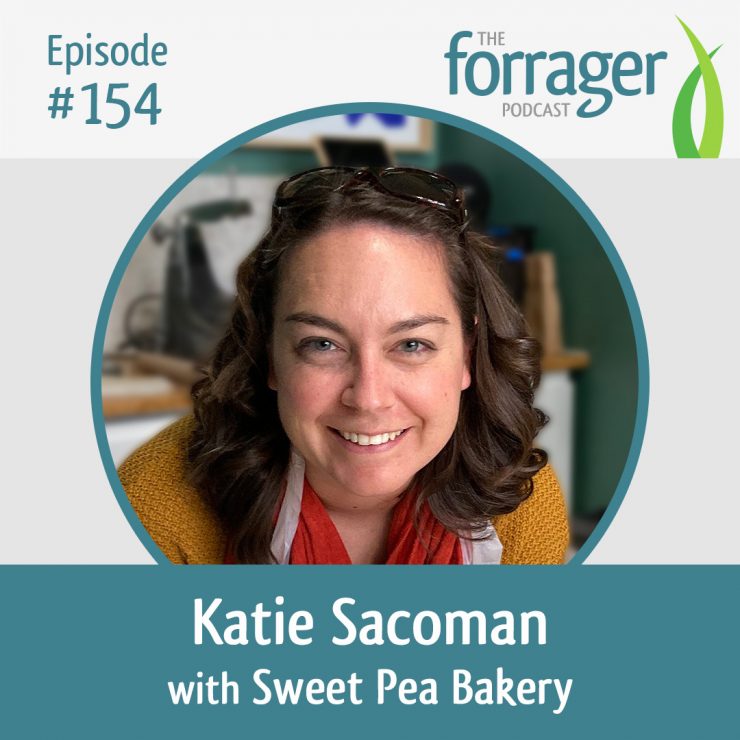
David Crabill: Welcome to the Forrager Podcast, where I talk with cottage food entrepreneurs about their strategies for running a food business from home. I’m David Crabill, and today I am talking with Katie Sacoman.
But first I want to talk about your cottage food business website. I recently researched all the free website builders out there and found that the best one for cottage food businesses is Square Online. That’s the platform that Katie uses for her business, And I have created a free tutorial that walks you through the steps you need to take to build a nice and powerful e-commerce website like Katie’s.
Now you might be thinking, what’s the catch? There isn’t one. Square Online is a really incredible tool that I personally use for my own business, and I’m constantly amazed that cottage food entrepreneurs still use other website builders like Wix, Squarespace, and GoDaddy. So if you wanna learn more, you can watch my free tutorial by going to forrager.com/website.
[00:01:00] Alright, so I have Katie on the show today. She lives in Albuquerque, New Mexico and sells many types of baked goods with her business Sweet Pea Bakery. Katie never expected to be running her own business, but after having her daughter, she realized that she didn’t want to go back to her former career.
She started decorating sugar cookies for fun, and pretty soon family and friends started ordering them for events. As she built her business, she eventually became overwhelmed with the number of custom orders she was getting. So she transitioned to selling more traditional baked goods at markets.
And then when that became overwhelming, she transitioned again to a commercial kitchen so she could produce more and sell wholesale. In this episode, Katie shares how she transitioned from custom orders to markets to wholesale by remaining adaptable and embracing the messiness that inevitably comes with growing your own business. And with that, let’s jump right into this episode.
Welcome to the show, Katie. Nice to have you here.
[00:02:04] Katie Sacoman: It’s good to be here. Thanks, David.
[00:02:06] David Crabill: Well, Katie, can you take me back? I know that this, business has been kind of an unexpected life twist for you. How did it all get started?
[00:02:16] Katie Sacoman: Yeah, I was actually originally a teacher. I taught for five years and then had my daughter and I knew I’d wanted to take time off and so I planned to take a year, ended up taking two years off of teaching and I had already started baking. have always enjoyed it, and I got into the whole world of decorated sugar cookies and deep dived into that and got obsessed with that.
And it was a really great way for me to have something that I really enjoyed doing while I was a stay-at-home mom. By the end of the first year home people would ask, do you miss teaching? And my answer was no. And so I knew that I was not gonna go back to teaching.
And I think even then, probably a part of me knew that I maybe wanted to do a bakery, but I was nervous about it. And at the time, you couldn’t bake out of your house in Albuquerque legally. You’d have to have a storefront or a commissary kitchen, something like that. And that seemed really big and daunting, especially after not working for two years.
And then. COVID hit and I was just ready to enter back into working and that kind of created a bit of space to figure things out. I helped out with a local preschool, watching the preschool teacher’s kids, and just continued baking and ended up getting into some work, helping to get some laws changed here in Albuquerque.
that was kind of what paved the way for the bakery. Starting out of the house. I didn’t necessarily feel comfortable jumping into a space first and really wanted to start smaller, especially with my daughter being young. And
And as I started to do it more and more, I realized I’m not getting tired of it. I really do love it, and it’s something I could see myself doing really long term.
[00:03:55] David Crabill: You mentioned that you were like nervous about potentially turning this into a business. Was that because of the legal issues, you know, Albuquerque not allowing cottage food businesses, or do you think you would’ve been nervous anyway?
[00:04:09] Katie Sacoman: I think I would’ve been nervous anyway. I think especially being married and now having a kid, when all of that started to be on my mind, that was a big change, right? but It did feel like I was putting my family in a position of a little bit of risk financially and then down the road of would it work out? think anytime you start something new, especially someone like me who really wants to get it right, there’s a fear of failing.
And I think that was probably part of it too, of will I be able to make it work? Will I start this thing and it’s going to all fall apart? And there’ll be a lot of shame in that. I think that was something that I felt as I was trying to process through, do I actually wanna do this? And I really had to work through a lot.
[00:04:56] David Crabill: And you mentioned that you got into this cookie decorating hobby. What year was that and how did that get started?
[00:05:04] Katie Sacoman: That was probably around 2015 it was the first year my husband and I were married, I talked about wanting to try doing decorated sugar cookies. I think I saw it on like Food Network and was like, oh, I bet I could do that. Arrogant me. and I couldn’t find Barang powder for some reason, and my husband found it for me for my birthday.
And that was my gift And I went, I think that same night and baked cookies and made icing and I decorated them and they were honestly terrible. They were so bad. My icing was so runny. It made a huge mess. And I did not touch them for another like year or two. fast forward, and I was baking chocolate chip cookies to help raise money for a friend who was going on a trip.
And my mother-in-law reached out to me and said, I have a friend who would like to support this, but she’s wondering if you could do decorated sugar cookies. And I, I almost said no. And then I paused and I was like, Hey look, I have tried it before. It was a failure. I’m willing to try again, but I just can’t guarantee what they’re gonna look like.
She was like, that’s fine. Whatever they look like, it’s no big deal. I wanna participate and help out. And so that was kind of the first time I really researched and did a bit more of a deep dive into royal icing and consistency and how to make it look right. after I did those ones, there was such a drastic improvement, but it was like, these actually look like I want them to, and that’s kind of what jumpstarted that.
[00:06:39] David Crabill: So I know you said that, you know, you were kind of nervous about starting this as a business. When do you feel like you started to get over that fear?
[00:06:48] Katie Sacoman: I feel like it was when friends and family would come back for it over and over again. also just as I saw my skill improve in just the design aspect and the ability to execute it, and just the joy I got from it.
I feel like that was a really big thing. And two I think it’s always hard because friends and family often will say, oh, you’re so good at this. You should start a business. Like, you should sell this. And it always feels like maybe it’s something that, you know, they’re just saying they’re being nice.
But I feel like when I started having friends or family get something to gift to someone else, and I get feedback from that other person who had no, no family or friendship tie to me. Or if I would share something and somebody who I wasn’t really close with would say, oh, those are really pretty, that was something that was like, okay, maybe there is actually a desire for this thing and maybe that is a possibility.
[00:07:49] David Crabill: So you said you started making cookies in 2015. I’m not sure if that was when you picked it up and then put it on the table for a, a year or two. But when did you actually sell your first order of cookies?
[00:08:04] Katie Sacoman: I think 2016 was the first one, in all honesty, that was like, somebody is legitimately ordering and I’m making a larger order. When I did, I was not charging near enough. And I didn’t do it super often.
So it was here and there. I would say kind of starting around 2016,
[00:08:24] David Crabill: Did you feel uneasy about it at all because you knew it was illegal
[00:08:29] Katie Sacoman: I did, I think that’s partially why I did not charge near enough for what I did. That first set. I think I charged her like a dollar 50 for each regular sized decorated sugar cookie. And they also got some minis that I did like 50 cents each. It was not a far move on my part, but it was good experience.
Um, And so the way that I handled it was I was not going to go outside of any friends and family, and I didn’t seek out the orders.
It was friends and family coming and saying, Hey, I love cookies for this celebration. Would you be willing to make some for me? And we’d like to pay you for them. And so That just for me, felt like the most comfortable thing cause I’m not really wanting it to be a business at this point. But also how kind of friends and family to wanna make sure that I’m compensated for my time and the ingredients that I put into it. And to see the value in what I was doing.
And so I’m really grateful for them that they really encouraged me in that and really asked to do that and were supportive.
[00:09:25] David Crabill: Yeah, I mean, it was a weird situation because at the time New Mexico had a cottage food law. Now I will say it was a very complicated cottage food law, like the steps you needed to do to get your business up and running was some of the most complicated in the entire country. But Albuquerque just said no, like they did not allow any cottage food businesses within their city.
So, it felt a little unfair. And I know that there was some legislative work and some advocacy work, and you’re a part of that work. Can you kind of share what kickstarted that and a little bit about how you helped change things?
[00:10:05] Katie Sacoman: That was such a great experience just to learn so much about what goes into that type of process and Not only that, how complicated the legal system is. Like you say, the law was so complicated. I reached out to the city and was like, I would like to start a home bakery.
Is there any way that this will change? Is there any way that we can get around this? I just would get the standard response of, it’s not legal in Albuquerque, but I could move 15 minutes and do it ’cause I would technically be under Bernillo County. And that was just the crazy thing of I would have to completely uproot my family.
And so I had tried a couple of times to find avenues and be able to make that happen from the house and was constantly told no. And I kind of had maybe given up on that I think until I listened to your podcast on Forrager with, I believe it was Erica from the Institute for Justice.
And you guys were talking about some cottage food law changes coming up and what that process looked like and just the work that the Institute for Justice was doing to try and change cottage food laws and create more freedom for food entrepreneurs. I had felt so alone in fighting for that previously, but listening to the podcast made me realize, okay, there are resources and there are people to support this work and people who are already doing this work, I don’t have to do it on my own.
I can go join in on that. And so I reached out to the Institute for Justice and explained the situation and what I was wanting to do, and they emailed me back and said, we are actually currently already reaching out to the city of Albuquerque. We’d love for you to help out. We need local bakers and people to help the ground effort.
And that’s how I ended up getting involved in that whole process.
[00:11:50] David Crabill: What did that process actually look like?
[00:11:53] Katie Sacoman: It felt like it was long and in reality it wasn’t. I think I reached out to them in maybe November but towards the second half of the year and they reached back out to me. They had sent a letter to the city of Albuquerque essentially stating like, Hey, we know that this is the current law.
We don’t feel like that’s fair. We would like to encourage you to change it. And we also, may seek legal action to see if we can get it changed essentially, is what the letter said. And so they were in talks with the city of Albuquerque and when I started talking with them quickly, they reached out and said, Hey, we’re gonna pause with the city of Albuquerque because we’ve found inroads with the legislature to hopefully get things changed for the whole state.
That was amazing because I was only looking to change for my city, but in the end, it freed up so much for the entire state and created such better conditions for food entrepreneurs overall. And Institute for Justice. Did a lot of the legal and advocacy work with legislators.
Our part was more getting ground support from the community and from other bakers. So I reached out to see if other bakers were interested in helping out, and we had a meeting with the Institute for Justice where they kind of asked us, what are you guys wanting and what do you hope to see?
And they kind of laid out how we could help. And that looked like a lot of posting things on social media to make people aware that the bill was up A lot of. Writing letters and making calls to legislators. I ended up testifying in front of a few committees. And I think what people often don’t realize is that there’s kind of a short window to get stuff passed that the legislator is in session.
we started that work in January, but there was a point where they were voting on the bills. It had to go through two committees and then go to the final vote. our bill was voted on at like the 11th hour. It was so close to the end of the session. And if it had not been voted on or had been denied in that legislative session, it would’ve had to wait till the next year.
So it felt like a really long process. ’cause we were doing a lot of calls, a lot of testifying and things like that. But in reality it was only a couple of months, but we got that passed, which is just crazy wild.
[00:14:10] David Crabill: Yeah, every state’s different. Some states have a very short legislative session. And then other states is really long, like when I went through it in California, it was like a six month process and that’s if you get it passed, right? If you don’t get it passed, then you have to come back the next year.
So it can take a really long time. So, um, Fortunately I guess you had the support and it is not uncommon for things to get passed in 11th hour with a cottage food law ’cause it’s usually not the top of the priority list for the legislative session. So oftentimes it does just squeak in at the very end there.
But I’m glad it worked out. And the nice thing is not only did it allow you to have a business in Albuquerque, but it also made the law so much better, so much easier. And just now New Mexico actually has a pretty good law, which I would say before it was a fairly restrictive law in general.
[00:15:00] Katie Sacoman: Yeah, I would agree. It really opened up a lot and made the process just so much easier.
[00:15:06] David Crabill: So what was that like when the law went into effect? Like it was, I think July of 2021? What did it feel like on that day?
[00:15:16] Katie Sacoman: I was so excited. It just felt like just a lot of hope and opportunity of this had been something I, as I thought about it more, and as we talked about it and I was really honest with myself, I really did want and it gave me so much opportunity to build a life how I wanted it. And at the time. when I started in July, I don’t feel like I had this idea of, oh, I want to move outta my house or have a storefront. It was just, I want to bake for a living at this point in time and I wanna do it from home so I can be home when I need to with my daughter and can have some flexibility. And it just felt like such a relief to finally have that avenue and be able to start that.
[00:16:04] David Crabill: So you did start like right after it went into effect.
[00:16:09] Katie Sacoman: I did, I think it was July 15th that it went into effect. And the funny thing is I reached out to the city and said, Hey, I know this bill has gone into effect. I wanna know what I need to do. I’ve got my food handler certificate, but as far as business license, how does that work?
And I kept getting responses of, we don’t quite know how that works yet. sorry we can’t answer your question. So even though the law was passed, there was a lot of kind of behind the scenes that the city had to figure out of how are we gonna handle this new type of business? Which I think is a lot of why cities and states don’t want to make changes.
And that’s what I was told of, look, we understand you wanna do this, but that’s gonna require a lot of work on our part. And unless there’s a lot of response from the community saying they want it, and there’s kind of a lot of noise about it, they’re not gonna put in the effort to do that.
that’s why we had to make a lot of noise, but it was so funny to be like, yay, I can do it now. And they kept saying well, we don’t quite know how. I don’t remember exactly when I got the actual business license, but they just kind of retroactively dated it, and it wasn’t too long after.
[00:17:22] David Crabill: Well, At this point, you know, you had already had quite a lot of experience selling. I know you were just selling to friends and family, and it wasn’t like a super consistent business level. and I can also confirm that you had exceptional cookie decorating skills by this
[00:17:39] Katie Sacoman: Thank you.
[00:17:40] David Crabill: So what do you feel like changed once you actually were an official business?
[00:17:47] Katie Sacoman: Once I was official, I think I very quickly realized that if I wanted it to be a business, I had to treat it like a business. And I think that’s really the hard thing for home bakers is a lot of times it starts out that we didn’t necessarily plan on having a business or we like having the income coming in, but we’re just doing it for fun. And so we don’t have to necessarily treat it like a business. And I very quickly realized, no, if I am, doing this, I’m gonna do it and I need to make sure that I’m doing it well. I very quickly decided. that I was going to always pay myself from the business no matter what.
Also realized that I had to actually know what everything costs. I had to look at the cost of things and I had to make sure I was charging correctly. that is always the struggle, especially in the cookie decorating world of how much do you charge and how do you account for that time because they are so time intensive.
And so I tried to, even with family and friends, like run it like a business of like, Hey, cool, you want an order? Here’s the form to fill out, here is how much it’s gonna cost and here’s what that process looks like. So that it was really clear like, yeah, this is a business it’s official. I’m not just decorating cookies for fun off and on. This is what I want my job to be.
and also early on I realized how quickly it could take over my life and my house when you’re taking constant orders as things grow. if there were busy weeks and I was slower at first and got faster as time went on, but in those early days, it would take me much longer I quickly realized I can let this consume me if I’m not careful and realized I really needed to be careful about that.
[00:19:37] David Crabill: Yeah, you’re very open and honest on Instagram about your life, about your daughter, and you definitely made reference. Is to feeling overwhelmed at times over the years. Can you just expand a little bit more on that? Like what did you do to address it?
[00:19:55] Katie Sacoman: I Tried to put in systems of how I would do things and what. Week to week would look like in order to streamline as much as possible. So if that meant I’m gonna bake all the cookies one day and make icing the next and color it and then decorate the next day, or, I know I’ve got this order coming up, but I need the same thing for the next week. So what can I prep at the same time to be able to make the work less the next week? Or how can I prepare for a busy week ahead of time?
And at the same time, I can really easily fall into that trap of constantly saying yes and adding more and more until it’s completely overwhelming. And I’ve had to be really conscious of what am I actually capable of?
Where do I need help and where do I need to say no in order to make space so I’m not feeling overwhelmed.
[00:20:45] David Crabill: Have you ever gotten to the point where you felt so overwhelmed that you thought of just quitting?
[00:20:51] Katie Sacoman: Oh yeah, for sure. The biggest time, I feel like I felt that was last year in the holidays when I moved into the commercial kitchen. And that was really overwhelming. I think that was a time of questioning, what have I done? What am I doing? can I continue doing this?
[00:21:09] David Crabill: Yeah. I did Wanna talk about the commercial kitchen. I know you moved into a commercial space in, I think November of 2024.
[00:21:17] Katie Sacoman: Yeah.
[00:21:18] David Crabill: Did you move into that space? To try to get away from some of the overwhelm.
[00:21:25] Katie Sacoman: In some ways, yes, I. And so the business as it grew, just started to take over more in the house. it just got to the point where I had decided either this has to be out of my house or I have to do something else.
Just to be able to create better boundaries hopefully, of being able to be home and be at work. And there’s always stuff that bleeds over. But I really was craving that separation of home and work a lot. Part of moving in was that I could do wholesale in the kitchen and that would open up an avenue for regular income. So that I wouldn’t be fighting for new orders or repeat orders as much was my hope. Wholesale hasn’t quite panned out the way I wanted it to.
We do have some wholesale clients, but just let alone having work be at work and having home be for the most part home has been really helpful, I think for me.
[00:22:24] David Crabill: Yeah. While we’re on this topic of overwhelm, I notice that you just took breaks sometimes. Like you would take a whole month off or two months off. You’ve quit social media at times, Yeah, those types have been really good. I mean, As far as social media, in all honesty, if I could get rid of it and not have it, I would because it just sucks up so much of my time and I found that those times of just being able to shut it off are helpful.
[00:22:52] Katie Sacoman: In all honesty, that was a lot easier when I was a home bakery because I didn’t have set rent every month. And and we also, as much as. We were using my income and it was contributing to what we were spending personally. We had my husband’s income and so I was very lucky that I could do that
my husband teaches, my daughter was little, you guys are off for the summer. I wanna at least have a month that I’m off. We also love to travel so, so much, and that was important to me to be able to continue traveling. those were two reasons that I really wanted to do. That was to give myself and my brain a break, but also to spend time with my family and do the things we love.
That does become a bit more difficult when you’re not out of the house and have some more financial obligations than you do as a home bakery.
[00:23:42] David Crabill: As you mentioned, you were an elementary school teacher. That’s kind of where you thought your life trajectory was going to head. And you’ve started this business and it sounds like it’s been kind of messy and sometimes hasn’t really panned out the way you expected. Have you ever thought of like, oh, it would’ve been a lot easier if I just stayed as a teacher?
have you ever regretted the decision to start this as a business?
[00:24:12] Katie Sacoman: Yeah, I think about that question of. What would it have been like for life to be different? But at the same time, I’m really glad that I did it, even if in the end I decided that it wasn’t forever. I think that it has been such an amazing growing opportunity for me. And a lot of times when I think about should I go back to teaching or should I do something else?
A lot of times it was about. Having a reason to maybe avoid failure and avoid getting to a point of saying, oh, this didn’t work. In this recent year, I feel like it has shifted so much more to a freedom of, I believe I can do this.
The only question is how am I gonna do it? And how is the best way for me? Because there are so many ways to do a bakery, whether it’s a home bakery or you’re in a shared commercial kitchen like I am or you have a storefront. And even in between those, there are so many different ways to get to those different places.
And I’ve ended up being able to feel, I think a lot more freedom and confidence. I’ve learned that I can pivot fairly well. And I think I’ve grown in that. And that’s such a huge skill, probably just as a business owner in general, that if you’re going to be running a business, there’s always something around the corner.
And that sounds really scary and sometimes it is, but it’s learning to be able to pivot and say, okay, this didn’t work out how I thought it would, what’s the next plan? Sometimes it looks like taking a pause and saying, yeah, we’re taking the summer off and I’m taking the summer with my family. It could look so many different ways.
And being able to be okay with just holding everything really open-handed, I think has been. Key to me not dwelling on that should I have just stayed in teaching? I think there’s been so many times in my life that I’ve had opportunities to say well, what if life went differently? And it’s tempting to kind of think about those things, especially when things are hard and think would it have been better or would it have been easier? And I think the more and more I walk down the road of having a business and talk to other business owners and just people in general, I just more firmly believe that there’s just gonna be hard things in every season.
We can choose to continue and we can choose to pivot. Or also, it’s okay if we choose and say, yeah, I wanna go back to what I was doing, or I want to do something else. None of that is failure. It’s just having opportunities to learn more about yourself and learn about what really works for you and your family and the life you wanna create.
[00:26:58] David Crabill: You’ve definitely pivoted a lot in the last four years since starting this officially initially it was the decorated sugar cookies and it’s amazing how different your business looks today. So you walk me through how those changes occurred and why you departed from sugar cookies?
[00:27:20] Katie Sacoman: I honestly love sugar cookies and I wish I did them more than I do. Eventually I hope to return to doing them more than I do now. But as I was first starting and it wasn’t like, I want this to be a. big business, I want a storefront or whatever, when it was just gonna be out of the house.
I feel like that was a bit easier to manage that, of having the sugar cookies. It kind of created a nice schedule of what baking looked like and I enjoyed the creativity of it so much and it’s what I knew and what I felt like was the unique point for me to kind of have. It was also what people were asking me to do.
And so that was just kind of the natural thing to start with. I really quickly learned a, that I wasn’t charging enough for the amount of time that I was putting in. also started to think about, okay, I enjoy doing sugar cookies, but. Are those orders going to be really consistent.
They’re a more expensive item and so people are coming for birthdays or holidays or whatever. And so I started thinking about, okay, what are other things that I can add that people might be getting more often for just a weekend, they wanna get a treat or something like that. I also had started doing markets, which was one of the first ways that I really focused on growing the business and getting my name out there.
And sugar cookies, especially like the larger ones, don’t do great at markets because you do have to charge more in people. Are surprised at that, seeing the individual cookie. And so I would do like mini sugar cookie packs, but I quickly realized I also needed other things that were quick to produce.
So it would take less time. I could have more product at the market. They were a lower price point for people to be able to buy. And would also be like good kind of staple bakery items on the menu. Anytime that I have pivoted, it’s often come from either an opportunity that I’ve had or something is not working.
I’ve always tried to make any pivot, be intentional, as I did markets, that’s kind of how the menu grew. And then when I moved into. The commercial kitchen space it’s a shared kitchen and so there’s other people in and out. I have to rent the space as I use it. And so generally, like when I was decorating at home, the sugar cookies would be in my rack overnight and would dry overnight, and then I’d package them in the morning.
The problem with that in a commercial kitchen is I’m not there overnight to know if anyone’s gonna mess with them, which everyone is so far has been really respectful, but you just never know. Accidents happen. And also who is in there changes the space and how I can use it. So for example, I did some sugar cookies maybe a month ago, and there were two salsa makers in the facility and quickly realized that all of that salsa being made put a lot of humidity into the air and my cookies wouldn’t dry.
it just creates more challenges and it takes a lot of time. And that time I’m renting in that space. It’s not just out of my house. And so decorated sugar cookies don’t necessarily make as much sense in the space that I’m currently in, which is why I’ve pulled back from them. I also was trying to do the wholesale, so we wanted to have more of those types of items that would be available for wholesale clients.
And so we beefed up that side of the menu and just looked at now shifting in our markets, what are other bakeries offering? What are things that [00:31:00] we can make that are. Still true to who we are, but also maybe a bit unique and separate from other businesses that are at the markets. ’cause there are always so many bakers at markets that it can be hard, especially when I’m gonna have to charge more because I have staff and I have rental fees and a home baker doesn’t.
That has been a bit of a challenge in markets recently as I’ve made the shift. So, Yeah, it’s always pivoting from either intention or necessity. I feel like.
[00:31:27] David Crabill: I did want to take a step back for a minute ’cause we’ve been kind of leaning into the challenges that you’ve faced, and with any business there could be challenges, especially a business that keeps growing and shifting like yours has. But I wanted to step back and just recognize that, you have been very successful at your business.
You know, obviously you’ve sold so many cookies and you also sell so many different baked items. I mean, an incredible amount, at least a couple dozen different types of items, I would say. what has your growth been like? Have you been growing year after year, revenue wise?
Do you feel like your business is like on the way towards that kind of financial independence that you’re seeking?
[00:32:11] Katie Sacoman: I would say I mean, You mentioned earlier that the process sounds very messy, and I would say that’s how it feels even financially at this point in time. In some ways, moving into the new space brought a lot of freedom with just things out of the house and just for me personally, but it also brought on so many more expenses.
So if you look at kind of how we’ve been doing financially, if so, our January through June sales in 2024 compared to 2025 almost doubled, which is incredible. That was part of the goal of moving into the space. But we also had our expenses grow as well.
I think in September this month last I looked, we’re closing in on $5,000 in sales, which is the most we’ve ever done in sales. But at the same time with moving into the new space and having expenses increase, this is gonna be one of the few months of the year that we will be in the green.
And And it just feels so wild and feels so conflicting in your mind of we’re doing more sales. And how do you navigate that? there are necessary expenses for moving into a new space, how do you navigate?
We need staff, but to do new staff, we need to bring in more income to pay them and we need to grow both of those things at the same time, is really a huge balancing act that I feel like I’m constantly trying to navigate, constantly trying to learn and do better at as a business owner,
[00:33:44] David Crabill: What are things that you feel like have worked really well? I think number one would be the staff I’ve hired. I am really grateful for the two women who are on my staff. They are really collaborative in bringing ideas and wanting to see the business succeed. I knew that I wanted to be really intentional with who I hired.
[00:34:09] Katie Sacoman: I wanted it to be people who would go into their position with kind of the same idea of. What the environment would be in the kitchen and in the business in general. our tagline, I guess you would say, is crafting small batch desserts designed to bring people together, love others well, and make new memories.
And the bringing people together and the loving others well isn’t just something that we wanna do through. Like selling our desserts and people taking them to their table. Like It’s a huge motivation of what we do. But I also want to see that in our kitchen and in our staff.
And I think that the two wonderful ladies that I have on staff with me really do that really well. I would hire them again in a heartbeat. And another part of why I’m so proud of having them is I really wanted to, when I hired, hire people who are good at what they do and even to the point that they’re.
Better at their job than I am. If I’m giving someone a job, it’s ’cause I’m offloading something and they can do it better than I can. And having somebody who can do that job really well challenges me too. I have one assistant who works in the kitchen with me who is phenomenal. She is a rock star.
She’s always having ideas of different things we can do to change the menu. And the woman works so fast, so much faster than I am. Um, it’s crazy and just also brings so much experience from her previous positions in bakeries and I was really honest with her at the beginning when I hired her and said, look you have run a bakery and you have so much experience.
You are coming in with more experience than I do. I feel comfortable with that. Do you? And she said, a hundred percent I do. And I just appreciate How much of a joy it’s been to work with these ladies.
[00:35:59] David Crabill: Did that feel a little bit uneasy for you to have people on your staff who were more competent than you at certain aspects of the business?
[00:36:12] Katie Sacoman: I think at first, yes. I think saying it out loud and saying it to her released a lot of that of like, we are both going into this knowing. And that’s the thing is if I am a business owner who started my business not with any training and I’m then hiring someone who has essentially done my job and has done it longer than me, we both know that.
And to not say it can kinda leave something hanging in the air. I feel like part of my journey as a business owner has been realizing that, I can do a good job at my job. There’s also people who can do it as good as me, and there often will be people who can do it better. And that’s not a threat to me.
That just means there are people who we can work together to accomplish this vision that I have for the bakery. And so I think, that that has been a huge. way that the business has grown me, of being able to kind of step back and not take things so personally and recognize that, okay I now have some experience.
Instead of feeling like, oh my goodness, she’s bringing so much experience, she’s going to think that I am terrible at this. To be able to step into it saying, okay, we both have experience. We both can get behind this vision of what this bakery should be and we can both use our experience together.
[00:37:37] David Crabill: What is your vision for this business?
[00:37:41] Katie Sacoman: I would love to have a space one day. And so that, kind of tagline that I mentioned earlier, the crafting small batch desserts designed to bring people together, love others well and make new memories was the thing that I have used to guide any decision that I’ve made.
It’s been really helpful to be able to come back to that And so I just really would love to at some point have a space of my own. I really would love it to be a space that is an important part of the community.
I think that we don’t often see that with bakeries. But I think there is something so that happens when we are gathered around a table and eating food with people. I think that food just opens something up in that.
so that’s what I envision is a space where we can do that, whether it is throughout the week, serving people through doing our cookie classes loving people through. The way we show up in our community, we donate monthly to a nonprofit that supports Title one schools in our area. That’s been really important to me.
That’s something that we’ve done monthly, even when it’s hard months. ’cause that’s something we want to do to love our community really well. I also would love to be able to use the business to love on our community by hiring women who are coming out of vulnerable situations.
I think it’s so important to me that whatever we’re doing, we are trying to help our city thrive. And that’s kind of what we always go back to. Anytime we’re trying to make decisions and see a path forward.
[00:39:28] David Crabill: As you mentioned, you are renting this commercial kitchen space and that’s brought growth opportunities, but also has brought some challenges as well. And you also have this vision for having a brick and mortar bakery. Did you consider. Going straight to that, opening up a bakery of your own.
Why’d you decide to uh, rent a kitchen instead?
[00:39:53] Katie Sacoman: In my wildest dreams I did. I don’t love the idea of major debt, whether that is business or personal, I know that in business there are times where you take on debt. but to me, I wanted to try and minimize that as much as possible.
I have no experience previously in a commercial kitchen. it just didn’t seem wise to me, for me personally, to jump from a home kitchen, to a commercial kitchen. There was so much I needed to learn. As I was considering kind of what path to take, this was the in-between option of those two things.
There’s a couple of shared commercial kitchens around the city. I looked into all of them and wound up this one, which they’ve been wonderful. The ideal would have been to move into my own space there are things about a shared kitchen and the way they’re run that in some ways isn’t the most ideal for a baker food entrepreneur.
And so that’s been kind of difficult to figure out and navigate, but at the same time, it felt like we didn’t have enough income coming in to justify increasing our expenses so much that we were in our own space. And so I kind of wanted an in-between where I knew our expenses would grow, but we would have opportunities like the wholesale to also increase our income and kind of navigate those growing pains.
[00:41:18] David Crabill: So, as you mentioned, the commercial kitchen opened up wholesale opportunities. And what have you learned about that process?
[00:41:27] Katie Sacoman: My experience with wholesale has been rough. I think that was kind of my thought when I moved into the new space. I actually paused regular orders to try and get wholesale up. I spent a lot of time reaching out to places. I took samples to places. Contacted, I think most coffee shops in the city and sent out information. What I found, is that wholesale is really difficult because it’s a lot o work. You’re producing a lot, but your margins are smaller because they have to be able to mark it up.
And I felt like the margins that I was giving people, I was getting nos
It was really tempting at first to take it really personally. personally. But then I had to kind of step back and say, okay, look, this is the feedback you’re getting.
you have to make a decision of are you going to decrease your prices? Are you going to stick to your prices? And also just recognizing that these people you’re talking to are business owners too, and they have to make decisions and sometimes they’re not gonna make the decisions you may make.
You guys might not agree on what that should look like, and that’s okay. That just means that partnership’s not gonna move forward. So we currently have. four wholesale accounts around the city.
Our largest one is around $1,200 a month that they pay us. We’ve got another one that is a smaller account that’s around $500 a month. and then we have two other smaller accounts, as well. And so I paused looking for wholesale in the past couple of months just because I felt like I was putting in a lot of time to try and grow it.
And I was getting a lot of nos and I decided that I would rather go ahead and just take it as a, maybe this is not the avenue for us We’ve got some wholesale accounts. If we can get more, that’s great, but maybe we lean into other things instead. And just once again, we pivot and figure out what is right for us.
[00:43:30] David Crabill: So what do you think worked well for getting the wholesale accounts that you have?
[00:43:36] Katie Sacoman: One was a local spot that I had a relationship with previously. I think that was helpful. Um, so I’m really grateful for them that instead of just a no, they said, Hey, yeah, we wanna support you.
Maybe this is what it looks like for now. And maybe that can change in the future. Another one, like our biggest account, they. Had recently lost a wholesale account. One of their bakeries they had to end the relationship with. And so they were really looking for something. that was right when I had just moved in the kitchen.
And so it was like well, we can start next week. And so there was a real immediate need there. And another one was a local gift shop that I was talking to just about this whole process and hearing no, and that I’m too extensive. And she said, Hey, you know what? I’ve got a gift shop. I’m in Old Town.
We can charge more than other places can, let’s try it. And she’s also been very flexible. We’ve tried some different things that haven’t necessarily worked. We’re gonna try something new to see if that works as well. So we’re, she’s really working with us to figure it out and she’s like, yeah, as long as you’re willing to do trial and error, she said uh, we’ll keep going and see what’s gonna be the thing that works in our space.
So I’m really, really grateful. I think for all of them it was just different approaches of there was relationship with one. One, there was just a really immediate need and I’m grateful that they’ve kept us and they’ve valued our partnership I also think that kind of our vision and some of the things we do like donating locally and trying to make sure we’re honoring our employees by paying them a good amount.
I think those things were valuable to them and because of that, they were willing to pay a little bit more. So it’s very different I think from business to business that we’re working with.
[00:45:21] David Crabill: So the wholesale thing hasn’t worked as well as you expected. What has been working really well?
[00:45:29] Katie Sacoman: we’ve done a lot of markets and I really love markets. before I owned a business, I would not have said I was very extroverted. But I realized going to markets that I actually am and I really enjoy it. I enjoy the atmosphere. Those have been really good. We always get really good feedback.
There’s certain markets that we do really well at. so there is a local couple of smaller local ones that we’ve done that we’ll, we do every year, as well as some of the larger ones are. Just great by virtue of their size. So we do like the Southwest Chocolate and Coffee Fest. That’s a large, large venue, a lot of people coming through, so that just kind of naturally is often a better option for us.
There’s also another locally that the New Mexico Artisan Market and that one is great because there’s not a lot of prepared food vendors who are selling stuff that people can walk around and eat. And also it’s people who are coming, since it is an artisan market and there’s often a lot of art and kind of higher end stuff, they’re willing to pay a bit more.
And so we’ve, come to realize that probably because of a couple of reasons because I’m wanting to. Be really thoughtful in how much we pay our employees and not just pay the bare minimum. And because we’re wanting to donate into the community every month that means that our prices might be a little bit more than some other places.
And so we’ve tried to kind of figure out where are the places that, that is something that people are going to be okay with. Either they’re up for spending the money or they also value the reason behind why we’re a little bit more expensive. that’s been the case in those larger venue as well as other businesses.
That’s actually been one that we’ve been getting into a little bit more of doing. We just did today a big order. For a local orthopedics office that wanted to do some marketing. And so we did some edible image sugar cookies mixed with our classic cookies that they’re gonna take out to some different places and advertise their business.
Some local, we have a lot of industry like Honeywell and Netflix is out here and other things that, those are people who kind of have a bit more of a budget. And you’re also getting larger orders at the same time. And so that’s where we’ve shifted since wholesale didn’t work out. Plus you get a bigger percentage of your profit in the end ’cause it’s not wholesale.
[00:47:58] David Crabill: When I think of Albuquerque, I obviously think of the balloon festival.
I imagine There are just a massive amount of people that descend on Albuquerque. Have you ever done anything for that?
[00:48:11] Katie Sacoman: When I was at the Southwest Chocolate and Coffee Fest one of the kind of managers of the fairgrounds had walked by and talked to me for a bit and tried some granola, and then he was like, Hey, would you ever consider vending at the fair?
I chuckled and I said maybe when it’s not just me producing everything I would love to at some point get into something huge like that, that I think that event is so unique and so fun. We’ve tried to do kind of adjacent events, so a couple of years this past weekend actually, we did a hot air balloon cookie decorating class.
And we’ve done one previously in the past. And those are fun. It’s hard to do stuff the same weekend because so many people are doing other things. And specifically going to the Balloon Fiesta. And so I found that like if I am planning something on my own, I’m probably gonna wanna do it a week or so before like the cookie decorating class. Or if it’s gonna be something during that week, I probably want it to be something bigger that somebody else is putting on and advertising. ‘Cause you’ve got so much going on with Balloon Fiesta, it would be so cool one day to have a booth in there, but that is a ton of work.
[00:49:27] David Crabill: I know for the longest time, even before you officially started your business, you have been doing cookie decorating classes, and that’s a really big thing for you. can you share a little bit about how that fits into everything?
[00:49:42] Katie Sacoman: It’s honestly probably my favorite part of my job. I love doing those classes. I mean, I have teaching experience and so I feel like that goes really well with doing the classes. I think there was maybe one other cooker who was doing classes before, maybe two.
There weren’t a lot. So there wasn’t like a huge amount of classes going on in Albuquerque that I knew of. I was kind of looking for ways to both get my name out there and also trying to just bring in more types of income as things were growing. And so I reached out to a local spot here in town, Pooler Marketplace. They were my very first cookie class host
and what I love about it is. To see people come and just have a blast together. I’ve had people come on date nights. I’ve had people come with girlfriends for a girls night. I even this past class last Saturday, I had the most people who just came alone to just learn cookie decorating and have fun and have an afternoon out.
And it really is that thing of you are gathering around food and you just start having conversation and you can enjoy each other’s company and it just feels like such a special moment of community when we do cookie decorating classes. And we might have to expand to other types of classes ’cause it’s just, I really enjoy it.
[00:51:11] David Crabill: Since you say that’s your favorite thing, why haven’t you leaned into that aspect of the business more? I mean, you know, that could be. A full-time business potentially, you know, if you’re doing more types of classes or if you are teaching online or, teaching to a wider audience, you obviously have the skills to do it. so what do you feel like has pushed you in the direction of that more traditional bakery route instead of more of an educational business?
[00:51:42] Katie Sacoman: I feel like as far as in-person classes and limiting it to once a month between classes and markets, that’s a lot of time, especially on weekends that I am committing to. We also see a lot of ebbs and flows in our attendance.
And so like November, we generally don’t do classes because December is gonna be so heavy that people don’t buy our November classes. We actually, the exception this year is we’re doing a royal icing 101 class, which is actually gonna be a good size class. And that’s cool. So we pivoted to that ’cause people kept asking for something like that and it’s the perfect time.
People are gonna start doing holiday cookie decorating. So that’s kind of our first expansion into something other than like our standard cookie decorating class. As far as online teaching, I’m not opposed to it. Um, there’s a lot of, investment that would have to be done in technology and things like that.
I’ve considered it, but also time-wise has not been something I’ve had time to do of just investing the time to figure out how that works.
What I would do my, It’s funny you mention it ’cause my assistant has mentioned it multiple times. Why don’t you just do online classes too? Um, so I could see us doing that in the future, even potentially in the near future if we got additional help.
But that’s something that I think, I would have to grow the income of the business to be able to accommodate more staff so then I could step out and have more time to dedicate to that. ‘ and I’d want to really make sure I was doing that well.
[00:53:20] David Crabill: Well, you’ve obviously been doing this for a long time and I know it hasn’t always been easy, so what do you feel like has kept you going, even amidst facing some adversity at times.
[00:53:34] Katie Sacoman: I think the thing that has kept me going has been just little moments of confirmation that it is the right choice to be doing what I’m doing. I’m really grateful. To have had moments along the way that I’ve had other people, whether it’s friends or family, whether it is other business owners or even clients who have taken the time to see the value in what we’re doing and to encourage me in that.
‘ cause it’s so easy to succumb to the overwhelm and think that it’s just not worth it. And to have people like. My staff who say, yeah, we believe in what this is. We believe in what you want to do with it and think that’s good and worth doing.
To have my husband who is supportive and anytime that I’ve come to him and said, should I just quit? He’s always been like, no, you shouldn’t quit. You should continue.
And so I feel like I’ve been really, really blessed to have people who have encouraged me along the way, and I think some of it has been just comments in passing, but to them probably meant nothing. But to me, sometimes it was, I’ve been thinking about this exact thing and you have.
Without realizing it spoken into that thing that I was worried about or pondering or trying to decide was that the right way to go. And I’ve been grateful for the times that people have done that.
[00:55:02] David Crabill: What advice would you give to somebody who is just starting out today?
[00:55:07] Katie Sacoman: I think I would tell someone to just be really open-handed with everything. Cause I think the things that we try to hold really tight to sometimes can be a detriment to us and can cause more stress.
When you’re able to hold it so open handedly and say, okay, this is what I have. we’re gonna see what’s next. And to pay attention to where do things need to be let go of and where are things to continue in. think that has been one of the biggest things throughout this journey of holding my hands open, having ideas, but not holding onto them too tightly.
There is also so many resources out there that are free through the small business administration and through your local small business resource places. And I think that’s something that we often forget, but that is always something to lean into.
‘Cause there’s always something to learn and there’s always something to do better.
I think one thing too that I’ve told people before, and I hope it doesn’t sound negative ’cause it’s not a negative thing but it’s okay for you to just love baking and to decide. The business isn’t what you want. A food business is a whole different animal and there are so many resources, and if you want it, you can go for it and you can do the work and you can do it.
That’s not to discourage anyone who is wanting to do that and really wants to seek that out. But yeah, I think part of that open handedness is also it’s okay to decide this isn’t for me and to choose something else or to choose for it to look different than it initially did.
But I talk to so many people who bake and are say, I don’t know if I should. Do it as a business or if I should just bake. And my answer is always, if you wanna do it, go for it. And also it’s okay if it’s not right. And to just bake for the joy of it is something that is so worthwhile that I think we can forget as food entrepreneurs.
So make sure you’re baking for the joy of it and because you love it.
[00:57:05] David Crabill: Do you feel like you love what you’re doing right now, like you love baking
[00:57:11] Katie Sacoman: I do. I really do. And I think that’s gonna different throughout the years of the bakery. I actually had someone ask me a really interesting question just last week that nobody had ever asked me before and it was really good.
They asked, as your business grows, do you see yourself moving more into the business aspect of it or more into the baking aspect of it? I think that’s something I’ve been. Really realizing and thinking through over this past year of being in the new space of there are so many aspects to running a business.
And as it grows, as you move into a bigger space, as you add employees, there’s more admin, there’s more baking to do. And I think a lot of times, especially if we started solo, we wanna try and hold onto as much of that as possible. And I’ve always wanted to be an entrepreneur that if I need to let someone else do that, I will let someone else do that.
And so it was a really good question to make me think of if I imagine what my role looks like in this business long term, how do I see it? And my answer to them was, like, I would love to still be in the kitchen And I never want to lose my knowledge of what it’s like to be working in the bakery, doing the cookies and all of that. But it might look different in different seasons depending on what the business needs and what I need.
[00:58:38] David Crabill: Well, Katie, thank you so much. Now, if someone would like to learn more about you, where could they find you or how can they reach out?
[00:58:48] Katie Sacoman: Yeah, they can find me on Instagram. I am @sweetpeabakeryabq. We’re also that on Facebook and then they can always reach out on email sweetpeabakeryabq@gmail.com. If anyone has any questions or just wants to say hi, I’m there.
[00:59:04] David Crabill: Perfect. Thank you so much for coming on the show and sharing with us today.
[00:59:08] Katie Sacoman: Thanks for having me, David.
[00:59:12] David Crabill: That wraps up another episode of the Forrager podcast.
For more information about this episode, go to forrager.com/podcast/154.
And if you feel like you’ve gotten a lot of value from this podcast, I have a favor to ask you, could you take a quick moment right now and leave me either a review on Apple Podcasts or a rating on Spotify. It’s truly the best way to support this show and will help others like you find this podcast.
And finally, if you’re thinking about selling your own homemade food, check out my free mini course where I walk you through the steps you need to take to get a cottage food business off the ground to get the course, go to cottagefoodcourse.com.
Thanks for listening, and I’ll see you in the next episode.