David Crabill: Welcome to the Forrager Podcast, where I talk with cottage food entrepreneurs about their strategies for running a food business from home. I’m David Crabill, and today I am talking with Jacy Vinson. But first, we need to talk about email, and especially email marketing. If you’re not sending emails to your customers on a consistent basis, then I think you’re missing a big opportunity for sales.
I really love using Kit to manage email for my fudge business and they recently introduced the best feature that I’ve ever seen in an email marketing platform, which allows you to send email up to 10,000 subscribers for free. So if you still haven’t hopped on the email marketing bandwagon, now is a great time to do so.
to get started and learn more, you can watch my free email marketing tutorial at forrager.com/email.
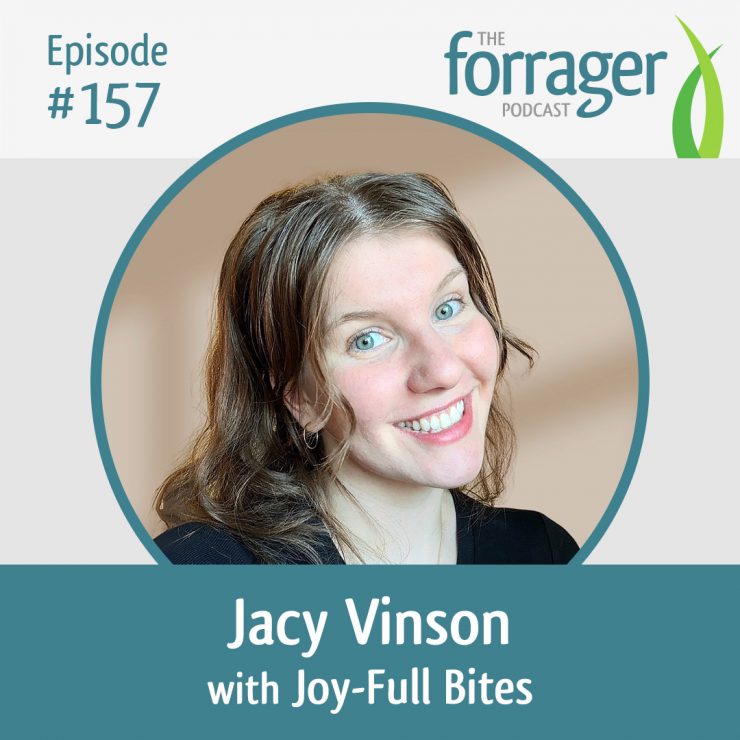
All right, so I have Jacy back on the show today. She was recently featured on episode 150, and today we’re gonna learn about her very unique business journey. Jacy lives in Eagle River, Alaska and sells baked goods and recipes with her business Joy-Full Bites.
Jacy has a long dream of opening a bakery, but once she became a stay at home mom, she decided to start selling baked goods from home. Instead her cottage food business slowly and steadily grew, but once she had her second child, she couldn’t dedicate as much time to selling at pop-up events, so she started selling recipes as well.
In this episode, Jacy shares how this hybrid approach of selling both physical and digital products has allowed her to provide for her family in a sustainable way. And with that, let’s jump right into this episode. Welcome to the show, Jacy. Nice to have you here.
[00:01:48] Jacy Vinson: Thanks for having me, David.
[00:01:50] David Crabill: Well, Jacy, can you take me back to how your cottage food business got started?
[00:01:57] Jacy Vinson: Yeah, of course. So I have actually been baking, I have been self-taught baker since I was about seven years old. I grew up in a family where food was a big part of our gathering. So growing up I just kept baking, and then as I got older, I wondered if there’s any way I could take this hobby that I had been doing for so many years and turn it into a business. I started researching Alaska food laws and I realized that there was this thing called cottage food laws, which up until that point, this happened about four years ago.
So I looked into that and realized that was perfect for my situation. So I definitely wanted to stay home, and this was. A hobby and a business idea. I was hoping to continue after my husband and I had kids.
So I did start my business before I had any kids. I started here in Alaska. I’ve been doing various different orders, various popups, different events of different sizes, and just putting my foot in the door in many different areas. And so over the years I’ve built up a clientele here locally and I do now have two kids of my own.
And this is still a business that I have been able to continue to build even with staying at home with my kids. So it’s been the perfect way of mixing hobby and helping provide a little bit financially while sharing my passions with local people here.
[00:03:21] David Crabill: And about what year would you. That you started selling your bake goods.
[00:03:27] Jacy Vinson: I believe that was 2022.
[00:03:32] David Crabill: Well, I, I feel like I saw when I was looking through your social posts, I thought that I’d seen that you started selling even before the pandemic.
[00:03:42] Jacy Vinson: So before I got married to my husband, I lived up with my parents for a couple months because that’s when the pandemic had started. So while I lived in that little town of my parents, that was my very first exposure to selling baked goods to people locally. It’s located in Cantwell, Alaska, very small town. it’s slightly older clients there, but they all love baked goods from scratch and that’s what I specialize in.
I didn’t have like massive amounts of orders or even like weekly orders. It was just like a few one-time orders, but it was just great experience where it started making me realize that I could do this actually maybe in the future once the pandemic was over.
And just from that one little experience, which was only about a month long, I learned quite a bit about like my menu, how big it was, my prices, how much time things took, delivery, customer service, everything like that. I learned so much in just that short month, right when I first started.
[00:04:44] David Crabill: I see. So you, you kind of tested the waters and then I noticed that that wasn’t your first experience baking professionally though, right? Like I saw back in 2018, you were the head baker at a coffee shop.
[00:04:58] Jacy Vinson: Yeah, so that was I got my first job when I was 16, so I believe that was actually in 2016. And I started working at this coffee shop and the lady who ran the coffee shop told me once she realized I had some baking experience, she’s like, oh my goodness, we have no bakers here. Would you just be interested in like taking the roll on, just like baking a couple things like during your shift. I’m like, yeah, no problem. Because from that point on, I had already had like over 10 years of baking experience and a very wide range of different things that I have baked. So I was like, that sounds like fun.
She already has the ingredients provided she has the materials, everything like that. So there at the coffee shop , I would bake things for those customers and. There was a very small selection before I had actually started, but when I started there, I was able to offer a couple more things and the customer started really liking that variety.
And so what my boss had me end up doing is, instead of when I first started, I was mostly just helping with the coffee orders, but then she started adding me to shifts where there are already enough people to make the coffee orders, and she just had me coming in as a baker. So that would be coming in during shifts, helping bake things, get them fresh and ready to sell that day, as well as sometimes I would come in during closing time and just get things prepped and ready for the next day as well.
[00:06:22] David Crabill: So it seems like This whole cottage food business was percolating, right? Like you baked at home a lot, and then you worked in a coffee shop, baking, and then tested out selling a little bit when you were living with your parents. And then it sounds like in 2022, you actually decide to make this a bigger thing.
And up until that point, had you expected your career would move into baking? Or what career did you go to school for? Or what, was your background in.
[00:06:52] Jacy Vinson: So I went to college for business administration. So my goal before I got married was to actually run my own bakery. I was thinking of in the future running my own brick and mortar bakery. And then I got married to my husband. And then once we had our first kid, I was still um, working on my degree up until we had our first child. And then once that baby boy came along, I just realized that my really true dream was to be a stay at home mom. And with that being said, that meant that I knew I wouldn’t be able to do a brick and mortar bakery for quite some time, if ever. And I was totally okay with that. But at the same time, I really still wanted to be able to branch outside of motherhood just a little bit.
And then that’s when I started exploring more options of how can I still take this baking hobby and is it possible to turn it into a business while still being at home with my child? And that’s exactly what my research led me to find out that it is possible to still be able to bake in my own kitchen like I was already doing just for fun and just with some extra steps and precautions taken.
Then I’m able to sell to people here locally, make connections, and just share my talent with more people.
[00:08:14] David Crabill: And what is the process like in Alaska to get off the ground legally under their cottage food law?
[00:08:21] Jacy Vinson: Alaska had actually just kind of looked over the cottage food laws and they realized that they can revise some of them, which was huge news for cottage food bakers.
Because that meant they gave us so many more choices, so much more variety. They started allowing us to use ingredients that we couldn’t use before, and that just like totally changed the game. what’s not required in the state, but I would highly recommend is a food handler safety course that I just recommend to all Bakers, regardless of your state.
That’s always something that’s super good to know because something that you might not consider about different baked goods, their ingredients, their pH levels, how they need to be stored, that’s something that I really think everybody should know. And on top of that, it just does make your bakery look so much better.
Because then people know that you have a very high level of hygiene there if you have that certificate.
But I would say for the most part, it was still very easy. You had to register with the state, your business name, you had to fill that out.
You’re able to get that all done online within like 20 minutes. Just pay the fee, whether you wanna do one year or two year. And then other than that, just make sure you stay up to code after you get your business registered uh, you can get your insurance, and then just making sure that your packaging is good to go and labels are good to go, which is all on the state website, which made it very easy.
[00:09:46] David Crabill: So it is interesting you have these three pretty different experiences that kinda led up to when you started your cottage food business. There’s the actual like hands-on experience in the kitchen where you were just experimenting, baking things for like 10 years. And then there’s the, time when you were actually in a coffee shop making items in a commercial kitchen, in a commercial setting.
And then there was this like month long period where you actually experimented selling products when you were living with your parents. So I’m sure all of those were beneficial, but I was wondering which of those three things do you feel like was the most helpful for you when you actually started in 2022?
[00:10:32] Jacy Vinson: I would definitely say that period when I was living with my parents, because that was me just being able to create that whole business from scratch. So that was all me. It wasn’t, dependent on whatever my employer would like me to do. That just gave me a lot of creative freedom of being able to create a menu, create my prices, and it just helped me learn so much from business at even such a short amount of time.
So, I would definitely say that period when I was living with my parents was most beneficial and most applicable for what I’m still doing today.
[00:11:05] David Crabill: Yeah, I wasn’t sure what you would say was the most beneficial, but I sort of, kind of guessed because, getting started, getting your hands in you know, and actually like experimenting with the business and having actual experience selling. I’m not surprised to hear that you felt that that was the most beneficial.
So when you actually did start your cottage food business in 2022, what was that like?
[00:11:33] Jacy Vinson: There was so many unknowns to putting yourself out there, starting something brand new, and that was just really daunting to me. I am very fortunate. I have a lovely husband who’s super supportive of all my endeavors, and he really, truly believed in me, even when I had those moments of self-doubt.
You might not always feel ready. It’s just one of those things where even if you feel mostly ready, you just there’s always gonna be that little leap of faith to kind of see where you’re gonna go, how you’re gonna put yourself out there, how this experience is gonna go. You have to be prepared for a variety of things, but I usually say, um, prepare for the worst, but hope for the best.
So I just did all my research. I just gave it a go. I made sure all my labels were up to code, everything like that. And it’s definitely a learning experience, especially if you do your first pop-up.
Having to socialize for a long time was kind of hard for me. I kind of started running out of topics and things to interact with my customers about, but it’s all just part of that learning experience. And As I began to figure out different platforms, what works best for ordering, what works best for payments, things like that, and pickups. It’s all just one big learning experience. You’re not gonna know everything at the beginning. I definitely did not. I learned so much along the way, months in years in still learning new things, things change and that’s totally okay. You’re just doing the best you can. I just did the best I can and it’s gotten me where I am today.
[00:13:05] David Crabill: So is that how you started? You, did you start at a popup? Was that the first time you sold when you started your business?
[00:13:14] Jacy Vinson: That was the first time I sold. Yes, and believe it or not, I had applied for a few different events, but I was very fortunate that the first pop-up I ever did actually ended up being one of the biggest events in the state during the wintertime. So not only was my very first pop-up at this very large event, it was again my very first popup.
So it actually went very surprisingly well. I did prepare for the worst, hope for the best, and it went amazing. I was very thankful for that, that everything went smoothly, but little daunting to be in what felt like such a big atmosphere for my very first time. But everything went wonderful.
[00:13:58] David Crabill: I’d say that’s not exactly recommended, right? Like if you’re jumping into your first event and you’re going to a large event, like did you second guess yourself as to whether you should have started smaller?
[00:14:12] Jacy Vinson: Absolutely. So when I had started, I started very late fall, early winter. And here in Alaska, there’s not many events in the fall and wintertime just ’cause when it gets colder, the roads get harsher and not many people want to go to events. And so the events are pretty minimal. When I had actually started thinking about events, honestly was, I should have done this differently.
When I started thinking about events was kind of. Right before the event started, like a week before. So to no surprise, they didn’t have a lot of events, didn’t have any more room, or they just weren’t ready to have, another baker there. ’cause maybe they already had some bakers there. So that’s something I would definitely recommend is starting smaller so you can just kind of get your foot in the door.
It might be more comfortable for you. And what I would also recommend is start applying for those events sooner rather than later. Think about those events. If you know of some events that do happen every year in the area that you’re at, start thinking about those events that are gonna be happening in a few months.
See if you can reach out to that coordinator or that manager now and see if you can get your application in and maybe not wait until the last minute like I did. But the only reason I was able to get into that event actually was because there was a last minute cancellation from another vendor and I did not have my hope set up at all once I put in my application.
’cause I’m like, it’s just a couple weeks before the event. I doubt they have any room and. I knew that even if I was able to get into that event, even if it was my very first event, I knew that was gonna be a huge get for me because at a very large event, you’re gonna have a lot of foot traffic and that’s gonna be a lot of new exposure for my business that I really needed as I was jumpstarting. So It all worked out in the end. I’m very thankful for, but definitely, in hindsight that it could have still been extremely beneficial for me to have started smaller.
[00:16:14] David Crabill: So when you say a big event, how many people came to the event and then what did you ultimately make?
[00:16:22] Jacy Vinson: I believe that there were about 50 other vendors. The amount of foot traffic that comes in, I’m not entirely sure. I want to say about 1,500 to 2,000 people come in. And then this event was actually three days long. So it was a Friday, Saturday, and Sunday. Various hours differing each day.
And what I ended up doing was just making a lot of baked goods from scratch, and I think I ended up doing about $1,200 in profit at the end of those three days.
[00:17:01] David Crabill: In profit? I mean, Is that just taking your ingredient cost out of the equation or does that like factor in the amount of time and paying yourself?
[00:17:11] Jacy Vinson: So that is going to include the vendor fee. That’s gonna include packaging cost and ingredients cost.
[00:17:21] David Crabill: So your revenue is probably like, I don’t know, maybe $2,000 or so.
[00:17:26] Jacy Vinson: I would agree.
[00:17:27] David Crabill: That’s pretty, that’s pretty good for a first event. and then you said you brought baked goods, but what did you choose to bring? Like what did your menu look like?
[00:17:37] Jacy Vinson: I will say, I will put this out there so people can learn from. My mistake is when I was living with my parents that one month and I put out a menu, my menu was far too large. I had. Way too many offerings.
So when this big event came along, I knew from that experience not to offer such a large menu. I was able to narrow down what I would like to do. So I did three different kinds of brownies, but they all had the same brownie base, so it was mostly the same brownie base with either different mix-ins, different toppings, or just different centers.
The next thing I did was pumpkin bread, and the reason I did that is because, it was a recipe actually of my great-grandmother’s that I used and those pumpkin breads did very well. Every single time. Every single day I sold out of that pumpkin bread. And the last thing I offered were bear paw cookies. So it’s a peanut butter cookie with a miniature Reese’s in the middle, and then three chocolate chips kind of along the top of that, Reese’s.
And when it’s all done, it looks like a dog paw or a bear paw. Once they saw it, they were like, it does look like a bear paw. And that was. By far my most popular thing, and still to this day is my most popular thing at every single event I do. It’s still something that’s like simple enough that the flavors are great, people love them, but it’s cute enough that people see it, they recognize it, and that they really enjoy it.
So that was actually my very first recipe that I had developed myself. and it turned out to be extremely, popular with people here.
[00:19:16] David Crabill: So basically you brought three items. You know, I know you had some variations on like your brownies, but you kept it very simple and you still did very well, which I think is a good. example for other bakers, you know, when they’re considering their first event. I think three is a pretty good number and you can still do quite well with just a very simple menu like that.
So it sounds like your first event was a little fortuitous, you know, like the person canceled and that opened up a spot for you, and obviously it was a very big event, but this sounds like a one time thing, right? It’s not like a reliable or repeatable event that you can build a business on.
So how did your business move forward from there?
[00:20:00] Jacy Vinson: So from there I started considering different platforms of how I could just do some weekly orders and I discovered the platform called Hot Plate. And essentially how that is set up is you’ll create your weekly menu.
You’ll go ahead and put like a description, a picture, your price, and then once your whole menu’s set up, you will drop the menu and that will go ahead and if you already have a customer base there in hot plate, it’ll send out a text messages to all the customers who have either previously ordered or signed up for text messages and they’ll know as soon as that weekly menu opens.
Starting out I did not have a customer base, so what I did was I would take that link and I would share it to local Facebook groups. That was a huge part of growing my business is I wasn’t able to go out and share as much with word of mouth, just ’cause I did have a little one at home. So a big part of growing my business was sharing with those local Facebook groups.
There was a few different ones, so I just shared with all of them that would allow like advertising or allow self-promotion of your business. And people really started enjoying the menu. People started signing up for pickups. for example, I would have my weekly drop open on like a Tuesday. I would take orders until Wednesday night, and then whatever orders came in, I would prep them. Thursday. And then I could have people pick up either like that Thursday evening or Friday, let’s say between 8:00 AM and like 6:00 PM And I could choose if I wanted to kind of split people up like one person per like hour, however I wanted to do it.
But luckily everyone’s orders were good to go In my little setup on my porch where I was able to just put their orders right in that cabinet and I was able to put everybody’s orders in there and then they were just able to come pick up whenever their schedule allowed.
So, if need be, a customer coach would always reach out to me and be like, Hey, I’m not able to grab my order today. Could I move it to the next day? And I was able to update that on hot plate as well. And I was like, yeah, of course, no problem. And then I would just work with the customer the best I could every single time.
So I started doing weekly orders whenever I could. With a little one at home. I wasn’t able to do it every week. It would probably be about like twice a month is when I was able to do it, so about every other week.
I didn’t wanna overwhelm myself. I didn’t wanna take too much time away from me and my kiddo, so I would just do one item for those weekly pickups, and any popups I did would usually vary between three and five items, and I found that that worked very well for me.
[00:22:45] David Crabill: So when you’re starting to do these like biweekly orders on hot plate, you got customers from sharing on Facebook groups. Did you also collect customer information from that first event that you had? Were you able to like continue marketing to the customers you got from that big event?
[00:23:05] Jacy Vinson: In hindsight, of course, I had wished I had collected information at that first event, but I did not. But in hindsight, I would definitely recommend anybody at your first event to go ahead and start collecting customer information.
It can be as simple as just like, hi, would you like to sign up for, like, text messages? So, you know, like when I am offering like new menu items, things like that. It’s very simple, but it’s something I didn’t do, but I wish I had done.
[00:23:32] David Crabill: So, kind of Take me through the timeline of your business. You know, you started in the fall of 2022. This is like entering the season when there are not gonna be a lot of events happening, but you were doing these biweekly orders, and then when do you feel like your business really started to pick up?
Like moving forward into 2023.
[00:23:53] Jacy Vinson: Everything was very slow growth over time, and that I feel like is a very normal thing to expect.
So I knew because even though it was slow, as long as it was consistently growing, I knew what I was doing was working. in 2023, I got pregnant with our second child.
And that pregnancy, was very rough. And that actually kind of. slowed down my business a lot where I wasn’t able to do those weekly orders anymore.
So things really took a hit on my business. So. Then in the summer of 2024 is when the events kind of started popping up again, and so then I started applying for just a couple of different events, and then that was pretty much all I was able to manage that year until my second son was born in 2024.
So I don’t think like my customer base necessarily declined. Everybody was still super patient. Once they found out like I was pregnant, everyone was super sweet about it. Nobody made me feel bad that I wasn’t able to bake or make orders. Everyone was just kind of waiting patiently until I was ready to do those weekly orders But when I was able to start even small again with those small pop-up markets, I had returning clientele come and that was just super sweet and really touched my heart.
[00:25:13] David Crabill: So it sounds like your business, it was always very much on the side, which is expected since you had, young kids at home, babies at home, you’re pregnant during this period. And then that leads us up into the end of 2024. So at this point, you’ve had a stable customer base.
You’ve done popups when you could, you’ve done, orders on hot plate when you could. And then I know you transitioned things to the end of 2024. Can you talk about that?
[00:25:43] Jacy Vinson: Yeah, so the end of 2024 is when our second baby was born, and I remember sitting down with my husband when I was about eight months pregnant with our second, and said, Hey, I’m not sure I can continue those weekly orders. Because juggling two under two, they were less than two years apart, was, I knew it was gonna be very difficult, and I knew I didn’t wanna stop, but I had to figure out maybe a slightly different idea. And so this is when my business transitioned to more of a hybrid business. So I had actually stumbled across this lady on Instagram and she had given me the idea because she started developing her own gourmet cookie recipes, and she started just selling them individually.
I had never even comprehended or even thought of the idea of that you can sell even individual recipes and you can sell them digitally.
So the fortunate part with digital products is that it’s just all passive income, so that business is able to work even if you are not actively working. I could make them cottage food friendly, at least for my state. Of course, all states differ, and I could share those recipes with other cottage food bakers so that they don’t have to have any guesswork.
They can save on their own time, their own ingredients. They don’t need to test different recipes because the beauty of these recipes is what I did was I would create a new recipe. When I got to that final product I really liked, I would take pictures of those cookies and I would still sell them in those Facebook groups here locally, and I was able to figure out which flavors, which cookie sold the fastest just with this Facebook group.
And even though they were just extra cookies from that recipe I had developed, I was still able to make a little extra income. Just selling those extra cookies. And not only that, I was able to get terrific feedback from real customers here in my area so that I knew what cookie recipe sold the best, what design sold the best, everything like that flavor profile.
And I was able to take all that information and share that with other cottage food bakers so that they know what might be the most popular for me, very well, could be very popular for them as well. So I was definitely trying my best to help other cottage food bakers as well, because that’s something that I had just been collecting a lot of information on over the last few years and I just wanted to still be able to share that with other cottage food bakers.
So. What I ended up doing that year also was create my very own Facebook group so I had lots of cottage food bakers from different states join and they’re able to get a variety of point of views from like different places.
And there’s still some participants that are from the same state, so they’re able to collaborate together and ask each other information, which is great, but. This group started growing very slowly and I got so many questions about just like the general cottage food businesses that I started realizing that all that information I had collected I could still put to good use.
So I definitely shared that information freely with my group, I had compiled it into this book that essentially is just like the whole how to guide of creating your very own cottage food bakery from scratch. And I compiled that into an ebook and I was able to share that with lots of people as well.
[00:29:21] David Crabill: Okay, so you transitioned from selling your baked goods to selling recipes. And I have to be honest with you, like if someone came along and said, “Hey David, what do you think about me selling recipes instead?” I would be like, I don’t think that’s a very good idea because there’s so many free recipes out there, you know, recipe blogs.
Certainly people have monetized the recipe blogs in other ways, but, don’t see a whole lot of people actually selling individual recipes like you’re doing, but clearly it’s working. And I know you learned from this business coach who’s doing a similar thing and it’s working for her too. So take me through like, what did you do that allowed this concept to really work and be successful?
[00:30:11] Jacy Vinson: I get that a lot where, when people first hear that idea, they’re like, well, why don’t people just like hop on Pinterest or Google and get those recipes for free? It is a challenge for sure. It’s definitely an unconventional idea, but thinking very creatively, thinking of how am I gonna make this very different from those other recipes out there. And that’s just what I was able to do. If I thought of a recipe idea, I would do my research first.
I would see. If there a recipe already existed like that out there, and if it did or if there was a lot of them, I wouldn’t even bother. I’d be like, okay, so there’s probably not gonna be a market for it out there. What is a different kind of like gourmet cookie or a different kind of gourmet baked good that people aren’t selling here, or maybe people haven’t really thought of. And it’s definitely a difficult challenge. Like I said, it’s definitely unconventional. But I still do physical orders. I definitely don’t do as many as I used to. With my two kids, but now I just have a hybrid business and it does work very well for me.
[00:31:19] David Crabill: I did wanna ask you about which recipes you started with, because obviously you already had quite a number of recipes that you would use to make products and sell, and I think most of the people listening probably could say the same thing. They have a number of recipes in their pocket. Did you start with those?
Did you like to start trying to sell those from the beginning?
[00:31:44] Jacy Vinson: So the only one, the only recipe that I had created that I did try to sell from the get go was that bear pot recipe That was the only one, the brownie recipe, the pumpkin bread recipe. I knew it wasn’t even gonna be worth my time because of course there’s hundreds of thousands of brownie recipes out there and tons of pumpkin bread recipes.
So I knew it wasn’t even gonna be worth my time because even if they’ve never tried the recipe from the outside eye, they can look at my pumpkin bread and they can say, oh, I can replicate that. And they’ll never know if it like fully tastes the same. But I knew I really just had to level it up. It just had to be very like eye catching. It there was a lot of components that went with it. So for example, like those Brownie recipes, even though it was super easy and it could be super easy to write up on a recipe card, it would be very hard to sell.
Because like I said, there’s so many different Brownie recipes out there. So from the get go, I knew I couldn’t just write up any recipe and try to sell that. I wasn’t gonna stop at a recipe if I didn’t feel like it was perfect, because the last thing I want to do is make it harder for any business owner out there who wants to try the recipe. I don’t want them to try a recipe that’s mediocre. And it could be a gamble with some of those recipes out on blogs.
I mean, You never know how many times they’ve tested it. You don’t know a lot of different factors. But I know for me, I have tried all my recipes multiple times. So every recipe I created, every resource in general I’ve created.
I didn’t stop revising. I didn’t stop. Try it out until it was perfect, because I wanted to make sure that every single resource I put out there for other bakers, whether cottage, food, home bakers, whatever it may be, I really wanted it to make their life easier.
[00:33:36] David Crabill: What types of recipes did you find worked really well?
[00:33:41] Jacy Vinson: So what I definitely put a lot of time in were those cottage food recipes. So these would be gourmet cookies that are next level both in taste and presentation. That should work for the majority of cottage food laws. I always encourage a potential customer to reach out to me, let me know what state they’re in.
We could both look at the cottage food loss and see if that recipe would be applicable for them. If it would, great. They’re welcome to purchase it. If it wouldn’t, that’s not a problem. I didn’t want anyone to feel like they had to purchase a recipe. I have always been more than happy just to offer my help.
I never expected anybody to like buy a recipe in return or anything like that. Anytime I had somebody from my Facebook group reach out to me. Always happy to help them. I love helping people. I love making their life easier. So whether it’s like a small question, big question, whatever it is, I’m always just happy to help them. So with.
[00:34:37] David Crabill: You selling to other cottage food bakers? Do you feel like it was your Facebook group? I know your Facebook group has over 2000 members in and now. Do you feel like it was your Facebook group that caused your digital recipe business to be successful?
[00:34:53] Jacy Vinson: I would say that was definitely one of the big groups. Since I do offer kind of a variety of different cookie recipes and dessert recipes like for example, I started a new collection where it’s a high protein sweets recipe. And I’ve had a few cottage food bakers take that and sell those because high protein desserts out there are not very common and you’ll still see a lot, quite a few in the store, but they might not always taste great.
So that was something that I wanted to make sure I had perfected and I had quite a few cottage food bakers reach out to me, check to see if it works for their laws. If it did great, they were able to sell those and they sold very well for them. But in terms of just my Facebook group, that’s definitely one resource that I can share my resources with.
But at the same time, I am still a part of a few other groups and helping them out as well. But I do love my group, everyone. There’s super sweet and I love helping everybody out there. So I would definitely say most of my time goes into my own group. But when I was doing just strictly physical orders, there was never a time where my business just like blew up overnight.
Never. It’s just been slow and steady growth each month. As long as I saw that each month things were improving, weather, whatever. Kind of measurement I chose to take that month. As long as I just continued seeing those improvements with those measurements that I chose, I knew I was doing something right.
So I wouldn’t say that even with that Facebook group, it was never like, okay, now everything’s gonna be easy from now on and everything’s gonna be great and it’s gonna blow up. I never had that. Everything was just very. Just a lot of consistent and very hard work.
There was never a time where, my physical business or digital business, either of them have come easy to me. Never has there been a time where I’m like, this is a breeze. This is easy. Everybody should be, doing everything. It’s just, it’s a lot of hard work and anybody who runs a business out there knows that you have some unexpected challenges that you didn’t expect, and you just kind of have to. Take ’em along the way, but I just had to continue being consistent and pour into that Facebook group.
Still offer my help to a lot of people and everything’s just been very slow growth. But that group is a wonderful resource for not only me, to continue learning things from people in other states, but it’s a great resource from other people in other states to learn from people and get second opinions on.
And to just encourage each other too. ’cause business is hard and it’s very hard if you’re doing it by yourself. So it’s a great community resource for people to be able to just come in and share their baked goods, ask questions freely, and just being able to get the help they need.
[00:37:46] David Crabill: I know the growth of the recipe business has been gradual, which is common for any business. But I did see a post where you said that you have made more money each month selling recipes than you did in selling physical products for an entire summer at the farmer’s market.
[00:38:05] Jacy Vinson: Yeah, so that’s correct. So that would be the summer when I was very pregnant. And it was about, I believe, a six hour market every Friday night.
And it became quite exhausting being very pregnant and continuing to show up, having to sit there in the hot sun and just doing my best with all of that. What some people might not realize is when you are a cottage food baker and you show up to an event, it’s not just like you’re able to go in your pantry and that you have all these things ready to go to just grab and go set up.
It’s a lot of prep work in the days leading up to it. So I would have to plan out what I was gonna offer. I had to plan out the grocery shopping. I had to estimate how many customers might be there, which is always a challenge and always a gamble. And then is when I actually started making the baked goods and then packaging them.
And that took a lot of time. So it would be at least two days prior. To the event where I was just doing different types of prep work, whether it is just planning or the actual baking or packaging before that actual event leading up to it, and then sitting through the event. once you calculate really three days work, it ended up being not as much as I was hoping to make.
And that was just very disappointing for me because I felt like I was putting like my heart and soul into everything that week. And just getting very little in return was just, it was hard. Right now my kids are just at a age where they need their mom a lot right now, and that’s totally fine. So even with this hybrid business, I haven’t completely cut off physical orders or anything like that.
I still love my physical orders. I still love being able to go to events, meet new people and share that love of baking with other people because what’s very rewarding is being [able to put like everything into a baked good that you just, you’ve perfected, you’ve done this so many times, you just, you’re very proud of it.
And to go to an event and have somebody purchase that and try it, and just being able to see like that joy in their face or that surprise in their face being like, I’ve never had something this good. That just, it makes you feel really good. It helps you feel like your hard work is paying off. So that’s something that I’ve always loved to be able to do there at physical markets that I don’t get to do in my digital business.
So it’s just kind of a transition in between period where I’ve had to just slightly transition to something a little different. But it’s not something that even with my digital business, I’m not planning on cutting off physical orders completely. That’s something I still like to do in the future, even more.
[00:40:51] David Crabill: So it’s interesting how, you didn’t really use your existing recipes to create the recipe business. You had to use a lot of [00:41:00] creativity to find things that were more eye-catching. Has that actually like fed back into your cottage food business?
Like, are you taking the recipes that you’ve created to sell and then using those new products and selling them locally?
[00:41:19] Jacy Vinson: Absolutely. I take my own recipes and that is what I get the most request for. So I would say the majority of my custom orders in the last year have been for those cookies, believe it or not.
So that’s something that I wasn’t exactly really expecting. I just figured people still like what I was offering before, but once they realized like, Hey, what you’re offering now is like super cool, we wanna follow that as well. I would definitely say. The physical customer market versus the digital customer market, they vary extremely differently.
So what I feel like would work better for those popup markets, I felt like was more simple. People were more, content with the simple things. But when trying to offer different resources to people nationwide and worldwide, they expect a lot more. Because like you said, there is a market out there of just free recipes out there, which I think is great. Those are great resources, don’t get me wrong. I’ll use free recipes when I’m cooking a dinner, whatever for my family. Like those are still terrific resources out there. I just wanted to be able to offer a resource that was just next level that would also help business owners. And so that’s when I started creating those cottage food friendly recipes in that book that I had spent a lot of time on so many, so many months creating that book and making it perfect for other people.
’cause I just wanted to be able to share that with others. And so once I made that final product, I would sell them here locally.
I would just like post on the Facebook group being like, Hey, I have five of these cookies left. It’ll be like, they’re very large cookies. So I’d be like, they’re $6 a cookie. And then I would know what sells the quickest and It would usually be those customers who were able to get their hands on one of those extra cookies or the ones that are like, oh my goodness, that was like the best cookie ever.
once they able to try that for themselves, then I started having custom orders being like, Hey, I have family coming in. Would you be able to do like those gourmet cookies again?
Because those were terrific. And that was something, of course, I was like, more than happy to do because. Those were something that I was able to create, not only with my own recipes, but I know that recipe has been thoroughly tested and I would trust it time and time again. So that was something that I was always happy to oblige with.
I’m like, of course, like I’m happy to make those cookies for your family members. I’m so glad that you even like thought of me as your family members coming here to visit you in Alaska. Like I always just kind of figured that clientele here locally would just want the more simple things, but once they started realizing like, oh, this girl can actually do a lot more than we realize, then they’re taking full advantage of that, and I’m fine with that.
They’re extremely happy and I’m happy always to serve them.
[00:44:01] David Crabill: It’s pretty common for me to ask a podcast guest about product pricing, but I really wanna know about recipe pricing. what have you found has worked really well? Like, what are people willing to pay for these recipes?
[00:44:17] Jacy Vinson: So let’s start with my gourmet cookie recipes. Those right there vary between $3.50 and $3.75. Super affordable. That right there, those are the same cookies I could sell locally for $6.
But that’s something that as I was developing those recipes, it was never just fully about the money for me. It was just kind of like another side hustle where I just wanted to help financially with my family. So. I didn’t want to price too highly.
I just wanted it to be an affordable resource for everybody. And of course, everybody’s at different stages in their business. Some people have more money to spend on extra resources. Some people have less. So I was really just trying to find that middle point.
But with those slightly higher cost ingredients and more batches that had to be made, I did have to make the high protein sweets recipes a little bit more. I believe they’re about $4.50 cents a recipe. But again, nothing crazy like expensive or anything. so. Overall, my recipes range from anywhere from $3 and 50 cents to $4 and 50 cents, but my main goal has always been to just make it affordable for anybody and everybody just.
[00:45:33] David Crabill: $3.50 or even $4.50. Sounds kind of like a random price. Like have you experimented with pricing at all? Have you tried $5 or even higher, or have you tried lower to see how it affects your sales?
[00:45:49] Jacy Vinson: So occasionally I’ll run sales still on my website where, I’ll just like those people who might not even be able to afford those like $3 50 cents or $4.50 recipes. Then I’ll run sales occasionally for them as well. I have considered going higher, but overall, like I said, my main goal has always been just to make it more affordable for people.
And here in Alaska we do not have sales tax. So it might seem kind of random being like, why would you make it $3.50 instead of $3 recipe? And I actually did this same thing with my physical baked goods where I would kind of just like add an extra like maybe $0.25, maybe $0.50, and that would account for as if there was tax. And people have no problem with like paying it either. So even though it seems like maybe a little random, we don’t charge sales tax here.
So that’s just kind of an extra way to help, include that. And when the tax year ends and I have to do my taxes
[00:46:50] David Crabill: Well, I did want to ask you about social media. I was looking at your Instagram account and noticed, like even going back to some of your very first Instagram posts, I mean, you had over a hundred people liking some of those posts, and I’ve noticed that consistently, like you’ve had quite a strong social media presence.
It seems like almost anything you do on social media has a strong social media presence. So like, how is that possible? Because that’s not typical for somebody who’s, starting an Instagram page or starting a Facebook page.
[00:47:27] Jacy Vinson: I think that depending on your audience, depending on your followers, different things are gonna connect with them more or less than others. So definitely people are a big fan of like the food reels or like the baking reels because I mean like food fuels people.
So that’s a great thing where I’m able to kind of just share my creativity and that’s a great creative outlet for me. But. It’s been a lot of trial and error. There’s been some posts where they don’t do well and that’s okay. Then I know, okay, well that topic doesn’t connect as well with my audience and that’s totally fine.
So everybody’s followers are gonna be different. And again, same with my social media is the same as my business. That was never a point where my page never like blew up. It’s just been slow and consistent growth, which I feel like is, it can feel a little discouraging for some people, But in reality, I feel like the majority of business owners, the majority of just everything that you do is gonna be slow and consistent growth.
So it would be great if things just fast track to the end where like your page may blow up, your business may blow up, like you went viral. That’s great. Like you’re in the clear now is what It would be great. But in reality I think I have like a very. Average growth story where everything I do, whether it’s the physical business, social media, is just very slow and consistent.
So I have had to try different things and figure out what connects with my audience the most. I do find that people love to see the baked goods, see what I’m baking, and people surprisingly love to see me. So when I’m face to face with the camera, a lot of people actually connect with that very well.
And I like to kind of have some fun with social media, so I’ll make some funny reels here and there. My most recent reel was just like a funny one, just for laughs, just to kinda bring some light to some people’s day and just kind of just make it fun. So that’s something that makes social media easier.
For me, in my experience, I heard the advice was post consistently, post consistently. Like always post consistently. For me as a mom of two littles, I have two with that, or three and under. Now. That just wasn’t plausible for me. I wasn’t able to post every single day and still make quality content.
I didn’t just wanna post just whatever and just get it out there just so I can say, okay, I posted for the day. I wanted to make sure that what I was putting out there was beneficial for at least some reason. So whether that was gonna be going ahead and just showing my bake. So, on my Instagram, when I go ahead and show like my cookies and stuff like that, that can just be inspiration for other people out there to kinda be like, oh, that’s a really good idea.
Maybe I’ll try that. whether or not they buy a recipe that’s totally unrelated, but. I just love being able to share what I’m kind of up to in my own kitchen and just kind of share that inspiration, let people know. And then of course I’ll do like occasional funny reel out out there just for last, just to kinda bring a smile to people’s day.
But again, it’s just finding what connects best with your audience. Your audience is going to connect with different things, and your demographic on your social media can vary drastically. So, Instagram especially offers some great insights that will let you know what your demographic is for your followers or non followers, and then you can kind of study that figure out, like if you have a younger audience, maybe they like those kind of faster reels or maybe they’re more into that kind of funny humor type and then like maybe an older demographic.
They don’t like those fast reels as much. Maybe then if you study your insights and find out that you have an older demographic, maybe they would like to just see the classic posts more. Or maybe they still do like the humor reels, but maybe their sense of humor might be different than like a younger demographic.
So really it’s also just studying your demographic and figuring out what’s gonna connect best for them.
also my Instagram and my Facebook differ quite a bit. I would say my Facebook is more business related than my Instagram just because I have found it much easier to connect with a local audience on Facebook, and it’s easier to connect with a more global audience on Instagram. Now, that’s just my experiences. That might not be the experience for everybody,
Whenever I would post on Instagram, who knows if it would even reach like my local audience. It might be more global audience. And when I’m selling physical goods and I’m not able to ship them, I didn’t really find it useful to be posting on Instagram about my cottage food bakery just because. Then like I might get somebody from another state being like, oh, could you ship this to me?
And I’m like, I’m sorry, I can’t. So I would definitely say Facebook was my more, business related and I found far more success on my Facebook with my own Facebook page and Facebook groups locally.
My own group as well as just on my personal Facebook too, I’ve just connected with a lot more local people there on my Facebook.
[00:52:22] David Crabill: One thing I did wanna ask about is I, I noticed that you are very religious and I want to hear how you feel like your beliefs have impacted your business.
[00:52:34] Jacy Vinson: I truly believe every success I’ve had is because of God. he’s provided so much for us. He has just blessed us with so much, and I’m so thankful for that.
I’m so thankful that I’ve been able to get to the point where I am today, and I really do truly believe that that is a God thing he’s been providing for us in ways that I couldn’t even comprehend and grasp. And I have been a Christian my whole life. I grew up in a very strong Christian household.
I’m very thankful for that and my wonderful parents for raising me as such. And I want my life and everything I do to point back to God. So all the success I have, I wanna make sure that’s clear, that I believe that God’s given me that. And on my business cards, I would just like kind of plant little seeds for other people. and I would put little verses on my business cards. Kind of just slowly plant seeds with people. Um, i’ve never been somebody who’s like super outspoken about my faith.
I could be very shy about it, but that’s something that I just try to very intentionally just, plant little seeds here and there. And so I just wanna be able to serve God’s people, serve other people, and just. to kind of tell them the way God has blessed me in my life and just praying that God can do the same in their lives as well.
[00:53:56] David Crabill: So you’ve been at this for a few years. Where do you see yourself going in the future?
[00:54:02] Jacy Vinson: My plan for the future definitely is to continue with that digital business where I’m able to continue selling my recipes create more recipes when I’m able to just ’cause that’s easier for me to do now with my children. But in the future, as they get older, if I’m able to have more time on my hands and I’m able to go back to those markets, I would really like to do that because I made a lot of great friends locally and I still have some people who reach out to me who miss me actually at some pop-up markets. I’ve had a couple people reach out being like, Hey, are you planning on doing some more popup markets next summer? And I’m like, I’m not really sure. I’m gonna kind of play it by ear. But it just really nice to know that my business, even though it seemed like it was kind of. Up and down all over the place with having my kids and having to pause and slow down that there’s still some people who like remember the business out there and are hoping that I’ll still be able to do, um, more pop-up markets and such like that.
And if I’m able to do more pop-up markets. I think all this experience with the digital recipes will also help me kind of revamp different product offerings that I’m able to do. Especially now since Alaska’s cottage food laws have changed where we’re offer, we’re able to offer a lot more ingredients now than a lot more of my recipes, if not all My recipes are now applicable under the cottage food laws of Alaska, which makes me super excited because that means I’m gonna have way more options out there.
So I’m able to share new products with my customers when I’m able to do those pop-up markets again. So I definitely am planning on doing pop-up markets in the future. How soon I’m able to do that again, I’m not sure, but I’m excited to do it again in the future.
[00:55:48] David Crabill: Certainly it hasn’t. Always been easy. You know, You have young kids at home and, you’re pregnant at times and you’re trying to run the business. What do you feel like has kept you going with your businesses?
[00:56:02] Jacy Vinson: I would definitely say my children are a huge motivator in my life.
But honestly, at the same time what I’m able to teach my kids as they get older is persistence can definitely pay off. Seeing me not give up on my businesses, no matter how hard it gets or how many unexpected things are thrown at me, I’m able to be an example for my kids that, hey, even when life gets hard, like we’re just gonna figure out a solution.
So even though my growth has been at a consistent rate, sometimes it’s on the slower side, sometimes it’s slightly faster, it just kind of varies, but at least it’s growing. But definitely my children are a huge motivating factor for me to help provide for them. But more importantly, just help show them that if you wanna do it, you could put your mind to it
and being able to show my kids those life skills and those business skills is just a really big blessing for me, that I’m able to stay home and show them that, hey, even though you might not be technically working outside the home. You could still be working inside the home and still creating businesses, still creating opportunities, and just so many skills can be learned that it might not always be easy, but it’s possible.
[00:57:15] David Crabill: Well, thank you so much, Jacy. Now, If somebody would like to learn more about you, where can they find you or how can they reach out?
[00:57:23] Jacy Vinson: So you can find me on Instagram. I am @joyfulllbites_jacy on Instagram or Jacy Vinson on Facebook. You are also more than welcome to look up my website.
That is going to be joy-fullbites.com. You can look up my recipes there. You’re able to contact me there on my website as well. Always feel free to ask me questions, but those are the best ways to find me.
[00:57:46] David Crabill: Awesome. Well, thank you so much for coming on the show and sharing with us today.
[00:57:50] Jacy Vinson: Thanks so much for having me. I appreciate the opportunity.
[00:57:55] David Crabill: That wraps up another episode of the Forrager Podcast.
For more information about this episode, go to forrager.com/podcast/157.
And if you feel like you’ve gotten a lot of value from this podcast, I have a favorite to ask you. could you take a quick moment right now and leave me either a review on Apple Podcasts or a rating on Spotify? It’s truly the best way to support this show, and it’ll help others like you find this podcast.
And finally, if you’re thinking about selling your own homemade food, check out my free mini course where I walk you through the steps you need to take to get a cottage food business off the ground to get the course, go to cottagefoodcourse.com.
Thanks for listening, and I’ll see you in the next episode.