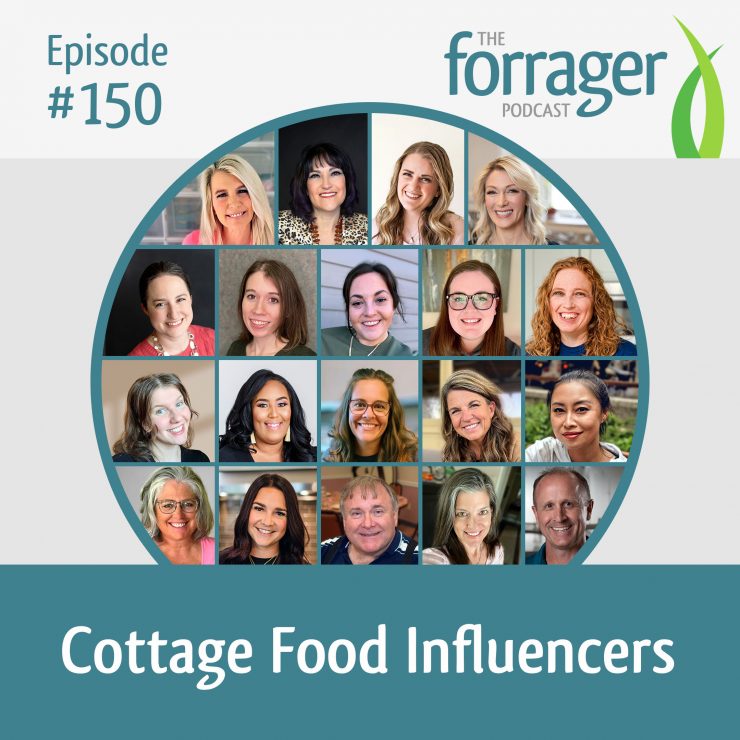
David Crabill: Welcome to episode 150 of the Forrager Podcast. I am super excited for this very special episode, and it’s kind of hard to believe that it’s already been 150 episodes, but I did start this podcast over five years ago. I’ve talked to a lot of amazing entrepreneurs over the years, and I want to do something special for this episode.
I did something special in episode. 50 in episode a hundred. And so just like those episodes, I asked my audience what they wanted me to do for episode one 50. They voted and said they wanted to hear from industry influencers. On this episode, I actually did something very similar in episode 50, and it’s kind of funny to think about.
The differences between episode 50 and this episode today, episode 50 was almost four years ago, and the industry has changed a lot in the last four years. Back then, I only had people that ran Facebook groups come on episode 50, and I would never. Do that today. I mean, Facebook groups are still a really big thing, obviously, but now people are just as likely to have their main following on Instagram or even on their own private communities, so it would be a little hard to only restrict influencers to those that have Facebook groups.
Also, just thinking back four years ago, back in episode 50, I didn’t have any help with the podcast. I was running it solo. And around episode 70 or so, I hired Faith who is my assistant, and she’s a big part of the reason the podcast is where it is today. She does most of the editing for the podcast. She finds most of the guests for the show, and she does all of my social media.
And I have to give her most of the credit for this episode. Once my audience decided they wanted to hear from industry influencers, I gave her the reins and I let her find the influencers for this episode, reach out to them, get a clip recorded, and she pieced it together. So I thought this episode would be a good opportunity to recognize the many behind the scenes contributions she makes to the podcast.
I really love the mix of guests that faith found for this episode. It’s really well balanced, so a number of the guests have been on the podcast before and a number of guests are new to the show. Also, some of the guests who hear from today help cottage food entrepreneurs in general, and some of the guests help a very specific niche.
Maybe they help people in a certain state, or maybe they help people with a certain type of business, and also some of the guests. Have huge followings and some of the guests have smaller followings, and when I say smaller, we’re still talking about over a thousand people in their audience, but just not as big as some of the guests.
A number of the guests you’ll hear from today have audiences of over a hundred thousand people, and that’s another thing that really stands out to me comparing this episode to episode 50. Back in episode 50, I was really blown away when I tallied up the audience numbers for all of the guests I had on that episode, and it was over 125,000 people in their audience.
That was an enormous number to me at the time, and it’s still a huge number obviously, but I looked at the followers for the guests that you’ll hear from today. I took their top. Platform page, whether that be a Facebook group, a Facebook page, an Instagram page, whichever one had the most followers. I took that one for each of the guests today and added them up, and the guest you’ll hear from today represent.
Over 1.5 million followers, and that’s just an unbelievable number to me. But it represents just how much these people are helping the cottage food community. They give a lot of their time and a lot of their lives, sometimes even without compensation. To helping other entrepreneurs. And so just like episode 50, I wanted this episode not just to be a really helpful episode, which it is, but I also want it to be a celebration for not just those you’ll hear from today, but everyone who helps support this industry.
The cottage food industry continues to grow every year, and a big part of the reason is ’cause of the people who give a lot of their time to helping support this industry. Alright, now we have a lot of amazing guests to hear from today. Now, back in episode 50, I just asked influencers to share their top tips or their best advice.
I didn’t really tell them what to talk about, but a lot of the influencers for this episode want some sense of direction because they can talk about any number of topics related to cottage food business. So we did it a little differently this time. We gave most of them a topic to talk about. You’ll hear some of them reference that in their answer.
The goal was to have it be a little bit more of a well-rounded episode that covers a lot of different topics. Now, if you’ve been a long time listener of the show, I think you’ll quickly realize that you’ve heard a lot of this advice before. This is more of like a highlight reel of some of the very best advice that’s been shared on the podcast before. But of course, each influencer has their own unique spin on it.
I’ve organized this episode roughly into four main parts, so it’s organized by four ms. So we’re gonna start with mindset, then marketing, then management. Finish off the episode with advice about money, and with that, let’s jump right in.
Tiffany Hill
[00:05:33] David Crabill: Alright, we’re gonna start the episode off by hearing some advice about mindset and our first guest is Tiffany Hill. She was on episodes 113 and 114 of the podcast. She probably doesn’t need any introduction because she has a massive following online, but what’s really amazing to me about Tiffany is just how fast she’s grown her business.
Back when I did episode 50 almost four years ago, she wasn’t even an influencer in the industry at all. So just in that last four years, she’s grown her own cottage food business and created this amazing resource for cottage food bakers. So with that, let’s hear from Tiffany about overcoming fear.
[00:06:14] Tiffany Hill: Hi, I’m Tiffany from the Pink Crumbb, and first off, I want to say that if you are currently operating a home bakery or you are thinking about starting one, I am so excited for you. I think it is the best career. Ever for a multitude of reasons, and I think my advice has two parts to it. The first is, don’t allow your worries or your questions or your concerns to prevent you from moving forward.
That is definitely what happened to me. I had so many questions that I was overwhelmed and it kept me frozen for many years and prevented me from opening my home bakery. So just tackle one question at a time. If you aren’t sure which cottage foods you are allowed to sell, tackle that. And then if you’re not sure how to get licensed, tackle that next.
As you get going, if you feel like your profit margins are too low, you can tackle that at that time. So don’t feel like you have to have all of the answers to your questions to even get going and get started. And the second part of my advice would be to take in all the words of wisdom from the veteran cottage food bakers, but know that you are an individual and you can do things your own way too.
So some of us love markets and some of us don’t. Of us love bakery carts, some of us don’t. Some of us do porch pickup. Some of us charge top dollar. Some of us charge a little too low. We are all individuals, as are you, and you will be able to just keep modifying and adjusting and taking in all that advice, but ultimately applying what works for you and it’s okay to do things your own way too.
So with that, I wish you the very, very best. Good luck to you and I hope you have a fabulous time.
[00:08:12] David Crabill: I really wanted to highlight the second part of what Tiffany said, because I see entrepreneurs make this mistake all the time. They hear advice from someone and they think that they have to follow that exactly in order to find success. But what I’ve found with running the podcast and hearing all the different stories is that.
Every business is totally different. What works for you in your circumstance might be different than what works for someone else. So it’s really important not to get sucked into the trap of thinking that you have to be like someone else in order to be successful.
Nicole Bendig-Lamb
[00:08:45] David Crabill: All right. Next up we have Nicole Bendig-Lamb. What’s really fascinating about Nicole is that she had this long time baking dream, but she resisted it because she believed that she needed to have a stable traditional career in order to pay the bills. In this clip, she shared some mindset shift that allowed her to get over that mental hurdle.
[00:09:07] Nicole Bendig-Lamb: Hi, cottage food bakers. This is Nicole Bendig-Lamb owner of Cake Business School, LLC, and author of Baking Your Way to the Top. People often ask, what’s the biggest mindset shift hobby bakers need to make to turn their passion into a business? I love this question because your mindset is so important to success.
I started doing cakes over 25 years ago as a hobby, and probably like you, I made them for free for friends and family. I was instantly hooked. Soon other people started noticing and asking to pay me for my cakes. I reluctantly did this as a side hustle and as it grew. People would say, you should do this full-time, or I think you missed your calling.
You see, My day job was as an accountant, but I would always answer with, oh no, I could never do this full-time, or I wouldn’t make enough money doing this. But after a while, I realized that the only one telling me I couldn’t do it was me. And once I made that mindset shift. The rest fell into place and I was eventually able to leave my day job and follow my sweet business dreams.
So really the first step to turning your hobby into a business is to simply believe that it is possible. And from there the rest is just learning and implementing the business side. And the best part is there are tons of great resources and coaches who can help you achieve your sweet business dreams too. So good luck and happy baking.
[00:10:49] David Crabill: I have personally faced imposter syndrome many times in my own business ventures, and it makes such a big difference when you just have the confidence that you deserve to be paid for your talents. Oftentimes, that is a difference between struggling and success.
Brette Hawks
[00:11:06] David Crabill: Next up we have Brette Hawks. She was on episode 83 and today she’s sharing a story that she did not cover on her episode, and this is something that holds a lot of bakers back.
[00:11:21] Brette Hawks: Hey, this is Brette from the Out of Home Baker. I wanna tell you that everything you need to know is on the other side of just getting started, and so often we put all these excuses in our heads and maybe we don’t even realize they’re excuses. We think they’re valid things that we haven’t figured out yet.
We haven’t figured out the legals, we haven’t figured out the logo, the name, what our menu is. But you literally cannot steer from a parked car. If you’re not moving, then you’re not gonna be able to find the next step. you could have the. Shiniest, fanciest business and working out all the perfect details, but literally sometimes just getting started is so much better, pretty much always than being perfect or having everything ready because so much of what you need to know you figure it out once you get moving.
So don’t let what you don’t know stop you, especially the legals. Don’t be afraid about the legals. When I started my business. And I had zero idea that any licensing was needed. I remember being at a Get together, it was a friend’s wedding and somebody made a comment about the fact that I must not have any licensing because I didn’t have the right kind of a kitchen.
It was like a very kind of snobbish comment and it scared me outta my pants and I. Everything down because I felt like I was with my business in the dark trying to sneak around and like the government had this spotlight out and was trying to find me. And I’m trying to like stay out of that spotlight and literally.
It was not as intense as that. Yes, there are rules you have to figure out, but so many of us, we just do it until we can figure them out. And that was the case for me. so I, don’t want you to let those things. Stop you from going forward because you will be able to figure them out as you go along.
And rules change all the time and opportunities become available and you’re really so much less in the spotlight than you think. and just know that everybody you admire, all those bakers that have the most shiniest Instagram pages that are making so many videos and that seem like they’re just knocking it outta the park. They all started exactly where you are right now.
[00:13:41] David Crabill: When I ask people what their number one challenge is more often than not, they say they are afraid to get started. Every single week I get emails from people who say they have been thinking about starting a home food business for months or oftentimes even years, and they still haven’t started. And even if you have started your business, I still think Brette’s advice applies because there are always new opportunities that crop up in business.
We might hesitate on because we’re not quite exactly sure if it’s gonna work, but the only way to get over that fear is to take the first step.
Alina Eisenhauer
[00:14:22] David Crabill: All right, now let’s shift into talking about marketing.
Next up we have Alina Eisenhauer. She has not been on the show yet, but she will be very soon. She’ll be on episode 153, and I’m pretty sure Chef Alina has the record for the most. Press mentions of any guest I’ve had on the show before. She’s been on national TV many times. At one point she built up a restaurant to 40 employees, so she knows a thing or two about marketing, and today she’s gonna share a bit about branding.
[00:14:57] Alina Eisenhauer: I am Chef Alina, my community on Facebook. I have the Gluten-Free Baking Secrets, tips and Tricks group, and then I have my paid Communities of the Cottage Baking Success Academy and my gluten-free baking boot camp. if you’re an independent business owner, you also need to learn a lot about marketing and advertising, but really more marketing, getting the word out, finding your community, your buyers, and everything.
Again, you need to think about your brand. I think a lot of time in cottage baking, because it’s just out of my house from my heart, people don’t think about themselves as a brand, you need to think of yourself as a brand, and again, this is what sets you apart in a crowded market as well. Start to finish that you have brand colors, that you have something so that your packaging your table.
When you go to a market, how does that look? Your table at a market is your silent salesperson. That’s your first impression. People get when they’re walking by. Does it look like a display in a store because it should. It should look like a little display in Stonewall Kitchen or something. It should be inviting and if people wanna stop and look and see what you have and your display, ideally, if you can have your packaging, your display, your logo whether you have a Facebook page, a website, whatever.
You have all your colors and everything is. You have continuity through that, you start to build a brand that people recognize. So if someone sees you out and they see your table, even if they’re not right up on top of it, they know that’s your table because of your colors and the way it’s set up that matches the packaging of the cookie that they bought for you at some other event.
Things like that is really building consistency and building an actual brand, which might. Funny to people when they’re thinking, well, I’m just a cottage baker. But you need to really have a brand.
[00:16:43] David Crabill: Developing a cohesive brand like Alina’s referring to here is definitely something that you work your way up to. It’s not gonna be something you have on day one, and that’s okay, but what’s never okay is thinking I’m just a cottage baker. No, you’re a business. You are providing something of value to your community and you should get adequately compensated for it.
Cassie Menchhofer
[00:17:10] David Crabill: Next up, we have Cassie Menchhofer. She was on episode 64 and also briefly on episode 100, and she runs a Facebook group for Ohio Cottage Food Producers. but her support for small food entrepreneurs goes well beyond just her Facebook group.
She, I think, is the only person who’s been on the show who actually has become a co-packer, not that she uses a co-packer. She is a co-packer and she used her commercial kitchen space to make products for other food entrepreneurs and help them support their business goals. So she is pretty unique, and you should keep that in mind as you listen to this advice from her about how to pick your next product.
[00:17:54] Cassie Menchhofer: Hello, cottage food producer friends. My name is Cassie of Cassie’s Country Cupboard, and I’ve been part of the Ohio Cottage food producer world since 2011. My recommendation for finding what the best new product would be for you, try visiting a couple of your local markets. Look at what’s already available, what’s missing.
Can you add your expertise to what is missing? Try and find the market manager and ask what they would love to have at the market. If it’s something that you can do to fill that gap, that’s where you can focus your skills. Many local markets, both in person and on social media, have plenty of cakes, cookies and general sweetss.
What can you do? That’s something allergy friendly, something dye free, something extra special like a specialty bread from your family. Heritage. Don’t do what everybody else is doing ’cause you’ll just get lost in the mix. Find out what you are special at being able to do and do that. Good luck.
[00:18:48] David Crabill: It sounds so simple when Cassie puts it that way, but most entrepreneurs don’t do this. You know where most entrepreneurs go when they want to create a new product, they go to their kitchen, but Cassie’s advice go to your market. Talk to people, ask questions. It’s entrepreneurs that are hyper aware of their community’s needs and the gaps in the marketplace that are the most successful.
From what I’ve seen, oftentimes the best new product to offer is a familiar product. You don’t wanna be completely foreign, familiar enough, but it should have a twist. It should have something different or special or new, just like Cassie said. That’s how you’re gonna stand out in the marketplace.
Jessi Deily
[00:19:33] David Crabill: Next up we have Jessi Deily. She was on episode 1 0 7, and it’s funny to me in this clip, she says she’s an aspiring content creator, but her TikTok channel has over a hundred million views on it. So I’m pretty sure most content creators are aspiring to be more like Jessi. Anyway, today she’s talking about an essential aspect of content creation.
[00:19:59] Jessi Diely: My name is Jessi Diely, AKA Colby Jackrabbit. I’m a cottage food baker who sells macarons, meringues, marshmallows, and cake in Helena, Montana. I’m also an aspiring content creator, and I post baking videos on social media, especially YouTube and TikTok. My advice to those of you growing a cottage food business is to leverage storytelling in your marketing.
2024 was year of the wood dragon according to the lunar calendar. So I decided to make meringue shaped like dragons for lunar New Year. They turned out so cool, but because they had such tiny arms, legs, and horns and delicate tails, most of them broke in one way or another. When I tried to take them off of the silicone mats, I baked them on.
I was heartbroken. I couldn’t sell dragons with missing legs and tails, and I didn’t have time to make more before the event. I was preparing them for. But then inspiration hit me. I’ve always admired Kintsugi, the Japanese art of repairing broken pottery by mending the areas of breakage with lacquer mixed with powdered gold.
the practice treats breakage and repair as part of the history of an object rather than something to disguise, and I think that’s so beautiful. So I mixed gold luster dust into royal icing and used it to reattach the broken limbs and tails and included a mini heat sealed piping bag with extra icing in case customers needed to make further repairs after purchase.
I told the story all over social media and very quickly my small tragedy turned into a story of rebirth and resilience, which aligned perfectly with the themes surrounding the new year. People love the story. They love the dragons, and I sold out of all of them. Stories resonate with customers. So when you’re marketing your tasty treats, share a little bit about yourself in the process, tell your customers if you’re using a recipe that’s been in your family for generations, if you’re reason, if you’re selling gluten-free treats, is because a family member has celiac disease.
Share your why. Did you mess up a bunch of batches trying to perfect your recipe? Let people know what obstacles you overcame to produce the most delicious product they have come to love today. You can get creative with your storytelling, but the most important thing is to be authentic to you and your business.
[00:22:10] David Crabill: In a month from now, you’re probably gonna have a hard time remembering Jessi’s advice, but I bet you’re gonna remember her story about the broken dragon cookies that shows the power of storytelling. People don’t remember facts or figures, they remember stories. So if you want your business to be remembered, make sure to incorporate storytelling and all of your marketing.
Kortney Carey
[00:22:32] David Crabill: Next up we have Kortney Carey. She was on episode 50 and I can’t believe she hasn’t been on her own episode yet. I’ve been meaning to do it, but back when we did episode 50, she had a baby right around that time. Didn’t seem like a good time. And then somehow it just hasn’t happened. But I’ve talked to Kortney and we’re gonna make it happen.
It shouldn’t be too long before she is on her own episode. Anyway, today she’s gonna be talking about her top tips for posting on social media.
[00:23:00] Kortney Carey: Hi, I’m Kortney Carey. I turned off my mixer about five years ago, and I started Bakery Tee Co a Baker’s boutique. And while I love baking teas and all that cute stuff, I’m really passionate about Bakers feeling confident in their social media posting and building a brand. Okay, so here’s the thing. Being an at-home baker is not just about flour, sugar, and way too many dishes, right?
If you want people in your local community to actually remember you when they need cookies or bread or whatever, you’ve gotta show up online like you’re already their favorite neighbor. That means. Show your face. I know you’d rather hide behind your mixer, but people don’t just buy bread. They buy you.
Let them see all the behind the scenes from like blue eon in the background, your grocery cart full of butter, even your kid licking sprinkles off the floor. People love that authenticity and they love knowing their baker.
Next talk, local post about Friday night football, the school fundraiser, the pumpkin patch down the road.
You want people scrolling and thinking, oh, she is one of us, or he’s one of us. Also, showing up in person helps you create connection and opportunities out of thin air, I promise. So be part of the community. And last, please. For the love of buttercream, stop only posting your finished bakes. Share them. Yes.
But share the fun and personality driven unique stuff too. Like your Diet Coke addiction, your massive collection of butter, Christmas ornaments, your evening walks to the coop to feed your chickens. That’s the stuff that makes people fall in love with you and makes that connection, not just Your cake, you know what I mean?
At the end of the day, you want to be the neighborhood baking lady, the go-to dessert person in your community. You wanna show up and post consistently so when someone local has a celebration, your name is the first one they think of. That’s how you build a brand as an at-home baker, by being real, being local, and being consistent. Good luck and happy posting.
[00:25:00] David Crabill: Man, as an introvert, I have struggled with this so much over the years, and I still struggle with it today to some degree, but I’ve learned that people really want to know you. They don’t want to interact with the business, they wanna interact with you as a person. It’s actually your biggest advantage over the commercial bakeries out there.
So the more that you can infuse yourself into your business and build that trust, the more likely people will buy.
Tanya Clowers
[00:25:24] David Crabill: Next up we have Tanya Clowers. Just a few years ago, Tanya never dreamed she would be baking cookies, let alone decorating them and selling them and helping other people decorate and sell them. And now she has the largest YouTube following by far of any of today’s guests. So today Tanya’s gonna share the strategies to use to grow on YouTube and create compelling video content.
[00:25:49] Tanya Clowers: Hello, this is Tanya with South Street Cookies. We’re a home bakery in Iowa, and I specialize in custom cookies decorated with royal icing, and there’s a chance you may have seen my videos online. Since 2023, I’ve been building my YouTube channel and now have 114,000 subscribers, and I was asked to give a few tips on how I make my videos.
To start with, I’m a huge fan of YouTube for small businesses, and it surprisingly does a really good job at targeting people near you. It’s easier to grow a channel on YouTube now than in the past because of YouTube short. Which is comparable to reels on Instagram. I try to post one video every day, so it’s just become part of my routine every morning to edit video while I’m doing other admin type work.
And the biggest thing with YouTube is posting consistently and engaging with your audience. As far as what I post, I record mostly short cookie decorating videos, but I sprinkle it in some other behind the scenes content. I don’t love talking about myself or thinking about stories to tell, so I just explain what I’m doing.
So it’s basically tutorials, but my audience isn’t just bakers, for example. I’ve had so many parents tell me that they watch a few of my videos every night as part of their child’s nighttime routine, or at farmer’s markets, people will comment that they love watching my videos and how relaxing they are.
customers find me on YouTube for ordering cookies and also for taking my cookie decorating classes. I had a friend once tell me that I quote unquote, made it because my videos are popping up on their suggested video page, which just kind of made me laugh because that’s how the algorithm works. It shows your videos of people in your area, and I don’t think that’s entirely common knowledge.
The way I record my videos is actually very simple. I have an iPhone, which honestly is outdated. It’s a budget iPhone from 2021. I use a shop canvas, ring light phone holder, so it’s just one light on an arm that holds the phone. I record in real time and then speed up my edits with an app called Splice, and I record my voiceovers when I’m editing the video and I use a very cheap wireless mic.
I don’t think it’s difficult to accrue a lot of content. You can just record, clips of baking, decorating, prepping, icing, packaging, or B roll of all the things in between, or like day in the life content. If voiceovers aren’t your thing, you can post to music. If you don’t like showing your face, just include your hands.
There are many ways to record what you’re doing. All of this is transferable to other platforms, but I’ve really grown to love YouTube and I’d love to see more bakers using it for their businesses.
[00:28:09] David Crabill: I love the fact that Tanya gave a different perspective here. You know, we’ve heard that storytelling can be really powerful. Infusing yourself can be really powerful. But in her case, she didn’t wanna do either of those things. And clearly it has worked for her. Just like Tiffany was saying at the beginning of the episode, you have to do what works best for you. And the more you can do that, the more consistent you can be.
Stefani Pollack
[00:28:33] David Crabill: Next up we have Stefani Pollack, and she is the only person I know that has an Instagram account with almost a million followers, so she knows a thing or two about creating compelling content. Today she’s gonna be talking about something that I think a lot of entrepreneurs are pretty unsure about using AI in your business.
[00:28:57] Stefani Pollack: Hi, I’m Stefani Pollack. I’m the founder of The Bake Fest, the largest virtual event for bakers in the United States. All cottage bakers should be using artificial intelligence, and I’m going to tell you about three ways to use it in your business. Number one is marketing copy. We all know about getting AI to do writing for us, but be real strategic about it.
So think about what you wanna say. Tell AI this is what you wanna say, but then say. Hey, AI, ChatGPT, Gemini, Claude, whichever tool you’re using, how can I give this a stronger hook? Compare what I wrote to what other successful companies are doing to market their baked goods and make mine better. Make it sharper, make it wittier.
Make it more shareable, and go from there. Keep tweaking until you get something that really works.
Number two, data analysis. Hopefully you have a whole bunch of data about your business sitting around. Probably it’s in spreadsheets, information about when your customers are buying, what they’re buying, how much they paid.
You can drop all of this data into AI and say. Hey, what trends do you notice? What Price point are people buying at more? What products are people buying? How often are they buying? Are they buying the same couple of things? Are they buying them together and ask it to help you future plan your business based on that data.
Number three, use AI as your business mentor. Make sure your AI knows everything about your business. Don’t be shy. Tell it all the things and then ask it questions. Say, I’m thinking about this new thing. What do you think? And iterate with it. Have conversations and ask it. What would somebody who is really successful, who is five, 10 years ahead of me in the business game, what would they do that I’m not thinking about?
Then actually try to implement some of the ideas. Don’t just have conversations. Actually go and do it and see the results that you’ll get.
[00:31:04] David Crabill: As Stefani said, even the entrepreneurs who are already using AI in their business oftentimes only use it to overcome writer’s block. So I really love all these additional ideas that Stefani gave, and I think it’s pretty clear that we’re probably not using AI to the degree that we could, myself included.
I also wanna add that AI is a learned skill just like everything else. And if you pick it up for one day, you might not find it all that helpful, but over time, as you use it more, you’ll learn more about how to use it better, and the system will learn more about you and become more useful as well. So ultimately, yes, AI is a learning curve, but it could end up saving you time in the long run and allow you to grow in ways that you never would’ve been able to without it.
Jacy Vinson
[00:31:52] David Crabill: Next up we have Jacy Vinson. She runs multiple Facebook groups for cottage food bakers, and today she’s gonna be talking about something that I think every single cottage food entrepreneur should be leveraging email marketing.
[00:32:06] Jacy Vinson: Hi, my name is Jacy Vinson. I am the owner of Joyful Bites, located in Eagle River, Alaska, and today I’m here to discuss email marketing,
First off, the most important thing to do if you wanna start using email marketing, is to build an email list.
You can’t market effectively if you don’t have anyone to market to. I built my email list a couple different ways. First, I made sure that every time someone placed an order, they would be automatically subscribed to my bakery’s emails. They did have the option to opt out, but the default was to have them already opted in.
Another way was just a simple popup on my website, asking if they want to opt into emails, and if they did, then they would be the very first to know if a new product was launching. Any upcoming sales I may have, or events that I would be at. Other options that are great at building or email list could include a small discount towards their next order.
They would just add their email and have that discount email to them. Last option I would recommend is a free resource that you created. That could be for the customers. It could even be for other business owners, or both. Maybe that resource could be about how to achieve tall cookies, maybe a resource about how to keep your cakes moist.
It can be a. Resource as simple or as extravagant as you want to make it. For someone to get that for your resource, all they would have to do is just add their email and they’ll get that resource email to them. Now, all of these options can vary depending on what platform you use, so check out what options may be applicable for your platform and adjust if need be.
Once you have built an email list for the best results, don’t let your email list sit there and maybe just send an email. Once or twice a year, you’re gonna wanna nurture your audience and keep them in the loop. Email them when you have a new product coming soon to build that anticipation and excitement.
Then send another email when it actually launches. Let them know what events you may be at in the future, or if you have some holiday pre-order sales coming up. Keep communicating with your customers. They will love to hear from you.
[00:34:09] David Crabill: Jacy shared a lot of great ideas for creating a lead magnet. That’s the industry term for a resource that helps get people onto your list, and certainly a lead magnet is a more effective way of getting people on your list. But if you’re dragging your feet on that or haven’t created a lead magnet yet, don’t let that stop you from starting an email list.
You can start just by asking people to join your list, especially if you’re at a market. Ask your customers, will you join my list? And many people will say yes. And remember, as important as social media is, at the end of the day, you don’t own it. But no one can take your email list away from you. That’s why I think every cottage food entrepreneur should use email marketing.
Amanda Schonberg
[00:34:56] David Crabill: Next up, we have Amanda Schonberg. She was on episode 80 of the podcast, and when people ask me what is the first episode I’d recommend they listen to, usually I point them to Amanda’s episode. She has this amazing knowledge base, and I personally learned so much from her episode. She crammed so much amazing information into it, and I think I speak for many other influencers out there that we’d all like to be a little bit more like Amanda today, she’s got some advice about how to add an additional revenue stream to your business.
[00:35:36] Amanda Schonberg: Hey, what’s going on, sweet Friends, my name is Chef Amanda Schonberg, and I’m the founder of Baking for Business. I’m extremely passionate about helping bakers not just get started, but also scale their baking businesses. And one of the best pieces of advice that I have for those who want to scale is don’t be afraid to go digital, honey.
Digital products is where it’s at, and it’s it’s also an amazing game changer. You know, when I first considered sharing my recipes online, I will be honest with you though, I was a little scared. I thought, why would I get somebody my recipes? What happens if they sell more than me? Or what happens if people don’t wanna order from me anymore?
And all of those feelings are normal, you guys. If I’m being honest, the complete opposite happened. My business and my brand blew up. Sharing those recipes built trust, it expanded my reach and actually increased my sales because people saw the value that I was given and they wanted more. That first weekend when I sold my recipes, I generated over $5,000 in just that short little weekend, and that would have taken.
Hours for me to be in the kitchen and do, but that success did not just happen to me. It also happened to my students, like Danny, who was a mom that was looking for another way to increase her revenue. She generated over $30,000 just launching her digital products within her very first week. And so here’s what most bakers don’t realize, going digital is not just about selling recipes, and it doesn’t mean that you’re limited to.
Selling to other bakers. You can create templates, pricing guides, checklists, PDFs, planners, the sky is the limit. Care cards, you know, all those things that you scroll and buy from others. It’s time for you to quit purchasing and to start being the seller. And the beauty of digital products is that it gives you freedom because it holds you over at times when maybe you’re not booked or maybe orders are not coming in.
You have another way to generate revenue in your business. You already have amazing gifts inside of you, so don’t box yourself in. I want you to think about the knowledge, the shortcuts, all the systems that you’ve created to help your business flow and turn those into digital products because digital products are not just extra income, y’all.
They are leveraged, and that’s how Bakers can build a business that lasts and stands the test of time.
[00:37:59] David Crabill: Whenever you’re creating something, you’re also creating something else. You’re creating byproducts and the truly successful entrepreneurs find ways to sell their byproducts. This concept was first introduced to me by Jason Freed, who talked about how Henry Ford used his byproducts to create the Ford Charcoal Company, which is now Kingsford Charcoal today.
So anytime you see a bag of Kingsford charcoal, let that serve as a reminder to you to try to find ways to use your byproducts in your business. And for many of us, one of the most valuable byproducts that we have is the knowledge that we’ve gained by building our businesses, which we can then share with others.
Michelle Chesser
[00:38:41] David Crabill: All right. Let’s move on from marketing into management.
Next up we have Michelle Chesser. She was on episode 140, and one of the things I most love about Michelle is that she’s so real and authentic. I feel like a lot of entrepreneurs think they need to have everything perfect and polished before they can post. I think Michelle would be the first to tell you that she is not that person.
She just shows up as she is and she has one of the largest followings in the cottage food community. So she is proof that you don’t have to be perfect in order to be professional. But although she may not always be polished, she is very consistent. She’s one of the most consistent bakers I know, and you can be sure that that is a big part of her success.
[00:39:30] Michelle Chesser: This is Michelle Chesser from Home Sweet Home Baker on Instagram, I would say that being consistent is definitely the top thing that helps build loyalty with your customers.
Consistency doesn’t always mean showing up day after day and week after week. It really means showing up when you say you’re going to show up, whether you do the markets every week or once a month, or if you just do holiday markets, you’re still being consistent and you’re letting your customers know where you’ll be and when you’ll be there and you follow through with it.
There is a local baker and a lot of times she’ll post something exciting and fantastic that she’s going to do, and then you hear crickets or she’ll mention that she’s going to be somewhere and she never shows up. Because of that, she’s lost a really big customer base. She’s a wonderful person. I love her bakery, but this has really hurt her business.
And one more thing that I will say about building customer loyalty not to be cliche, but to be yourself. Be friendly, be engaging with your customers. Get to know them. Yes, it’s hard to remember people’s names, but put some effort into it. And really when you see your customers say their name, even maybe mention something about them that you know, ask how they’re doing, ask how their family is, this will really make them feel special.
[00:41:09] David Crabill: Michelle often provides a fresh perspective on things, and I love how she reframes the concept of consistence here. A lot of people think, oh, I have to post every day, or I have to post every week. But really what you have to do is focus on your customers and understand what their expectations are and meet those expectations.
And the best part is. You can control those expectations by deciding what you want to communicate to them and what you want to commit to.
Wendy House
[00:41:37] David Crabill: Next up, we have a Wendy House. She runs a very unique bakery that has exploded in popularity in the last few years, and also her social media accounts have blown up too. There are now thousands of cottage food entrepreneurs that follow her, and today she’s gonna talk about the right way to grow your business.
[00:41:59] Wendy House: Hi, my name is Wendy and I run an honor system bakery from my driveway in Oregon. I think the biggest mistake new micro bakery owners make is trying to do everything all at once. You’re excited, you’ve got a hundred recipe ideas and you wanna offer all the things right away.
Breads, pastries, cookies, you name it. But when you spread yourself too thin, it’s really hard to stay consistent, and consistency is what builds trust with your customers. I’ll confess I was forced to scale up much faster than I really should have. Within a couple of weeks, I scaled from about eight loaves to 40 loaves, which sounds like a dream on paper.
But because I wasn’t skilled at baking such large quantities at a time, my products were probably subpar back then. I often wonder how many potential regular customers I may have lost during that time because I didn’t take the time to truly scale up my knowledge and abilities and build that quality and trust with my community.
I feel like the best way to avoid that is to start small and focused to choose one or two products you truly love to bake and you know you excel at and start testing those on friends and loved ones that you know will be honest with you, make things that you really enjoy and you can make. Over and over again without burning out.
Dial in those recipes. Figure out your systems and procedures and sales, and then start to expand. Another piece that’s often overlooked is boundaries around your time. A micro bakery can quickly take over your whole life if you don’t set sustainable hours and limits. It’s okay to sell out. It’s okay to say no, but what matters most is creating something that you can keep and sustain doing long-term.
So my advice is keep it simple, keep it small, stay consistent, and protect your energy. That’s how you grow something that lasts.
[00:43:52] David Crabill: One of the most important aspects about running your own business is that you are in charge. You get to decide what to say yes to, and just as importantly, what to say no to. And actually, I think that’s one of the risks of an episode like this is you could hear all these things that these amazing entrepreneurs recommend, and you’re probably gonna wanna do a lot of them all at once.
But if you do that, then you are going to burn out and you will not have a sustainable business. So the most important thing is just to decide what’s your next best move? What’s the next thing you’re to implement? And just focus on that until it’s complete and then you can work on something else.
Lisa He
[00:44:32] David Crabill: Next up, we have Lisa He, she has not been on the podcast yet, but she will be on the next two episodes, episode 1 51 and 1 52. She’s been in the industry a long time and has done so many things. She’s built a successful bakery, then leveraged that success into building a supplies business than a course business, than a software company.
And as I was talking with her in her interview, I realized that a big part of the reason why she’s been so successful is because she has an amazing amount of discipline and focus in her business ventures. So I asked if she had any advice about how to keep yourself accountable when growing your business.
[00:45:14] Lisa He: Hi everyone. My name is Lisa He and I’m the owner of Borderlands Bakery, a baking company, and My Custom Bakes, a order management company for cottage Bakers. One of the things that I don’t feel like we talk about enough as small business owners is our ability to be accountable to ourselves and be disciplined.
When the task is boring or it’s a legal thing or a tax thing that we have to deal with, but we have to do it anyway. There’s a ton of these little sneaky tasks that are sprinkled into business management that are a pain to deal with. Sometimes you end up having to go back and forth with your local health department a gazillion times before you get your food label approved, or, you you gotta pay your taxes or file for a special business license for a certain event.
And these little things feel like these big obstacles sometimes, but if you want to run a legitimate business, there are some things that we cannot get out of. So if you want to be accountable to yourselves, you have to exercise that discipline muscle. And I swear. It gets easier as you do it more over time, but if you can get yourself on some kind of cadence to addressing the admin parts of your business, that will save you a lot of time and headache in the long run , even if it means setting aside 10 minutes a week to do your bookkeeping.
Please do it. It’s gonna be worth it. It’ll make your life way easier when you’re trying to do your expenses and file your taxes. There are a lot of unglamorous sides of small business ownership. That just have to be done. You have to find a way to help muscle yourself through this and to stay accountable to yourself if you feel like you can’t stay accountable to yourself.
It’s always helpful to have an external accountability buddy, whether that’s a friend in the industry or a coaching group that you join. But if you struggle with this. Is something that’s gonna be a bigger problem as you grow as a business. So nip it in the bud, develop those habits as early as you can, and your business will go a lot smoother.
[00:47:42] David Crabill: One thing I’ve noticed is that cottage food entrepreneurs tend to be fiercely independent. But although we’d like to think that we can keep ourselves accountable, most of us, myself included, need some kind of external accountability system in place. As Lisa mentioned, getting an accountability partner or joining a membership can be a couple really good ways to do that.
But I wanted to also add in another way that’s worked really well for me that I don’t hear people talking about, and that’s to have your audience keep you accountable. So what I’ll do is when I send my weekly newsletter, I will tell my audience what I am planning to do. I’ll say, you can expect this next week or whenever it may be.
And then when life gets in the way and you know, you feel like not doing whatever you plan on doing, I always have in the back of my mind that I promised to my audience that this would happen within this timeframe. And that helps keep me accountable. And so for you, it doesn’t have to be email, you could post on Facebook, or you could post on Instagram and tell your audience what you’re planning to do.
But regardless, the main thing is to find some system that works for you, that helps you do the tasks that are very easy to put off in the short term, but make a big difference in the long term.
Allyson Grant
[00:49:00] David Crabill: Alright, and finally, let’s transition to some advice about money.
Next step we have Allison Grant. She was on episode 1 36 and she has been working in the food industry for the longest of any of today’s guests. So as you can imagine, she knows a thing or two about running a successful food business. Today she is going to share some advice about dealing with finances.
[00:49:27] Allyson Grant: Hi, this is Allison from the Better Baker Club, and I wanted to take a couple minutes and share some tips about managing your finances. This is a question I get asked frequently by Bakers who are just getting started and their finances feel overwhelming
but really, your finances come down to two things. Finances are the money that you bring into the business and the money that you spend in your business. Once you get a handle on how much you spend and how much you bring in, the difference between those two numbers is your profit. And if you can track your profit month over month.
Then you are going to be able to use that information to see how well you’re doing and make adjustments accordingly. So here’s a few tips to help you start to track your finances every month. First, you wanna start by having a dedicated checking account specifically for your business and not mixing it with your personal.
Spending, and sometimes it helps if you have a credit card that you don’t use for your personal expenses anymore, and you might decide to just use that credit card for your business transactions. That’s a good way to keep all of your spending in one place. Use it for your Amazon purchases, use it for your Costco purchases.
Then at the end of the month, when you go to record all of your spending, you have one place to go. See where you did all your spending. you’re gonna have a business account that’s separate from your personal account. The next thing you wanna do is get in this habit of weekly or monthly, depending on how often you are selling.
You want to take a few minutes and record everything that you spent that week. And then you’re gonna go and do the same thing for everything that you brought in. Now, a lot of bakers accept payments through multiple different platforms, and you wanna go and look at your Venmo, look at your PayPal, look at your square if you’re taking credit cards, and add up all of those numbers.
So at any given week, you know how much you’re spending and how much you’re bringing in. And then when you know the difference between those two, you can sit down and say, this is how much profit I make. And my recommendation is that you do a month end wrap up every month so that it’s nice and clean. You finished your numbers for the month, you know how well you did, and once you know this information, it’s gonna help you to make decisions for your business going forward.
So I hope you found that helpful. Good luck with tracking your finances. You can do this. It’s one step. In the direction of becoming a successful business person.
[00:52:18] David Crabill: I can confirm that many entrepreneurs feel very overwhelmed by managing their business finances and oftentimes think that they need to hire an accountant. And it is honestly not that complicated. I love how Allison broke it down, and even though it’s simple to do, there are so many people that have no idea whether they’re making money or not, especially if they’re merging business and personal finances together.
Many of my podcast guests have admitted that once they actually crunched the numbers, they realized they weren’t really making any money with their business, and sometimes they were even losing money. And you never want to be paying a customer to take your product from you. So it is absolutely critical to get in the habit of tracking your income and expenses and understand how much profit you are making.
Rachel Laukala
[00:53:08] David Crabill: Next up we have Rachel Laukala. She was on episode 1 35 and on her episode she revealed that even though she was a former math teacher and very comfortable with numbers, she struggled for years to price her products correctly. It was actually part of the reason why she grew to resent her business, the business that she had at one point loved so much.
So today she’s gonna talk about what she’s learned about pricing.
[00:53:38] Rachel Laukala: Hi, my name is Rachel Laukala and I am the owner of Cake Pops by Rachel. And my best advice for cottage food entrepreneurs would be to start out pricing for profit and not just what feels fair. I know it’s scary at first to put prices out there, especially when you’re putting a new product out, but. It is worth it in the long run to understand how pricing products works and what all goes into it so that you’re not just.
Running a hobby, you’re actually running a business that makes money and pays you back. When I first started out, I was comparing myself to other businesses, curious about how people felt about what I was charging. Didn’t really know the in and outs of what all was involved in pricing my products.
Either I just was kind of guessing based on what I was spending, but I had no clue how to include my time and actually truly pay myself. So I would just say to value your own time and there’s nothing wrong with looking and seeing what other people in your area are charging, but know that that’s not the only measure that goes into whatever it is that you’re making and your products and your time. Absolutely. Make sure that you charge your worth.
[00:54:58] David Crabill: This is definitely something that trips up most new entrepreneurs, and I think there’s a couple reasons why. One reason is oftentimes we look at grocery store prices when we’re trying to figure out what we should be charging.
We have to remember that most things in the grocery store are mass produced by machines.
So not a great place to price compare. And another major reason I think it happens is because people will add up the cost of their ingredients and charge more than that and then think that they’re making money. But actually your ingredients should be ideally about 30% of what you end up charging. So ideally less than a third of the price you charge will be allocated towards the money you spent for the ingredients.
And once you make that shift, it allows you to not only pay yourself and pay for other business expenses, but also to reinvest in the business, which allows you to keep growing.
Mal Dell
[00:55:57] David Crabill: Next we have Mal Dell who runs an extremely popular cottage food Facebook group, but his background is actually in business finance, so I asked him what cottage food entrepreneurs could do to get funding for their business.
[00:56:12] Mal Dell: Hi, this is Mal Dell, The Monetization Chef. I run the Cottage Food Business Group on Facebook and the Cottage Foodology Newsletter on Substack. Question, when should you apply for financing in your cottage food business? Two unpopular answers never. And yesterday. Ideally, you shoestring your startup from personal funds and grow from profits, so you never need a business loan.
That’s not usually realistic, especially if you are after big jumps in growth or new opportunities pop up. Note that with an LLC and an EIN, you can create business credit over time, separate from your social security number, but your first business loans will invariably depend on personal credit based on your FICO score.
FICO, which is an algorithm financial institutions use to help determine your credit worthiness.
Fortunately, raising your Fi CO is an iterative and predictable process anyone can do.
Your goal is to get into the upper six hundreds or seven hundreds, even better access to, and the cost of your loans will be tied to your score.
While FICO building is progressive and reliable, it’s often slow.
Lenders like to see at least two years in business for a business loan or card. So start yesterday. As I suggested earlier, of course, a top FCO can move you to the head of the line. Now, let’s start building some credit. Note that some accounts are easier to get than others, especially if your current score is low.
Get some gas charge cards from the big brands. Use them exclusively and pay them off immediately when the bill comes. Get some department store cards harder to find with the decline of retail. But Home Depot, Kohl’s, target, JCPenney, et cetera, are still around. Same strategy. Use the cards instead of cash and pay them off always on time.
Now you jump to developing wholesale business accounts with suppliers. Only the largest suppliers report to the reporting agencies. Uline is one where you might find packaging for food stuffs. There are also three different main types of credit and agencies may bump up your FICO based on making payments on all three types.
These are one revolving credit. For example, credit cards where the payment is variable depending on your usage. Two installment credit, like a car loan or a mortgage where the payment is fixed. And three, open credit, similar to revolving and function. An example would be a business line of credit. Dabble in all three to earn a top FICO.
Some other tips. If you can’t pay off credit cards each month, keep your balance below 30% on each card. The longer you have a particular card or loan, the higher your score, assuming you are paying on time. Uh, that’s always the caveat there. Another reason to start yesterday. Meter your credit applications.
Start slow and don’t bunch multiple card or loan apps together, which is a big red flag. Slow and steady. Develop a plan and stick with it. The easiest business card to get is the Capital One Spark card. If you follow these steps, you’ll be loan ready from a credit worthiness standpoint when you want that expensive piece of equipment.
Delivery van, or to open your own commercial kitchen. Best wishes I.
[00:59:06] David Crabill: As you were listening to mal, you might’ve been thinking, wow, this sounds really similar to the strategies I need to get a car loan or get a home mortgage, and that’s exactly right. I think one of the big misconceptions that a lot of new entrepreneurs have is that if they walk into a financial institution with a really compelling business plan.
The bank is gonna give them money, and that is just not true. Just like with a personal loan, a financial institution is primarily gonna be looking to your past, not to your future plans to approve the loan. So, like Mal said, banks typically wanna see multiple years of business growth before taking a financial risk on you. So if you’re just starting out in business, a business loan is probably not the right thing to get right now. But MA’s advice is still something you should be following right now, so that you are able to take that next step in your business in the future. And fortunately, the cottage food industry is a super affordable way to start building that business experience without a lot of financial risk.
Jenny Berg
[01:00:12] David Crabill: Next up we have Jenny Berg. She was on episode 74 and also briefly on episode 100, and she runs a Facebook group for cottage food businesses in Oregon. In her first episode, she mentioned that she wanted to change Oregon’s law to be able to sell wholesale, and then in episode 100 she shared that she put in a ton of work to help change Oregon’s law.
And as of last year. Cottage food businesses in Oregon have been able to sell wholesale, including Jenny. So today she’s gonna share some of what she’s learned about selling wholesale.
[01:00:47] Jenny Berg: Hi, this is Jenny Berg with Crumb Sourdough Micro Bakery. Thanks for having me on the call, and congratulations. I wanted to talk about overcoming nervousness in your first wholesale account opportunity. First, being prepared is a great way to overcome nervousness, so doing your research on wholesale pricing in determining the profit margin that works for you is gonna give you confidence when you speak with the store manager or the buyer.
For me, knowing that I’m in charge of my own business as a business owner gives me confidence for instance, I can control my inventory and, and I can also determine the shelf life of my product, and I want to make sure that the store follows those protocols. So just always standing your ground and being in control will give you the confidence that you need.
Most store managers will work with a small local business and allow you to start small and scale up from there. So come in with just a few products to begin with, see how it sells, and then you can gradually scale up if you want to, and you can pivot at any time. And ultimately, if it doesn’t work out.
The worst thing is you leave that store and you’ll realize there are many other opportunities waiting for you, so good luck.
[01:02:12] David Crabill: Remember, as Jenny said, you are in control of your business. I think a lot of entrepreneurs tend to just be grateful that a store even wants to put your products on their shelves.
But remember, you’re bringing value to their business too. You need to think of it as a partnership, and maintaining that perspective helps you negotiate from a position of strength rather than desperation.
Matt Rosen
[01:02:36] David Crabill: All right, and our last guest today is Matt Rosen. He was on episode 1 33 and in his episode he shared that he did something that he didn’t expect would make that much of a difference, and it ended up being the best business decision he ever made.
So let’s hear what Matt has to share with us.
[01:02:57] Matt Rosen: Hi there. This is Matt Rosen from The Cottage Foodie, and I wanted to share a tip with you today on a way to help market your cottage food business that you may or may not have thought of, and that is to join your local Chamber of commerce. I joined my local chamber approximately six years ago, and. To date, My largest order for my shortbread cookies has come from a connection that I made at a chamber event.
And that one order that I got at that one event paid for four years worth of, my membership dues to the Chamber of Commerce, so well worth your time to at least look into your local chamber. Most of these chambers of commerce are just filled with small business owners as well as representatives from large businesses who are looking for ways to show their appreciation for not only their customers, but also their employees.
And a lot of them are looking for unique ways to show this appreciation. And that usually comes in a way of. Homemade goods instead of just doing like some kind of a store-bought key chain lanyard, things like that, they are looking for ways to stand out with their, not only their employees, but also with their customers.
So, uh, that’s my marketing tip. Check into your local Chamber of commerce. I highly, highly encourage you to do that and not only join the chamber, but also be active. Don’t just be a name in the directory. Show up to the events and show your face and tell people who you are and your business will grow just from making those connections. Good luck.
[01:04:31] David Crabill: I wanted to end with Matt for a couple reasons. First of all, his advice about joining the Chamber is something that’s so easy to start doing and you can even start doing it today. I recently moved to a new area and I was talking with the president of our Chamber of Commerce, and I was surprised to find that there are no cottage food businesses in our chamber, even though there are plenty of cottage food businesses in this area.
So if you join your Chamber of Commerce, don’t be surprised if you’re the only cottage food business, and if you are, you’ll be the first one. Many of the businesses think about when they have their next corporate event or need corporate gifts, so it’s a great way to boost B2B sales.
The other reason I wanted to end with Matt is because he is hosting Cottage Foodiecon, which will be the first ever in-person National Cottage Food Conference.
I am so excited for this. I’ve been wanting to see an in-person conference for this industry for a long time. I am gonna be there. A number of the guests you heard from today will also be there, and I hope you’ll be there too. It’ll be happening in April, 2026 in Eden Prairie, Minnesota, and you can learn more by going to cottage food econ.com.
Conclusion
[01:05:51] David Crabill: All right, that wraps up episode one 50 of the podcast. For more information in the many, many links related to this episode, you can go to forrager.com slash podcast slash one 50. Now I normally end an episode by asking you to leave me a podcast review or join my free mini course. And if you choose to do either of those things, of course I’d be appreciative. But today I wanted to do something a little bit different If you were inspired by one of today’s guests or maybe have been inspired by someone else in the cottage food industry who wasn’t on this episode. I would encourage you to join whatever paid offering they have, whether that be one of their products, or a course, or a membership.
Even if you only join for one month of the membership, I guarantee you your support will mean the world to them. And if you would like to support me, I have a membership of my own. It’s called Cottage Food Pro. And I do have to give Tiffany some credit for helping shape my membership. For the longest time, I felt kind of inferior myself because there are so many amazing content creators and coaches in this industry, some of which you heard from today, and I knew that I couldn’t create content better than they could.
But one thing Tiffany said was she kept her pricing really low, in part because she wanted entrepreneurs to be able to join many memberships and learn from multiple influencers. And that philosophy immediately resonated with me because I thought, you know, when I go to a farmer’s market, I don’t expect to buy everything I want from just one vendor.
Some vendors do one thing well, and some vendors do another thing well. And likewise, I know there’s content in my membership that you can’t find in someone else’s membership. And there’s certainly a lot of content that’s not in my membership that you can find in others. So that’s why I’ve kept the cost of my membership really low as well.
If you wanna learn more about it, you can go to cottage food pro.com and if you wanna check out the free and paid resources of the guests you heard from today, I’d put all those links in the show notes. Thank you so much for listening and for being a part of this industry, and I will see you in the next episode.