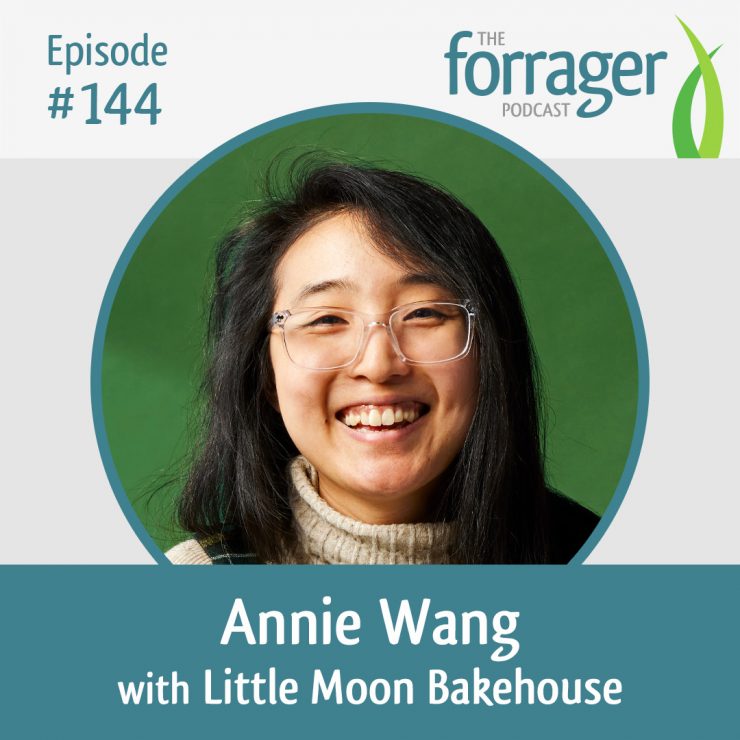
David Crabill: Welcome to the Forrager Podcast, where I talk with cottage food entrepreneurs about their strategies running a food business from home. I’m David Crabill, and today I’m talking with Annie Wang.
But first, we need to talk about email, and especially email marketing. If you’re not sending emails to your customers on a consistent basis, then I think you’re missing a big opportunity for sales.
I really love using Kit to manage email for my fudge business, and they recently introduced the best free tier that I’ve ever seen in an email marketing platform, which allows you to send emails to up to 10,000 subscribers for free.
So if you still haven’t hopped on the email marketing bandwagon, now is a great time to do so. To get started and learn more, you can watch my free email marketing tutorial at forrager.com/email.
Alright, so I have Annie on the show today. She lives in Oakland, California and sells vegan Asian pastries with her food business, Little Moon Bakehouse.
[00:01:00] Years ago when Annie switched to eating vegan, she could no longer eat many of the Asian baked goods that she grew up with. She has now created vegan versions of many of those items from her childhood, and she’s built an impressive business around them.
Initially, Annie started selling from home, but she eventually outgrew her home kitchen, expanded into a commercial space, and now ships her products across the country.
In this episode, Annie shares how she turned multiple passions of hers into a very successful hyper niched and eco-friendly bakery by starting small, scaling up and completing a massive rebrand.
And with that, let’s jump right into this episode.
Welcome to the show, Annie. Nice to have you here.
[00:01:45] Annie Wang: Yeah, thanks for having me.
[00:01:47] David Crabill: Well Annie, can you take me back to the beginning of this journey? How did it all get started?
[00:01:53] Annie Wang: I started Little Moon Bakehouse in January of 2021, officially as a cottage food operation in Oakland. so, the first product that I ever made was a Taiwanese pineapple cake and I made it vegan and gluten free. Everything that I make is vegan. And then that one I knew I could probably make gluten-free because it didn’t need to rise like bread does.
And so I first started a little bit before January. I did like soft launches. I did a few fundraising bake sales. So I fundraised for an Asian American group that I was a part of, a nonprofit and just got feedback that way also. I also, posted on Next Door and delivered to a lot of my surrounding Oakland neighbors based on your experience on your podcast. but yeah, so I think um, essentially the vision has always been to create a bakery that is like what you would imagine in any Chinese bakery or Asian bakery, but everything is vegan. I grew up going to a lot of those Chinese and Asian bakeries, and I became vegetarian really long time ago, like over a decade.
now. And then recently also became vegan after I started the business. And so there was a lot of things that I didn’t eat for a long time because they were no longer, accessible to my chosen diet. So, yeah, I just thought it would be so wonderful to be able to have those things again to.
Relive those wonderful like food moments that I used to have and then also be able to provide that to other people . and quickly before that I was in food tech. So before the pandemic I was in food tech and marketing and then got laid off along with half of my team. Had some time to think about what I wanted to do and decided to start this business.
And then before that I was in climate work. So this business basically encapsulates all of the things that I’m really passionate about. Trying to positively impact the climate through food systems and then also being able to bring in my heritage at all.
[00:03:43] David Crabill: And you mentioned you’re creating kind of a Chinese or an Asian bakery that’s completely vegan. So would a typical Asian bakery have any vegan items?
[00:03:55] Annie Wang: Oh, There might be, if they make the fried dough ball, it’s like a fried sesame ball made of glutenous rice and inside is red bean. Usually that one is vegan.
[00:04:05] David Crabill: So this is a pretty wide departure, from what you grew up with. So did you find it to be a challenge to convert these items into a vegan recipe?
[00:04:16] Annie Wang: I think definitely there are some that are pretty finicky. Like, we just launched bread items late last year. And that one I was really intimidated by for a long time because bread has a life of its own. And I was new to baking just from the start. But yeah, I think the pineapple cake, interestingly enough, only took me three tries.
And then the almond cookie that we made took. about a year to develop partway through. I kind of just gave up. I think it was like in the end I, it was maybe 21 to 27 tries. I forget exactly how many that it took, and that was only the documented tries. the almond cookie took a really long time.
[00:04:52] David Crabill: Do you find that a lot of your customers are like you? Like they have these cultural memories, but they’re also vegetarian or vegan?
[00:05:01] Annie Wang: It’s a mix . So So there are some of our customers that are vegan or vegetarian and have similar reasons to me for wanting to purchase our products. The other good chunk of people they have maybe a dairy allergy, egg allergy. There’s actually a lot of allergies it seems like these days.
I don’t know if it’s more than it was before, but it’s. Adults, but then also their children. And so a lot of people will come to me and say, you know, my child is allergic to X, Y, Z number of things. for instance, during mid-autumn, especially in California, they’ll celebrate mid-autumn in schools. So they’ll have moon cakes for all the kids.
And a lot of times those kids that have the allergies can’t participate because moon cakes are often not vegan. So I’ve had parents come to me to buy some for their kid and their kids’ classmates so that their child can participate again.
[00:05:52] David Crabill: So, what inspired you to start the business in the first place? I mean, you had mentioned that you worked in marketing and, you [00:06:00] also had former experience in food tech, I think you said. but what was the turning point that got you to actually take the leap in January of 2021?
[00:06:11] Annie Wang: I actually had this idea for this business when I first moved to the Bay Area and was pursuing a career change to food tech in marketing. And so that was like 2017. but I wanted to get experience first in the industry and just kind of see where that led me. And so fortunately I was able to do that for a few years.
And then after I got laid off, I did a lot of random projects. I think like a lot of people, I was exploring what life would look like. Outside of I. A nine to five, like a traditional job. because during that time things were so unstable and so many people were getting laid off.
And I think a lot of folks also had the realization of, you know, a nine to five isn’t necessarily the most stable thing, so maybe I should pursue something that I am really passionate about. And so, in between having a worm , composting farm and doing food reviews and also dancing, ’cause I was dancing at the time on a team, in between all those things, I also started baking and really rediscovering this idea that I had earlier on and figuring out what that might look like for me.
So I think probably partway through the year I did a few test runs. You know, I would give tests, products to my dance team or my friends. And I always thought that this had potential to be a business . And And so I just pursued it really seriously for a few months when I first started recipe testing, maybe in like August of 2020.
And then in end of November, early December of 2020, I did kind of like a fun launch just to see how many people would want to buy pineapple cakes for the holidays. And really quickly after I launched, I had a lot of orders. I had people asking from out of the country. I had people from around the country asking.
And I ended up getting orders for 700 individual pineapple cakes that I ended up having to make. And so I just, for two weeks straight, I was up at all crazy hours. Making the jam, making the dough hand filling and hand shaping all of the pineapple cakes and then baking them off, packing them and shipping them.
And in the end I had fulfilled all the orders and had made about maybe a little over 700. And I think that was when I realized Like, I don’t know what my future will look like in terms of having a job. Nobody really knows what’s going on right now for Covid, and so I thought that I should just give this a chance.
[00:08:32] David Crabill: Wow. That is crazy. So this is like a pre-launch. It’s like you really hadn’t even started your business. You just were spreading the word. You got orders for about 700 of these pineapple cakes, and you said these were from across the country and even sometimes out of the country. How did you spread the word and get that kind of demand from people who clearly had not tried your product?
[00:08:54] Annie Wang: No, it was crazy. It was very unexpected. I started an Instagram page and then also a TikTok, and then I think the biggest thing was that I had posted on a lot of Facebook groups back then, I think I mostly focused on. Like Asian American Facebook group and then maybe some vegan ones as well.
But yeah, I think it was mostly posting there and then just like telling friends and family and then they would tell people yeah, I think the furthest request I got from someone was, I think Australia.
They were like, you ship to Australia? And I was like, I’m sorry. I don’t think I can do that.
[00:09:29] David Crabill: Wow. That is crazy. Now. was the vegan aspect, the thing that was really catching people’s attention? Were there other options for getting a vegan pineapple cake?
[00:09:41] Annie Wang: So getting pineapple cakes in the US is actually kind of hard. Or it can be expensive. personally, I’m Chinese American, but I grew up eating Tony’s pineapple cake. Because they had pineapple cakes in the Chinese grocery stores. And then when I started making them, that’s when I realized that they are originally from Taiwan.
in Taiwan, they’re so popular. They’re like one of the national items, And so it’s a little difficult to get them like high quality ones in the us. And so I think people were interested. They were excited because it was, I think an Asian bakery, like a new Asian bakery.
I was very new. And I think also just that it was such like a niche product that people, if they like them, they like really, really love them. So I think it was kind of like those three things together.
[00:10:25] David Crabill: Do you think that you would’ve found a lot of success even if they weren’t vegan? Or do you think the vegan aspect was really important?
[00:10:34] Annie Wang: Yeah, I think it’s a little hard to say. I think some people definitely were very excited, the fact that they were vegan, and they just like, oh, I, I must try this. I, have to try this. Just to see, and then the other segment of people is probably just like, oh, pineapple cake.
Wow. Like you don’t really see these homemade, ’cause they’re really labor intensive too. So I don’t think a lot of people like to make them
[00:10:53] David Crabill: And it sounds like you know, a lot of the people who are interested are obviously people who already love them, who already knew them. Did you have any concerns initially that people would be a little turned off since they, you know, are used to a non-vegan item? You know, and this would be something that is different for them.
They might not want your product at all.
[00:11:13] Annie Wang: Definitely, I think, people have a perception of vegan products that they are gross basically. that’s always a concern. I think even to the present day, like branding wise, when do I tell people that it’s vegan? Because honestly, it kind of is not, relevant to the taste of the product.
Like our products have been compared to Chinese bakeries locally and they’ve been liked better by folks that really like Asian bakery products. So When it comes to the taste, it’s not really relevant. I think where it’s relevant to me is for the mission of the business. It’s kind of just something that I always think that I need to navigate.
But I’ve definitely gotten comments like I think before I was a little moon bake house when I was Annie’s tea cakes. I remember distinctly I was at the farmer’s market and somebody was walking up to my booth, and back then I had vegan pretty prominently on my banner. And so they were walking up to the booth.
They seemed so interested, and they were about to ask me a question, and then they saw the word vegan and they audibly to me, they said, Ew. And walked away. They said, Ew, vegan, and then walked away. So, I mean, you definitely get that. But I think people are starting to change their minds with a lot of the vegan products now on the market.
And yeah, honestly, there’s like a lot of ways to make things vegan that are usually not vegan and they taste the same or better. So, for instance, we just launched something called a Choco Pie. And for people that don’t know, a choco pie is a Korean packaged snack, and it is two layers of sponge cake with a marshmallow layer in the middle, and then it’s all covered in chocolate.
we recently made them with a local business doing the chocolate part. I’ve gotten feedback that it tastes even better than the usual item. cause I used to also eat those growing up. I love them. And then just for research purposes, sometimes I will taste things, that are vegetarian.
And so we tried the Choco pies from when we were younger and they were not good. Like they had a strange taste to them. I might be a little biased, but I definitely think that ours are better than the original. So there are, definitely things out there that are vegan, but the same or better than the original product?
[00:13:17] David Crabill: What guides you in terms of what products you will launch and what products you won’t like? Where do you define your niche?
[00:13:26] Annie Wang: Usually I just think back to a lot of the things that I used to eat, or I’ll ask friends that have similar experiences to me for what they would wanna see. So my husband is Chinese, Korean American so he grew up actually eating Korean food. And so sometimes I’ll just ask him like, what product do you wanna see? Or I’ll ask my customers like, oh, what are, what are you craving? Like, what are the things that you want? So, partially it’s based on what I used to really love. And then the other part is based on just seeing like, what are other people wanting these days that we don’t currently have?
[00:14:02] David Crabill: And are you always trying to like bring back those childhood memories and nostalgia completely, or are you trying to take it and then put your own spin or twist on it?
[00:14:14] Annie Wang: I think a lot of places you see a lot more like fusion food places, which I think is awesome. I think for me, I am trying to really recapture that nostalgic moment I think that that’s a little bit of what’s missing is that a lot of the places that do things in a new way, a lot of the items that they make are just different. Like they’re really great and they like taste really good, obviously. But I think what we’re missing in the market is like, just directly what we used to really love. And so I’ve actually gotten that comment a lot from customers saying like, oh, we love how you’re able to stay true to the source material.
But then also, you know, make it vegan and make it fresh, but it still feels the same. And so I think, uh, I, I take a lot of pride in that, being able to make things that are reminiscent of the things that we used to eat.
[00:15:04] David Crabill: Yeah, I mean, I imagine that’s. Pretty hard since you’re trying to, really recreate the product. I see a picture of a salted egg yolk moon cake, right. Or a product that has a sausage on it. So what has it been like trying to get those as close as you can, or do you feel like they are actually a bit different from the original?
[00:15:27] Annie Wang: You know, It’s funny, the egg yolk actually also took a really long time. And this year I think it’ll be just a little different too. So, the only product that I think that we have actually that is a little bit different is the pineapple cake. and you know, I think that we probably could make it exactly like the usual pineapple cake.
Even if we were to keep it gluten free and vegan at this point, it’s more of a preference, I think. But most everything else is pretty close to the original. Whenever we’re doing testing, I always, go around asking people and we do a comparison to the original thing, minus meat. We never do that for meat.
But anything that’s like vegetarian , for instance, like an egg yolk, for the salted egg yolk, we actually bought some moon cakes that had a salted egg yolk, like the ones that I used to eat growing up. And we tried it and we had four of them, so we just like did very teeny tiny tastes of them.
So they would last for a really long time. We didn’t have to buy more. And I remember tasting it thinking, oh, this does not taste like a salted egg yolk that you make at home. And so I spent a really long time trying to recreate that, and then we finally got it. It tasted exactly the same. Then we’re just kind of like iterating there.
But yeah, the salted egg yolk took a while to perfect as well. But I would say that it’s pretty similar to what you would find. I actually had a customer do a video on Instagram the first year I launched them and they tried it and they started laughing and then she said, you did it. so yeah, I would say like, yeah, we try really hard to make it taste exactly the same.
And I think a lot of times we pretty much nail it.
[00:16:56] David Crabill: so, you know, we know that you sell moon cakes and the pineapple cake. What other items are on your menu?
[00:17:04] Annie Wang: So we also have the almond cookie, which we made for the premier of Everything Everywhere, All At Once in 2022. We also have a lot of bread items now. So we have the hot dog bun, which we use the Impossible Hot dog. It’s so good. We also make a corn mayo hot dog bun, and the mayo is house made. And then for our sweet items, we have a coconut bun.
Also known as cocktail bun, a black sesame bun, a coffee bun. And, in our bundles we also do a specialty green onion bun. oh, we also have moon cookies, so that’s something we created. It’s a re-imagining of a moon cake as an American style cookie. So our black sesame sugar moon cookie is a sugar cookie outside with black sesame moon cake filling.
[00:17:49] David Crabill: Most of the things you said there, from what I saw, were not in your menu in the first couple of years. So what did you initially envision the bakery would be like and how has that changed over time?
[00:18:03] Annie Wang: So actually the way that we are now with bread, that’s exactly what I wanted to do since the beginning. I think I was, as I said, very intimidated by bread because it’s really time sensitive. It. Only as a one day shelf life, just generally like a lot of things about it, can be difficult. And so I thought that I should work on just generally getting my feet under me for business and baking.
And then when I felt ready that we would do bread when I was experimenting with foods in 2020 with recipes, I actually made a coffee bun. Really early on. I actually was just looking through my photos and I realized that I had, tested it super early on, but I never launched it in a big way because I just wanted to, get more experience.
And so, yeah, I think from the beginning I envisioned it as like an Asian or Chinese bakery, but everything is vegan.
[00:18:53] David Crabill: And one of the things you just kind of like. Briefly touched on, just ran right over as you’re like, oh, I, I created these almond cookies for Everything Everywhere, All At Once, and then you just kept going. It’s like, that’s kind of a big part of your story, right? You know, you created these cookies for you know, the Academy award winning blockbuster movie from a few years ago for a premier of it.
Right. So can you share a little bit about that?
[00:19:19] Annie Wang: yeah, it was a really cool experience. I was connected to one of the organizers of the movie Premiere, and then it turned out that they were looking for a local baker to recreate the cookie that appears in the movie.
I think it was a little less than a week before the premiere, and they asked me if I could do it, but I’d been working on my almond cookie for like a year. And at that point I was in that lull of, oh my God, never again will I look at an almond cookie in my life.
And so they asked me the week before the premiere, and I had done like 16, 17 trials and I was like, you know, I have a weekend, so maybe I’ll just give it a shot. So I told them I’d get back to them on Monday, Friday, Saturday, Sunday. I just cranked out recipe after recipe. And finally on Sunday afternoon I had something workable.
I was like, oh, this is it. we can do it with this. This is great. So I told them on Monday and they asked for 850 cookies by Thursday, like packed and ready to go. And so I spent that whole partial week, just like many days measuring, mixing, baking, and then repeat for like 12 hours a day.
And then I packed half of them on my own and then I looked up and it was like 4:00 AM two days before the premier. I was like, oh my God. Okay. And so the next day, my husband and two of our really close friends came by and we packed them together. And then the next day on that Thursday, we went to the premier.
Like we all loaded up in a car. There was all these like, crates of cookies with us. it was one of those moments that I’ll always remember ’cause it reminded me, you know, it’s, you never know what opportunities will come. You just kind of have to be prepared for them. if I hadn’t been working on that cookie for so long, if I hadn’t given it so many tries.
Like, I’d been working on it since the summer of 2020, I started working on that cookie. And if I hadn’t been doing it for so long, like there was no way I would’ve ever been prepared for that opportunity. And when I got there, actually one of the directors we were chatting and I, I was like, oh, like we’re so excited to see a movie.
Like, We gave him some of the cookies just to make sure, like their team could get some too. ’cause they were just giving them away to attendees. And he mentioned that, you know, they did this in all of the different major markets that they had a premier in. They worked with local bakers to recreate the cookie.
And he was asking, is it an almond cookie? And I said, yeah, it’s an almond cookie. ’cause yeah, you like asked for that, right? And so he was like, oh, that’s awesome because like nobody else has made an actual almond cookie. Everybody else made a different kind of cookie and then they kind of like made it look like the cookie. But ours ended up being the only one that looked exactly like the cookie. Then also was an almond cookie . So I think just, it was a experience I was really grateful for. I’ll never forget it and it taught me kind of that lesson of like, you know, things come back around in life. You just have to kind of be prepared.
[00:21:59] David Crabill: Yeah, there’s this great picture of you standing next to Michelle Yeoh, you know, it’s like, I don’t know too many people who could say that they, created products for a premier of, you know, I think it ended up winning best picture. Right. So that, I mean, that’s such a humongous movie.
[00:22:15] Annie Wang: Yeah. I got so many awards. I think I got like 11 awards in the end.
[00:22:18] David Crabill: How did they find you though? Because, you know, you said you weren’t even in a place to say Yes when they asked you. So like, how did they end up finding you?
[00:22:28] Annie Wang: One of my friends actually invited me to the premiere ’cause they had tickets. And then one of the organizers for that event I actually was already in contact with because we were talking about doing something else together. And so I just reached out to him and I asked him like, oh, do you guys need anything for this upcoming premiere?
We’re gonna be there anyway. then he asked and they, told him and he was like, oh, actually yes, there is something they need. so that’s kind of how it happened.
[00:22:51] David Crabill: And it looks like you still sell these cookies, right? Like that’s, become part of your story.
[00:22:57] Annie Wang: Yeah, that’s right. Yeah. We still sell them.
[00:23:00] David Crabill: And then you also sold at another premier. I don’t know if this is just becoming a trend, right. But you partnered with the Alameda Theater for another premier weekend, correct?
[00:23:11] Annie Wang: Oh yeah, that was for the premier of Chang Cheese. So that weekend or that period of time, I think I did it with the Alameda Theater. They bought some of the pineapple cakes to sell at the concession stand for folks. And then I tabled out outside of the AMC Theater in Emeryville. I was like talking to their manager, I think, and they said, you know, unfortunately we can’t sell your products here because we have our own concession stand and like, exclusive whatever thing.
but we would love to host you outside of the theater. And so I just, sat up outside the theater for the premiere.
[00:23:45] David Crabill: So when you did that premiere for everything everywhere, all at once, you. Got press coverage. Do you feel like that boosted your business and helped it grow to where it is today?
[00:23:57] Annie Wang: Think with any press it’s like a big spike and then it quiets down again. I would say that’s more what happened. Yeah, I think I’ve been pretty fortunate to get press coverage for things that I’ve done. but it always gets people really excited. So it’s like a fun thing for me to be able to talk to people about, like we’re talking about it now. And then I also have a poster of that KQED article that I put out at events. And usually it catches people’s eye. So yeah, I think at this point it’s, more just like a really fun experience to be able to talk to people about, and people get like really excited.
[00:24:28] David Crabill: You said you’ve been fortunate to be in the media many times, but you’ve been in the media a lot. You know, Eater, Thrillist the Sam. Francisco Chronicle. You mentioned KQED. It doesn’t seem like it’s a fortunate thing, like you must’ve done something to get all of this press coverage right.
[00:24:46] Annie Wang: Oh yes. It, I don’t, yeah, I don’t mean to say it like oh, it just happened. No, you definitely, there was like pitching involved. what I mean by that a little bit more is that I’m fortunate that people wanna give me a shot to like put me in press and then also they find what I do interesting enough to be able to write about it.
And so I think the rebranding also helped a lot with that. Then just people like gravitate towards My Story. And I think that I’m fortunate that, that is the case. ’cause I know a lot of people are at you pitch, endlessly and like nothing comes of it.
Which I think is more the case. But yeah, so no, definitely there is like pitching involved.
[00:25:18] David Crabill: What do you feel like has worked well when you pitch, or what would you recommend to somebody who wants to be in the press?
[00:25:26] Annie Wang: What I would say is really getting to know your community is really big.
You know, Go out there and meet other business owners, like meet other people that are in the, same, like fear kind of. and then just build those relationships. ’cause somebody gave me really good advice once they said, you know, you wanna kind of be known as a leader in the space.
And so part of that is like, if people know you, they’ll like know what you’re doing. And then yeah, I would say that’s like more external and then business wise, you know, just, run your business how you would like to run your business. Do your best, find mentors and become that leader that people want to talk to also.
And then in terms of actually pitching, I would say, practically speaking you just find journalists that have written articles that are. In line with what you’re doing and then figure out a way to find their contact information and then pitch from there.
I think early on when I was pitching, I mostly picture on the mid autumn festival. ’cause I was like, basically my Christmas it’s like very, it’s a huge time of year and so I would pitch things that we’re doing. So like the vegan salted egg yolk, I pitched that because it is just like a really unique offering. And then I just always keep people up to date. Like now I have like journalists that I’ve talked to before, so I was just trying to keep them up to date with what’s.
[00:26:40] David Crabill: You know, You’d mentioned that you had background in marketing, right? So do you feel like your previous marketing experience helped with getting into the press or did it help in other ways in terms of how you’ve grown this business?
[00:26:55] Annie Wang: Yeah, I mean I think I mostly just understood the importance of being on social media and just like knowing that from the get go. So I think that probably was helpful. And then also email marketing. I did a lot of random jobs as a marketer. ’cause I worked at startups and so there was just always a lot of things to do.
but yeah, I think it’s more, it was more the mindset of, oh, I know that marketing is really important . And then learning the skills from there was, was a little bit more like of a journey.
[00:27:21] David Crabill: How have you used email marketing in your business?
[00:27:25] Annie Wang: Like I will try to launch things on email earlier so that people feel like, you know, if you sign up for the email, you get early access to things. And then I’ll generally just try to be a little bit more active, but not too active on email. I know it’s like overwhelming when you get like five emails a day from a business And then if I have any like, events coming up or pre-orders or if I write a new blog that might be interesting to people like, I’ll usually send that out
[00:27:52] David Crabill: How often do you feel like you’re emailing your list,
[00:27:56] Annie Wang: like once or twice a month. I don’t wanna do more than twice.
[00:27:59] David Crabill: And do you find that a lot of orders come from emails?
[00:28:04] Annie Wang: I think a good amount do. Though I’ve been doing email a little bit more recently.
[00:28:09] David Crabill: So you’ve mentioned your rebrand. You know, you used to be Annie’s T Cakes and now you are a little Moon Bake House. So can you walk me through what it was like to rebrand and why you decided to do that?
[00:28:23] Annie Wang: I knew from the beginning that I wanted to have a new name and a new brand. It just, it was gonna take so long to think of a name that I liked I was starting for my own savings, so I didn’t wanna spend money on like a designer or anything. and also it was all really new, so I just wanted to see what would work and what wouldn’t.
Before I put so much effort into making a full brand, so Annie Sea Cakes, I thought of, I. In bed one night, I was like, you know what, let’s just go with this. And so we did that and we were Annie Sea Cakes for like three years. And so I started really considering a rebrand. I think it was December of 2023.
And a little bit before that I just started thinking of names. I was like, okay, like what are good names? I did so many things to try and think of a name. I like did the name generators online constantly. I feel like I was on those like at least two to three times a week, just like randomly generating names.
And then I did customer profiles, like just based on what I knew from the past three years in business. I thought of keywords I made, lists. I like, I have a really long document for the rebrand that lists out like the mission, our values vision statement, all of that kind of like background stuff. Then all the random names.
I came up with all of the words associated with the brand that I wanted, the feeling to be the colors I thought would work, like fonts that I thought would be good. And so I went through that whole process. I had a designer that I really loved. their work and so I engaged ’em really early on telling them that I would be rebranding and that I would need their help with creating a brand guide.
But I was like, I don’t have a name yet, so let me give back to you. And so from December to the end of April, I was thinking of names and I was just doing this like constantly, like it would come in my mind randomly throughout the day. And then finally one day I was on a name generator and Little Moon came up and out of all the names that I had been looking at and thinking of and like, there’s something about that one that like feels right based on all of. The like feelings I want this brand to have. And so I started polling people. I had like a few names coming out and I was, in my mind though, like the back of my mind, I was like, I think it’s gonna be that one. I really like that one.
But I just wanted to see like what people’s reactions might be. The funniest reaction I got was somebody said, oh but it reminds me of a butt, like if you moon someone. And I was like, okay, I don’t know. I think that might be a niche reaction. Let’s hope. and so yeah, finally I had, I had a name and
[00:30:52] David Crabill: I’m just really, really quick. I’m curious you, you worked on names from December through April. When in there did you find the Little Moon name?
[00:31:03] Annie Wang: It was like, I think mid-April.
[00:31:05] David Crabill: Wow. Okay.
[00:31:07] Annie Wang: Yeah, it took a really, I even went on Fiverr and hired someone just to think of names. I was like, okay, maybe you know, I haven’t tried this. Like maybe they’ll come up with something. They did not really come up with anything that I, that I really liked. it really took that whole time to think of a name.
[00:31:23] David Crabill: So do you think that if you had not found the Little Moon name that you potentially could have taken even longer than April?
[00:31:32] Annie Wang: Yeah, I think so. Because the name was such an important part of it. Like it just was the thing that was gonna bring everything together. It was like what our whole branding was gonna be based off of. And I had spent so long having a name that I hated that people would say wrong. There were like so many things wrong with that name.
I was like, I am not going however much longer. If I’m gonna do a new name, it’s gonna be one that we’re gonna stick with. Like, we’re not changing this again. And it has to be one that I think like works
[00:32:00] David Crabill: But you know, I love the fact that you didn’t. Try to create the perfect name for the beginning. You know, a lot of entrepreneurs get really bogged down in trying to find the perfect name, and I always tell people, you know, you can change it. If you wanna change it, you can change it. So, I love that you did that.
That’s probably part of the reason why you were successful is you just tried something. You know, Annie’s T Cakes wasn’t the perfect name, right? So then once you got three years in, I think most entrepreneurs even would’ve been trying to change the name after six months or a year.
But you really got into this before you decide to invest in a rebrand. So, the Little Moon Bake House name, I love the name. What does the name mean? Why did you feel like that was the right name to pick?
[00:32:45] Annie Wang: I had a consistent vision. This picture that I found really early on it was basically like a field of daisies, it was a really nice color. It was like really warm. And I really liked the idea of daisies.
And I think that when I looked at that picture, it made me feel comforted and nostalgic and all the things that I wanted the brand to be. when I thought of Little Moon, I just had the same feeling. But I think after having so many months of looking at potential names, I. this one feels right.
[00:33:15] David Crabill: Well, I, I saw your Instagram post about it, and you mentioned that Moon has cultural relevance, right?
[00:33:23] Annie Wang: Yeah. The moon does have cultural relevance. It’s very important in a lot of Asian cultures. I think like, harvest and other things like go around it. There’s a lot of mythology it’s like the visual of a crescent moon is familiar to people.
And then in a more specific sense, I guess culturally the moon is, is very important. especially during the mid-autumn season.
So we’re really well known for Moon cakes and some people think it’s because of that, that we chose Moon. But it’s, not yeah, I would say it feels like it hearkens back to something culturally very significant. The little kind of just makes it feel cute. and then I actually originally wanted to do bake shop, but practically it was taken, so I didn’t choose Bake Shop, but I’m actually glad, ’cause I think Bake House sounds a lot more like homey.
[00:34:07] David Crabill: Well, you invested a lot of time and some money into rebranding. You know, you rebranded everything, created the full brand colors, fonts, logo. So the real question is, do you feel like your business has changed because you have rebranded now?
[00:34:26] Annie Wang: Yeah, definitely. It was like a thousand percent worth it to do a rebrand. also, I’m gonna shout out my designer Kai Kwong. she is great. She does great work. But yeah, it was a thousand percent worth it. Like I think part of it is just that people it as an actual business now instead of just like a hobby.
It just seems like it’s more in line with what we wanna do moving forward. So I think it, it really captures the spirit of, you know, the vegan Asian bakery that we want to do long term and being able to communicate that to people is really important. And I don’t think that Annie’s T Cakes and the branding that I did on Canva, like really communicated that as well as our current brand does.
And then also the emotions that we wanna communicate are so much better communicated in the brand that we currently have.
[00:35:18] David Crabill: Also aligned with this, I saw you created very customized boxes that align with the brand. Can you talk about your decision to invest in those?
[00:35:28] Annie Wang: Oh yes. Also a Beautiful Creation by Kai Kwang. The boxes, it was because we were gonna do a rebrand. I was like, you know what? Let’s just do it all, let’s just pull out. So we launched a rebrand. I teased it for a whole month I was like, oh, like, what do you think the names will be?
Like, Oh, it’s coming, like this is some, right. Like, all of that kind of stuff. ’cause I wanted people to remember, I wanted them to know that it was coming, so they wouldn’t just be like, where did Annie’s Sea Cakes go? Like, because I’ve seen brands, like small ones, they’ll rebrand and they’ll keep it a secret,
Then [00:36:00] everybody’s like, where, where are they? Like, do they not exist anymore? Like there are brands that I used to follow that I no longer know if they’re in existence or if they just rebranded. And so I wanted people to know that it was happening so that they would be prepared. And then the boxes, I had never done custom packaging because I was like, I’m gonna rebrand for three years.
I was like, I don’t wanna invest in custom anything because I’m gonna rebrand. Like I know I will. And so once I get my footing under me for business, once I have like more money to invest in this, I will definitely rebrand. And so we worked on the boxes and bam, bam, bam. Rebrand, new boxes, new packaging, shipping, nationwide.
Like All of it came out at once. And I wanted it to feel like, oh, this big thing has happened. And so I was like, all of it will come out at one time. For a few years, I also was reticent to ship nationwide. There was a lot of issues, like product wise, like our shelf life wasn’t as long so things would get soggy, which is not pleasant.
But we were able to figure some of those things out and so I was like, this is the year everything is ready. Like we’re ready to do it.
[00:37:02] David Crabill: So you rolled out the rebrand and the new packaging and the nationwide shipping all at the same time and you spent a lot of time building up a lot of anticipation?
psychologically speaking, that’s kind of a way of building up suspense and making a big splash for a launch. Right. So you did a really good job of creating anticipation for it. Did you find that once you announced the name, there was a big reception to it?
Did you get orders from across the country?
[00:37:30] Annie Wang: Yeah, people were really excited. for the new name and they, really gravitated towards it. And the full on the branding I would get, even to this day, like I get a lot of compliments about the name and the branding and the packaging.
And I think, people that had been waiting for a while were finally like, oh my God, I can finally get this. And it was also right before mid autumn, which was also part of the reason I wanted to time it at that time. cause it was our biggest season. And so I was like, okay, like I’ll time it for mid autumn.
And then the pre-orders were open for mid-autumn moon cake and people were so excited.
[00:38:05] David Crabill: So when you launched the rebrand and the packaging, I’m assuming the packaging is not cheap. Right? Did you also increase your pricing along with it?
[00:38:16] Annie Wang: So I did get packaging that I could, in my mind I was like, it is expensive. And I, yeah, there was a minimum amount I had to get. And so I thought I’ll just get a package that I can continue to use after the season. I didn’t increase my pricing for individual products, but products that go into the box, they definitely include the price of the box. .
[00:38:35] David Crabill: And with your new packaging, I wanna ask about this because you, for the longest time have used compostable packaging, and that’s been very important to you. Your new packaging does not look compostable to is that the case?
[00:38:51] Annie Wang: Uh, Okay, so this is a saga, this is unfortunate. I still use the same cell bags that I’ve always used from Elevate packaging in [00:39:00] Chicago. they do all compostable items. Unfortunately, though that in theory they are compostable, but practically speaking, they actually gunk up a lot of machines, like composting machines, and they don’t end up getting composted.
They end up getting thrown out. So yeah, unfortunately the packaging is not compostable. So I’ve stopped saying it because it’s like literally not gonna happen. And I’ve been looking for alternatives, but I still use them because it’s a wood fiber base and I still think that’s better than a plastic package.
So that’s kind of the thing. The packaging, the boxes are recyclable because they’re made of paper. So I always try to find whenever we do packaging, like We’re likely not gonna do like metal, like tins because those are more energy intensive to create than just paper-based products.
the stickers that are on our packaging are also unfortunately those are plastic. the paper-based stickers have a lot of issues with moisture. So if they get moist at all they fall apart. so that is something that I’ve had to, compromise on a little bit.
But the hope is for the future that we’ll find a, a packaging uh, specialist that actually has compostable packaging that can be composted. And that we can use for like our items that have like longer shelf lives. And then once we get to that point that we can use that manufacturer to custom print our packaging so that we don’t have to do the sticker labels anymore.
And then the package will be just fully compostable . So that definitely is like a goal. And there is a business in the Bay Area called Sway that’s working on seaweed based compostable packaging. And so I’m in touch with them and I’m that it can be a solution.
[00:40:40] David Crabill: Yeah, I know. I mean, this is a big thing for you, right? And the environmentally friendly aspect of your business affects everything. You know? I saw that you’ve used upscale products or byproducts in your business. Can you talk a little bit about that?
[00:40:56] Annie Wang: Oh yeah. We used upcycled products. First, just at a, in a baseline, we try to reuse everything repurpose things. I think a lot of bakeries do this in restaurants. You just repurpose like, for instance, with the pineapples, we have a lot of juice leftover. So last year either We’ll give it to the other people in the kitchen if they want it.
Or last year we made it into a syrup and we put it into one of our moon cakes for mid autumn. So we’re always trying to do that in general. And then yeah, really early on I used, tofu based flour or soy based flour from Renewal Mill, which is a company that upcycles the fibers leftover from tofu making and like oat milk making and a lot of other things like that.
And so actually a really good friend of mine named Caroline Cato was. The COO at the time were good college friends and she’s like been an amazing mentor. And so I thought what a wonderful way it would be to work together in that sense. Since then I haven’t, because I’ve, I haven’t been using it because I tried to move away from soy ’cause a lot of my customers were asking for soy free products.
And so we’re currently fully soy free just because of the allergens associated with it for some people. But yeah, I definitely did do that. And then now we just try to make sure that we don’t waste any, anything if we can use it.
[00:42:14] David Crabill: I also saw somewhere you said you were planning on it, I don’t know if you ever did it, but increasing the shelf life of your products by using some, some natural products. Did you ever do that?
[00:42:26] Annie Wang: Yeah, actually we did last year. That was, so that was part of the reason we were able to ship nationwide was because we were able to increase the shelf life. There is a business that makes shelf life ingredients with just natural fibers.
And so I reached out to them and we were able to increase the shelf life of our moon cakes was about a day before, and we were able to increase the shelf life of our red meat moon cake to at least two weeks When I did it at home, it lasted about a month without changing really flavor or getting super soggy.
It just stayed the same. But I usually tell people two weeks just to be safe.
[00:43:03] David Crabill: So, could you just explain a little bit about how it is increasing the shelf life of your products?
[00:43:10] Annie Wang: Yeah. So the biggest thing for us is that our water activity so that’s like the amount of free water in the product. It was really high. So the scale for water activity is like zero to one, and anything below like 0.7, let’s say is like decently. Okay. And ours was at like 0.9, so all of our products were really high water activity level.
And so what the shelf life ingredient does it has just like natural plant fibers, and it locks up the free water in the product. So. That is a thing that the water activity, if it’s really high, it’ll lead to mold, like basically for sure. uh, after you have your water activity locked up, you highly reduce your chance of there being mold.
And then after that it’s just figuring out whether or not your product, the taste will stay the same.
[00:44:00] David Crabill: And did you have to make adjustments to your products regarding the taste?
[00:44:06] Annie Wang: No, we didn’t make adjustments to the products. We just kind of adjusted the amount of the shelf life ingredient that we use. the first time we ever did it, the red be moon cake, it lasted one month, no problem. But the taste was a little strange. So we decreased the amount of shelf life so that it could taste the same as it used to.
[00:44:24] David Crabill: And so this would be basically a substitute for anyone who uses flour, is that right?
[00:44:30] Annie Wang: The shelf life ingredient is not a flour replacement. It’s like an additional ingredient. So it only is a very small percentage of the weight of the product.
[00:44:38] David Crabill: I see. So you’re, you’re adding a plant fiber to just, bind the water.
[00:44:43] Annie Wang: Yeah, that’s Right.
[00:44:45] David Crabill: Where else do you currently sell your products?
[00:44:50] Annie Wang: So in addition to shipping nationwide, we also sell locally at the Farmer’s Market. We’re at the Ferry Plaza Farmer’s Market the first Saturday of every month. people can pre-order to pick up on Tuesdays and Saturdays from our downtown Oakland kitchen. And then outside of that, it’s like popups and different events that we do.
[00:45:08] David Crabill: So you sell locally at some events and then you do pickup orders. Has that changed much over time, or is that how your business has gone over the past four years?
[00:45:20] Annie Wang: In terms of selling locally, that’s like basically how it’s gone. And then we also started doing pre-orders for events that we’ll be at. So I think that’s the thing that’s a little bit different now. So if people wanna pre-order and pick up at the booth at an upcoming event or farmer’s market, they could do that.
[00:45:35] David Crabill: Do you have a team around you at this point?
[00:45:40] Annie Wang: I just officially hired a couple of people like a month or two ago. I just started training them. So one person comes in a few times a week and then the other person is gonna start coming in around few times a week later this month. And then one person that is in operations that does a lot of catchall stuff, thankfully, she’s been really great.
and then one other person works the farmer’s market that once a month, farmer’s market and then does deliveries here and there. there are a few people that I get to work with. Mm-hmm.
[00:46:12] David Crabill: So you’ve been doing this for over four years now. How long was it basically just you?
[00:46:19] Annie Wang: It was just me for two years and then like friends would come and help out and then like maybe some students for the summer, just like very informally, like would come and like help. But for two years it was fully, fully just me. And then after that it was like here and there some help.
[00:46:36] David Crabill: I saw somewhere that you said that you are an introvert. So what was it like putting yourself out there in those first couple of years? I.
[00:46:45] Annie Wang: It’s funny that I said that publicly. I don’t remember ever saying that somewhere that somebody could read. But talking about this business, I really love what I do and I really love this business. So, it’s always really fun to talk about it. And like being able to like meet people in the food community has been really fun.
I think I used to be a lot more shy So when I first moved here, I didn’t know really anyone ’cause I’d never lived in California and I didn’t have any experience in marketing. I didn’t know anyone in food tech. And so during that time period I had to really figure out how to advocate for myself and like go out and put myself out there.
And I think that that was the beginning of me really learning. Who I was and how to do all those things. And then when I started this business, like I’ve never had a problem talking about this business for all the reasons I listed. Right? It’s so fun. Like I really love it. I really love what I do. And then I think that the thing that has been a real blessing coming out of this is that I feel like this is the first time in my life that I’ve ever gotten to fully just be myself and do that in a professional setting.
And so, yeah, I think in that way I’m really blessed and it’s really like helped me to become myself in a way. whenever it’s about Little Moon House, it is like basically a free for all.
[00:47:58] David Crabill: If you think back to beginning of 2021 when you were just starting it, what did you expect to happen in your business and what would you say has surprised you over the last four plus years?
[00:48:11] Annie Wang: I really didn’t have any expectations. I had a lot of dreams. I had a lot of like thoughts, like maybe this will go somewhere. But probably, similar to a lot of people that started business, I feel like I was just dealing with so many new things that I had no time to have any expectations.
because everything, was like, I don’t know, everything was an unknown, so I had no benchmarks for anything. These days I, feel a little bit more comfortable having some expectations of like, okay, like if I go to this event, how much should I bring? Or like, how much do we expect to sell?
But yeah, I would say it was really just like a, let’s see where this goes. Kind of mindset.
[00:48:47] David Crabill: Is there any advice you’d give to somebody who is starting out on their journey today?
[00:48:52] Annie Wang: Oh, I think, you just have to start like, I know that everybody says that, but it’s really true. Like we Were talking about the name, right? Like, I didn’t think of a full name because I just was like, this is gonna take too long and I don’t want it to hinder me from starting something and getting somewhere and getting more data on like what works and what doesn’t.
And so yeah, I think it’s like whatever hesitations you’re having, I think obviously prepare some, right? Like I’d been working on recipes. I’d been like doing like some of those things. I had general plans in place for like, how I would launch stuff and like who I would reach out to, but I didn’t have anything really concrete and I think that’s fine.
I. Sometimes it can also be an excuse to be like, oh, like it’s not perfect yet. So I like, don’t wanna do it. And part of it might just be because you might be a little scared to try and that’s okay. I feel like that’s, true for a lot of people. And certainly it was true for me at some points. So yeah, I think like a, you just have to start.
It doesn’t have to be perfect ’cause it’s definitely gonna change. And then find some mentors, find people that have been doing this just a little bit longer than you so they can give you some pointers. If you find someone that’s like really further out, they’re not gonna remember a lot of what they did.
And it might not be so relevant to you, their experience now. So I would find someone that’s been doing it for like three years more than you, or like five years more than you. And then just, try to set up regular checkups with people, like find groups in the community that you can connect with that are other small business owners.
Like, I think a lot of the really fun stuff about having started is that there’s gonna be people that are starting around the same time as you, and you’re gonna come up together and that’s gonna be really cool to see. And you guys will probably get close because you came up together. so find those people, like, find other people that are doing things.
And then, Actually I was just having a talk with someone and he was asking me like, do you think my idea is good? Basically? And I was like, you know, I realized that when I first started, I told my idea to someone and they were like, that’s like too niche. Like, that’s like not good. And if I listened to them, like I wouldn’t be here.
at some point it’s less about getting everybody’s approval. And it’s more about you believing in what you’re doing and just really going for it the way that you wanna go for it. Because then you’re gonna find the people that actually, right.
It’s like customer segments. You have to find your actual customer. I think like, just ’cause some people in the beginning like, you’re feeling so off, right? Like you’re not really sure where, where everything is and like what’s happening. Like it’s so confusing and then one person says something negative and you’re like, oh no.
Like the whole thing is terrible. Like, you know, It just becomes so catastrophic. But it’s not. And I think that if you think it’s a good idea, you should give it a try because you’re gonna wonder if you didn’t. And then if it ends up changing and becoming something totally different, you never would’ve gotten there if you didn’t start to begin with.
So yeah, I would say just, you just have to have like a level of confidence that something will happen from it. That will be good.
[00:51:42] David Crabill: I feel like a lot of people inherently know they should just start, get started, take action. Right. But it’s just hard to get over the fear. So, and just looking at your rebrand, I mean, you spend a lot of time on the rebrand, so I have a sense that you’re maybe kind of a perfectionist.
What do you feel like got you over that hurdle and allowed you to take the risk or allowed you to just start with something that wasn’t perfect?
[00:52:12] Annie Wang: Part of it was that I was working on a lot of random projects. The other part of it was that we were in a pandemic and I was like, you know what? Like I got laid off. nothing is stable. Let’s just go for it. I think I definitely did have some hesitation. Like I think I had a moment where I was really scared and was thinking like, finding all the reasons, right? Like, oh, like something, something, this won’t work because of whatever, like, whatever it is. I think I was really scared and I, I think I had a fight with my husband, who was my boyfriend at the time, and he said something that was like, X, Y, Z, this is whatever, is not the reason that, you know, your dreams aren’t happening.
And I was like, oh my God. Like he’s right. Like I am hesitating, I’m like holding myself back. I was like, you know, yeah, I should just go for it. And then sometimes when I go for things, when I do things like this, happens a lot when I go on vacation. When I’m just traveling, I will like start something, like start going out somewhere without a real plan.
And whenever I go on vacation, I always get lost. Like for, I will definitely get lost. At least one to two days of the of the trip, I will be lost. And I think when I had that realization with him that he said that to me and I was like, he’s right. And I think that was the big moment. And then when I started, I just kind of went in blind.
I was like, okay, like some plans here and there and it’s just like when I go on vacation, I’m gonna do it and then I’m gonna get lost. And I definitely got lost a lot of times. But in the end I always learned something from it. So, yeah, I think it was a mix. I think it was, he said that and then I realized that it’s all data gathering and that I just need to be okay with things like falling apart for them to get put back together.
’cause at least it’s data. Now I know what works and what doesn’t.
[00:54:00] David Crabill: Were there times where you felt like quitting the business?
[00:54:05] Annie Wang: Yes. Oh my God. Yes. I was like, I think it was the summer of 2022. And it’s funny ’cause a few of my friends that also started businesses at the same time as me were also having that same thought with themselves. So I took a month off. I was like, okay, from like May to June, I’m just not gonna go to the farmer’s market.
Like I’m just gonna pause. And I still did some work but it was all like computer work And I was like, you know what? Let’s just shut it down. Like I thought about that for a while. But eventually I was like, no, I can’t do that.
Like, I just, I need to know where this goes. And I think I just kind of needed some rest.
[00:54:39] David Crabill: What do you feel like has kept you going all these years, and why do you continue to run and grow the business, and why do you love it?
[00:54:48] Annie Wang: It’s the most fulfilled I’ve ever felt doing something. And that is hard to find. And I think that, you know, for all the reasons that I feel that way are the reasons that I continue going. Because every time I am able to connect with another business owner or whenever, like we do a really fun, like collab or put out a product and I am like, oh, this is the one, this is it.
Like, it tastes just like, it, like all those moments just like add up and it just makes it all worth it. Like, I think for a long time I was really resistant to the kitchen work. Just because I was tired. I was just really tired. Like it’s really physically taxing. It’s like mentally draining. And thankfully now I have help. that definitely makes it easier. I think that’s just like all the wonderful things that have come out of it from the business and all of the wins that we get and the fact that I get to like, think about ways to create new things and like just be really creative.
those all are all things that just like make me wanna keep going and I just wanna see where it goes.
[00:55:48] David Crabill: Well, thank you so much, Annie. Now, if somebody would like to learn more about your business, where can they find you or how can they reach out?
[00:55:56] Annie Wang: Yeah, so they can go to littlemoonbakehouse.com to look at our products and like order, and I’ll learn a little bit more. Our Instagram, all of our socials are also the same. It’s just @littlemoonbakehouse. And then they can also email me [email protected]. I just hope that if somebody’s out there listening to this and wanna start a business they should go for it.
They definitely should. And if there’s any way that I can help they can feel free to reach out.
[00:56:23] David Crabill: Perfect. Well, thank you so much for coming on the show and sharing with us today.
[00:56:28] Annie Wang: Yeah, thanks for having me. This is awesome. What a full circle moment.
[00:56:34] David Crabill: That wraps up another episode of the Forrager Podcast.
For more information about this episode, go to forrager.com/podcast/144.
And if you feel like you’ve gotten a lot of value from this podcast, I have a favor to ask you. Could you take a quick moment right now and leave me either a view on Apple Podcasts or a rating on Spotify? It’s truly the best way to support this show and will help others like you find this podcast.
And finally, if you’re thinking about selling your own homemade food, check out my free mini course where I walk you through the steps you need to take to get a cottage food business off the ground. To get the course, go to cottagefoodcourse.com.
Thanks for listening, and I’ll see you in the next episode.