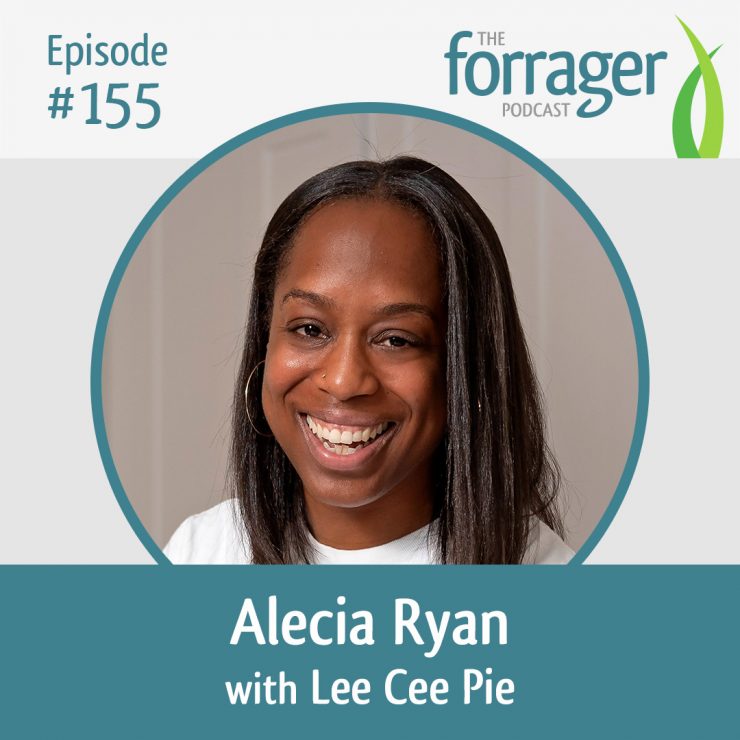
David Crabill: Welcome to the Forrager Podcast, where I talk with cottage food entrepreneurs about their strategies for running a food business from home. I’m David Crabill, and today I am talking with Alecia Ryan.
But first, we need to talk about email, and especially email marketing. If you’re not sending emails to your customers on a consistent basis, then I think you’re missing a big opportunity for sales.
I really love using Kit to manage email for my fudge business, and they recently introduced the best free tier that I’ve ever seen in an email marketing platform, which allows you to send emails to up to 10,000 subscribers for free. So if you still haven’t hopped on the email marketing bandwagon, now is a great time to do so.
To get started and learn more, you can watch my free email marketing tutorial at forrager.com/email. All right, so I have Alecia on the show today. She lives in Ardmore, Pennsylvania and sells cookies and mini desserts with her cottage food business, Lee Cee Pie. Back in 2022. Alecia started her business on a whim after discovering an amazing pie recipe, but then paused her business for almost two years due to life circumstances last year, she started up the business again by partnering with a coffee shop and developing a very strong brand, and she quickly went from having no orders to selling hundreds of cookies in a week.
And now she is in the process of renting a commercial kitchen to take her business even further. In this episode, Alecia shares how she built her business into a success by focusing on branding and customer relationships, despite facing many unpredictable changes along the way.
And with that, let’s jump right into this episode.
Welcome to the show, Alecia Nice to have you here.
[00:01:53] Alecia Ryan: Hi David. Thanks for having me. I’m so excited.
[00:01:56] David Crabill: Well, Alecia, can you take me back? How did this all get started?
[00:02:02] Alecia Ryan: Sure. So, the moment that I started my business was really at a time in my life where I was seeing some changes in my body, first I should say, I started my business in 2022. And at the time I was going through a phase where my body couldn’t tolerate most foods and one of them being dairy.
And I really missed having sweets and desserts. But the only dairy free desserts I could find at supermarkets and in restaurants had a long list of weird ingredients. And I wholeheartedly believed I could make the same version with healthier and whole ingredients. And it all started with this gorgeous laminated puff pastry pie that I made with a plant-based butter that I found at a local grocery store.
And when I tried it, I knew I had something so special that I had to share it with my friends and family. So that’s how it all began. And throughout the process, I fell in love with baking and experimenting and I launched my business the next day.
[00:03:02] David Crabill: Wow. So one day after you made this thing, you started your business.
[00:03:07] Alecia Ryan: Yeah, it was, pretty incredible. It, it was a white peach filling with maple and a little bit of ginger and I went to YouTube University and learned how to make puff pastry, and it was just gorgeous. It had a gorgeous flake to it, and it was really special and it was something that I wanted to share with my family and friends.
[00:03:26] David Crabill: I’ve never heard of someone who discovered a product and then literally the next day started a business for it. So was this something you’d ever thought about? Like, oh, maybe I’d open a bakery someday.
Like where did this come from?
[00:03:40] Alecia Ryan: So I started baking through COVID. Like most people, I would experiment with some cookies and some cakes, but it wasn’t something I thought I would do for myself. My aunt is actually a baker and I owns her own bakery, so I knew it ran in the family. It just wasn’t something I thought of for myself.
But that day that I made the pie, I kind of, I went to sleep that night and everything just came to me. The name of the business the vision, the branding, all of these things. And so it kind of unfolded. very naturally.
[00:04:10] David Crabill: I do wanna clarify, you mentioned your aunt, aunt Carla was on the show three years ago on episode 78, and when we asked you to be on this podcast, we had no idea about that connection, so you told us about that. So that’s kind of a cool thing to discover.
[00:04:27] Alecia Ryan: Yeah, yeah, I, I’m following in her footsteps and she’s an incredible gluten-free baker. So happy that it runs in the family.
[00:04:35] David Crabill: Yeah. And I asked you specifically like, is she the one who inspired you to start a cottage food business of your own? And it sounds like she didn’t. Right? That’s it’s just happenstance.
[00:04:46] Alecia Ryan: Happenstance. It definitely came to me on my own, you know, I thought to myself like, this is really nice. Maybe one day I’ll start a bakery. Those are my actual thoughts. And then I launched it the next day. I was thinking to myself, why do I have to wait for one day? One day? Could be now.
[00:05:00] David Crabill: I feel like that’s the opposite of most people, like most people just spend a lot of time thinking and wondering and researching. So is that just like who you are as a person? Like if you have something you want to get, you go after it.
[00:05:16] Alecia Ryan: You could say that I’ve had a lot of ideas, business ideas throughout my life. Just many things I wanted to do. I always thought I would have my own business and I always thought I would be an entrepreneur. I just didn’t know it would be me having my own bakery.
[00:05:32] David Crabill: Do you have any entrepreneurial experience before this?
[00:05:36] Alecia Ryan: So I minored in entrepreneurship at university. And other than that, entrepreneurship really runs in my family. So grandparents on both sides of my family were entrepreneurs and they founded and owned very successful businesses and then passed them to my parents. And during the summers I would work at their businesses as a kid.
So I kind of got the bug and I feel I was destined to be in this space. I just didn’t know it would look like this.
[00:06:04] David Crabill: When you say you started the business one day after discovering this product, what did that actually mean? Did you actually start selling your product one day later?
[00:06:14] Alecia Ryan: So I came up with the branding and I launched the name and the concept to my family and friends. And I think a week from that point I had my first event and I did a tasting event where I offered two different pie flavors paired with different cheeses and wines. And I had all of my family over and I started taking orders, I wanna say a week from that point.
[00:06:37] David Crabill: I gotta say, Alecia, I think that might be a record for the fastest uh, launch of a business and the most unexpected launch of a business too. And how did that first event go?
[00:06:48] Alecia Ryan: It was so fun. It was in October of 2022, and as I mentioned, I had these two different pie flavors. One was a classic apple pie, the other was a maple ginger spice pie. And I just loved curating the menu. You know, coming up with these different cheeses that would pair with the different apples that were in each pie.
And then having wines that complimented the cheeses that I was offering. And I think I left the event with, I wanna say. I don’t know, betwe, maybe 10 orders. And some of them were for, Thanksgiving. ‘ cause again, I launched this business at the end of October and it was really nice. We had music playing.
I set up the whole display. I had a movie on in the background just so people could mingle and move freely throughout this space. So it was really nice.
[00:07:34] David Crabill: And what were you doing up to this point? Did you have a job?
[00:07:38] Alecia Ryan: Yeah, so my background is actually in corporate retail and I still actually work in corporate retail full time. And what I do for work is very analytical and numbers based. And so baking has also become this creative outlet for me that kind of exercises the little girl in me that always wanted to be an artist.
[00:07:59] David Crabill: Yeah, I did see that you said you have a strong interest in art and have always had an interest in art. it’s kind of interesting that you kind of went from this. Analytical background to something very different. So is it just because of this love of art that you’ve had?
[00:08:18] Alecia Ryan: I honestly feel it is, my dad is an artist at heart. I’m an artist at heart. And growing up, for me, I could never pick a discipline, even though I had been to many art schools. So I studied different things like fashion design, interior design, architecture sketching and, all these different mediums.
But I could never pick an outlet. And for me, I found that through baking. one of the things that I love and how I express my art through my baking is coming up with these really fun flavor pairings, but then also I enjoy plating. I enjoy photographing. I do all my own photography and with natural light, and I also design all my own packaging to match whatever order I’m working on.
[00:09:00] David Crabill: I can see you had a really strong brand. We’re gonna get to that in a little bit, but most people, I feel like, that have this latent art background.
Like you have oftentimes go into doing custom art baked goods, like custom decorated cookies and custom decorated cakes. Is that something you’ve ever explored? ’cause I’ve noticed that your business is, customized and artistic, but in a different way.
[00:09:28] Alecia Ryan: I would say in a different way. I don’t do the, cookies with all the decorated icing or the fondant cakes with the decorated, piping and icing. What I really enjoy doing is taking the concept or the theme from whoever my client is. So they might be having a baby shower in, in the colors are purple and yellow, and the, theme might be whimsical.
So I take that inspiration, and then I translate that into a menu that speaks to that concept. And then I design all of the hang tags and the packaging [00:10:00] and even curating the menu in terms of what item I’m gonna provide for that event.
[00:10:06] David Crabill: So can you give us an example of an event that you did and then what the finished product actually looked like
[00:10:13] Alecia Ryan: Yeah, so there’s a business that just opened near me. It’s called Rowan Inc. And they are an ear piercing shop that caters to young adults and first time children who are getting their ears pierced and they make the experience for them very welcoming and very fun. So they feel a niche in that most ear piercing places might be at the kiosk in the mall.
And in this particular environment with Rowan, their colors are very, very youthful and fun and welcoming. They use a lot of pinks and greens and they’re all about honoring the celebration of the moment. And this shop opened up across the street from me actually, and I reached out to them and said, I would love to donate cookies for your grand opening.
They said Yes, and then they gave me creative control to come up with the menu and everything else. So I took their colors and their branding and their mission statement. And I came up with three different cookie flavors. And one was a strawberry or a sugar cookie rolled in strawberry sugar.
And the other was a celebratory cookie that had a vanilla icing with sprinkles on top. And then the third cookie was a pink, white chocolate chip cookie, and I put them in packaging with their label on it. I designed a matching menu with some of their brand identity, the pieces of their brand identity, and delivered it to them for the grand opening.
[00:11:36] David Crabill: It sounds like that was one of your most meaningful projects and kind of like a passion project. Why did you choose to offer to donate that to them instead of asking if they’d like to order from you?
[00:11:50] Alecia Ryan: So being a a smaller, like I, I at times call myself a micro bakery. And so being that there’s not a lot of people in my neighborhood who know my name yet, I do donate a lot of my cookies in order to establish a relationship with future customers. because I’m not a large brand just yet, I’m still growing.
I felt like it would be a nice way for me to have a foot in the door with Rowan. after donating that first batch of cookies for their grand opening, they actually hired me a second time to do cookies for an event they were having with Villanova. I see when I donate these cookies more as an investment to establish a relationship with some of these brands I really want to work with. So.
[00:12:32] David Crabill: And I can see from your social media account that you did that. collaboration with Rowan earlier this year, but a year ago, you know, you also posted that you’re making hundreds and hundreds of cookies for the holidays. I know you have a successful business, so I’m just curious about like, how your business has grown and do you feel like it, goes up and down at certain times in terms of how busy you are?
[00:12:59] Alecia Ryan: It definitely does. When I first started my business, I was mainly selling to friends and family and then friends of friends, right? So it was keeping my circle very small. And following that first year of business, I took a backseat to deal with some more personal things. So I wasn’t, selling that much.
I pulled back on the orders that I was accepting. And more recently though, as you mentioned last December, I started a partnership with the local bookstore. I started a wholesale partnership with them. So I’ll stock my cookies with them on a weekly or a biweekly basis. And I have also baked for their private events.
And I had my first, I wanna say, event for the public with them. And last year I hosted a Christmas cookie buffet where I think I made about a thousand cookies. Laid ’em all out on the table and customers would pay for their cookie box. And you can stuff as many cookies as you want into the box.
So that was my first event for the public. And I wanna say my first event with this local bookshop, and we’ve been partnering ever since.
[00:14:03] David Crabill: So when did you say that started? Was that a year ago? About
[00:14:08] Alecia Ryan: Yep. That was December, 2024.
[00:14:12] David Crabill: And then what did your business look like before last December? I know you said you took a break and were you selling at all before you started that partnership?
[00:14:23] Alecia Ryan: Not necessarily was very quiet as, as I was saying, I took some time off to manage some things in my personal life. I did a little bit of testing here and there. If I, caught some inspiration, I would bake that item and then gift it to like my family or friends. But other than that, I wasn’t really selling prior to December, 2024.
[00:14:43] David Crabill: so it’s kind of interesting, right? You started at the end of 2022. I know you got some Thanksgiving orders, and then you had this hiatus and then revamped your business with this wholesale account. So if you can think back to 2022 when you started, did you have a vision at that time for what you hoped it would become?
[00:15:03] Alecia Ryan: I don’t know if I had a vision at the time. I, there was things I wanted to stay true to. So what was important for me was that I was using, even though I think I mentioned at the time I started baking vegan desserts because I, my body couldn’t tolerate dairy. I had since been able to introduce most foods back into my diet, which means I could now bake with dairy.
But what was still really important for me was that I was using organic, local, and thoughtful ingredients and just staying true to like this organic feel and, and honoring whole ingredients and kind of making that the standard and the norm for what be good should, be.
[00:15:41] David Crabill: Can you elaborate on that? When you say local and thoughtfully sourced, like what does that mean to you?
[00:15:49] Alecia Ryan: for me that means if I’m offering anything with a fruit filling or fruit in it, I source it from the farmer’s market. Otherwise, I’m using organic flour, organic cane sugar, and I actually make my own organic dark brown sugar. And I use rich pasture raised butter and pasture raised eggs.
[00:16:09] David Crabill: Do you feel like customers have valued what you’re putting into them? Because obviously this is gonna increase the price of your ingredients by a lot, right? Do you feel like you’ve been able to charge accordingly?
[00:16:23] Alecia Ryan: I do feel like I’ve been able to charge accordingly. There’s some people who are used to the prices that you’re gonna see at the supermarkets. Or with other bakeries. I kind of reconcile with myself that might not be my customer. I actually even contemplated offering two different pricing menus.
So for those who were interested in organic bakes versus those who were interested in conventional bakes, and I since moved away from that because I still wanna honor, as I was saying, and stayed true to my, vision for offering something that is whole and complete.
[00:16:57] David Crabill: So what is your pricing landed at?
[00:17:02] Alecia Ryan: So I offer, at the bookstore, I offer a extra large cookie, and it could be a variety of classic flavors like your sugar cookie, your chocolate chip cookies. Those would be $6 for an extra large. And I offer your standard sized cookie, which are about a one ounce cookie. Those would be a dollar 66 to about $2, depending on what I’m adding in.
Sometimes I’ll do some classic flavors. Sometimes I’ll do some more premium cookie flavors, like a strawberry cheesecake sugar cookie, or an apple pie sugar cookie. Something elevated based off of the season or whatever holiday that we’re celebrating. And those tend to range for a little bit more.
[00:17:40] David Crabill: And would you say that the bookstores clientele are people that are generally looking for organic? Are they generally spending more money? is it a higher end clientele?
[00:17:53] Alecia Ryan: It is a bit of a, I wanna say a local clientele, but what you get when you’re going to that bookstore is an experience, is beautifully designed and curated. And next door to the, the bookstore actually is a plant shop. So you can flow from one space to the other and it’s really a destination spot.
And I feel that’s why my cookies fit the environment because you’re, you’re there for an experience.
[00:18:17] David Crabill: And I can see from pictures, I mean, your cookies look amazing, right? They’re very specialized, at least some of them are. And the packaging is on point. But I’m curious, you know, you say an extra large cookie for $6, obviously it sounds like a high price point. And then like how much does that cookie way? about three ounces or more.
Okay, so you’re, able to achieve about $2 an ounce, which is. About double what a traditional cookie would be. But again, the organic ingredients, pasture raised eggs, all these things are gonna increase the price too. And then I know you do cookies primarily, and what else have you sold with your business?
[00:18:59] Alecia Ryan: I recently started experimenting more with cakes. I love baking mini cupcakes or mini tiered cakes, and I’ve been spending more time in that space. And I’ve actually had a few customers, I wanna say in the last month where I’m exclusively baking mini cakes for them. I baked, a batch of cupcakes for a Chinese tea ceremony.
I have another fundraiser coming up, and then in the next few weeks where I’ll be baking cupcakes for that event, and I’m having a lot of fun with it. I’m, I’m learning a lot as I’m going through it.
[00:19:31] David Crabill: You know, I thought it was interesting that your business name is Lecy Pie, but it doesn’t look like you actually sell pies anymore. Um, And that’s the case, right? You’re no longer selling pie. Eyes.
[00:19:44] Alecia Ryan: I still sell hand pies, but on a smaller scale because they’re so time consuming. I hand laminate everything from start to finish. So the pie is 100% made from me. There’s no philo dough involved and everything is made from scratch. So because it takes more time, and I’m also juggling a full-time job, I release my hand pies during certain times of the year, so I’ll release them in the spring around Mother’s Day or Easter, and then I’ll release them again for Thanksgiving and Christmas.
[00:20:16] David Crabill: So it sounds like the product that inspired you to start the whole business is no longer on your menu. Is that correct?
[00:20:25] Alecia Ryan: It’s still available on my menu just at limited times of the year.
[00:20:30] David Crabill: And I did notice that you eventually incorporated the apple pie into a cookie. Correct.
[00:20:37] Alecia Ryan: Yes.
[00:20:39] David Crabill: Has that done well? It looks very labor intensive to me.
[00:20:43] Alecia Ryan: So I, for that cookie, it was really fun. It is a bit labor intensive because all of the components have to be made first, right? So I’m making an apple pie jam to be swirled within the dough. I’m, of course making the cookie dough from scratch. And then also I’m hand laminating pastry pieces that I then cut into triangles to top the cookie.
So three different components, you know, your traditional cookie, your apple jam, and then your pie piece, all to make up the apple pie cookie.
[00:21:13] David Crabill: And what did you sell those cookies for?
[00:21:16] Alecia Ryan: Those were my specialty cookies for a three ounce would be $6.50.
[00:21:23] David Crabill: And I was wondering. Did you expect to be fully focusing on pie when you named your business Lee Cee Pie?
[00:21:33] Alecia Ryan: I did actually, I thought I was going to be one of those bakeries that offers one single thing, but in a lot of different flavors. So I thought I was gonna have apple pies and blueberry pies and all these different flavors and fillings. But pie would be my, focus and I realized again, that the pies can just be so, they’re special.
You know, they take a lot of time and a lot of attention, and it’s not something that I can. Whip up or kick out of my kitchen very quickly, and I could do that with cookies, which is why I started to expand my menu in, terms of cookies. And now I’m expanding more into cakes. But the pies are still the heart and the soul of Lee Cee Pie.
[00:22:13] David Crabill: Did you ever experience like difficulty selling your pies at a certain price point?
[00:22:20] Alecia Ryan: I haven’t, I actually, I did one farmer’s market, I wanna say last fall. And I only offered pies and pastries, and I sold out in an hour and a half.
[00:22:31] David Crabill: Have you experimented with just like continuously increasing your pricing of the pies to better compensate you for the effort that it takes?
[00:22:40] Alecia Ryan: I thought about that, but then my pies would be $10. So I have since started doing smaller pastries, so ones that could fit in the, palm of your hand and going a little bit lower on my price.
[00:22:53] David Crabill: $10 for a pie sounds really small. So are you talking about mini pies?
[00:23:02] Alecia Ryan: So $10 for the pie would be a hand pie, and it would be about six by four inches.
[00:23:09] David Crabill: Have you ever done like full-size pies?
[00:23:13] Alecia Ryan: I haven’t actually.
[00:23:15] David Crabill: Okay. All right. So I, I had in my head that you started out selling full-size pies, and now I understand that you started out selling hand pies and that, that makes a lot of sense, that they’d be very time intensive, obviously.
[00:23:29] Alecia Ryan: Yeah. Yes. but I still feel like, I don’t know, $10.
[00:23:34] David Crabill: I could see someone paying $10 for a hand pie.
[00:23:37] Alecia Ryan: Uh, you know, maybe, Maybe I’ll try it out, but I’m in this moment right now where I loved minis. Like I loved the mini cookies and the cupcakes and mini pastries. I did mini pastries for a popup this past spring with a local shop, and they had a strawberry preserved filling and a lemon curd filling, and they flew.
They were so popular. they were something I was offering. They were in the shape of a flower and they were something I was offering for the beginning of spring, and they were really, really popular. So I’ve been in this space where I’m loving minis right now.
[00:24:10] David Crabill: Well, one thing I will say is everything is very intentional with your business. Like it, you have a limited menu, a focused menu, and then also. Your products all feel like they’re connected to each other. Like What would you say your inspiration is for your product?
[00:24:29] Alecia Ryan: So when I was building my brand, there was words that I wanted to embody. Like the branding, like my vision and the, the words I used were organic, whimsical, and minimalist. So they are organic in their packaging and organic in their ingredients, whimsical and flavor. So I’m using flowers and lemon curd and fruit preserves and tea inspired flavors.
And then minimal, again, in the packaging again with just very clean lines from my logo white header cards, or brown packaging. So those three words for me aren’t just a representation of my brand, their representation of my personality, and how my, art flows through me.
[00:25:12] David Crabill: It looked to me like you kind of had an Asian flare with your baked goods. Would you agree with that?
[00:25:19] Alecia Ryan: I do, it’s somebody else described my artistry as like French inspired, but my flavor pairings. Yes, I agree. Or have a little bit of an Asian flair.
[00:25:30] David Crabill: So can you share a little bit more about the flavors that you’ve offered and which ones are some of the most popular?
[00:25:38] Alecia Ryan: so me personally, I really enjoy tea and different types of tea, green tea, earl green tea. So I bake a lot with those flavors or flavors that compliment that. So I love baking with Earl Gray or pairing that with lavender baking with matcha and putting that into a glaze or putting that into a coffee cake.
Lemon is, is usually a staple in my menu, although it’s the freshest and I think the most appreciated in the spring or the summer. I love baking with lemon because that kind of compliments the tea flavors that I use. And I love baking with seasonal fruits. So that’s the other thing I try to rotate in.
Regardless of my core flavors that I use, I try to rotate in some seasonal flavors. So right now I’m baking with ginger and maple and honeycomb and chai and pumpkin spice, so my flavors will rotate also.
[00:26:30] David Crabill: And I know you started this because you were creating vegan. Desserts and I know you still create vegan desserts. How does your business look like in terms of, what percentage of what you sell is vegan versus non-vegan?
[00:26:46] Alecia Ryan: The percent of vegan is very small by this point, I’ll offer vegan by request, but it’s not a part of my regular menu.
[00:26:56] David Crabill: Did you ever expect your business to like fully focused on vegan products?
[00:27:02] Alecia Ryan: I did actually, I thought I was gonna stay in this lane of vegan baking and then at some point introduce gluten-free baking, and I just felt like that piece of it, that experimenting phase right, of recreating all your recipes with those type of ingredients was a little harder for me to do.
[00:27:21] David Crabill: We’ve touched on it a little bit already, but your brand is super impressive, very on point. Can you share a little bit about what were your goals when you created your current brand?
[00:27:35] Alecia Ryan: when I created my, the brand, at first I did everything on Canva and I printed all my work and all my collateral at Staples. And I still do, and I wanna say two years into my business, I hired a branding agency to put together a full package for me.
I wanna bring back up those three words that I’m hoping to embody with what I’m, I’m creating. And it’s organic, whimsical, and minimalist. And those are how I would like to describe my brand, how, what I’m, I’m hoping to convey with my branding, and I shared that with the two incredible ladies that I work with and them designing everything, my logo, my icon, and my color stories, et cetera.
I shared that with them and they put together this beautiful branding package for me.
[00:28:22] David Crabill: Whims. I could see that potentially being colorful. But your brand is black and white. Correct.
[00:28:30] Alecia Ryan: Yes. Yep.
[00:28:32] David Crabill: So why did you choose to go in that direction?
[00:28:35] Alecia Ryan: I wanted something that felt the black and white of my brand. So the white background with the black logo and the logo is very geometric, right? The lines are very clean. That ties to the minimalism that I’m hoping they convey with the brand. I wanted that because it felt like something that had staying power.
Something that I could revamp later if I wanted to. But something, that was a little bit more versatile and that I, could stay with it and Still love the brand. Years later, the design of the brand
[00:29:06] David Crabill: And your packaging is very refined. It looks like. Packaging that took a fair amount of iteration to arrive at. Did you experiment with different packaging options before landing on what you have now?
[00:29:22] Alecia Ryan: I did, I had, I used to use more stickers and my branding and the background was pink and I used more script in my, my labels, and I did pare it down. I just want it to be something just clean and also that minimalist and like those clean lines also speak to the type of ingredients that I use.
I only use ingredients that are necessary in my, bakes. I don’t use any additives or artificial colors, and I’m using ingredients in their, as close to their purest form as possible.
[00:29:54] David Crabill: If you were talking to another cottage food baker that does cookies and mini desserts like you. They said, you know, I really would like to improve my branding and my packaging. Is there anything specific that you would recommend they start with,
[00:30:11] Alecia Ryan: Lighting is a huge thing. If you’re not photographing your own work or somebody else’s lighting is, is key for me. It’s more than just your angles or what your background looks like. The lighting, I feel helps tell the story of this whatever the baked item is that the person wants to eat.
So it’s important that you have great lighting to have your colors and your texture. Be as true to form as possible. So people, when they look at whatever that photo is or whatever that item is they’re envisioning it like they’re looking at it in front of them.
[00:30:45] David Crabill: So how do you achieve great lighting?
[00:30:49] Alecia Ryan: I like to photograph in natural lighting. If I don’t have natural lighting, I try to, achieve it with my angles. Right? So, Have it be as close to natural as possible. It doesn’t have to be direct light. It could be your state. You’re photographing it close to a window, you’re holding it up against a white background
[00:31:08] David Crabill: I saw one of your posts that you said that a recent photo shoot reignited a spark in you. And I was wondering. Were you feeling like you were in a rut at that time? I just wanted to know what caused you to say that.
[00:31:25] Alecia Ryan: Definitely I was in a space, and I think I’m getting over this hump, but I was in a space where I, I burnt myself out. I was taking on multiple orders through spring and summer and also working full-time, and I didn’t create time or space for myself to have a break, and I burnt myself out and I lost a little bit of my motivation in the process I recently met lovely person who owns an event space in the local town where I am, and she’s also a photographer, and I had her photograph some of my merchandise that I, I have, and I just had so much fun talking to her, and it was just fun being there.
It fun talking to like-minded individuals who get where you are and understand what you’re failing from an artist’s point of view.
[00:32:12] David Crabill: A number of the bakers that have been on the podcast have talked about burnout. Do you feel like there was. Anything you could have done to help prevent that from happening.
[00:32:23] Alecia Ryan: I think in hindsight, I would’ve taken more time off during the summer while, most people are away and traveling and at the beach, that would’ve been the ideal time for me to maybe go to start doing biweekly drops at the bookstore or lowering the custom orders that I take. And I didn’t do that, which is what led me to the burnout.
[00:32:44] David Crabill: So do you feel like you’ve made an adjustment? I know that happened in the spring and summertime.
We’re now in the fall and, and maybe orders aren’t as heavy for you right now, but like, do you feel like you are doing anything different now or you’re planning on doing anything different moving forward?
[00:33:00] Alecia Ryan: [00:33:00] Yeah, I’m managing my burnout now just by making more space and time for rest and to get out of the kitchen and do more fun things with my family and friends. So that might look like. Lowering the amount of orders that I accept on a weekend so that Saturday I can go spend time with family or I can go explore something new.
And then also I’m finding that giving myself that break from being in the kitchen is also inspiring me, right? Like I’m changing my environment and I’m going out to see different things, experience different environments. And that also then later sparks some inspiration in me for what I wanna bake.
[00:33:37] David Crabill: At those busy times, have you ever considered hiring help?
[00:33:43] Alecia Ryan: I actually have recently hired an intern and she goes to the restaurant school down in Philadelphia and she helps me with my large order. So yes.
[00:33:54] David Crabill: And how’s that going?
[00:33:57] Alecia Ryan: It’s great. She doesn’t need a lot of handholding, she does this at school, so I don’t have to tell her how to mix cookies and for how long. You know, Those details that might not come to people who baking doesn’t come natural to.
[00:34:10] David Crabill: So it sounds like the wholesale account kinda rebooted your business and then from that you’ve now started doing a lot more custom orders too. So how would you say your business is split right now? Like, how much of your business is wholesale coming from the coffee shop and how much of it is custom orders?
[00:34:33] Alecia Ryan: I wanna say it’s 50 50. Prior to this though, or like earlier in 2025, it was probably 10. 90% being wholesale, 10% being custom orders.
[00:34:46] David Crabill: And what would you ideally like it to be?
[00:34:50] Alecia Ryan: I really like the 50 50. I have the most fun with the custom orders and it just helps me flex my creativity, right? Like the order is different and new every time. The theme is different and new every time, and it’s really fun for me.
[00:35:05] David Crabill: Have the custom orders come from word of mouth coming from the coffee shop Sales.
[00:35:13] Alecia Ryan: yes. A decent amount coming from word of mouth, from the coffee shop. some customers will find me on the Instagram. And they love the photography or they love the photos and everything looks great, so they’ll reach out based on that. And then also I do get some of my business just from donating cookies or, baking up samples and taking them to local businesses.
So I wanna say that, that last one just having samples ready to go and introducing myself and what my name is, what my business is, has been pivotal in gaining new customers. As I mentioned before, I donated cookies to a, a local business that was having a grand opening and then they returned and ordered cookies from me in the future.
And so I gained a lot of business from that. Just not being afraid to get out there and, and introduce myself, and then also show people what kind of [00:36:00] work I can do
[00:36:02] David Crabill: So when you say having samples ready, what does that look like?
[00:36:07] Alecia Ryan: that looks like I’ll have. Some of my classic flavors, or I’ll bake up some of my classic flavors like my brown butter, sea salt, chocolate chip, or my vanilla bean sugar cookie, which is my favorite in my opinion. And my snicker doodle, my toasted snicker doodles also huge hit most of these flavors I do really well at the bookstore, and so I’ll bake up some extra samples and I’ll bake them in maybe a half ounce cookie and I’ll package it up really nice and go take it to people that I wanna work with in the future.
[00:36:38] David Crabill: Do you do any samples at the coffee shop itself?
[00:36:43] Alecia Ryan: When I release a new item, I will also put out samples just to give people a chance to try it before they buy it. So I did a coffee cake at the bookstore and I took whatever end pieces I had left over from my bake. I would cut into small pieces and put them in little containers and then put those out for samples.
[00:37:04] David Crabill: Do you have any kind of like. Numbers or, um, any evidence that shows that putting out samples is that boost orders a lot? Like, can you tell
[00:37:15] Alecia Ryan: Yeah, I can tell. ‘ cause I, I have a really great relationship with the owners of the bookstore, so I’ll text them periodically and ask how any new items did that I dropped off and whenever I put out samples, the item always sells out. If I don’t put out samples, I’ll typically have a handful left over into the next day.
[00:37:33] David Crabill: what prevents you from putting out samples every time?
[00:37:38] Alecia Ryan: Sometimes my bake might be too small and then I, just don’t have enough end pieces or extra pieces to give samples for.
[00:37:46] David Crabill: But if it helps boost sales, like you could potentially just do another batch or half batch to create samples to boost the sales.
[00:37:55] Alecia Ryan: Yes.
[00:37:56] David Crabill: But it sounds like a lot of times there are no samples sitting there with your products at the coffee shop.
[00:38:04] Alecia Ryan: Not for the cookies. The cookies at this point have a decent following, and they typically sell out over the weekend on their own. If I introduce anything else, like a different cookie flavor or a cake, a coffee cake, or a pound cake or a banana bread, then I will put out samples with that.
[00:38:21] David Crabill: So most of your business is wholesale and custom orders. Have you tried out pop-up events?
[00:38:29] Alecia Ryan: I have, I did a couple of popups and farmer’s markets in this past year. So I did two farmer’s markets and I had two totally different experiences at each one. And then I did a few popups and I didn’t want markets and popups to be a huge part of my model at this point.
[00:38:47] David Crabill: I need to hear about the different experiences with the two farmers’ markets. You said they were totally different.
[00:38:54] Alecia Ryan: Yeah, it was the same farmer’s market. And the first market I did was during the summer. It was a Saturday from 10 to two, and I sold out in an hour and a half, which is pretty exciting I should say. And then the second market I did with the same organizers was during the holiday and it was a Friday night market and it was very cold and I took home half my product.
[00:39:19] David Crabill: Okay. So different experiences, but very different circumstances, right? Different time of year, different day of the week, different time of the day. So have you noticed that at any popups like that, certain times of the day, certain times of the year, your products don’t do as well or sometimes do better?
[00:39:40] Alecia Ryan: I wanna say I do think, it might be the time of the year.
[00:39:45] David Crabill: It’s funny ’cause usually the holiday times is when people sell the most,
but you are just saying that your products sold better in the summertime.
[00:39:55] Alecia Ryan: it did. And I don’t know if that had anything to do with what I brought. So in the summer I was offering my hand pies, and in the winter, at the winter market I was offering cookies. So I don’t know if it’s a little bit of as you mentioned, circumstances, different day, different time different product.
[00:40:13] David Crabill: You know, I actually could see it potentially being a product issue in that case because. The hand pies are gonna attract the eyeballs, right? Like they’re really impressive to look at. Like, I’ve looked at pictures of them, right? And they’re one of those things I could see people being like very impressed by, at a market, would you agree?
[00:40:32] Alecia Ryan: I do agree. Mm-hmm.
[00:40:34] David Crabill: But then they also are a ton of work. So, I’m curious as to why you didn’t bring back the hand pies for the fall market or the holiday market, because that is also a time when pies would sell. Great.
[00:40:50] Alecia Ryan: You’re right. And I think I leaned into cookies for the, that whole milk and cookies, idea that people have for the holidays. Like you leave the cookies out for Santa type of thing. So I leaned into cookies and didn’t do the pies.
[00:41:04] David Crabill: Well, it sounds like markets could be really successful for you, you know, with some experimentation tweaking in, but it also sounds like you just don’t need them, right? Like it’s not a direction that you need to go in ’cause you’re really enjoying how the wholesale and the custom orders are working out.
Is that accurate?
[00:41:23] Alecia Ryan: Yeah, I would agree. I also think if I was baking full-time, then I would do more popups in farmer’s markets because at that point then I could start to build a little bit more of a regular clientele, if that makes sense. I feel like at the time I also didn’t have maybe enough of a following in order to bring people out to the popups or the farmer’s markets. Because I was doing ’em so sporadically, I felt like if I was doing them more often, like every week, I could build like a deeper relationship with some of my followers.
[00:41:54] David Crabill: Well, As you look ahead, do you have any plans for the business? Where would you like it to go?
[00:42:01] Alecia Ryan: looking ahead, I would really like to expand my special event baking and do more work with businesses and, and brands and everything. That’s my favorite part about what I do. I love taking inspiration or a concept and then translating that into what that means for food, right?
And then just executing that vision. That part is so fun for me.
[00:42:25] David Crabill: I know you’ve had moments where you’re baking hundreds and dozens and dozens of cookies and you’ve got the baking rack. I see. And so have you ever thought about potentially going commercial?
[00:42:40] Alecia Ryan: So I actually am in the process of finishing up paperwork to get into a commercial kitchen.
[00:42:46] David Crabill: So what has that process been like to find it and to get in?
[00:42:52] Alecia Ryan: it’s been really challenging based on my location, so. that I know of. There’s only a handful of commercial kitchens in my [00:43:00] area and they’re all about 40 minutes away from where I live. So it took me some time to decide which space I wanted to be in based off of the commute and which days I would be there. And just talking to other bakers or food makers who were in that space and getting their opinion on how things go and how things run at that commercial kitchen.
So I finally landed on a space, and then it’s in Northeast Philadelphia and I started my paperwork and I have to go through two rounds of licensing. So I have to get licensed through the state and I also have to get licensed through Philadelphia County.
[00:43:35] David Crabill: Did you look into any options that are, closer, like potentially trying to rent out a, a restaurant’s kitchen in the off hours or something like that?
[00:43:46] Alecia Ryan: I did, I looked into if I could rent out the kitchen of local churches or as you mentioned, local restaurants and nothing came to fruition.
[00:43:56] David Crabill: so, You’re moving forward with this idea. What do you expect it to look like? Like how often do you think you’re gonna be going to the commercial kitchen to bake?
[00:44:07] Alecia Ryan: I will be there a few times a month. I am still licensed to bake for my home, so I’ll always have that as a backup. And I envision myself using the commercial kitchen for my large orders where I need to produce a whole bunch and also so that way I can guarantee that what I’m getting paid for the order can offset the price of the kitchen.
[00:44:29] David Crabill: Do you have to commit to a certain number of hours per month?
[00:44:34] Alecia Ryan: In my contract, I get 10 hours a month and I can add on more if necessary.
[00:44:40] David Crabill: Is this also gonna enable you to bake other types of items? Like, I know there’s obviously restrictions with Pennsylvania’s cottage food law.
[00:44:50] Alecia Ryan: Yep. So out of the commercial kitchen, I can bake with dairy based products or TCS foods. And by dairy based products, like things that might have a dairy filling that has to be refrigerated after it’s made.
[00:45:04] David Crabill: Are you planning on using that? Like Do you plan to, add more things to your menu or do things that involve perishable bake goods?
[00:45:12] Alecia Ryan: Potentially I, last summer I experimented with making my own ice cream and it was delicious. So I, I plan to make some more things like that.
[00:45:22] David Crabill: So I know you said that you’re gonna use the kitchen to help produce your big orders. What do you hope the commercial kitchen will help your business become?
[00:45:35] Alecia Ryan: I hope it will help my business become more efficient. I think that’s my biggest obstacle right now is just the time that it takes to bake orders in my residential kitchen. It takes double the time. So at the commercial kitchen, I’m really looking forward to cutting down my prep time.
[00:45:52] David Crabill: And what is your ultimate goal for the business? Say, five years from now?
[00:45:58] Alecia Ryan: Five years from now, I really would like to own a third space, and for me, that would be a creative and a culinary studio all rolled into one. So it would be a space where I could bake my custom orders or bake my wholesale orders, but also a space where can do some food photography for other brands and clients.
Or I can host culinary events at this space. So long term, I really want to have a box of my own where I can combine this culinary and creative. Hybrid that I’m constantly balancing through my business.
[00:46:36] David Crabill: Well, over the last few years, are there any stories that really stand out to you in your business?
[00:46:43] Alecia Ryan: There are I. This past summer, my cookies were actually featured on a local news station and they were highlighted during a segment at the bookstore that I partner with. So that was a really exciting moment for me to look on the screen and see my signature white and black packaging on the television.
And then towards the end of the summer, I also was featured in Mainline Today Magazine in their August edition. So they wrote up a quick little spread on me to talk about my business and myself. So both of those moments were really exciting for me. It made me feel gratitude and, fueled me to keep going in my business.
[00:47:23] David Crabill: Were both of those just fortuitous? Did you do anything to help make them happen?
[00:47:30] Alecia Ryan: What’s funny is the magazine spread came about very serendipitously. I connected with somebody on Instagram and they ended up being a photographer for the local magazine, but I didn’t know that at the time. I reached out to them thinking there were somebody I met at one of my popups and they reached out to me thinking they were somebody they met at a different event.
And when we both realized we weren’t who the other person thought they were, we still introduced ourselves to each other and luckily this, the photographer said that he really loves to feature minority and local businesses in this magazine, and he would be reaching out later to cover me in a spread potentially.
So that experience happened very organically. Kind of Took me by surprise, but obviously very excited and just kind of a funny story when I think about it. And then the feature of my cookies on the local TV station, the bookstore that I partner with, they were being covered in a local segment and they reached out to me to ask if I could make some specialty cookies to feature in their shop while the new station was there.
[00:48:38] David Crabill: So what advice would you give an entrepreneur who’s just getting started out today?
[00:48:45] Alecia Ryan: I would say that your recipes and your, branding, doesn’t have to be perfect for you to get started. It has to be good. It has to be great, but it doesn’t have to be perfect. You can tweak it along the way. for me personally, I am probably on like iteration 20 of my cookie recipe, or I’ve redone my labels and my business cards many times.
That’s something I wish that I knew in the beginning was that those things didn’t have to be perfect. They had to be good and I could tweak it along the way. So don’t let those things be the reason why you don’t get started.
[00:49:22] David Crabill: So do you feel like you spend a lot of time trying to make everything perfect before you really move forward?
[00:49:30] Alecia Ryan: I did and say that I know I launched my business overnight, but there was also a period where I wasn’t, you know, where I took a hiatus and I was trying to perfect certain things. And it wasn’t until I was in the process and in the moment that I was able to learn and grow and tweak as I go.
[00:49:50] David Crabill: Well, As you think back on the last few years, what has this business meant to you?
[00:49:56] Alecia Ryan: This business is my baby. I eat, sleep and breathe it. And I think about it all the time. have so much fun, fulfilling this creative side of me. And then I really enjoy sharing it with people. I enjoy sharing my photos. I enjoy sharing my food. And when people share good feedback with me, like they like this photo, or they like this cake that I made or this flavor, it just fuels me to keep going.
And it’s part of my mantra, which is to like honor small joys, right? Like baking brings me joy, but I also share that joy with others.
so my mission statement actually is every bite is a little joy.
[00:50:36] David Crabill: I feel like a lot of cottage food bakers don’t even have a mission statement. Like, why did you decide to have a mission statement? For your business,
[00:50:46] Alecia Ryan: It’s so that I don’t lose sight of what my vision for this project is. And I keep saying that it’s like something for me, right? Like this baking and this journey sparks a joy in me, but it’s not just for me. It’s something that I have to share out with other people, or I feel like I wanna share out with other people.
And so the mission helps me stay true to what my intention was for my business when I first started.
[00:51:11] David Crabill: Well, Thank you so much, Alecia. Now, if people would like to learn more of. About you, where can they find you or how can they reach out?
[00:51:20] Alecia Ryan: So they can find me online at leeceepie.com or @leeceepie on Instagram and Pinterest. And if you’re local to Ardmore, you can shop my cookies at the Bookie Coffee House and Havertown PA. I do a biweekly or a weekly cookie drop with them.
[00:51:40] David Crabill: Awesome. Well, thank you so much for coming on the show and sharing with us today.
[00:51:45] Alecia Ryan: Thank you so much for having me. I really appreciate it.
[00:51:50] David Crabill: That wraps up another episode of the Forrager Podcast. For more information about this episode, go to forrager.com/podcast/155.
And if you feel like you’ve gotten a lot of value from this podcast, I have a favor to ask you. Could you take a quick moment right now and leave me either a review on Apple Podcasts or a rating on Spotify. It’s truly the best way to support this show, and it’ll help others like you find this podcast.
And finally, if you’re thinking about selling your own homemade food, check out my free mini course where I walk you through the steps you need to take to get a cottage food business off the ground to get the course.
Go to cottagefoodcourse.com. Thanks for listening and I’ll see you in the next episode.