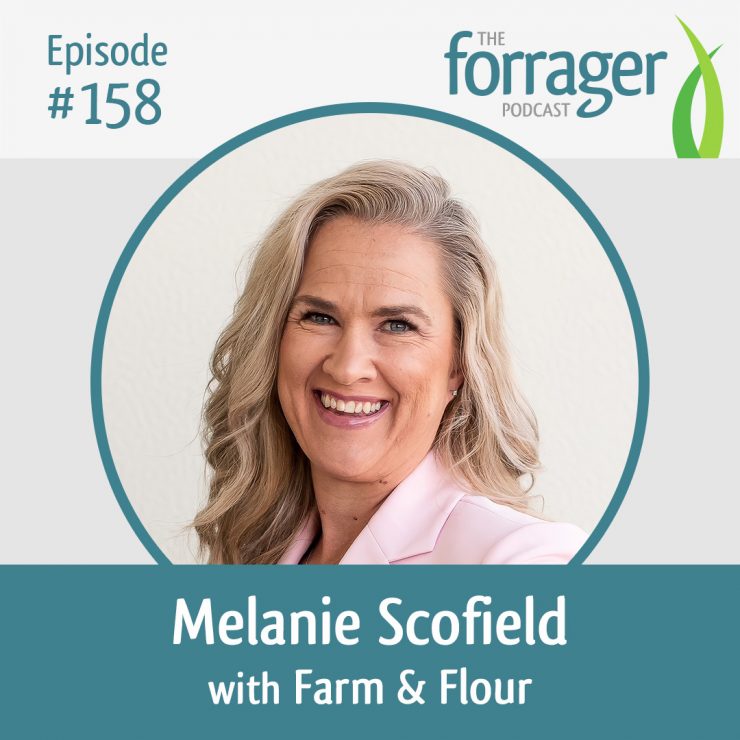
David Crabill: Welcome to the Forrager Podcast, where I talk with cottage food entrepreneurs about their strategies for running a food business from home. I’m David Crabill and today I’m talking with Melanie Scofield.
But before we begin, I’d like to tell you about the Simply Bread Oven. As you hear today, Melanie has now invested in not just one, but two Simply Bread ovens, and she’s using them to bake up to 200 loaves of bread in a single day.
She also uses the Simply Bread app for the dozens of pre-orders she gets every week. Simply put, these are reliable tools that Melanie has used to grow her booming farm stand, but the Simply Bread oven isn’t just reliable.
It’s both practical and futuristic as well. It combines traditional baking techniques with cutting edge technology. You can use it to bake breads, desserts and more, and you can bake up to 15 loaves in just 40 minutes. You can connect it to wifi control. Each of its three baking decks separately from each other, plus many more features designed to help you get the perfect bake every single time.
Simply Bread also has a growing line of high-end baking accessories available because their mission is to make the world’s highest quality baking products accessible to everyone. so if you’re looking to upgrade your baking game from beginner to professional, they simply have the right products for you.
I encourage you to check them out, and I think you’ll be impressed too. To learn more, go to forrager.com/simplybread.
All right, so I have Melanie on the show today. She lives in Jacksonville, Oregon and sells sourdough bread and many, many other products with her cottage food, business Farm & Flour. Back in 2023, Melanie’s world was turned upside down when she was diagnosed with cancer and she started baking a lot as a form of therapy.
That led her to start selling to friends and neighbors and eventually open up a very simple farm stand at the beginning of 2024. After that, things went crazy. Within just a few months, she was selling hundreds of baked goods each week and just a few months later, she upgraded the farm stand into a mini store on her property. She is now building a commercial kitchen to try to keep up with the never ending demand for her products. And today you’ll hear how she created one of the best farm stands in the entire country. And with that, let’s jump right into this episode.
Welcome to the show, Melanie. Nice to have you here.
[00:02:34] Melanie Scofield: Oh, thank you for having me.
[00:02:37] David Crabill: Well, Melanie, you have a very unique and meaningful start to this journey. Can you tell me how this all got started?
[00:02:47] Melanie Scofield: This all started back in, 2023. I had some medical issues going on. I was dealing with severe back pain. Had to have back surgery a few weeks later. I had to have emergency spine surgery because the back surgery basically didn’t work. My discs reslipped and paralyzed me, so I wasn’t able to walk.
During my hospital stay, they did all my blood work and it came up with a very rare form of leukemia. So during this time of recovery and all of this, I had lost my job. I worked at a school. I knew that that wasn’t something I could keep doing. And, once I kind of felt a little better, I knew I needed to do something.
My kids are grown and I knew I couldn’t just stay home and do nothing. But I also knew that going into chemotherapy and infusions and stuff like that, some weeks I don’t feel good and I didn’t know how I was going to possibly work a full-time job or even a part-time job, not knowing what I will feel like that week.
So I asked my husband, I said, well, if I learned how to make bread, will you build me a little stand and then I can just sell our chicken eggs and just a few loaves of bread, every day. And then at least it gives me some kind of a purpose. And I know there’s a lot of sourdough bakers or that aren’t bakers, but they know that it’s a lot of work and it’s challenging, and I needed that challenge.
So, he did and he built me a stand in a weekend and I’m like, okay, we’re gonna do this. And I live out in the country. I live from my town. I only have about 2000 people in my town. And, I’m about eight, nine minutes from that town. But the town that everybody comes from is about 20, 25 minutes from my house.
So I thought it’s fine, you know, I’ll just do it for my neighbors. I don’t think anybody’s gonna come up here. the community where I live. I’ve been in that house for 20 years. We raised our girls in this house and I didn’t even know my neighbors, which is crazy we’ve been there so long. But, you know, we all have acreage so we don’t really see each other. and They enjoyed, having fresh bread, the fresh farmed chicken eggs. And so then I’m like I’ll just try cinnamon rolls. Let’s try to do cinnamon rolls. And I just kept adding. Well Then the demand just came huge that I started.
Well, I’ll just do some pre-orders and I asked my husband, can you build me little doors in this stand so I can just, you know. put their pre-orders in it. So basically they prepay the whole system is built on an honor system. I think I forgot to mention that because I couldn’t be around people. My doctor, my oncologist was like, no, you need to stay home.
You know, You have no immune system. You need to stay away from people. So that was another reason why I knew I had to do something from my home. me. He built that and I put, the customer’s little baggies with their goodies in there. And I had a system all set up for that. And I just kept building my community via social media the Nextdoor app, just different ways that I could get everybody involved and I would do giveaways.
I would collaborate with different local businesses different schools around town. And I built it to the point where this. little farm stand was just way too small for where I was going. So by September of last year, my husband built me a bigger stand, it’s an enclosed 10 by 20 stand that we kind of just bought a shed and made it my vibe and the vision that I wanted to build a little porch on it.
And I still did the same concept. So I still am open the same hours and I still do pre-orders. it’s basically like that’s just how it started is just taking something that was a hardship for me in my life and figuring out how to make it. Better and not, be upset about the situation that my life was in, but building the community as well, and building the, neighborhood and the friendships that I have with this little bakery.
[00:06:54] David Crabill: Yeah, the trajectory of your business is crazy, and we’ll get into that. But talking about the hardship, you know, I mean, it sounds like your life just turned upside down almost overnight, right? You had a job, things were normal, and then all of a sudden you had this medical emergency, which led to blood work, which led to discovery that you had cancer.
So what was that like and what year was that happening in?
[00:07:21] Melanie Scofield: That was in 2023. It was February. Because I remember it was on Valentine’s Day when I had my bone marrow biopsy. And, I was just in shock, I feel like having all of this, there’s a form of, grief that went with it. You know, At first I was shocked and then I was mad and then I was sad and then I just took all those emotions and just started baking and was like, well then I’m just gonna bake it out. Right? I think that’s kind of a joke that everybody stress bakes. Well, let me tell you, I stress baked and when I baked, I’m like well, my husband’s like, I can’t eat all this. So that’s why I was like, well then maybe everybody else will.
[00:08:00] David Crabill: So how long was that grieving process? I know you lost your job in there. Everything’s kind of falling apart, right? And you’re trying to bake your way through it. So when did you feel like stable enough to actually consider selling these?
[00:08:17] Melanie Scofield: My job, I kind of lost it in summertime and I started putting it, the word out there of November, December of 2023 is kind of when I just started trickling into the thought of it. But at this point I was still literally baking bread while sitting down because I was still recovering from my spine surgery, learning to walk and doing all of that.
So everything was catered around the fact that I couldn’t lift anything. So my husband had to, you know, it was smaller quantities obviously back then. So I would have to do things in a single form. My husband would have to carry the things to these tables where I’d have chairs sitting down because I could not stand for long periods of time or even any time as I was learning to basically walk again. And so. january of 2024 is when we put the stand out in front of the house, and I started doing it more than just, offering it to my neighbors here and there. And at that time it was more of my neighbors across the street. I would give ’em a free loaf of bread, you know, just trying to get that feel out there and offering it online for people.
If they would come pick up, they can have a free loaf of bread or cookies or anything like that. So, that’s kind of the timeframe on that. So if you think about it, that was January and by August of that same year, my husband was building me a larger stand and got it done. Within weeks, people were stopping and were like, making us look bad because here’s my husband putting this through and probably, I think he got it done in two weeks, building this new stand that I have now.
[00:09:54] David Crabill: where did this whole baking thing come from? Like Were you a long time baker? Like did you already have all these baking skills?
[00:10:02] Melanie Scofield: Well, yes and no. So I used to bake long time ago for my girls. I kind of was known for doing cupcakes. I’m not a cake decorator by any means. But I wanted good quality, you know, stuff for my girls. But the whole bread just was more of, my husband was having digestive issues, couldn’t really eat, you know, the bread that was in the stores.
And so I started with, you know, the recipe on the back of the flour bag. ‘ cause I was like, well this is easy enough. I’m just gonna do this. And it was just an artisan bread. I was like, okay, well that’s. Been there, done that. So let’s try something harder. Let’s try sourdough. Everybody’s talking about sourdough.
Let’s see how I can do that. So I created a starter and I started just like we all do down the rabbit hole of watching videos of how people do sourdough. And, and obviously it was a bit overwhelming because it is, ’cause sourdough is, but I’m also one that just does things. And so I’m like well, I’m just gonna go for it.
I’m gonna simplify it so that it’s not complicated ’cause this is too much information for me, so that’s what I did. I just kind of, you know, just kept trying and figuring out what works the best and which work works the best ways for, what my husband enjoyed and I. We all know there’s different kinds of bread. I create a very soft and fluffy bread, and you either like that or you don’t. But I learned that that’s what my husband liked and that’s what my customers like, that’s what they like from my bread is that it’s fresh bread, but it’s also super soft and fluffy.
I don’t make a, like a crunchy bread. And, and I listened. So I’m like, okay, well that’s what my customers want. So I’m gonna keep making sure that that’s the bread that I put out.
[00:11:43] David Crabill: And did you have any kind of business experience before this?
[00:11:48] Melanie Scofield: actually, yes. My husband and I have owned a landscape construction business for 20 years. Obviously it’s the Construction is his end of it. And I dealt with, all the payroll and you know, the behind the scenes stuff. And I also owned an old fashioned candy soda shop back when my girls were younger we sold it with the building because we didn’t own the building and we didn’t wanna own the building and they were selling it.
So we just sold it all together. And so, yeah, so I have a little bit of business background behind me.
[00:12:17] David Crabill: Yeah, a little bit. It sounds like you have quite a lot of business experience. And how long did you run the candy shop for?
[00:12:24] Melanie Scofield: We had that for about 10 years. So, it was just a fun place for, you know, the kids of my local town to come and hang out. We had penny candies and your ice cream and old fashioned sodas and created a fun atmosphere for the kiddos here in our little town.
[00:12:42] David Crabill: Okay, and this is pretty significant. I mean, you’re doing ice cream, so this is a full-blown food service establishment, right?
[00:12:49] Melanie Scofield: Yeah.
[00:12:50] David Crabill: So I’d imagine you learned quite a bit from that candy shop experience. I mean, why did you start that business in the first place?
[00:13:00] Melanie Scofield: It was when my, it was all in my girls. They went back to school. You know, I raised my kids and when they started school, I am not a sit down person, obviously, as you can tell, I like to go, I like to build things. I’m a builder and so I found this little dainty spot in our town. I don’t know if anybody’s familiar with our town.
It’s very small, but it’s very cute. It’s a historical town. I found this little closet basically, that I’m like, I’m just gonna open a little candy shop in here. And I did. Well then I’m like, well, then I need ice cream and I need more. So then we opened it in a bigger location and, it was just something to give me to do.
My girls throughout their grade school were able to come in. I could, go pick them up from school. Their school was a couple blocks away. They can come back to the candy shop and be a part of running this business with us. so it was just something, I wanna say.
It was something to do ’cause that’s kind of how that felt. That was, a slower pace of a business than what I do now. But it definitely had more of the, it was a storefront, so I had, you know, upkeep and stuff like that than having a, honor system bakery.
[00:14:08] David Crabill: You say it was just something to do, but why did you choose to do a candy shop as opposed to any number of other businesses you could potentially do if you wanna just have something to do.
[00:14:20] Melanie Scofield: I dunno. It just seemed fun. It’s very, you know, it was, I was trying to bring back stuff that, you know, we don’t have, all of my candy was in glass jars, so they were, you know, penny candies you would say, but not anymore. But, that same vibe that came in. We refurbished an old soda fountain, so we brought in old fashioned soda phosphates that I did research on, and we visited some soda jerks down in Southern Cow to kind of learn how to do all of that.
And it was just something to grow and to build and make kids happy. You know, I had two little girls and they had their friends and so I thought it would be fun to have something to bring to our little town. For the kids here.
[00:15:00] David Crabill: What was it like when you felt like you had to let that go?
[00:15:04] Melanie Scofield: It was tough because I felt I really had a bond with my local kids and watching them grow up, so that was a hard transition. But we were also in a point of our lives where our girls were competitive gymnasts, so we were traveling a lot and I had a count on employees to take care of the shop, which is, is hard to let go, but also very stressful, as we all know. If you’ve ever opened, anything with any kind of employees, it just, it gets hard, of trying to figure out how to manage this while I’m traveling so much, you know, keeping my kids. And it started to not become. Fun anymore because I had so much other commitments and my girls had outgrown it too.
And so it was time, and we still miss it because it was such a joy of the community but it also, like you said, taught us different things that I’m able to bring in my business now that we’ve kind of grown from and we’re able to pivot to, into this business.
[00:16:02] David Crabill: What are some of the things that you feel like you’ve learned in both the candy business and the landscape business that you have taken into this business?
[00:16:15] Melanie Scofield: Oh. They both, all of it just brings people happy. You know, I’ve learned everything that we do that we always put our shoes in you know, our customer. Like, what do they want? Like when my husband builds designs for landscaping, people say, well, what do you want?
And he’s no, this is your house. What would you wanna see? And it’s the same with the candy shop. And it was the same with the bakery. I wanna make my customers happy and I want them to feel joy every time they walk into the stand and every time they pick up a loaf of bread or have their pre-orders that it’s packaged just like a beautiful gift.
So it brings joy. That’s what we like in everything that we do.
[00:16:57] David Crabill: I know that this whole extensive stress baking thing came out of your situation and ultimately this farm stand came out of that situation. But I also read somewhere that you said you always wanted to open a bakery or that has been a dream of yours for a while.
[00:17:13] Melanie Scofield: Yeah, you know, I’ve always just wanted a cute little bakery storefront that, once again, brings joy and everybody enjoys walking into, and I still sometimes think that that’s what I want, but with my circumstance, I’m able to provide that. In an honor system way, I’m able to hopefully still let my customers enjoy the space that they’re in when they walk into this honor system, farm stand, make sure it’s, pristine, it’s clean, it’s organized, it’s got the freshest products and they’re not walking into chaos, I tell my husband all the time, I still look and I’m like, Hmm, maybe we should open this here. And My husband has to ground me and be like, no, you know, we can’t do that. I can’t physically do that. ’cause some weeks, yes, I’m still not capable of doing as much as I can on another week. I still take it week by week.
[00:18:10] David Crabill: So I know you said that you started in January, 2024, which is when the farm stand was built and started, but it looked like you had really started your business before that looked like you were doing pre-orders before that, right?
[00:18:25] Melanie Scofield: Just a, like, Just a couple of weeks before that it was mainly just, doing recipe testing and, and giving ’em out to customers and trying to figure out what it is that the community wanted as far as goods. And I still figure that out. I’ll launch something and I’ll put it in the stand and it doesn’t move. And you’re like, okay, well that’s crazy. And so. I started at the beginning to try to figure out, okay, do people really want bread? Do they really want cinnamon rolls? so before I was posting and I was building excitement for people. I love marketing. I love [00:19:00] engaging in my community. I love doing all of that kind of thing.
So in my Instagram page, I was really trying to build that excitement for people to be excited for what was to come.
[00:19:11] David Crabill: Yeah, if we go back to your very earliest Facebook posts, you have one where you say, you know, I’ll trade a taste tester for a review. And I thought that was so smart. So before you even started doing pre-orders, you were really just listening to your community.
[00:19:28] Melanie Scofield: Absolutely. Because all in all, it’s for them, to me it’s, not about how much money I’m making and how much things I’m doing, it’s more of what is it that my customers want. I do a lot of polls because I want to know what they want, not what I want, what do they want, what do they wanna see?
Whether it’s the product, whether it’s how I launch it, do they want mini loaves or do they want full-size loaves? Do they want, you know, like, what is it that, they want to see from me? And so that’s always been a huge part of my bakery, is just really listening what they want.
[00:20:04] David Crabill: Have there been any things that your customers have wanted you to do that you haven’t wanted to do and you’ve said no to?
[00:20:12] Melanie Scofield: Um, I think the biggest is. People, you know, we have a lot of allergy people around, and they want gluten-free. And My daughter’s gluten-free. She always has been gluten-free. So I can bake gluten-free, but I’m a small bakery, so I can’t promise that I don’t have a bunch of flour floating around.
I make sourdough, I make hundreds of loaves of sourdough every week in my little kitchen. I can’t promise that I don’t have regular flour flying around off of something. And so I just don’t do gluten-free because I just feel like I can’t give them what they want. ’cause I don’t know if it’s an allergy or if it’s just a preference, but it’s really hard for me to put out something that I’m not, 100% capable of saying, yep, this is gluten-free.
So every once in a while I’ll throw out gluten friendly chocolate chip cookies, or I’ll do an artisan loaf of bread, but. Um, trying to upkeep on a gluten-free starter is super expensive, and I don’t have the space to be like, okay, this is the space that is, no flour has been involved in. I can bake it and I’m good at it, but I just can’t make that promise.
[00:21:21] David Crabill: So in a pretty short timeframe here, your business has absolutely blown up. You are selling hundreds of baked goods per week. What were your ambitions, your goals when you first started the business?
[00:21:36] Melanie Scofield: Oh gosh, that’s a hard one. ’cause I, I just enjoy what I do. I get asked daily, you know, are you still liking what you do? I say I love it. I love doing it. And guess what, on my days off I’m usually baking. ’cause I’m usually taste testing to try to bring something new into the stand.
and trying to keep up with the different trends, the different holidays, just to keep people engaged too. So ultimately it’s just bringing in the community that is my biggest. And I guess goal is just to get everybody good bread. You know, I just started launching pre-order drop-offs in different areas because a lot of people can’t get up to my place And I’m like, okay, well how can I get this to a people that can’t get out here? And so, my husband actually, he, we are closing down the landscape. He’s retiring and he’s gonna be helping us full-time in the bakery.
‘Cause I’m tapped out and I’m like, I can’t do anymore myself.
And obviously he won’t do my bread ’cause that’s my thing, but he’s so great because he is the one that’s always has done all my dishes and every baker that’s listening to this knows that’s huge because there’s a lot of dishes when you’re a bakery.
so that’s kind of how he’s been helping me a lot lately, is he, keeps all the dishes clean every day and obviously does the one that does all of my electrical work and the buildings of everything. and he’s doing deliveries on Fridays to three different local businesses that I feel has helping both of us.
It’s bringing people into their stores. There’s some stores that people have never even heard of, that it’s bringing them shopping there and vice versa. So there’s people shopping there that are like, Ooh, what’s Farm and Flour?
So it’s definitely a team. I can’t do this without him, but I’m also at my max capacity of what I can do. And so that’s what we’ve decided to do, is close down the landscaping and work on this adventure together.
[00:23:23] David Crabill: Did you have this kind of vision when you started the business? Like did you see it going where it ultimately has?
[00:23:31] Melanie Scofield: No, not at all. The support has just been so amazing and I truly love it. And just to see you know, the repeat customers. I have some customers that have been with me since the very beginning and have watched, me grow through a lot of trial and errors, because that’s gonna happen. You know, At the beginning my cookies were as flat as a pancake and I could not get it figured out. And it took some time. And I have a, a handful of customers that have been patient and I’m like, okay you’re not paying for these, but you need to tell me what do you think about these? And, no, I never would’ve thought that this is where our life would be at this time in our lives.
we have so much going on. As we’re growing and, it’s really cool to be a part of it and to have the community be a part of it.
[00:24:14] David Crabill: So you, tested the market. You got some feedback in exchange for reviews. You did some pre-orders for a few weeks and then you opened up the stand in January of 2024. So can you take me through what those first few months looked like?
[00:24:30] Melanie Scofield: It was just really trying to figure out, I am all about systems, so creating the right systems to be able to produce the same products over and over. but It was hard because back then I just had Dutch ovens, right? So I can only do two at a time in a dutch oven. And so it’s a constant shuffle, it’s a constant rotation. And I was baking all day long because to be able to pull out 12 loaves a day is a lot on a little oven.
[00:25:00] And so it just wasn’t manageable for me to do because I, I knew that we either stay kind of smaller pace and be able to put out four or five loaves, or we’re gonna figure out how to scale it up. Obviously married to a contractor, they know that you get better equipment and your better equipment helps you grow your business. So I guess that would be something that we’ve kind of learned with having the two different businesses is, okay, we need to grow then let’s invest into better equipment.
[00:25:30] David Crabill: What was driving you to keep scaling it and producing? Because I mean, at this time you’re still. Dealing with your physical issues, right? So what was causing you to not just say, okay, well we’ll just do four to five loaves a day and that’ll be fine.
[00:25:47] Melanie Scofield: The people, right? The demand. I was selling out so fast and I knew that people wanted it. And so if people wanted it, guess what? I’m going to make sure that I can produce enough for what the people want. And even now. still can’t keep up with the demand, but I’m learning. I’m trying to learn my balance and figure out where that is, but I just wanna make people happy and I want everybody to have fresh bread, and I’m trying to figure out how to keep up with the demand by keeping my, quality still good but also knowing my limits.
[00:26:32] David Crabill: Are you still dealing with physical issues? it’s been, what, almost a couple years since you opened this, the farm stand? Like, Is that still a challenge or are you, you mostly passed that now?
[00:26:45] Melanie Scofield: I’m, mostly past that. I still do have a lot of issues with nerve issues. ’cause whenever you get into the back and, with everything falling onto my spine and onto some nerves, I do have a lot of nerve issues. So I do, I’m in therapy for that. So I just learned to listen to my body.
I stand on mats, I make sure I have the right shoes on and, sometimes I will get super tired and I just will just produce what I can, what my body’s maxed will, will let me do. But I feel like that’s just something I’m always gonna deal with as far as the nerve damage.
’cause that’s kind of impossible to get rid of. But just being able to push past it, but also listen, when I need to sit down or take a break, I try to do a lot of that with sourdough. There is a lot of different break times, you know, with your bulk fermentation and stuff like that, that I’ll try to sit down for a little bit and, catch my breath, but then get back up and finish the process.
[00:27:39] David Crabill: So you said you invested in equipment to kind of help meet the demand. So equipment have you invested in so far?
[00:27:48] Melanie Scofield: when I first started investing equipment, I started with a 20 quart, mixer, you know, I think it’s like vivo or something like that. And that’s how I was mixing my bread. I was able to mix about 12 loaves at a time, and that was big for me.
I, it just helped because. Trying to do all the stress and folds and mixing 12 loaves of bread by hand. It takes a lot on you.
so I invested in that little mixer and that mixer helped me quite a bit. And then once I got to the point where I’m like, okay, I need more, I have a 30 core spiral mixer now that I’m able to produce about 25 to 30 loaves in that. Even at that, I still have to run that three times a day when I make my bread because I’m doing about a hundred loaves right now each day.
but I’m probably, probably max. I don’t know if I’ll get a bigger mixer. It’s not my priority ’cause I have to shape really fast, so I don’t wanna make. All the loaves at one time and then them over ferment and it’s just a big mess. And then I got a Simply Bread oven and that was life changing when it came to baking.
I can bake 12 loaves at a time and it takes me about a half hour. so that was just a game changer for me. I was able to scale up the business as far as getting, the bread out faster. I just recently purchased another bread oven because now with I am producing anywhere from a hundred to 200 loaves a day, I need to be able to bake it a little bit faster because I couldn’t wake up any earlier to bake and get the stand stocked at 9:00 AM You don’t know me, but a lot of my customers know if I say I am open at nine, I’m open at nine. So I’m very consistent and I think my customers really enjoy is that I’m open Thursday to Sunday, nine to seven period. Like that’s just what it is. My pre-orders open the same time every week.
Everything is what it says it’s gonna be. So I try to make sure that I’m producing enough or producing at that capacity to be able to open the stand at 9:00 AM when I say that I’m going to.
[00:29:48] David Crabill: So, wow, you have two Simply Bread ovens. I can’t think of somebody that I know that has two of those and you are producing a hundred to 200 loaves per day. I mean, this is insane quantities for a home space. I mean, what does your home kitchen space look like?
[00:30:10] Melanie Scofield: Yeah, it is chaotic, but organized? Is that what you would say? I dunno, you know, the ovens are next to each other, back to back. And they’re in, an area where I do all of my baking in that area. And then my prep, I have a room where I do all my prep work with my tables and all of my mixers it’s about creating those systems though, and making sure that you have those systems down to be able to produce like that and keep it organized. I’m a planner. I’m an organizer and that was something that I struggled with when I was no longer working, is I had nothing to plan.
My kids were grown. you know, I wasn’t working, so what am I gonna plan? I need to have everything structured and that was one thing that this sourdough and the bakery was able to give me. And some people don’t like that, but I am very like that everything has to be in its place.
And so, we’re still learning the best option for that. But we are working on building a commercial kitchen. So we’re hoping to have all of that in one place very soon.
[00:31:11] David Crabill: Yeah, I, it sounds like you’re very ready for a commercial kitchen, because You’re not only doing a hundred, 200 loaves in a single day, but you’ve got all these other products that you manage too, right?
So maybe those are happening on other days, but. It’s a lot. I mean like looking at your videos, looking at your, your stand. It is really impressive and it’s unbelievable how much you put out. Do you have employees helping you?
[00:31:35] Melanie Scofield: I don’t, because well, one under the cottage bakery laws, you can’t have employees. So it’s just me sometimes my daughter will help me with some of my cookie dough prep. But other than that, I like to stand always being stocked. I don’t want people to walk in and it feel empty.
And so yes, on my days off I may be making a bulk pancake mix and I just kind of schedule that out to be like, oh, that looks empty. Or, today we’re gonna make some jam because I need to stock up all of the jam. And then I’ll just kind of stockpile it away and it will usually last me a couple of weeks or something. and sometimes I’m out and I am learning to be that’s okay, As soon as I can get a chance to restock it, I will. And for the most part, people don’t really get upset if I’m out of something or another, but I just keep that rotation flowing.
It’s another thing I’ll say systems a million times because that’s how I am able to create that space, is I have a lot of systems in place to keep that organized.
[00:32:33] David Crabill: Have you found that it’s actually kind of a good thing to be out of things sometimes? ’cause that essentially builds scarcity and then, it makes people want it even more get there earlier to make sure that they can get it before it sells out.
[00:32:47] Melanie Scofield: 100%. I sell out every day by noon. sometimes it’s earlier than that. As far as all my baked products I’ll be stocking the stand at 8 30, 8 45, and I have a line waiting and I kind of feel bad for my neighbors, that’s another reason why I’ve kind of decided to do pre-orders in a different location to kind of help some of that flow of, I don’t want it to be chaotic for my neighbors either.
But when I launch certain products or like if I do a holiday launch, it’s crazy and there’s lines and there’s people It’s so surreal to me, but it’s also, it just makes me happy too, that people are enjoying that. and that’s What I’m trying to learn too. It’s okay to just produce what I can produce and then it keeps people wanting more.
[00:33:35] David Crabill: There’s a lot of farm stands out there. I mean, especially nowadays, it’s a very, very popular concept. I imagine you were not nearly the first farm stand in your area. Why do you think your farm stand has become so successful?
[00:33:52] Melanie Scofield: I kind of ask myself that every day actually, because I don’t really know. I guess if I’d have to think of one thing, it would be the consistency. Like I said, I keep everything consistent. as far as opening, I always have my classic bread out, one flavor, my baguettes and cookies.
Those are the things that will always be out. And then they’ve learned. Saturdays I usually do a big push and I’ll do just whatever I feel like baking that week. And I do cinnamon rolls on the weekend and I do scones now. And, It varies. So it’s, you have your staples that people want because you do have your people that just want the, you know, they come in for a baguette, that’s all they want, that’s fine, they just want a classic bread.
But then you have some people that wanna come in for those frosted sugar cookies or everybody’s into my Rice Krispy treats. So those go in like five minutes and. I’m all about presentation and my packaging is always very spot on. I, I would say that almost my packaging takes more of my time than actually making some of my products because it has to look a certain way.
And my family all knows that if you put that label on crooked, you might as well take it off and redo it because that’s not how it’s gonna go out. So my bags are each stamped with my logo, everything that goes out of that bakery has my name on it. And, I think people enjoy that.
It looks pretty. People shop with their eyes and if it looks good, they’re gonna want it.
[00:35:19] David Crabill: I have no. Out that consistency is a big part of your success, but I bet you there are other farm stands out there that are consistent, that don’t have the same level of success that you have. I, I think it’s a combination of a lot of different things, but like you’ve said, you’re very into marketing, very into branding, and you farm stand has a look that is super impressive.
I was reading through some of the reviews and people were saying that it was an experience to go to your farm stand and it makes ’em feel good to go there. And then of course you have your story behind it and then you have all this business experience. So some of the things that might be very hard for a new entrepreneur weren’t hard for you to implement, you know?
So I think yeah, it’s consistency, but you know, your product quality, your branding, your business background, your story, like it all kind of ties together and has. Caused this massive popularity. And also I would say your productivity, like the amount of stuff you put out is insane. And it’s a little hard to believe that you don’t have employees.
But I know you say you don’t do well sitting and doing nothing so, it is really amazing to see where it’s
[00:36:30] Melanie Scofield: gonna say too, like when I launched my farm stand, not one person knew of my health issues, my cancer, nothing. I knew when I started this, I did not wanna build it off of pity. That was not what I was gonna do. And then somehow the news got a hold of it, and they did a story on me. And that was the first time anybody knew my story because I was very, very strongly as like, I didn’t want people to come to me just for the pity.
I wanted to build it because of my product and my vision and what the whole stand stood for.
[00:37:05] David Crabill: Was it just because you wanted the farm stand to stand on its own? Or was there some level of self-consciousness there, you know, that you didn’t like talking about it with people?
[00:37:18] Melanie Scofield: No, I wanted people to enjoy my products and what I’ve built with the stand and not just come to do it because they wanted to, because it happened as soon as the story came out, people were sending me money and I’m like, that is not what I wanted at all. And I didn’t want that, I don’t know that feel soreness because don’t feel sorry for me, i’m doing fine. There’s a lot of other people out there that are way worse than I am, and this is how I’m coping and I just want them to enjoy what I’m putting out rather than say, oh, I gotta go there because she has cancer and I gotta help support her. As you know, I want people to enjoy the space that I’ve built and my products.
[00:37:59] David Crabill: As I was looking through your posts and your, items. I just was blown away by the quantity of items. And it seems like you have sold at at least one point or another, almost every single type of item that is allowed under the cottage food law. I mean, It’s, every kind of baked good.
You’re, you know, selling candies, not necessarily ones you make, but you know, other makers, candies in your shop, you’re doing pies and donuts and mixes and popcorn and fruit butters and jams, and the oils and the syrups and it’s just, and then you have these non-food items too, you know, stationary, et cetera.
So, I was just trying to figure out if there was like anything that you haven’t sold that has allowed under the cottage food law. Is there anything left that you’re wanting to try?
[00:38:54] Melanie Scofield: Not really. You know, Like you said, I’ve kind of maxed it out. I kinda, make sure that I am doing everything that I possibly can in that law. And oh, just wait. When we get that commercial bakery going, I’m like, oh my gosh, the sky’s the limit then. Right. but under the cottage food law, I’ve just made sure that everything is, ’cause even my frosting, I just use a glaze for cinnamon rolls.
I can’t use frosting obviously because of cream cheese. And so, i’ve just learned how to pivot the cottage food bakeries, the law. I mean, It’s a little bit strict over here than a lot of other places, but I feel like it’s giving me a good start to the business. And the only reason I need a, a commercial bakery is, is more of the growth and being able to grow with that.
As far as the products, there’s not like a whole bunch that I want to do extra. It’s more of just the growth to be able to grow and have a bigger space.
[00:39:51] David Crabill: Your extensive menu is, opposite of what most entrepreneurs recommend, right? Like people say, simplify your menu, focus on what you’re good at. It’s like you’ve done the polar opposite of that and that you have sold anything and everything you could possibly think of selling. So do you have any thoughts about that?
You know, like, ’cause you, I’m sure are very familiar with the concept of simplifying your menu and, making your, business more focused.
[00:40:18] Melanie Scofield: Yeah, so for the most part, my weekly menu stays pretty much the same. I’ll have a bread and a flavor, and then I always do it in a loaf and then cookies, and then some sort of a treat and cinnamon rolls. Usually I’ll do a flavor of scones. You’re probably looking at my Thanksgiving menu and yeah, I don’t know what I was thinking, but I was on vacation when I posted that.
So I think I. Was on vacation brain. But, I usually keep a rotating menu, just different flavors on a weekly basis. But I also love to create new things and I get very, bored if I’m doing the same stuff over and over. So I think that’s what my customers enjoy because I do have my basics, but then I’ll throw in some extras and that’s what keeps, I think everybody engaged, including me. And so it’s keeping my mind busy as well as it’s making all of my customers happy.
[00:41:16] David Crabill: I know you have a high standard for the products that go out and also like every time you put something in the stand it looks amazing from a packaging perspective. Are there any items that you’ve tried that have not worked well?
[00:41:32] Melanie Scofield: It’s really kind of funny because there’s stuff I’ll put in my stand that doesn’t sell, but I’ll put it on the pre-orders and it sells instantly. So trying to learn that balance of what sells in my stand and what doesn’t and what sells better. Pre-orders only, that’s all a whole other thing. But I don’t launch something until I have my packaging down. So, I’ll figure out a product and then I’m like, okay, well I gotta figure out how, and I’m gonna make this look presentable before I even launch it. Sometimes I don’t understand it because I’m like, why is that still there? That would’ve sold out so fast. Like when I do pizza crust, for instance, you know, they sell, I sell ’em like crazy pre-orders. I can’t do enough of them, but I’ll put ’em in the stand and it’ll sit there all day.
And I’m like, that is so weird. And so learning what sells at which location or whether it’s pre-orders or in the stand, is kind of different. Packaging is, definitely a hard one. I think everybody struggles with that because I don’t want my packaging to be, you know, take away profits and I don’t wanna add my price point to be so much higher to make sure that, does that make sense?
Make my packaging. So I try to make sure it’s both, people come a lot and get ’em as gifts, and so that’s why you’ll see I have kind of note cards in the stand and I’ll have that because a lot of people actually come and do gifts for people and they’ll grab a card on their way, and then it’s just kind of a one-stop shop.
[00:42:56] David Crabill: From what I can see on your pre-order system, pretty much if orders are open, you pretty much sold out of anything. So, Have you thought about just doing only pre-orders? Like why do you not max out what you could pre-order and why do you like stock up the stand?
[00:43:18] Melanie Scofield: Well, because the stand is ultimately what I enjoy, and the pre-order is just built to it because people couldn’t get to the stand without it selling out. I still have a lot of new people still come to the stand that don’t necessarily pre-order. And I have some people that choose not to pre-order.
They just wanna come to the stand. It’s kind of a, funky situation. And now that I’ve have it in other locations, I was a little worried ’cause I’m like, then there’s nobody gonna come to the stand because I truly enjoy when people come to the stand and kids love it, you know, there’s a treasure box for kids.
And the treasure box for kids was, I put that in there because kids aren’t gonna say, Hey, let’s go to that pink bread stand. No, they’re gonna go like, hey, let’s go to that where I can get toys, that pink building, just building that vibe, like people coming to experience what I’ve built right there. Plus, everybody loves to come for the dogs. Everybody just wants to visit my pups that are there, that greet them, and so it’s just kind of that whole, I have a map, I dunno if you’ve seen it. I have a whole map in the stand of where people visit and it’s mind blowing. I love reading that every day to see the new people that come from all over the United States to my little stand.
[00:44:31] David Crabill: Yeah, it, it’s cool to see all the different elements you have. You know, I have the treasure box for kids, and you do these coloring contests. You have a notebook for people to leave feedback. You offer free coffee. You’ve got this map that shows people where they’re from, you sell merchandise and stationary and.
Obviously your, food items as well. Not too hard to see similarities between the candy shop and what this farm stand has become.
Do you feel like this business is kind of a continuation of what you stopped with the candy shop?
[00:45:08] Melanie Scofield: I would say, yeah. I would, because what I’m building is still community. And when I had the candy shop, it was community. It’s just a different form obviously. And the way our world has changed. I think a lot of people really like the fact that they don’t have to engage in anybody. ’cause you know, sometimes that’s kind of how our society is.
They love that they can just come and get what they need and go without having to run into a store or anything like that. but then it’s also really neat to see people come and talk to other people that are there and learn about it. I have probably once or twice a month the senior living homes that literally their buses pull in and they come and they go into the stand and they, have fun shopping and they leave me flowers and, they leave with their little baguettes and they’re good to go.
and it’s just so sweet to see all of that. So yes, I’m not physically out there to see it, but obviously we all have cameras and I’ll look and be like, oh my gosh, that was so sweet. You know? And, And the families that meet there and the people that bring, their aunt from Michigan that’s visiting to the stand because they feel like it’s so special.
So to have that. Uniqueness and that special to everybody, not just me, like how much it means to me, but how much it means to everybody that comes into the stand is just so cool.
[00:46:33] David Crabill: You are obviously a people person, a people pleaser. Has it been difficult for you to essentially be in a situation where your doctor’s telling you like you can’t be around many people?
[00:46:47] Melanie Scofield: Oh gosh, 100%. It took a huge emotional toll on me ’cause you know, I am a people person, so trying to be, I. don’t wanna say locked in my home, but I had to stay at home for a long time and not be able to do things. I mean, I couldn’t even go to the gym. and it changes. I go in every couple of weeks for blood work, and depending on what that says, depends on what I’m able to do that week, because my numbers are too terrible. I’m not supposed to be around a ton of people, but it has been a really hard transition. But it’s nice because I can pop out there and everybody gets so excited that I’m out there.
I do hold events to bring the community and we’re all out there. But it’s, it’s probably one of my hardest things is to not be engaged with people all the time. And that’s when it comes to, like you say, the storefront. The brick and mortar is something I’ve always wanted because I am a people person, so not having it has been a little bit of a challenge. But I think having social media and having everybody interact with me online helps a little bit of that.
[00:47:53] David Crabill: Yeah, well, with the business blowing up, your social media’s also blowing up. You have over 12,000 Instagram followers now, and this is in less than two years. So what have you learned about growing on social media?
[00:48:08] Melanie Scofield: You know, If I could say the hardest part of my whole business would be say, I would tell you it’d be social media. I’m not a big fan of it because it is a lot. It is. Very hard, but I’ve learned that people want to know what you’re doing. They want you to be engaged. They just wanna be involved.
And so It’s hard sometimes to be like I, I gotta make a post. I gotta figure out what to post. And, And I am by no means an influencer as far as I don’t have time to edit. I don’t know how to edit. I literally take all of my pictures with my phone. I try to figure out a good way to show it that shows the product.
Sometimes it’s terrible footage, but I don’t have time to do anything else. Most of the time I even forget to take pictures on a big pre-order day, but I. Do, right. Every day I show up. If I’m on vacation, I still show up. I’m not gonna overload them with photos and I’m not constantly selling myself.
I think that’s where a lot of businesses struggle is they’re constantly promoting themselves with stock pictures or people just want you to be real. And that’s what I try to be. I don’t, why not there about any kind of anything if, oh, I’m going to the doctor again today, or this is that and that. I don’t, it’s just I try to keep it professional, but also keep it me and keep it engaging.
[00:49:32] David Crabill: Your products are so popular. You got so many returning customers and word of mouth. Why do you focus on social media at all?
[00:49:43] Melanie Scofield: Because I don’t know you. I feel like you can never stop growing. You can never stop showing case who you are because sometimes you can not, and then you disappear. And then I’m like, oh gosh, I haven’t heard from farmer and flower for a while. I hope everything’s okay. Or it’s not about constantly building the social media, it’s just keeping people engaged and excited for that next step. Plus it’s still building the community to me. It’s not about, getting all these followers. It’s about making sure the followers are my local community that are engaging and want to be engaged. And all of us businesses, there’s a lot of us that all kind of stick together and build that community for each other.
And there’s so many ways to do that. And it doesn’t cost you everything and you may not be able to donate. I donate a lot of gift certificates and a lot of free bread because I feel like showing Farm and Flour is a good marketing tool and we all have to spend money to kind of make money.
That’s like the biggest thing. And nowadays marketing is a lot. I don’t wanna say easier, but there’s so many different avenues than before when you just had to do an expensive TV ad or radio ad or something like that. Social media is free and it’s a free tool for you to use.
[00:50:59] David Crabill: It’s interesting to hear you say that marketing is almost easier because I feel like I hear the opposite from most people. Like they feel like it’s much harder to get noticed now. There’s so many more people doing businesses like this. I mean, I have person. seen like a farm stand trend in the last couple years even.
they’re incredibly popular right now. So it is an interesting perspective that you feel like all of these different options for marketing have made it easier.
[00:51:33] Melanie Scofield: Yeah, I just feel like if you build your brand. Everybody knows if it’s pink, it’s farm and flour. But like you said, there’s a lot of sourdough bakers now.
There’s a lot of farm stands happening, so it’s really hard to find something, but you need to find something that’s uniquely to you. when I, it was funny when I was building my new stand, you know, some people were very sad about it because it’s not, it’s different, right?
And they’re like, I hope you’ll paint it pink, like your old one. And I’m like, well, stand was never pink. I never painted anything on my original stand. But all my packaging was pink. So In everybody’s brain, they knew that pink was farm and flower. So it was kind of funny to know that they thought my stand was pink, but I did not ever paint my stand.
It was still the wood color that we used when we built it. you know, so building that brand, but knowing that there’s different avenues, right? Like I have some people that don’t utilize social media, but they’ll, I, on the back of every single bread is my QR code to my ordering.
It says love your bread, scan here, or check out our website to order more, because they may be gifted a loaf and they don’t know that they can go get more. So remember that every single piece of product that you put out of your stand needs to somehow get back to you.
[00:52:57] David Crabill: Yeah, I love that idea. I saw that QR code on your labels, and I thought that was genius because what happens when somebody’s out of it, they’ll still have the package. They, you know, might be inclined to throw the package away, but it’s right there, you know, if they wanna order more, they can just scan the QR code. I thought that was a great idea.
[00:53:16] Melanie Scofield: Right, but it’s not in your face. Like the front of my bags are very classy. Just what the flavor is, but then you flip it over and it’s got all the nonsense, you know, that you gotta put as a cottage, bakery, everything on there, to follow the laws, but it’s not so busy because you wanna keep it presentable too.
[00:53:36] David Crabill: So looking at next steps, you’ve mentioned already that you’re thinking about building out this commercial space. Can you tell me a little bit more about your plans there?
[00:53:47] Melanie Scofield: Yeah. We are just waiting on the last approval. We’ve gotten approval from the county and all of that kind of stuff, and we’ve already had the inspectors out and stuff, so we’re just working on, you know, all the behind the scenes of, converting our garage into a commercial bakery and, Keep going. like I said, my husband’s gonna be working with me after the first of the year, so we’re gonna build this together and have fun. Just creating, I guess, just more, I don’t know. I, you know, I have so many visions and I don’t know where it will go. Maybe eventually getting into a mobile bakery.
I don’t know. I could go on forever with all the visions I Cause everybody wants me to be everywhere and obviously I can’t be.
But just really trying to, create this commercial space for us. and be able to, build new systems and create the same products that we have.
[00:54:42] David Crabill: Your business obviously is doing extremely well from a sales perspective, but every time you’ve increased, you’ve had to keep investing in equipment, you know, build this, kind of shed little shop house thing. Now, investing in a commercial kitchen, have you actually like, made a lot of money from this or do you feel like it just keeps getting poured back into the business?
[00:55:08] Melanie Scofield: No, it’s kind of both. I wouldn’t say we make a lot of money, especially building. We’ve, built a couple of businesses. We always reinvest as well. So it’s, been enough to supplement our income as far as it pays, you know, all of our bills. And then I’m able to reinvest as well back into the business.
So, It’s kind of one of those areas where, yes, it makes money, but I’m also reinvesting the money into growing. So, I’m hoping in the next couple of years we’ll see more of that growth, financially
you know, and Sometimes that’s a hard thing to when people say, you know, oh, do I bet you make a lot of money? And I’m like, I don’t even know.
It’s not even about money to me. I know it’s a business, so I have to make money, but it’s more of just being able to get everybody, their bread and all the baked goods.
[00:56:03] David Crabill: Well, I see that you’ve won an award for being the best bakery in southern Oregon. And I also would say, I, I wanna encourage everyone to look at your social, look at your space, because I am sure that this is one of the very best farm stands in the entire country.
There’s not many farm stands like it, but One thing I really wanted to emphasize here is that a lot of people will look at what you have now and they’ll go, wow, I wanna have something like that. But if you step back, like it looks nothing like this in the beginning, right? Initially it was just doing taste testing and if you look at your very first farm stand, it was so simple.
And even when you opened this new like building. That was much simpler than what you have now. So it’s been a very iterative process. You just kept adding to it. So I dunno if you wanna add anything onto that, but I really just want to emphasize like that it’s taken some time, it’s happened quickly, relatively speaking, but it, it’s happened over time for sure.
[00:57:04] Melanie Scofield: Oh, I appreciate that so much. because I get this question asked a lot and I just tell other bakers, you have to, put yourself out there and start with some of your basics and see how that goes. And depending how you want to build your business. always told my girls too, like, You’re in charge of your life.
You’re the one that makes it right. If you want to build it insane, then you know you still have to start from the bottom and you still still have to start. That’s the main thing. You have to start, you have to create systems in place and you have to set your boundaries because yes, I do a lot of product, but I also do tell people no,
know what you’re, capable of and what you wanna do. So, Listen to what your customers want, what your community wants, social media is your best friend.
Even though I say I don’t like it, it is my best friend because it has built my business. I am in the country. Yes, I do have my neighbors that drive by and they support, but if you wanna build it bigger and you want people to come, you have to engage in social media involve yourself in the community.
[00:58:14] David Crabill: Well, thank you so much, Melanie. Now, If people would like to learn more about you, where can they find you or how can they reach out?
[00:58:22] Melanie Scofield: Oh, well, thanks for having me. You can go on to Instagram or Facebook Farm and Flour JVille usually, and I just had my website built. I’m super excited. It is farmandflourjville.com and um, you can contact me on there and it has all my links to my socials too, if that’s easier.
but I love to answer questions and help out other bakers because we’re all in this together and, I think that most bakers are home with their kids. So I have kind of a different, even though I have kind of a story, I also am different because my kids are grown. But I’d be more than happy to answer any other questions if you need any help on anything.
[00:59:03] David Crabill: Great. Well, thank you so much for coming on the show and sharing with us today.
[00:59:08] Melanie Scofield: No problem. Thank you for having me.
[00:59:12] David Crabill: And that wraps up another episode of the Forrager Podcast. For more information about this episode, go to forrager.com/podcast/158.
And if you feel like you’ve gotten a lot of value from this podcast, I have a favor to ask you. Could you take a quick moment right now and leave me either a review on Apple Podcasts or a rating on Spotify. It’s truly the best way to support this show, and it’ll help others like you find this podcast.
And finally, if you’re thinking about selling your own homemade food, check out my free Binny course where I walk you through the steps you need to take to get a cottage food business off the ground to get the course, go to cottagefoodcourse.com.
Thanks for listening, and I’ll see you in the next episode.