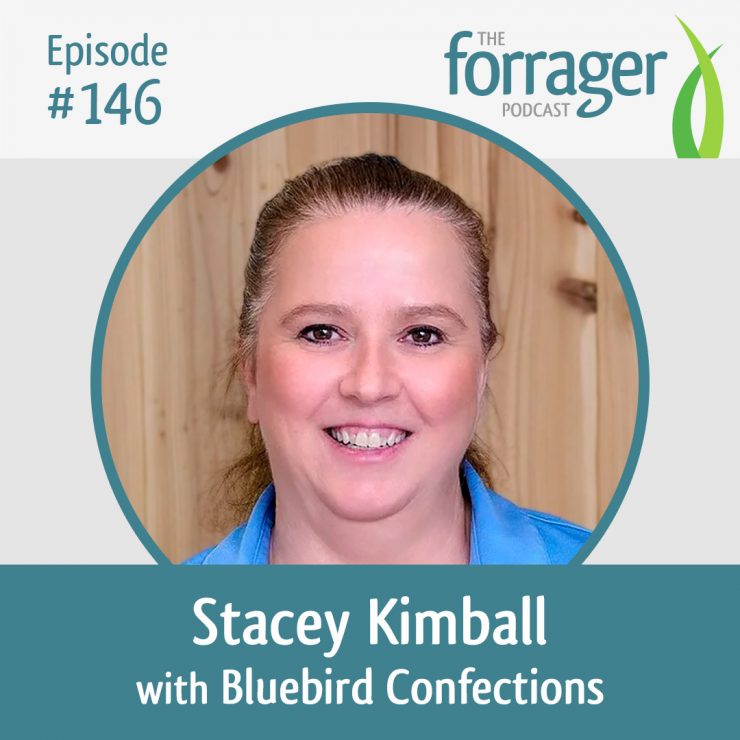
David Crabill: Welcome to the Forrager Podcast, where I talk with cottage food entrepreneurs about their strategies for running a food business from home. I’m David Crabill, and today I am talking with Stacey Kimball.
But first I wanna talk about your cottage food business website. I recently searched all the free website builders out there and found that the best one for cottage food businesses is Square Online.
So I created a brand new free tutorial that walks you through the steps you need to take to build a nice and powerful e-commerce website for your cottage food business for free. You might be thinking, what’s the catch? There isn’t one. Square Online is a really incredible tool that I personally use for my own business, and I’m constantly amazed that cottage food entrepreneurs still use other website builders like Wix, Squarespace, and GoDaddy.
So if you wanna learn more, you can watch my free tutorial by going to forrager.com/website.
All right, so I have Stacey on the show today. She sells alcohol infused caramels and chocolates with her candy business, Bluebird Confections in Caldwell, Idaho.
Stacey started selling her caramels from home in 2013, expanded into a shared commercial kitchen in 2017, and then rebranded and moved into her own storefront in 2020 right before the pandemic hit.
In this episode, Stacey shares how she overcame challenges and found success by building relationships within our community and focusing on slow and consistent growth.
And with that, let’s jump right into this episode.
Welcome to the show, Stacey. Nice to have you here.
[00:01:37] Stacey Kimball: Thank you for having us.
[00:01:40] David Crabill: Well, Stacey, can you take me back? How did this journey get started for you?
[00:01:45] Stacey Kimball: Sure. So we can go way back. I actually have a background in retail management and marketing and had been doing that for about 10 years and kind of on the side started baking and making sweet treats for friends and family. And in 2013, finally with the encouragement of friends and family, decided to sell our products at a local craft fair.
and at that time, I don’t even think we had to have cottage law approval here in Idaho. So I just tried it out. It was kind of successful. So slowly built up into almost every weekend, especially during the holidays. Just had other craft markets selling. Mostly at that time it was like cupcakes and cookies and a little bit of candy.
And quickly kind of learned that there were a lot of people selling cookies and bread and I needed to do something different. So we started making caramels and actually our first product was dark chocolate salted caramels. Not the easiest one to start with, but that’s where we kind of went,
And from there, it just kind of continued to grow. In 2017, I left my retail job full-time and started doing more and more markets and then was able to get into using a commercial kitchen. Some friends of ours had a cookie business and we were able to kind of tag team with them and use their kitchen while I helped them with their business as well.
[00:03:09] David Crabill: Yeah, no, we’ll get into it. I know you’ve gone through a number of stages in your business so, you had mentioned that you didn’t even need a cottage food approval, and I do remember that like Idaho has been pretty lax, where if you are selling something non-perishable, there’s like, it’s not gonna get anyone sick. people can go ahead and do that. So they’ve had that policy for a long time. Now you said that you have a background in retail management and marketing. Can you tell us a little bit more about what that meant?
[00:03:37] Stacey Kimball: Sure I have a bachelor’s degree in management and marketing from when I graduated college and then went to work at several large big box retail stores here in Idaho. And really gained a lot of experience, customer service and retail and merchandising through that. And I think that really has been beneficial and having my own business and kind of understanding a little bit more of what’s happening and knowing that there’s cycles in the business and that there’s a process to ordering everything that just doesn’t happen overnight.
[00:04:10] David Crabill: So what’s an example of something that you do today in your business that you wouldn’t have done if you didn’t have that retail background?
[00:04:20] Stacey Kimball: The biggest thing for me is inventory management. So knowing what products I have, knowing what products are selling. So I keep a detailed list and it’s not fancy. It started out as a very simple piece of paper written down. So when I went to a market, I took many bags of sea salt caramels and many bags of whatever flavor.
And so I knew what I sold, so I knew what I had to make again, and I could track what I was selling. And I didn’t do that at the beginning. And once I started doing that, I really realized that there were products that I could sell more because that’s what was really selling. And the biggest one for me was assorted bags.
So customers are allowed to mix and match their own assorted bags, and that really is one of our top sellers and still continues to be in it. Had I not been tracking that, I wouldn’t know what I needed to make and what would continue to sell.
[00:05:10] David Crabill: I see that you have the bags that have just one flavor in it, but so when people do assorted bags, you just like, let them fill up the bag, or do you like to sell it by the pound?
[00:05:21] Stacey Kimball: We sell all of our caramels by the dozen. So there are bags of one dozen, so they can mix and match their own individual dozen. And then we provide the bags for ’em with that already sticker. There’s a sticker on the back listing all the different flavors. Our caramels are wrapped in different colored wrappers to indicate the flavors so that they get home and they kind of know what they’re getting.
[00:05:41] David Crabill: Yeah, it’s, it’s a really fun aspect of your business. It looks kind of like a rainbow,
[00:05:45] Stacey Kimball: Yeah, it does. It’s, and we’ve looked at changing to custom wrappers, like with just labels on them. haven’t moved quite in that direction yet. Customers have asked us, several times about, labeling each individual piece, but where we hand wrap everything, adding one more sticker really just isn’t efficient or effective for us to do.
[00:06:03] David Crabill: Well, I think it’s kind of a fun aspect of your business. You know, it’s a unique aspect and it probably, if you’re at a market, I’d imagine, it gets some attention, right? You get it kinda looks cool.
[00:06:13] Stacey Kimball: Yeah, it does. It catches people’s attention. And then they also, maybe they don’t remember what flavor it was, but they were wrapped in this color or, you know, someone gifted those to me. Or we often get people, I’ve seen these before, I’ve seen these at other markets, or I’ve seen you at other locations around town.
I recognize this. So yeah, it’s definitely some brand recognition with the colorful wrappers.
[00:06:35] David Crabill: So you said that you transitioned to doing assorted flavors once you started doing inventory management. And about what time was that? You said you started selling in 2013, so what did you start selling and then how did that change over time?
[00:06:50] Stacey Kimball: So our very first thing that we sold was the dark chocolate salted caramels. And we sold just that for a really long time because I was still working full-time. And actually kind of a big boost to selling those as our kids were in school at the time and we did several fundraisers at the school where I would make them and then they would sell them at the school and we kind of split some proceeds.
So that kind of helped build my business that way. And then actually a family member asked me to make a licorice flavored caramel, and that was our first flavored caramel. And it kind of just took off from there. I kind of realized that the baked goods and cookies weren’t going in the direction that I wanted to go.
They also took a little bit more time and weren’t as shelf stable as the caramels. And the caramels were a much more unique product going out to other markets. There’s not. A lot of people sell caramels and they’re still not here in the Treasure Valley. We’re one of the few people that do make handcrafted caramels.
So it kind of sets us apart. And then we slowly started adding other flavors. And the other thing that really makes ours unique is that we do infuse most of our confections with locally distilled spirits.
[00:07:56] David Crabill: Yeah. It’s interesting that you started out selling just the [00:08:00] dark chocolate sea salt, and then now it seems like you almost exclusively sell the alcoholic infused caramels, right?
[00:08:09] Stacey Kimball: Yeah, our individually wrapped caramels that we sell by the dozen are 50% of our business consistently. And there’s some top flavors in there that it doesn’t matter what time of year it is, they always sell. Those are our sea salts. Just a good classic flavor. We have a cinnamon whiskey, caramel and our licorice is actually still one of our top sellers.
And then our other one is our um, huckleberry vodka caramel. So Huckleberries are a big thing here in Idaho. So it’s a product that people like to share with family outside of the area. When they’re visiting other people, they often stop in and take them to share, but then also love the flavor here.
So yeah, it’s a great flavor for us.
[00:08:46] David Crabill: Yeah, I saw that you really care about focusing on local flavors, that huckleberry is one of those. Are there other examples of that?
[00:08:54] Stacey Kimball: Yeah, we have a great relationship with the distillery that makes our huckleberry vodka. We also do a bourbon pecan [00:09:00] caramel that they make. We try to do, like you said, as much local as possible. We have honey lavender caramels um, right now that are seasonal and those are using honey from a local apiary lavender that’s grown here in the Treasure Valley.
So yeah, we try to incorporate as much local product as possible. We’ve also started working with some of the local farm stands and getting fruit from them and incorporating that into our products instead of buying mass produced products and incorporating those. So as much local as possible. Not only does it add better fresher flavor, but it also is helping support those businesses as well.
[00:09:37] David Crabill: So you said that you. Choose the direction of caramels or candies because other people were making cakes and cookies and breads, and you said there’s still not a lot of people that sell caramels in your area. So why do you think that there aren’t as many people selling confections?
[00:09:58] Stacey Kimball: I think there’s a lot of perception that it’s harder than doing things like cookies or candy. For me, it’s the opposite. The cooking process is a little bit longer. You have to have a lot more patience with it. It’s not something that you can kind of just throw in there and kind of walk away. But in the end I think it’s easier. Like I’m cutting and wrapping caramels, which is, I know, not easy. I do it constantly every day, but for me, it’s easier than spending hours decorating one fancy sugar cookie. So I think that’s what it comes down to. And it also is a strength of mine.
I’m not artistic that way. I don’t necessarily enjoy spending hours decorating cookies. So, leading into that strength, I’m much more enjoying developing the flavors. And the caramels. And the confections give me a lot more flexibility that way.
[00:10:45] David Crabill: But I did see in your early social media posts that you did those decks. Rated sugar cookies. Right? You did like cake balls. You did cupcakes.
[00:10:54] Stacey Kimball: I did, yeah. For a little while. And I think that’s also when um, Pinterest was really starting to take off. And so there were tons of ideas out there and tons of people doing stuff. And amazing to me still the stuff that people can do. But that’s not a strength and that’s not the part of it that I enjoy.
And I think that’s something I’ve kind of learned through this whole process is that I really need to lean, lean into my strengths and lean into what I enjoy and the flavor development and coming up with the truffles and kind of, that’s what I enjoy much more than the slow process of decorating all those cookies and cakes.
[00:11:26] David Crabill: But it doesn’t sound like you’re like, oh, I really wanna start a candy business. You, it sounded like you’re kind of open to starting a food business in general and trying to figure out what would sell best or what you’d be the most passionate about.
So what do you feel inspired you to start the business in the first place?
[00:11:46] Stacey Kimball: it came down to sharing like we always have since my husband and I got married, always made like cookie play otters for our friends and family, just around the holidays to kind of share that. And it kind of just started to grow from there. Like it was a passion, like we enjoy sharing that we enjoy, bringing that joy and sharing those flavors with our friends and family. And they just kept asking for more at different times and like, Hey, I have a special occasion. Can you do this? So I really did enjoy that and I was passionate about that part of it. And you’re right, it really wasn’t specifically um, candy at that time.
but kind of just grew into that. Like that makes the most sense. And again, I think that leans a little bit into my background, my educational background and working in retail, like what’s, it doesn’t make sense for me to try to continue to sell cookies and cakes if that’s not what sells more.
Once I started selling caramels and no one else was like, okay, that makes more sense, like economically and at the market and how much effort and time I can put into it. kind of Just shifted that way. And still that passion of like, oh, sharing those flavors with friends and family and developing those different things is still there.
It just kind of took on the form of a different product.
[00:12:50] David Crabill: I’m not sure if you know this, but I run a side fudge business, a confection business. And one of the things I’ve noticed is that my fudge sells way more during the holidays than at any other time of the year.
So is that an issue you faced?
[00:13:06] Stacey Kimball: Yes, very much so. and it still is that issue. So about 50% of our business still comes in the fourth quarter, so we kind of survive the first three quarters of the year and then really thrive through the fourth quarter, which is a little bit difficult sometimes with planning. You can only make so much so far ahead.
Like I, like I can’t make stuff now and stock it away, to have in December. Like other makers, you know, pillow makers or people that are making other non-perishable items. I can definitely start preparing now. And so our preparation is a lot different. Just like getting ready for those markets and making sure we have all the inventory we need and the paper products and that, you know, really planning out for that.
But most of our business definitely comes through the fourth quarter.
[00:13:55] David Crabill: So do you differentiate your products at all? Like do you, do you sell other things that sell better earlier in the. Year.
[00:14:02] Stacey Kimball: a little bit. So we have seven flavors of caramels that we have all the time. And then we rotate in different seasonal flavors. Like right now we have honey lavender. We also have a tahini caramel, which is a little bit specific to the area. It’s super popular. It’s also kind of seasonal.
and quite honestly, I’ve learned in the last couple years, for the fourth quarter, it’s easier to narrow down the product offerings so that I can make more, increase the quantity of what I’m making and still keep that quality really high.
[00:14:34] David Crabill: So you started selling in 2013, you shifted to commercials in 2017. I think.
What did those first four years look like
[00:14:45] Stacey Kimball: It was really just weekends and cooking out of our home, taking over the entire kitchen and making like crazy for a weekend that would come up and, you know, being hopeful that we would sell out. ’cause I really wouldn’t have another way to sell it. Or working specifically for a fundraiser for the school or for a special order that a friend or family had done.
But it was mostly just weekends at that time.
[00:15:11] David Crabill: And when you went commercial, like what caused you to make that leap?
[00:15:17] Stacey Kimball: I left retail management after 10 plus years there, just because I felt that every weekend for retail was becoming a huge sale weekend, and it wasn’t. where I wanted it to be. I was putting in tons more hours. My kids were getting a little bit older, and had a little bit more demands of my time.
and so just chose to leave retail management. And like I said, we had some friends that owned a small cookie shop and they were looking for some help. So I went to work for them part-time and it was fortunate enough that she kind of helped mentor me in starting my own business and then allowed me to use her commercial kitchen space as well and slowly start expanding our business.
And really that’s what we’ve done from the beginning. It’s really been controlled growth. I’m the only one who cooks all of our products, makes all of the candy dips. So our growth really does have to be controlled on what my output can be.
[00:16:09] David Crabill: And why is that? Like, why do you feel like you haven’t outsourced that since you have a background in management?
[00:16:15] Stacey Kimball: One of the things I learned from working at the cookie shop is really you have to hold onto the part of the business that you’re passionate about because if you don’t, you kind of lose that interest and that drive for it. So I have some part-time staff that works for me. A couple of high school girls, and they’re the ones that wrap most of the caramels.
They package ’em, they package most of the other candy. They know how to um, work. The counter at our shop. They do a lot of that. But for me, the passion and the joy is creating the caramels and cooking. So right now, that’s something that I’m still holding onto.
[00:16:50] David Crabill: So it sounds like it was still very much a part-time thing when you decided to go to commercial, and it sounds like you didn’t have to pay for the commercial kitchen, but you were working in a commercial kitchen and had this, nice collaboration there so where did your business go from there?
[00:17:06] Stacey Kimball: that was in 2017 that I was, um, started working 20 16, 20 17 that I started working part-time at the cookie shop. And then in December of 2019, we started having conversations, my husband and I, about the possibility of this being like a full-time thing. Can we have our own candy shop?
can this become. You know, like reality. This is something we talked about. And so we started looking at places that were available here in the Treasure Valley where we wanted to be. Started talking about a business plan. And then at the beginning of 2020 the owner of the cookie shop also told me that she was looking to move to a new location.
It was a little bit different. Commercial space would’ve been a little bit more difficult for me to be in there. And then kind of at the same time, a different bakery moved out of their location, and announced that they were upgrading. So kind of all these pieces fell into place at once. We contacted the other local bakery and it was a great location and we had a lease signed with the owner of the building about two weeks after we talked to them.
And that was the beginning of February of 2020.
[00:18:09] David Crabill: Wow. February, 2020. Well, that’s quite a time to start a brick and mortar.
[00:18:13] Stacey Kimball: Yes. So we didn’t, um, yeah, we signed our lease and moved in and got our new commercial space licensed, and that was really our biggest focus. As soon as we moved in, we really weren’t worried about the front of the shop. My focus at that time was getting the commercial kitchen space licensed because I knew I couldn’t keep producing and selling to our wholesale accounts that we were working with until I had that.
So, our plan going into it was getting that commercial kitchen space license. We got in there, we got our provisional license, and two weeks later, COVID hit.
[00:18:44] David Crabill: So, I mean, What did you envision for the storefront and then what actually happened?
[00:18:53] Stacey Kimball: So we envisioned getting licensed and slowly building out the storefront and getting it opened. Midsummer the other thing that we did when we moved into our, um, our own brick and mortar spot is we had planned to change the name of the business. So we were originally operating the business when we were selling through cottage law as chocolate infusion.
And when we made the decision to open the brick and mortar, we really felt that we needed to change the name to really encompass more of what we were doing. So that’s why we changed to Bloomberg infections. It wasn’t an easy decision and it’s not an easy process. But we just felt that it encompassed more of what we were doing.
Bluebird happens to be the state bird. So we wanted more of that Idaho connection and a lot of people associate Bluebird with like joy and happiness, and that’s kind of what we wanted to do. And also getting away from just chocolate, going more towards confections and allowing us to have a little bit more flexibility with the products that we were offering.
So we had all this great plan, mapped out how we were gonna do this, and everything just kind of got, it didn’t get put on hold, but it got slowed way down. As everybody knows, nobody was out doing anything during covid, so it really just slowed the progress of our business down quite a bit.
[00:20:06] David Crabill: Before we get into the pandemic and how that kind of affected your business the rebrand that you did, what was that process like when you talked about changing the name and why you changed the name, but it was a pretty full on rebrand. What did you do to make that happen?
[00:20:24] Stacey Kimball: it was a rebrand. As much of it, it was as an initial branding. We had established our product, but we really didn’t have a brand behind it. And so, luckily my husband, that’s his background. And so it went from my business as a cottage business to our business as a brick and mortar.
So he helped come up with a name and the logo and the branding design. He’s actually designed all of our packaging and stickers and is super fortunate to have that. ’cause I know that would’ve been a huge financial output in the beginning, but it really is what also kind of set us apart. Like it, it helped elevate our business and that it’s not.
a cottage business anymore. It’s a serious branding business. Like you can come in and get higher quality. I think it elevated the quality of our products.
[00:21:12] David Crabill: Well, I mean, maybe not the actual quality of the products, but the perceived quality maybe. Right. I assume that the products didn’t improve themselves that much. Right.
[00:21:21] Stacey Kimball: No. Right, but yes. Yeah, exactly. That’s what I was trying. The perceived quality of the products is there. And it also, I think the branding, well, I know the branding really helped us establish more of the road that we’re going on. Like all of the decisions that we make now are based on does that fit the brand, does that fit where we’re trying to go with this?
Does that, fit, that perceived elevated quality of their products
[00:21:45] David Crabill: All right, so you said that you were really focused on getting your kitchen license. Can you take me through what that process was like?
[00:21:55] Stacey Kimball: Sure. So when we moved into the brick and mortar we were fortunate that it had been a bakery prior to that. When they moved out, we had an agreement with them that they left the three basin sink. They left the hand washing sink and the wastewater sink intact. So we didn’t have to go back and install all of that.
And so really for us it was moving in getting our equipment in there, refrigerators, freezer work tables. Um, The one thing we did have to change and install was a hood to meet fire code. They had an exhaust fan because it was a bakery before, but because of the caramel and the risk of fire, we did have to put in an exhaust hood.
Luckily we were able to work with the fire department and put in a minimal exhaust hood. We didn’t have to spend multiple thousands of dollars to do that. I know some can be upwards of $10,000, but we didn’t have to go that large just ’cause it was a smaller operation that we have.
[00:22:54] David Crabill: I’ve heard of you like $20,000 or you know, even more sometimes for a hood. The other thing is a grease trap is oftentimes a big expense. Did you have to deal with that?
[00:23:06] Stacey Kimball: We did not. No. So we don’t have any ovens, we don’t bake anything. I’m not cooking anything that has grease. It’s a really pretty small operation that we use. We have two um, induction burners that we use, that we cook everything on. And the hood that we have is large enough to cover that area.
Basically it’s like a three foot work table that we work on. Um, and it, the other part of it that we had to do is it has a built-in fire suppression system. So if it detects a fire, it has like a little small built-in fire extinguisher in it. So it was still expensive, but it was not $20,000.
[00:23:39] David Crabill: So you obviously started this right at the beginning of the pandemic. Sounds like you’re getting your licensing right as the pandemic was hitting like, is that correct?
[00:23:48] Stacey Kimball: Yeah, we got our provisional license about two weeks before the pandemic hit.
[00:23:53] David Crabill: Yeah. So did you ever get a chance to actually open up the storefront?
[00:23:57] Stacey Kimball: We didn’t open the actual physical storefront until October. the. Caldwell, where the shop is, was a little bit less strict about being completely closed down. So we were still able to do um, produce for our wholesale accounts that were able to stay open. Some of them were coffee shops and restaurants.
So they were considered essential so they could still sell. We focused a little bit more on selling some online and did curbside pickup customers could order that way. But really it was just, it was pretty slow, just like it was everywhere. And then in October we finally had to open the doors, so we could continue to pay rent and get ready for the fourth quarter.
And things were really lessening. The restrictions were lessening here in Treasure Valley, especially in Caldwell, where we were at. And so we were able to do that and then people kind of started slowly, kind of started trickling in and that’s when events started happening as well too. So we were able to maintain that first year financially by being able to do a little bit of those small events in the fourth quarter.
[00:24:56] David Crabill: So obviously the pandemic brought a lot of uncertainty, right? And for a while there we had no idea what was gonna happen. Were you starting to question whether it was the right choice to move into the storefront?
[00:25:11] Stacey Kimball: Oh, definitely during that time, because like you said, nobody knew how long or what was gonna happen. we, I. Had saved up and had, um, some capital investment enough to get through. We, what we had hoped would just be the first six months while we were getting up and running and kind of had to stretch that out a little bit more.
So almost the first year, just because there really was nothing coming in those first few months. I mean, a few small wholesale accounts are enough to kind of just keep us floating along, but everything just really slowed down. The other thing it did kind of allow us to do though, was take more time to build out the front of the shop.
We custom built the cabinets out there and the countertop, so it gives a little bit more time to do that. It wasn’t still fully where we wanted it to be when we opened, but at that point in time, in October, we really had to open the door so we could continue to stay open. But yeah, it was stressful and it kind of still is like you never know.
If it’s gonna be a busy day or a not busy day, and really we haven’t found that the economy is completely settled down yet, it’s still very volatile and just not knowing exactly what’s happening
[00:26:16] David Crabill: So you’re over five years into this now, like looking back, do you wish you had waited to start the storefront later or are you glad that you moved in when you did?
[00:26:27] Stacey Kimball: For us, I think it was a good time to move in when we did. The pandemic just kind of forced us to make some different decisions. It was also an interesting time in our lives because our youngest was a senior in high school, so we were months away from being empty nesters. Which isn’t necessarily the best time to start a business, but all the pieces fell into place and it worked for us.
The other thing that forced us to do is make very conscious decisions about our business. We are essentially debt free, which means things can be a little bit more challenging to run sometimes. So we didn’t have a business loan, so when we want equipment, we’re having to save capital. But it also means at any point in time if something were like the economy to work, completely fall out, we could lock the doors and walk away and not, not lose everything.
[00:27:13] David Crabill: So obviously everything went a lot slower. You started this in February, March and then didn’t have your grand opening till October, but when you finally did open the doors, what was that opening day or opening weekend like?
[00:27:28] Stacey Kimball: It was good. It was, um, I think a little bit better than I expected. It was a lot of community support, so it gave us time prior to opening in October to really, you know, start, getting our name out there and trying to do that. But it’s still, that’s probably one of our biggest challenges still is getting foot traffic in the door.
We still have people that walk into the shop every week and say, oh, we didn’t know we were here, or We’ve driven by and didn’t know what this was. So that’s, COVID definitely put a damper on that. Like there wasn’t a huge grand opening. People weren’t just kind of starting to trickle in all the time.
And it still, like I said, it’s still one of our challenges is getting the foot traffic to the door.
[00:28:05] David Crabill: You mentioned that you’re in a house, and I did see this is like a residential development that’s been converted into a commercial one. Is that part of the issue? Is there not as much foot traffic in that area?
[00:28:19] Stacey Kimball: Yeah, so we, the area that we’re in is mostly residential. It has been the block that we’re on has all been converted to commercial use. But it’s there, and there is foot traffic and there’s traffic that drives by, but it’s not like in a big, huge downtown area. We’ve looked at that, but it’s also a lot more expensive to be down there.
At this point in time, it’s just not something that we, I can justify doing. So we’re super fortunate in the space that we’re in. We do get people that drive by there and walk through traffic. We’re about a block and a half away from one of the colleges and about two blocks away from the big fairgrounds and an event center.
So we do get some traffic that way. It’s just more of getting that conversion for people to walk in the door.
[00:29:07] David Crabill: So how much of your business would you say comes. Items from foot traffic or in-store sales versus wholesale.
[00:29:15] Stacey Kimball: Right now our wholesale is between 30 and 40% depending on the month. and I know the numbers aren’t gonna completely match up ’cause there’s other custom orders and other people that are in there and events. So our foot traffic is probably our lowest, about 20% of our business.
[00:29:31] David Crabill: So you’re also doing custom orders, custom events, things like that.
[00:29:37] Stacey Kimball: Correct.
Yeah. And we still do events. We actually just did an event last Friday. Um, But yeah, there’s usually two to three weekends a month that we’re doing events, excluding the summer, so it just gets too hot here in our area in Idaho for us to be outside. But yeah, so we still do events year round, and we have customers that are there and look for us consistently at those events.
And it is still surprising to me. We tell them time after time that, you know, we have a shop you can stop at anytime, and they’re like, oh, we just love visiting you here. And we, you know, are just right here. Even the event we did on Saturday was less than two miles from our shop. And people are like, oh, we just love shopping from you here.
[00:30:14] David Crabill: yeah. You fit into their schedule, right? Instead of them coming to you, what would you say is your favorite sales channel?
Do you really like the markets? Would you like to just be doing wholesale more or do you really prefer the foot traffic at the door?
[00:30:30] Stacey Kimball: I would say that. The markets are always great. They’re always a lot of fun seeing those customers coming back. It’s always, for us, it’s usually super fast paced at markets. We’ve cut down on the number of markets we do just because of the challenge of having our shop open every weekend too.
It’s almost like we’re doing two markets at a time, and that can be sometimes overwhelming, but the markets are great. A lot of exposure to customers that way. But really the best part for me is seeing the customers come into the shop, whether it’s a repeat customer or a brand new customer who’s just discovering us, being able to develop that relationship with them.
Learning what they love and why they’re buying it, and why they’re sharing our candy, or why they’re, you know, just drove by and they wanted. A little picked me up and so they pulled in. So, and that’s one of the decisions we also made very consciously when we started our business is, is our pricing, is we want to be reasonably priced.
We want customers to feel like they can stop in on an average Wednesday and just pick up, you know, a few pieces of candy and not only think that it’s a special occasion and that they’re committed to having to spend 50 or $60 to be able to spoil someone in their family.
[00:31:39] David Crabill: So when you say reasonable pricing, what does that mean
[00:31:44] Stacey Kimball: We sell our bags of caramels for $10 a dozen and our sleeves of chocolate dipped caramels for six of ’em are right at $7. So we have a lot of customers that visit us from other markets, whether it be, like the Seattle area or LA or New York and say that our prices are very reasonable. Sure we could charge more, but we really want our customers to be able to come in.
Often. I’d rather see someone once a month, once every six weeks, and then just like once a year, ’cause they think our products are too expensive for them to indulge in.
[00:32:17] David Crabill: And how does that break down, you know, like at that price, how much of it is going into ingredients? How much of it is like profit you take home?
[00:32:27] Stacey Kimball: The ingredients are pushing 50% of it. Ingredients are expensive, as you know, um, especially butter. But that’s still, I mean, we’re still profitable. We’re still, the business sustains itself. Since our initial capital investment it’s been able to pay for itself and continue to grow. Most of the money goes back into capital investments.
We don’t take a huge profit from the business right now. That’s the road we’re working on. but It’s the people stopping in all the time and, and wanting those products and wanting to share them. I got a call last Friday, it was like 5:55 and we close at six o’clock. Hey, I’m down the street.
My friend’s in the car, she’s never been to your shop. Can we stop by? I’m like, yeah, that’s fine. We know you’re closing. That’s fine. Please come by. So that’s the kind of stuff that I really enjoy and that’s the stuff that I want to hear like, I want to share this with my friend. I want them to experience it with you.
So as much as I love doing the markets and the wholesale accounts, it’s really those connections that we make with our customers when they come in the store.
[00:33:31] David Crabill: 50%, ingredient cost is really high. You know, typically, as you know, like you’d be wanting to shoot for more like 30%. Right. Do you feel like it’s limiting your growth?
[00:33:44] Stacey Kimball: A little bit, but there are some choices that we make to have some higher priced ingredients. Huckleberries are super expensive and that’s part of it that drives up that overall number. They’re actually one of the most expensive ingredients that we use. Currently in the Treasure Valley.
They’re about $25 a pound. And that we go through quite a few of them, but it’s also one of our most popular flavors. And every time we talk about eliminating it or finding something else to use, it just really, doesn’t make sense. So, there’s a few products that we use that are a lot more expensive that kind of skew that number a little bit.
It’s also difficult for us to find chocolate locally so that I have to source um, from outside of Idaho and get it shipped here. And that, again, that’s a little bit more expensive.
[00:34:31] David Crabill: So with, like, say the huckleberry flavor, you said it’s one of your most popular flavors. What prevents you from. Bumping the price of that one up a dollar per bag or something like that.
[00:34:43] Stacey Kimball: We do that, we do have some premium flavors based on ingredients and huckleberry is one of ’em. So our huckleberry is a premium flavor. We also, the local honey that we use is a little bit more expensive, and so that flavor is bumped up as well. So yeah, overall those things are bumped up, but when you’re looking at the numbers, those ones are kind of skewed a little bit for as far as the cost.
[00:35:03] David Crabill: And so if you’re increasing the prices and, and having those be premium flavors, when they buy a bag, do you include those? When do you let customers choose an assortment of flavors? Like a Dozen.
[00:35:15] Stacey Kimball: Yeah, we, I do just because most customers are conscious of it. We found, and I’ve, again, it’s one of those, you kind of just watch and see what people are doing. Most people, when they’re doing an assorted bag, they’re picking up like one, maybe two of the premium flavors and putting them in with their assortment.
If they’re doing 11 premium and one regular, we kind of have a conversation like that. It’s kind of not the way this was intended to be, but very rarely does that happen. Most of the time they’re just like one or two that are kind of mixed in there. But just for the ease of selling at the events, when it’s pretty fast paced, it’s harder to upcharge for just that one item.
[00:35:52] David Crabill: How many caramels would you say you sell each week? I
[00:35:58] Stacey Kimball: The market this last weekend was more, actually less caramels because it was a wine festival, so we did more like truffles and chocolates. But typically when I’m in a big market, like we did at a big vintage market, it was a Thursday, Friday, Saturday market.
We probably went through almost 400 dozen bags of caramels. So on an average day, actually almost every day that I work, I make four batches of caramels and we use half sheet pans and that makes wrapped caramels that makes 144. And so I’m making that every single day just to keep up with orders and quantity and just enough to keep, to be able to fill orders and keep my counter full.
So when you start counting individual rums, it’s a lot.
[00:36:43] David Crabill: You’re saying that it’s 140. For each pan, so you’re making like over 500 caramels per day.
[00:36:50] Stacey Kimball: Per day. Mm-hmm.
[00:36:52] David Crabill: Wow. That’s a lot.
[00:36:54] Stacey Kimball: It is a lot. Yeah.
When you, sometimes it’s scary. You start thinking about it that way. And I know I have posted numbers on how many I make during the holidays, and those numbers usually jump from four batches a day to six to eight, just to keep up with demand for the holidays.
So. That’s also a lot of wrapping, you know, 500 individually wrapped caramels per day.
And that’s why I have some part-time staff that does that for me. They really do most of the wrapping of the caramels. I still cut them all just because they’re high school girls and just to um, lower the risk of them cutting themselves. I cut them all and then they just wrap ’em. But they’re pretty fast.
[00:37:34] David Crabill: Well, speaking of cutting caramels, I have to ask you about this cutting device that you have because that’s always been one of the hardest things I’ve had in my Fs. It’s like, how do you cut the product? So can you talk a little bit about what you have there? Yeah, sure. We, when we originally started, and it was a cottage business and I was doing most of it at home, we kind of started with like a rotary cutter, almost like a pizza cutter and a piece of plexiglass that was measured to width and length, so we knew how to cut them. And then as it continued to evolve, we figured out that I needed to do something that was a little bit faster.
[00:38:09] Stacey Kimball: We looked at pastry cutters that are sold commercially. The ones, I’m sure you’ve seen ’em, they are kind of adjustable width.
[00:38:16] David Crabill: Yes, you’re talking about like the ones that have discs and then they separate out, like, and you can set how far apart the discs are. And while it was nice that they were adjustable, we just didn’t find that they were heavy enough to cut through the caramels.
[00:38:30] Stacey Kimball: my husband actually designed and built the cutter. So it is rotary cutters, it’s wheels from pizza cutters that are mounted on a metal shaft and we have spacers in there and then some wooden handles. And it’s been great. It took a little bit to get used to but with the spacers in there, we’re able to adjust it to cut them to length and then to width.
And then if we, you know, if we need to change anything, we can do that. And then just recently in the past year when we upgraded all of our packaging our dipped caramels are now also hand cut with a roller too. So. It’s quite the process to sharpen those blades. It’s not, we posted a video a couple years ago, I think, of him sharpening it. It’s not something that I would highly recommend, but he puts it on a drill and then a sharpening stone and it kind of goes from there. So
I’m sure it’s not OSHA approved, but sometimes as a small business owner, you kind of have to do what works.
[00:39:23] David Crabill: Well, I feel like a lot of people would probably just buy a new disc, right? Every time they want to sharpen. Like, I don’t know, maybe that’s just not economical. I
[00:39:34] Stacey Kimball: You could. Yeah. But I mean, those are, they’re like five to $7 a piece and the one roller has six cutters on it. So yeah, we have replaced those once or twice, but they get sharpened about once every three to six months just because they get used so often.
[00:39:51] David Crabill: And I was wondering, why haven’t you invested in a guitar slicer?
[00:39:57] Stacey Kimball: So we did invest in a guitar slicer about a year and a half ago. For our ganache. For our truffles. So they also now fit in our boxes. They’re all squares. But we haven’t found wires yet that will actually cut through the caramel. I’ve tried it several times. The wires are just not quite strong enough.
so it’s, it’s something that we’re definitely looking at, but they’re kind of not made strong enough to do that, or I haven’t found the one that is so
[00:40:25] David Crabill: Yeah, I, I know that they exist, but they’re probably like thousands of dollars to get one that can do that.
[00:40:32] Stacey Kimball: Right. And I think that’s one of the other challenges, and you’ve probably run into this too with your fudge business, is that like, we’re at this point where. As a candy maker, there’s a lot of equipment that you can kind of hobble together or create yourself to make it work and you’re small, but as you continue to grow, there’s not a small or a middle sized equipment out there.
You go from kind of home, small stuff to $10 or $20,000.
[00:40:58] David Crabill: Yeah, I think some of the guitar slides that I’ve seen are like $5,000. You know, it’s just like, there’s just no way you’re gonna, it’s gonna be investing in that kind of product unless you’re going really big with your business.
[00:41:10] Stacey Kimball: Right. And that’s the other thing that we talk about too, is like, yeah, we could invest in that, but then to make that like, get our return on investment and pay for itself, how much more caramel do I have to produce? Then it’s like a, it’s kinda like a snowball effect. ’cause we’ve talked about it, I still cook each batch of caramels as a single batch.
So it takes an hour and a half, about an hour and a half to cook a batch of caramels and pour ’em in a half sheet pan, and then they have to be individually cut and then wrapped. Well, we could get a steam cuttle, but that’s easily a five to $10,000 investment. So I could cook multiple batches at once, but then that just pushes the production or the workflow slow down to then cutting it.
So then how do I cut them faster? Okay, there’s, then there’s a $5,000 guitar cutter. Okay. Now the production slows down in a wrapping machine. Those are easily $10 to $20,000. So it’s the one piece of equipment then kind of snowballs into all of these other things. Which then no longer fits in the space that we have.
So then there’s that.
[00:42:12] David Crabill: Is there any piece of equipment that you feel like that’s gonna be your next piece of equipment that you invest in or that you have eyeballs on?
[00:42:21] Stacey Kimball: Probably right now it’s a bigger chocolate melter, like a tempering machine ’cause we’re still doing that all in small batches as well too. And really in the last six months that I spent my slowdown I am pretty efficient at cooking and cutting caramels. And when I have my staff on hand, we can get ’em wrapped and processed pretty quickly.
but for me it’s, getting them dipped and the truffles and everything. My slowdown is waiting for more chocolate to melt. So I think that’s the next piece of equipment. And I think that should speed up that process without really causing more congestion, just pushing it farther down the line.
[00:42:56] David Crabill: Candy can be a kind of a finicky product with weather, humidity and everything. Have you found that you have to change things throughout the year?
[00:43:06] Stacey Kimball: Actually I noticed it too. Um, for us even being in Idaho wheat, there’s humidity. And so it was rainy this past week and so caramels took a little bit longer to cook. They also take a little bit longer to cure to set up so that we can cut them. So yeah, that’s the time it takes.
And then we also make some handcrafted marshmallows. And those I know or I learned the hard way not to make those on super rainy days either. They just take, they just don’t work as well. So yeah, there’s definitely things that we have to pay attention to, depending on the weather.
[00:43:39] David Crabill: So I know you do marshmallows, truffles, caramels, What’s your whole product lineup right now?
[00:43:47] Stacey Kimball: So we have seven flavors of caramels we have all the time, and then two to three different seasonal caramels. We have nine caramels that we dip in chocolate, so our dark chocolate salted and milk chocolate salted, as well as some of the infused flavors we dip in chocolate. There’s also truffles.
We usually have six to 10 different flavors of truffles. That really varies on the season. More so Valentine’s Day, Mother’s Day. We sell truffles a little bit more around the holidays as well. We also decided to add some products that we consider like value added products. So since we already make chocolate dipped marshmallows and caramel, we also make carmelos.
So we layer chocolate and caramel and dip those in chocolate. We make what we call a turtle dove. It’s our version of a turtle. Again, we already make the caramel and have the chocolate. So instead of adding something completely different to our line, we just, um, added turtles. We do, like I mentioned, chocolate dipped pretzels, chocolate dipped marshmallows, and we do peanut clusters.
And then from there we have a couple different variations. We created a product we called a rowdy, it’s a peanut cluster there. We add peanut butter and potato chips too. And then we have a spicy version. So instead of peanut butter, it has jalapeno and jalapeno potato chips, which have been very popular.
And they’re called rowdy because we’re across the street from our local rodeo grounds, which holds the Caldwell Night Rodeo. And they have a rowdy side and a city side. So it’s kind of like a little local nod.
[00:45:16] David Crabill: So how do you decide on, say, a new product? Like when you’re considering whether it fits into the brand or not, you know, like what, where do you draw that line of what you’ll choose to sell or won’t choose to sell?
[00:45:30] Stacey Kimball: So we’ve made a conscious is just not, you make fudge, we don’t make fudge. When we first started the business, there was someone, actually, there’s a couple of businesses in town that were making fudge. I don’t know for sure that both of ’em are still around, but it’s just, it kind of is a different process and a little bit different ingredients than what we have.
So we try to keep it focused on products that are, like I said, kind of more value-added, taking some of the ingredients that we already have in creating something new from that rather than a totally new product. We haven’t added a lot of new stuff. Probably in the last year. Again, also a conscious decision so that we can still maintain the quality of what we’re making.
And again it’s, it’s me that’s making it so it’s much easier I think for me to create a new flavor of caramel or truffle than to add a completely new product.
[00:46:22] David Crabill: I saw it’s probably a couple years ago, but you’re selling caramel sauce. Is that still something you do?
[00:46:30] Stacey Kimball: We don’t do that anymore. No. When we first started out, we were trying that and it’s, We never completely got the recipe to where we wanted it to be, shelf stability. And it sold all right, but it wasn’t great. The other thing with adding a new product is it also means new packaging, new labels.
So it’s not just the process, but it’s all of that. And that also adds into the cost. And that’s something that we try to look at as well. Like, What can we make that will still fit in the packaging that we have? And utilizing some of the [00:47:00] labeling that we already have. The other reason for that too is our packaging, like our sleeves that our caramels come in.
It is the same packaging that now our carmelos are in and our truffles. So when you come into the shop, if you’re putting together a gift box, we created a box that holds either three or five sleeves. So it’s kind of that whole, along that whole branding and that whole plan. We also created a bottle hanger.
So if you’re coming in and purchasing a sleeve of caramels, you can get a bottle hanger and easily add it to something like a bottle of champagne or olive oil, or put it easily into a basket or a gift for somebody.
[00:47:34] David Crabill: So I saw that packaging has been one of your biggest challenges. What have you discovered over the years about packaging and what works well?
[00:47:46] Stacey Kimball: It’s vital to have someone. that totally understands your vision for packaging. And I am super fortunate that that’s my husband’s role in the business. That’s his background. He understood what the, you know, taking into consideration what I needed to do and what, how I made the caramels.
That’s what works. He designed the packaging around that, but also made it so that it perceived higher quality, that they were, you know, clean and sharp looking. that it was easy for us to, like I said, expand it to a gift box. You can have three or five. And it looks like a great gift that you’re doing.
packaging is definitely a challenge. It’s something that we look at all the time and just when you think you got it figured out, you have to hope that the supplier that you’re getting from doesn’t change their packaging. ’cause that changes everything. We are a little bit different in most candy stores too.
When you walk into our shop, everything on our counter is individually packaged. That. Was a result partially because of Covid. When we started everything needed to be packaged that way, so it wasn’t handled as much, giving our customers more sense of security that it was safe for them to eat.
And that’s really just kind of, we maintain that, that’s what our customers know. Now, that also makes it a little bit easier, so it doesn’t matter if we’re preparing it to go on the front counter or if it’s going to a market or to a wholesale account. It’s all packaged the same way.
[00:49:07] David Crabill: Yeah, because that’s not typical of a candy shop, right? Typically you walk in and you know, you could pick something out and they’ll bag it up on the spot. Is that something you’ve considered changing?
[00:49:17] Stacey Kimball: It is. But those cooled glass counters are also quite expensive. They’re $10 to $15,000 a piece, which was an expense upfront that we didn’t have a lot of capital for, especially with covid slowing everything down. The other thing that we found too is that having them individually packaged they have a longer shelf life so they stay fresher a little bit longer.
And it also allows our customers to know what they’re getting. They’re all individually labeled on the back, so if they’re picking something up and they get home later, they don’t have to try to remember what flavor of truffle they got or what exactly it was, or if they’re gifting it, it’s easier that way too.
So it’s definitely not traditional for a candy store, but it’s definitely worked for us and our customers like it and appreciate it. The other part of it that’s great for me [00:50:00] too is that customers come in and they can kind of pick up and it’s a little bit more self-service. They can kind of pick up and create stuff themselves if I’m not available or if I’m helping with another customer.
So they also appreciate that part of it as well.
[00:50:14] David Crabill: I know your husband is in marketing and he does all the design, the labels, the branding and everything. Are there other things he helps with or are there other things that you’ve learned that have helped you get the word out.
[00:50:28] Stacey Kimball: Yeah, so he, the role my husband plays in the business definitely is behind the scenes. He does all of the marketing. Most of the photography, all of the website photos um, helps a lot with the social media photos. I mostly control the social media account just because he doesn’t have time to, because he has another full-time job.
But those behind the scene decisions he makes are also very good at the financials and the numbers, and kind of helps us stay on track that way. He’s also developed like a fancy spreadsheet for our cost analysis so [00:51:00] we can break it down. Um, every ingredient in every product, we know how much it costs.
So if the cost of butter goes up, I know how much that affects my caramels or the truffles or when we use a different brand of chocolate, how that’s affecting that, which is also very important. So we know that we’re in that range of where we need to be before we have to increase prices. And we look at that probably every, right now about every three to six months.
As far as marketing goes. We’ve really taken a feed on the ground approach. you know, Being at markets as much in events as much as those are selling events. I also very much approach those as a marketing opportunity. So we’ve developed a postcard that we hand out. We usually change the pictures on it once a year.
Right now it says you have great tastes. It shows a little bit of our products and directs customers to our website so they can find us, kind of answers those questions. But we put those in every bag. When customers are purchasing from us also at the shop we do that, but mostly at markets.
We’re handing those out. If people are asking for information stopping by, we hand those out. It’s directing them to us and helping spread our name that way, but really know like feet on the ground at those markets. We’ve also chosen to be super involved in our chamber of commerce, both in Caldwell, where the business is in Nampa, where we live.
They’re neighboring cities, but that’s also very important to us. Not only supporting those other businesses, but getting our name out there that way. And really what we’ve learned through the business is that it doesn’t happen overnight. It’s a lot of building those relationships with those other community members and those other community businesses.
So we’re there every month, several times a month talking to people, getting our name out, and it might take them six months or a year until they become a customer. But usually once they’re, they try our products for the first time or come into the shop. We don’t have a problem with them being returned customers.
[00:52:54] David Crabill: What do you feel like you do to bring customers back into the shop and, and stay top of mind for them?
[00:53:02] Stacey Kimball: It really is that relationship. We work really hard on that. They walk in and it’s an inviting environment for them. They also enjoy that they get to talk to me. I’m there 99% of the time, so they’re talking to me. I get to know them like, who are they buying for until the next time they’re there.
Like, Did your mom like the candy you took her? Or how was your daughter’s wedding? And those kinds of things, just building that relationship. They like that just as much coming in to get the candy. And. it’s consistent. We don’t change our products a lot.
That’s the same caramel you bought like two or three years ago. We have customers that have moved away from the area and still contact us and have us ship stuff to them because they haven’t found something there that they like as much. But it really is, it’s that relationship that we’ve developed with them.
[00:53:52] David Crabill: With you. You being commercial? I mean, you could be shipping across the country. Have you looked into e-commerce or trying to [00:54:00] grow your online store?
[00:54:02] Stacey Kimball: We are starting to do more of that this year. That’s kind of our goal for 2025 is to look into that a little bit more. The challenge with it being mostly temperature. as you know, from working with Fudge two chocolate melts, pretty easily. The caramels, um, hold up a little bit better from shipping in.
It’s really not necessarily shipping, like while it’s in transit. What we found the biggest issue is like, where is it being delivered to? So if it sits on their porch for, you know, a couple hours, that’s when it’s most volatile. So we’re working on that. Um, it’s something we’re looking at growing and again, um, like I mentioned before, we just really have to control the growth that we have seen as how I am the only one that’s making everything.
[00:54:44] David Crabill: As you look ahead. It sounds like you’d like to do kind of more of an e-commerce focus, but where would you like the business to go in the next three to five years?
[00:54:55] Stacey Kimball: That’s a good question. We talked about it. My husband and I talk about it probably once a month. the long game, so like in five years, hopefully sooner than that, we would like it to be an option where he can work full-time in the business. And it’s our main source of income. We’re just not quite there yet.
But that’s really what the long game is at that, at this point in time. So does that mean staying in the location that we’re at and expanding, like you said, more e-commerce and doing more markets that way? Or is it better for us to grow and expand and that’s something that we look at all the time.
We had a discussion just a couple weeks ago about if it was time for us to get a business loan and do some capital investment and some bigger equipment so we can expand our operation. So we’re always looking to see what the best options are. Right now at least this month, the decision was to kind of stay where we’re at and stay the size that we are and look at more growth opportunities.
So maybe expanding our wholesale and like you mentioned more e-commerce before we move to a bigger location.
[00:56:00] David Crabill: Well, you’ve done the cottage thing, you’ve used someone else’s commercial kitchen. Now you have your own storefront and commercial kitchen. You’ve got a lot of experience over the last 12 or so years. So what would you say to someone who’s getting started on their journey today?
[00:56:18] Stacey Kimball: For me the most important thing, and I touched on this a little bit before, is to not give up that part that you’re passionate about. So if you really enjoy the baking or the decorating, the cookies build up a team of people around you that can do the other parts that aren’t so fun.
Like I said, I pay our staff to wrap the caramels and package them. I pay someone to mop the floor so I have more time to do the part that I’m passionate about. ’cause I think when you lose that or give up that part or that you’re passionate about, you’re kind of giving up a part of your business and it’s harder to control that growth and see where it’s going.
So that’s probably the biggest thing for me, is that passion. And the other big piece would be understanding all of the costs that are involved. Not only do the ingredients, but there’s a lot. When you open your own business, your own brick and mortar, it’s more than just the ingredients of the employees.
There’s all of the insurance and all of that that goes into it. So it is a big commitment, but it also can have great rewards.
[00:57:19] David Crabill: And what do you feel drives you to continue running this business?
[00:57:25] Stacey Kimball: It really is the relationships, the relationships we have with our customers the relationships that we have built with other local businesses whether it’s the distillers we’re buying from or the businesses that are selling our caramels. and just really the, the relationships that we have with our community as well.
I like the fact that customers will randomly stop in. It happened on Thursday while I was at the shop. One of our customers stopped in and brought me flowers from our garden. We’re just out sharing flowers today. And so we thought of you and dropped in. So the part that I like, that they feel that they can stop in and do that.
When we work with local businesses, we aren’t only looking to put our products in their store, but how can we help you grow? How can we build a better, stronger business community and a better, stronger community for raising our families? And like, what can we do? So a lot of it is the relationships.
That’s the part that drives me.
[00:58:18] David Crabill: Well, Thank you Stacey. Now, if somebody would like to learn more about you, where can they find you or how can they reach out?
[00:58:27] Stacey Kimball: So we are on Facebook and Instagram @bluebirdconfections, and then we also have our website, bluebirdconfections.com.
[00:58:37] David Crabill: Great. Well, thank you so much for coming on the show and sharing with us today.
[00:58:42] Stacey Kimball: I appreciate it. Thank you.
[00:58:46] David Crabill: That wraps up another episode of the Forrager Podcast.
For more information about this episode, go to forrager.com/podcast/146.
And if you feel like you’ve gotten a lot of value from this podcast, I have a favor to ask you, could you take a quick moment right now and leave me either a review on Apple Podcast or a rating on Spotify. It’s truly the best way to support this show and help others like you find this podcast
Finally, if you’re thinking about selling your own homemade food, check out my free mini course where I walk you through the steps you need to take to get a cottage food business off the ground. To get the course, go to cottagefoodcourse.com.
Thanks for listening, and I’ll see you in the next episode.