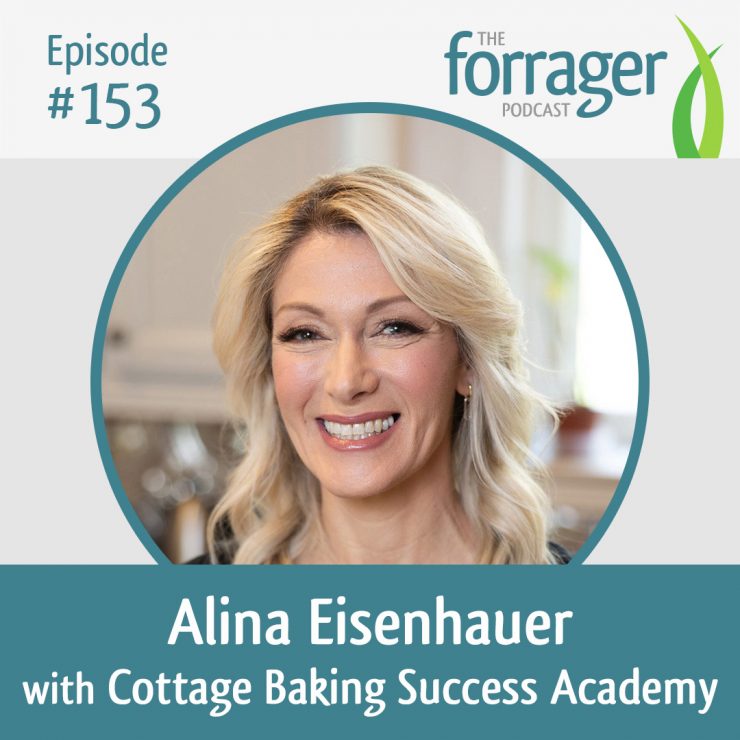
David Crabill: Welcome to the Forrager Podcast, where I talk with cottage food entrepreneurs about their strategies for running a food business from home. I’m David Crabill. Today I am talking with Alina Eisenhauer,
But first, we need to talk about email and especially email marketing as you’ll hear on this episode. Alina wishes she had built an email list a lot sooner. So if you’re not sending emails to your customers on a consistent basis, then I think you’re missing a big opportunity for sales.
I really love using Kit to manage email for my fudge business, and they recently introduced the best free tier that I’ve ever seen in an email marketing platform, which allows you to send emails to up to 10,000 subscribers for free. So if you still haven’t hopped on the email marketing bandwagon, now is a great time to do so.
To get started and learn more, you can watch my free email marketing tutorial at forrager.com/email.
Alright, so I have Alina on the show today. She lives in Worcester, Massachusetts and helps coach cottage food entrepreneurs with her business Cottage Baking Success Academy. Alina started her first baking business way back in 2003 when she was six months pregnant. A couple of years later, she expanded into her first storefront and then kept expanding the idea until she had a full blown restaurant with 40 employees.
She has now competed in many cooking competitions on national tv, has been featured in many books, and has consulted for major restaurants. Eventually, she shifted her focus to coaching, first, to help people with gluten-free cooking, and now to help cottage food entrepreneurs too.
In this episode, she shares many of the lessons she learned, including avoiding burnout, becoming profitable, and leveraging productive business systems, And with that, let’s jump right into this episode.
Welcome to the show, Alina. Nice to have here.
[00:01:56] Alina Eisenhauer: Thank you so much for having me. Happy to be here.
[00:01:59] David Crabill: Alina, you’ve done so much and I don’t even know exactly where to start with your episode. So let’s just start from the beginning. What got you into the food industry in the first place?
[00:02:12] Alina Eisenhauer: So I have always been, interested in food, obsessed with food and ingredients really since I was a little kid. I always loved being in the kitchen with my mom and was always interested in interestingly enough with you being called Forrager, uh, foraging, being out in the woods, I would always ask her everything, every plant I passed, can I eat that?
What does it taste like? I started working in restaurants. When I was in high school. I really gravitated towards baking, started working as a pastry chef, but that was in the eighties and. You know, The culinary industry in general was not nearly what it is now. It was before the dawn of food network and all that.
It wasn’t considered a great career, and most people I worked with were grumpy, old, burnt out men, and I didn’t wanna turn out like that. So I went in a totally different direction after college. I, I went into the fitness industry for 10 years, and then when I got pregnant with my son, I, you know, started thinking about what I really wanted to do and I just kept coming back to food.
And my husband at the time, my son’s father came home one day. We had moved to a new area and he came home and he was complaining. He said, I can’t find a good loaf of bread anywhere. And I said, that’s what I’ll do. I’ll open a bread bakery. I was six months pregnant, maybe a little delusional. And for the next six months I read a lot.
So I had, I had obviously worked at restaurants in high school and stuff, and baked and cooked a lot, but I had never you know, run a bakery or done anything at like that kind of a. To sell to people. So I read a lot, got every textbook. I practiced a lot, perfected recipes. I found a little local, so I started as a micro bakery.
I found a little local family run market that sold like fresh produce and stuff, and they had a tiny corner, like 300 square feet, little corner of their store if it was that where I could put in an oven and some counter space, which was basically all, I had And I was able to bake out of there and then worked out a deal with them to be able to sell basically and give them a cut and sell my stuff out of just that little corner of their store.
And so when my son was six months old, was when I opened my first space there inside that little market in strawberry, Massachusetts.
[00:04:15] David Crabill: Yeah, I know you never started from home, but I don’t think it was even an option back then. And Massachusetts is a particularly strict, even still today with homemade food. Right. So it wasn’t even a, a choice really, unless you wanted to just operate illegally.
[00:04:29] Alina Eisenhauer: Right. Massachusetts is still, yes, very much one of the strictest states. And so yeah, that wasn’t an option. And the, you know, people always say, what’s the difference between micro bakery and a cottage bakery? To me, I think a lot of people use the terms interchangeably. To me, a micro bakery is still kind of the way I started.
So maybe you’re working out of a cloud kitchen or a food hub or something where you’re, renting, a commercial space in a church or something. You don’t have your own storefront, your own big commercial kitchen. You’re using a small amount of space somewhere else. It’s still very grassroots and still, when I did that, I was selling at farmer’s markets and those types of things, just like I would’ve if I had my house, it’s just that I had to go somewhere else to do the baking.
[00:05:09] David Crabill: So you never actually started from home, but I know you felt compelled to focus on home bakers, like that’s who you helped today. Why did you decide to go in that direction?
[00:05:21] Alina Eisenhauer: Really one it started with so I have a very large group, gluten-free baking group. I had to cook after 20 years in the industry as a pastry chef and bakery owner had to go gluten-free ’cause I’m an autoimmune condition and I’ve very large gluten-free baking group. And I shared a lot of recipes and teach gluten-free baking classes and started to realize that I had a lot of cottage bakers and home bakers in my group that were using my recipes.
But. Didn’t have a lot of the business experience or background or I had people mentioning that they weren more curious and wanted to start. And then I just started looking around and I saw that really, that there was a need. There’s a lot of people that wanna do this. I think it’s really grown, especially since COVID.
And I saw so many people that I knew I could help that because given the way that I grew from and all the lessons I learned from starting in that small storefront, and then I grew into a big full, 40 employees, 5,000 square feet over the years that I had it. And lessons I learned along the way, and especially when it comes to food costing and profit and all of the like, real business things that I think people get hung up on.
And I also think people have maybe misconceptions about that, the margins in the industry, whether you’re brick and mortar or a cottage base. And I really believe that. People can create in many cases, more sustainable business with a better lifestyle. Doing it from home than opening a brick and mortar.
The brick and mortar industry for food is brutal and the margins are really small, and you can actually have better margins doing it from home or doing it out of a really small, space and doing farmer’s markets and things like that. And I say that from experience, having grown a business that was doing, almost $2 million a year, the year that I closed, if I had to do it again.
And when I meet people and talk to them that talk about wanting to grow into that, I’m like no, no, no, no. Just perfect what you’re doing with your cottage bakery because you’re just gonna get bigger. You’re just gonna get bigger headaches and smaller margins. So you’re gonna work harder to make not that much more money and have much less of a a life in a lot of cases.
So, Yeah, that’s really why I became passionate about helping Cottage Bakers learn how to make the most of what they’re doing and maximize what you can do out of your house given your situation where you are, what you have for set up, and who you wanna serve.
[00:07:39] David Crabill: So let’s talk a little bit more about your first business. You said that you were six months pregnant when you decided to open a bakery, and had you run a business before? Like where’d you get this idea to start a business?
[00:07:52] Alina Eisenhauer: my dad was an entrepreneur and when I was in the fitness industry, that kind of was my own business. I was personal trainer, so it was my own business. I kind of always someone that liked to work for myself and I just knew I wanted to be in food and there wasn’t.
A lot around there. Again, it was one of those like, I think like a lot of entrepreneurs, it’s just something in you and it’s that like, I saw a need and I thought I could fill it and it sounded like something I would like to do. I liked to bake bread, so my, my first place really did focus on bread.
Then it grew into, I think what a lot of cottage bakers do bread and then quick breads and cookies and, things like that. But really, you know, heavily bread focused. And it really was just that wanting to be able to give something to my community where I saw that there was a need for it and that I could do on my own, have my own schedule and be in control of it, especially being a new mom with a little baby that I had to somehow work into the schedule as well.
[00:08:42] David Crabill: Alright, so you decide to open this little Corner Bakery in 2003 take me through the next few years. Like What was it like starting that business?
[00:08:52] Alina Eisenhauer: So it was a lot of blood, sweat, and tears. I, I learned a lot of lessons. It was great. It was well received right away. And I learned a lot of lessons as I went again, about growing and stuff. So I, I was in that same location for, maybe two years before then I expanded again for quite a while.
It was just me. Putting out, you know, what I could with my son there with me sometimes going in super, super early in the morning to bake everything fresh and then put it out and, you know, maybe sell out by three o’clock and then be done with my day. And then doing some farmer’s market seasonally. And I had a bigger demand and I couldn’t keep up with it.
So I hired one employee in that location. So I had one woman that I trained to come in and work with me so that we could just put out more product and then got to a point where we were capped out there and with giving them the cut and everything else, like I was making money, but not a lot.
And again, in hindsight, this is why I really think cottage baking is so great. ’cause you’re. Your margins really can be considerably better than when you’re paying the overhead of being in a a space. But at that point, again, that wasn’t really an option here. So someone approached me in the town that I was in that was building a new, little strip malls, not really the right word, but it was like three or four businesses.
So it was brand new slab, like I could design what I wanted. And they approached me about growing my business into this space. And it was right next door in the same building. They were putting in a little Montessori school, which my son was just about that age, which was perfect ’cause he could go to school there.
And I also knew I’d have a good business with like them all, the moms dropping their kids off and stuff. So I moved into my own storefront then about two years later in the same town and grew and added doing breakfast and lunch, kind of very much Panera style, but. single location, just me and grew my staff.
I think there to probably about 10. Then we added on and started doing some cakes and things like that, and I was there until 2008. And then same thing. I wanted to grow again. And when you’re brick and mortar, it’s, almost is this constant wanting to grow and be bigger because the margins are small.
So the only way you’re gonna make more money is by pushing out more and more product. You don’t have a lot of room to play around with your margins and stuff. So I wanted to grow again and I had started toying with the idea of being open at night and doing a dessert bar and pairings with alcohol.
I’d actually been to. An industry conference and went to one and I thought it was the coolest thing. And they’re like, oh, there’s nothing like that around here, so I wanna do that. So I moved my business to Worcester from Sturbridge, which is about a half hour away, but it’s much bigger. during that time, I had, people had started to know of me, like even in Worcester because I was going and doing farmer’s markets there.
because of doing the farmer’s markets, I had won some local awards, like People’s Choice Awards for Best Bread and things like that, just from people knowing me through the farmer’s markets and things. So I thought people kind of know me there, I can go and expand my business there. So then I moved to oyster in 2008 and into my first base there, which was probably.
Double the space I had had in Starbridge, it was still, maybe it was just around 2000 square feet. And I was there for five years and then got approached again by somebody that owned a business down the street that had a huge space and wanted to go in as business partners with me to expand into a full dessert bar restaurant, really with a bakery.
So in 2013, I did that, took on business partners and moved into that space, which was huge. It was 5,000 square feet. We had event space and staff of 40 and all the things. That was when I started, I got cast on a few food network shows. So then I got a lot of publicity, which really helped to grow the business.
And I did that for, five years. So 2013. Yeah, to 2017. In 2017, I decided to close, which people always ask me about that. And in, the year that we closed was just that year. Had we finished out the year, we would’ve done $2 million or a little bit more for the year. I had a staff of 40 that I loved, still talk to and mentor.
A lot of them, they’ve gone off and done their own things. you know, people always ask me why I did it. And again, this is where I talk to the margins that [00:13:00] people don’t, and anyone listening who’s in cottage baking you know what your margins are. I hope, and I think what people aren’t prepared or don’t understand is the margins in brick and mortar are ridiculous.
So the average restaurant bakeries are a tiny bit higher, but not much. The average restaurant in the United States, the profit margin is three to 5% and with most places falling in average like four. there some that hit eight or a little bit higher? Yeah, it’s very rare. Usually chains with huge buying power chain restaurants can be a little bit better, but most independent restaurants are somewhere between three and 5%, which might even not sound too shocking to people off the top of your head, except for when you do the math.
If we were doing $2 million a year, 5% of that is a hundred thousand dollars and now you have to split that by three partners. So that’s not a lot of money for 80 hour weeks. And you know, when you have a brick and mortar, it owns you. So yeah, I mean obviously I was, you know, taking a salary, but again, you’re not paying yourself outrageously.
That’s what the profit is supposed to be on top of. You know, what you pay yourself, what you would pay somebody else if you’re, you know, acting as manager or [00:14:00] chef or whatever it is. I also had health issues. That was when my, I was diagnosed with my autoimmune and my health issues started coming up.
My son was in high school and I realized he only had a few more years and I wanted to really be able to be present and have, just a different schedule and a different life. As much as I loved my restaurant family, I didn’t love the hours and the stress. So I closed that and did consulting for a few years for bakeries, restaurants, country clubs, so many development costing recipe development, all those types of things.
And then COVID happened, which was not a great time for consultants. So I got hired on, I took an interim job. It started as a consulting job. And then I took an interim, full-time job actually during COVID as an interim culinary director for a place. And in the while I was doing that, started working online and realizing I have, a lot that I can teach and I really wanna share with people and teach people.
So I started working on putting together My website first I thought I might do food blogs and then realized I really love to teach. So I started putting [00:15:00] together courses and classes for gluten free because once again I saw somewhere there was a need for really good recipes and instruction and helping simplify it for people and showing them that you can really make amazing food just as good, gluten-free, but there’s so much misinformation out there about all of that.
And so that led me into that. And in I went full-time into that. I started my two Facebook groups and I have a subscription membership for gluten-free baking. So we started those in 2022 and have grown huge. My, free Facebook group is just about a hundred thousand people. I have a thousand people in my subscription membership.
And then I do independent course classes. And then that kind of led me this year into the cottage baking because again, I saw so many people in my groups that were either gluten-free or allergen that either wanted to because they wanna provide it, people with allergies. I have a lot of compassion for other people with allergies, even if it’s not the same.
Because if you don’t have a food allergy, it’s hard to understand how much it impacts your life. Food is everything, right? It’s our [00:16:00] celebrations, it’s our traditions. And when you have to change all that, it’s really hard. And I saw a lot of people in my groups that wanted to be able to share that or already were with cottage baking.
And then I saw the need within that community for more education around costing and menus and production, streamlining things. All lessons that I learned in growing from starting as this tiny micro bakery that was, again, very similar to a cottage bakery, other than the kitchen wasn’t in my house doing farmer’s markets and setting up your tables and all those types of things.
So I’ve taken all of that and turned that into a course. That I now teach a Cottage Baking Success Academy, which is a four week course, or there’s also a VIP program that includes an additional four weeks with some one-on-one and things like that. And it’s been great. I have a lot of people that are kind of in both groups and a lot of people, so for the cottage baking, it’s not necessarily, you don’t have to be doing allergen or gluten-free or anything.
It’s for anybody doing food business. we go right from the beginning all the way through starting off with [00:17:00] what you need to get started and kind of an outline of your first steps, which. I have A PDF, a little checklist that we can offer to your listeners as a way to get started that just outlines all of the things, kind of get your ducks in a row dot your i’s, cross your t’s, everything you need to get started to kind of be aware of that.
You need to look into that, you need to have lined up to see if it makes sense for you to do it. And to start off your business on the right foot. And then throughout the course, we really, I take people through step by step how to find the laws in your state, which I recommend Forrager all the time for that.
How to find out what your, your state, and in the case of some states, like Massachusetts, it can even be your town and your county, what your laws are, what can’t, how do you decide what. Menu items, menu and your recipes and your packaging. How do you promote it? How do you set up your market tables your branding production schedules so that you can accomplish everything you need to in the course of your week, given the size of your kitchen and kind of all of those kinds of things.
[00:18:00] David Crabill: [00:18:00] Yeah, you mentioned the checklist in there. We’ll definitely include a link to that in the show notes. And you’ve obviously come so far over what, 22 years now,
[00:18:10] Alina Eisenhauer: Yeah.
[00:18:10] David Crabill: and it all started with this little business, which you said was really successful from the get go. Why do you think that was so successful?
[00:18:18] Alina Eisenhauer: I think it’s a few things. A big part of it is finding a need, right? Find what’s, missing, what do people want and need in your community? I think that’s really big and to this day I think from the beginning I did it more back then I, you know, right away, obviously my husband saying he couldn’t find bread, and we looked around.
There really wasn’t anything around. And then I asked my customers, I always have, and to this day, I do what I do at my groups. I poll a lot, whether it’s in my groups or by email to customers. And I encourage my students to do the same thing, is ask people what they want. Because if you give them what they want, you have loyal customers, right?
They’re gonna buy from you if you are giving them what they need and what they’re asking for. And filling a need for your community and just really [00:19:00] being a part of the community is a huge part of being successful. Obviously then, being really strict kind of adhering to your having standards, adhering to your standards, knowing what sets you apart, being consistent.
Consistency is really important in business, especially food business. I think that’s another thing that I learned and you can look at chains in bigger businesses to see kind of evidence of that is that people really value consistency and chains are such. A good example of that is that people will take mediocre things that are consistent over things that might be fantastic one day and horrible the next which is why places like Dunking Donuts or Starbucks or whatever is because.
People know what they’re gonna get every time they go. And I think that’s really important in your small business too, is to be very consistent with your product, with what you’re offering, how you offer it, how you show up. All of those things are what kind of, what it takes to really build a loyal and consistent customer base.
[00:19:55] David Crabill: I totally. That, you know, you should find a need and, ask [00:20:00] customers. That’s something that I’ve been recommending for the longest time. But what about the entrepreneur who just feels like there are no more needs, like in their area.
Like everyone’s doing everything and, it feels like there isn’t really a gap.
[00:20:16] Alina Eisenhauer: I think there always is. I’m sure there are some instances where it’s really overly saturated In that case, again, find out, you know, one of the exercises I have my students go through in cottage baking in the Success Academy is one of the, one of the exercises we go through is like, what is your unique voice?
What makes you unique and different from everything else that’s out there? Because we all have something that makes us different. it might be your connection to a certain part of the community or something. Your take or your slant, your family tradition, your heritage, whatever it is, there’s something unique you can offer.
You just have to figure out what that is because we are all different. And I really believe that there’s a customer and there’s an audience for everyone. There’s lots people, you know, even if you think [00:21:00] about the, I get it all the time because people even say that to me like about the online world, right?
There’s lots of people that do online courses or that teach gluten-free baking or whatever. It’s, but there’s room for everybody because each of us has our own audience in our own community, and you have to just really be authentic to who you are. I think that’s really important is don’t look at what everybody else is doing.
Don’t try to just because someone else is successful, don’t try to do what they’re doing, do you, and be really authentic to who you are and to what you wanna create. And that is the magic. I think that’s the big lesson for a lot of people to realize is don’t try to be what you think people want.
Just be who you are and what you are passionate about, and that will get you the right people in the right audience.
[00:21:42] David Crabill: Obviously, you’ve done so much in your career and you’ve had multiple award-winning restaurants, but I saw you’ve never been to culinary school except for when you taught at
[00:21:53] Alina Eisenhauer: Right.
[00:21:54] David Crabill: Do you wish that you’d gone to culinary school?
[00:21:57] Alina Eisenhauer: I don’t, so I have an interesting [00:22:00] take on that, which is funny because I taught in culinary school. I think for some people, I think you need to know yourself. I think this applies to a lot of, trades maybe. But I think there’s advantages to both. And you need to know yourself, and it depends on the person.
For me I’m a lifelong learner. I’m one of those people that’s very curious. I always wanna learn when I wanna learn how to do something. So when I wanted to start the first bakery, like I literally bought the textbooks from like three different of the top culinary schools. Culinary of America, cord on blue.
I can’t remember what the last one was, but I had three of them. And I would read through all of them. I would compare if I wanna make something I’ve never made before, I would read through four or five different recipes and see what was the same, what was different, and then figure out what I thought made the most sense.
And then some trial and error. And I think if you’re someone who is proactive and really curious and a learner, you certainly can, especially now, there’s so much information out there available. You certainly can teach yourself. It may take longer depending, you know, on the person, maybe techniques and things like that.
The advantage to culinary school is a little bit faster as far as [00:23:00] learning like sound technique, especially for some of the pickier, fancier, you know, French pastries and things like that, which a lot of those you can’t do in cottage baking anyways. But the disadvantage is you’re going to learn a method to do it.
Depending on where you go to school, right? There are some standard things across the industry and across, you know, culinary schools. Certain things are fairly standard and taught the same almost everywhere. But there’s deviation depending on who your chef instructors are and their philosophies and what they like and how they teach.
And I think sometimes, and I would see it because in my years of owning businesses, I had a lot of in, people do internships with me from a lot of different culinary schools. And I would see oftentimes they’d come in and be so dead set in a certain way of do something because that’s the way they were taught by their chef instructor in school.
And they thought that was the only way to do it. so I feel like sometimes you can be a little bit more boxed in and not maybe take as many creative risks or discover new things [00:24:00] because you’re taught one way and you follow that single path. But for some people it’s fantastic because if you have absolutely no knowledge, it is gonna be a much faster way to learn to go to a, pastry or baking certificate program or something.
[00:24:13] David Crabill: Right. And as you said, you already had quite a bit of experience in the past working in food businesses.
[00:24:19] Alina Eisenhauer: right.
[00:24:19] David Crabill: And I know you’ve been on TV many times on a lot of cooking competitions, as you said. And in those competitions they always like to make it dramatic and throw you curve balls. Do you think that the fact that you didn’t go to culinary school actually gave you an advantage?
’cause I knew you won some of those competitions.
[00:24:37] Alina Eisenhauer: Yeah, I think maybe a little bit, I think, definitely working in the real world and working in in restaurants gave me a little advantage. The biggest advantage was having done more than one because they are all games after all. The competition shows they’re not really real life. And the first time, you approach everything a little bit differently and then once you’ve done one or two, you start to realize when you understand the editing [00:25:00] and two the game of it all a little bit more.
And I think that makes it a little bit easier.
[00:25:06] David Crabill: You say they’re games, but I did watch the first episode of the Sweet Genius one that you won and you got quite emotional in there.
[00:25:15] Alina Eisenhauer: I did, in fact, so much that was funny when that one came out. So we did a big watch party at Suite when that one came out and leading up to it because they were running commercials for it, and they kept showing me crying in the commercials. So nobody had any idea that I want.
We when we were bound to like, you know, by contracts, we couldn’t say anything to anybody. Nobody knew until the end of that night. People thought for sure like that. I hadn’t won because he saw me crying on tv. But I get emotional. you know, My audience now knows that about me. Some of them have seen me get emotional.
Sometimes even I get emotional about food. I don’t know why, for a lot of people, but for me, just for whatever reason, ever since I was a child, like food to me is so much of your a family and tradition and it’s how I show love. It’s how a lot of people show love and, I tend to be an emotional person.
[00:26:00] I tend to cry more and be more emotional when I’m happy than when I’m sad, which is funny. And in that case it was like the Ron Min Israel who was the judge on that I had, having not gone to culinary school it was people like him that I learned from watching them and reading their books.
And I really looked up to him. He’s very meticulous and one, arguably one of the best cake artists in the world. And so I’d always looked up to him as a chef. And so to be on that show and have him be a judge and then have him pick my stuff as the winner and like me, was a very kind of surreal, emotional moment for me.
it was validating. ’cause at that time, you know. when I was younger, I think I suffered with imposter syndrome a lot because I didn’t go to culinary school when I was younger. And I think a lot of people probably can correlate to that. And it took me years to not, and even having been on Food Network multiple times and having grown the business and won awards and all that, I still suffered from imposter syndrome for a long time because I didn’t go to culinary school.
[00:26:56] David Crabill: If you think back to when you started the business in the first [00:27:00] place, what were your goals and your dreams at that time?
[00:27:04] Alina Eisenhauer: that time, I think really initially was just to create a business and a, to make a living for my family and be able to serve people. Delicious food, make the community happy. And I think over the years it changed you. Definitely. I’m a very goal oriented competitive person.
I think in a certain respect that got the best of me as I kept growing, you know, and grew bigger and bigger. And like I say in hindsight now all the time, like I probably, if I had to do it over again, wouldn’t have have necessarily grown as big. And I have a lot of friends in the industry who will say the same thing, who had one location opened to two or three, and then ended up going back to one, realizing it was just so much of a better life.
And brings me back to like the joy of why you do it and starting it all. ’cause the other thing is, is the bigger you get, especially in the food industry, the farther removed you get from the actual process of why you did it in the first place and why you love it, which is creating things for people, right?
As you get [00:28:00] bigger and you have more staff, you’re not the one in the kitchen as much every day. ’cause you have to be the one running ing. So you get farther and farther away from. For most people the reason why we started doing it.
[00:28:10] David Crabill: I know you eventually sold your Sweet Kitchen dessert bar and appetizer bar business in 2017, and you said you had 40 employees at that time about it was a super successful business. I mean, You were creating very unique products. Did you consider selling that business?
[00:28:29] Alina Eisenhauer: Yeah. So I don’t think I ever really did like, maybe for a minute ’cause people asked me, the hard part about selling the business is even then I was so much the identity of the business. Even though it wasn’t my name because I built it, you know, a lot of publicity that I got as it grew and stuff was because of media and having been on Food Network and things like that, and the creative, like constantly doing kind of new and creative things.
All of that was so much, the creative [00:29:00] part of the business was so much driven by me. And it was I guess for what you would call now what people would call a chef driven, restaurant chef driven bakery. That without me, I didn’t really think that unless I was agreeing to stay on, if someone bought it, I wouldn’t really be able to sell it.
‘ cause you know, you would just be selling, the equipment and maybe my recipes, but again, without me, that it wouldn’t really be the same, it wouldn’t be worth that much to sell it to someone. And I wanted to retain the rights to my recipes and all of that.
[00:29:31] David Crabill: Do you have any regrets about closing it?
[00:29:34] Alina Eisenhauer: I don’t, people ask me that all the time. And since people have tried to get me to reopen, people have practically handed me places and I all the time say like, you could never get me to go back to doing that again. Again, I loved my customers. I still am in touch with some of them. Loved my staff, still in touch with a lot of them and have mentored some of them through starting their own places.
Some of them actually have cottage bakeries now, successful cottage bakeries. And as much as I [00:30:00] miss some of that and the camaraderie, I don’t miss the stress again, like having the amount of work it takes, you’re married to it. And since I have been out of now, I was in it. If you had told me that I would ever say that, I would’ve told you you were crazy. Because as food people we get obsessed with the rest. Industry is a little crazy like that. But once I was removed from it for a while and got to have so much more of a balanced life and more family time and more time with friends and enjoy cooking and entertaining what I want to and for people and the fact that now I’m able to share what I do and help such a broader audience because of the online world being able to help, whether it’s my gluten-free baking community or my cottage baking community, being able to help other people feed their friends and family or their community and follow their dreams is so much more rewarding, which is so crazy to say.
’cause being a chef and making delicious food for people was rewarding in a different way, but the lifestyle that came with it, I don’t miss that at all.
[00:31:01] David Crabill: [00:31:00] Usually when entrepreneurs talk to me about overwhelm, about burnout, it’s often because they just didn’t. Outsource. They didn’t hire soon enough, but clearly that was not a problem with you. You had 40 employees. So why do you feel like you still ended up getting burnt out and overwhelmed?
[00:31:23] Alina Eisenhauer: partially because it’s very hard as someone that’s creative and loving the food side of it and the creative side, creating the dishes, creating the menu, creating all of that. As many as boys as I ever had. I was always still the head chef. I was still, and I, very much believe in giving and do believe in giving employees, giving everybody creative freedom and letting them be a part of the process.
But I was always overarching and had to be a part of all of that. And even in front of the house things the hospitality in general and how everything ran, I could never fully hand everything off. To me it’s like if I handed everything off, then [00:32:00] kind of what’s the point? Because I like being involved in it, but it’s very hard for me to do.
I’m so much of a all or nothing person. So I think that was a part of it is, is even with all those employees and yeah, could I, take a week off and go on vacation or something? Yeah. But my mind was always still there. I think that is kind of where the burnout came in is that I didn’t see that that would ever change, that I would ever be able to not even if I’m not there, I’m there and, When you get bigger, you get bigger problems. As much as you get, bigger success, you also will a lot of times get bigger headaches. Being an entrepreneur is not for the faint of heart.
[00:32:34] David Crabill: What do you recommend to cottage Food Bakers to avoid burnout?
[00:32:39] Alina Eisenhauer: The biggest thing really is figuring out from the very beginning setting your goal. So the things that I work on with people is and we all do this as part of the course is figuring out from the very beginning, what’s your goal? what’s your financial goal?
What is your work week lifestyle goal look like? And then how is that possible? How can we make that [00:33:00] happen with your business and stick to it potentially? Could your goals change? Yes, but my. I guess recommendation to people is to always keep that in mind. And if you are hitting your financial goals and your lifestyle goals and you can grow a little bit and still keep all of that in check, then great.
But is not to grow too fast, not to take on more than you can handle and be very realistic about what you can do out of the space you have kind of in where you are. And if you go in steps and have processes. Also teaching people processes, which I didn’t learn or figure out and really streamline until really the last business I had, which then was very systemized.
But a lot of entrepreneurs also don’t put systems in place from the beginning, especially when you’re just one person. And I think that is huge for avoiding overwhelm is to have systems in place from the very beginning, even if you’re one person. So that way, if you do decide to have, bring someone else on, you have a system already, and you can just teach them the system.
Right down to your production schedules, to recipes, [00:34:00] to all of it, is that everything needs to be a system because that is what keeps things keeps production streamlined, keeps your schedule streamlined, keeps your finances, streamlined and again, makes it easy to hand off to someone else or to grow it.
[00:34:15] David Crabill: So what are some practical things that a cottage food entrepreneur could do to make more productive systems?
[00:34:24] Alina Eisenhauer: so one is product mix. I think a lot of people, try to be too diverse, jump on trends, wanna do everything, and I a hundred percent understand that urge and definitely felt right to it myself more than once when I was younger. First thing is keeping your product line smaller rather than bigger.
Find the things that you’re really good at and you specialize and be the best in that, in what you don’t need to do. Just because somebody says they would like it if you did, doesn’t mean you need to do it. Again. Having those systems and keeping track of everything and really being aware of what’s selling, what’s profitable what’s working and doing more of that.
And [00:35:00] then putting together production schedule is really important. So not trying to do everything all on the same day, working backwards from, whenever your markets, or your pickup days, or your delivery days are working our way backwards to figure out what needs to happen on each day leading up to that, you should not be weighing out your ingredients, mixing your ingredients, mixing your baters and dough, baking them, and packaging them in the same day. That’s a way to get overwhelmed really quickly and not be able to accomplish enough. If you can break tasks down to different days are different tasks, that is the easiest way to start to streamline your production.
[00:35:36] David Crabill: So for the entrepreneur who’s just getting started, thinking I gotta have goals, I have to have recipes, I need to have good systems in place, plus marketing, plus branding and consistency and showing up not to mention licensing, et cetera, et cetera. how do you find the time to focus on all this when you’re just one person?
[00:35:59] Alina Eisenhauer: [00:36:00] the checklist that I have that people can get from my, I guess you’ll put a link in the show notes or whatever. Um, the PF checklist is a place to start. I think lists are great. So being organized and having it and just putting one foot in front of the other and do things in order, you know, first finding out your local and state laws, what you can do, and then deciding what you wanna do, taking things step by step is, I think really the big thing and what will keep you from being overwhelmed is check one task off at a time in order.
You don’t really need to worry and stress about the marketing and taking your pictures until you first figure out what you can make. What are you going to make? Do you have the recipes to make it test those recipes, which that can be the fun part. And then how are you gonna package those things and you just take things one step at a time and go in order, and then you arrive, of course, towards the end at now you need to photograph them, and now you need to, market your product.
But you can start selling on a smaller scale to friends and family and things like that before you [00:37:00] even really need to worry about that stuff. So you can really go kind of one step at a time and grow as you’re kind of build your business slowly as you grow growing into things.
[00:37:12] David Crabill: You. Photography in there, and you have phenomenal photography, any photography tips.
[00:37:19] Alina Eisenhauer: So I was fortunate in that in the years of having my business, I had the same food photographers, so they did all of my stuff when I had my brick and mortars and then started teaching me to do my own when I started doing online.
So I was very fortunate to learn a lot from them. One of the biggest things is, is learning how to use natural light is uh, super important for food. It is so much better. I see so many people buying light boxes. The fact of the matter is if you live somewhere that’s really dark and gray and you’re never gonna get like some good light, it might be good to have one.
And occasionally you might need, but the amount of times that I have used artificial light in the last three years of doing this full time, I could count on one hand other than video, [00:38:00] which is different when I’m, filming a class or something. But for all of my food photography, I use natural light set up by a window and learning how to bounce that off.
So you don’t need fancy equipment. You can take amazing pictures with your phone. It’s just really important to learn how to use natural light. Use reflectors, you know, to get rid of shadows and bounce things off, and then learning composition. And that’s trial and error, playing around with it. I do have as part of my course, my friends who are the food photographers actually do a lesson for everybody teaching them about composition.
Whether you’re doing just one lo of bread or a bunch of cookies, like how you can set it up to look the most appealing and the difference in angles and things like that make, but you don’t need all kinds of fancy equipment. It’s more important. I think that would be the biggest thing that I would tell people to really understand is instead of paying attention to worrying about that you need a fancy camera or fancy lights or some crazy light box is, spend more time looking at the pictures that you like other people’s photography and looking at the composition.
So the way in which things are placed, the angles that they’re shot [00:39:00] from, and then maybe like other props that are around. play around with that more. It’s a lot of trial and error, but play around with that more because you do not need fancy, expensive equipment to take great food photos. It really is about the composition and making things look appealing.
[00:39:16] David Crabill: I know you’re a big proponent of building sustainable businesses, so what does that mean to you?
[00:39:23] Alina Eisenhauer: to me that really means a lot of things. I mean, there’s sustainable, so I’m not necessarily talking about, although I do believe in that sustainable as far as, you know, your footprint and all of that locally sourced and all of that, which I think is fantastic, but really sustainable for your lifestyle to me is really important for people.
Something that you will be able to continue to do, which all comes back to again, doing things in an organized manner from the beginning, having a plan and checking off one thing at a time, going slow so that you are sure that with each step you take, that this is something that you’re thinking through, that this is something that is going to [00:40:00] work for you and your lifestyle, like literally down to.
Finding out what you can, you know, you start off again, finding out what you can make, where you live, what are the laws, what are you allowed to do? It varies greatly by state, it’s kind of really crazy. know this better than anybody, right? What from one state to the other, what you can and can’t do.
but then just ’cause you can do it doesn’t necessarily mean you should. Then you need to look at your kitchen, your setup, the time you have every week to dedicate to this, and baby steps. Start with what you can manage, and then you can always go back and reevaluate when it’s time to grow a little bit.
If you wanna do a little bit more. What else can I fit in? But always checking to have it be sustainable means it needs to, you need to start and grow in a way that fits in with what you can actually realistically do, given your space, your lifestyle, the amount of time you have in a day, a week, month and your resources.
[00:40:54] David Crabill: You’ve talked about how food businesses have a really low margin. But we haven’t really talked about [00:41:00] pricing, so what are your thoughts on that?
[00:41:03] Alina Eisenhauer: So pricing is another place. I think. Pricing and profit margins is a thing where I think in the cottage baking community, it’s really hard online. So even if you try to research it online, it’s funny. The numbers they give you are ridiculous and wild, you know? Oh, some people say they can have a 50% or a 75% profit margin. Unfortunately that’s because within cottage baking it’s all self-reported and a lot of people I think are. Mixing up profit and pay. They’re not paying themselves first, which they should be. And then your profit is what you’re making on top of after you’ve paid for labor. If you’re your labor, then pay yourself first.
Your profit is what you’re making after your labor. Which that could lead to an entire tax discussion, but that’s another thing. So I think I always go back to as far as pricing goes. The standard has always been in the industry in brick and mortar, and it holds true for cottage because it’s just gonna actually make you have a higher profit margin in cottage in most places is that you [00:42:00] product should be priced at three to four.
It was always three for a really long time. Now, most people, including me, will tell you three to four times your food cost, meaning your ingredients cost. The only things that you really have control over. Again, with cottage baking, you may have a little bit more control over even. What people would consider your fixed cost.
But the things you really have control over are your ingredient cost and your labor cost. So getting really good at not wasting ingredients. Cross utilizing ingredients in more than one recipe so that you can buy in bulk. Dialing in that and then three to four times your ingredient cost. So when I use an Excel sheet to help people learn how to do this, there’s some costing apps out there, but I don’t think all, I think some of them confuse people more than they help them.
That the easiest way to do it, and the standard really is nail down for your entire recipe, how much that costs you to make one batch, just the ingredients, and then. you know, Figure out how many items you get out of it. How many individual units multiply by three or [00:43:00] four.
So once you know your unit price, and that’s the price that you should, three to four times. That being said, I tell people your average, all your products should average out to three to four times cost. sometimes you can do a little better than that. Sometimes there’s opportunities with certain products or depending where you live or the current, you know, we’re dealing with commodities a lot with baking ingredients.
So prices may fluctuate. Sometimes you have items that you can sell at a five or six times cost, and they’re not ridiculously priced. They’re priced at what the market will bear. You wanna look around at what other people are charging and what people will pay in your area, but that’s not what you should be basing it off of until you’ve made sure that you’re at least getting your three to four times right?
Your three to four times is your base. Then you may have some products that you can get again, like five times or six times on just because of what you’re able to get the ingredients for and what people will pay for them. And so in that case, yeah, charge what you can and get the extra percentage on them.
That will also allow you, if you ever [00:44:00] have a product that you just really love or your customers love and you wanna be able to make for people, that falls a little bit on the low end. Maybe it’s two and a half or barely hitting three times that you could get for it, but you really wanna make it. That’s okay as long as you have some other products to offset it that are getting you the five or six times your ingredient cost.
And that that calculation takes into account your, and like your insurance and your rent and all those kinds of things. And that’s where in cottage baking, you can have slightly better margins because your insurance is a lot less than it is. If you have a brick and mortar and your rent, in most cases a lot less, you are already paying to have your house, right?
Or so depending on, on that is also a lot less. So you have a lot less overhead when it comes to your fixed costs for a cottage bakery than you do for a brick and mortar when you’re paying a lot of rent and have to have much, much higher insurance. Your utilities generally are a lot higher. So all of those things, then we’ll cut, much more heavily into your profit if you’re a brick and mortar.
[00:45:00] David Crabill: [00:45:00] a lot of first time entrepreneurs, just of necessity. They don’t have the quantity to buy in bulk, and so they have to use their local grocery store. So do you recommend that three to four times. Being based on like your local grocery store, or is that more based on what you could achieve if you’re buying from a wholesale grocery store?
[00:45:22] Alina Eisenhauer: No, it has to be based on no matter where you buy it, because the math is math. I think that’s where people get into trouble because if you do less than that, you’re not building sustainable business, you’re not gonna be making, at the end of the day when you stop and look at actually how much money you made for the amount of time you’re putting in, unless it’s just a passion project, you’re not gonna build a business that has good enough margins because if you’re not charging that three to four times, you’re probably not covering or barely covering your expenses and then enough money to actually pay yourself something decent.
[00:45:51] David Crabill: So what about when somebody does move up and start buying in bulk? Does that mean they should decrease their price?
[00:45:58] Alina Eisenhauer: No. [00:46:00] If the market will bear, you know, that’s where I think where people need to understand where you have that fluctuation, which is why I always say you look at what other people are charging, and I never charge if other people are charging less than you, but you can’t realistically do it. Maybe it’s because the ingredient quality.
I had that a lot when I started because I firmly believed in locally sourced farm to table as much as I could. And then I always used real butter, really expensive vanilla. Like but that’s why my stuff tasted good and why people kept coming back for it, because I used higher quality ingredients.
so I wasn’t afraid if my cupcake was a dollar more than somebody else’s, it was because of the ingredients and I stood by that. It’s because of the quality of what I’m using. I think that’s really important. But you don’t need to lower your prices unless you were having issues selling ’em at what you were selling before, if that makes sense. Because there are some things I see people who are like, if I charged what I had to charge for that you can do pretty good. Nowadays for most people, I know it’s hard for people that are in like really rural areas that I would [00:47:00] still say there’s a lot of places that you can get, still get your stuff less expensive.
You really shouldn’t have to be buying other than in emergency situations like from a local supermarket, you get fantastic pricing. Like Walmart is very competitive. If you’re lucky enough to have a Sam’s Club buy you, in all honesty, Sam’s Club pricing a lot of times is as good or better than the big distributors.
So much that when I had my big brick and mortar I, had someone on my payroll who I paid every week literally just to be my runner for Sam’s Clubs because we got a certain amount of our stuff from Sam’s Club ’cause it was still better than any of our wholesale accounts were. There’s Restaurant Depot a lot of places.
So people can, as long as you have a business ID like you have a actual business license you can buy from Restaurant Depot online. You can get restaurant and they have a membership that you can pay into that’s really reasonable that then gets your shipping way, way, way reduced. ’cause that’s where online can sometimes cost you a shipping.
Amazon, a lot of times you can find good prices. The great thing on Amazon is you can compare price [00:48:00] by ounce a lot of times on there. So it’s easy to break down and compare things. So if you have Prime and you’re not paying for shipping if you’re creative, I feel like in most cases people really should be able to get stuff less expensive than just paying a retail price for it.
[00:48:15] David Crabill: So how about for the person that is started up their business, they’re at markets and getting a lot of first time customers, but having a hard time getting those repeat customers that a business is really built upon. What do you recommend for that kind of entrepreneur?
[00:48:32] Alina Eisenhauer: I have a few ideas around that. One is it’s really important to build a list. So again, things that people may not think of. This is another lesson I learned the hard way. I wished both in my brick and mortar and in my online businesses that I had started collecting emails earlier. Collect people’s emails.
So even if it’s as simple, if you don’t have a platform, you’re using, a hot plate or something like that, where you’re collecting people’s emails, you know, through an ordering system, then just as simple as having [00:49:00] notebook that I would have at the farmer’s market where people can put in like their name and their email and hey, we’ll send you little newsletters and let you know about, special drops and holiday things, whatever it is.
So you collect people’s emails so you stay top of mind and then do that. Send little notes out this, the markets will be at this week of working on this fund, new product. Occasionally send out emails asking people what they might like you or the things that I’m not making that you might like. I’m, exploring new menu options.
But being top of mind is kind of reminding people you’re there. ’cause a lot of times that is all it takes and I’ve had numerous people say that to me. I noticed if I’m better, posting on Facebook, I do get more sales. Like reminded people that I’m here. The other thing that I think is a great idea for people is. Depending on what your product is, if you have some sort of, whether it’s bread or cookies or whatever it is, is think about offering either something similar to what farms do. So A-A-C-S-A box, you know, community supported agriculture where people can buy in and they pay a certain price either for a season or for a [00:50:00] month, and they get a box once a month with whether it’s an assorted box of what you’re doing or maybe you have a subscription where it’s slightly cheaper if people sign up for a monthly subscription for bread where they get bread every other week or once a week or whatever it is.
But by subscribing and being a subscriber to your bread program, they get a better price than if they were just to come and buy one loaf. ’cause that way you are capturing them as a repeat customer. So being creative with things like that, I think goes a long way to really helping with repeat business.
[00:50:33] David Crabill: I know you’re the gluten-free expert. You’ve got this Facebook group with about a hundred thousand members in it. Are there any considerations that the allergy friendly baker needs to consider?
[00:50:47] Alina Eisenhauer: Yes, So the big thing with baking for people with allergies is if your kitchen is a hundred percent so say it’s, we’ll take gluten, but there’s gluten, dairy, not depending on what it is. As far as [00:51:00] cross-contamination, I think like gluten and nuts are, are up there as ones where you really have to worry about it if you’re not completely dedicated.
So if you yourself have a nut allergy or a gluten allergy in your kitchen, just never contains any of those things, then um. you safely can tell people that you, everything you bake is gluten-free. You can’t be certified. Certifi certification right, is this big crazy expensive process, which is why certified gluten-free products cost more.
There’s a huge expense in being certified which you can’t necessarily really do for home bakery, but you can say that everything you bake with, you’re using gluten-free ingredients and you have a hundred percent gluten-free kitchen or a nut-free kitchen that makes people feel very safe and is better for you as far as liability.
If you have a kitchen where you are baking both, so you bake, which I see people often online asking you about, so you bake regular, but you have customers asking you for gluten-free or dairy free or nut free. You just have to be really clear with them That it is not a dedicated kitchen. So they understand that and then be clear about your protocol.
[00:52:00] So I advise people if you’re going to be doing that, so we’ll say gluten-free. ’cause more than or not free again, would be the same dairy free. Is not as hard to avoid cross contact even in the same day. But if you’re baking, say, nut free or gluten-free, and you also do things that contain those ingredients, I really recommend that you separate your baking days.
So you’re completely wiping down your kitchen, cleaning your kitchen, wiping down. Really you should have separate set of pans that you’re using for the allergen baking and you’re doing it on a separate day. I recommend that you have keep bins like a Rubbermaid bin or something where you keep all your allergy safe ingredients, so they’re separate.
That way you’re just protecting yourself. ’cause you’re really taking every possible step you can to avoid any cross-contamination. We’re all human and people make mistakes, but for the sake of protecting yourself from liability and protecting your customers from, you know, potentially making somebody sick, it’s just to be really careful about separating that out.
And then again, just being honest with people about whether or not do both, or one or the [00:53:00] other. And then in how you, how you put that on your labels and your marketing and everything.
[00:53:04] David Crabill: I did wanna ask you about your Facebook group. It’s not common to see a Facebook group that has about a hundred thousand members in it. What did you learn that allowed you to grow it to the size it is today?
[00:53:18] Alina Eisenhauer: I’m such a big fan of, of Facebook groups. which I guess this kind of ties in even for everyone listening aside from groups just in general. I’ll go off on a tangent for a minute and say, you don’t have to be on every platform, be on the platform that you’re most comfortable with and build on one platform first, and then move to building on others because it’s a lot easier that way.
But The things that we did, I think that really grew it. One is we love what we do. We love our community. And give more than you take. Like we give a lot.
Like, Yes, I have paid courses and paid classes, but I give a lot of free content We also have made it a really safe, fun, happy place. So it takes a little bit of work and people think that we’re crazy when they [00:54:00] hear initially how we run it, but it has made all the difference in the world. is we, not only do all the members have to be approved, but every post has to be approved.
And the reason that we do that is one, to avoid the feed being full of spammy stuff. So people are gonna actually find the help, the recipes, the posts that they wanna find and read and see so they don’t get lost So one is for that reason two is because we approve every post. We’re also the first to comment on every post. So that helps to. One, it lets us be helpful to people. It helps to build a relationship with your group and also helps us be able to see if anybody starts to be mean, disrespectful, et cetera, on any post.
Because we were the first to comment, we get notified of comments on the, post. So we see that stuff. So there really is no nastiness. Everybody is really nice to each other that nobody’s being made. Feel stupid to ask any question. And that’s always been super, super important from the beginning.
So we get a lot of people inviting [00:55:00] other people to join, but also because we’re so involved. it, it keeps our engagement really high, which from the beginning when it was only like a few hundred people, we did a lot of polls and asked a lot of questions trying to keep engagement up, which Facebook really promoted my group a lot.
Because all the platforms care about is how long you keep people on the platform. So if your group is engaging people and keeping people there, then Facebook likes that. And so it’s gonna promote your group and show it to people.
because Facebook just wants people to stay on their platform as long as possible. So I think that also has really helped us grow.
[00:55:34] David Crabill: Well, you’ve come a long way since running that little corner bakery. Looking ahead, where do you see yourself going in the future?
[00:55:42] Alina Eisenhauer: really continuing on with, you know, what I’m doing my goal is to be really a leader, if not the leader. I guess I’ve definitely set outrageous goals. I think everybody should, because then even if you miss your outrageous goals, you’re still doing pretty well. I really to be a [00:56:00] leader in the online space for the gluten-free community and the cottage baking community.
Especially those people in the making community that focus on people’s allergies, but kind of really everybody. And I think if I were to expand any more than that, it would be just bringing more overall kind of lifestyle into it. I’d have to say one of the people that I’ve always really looked up to and admired since, honestly, since I was a teenager is Martha Stewart for the way that she’s kind of made her life her business.
And I think that’s really cool. So if I was ever to add anything else on, it would just be to do kind of more lifestyle.
[00:56:36] David Crabill: Well, you’ve helped a lot of cottage food entrepreneurs at this point. As you think about all you’ve been through, what would you say to someone who is just getting started today?
[00:56:47] Alina Eisenhauer: if you’re passionate about this and this is what you can do, I firmly believe that anybody can do it. I firmly believe that anybody can have a viable and I sustainable again for your life. Something that works for your life and what you want [00:57:00] outta it.
Home Based or cottage business, you just have to be really clear about what you want and go about it in a measured and strategic fashion and kind of always being really conscious of what you want out of it and who you wanna serve and how you wanna serve them. Being genuine is really the biggest thing, but I firmly believe that anybody can do it.
Are there gonna be some bumps along the way? Probably because that’s, business and that’s being an entrepreneur. But it’s one of the great things, and especially now I feel like it’s gotten even easier.
There’s, so much more information out there. And with social media, it’s easier to get people aware of what you’re doing and who you are.
And that doesn’t mean you have to become an influencer, spend all your time on social media by any means, but you need to have a presence. And then the old fashioned stuff still works, especially for any type of a local business is, which is what you are when you’re a cottage baker, which is your local schools, your PTA, the churches, local fundraisers cross promotions with local businesses, things like that.
Like grassroots, just [00:58:00] meeting people, being very vocal about who you are and what you do. And again, being authentic and being a person, talking to people and letting you know people talk to you, being interested in your community. So they’ll take interest in you.
So it’s something that you think you wanna do, I encourage people to try and do it. It’s also something that you can start for very little money if you’re smart about it and just spend money as you grow.
Which is another thing I think for people to think about if you’re just exploring it, is you don’t have to spend a whole bunch of money. Start small and grow as you can.
[00:58:32] David Crabill: Well, Thank you so much, Alina. Now, if somebody would like to learn more about you, where can they find you or how can they reach out?
[00:58:39] Alina Eisenhauer: So my website is chef alina.com on all socials. It’s at chef Alina e, so just Alina with an e after it on Facebook, Instagram YouTube. But primarily Facebook in my communities, my communities on Facebook, I have the Gluten-Free Baking Secrets, tips and Tricks group, and then I have my paid communities of the Cottage Baking Success Academy and my Gluten-Free Baking Bootcamp.
[00:59:06] David Crabill: Great. Well, Thank you so much for coming on the show and sharing with us today.
[00:59:10] Alina Eisenhauer: Thank you for having me.
[00:59:14] David Crabill: That wraps up another episode of the Forrager Podcast. For more information about this episode, go to forrager.com/podcast/153. And if you feel like you’ve gotten a lot of value from this podcast, I have a favor to ask you could you take a quick moment right now and leave me either a review on Apple Podcasts or a rating on Spotify.
It’s truly the best way to support this show and will help others like you find this podcast. And finally, if you’re thinking about selling your own homemade food, check out my free mini course where I walk you through the steps you need to take to get a cottage food business off the ground to get the course, go to cottagefoodcourse.com.
Thanks for listening, and I’ll see you in the next episode.