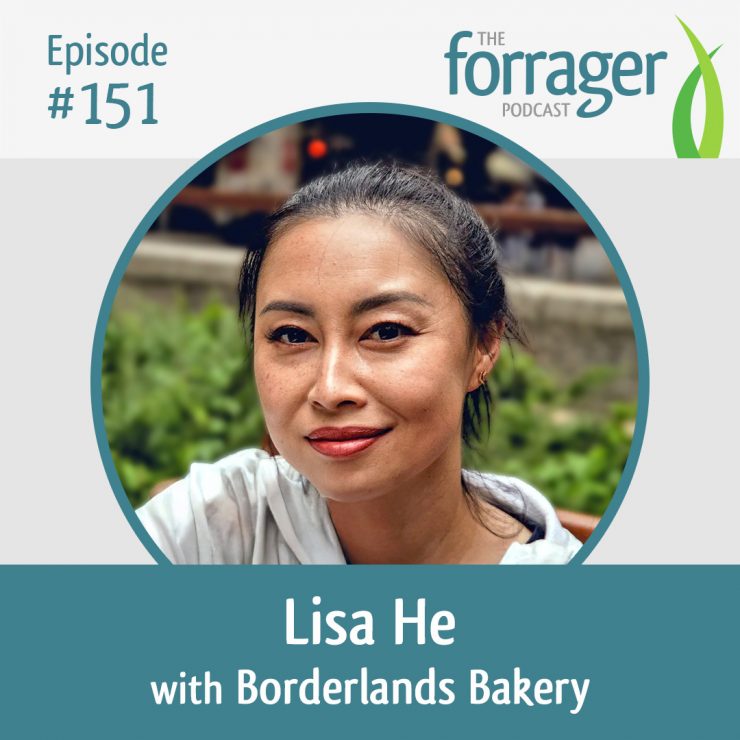
David Crabill: Welcome to the Forrager Podcast where I talk with cottage food entrepreneurs about their strategies for running a food business from home. I’m David Crabill, and today I am talking with Lisa He.
But first, if you’re feeling stuck or looking to grow your cottage food business, you should check out my new Cottage Food Pro membership. One of the best benefits of Cottage Food Pro is our monthly group calls, which are a great opportunity to get personalized feedback directly from me and other members.
In addition to our monthly calls, Cottage Food Pro also contains tutorials that are designed to boost your business without breaking the bank. To learn more about my new membership, go to cottagefoodpro.com.
All right, so I have Lisa on the show today. She lives in Orlando, Florida and now runs multiple businesses including Borderlands Bakery, where she sells custom decorated cookies and cookie decorating supplies.
She also has an online course business called Baking with Borderlands and a software business for cottage bakers called My Custom Bakes. Lisa’s journey began back in college when she started making custom decorated cookies, a hobby that ultimately completely changed her life. Her cookie business quickly became quite successful, leading Lisa to a appear on cooking shows on the Food Network and Netflix.
Her Instagram page for Borderlands Bakery now has over 175,000 followers, and she is one of the top influencers, not just in the cookie decorating world, but now in the cottage food industry as a whole. Lisa shared so much valuable information in this conversation that I decided to turn it into two episodes.
In this first episode, she shares how she started and grew her cottage food bakery and in the next episode, she shares how turned her cottage food bakery success into multiple businesses that help support other cottage food bakers.
And with that, let’s jump right into part one of my conversation with Lisa.
[00:02:00] Welcome to the show, Lisa. Nice to have you here.
[00:02:05] Lisa He: Thanks, David. Great to be here.
[00:02:07] David Crabill: Well, Lisa, you have done a lot of things. Let’s just start with the bakery, borderlands Bakery. How did that all get started?
[00:02:17] Lisa He: So first off, I think it’s important to just note that I took a very traditional academic route to start off my career. So I went to school for engineering at UC Davis, and one day I saw photos of French macarons online and was determined that because they were so cute, I wanted to learn how to make them not knowing at the time how difficult they were to make.
around 2008 time period, I started baking, experimenting with macarons cakes and muffins, and I started getting a little obsessed. It became sort of a creative outlet or therapy session for me, and I started bringing all of my baked goods to class and leaving it out front. Eventually I took that skill with me and started baking for my coworkers at work.
So I started creating relationships through the baked goods that I was sharing and kind of as a natural evolution of sharing all these baked goods with people. This hobby started to get a little bit out of control and I thought, Hey, maybe it’d be good to start selling them at cost to kind of make a little bit of extra money on the side and just to cover the money I was spending on the hobby.
But it organically grew into something a lot bigger. Over the next couple of years, I started sharing my experience baking and learning cookie decorating on Instagram, and this was back in 2012. So this is like the beginning of that era. And I shared how I was struggling, how awful my baked goods were and what I was learning through the whole learning cookie decorating process, And then people started gravitating towards those types of [00:04:00] contents. And eventually I opened up my cottage food business in 2014 in California. So that was, that was more than 10 years ago.
[00:04:08] David Crabill: So you said this obsession started when you were in college. Did you have prior baking experience before this?
[00:04:16] Lisa He: Zero prior baking experience. I’m an immigrant, so the oven was used for storage in my household. We didn’t know how to operate it. It was basically our drying rack for all of our dishes. I hadn’t even turned an oven on until I was like 18. So it was really new thing for me.
[00:04:36] David Crabill: And you mentioned that you’re an immigrant. Could you just share that story? I, I heard a little bit about it and it was a little shocking to me, but I.
[00:04:44] Lisa He: Wait, why is it shocking?
[00:04:46] David Crabill: Well, So I have a 4-year-old and a 6-year-old at home right now. 4-year-old girl, 6-year-old boy, and I know that you didn’t see your parents between the ages of four and six, and like having my 4-year-old, like [00:05:00] walking away from her right now. I understand why your parents did it. I just, I know like how it would be for her.
And so I wanted to talk to you about it because I can, I can’t help but think that it affected your life to some degree.
[00:05:14] Lisa He: Absolutely. I got to unpack that in my recent years of adult life, but. Basically, I was born in 1988, so in the eighties in Shanghai, China. That was right after China opened up its borders to, western sort of society and ideologies. And when China opened its borders, China started to teach English widely in all of its universities. And China gave all the high school students an opportunity to test, to get into university so they can have better opportunity in the future.
So my dad was one of those people who tested into college, and because of that, he got to have both like a western [00:06:00] and eastern education, and especially at that time in China, he wanted more freedom, more opportunity for his family. So he had already been planning to immigrate, and then he met my mom.
They had me. And when I was 10 months old, my dad decided he had been planning, but that was when he actually made the move to come to the us. So he was pretty educated. He had a, uh, global political science background. And when he came here, he, you know, went to night school, learned English, and worked all at the same time, and we couldn’t join him.
So my mom was able to join him a couple years later, and then there was a lag, and then I came over. So my parents came here to build that financial foundation first so that at least they would have something for me to come into when I was able to join them. And I was left in the care of my extended family, so my aunts and my grandparents. That did affect me, but I [00:07:00] don’t think I understood the impact of that until very recently. And I’m, I’m 37 now. I didn’t really start unpacking any of this stuff until I was 30. I didn’t know my dad, as you can imagine, since I hadn’t seen him for about five years, I only knew him as that voice over the landline.
And occasionally, you know, he’d call probably once a month because calling was really expensive back then. You, do you remember
[00:07:24] David Crabill: yeah. I remember ‘ cause I’m about the same age as you.
[00:07:27] Lisa He: Okay. So I would hear him once a month on the phone, and the other thing he would send me is he’d send our family chocolates from Costco.
Snickers and Hersheys and stuff, we didn’t have any of those in China at that time. So that was kind of a treat that he was saved up for and send it to us. And when I met him for the first time, I was freaked out and I didn’t know how to like, I’m, he is in the airport and he’s meeting me and I’m like, bawling, right?
Because who’s this person? And he worked really hard to develop our [00:08:00] relationship. Once I got here, he took me to the playground and he teach me to like do the monkey bars and to jump from like, you know, a couple feet up so that I can get over sort of my fear. Because I was very timid when I first got to the us aside from having to learn new language.
Like the culture shock was crazy. Even for a 6-year-old, you already kind of are established and you’ve learned your first language and you picked up on those social behaviors, right? So that, that first couple of years was really hard, but my dad and I uh, really formed a connection then. And my mom took more of a caretaker role in, our little family. So I, it did affect me a lot and I think because of what they did now I have a much better grasp of the level of sacrifice that they made to come here and to build a life here. And they did it kind of on a gamble, you know, because the future’s not guaranteed. And because of that, I feel like [00:09:00] I have additional motivation that might not have been there if I wasn’t an immigrant.
[00:09:07] David Crabill: You mean like motivation to justify their sacrifice
[00:09:12] Lisa He: Yes. To make sure that their sacrifices weren’t for nothing. And that I live my life. I think the best way I can honor their sacrifices is to live a great life and to do the things that I want to do in life and to do it on my terms. I think that’s something that my parents always wanted and for them, like they can’t even imagine that this is what I’m doing now.
They expected me to get a corporate job to climb the ladder and like be set that way. They couldn’t have guessed this for me.
[00:09:43] David Crabill: Have they been disappointed in your entrepreneurial decisions?
[00:09:49] Lisa He: At the beginning, I wouldn’t say disappointed. I think they were cautious. My dad has worked in a lot of different industries. He’s worked in the paper [00:10:00] industry. He’s done stocks, financial advising, and he’s also been a director of an Asian assisted living community. So he understands business, but he always worried if I wanted to get into entrepreneurship because it was very risky.
There’s a really high failure rate and all. He came here so that I could have a better life. And I think my parents both worried that if I chose this path, life would be too hard. And that’s, that’s not what they wanted for me or for us.
[00:10:33] David Crabill: Well, it is pretty hard, isn’t it?
[00:10:35] Lisa He: It’s very hard. It’s definitely not for everybody, and you have to go in there mentally prepared to do this.
[00:10:42] David Crabill: Well, I saw that this cookie obsession and subsequent business, it’s not the first time you dabbled in entrepreneurship. Can you share a little bit about your previous ventures?
[00:10:55] Lisa He: Um, So I think I was like 10 years old [00:11:00] when I was just going through a bunch of junk mail my parents had set aside and an AOL disc caught my eye And that disc kind of changed my life because I was like, the internet, you can go online. And I had heard about this through school. People were already going online using dial up, but I was like, Hey dad, this is free.
Can I like try like it’s a free trial. So pop the CD into our giant tower PC and many minutes later, and a lot of funky noises later, I was connected to the internet and I started playing games and that opened me up to a different community. And eventually I found a Korean, or like a K-pop music forum because I was really into K-pop bands when I was like 10, 11, 12.
And I noticed that people really wanted merch, but there was no merch available here in the us So I asked my [00:12:00] dad to get me a laminating machine and I started making Kpop bookmarks to,
[00:12:08] David Crabill: And Nice. And what, what age were you when this happened?
[00:12:12] Lisa He: uh, 11 or 12 it was middle school and I wasn’t really using online payment processors at like, I had no idea that there was a whole business side to stuff and legalities all of that. Right. I was so young, but people were mailing me cash and then I was sending them their bookmarks.
[00:12:30] David Crabill: Oh wait, so you weren’t just like selling these at school, you were selling these online.
[00:12:35] Lisa He: Yeah. On the forums online.
[00:12:38] David Crabill: Wow. I have heard stories of that, like the initial days of like, eBay before PayPal, like people would be getting cash in the mail for what they’re selling. I have heard, heard those stories. I don’t have any firsthand experience with it, but, uh, yeah, that’s, that’s real early.
[00:12:55] Lisa He: Yeah, real early you know, when you look back on it, you’re like Hmm, was that the best [00:13:00] idea? My mom was a little worried for a while ’cause she found one of those envelopes with cash in it. And she’s like, what are you doing? My dad’s like, it’s fine. Just leave her alone.
She’s got good grades and she just wants to do this thing on the side, so just let her do it. And I think that really pushed me into kind of exploring the world of business building. And of course back then I didn’t know it was entrepreneurship, but that’s basically what it was.
[00:13:25] David Crabill: It’s so funny though because your upbringing was. Very different from that, right? Like, I know your parents wanted to have good grades and that was the path they wanted to send you on. So it’s surprising, a little surprising that you would’ve ever even had the idea to just sell something online.
You know, like There’s something about you that saw this problem and wanted to create a solution for it.
[00:13:47] Lisa He: Yes. And I think ultimately that’s what a lot of entrepreneurship is. You see Problems and you think that you wanna help find a solution.[00:14:00]
[00:14:01] David Crabill: All right. So you sold K-pop bookmarks online when you were like 12 years old,
but you did a couple more things between that and the cookie business, right.
[00:14:12] Lisa He: I did the K-pop thing gave me a taste of what it was like to have spending money of my own. My parents didn’t take any of my money, so I started kind of saving up cash and I would buy myself little treats, you know, we had no money growing up, so any extra was like such a big deal. And I got the feeling of being self-sufficient and being able to provide for myself at a really young age.
And I think that’s something that my dad noticed and he encouraged. So when I was doing bookmarks, I also started exploring other parts of the forums. I noticed people really like jewelry, people really liked beauty products or skincare products. [00:15:00] So I started making handmade jewelry and I started selling that.
And that actually became this big thing. It paid for part of my college schooling, that’s how big it became. And I was doing everything by myself, everything through the forums until the first website builders started coming up. And I started blogging on things like Zenga. and then I built my own GeoCities website,
And I started building out like a little brand for myself where I was selling jewelry and then I started importing Asian skincare products. And this was when I was about 15, 16 when I started naturally also developing an interest for that. So I would always develop an interest, start to do it as a hobby.
And when it gets out control, I’m like, okay, I need to either cover the costs or do something else. So I take something I’m really interested in and I get a little bit hyper fixated on it and start generating revenue from [00:16:00] it.
[00:16:00] David Crabill: So, have this entrepreneurial bug and like you said the jewelry business actually did quite well, but you still went to college, right? Like you still pursued this academic path. do you feel like you did that for your parents or is that the path you wanted to take?
[00:16:20] Lisa He: when I was growing up, entrepreneurship was never an option for money making. literally never even crossed my mind until I was in my early twenties that I could possibly be a full-time entrepreneur. So growing up the whole time I was like, oh yeah, this is just a side thing.
It’s for fun. It brings in a little extra money. Until that money became not so little and I always wanted to give myself a safe career because I think that’s been drilled into me from the get go. My mom’s side of the family is in academia and they’re in the army and they were medical personnel in the army.
So I grew up [00:17:00] around a lot of anatomy books and somehow that made me want to become a ER surgeon since I was like three. So from three to 15 I seriously thought I was going to be a doctor because that’s felt like it was the only viable thing to me at that point. And I didn’t get a lot of pressure from my parents.
My parents wanted me to be in a career path where I could make enough money to have a comfortable life that was really all they wanted for me. And my dad was the one who said, Hey, if you pursue this surgeon slash doctor route, you’re gonna have a lot of student loans and you’re probably gonna be working so much that it’s gonna be really hard for you.
And he steered me towards considering other things like engineering law and all these other prestigious or seemingly prestigious, societally successful career paths. yeah, I just [00:18:00] never expected that I would want to do entrepreneurship. I always expected it to be something on the side. Also, it was so unglamorous David, my dad was like, you’re gonna be so poor and on the streets if you pursue the arts or entrepreneurship.
[00:18:16] David Crabill: Well, I know you, you obviously did pursue college, and what did your career end up being in.
[00:18:23] Lisa He: So I ended up getting a degree in biomedical engineering and my career is and medical device software. And I’m currently in the regulatory compliance role for a medical software company.
[00:18:36] David Crabill: So, uh, You’re still working in the industry.
[00:18:39] Lisa He: I went back to work actually very recently in last uh, I started in March, cause I had seen that you, you left the industry entirely before the pandemic, I think,
yes, 2019.
And then I tried to keep my skills a little fresh by doing some consulting on the side just [00:19:00] to make sure that if anything happened I would have a backup plan. So I’m very like a calculated risk taker when it comes to that kind of stuff, I guess.
[00:19:10] David Crabill: So that’s interesting ’cause when you quit your career focused full time on Borderlands, what were your hopes at that time? Like, What were your expectations?
did you foresee that you might come back to the industry someday?
[00:19:24] Lisa He: the interesting thing about my careers is I actually really enjoyed my medical device career. I learned a lot. I was really good at it, which always helps you like something. And I enjoyed the mental stimulation I got in that type of environment and the challenges that came with that type of environment.
And I enjoyed navigating that environment. I always told myself that if I had a choice, I would still like to do that in some capacity. But if I [00:20:00] had to make the choice between working for myself or working full-time for somebody else, I would work for myself and. At that time, I was hoping that Borderlands Bakery would scale to fully provide financially for my family and maybe for a couple of other employees.
But I didn’t have any dreams of scaling it to like a $10 million company selling it off. Like it was never about that. Borderlands Bakery was a way for me to authentically by sharing, of course, decorated cookies with the world. But I also really got to share the way I think with my community, make connections with my community and use what I’ve learned in my experience doing the Cottage Bakery and combining that with some of my corporate experience to help other people with their cottage businesses so that they can [00:21:00] be a step closer to the life they want.
So I really didn’t have any concrete, Hey, we’re gonna make this amount of money, we’re gonna have this much influence. I was just like, let’s see how this goes. Let’s see what kind of positive impact I this brand can have and see what happens. That was it. I didn’t really have any like big goals to be honest.
[00:21:24] David Crabill: Well, Let’s dig into Borderlands a little bit more. You started baking back when you were in college. It got to be really popular, and then take me through that first year or two of actually turning that passion into a business.
[00:21:42] Lisa He: I think the hardest part was actually just making the commitment to myself to make this legitimate and get my cottage food license. once I buckled down and committed to that it was very difficult back then David, because there was not a lot of things that was allowed on that list of [00:22:00] things to sell.
[00:22:00] David Crabill: Particularly for cookie decorators, right? Like royal icing. You wanna
use royal icing
meringue powder?
[00:22:07] Lisa He: So I, I actually had a lot of back and forths with the Sacramento County Health Department at that time trying to convince them that, Hey, this should be okay. I’m happy to pay for testing if you need to do the shelf life testing. But uh, was met with. just a wall.
But after the logistics, you know, all the business paperwork, legal stuff got taken care of. I started marketing my baked goods on my neighborhood Facebook page and next door. And, And next door is more strict. Now they want to be very particular about how you advertise your business, but back then it was more of a free for all.
So that’s how I got my first set of clients. that was really great because most of them were custom orders. So I was challenging myself to create designs and stretch my skills and develop new [00:23:00] skills and learn by doing. And eventually word of mouth marketing. I always tell people it’s the best. So people got wind through this first batch of people that I’ve made cookies.
And in that time, 20 14, 20 15, the cottage food industry was a very different sort of thing. There weren’t as many people doing it, so it got popular really fast because it was, I think, uncommon. And then I eventually started taking on more and more opened up, and Etsy learned a lot from that. Messed up so many times, more times than I, I, I’ve made so many mistakes, David, like every single mistake in the book I’ve probably made and learn from, and I’ve learned how to deal with people, how to create systems and processes in my business that work for me because I’m all about kind of autonomy and freedom of time, [00:24:00] so I had to design my business to fit my life instead of the other way around.
But turns out that I was letting my business run my life. I I was just working 24 7, wearing all the hats, doing all the things and I was like, oh, this is what it’s like running your own business. I, I go to work in the mornings. I work a full work day. I come back and then I’m doing cookies and cookie related stuff and sharing content online until 3:00 AM And I did this for two years straight.
because there was nobody to model what healthy behavior was for me, of, I paid the price for it like 10 years down the line with mental burnout and things like that. So the first few years were rough filled with tons of mistakes, lots of learning opportunities, lots of changes, lots of adjustments.
And it’s also really hard on the people around you whether you realize or not, because sometimes us entrepreneurs, we get into that mode and it is one track mind. We are so focused on a thing we’re doing, we [00:25:00] forget what’s around us. So that was also really hard to balance.
[00:25:05] David Crabill: So sounds like unlike most cottage food entrepreneurs, sales were not really an issue. Like the sales just came.
[00:25:13] Lisa He: Yeah, the sales came and I was really, really consistent about posting content. I was posting content every single day I probably spent two to three hours just posting content and engaging with my audience every single day. I had no life, David
[00:25:29] David Crabill: So about what year was that, that you actually got the cottage food permit?
[00:25:34] Lisa He: 2014,
[00:25:37] David Crabill: 2014. And then was it like that first two years, 20 14, 20 15, where you were feeling just completely absorbed and overwhelmed?
[00:25:46] Lisa He: uh, I think it was at least two years straight of just chaos. that time went by so fast, it’s just all blurred into each other.
[00:25:57] David Crabill: And well, how were you feeling at the time? Obviously you were [00:26:00] feeling overwhelmed, but were you like, wow, I’m so glad that I started this business, or were you like, wow, maybe I shouldn’t have started this business.
[00:26:08] Lisa He: I was like, wow, this is really cool. I really love doing this. I loved seeing the joy that it brought people to have something custom made for them at their event or celebration and that I was riding the high so hard. I had fully drunk my own Kool-Aid. So I was too excited to be like, oh my God, this is a bad idea.
So seriously, two years straight, I was like high off of my own work. It was insane.
[00:26:39] David Crabill: And you mentioned that you faced repercussions for doing that.
[00:26:45] Lisa He: Yes, As a result of spending my time, pretty much only on my day job and my cottage food business, I feel like my relationship suffered. So my ex-husband and I, we [00:27:00] met when we were like 19. it was a good like partnership and it felt compatible, especially when you’re that young. You see something and you’re like, this is great, but what you don’t realize is how much work goes into maintaining a relationship and or a marriage.
I don’t think either of us really knew what it took to have a strong connection. And having intentional times set aside for your family, your friends, is really important if you want any lasting quality relationships. And I wasn’t prioritizing that anymore. My ex-husband at the time he, was letting me do my thing.
He had his stuff going on. So at the time it didn’t feel like a problem until it compounded over time and became a problem. So I would say that’s one big thing, strained relationships and my health also suffered for it, but it [00:28:00] took a little longer ’cause the human body is pretty resilient and we can take quite a beating before things catch up on us.
So I was around 22, 23 when I was going really, really hard on my business and not really focusing on the stuff around me that mattered, like relationships and health. it took until I was in my early thirties before the physical and mental consequences started hitting me.
[00:28:25] David Crabill: You mentioned the mental ones. What, what physical consequences did you face?
[00:28:30] Lisa He: So I totally burnt out. In 2021, I like hit a wall and I had spent all of my time and energy doing all things borderlands, and later my custom banks and all this other small business consulting that I had taken on, I had completely filled my schedule and given all of my energy away to other people because I thought that’s the right thing to do. And in my early thirties, I was like, I do not feel right. Something was really off about just my [00:29:00] general mood. I felt like I had no energy and no motivation, which was really weird because up to that point in my life, I had been really self-motivated. I was able to get myself out of bed, do the thing muscle through any boring tasks like taxes or doing the numbers or all those little boring things I could muscle myself through so that I could be rewarded with the joy of, decorating cookies or seeing the joy on people’s faces when they get my stuff, or knowing that I had helped someone and I was sleeping more.
It was really hard to get up. And I started feeling anxiety for the first time in my life. So I started getting a chest pain and I was like, what the heck is this? And around that same time, I think I had a, a little bit of a quarter life crisis or whatever we wanna call it, because my relationship with my parents was a little bit strained and it was a lot of different things that caused [00:30:00] strain. First was me not prioritizing that connection. There’s also a cultural aspect where, in my culture, and I’m Chinese, we’re not that open about our emotions and our feelings, so. I didn’t really grow up knowing how to healthily express a lot of those emotions that I was feeling. And I suppressed a lot of things good and bad.
And I just hit a point where I think all of this stuff caught up to me and I started going to therapy because I was like, oh my gosh, what is wrong with me? Like, My body is not right, my mind is not right. Am I sick? Turns out if you don’t address that stuff, it always comes back to get you later. So I started gonna therapy and looking at my life as a whole, and that’s when I started, uh, making some adjustments around work and life.
[00:30:55] David Crabill: Which is a little ironic ’cause you initially said you started baking as the.[00:31:00]
[00:31:00] Lisa He: Uhhuh. Exactly. And, and when you look back on it, it was, you think it was therapy, but it was also escapism because the world is chaotic, you know, there’s so much you can’t control when it comes to life. And this was a part of life that I felt like I had full control over. And this is a childhood thing too, you know, ’cause I didn’t have control in my childhood, so I fought for it as I got older.
[00:31:24] David Crabill: All right. So you feel like you made some poor choices, right. and have some regrets there. If you could do it again, what would you do differently?
[00:31:33] Lisa He: This is always an interesting question because while those are regrets, I don’t know if I would’ve changed anything because they formed the person that I am today. Without going through that, I don’t know if I would have the perspective I have now. So I don’t know if I would actually change anything, but I wish that I [00:32:00] was more open to exploring fun and joy without it having to be a productive thing or without it having to mean anything earlier in life so that I can experience what that’s like and know that’s a feeling That’s okay to have.
Also, in addition to the joy that we get from achieving things and work.
[00:32:24] David Crabill: Well, I’ll tweak the question a little bit. What would you recommend to somebody who’s starting out, right? Do you think they need to go through the pain in order to become the person they’ll be in 10 years?
[00:32:36] Lisa He: I don’t think everyone needs to go through this level of pain. I think one thing that they need to do is whatever they want to do, go for it. But don’t do it in a vacuum like I did. Involve your friends and family in your decision making process. Talk to them. Open up the line of [00:33:00] communication with, you know, the life that you’re trying to build with your friends and family so that they can also give you some maybe insights or perspectives.
if I did that and if I were open to listening to some of the advice of other people, I think some of these challenges would not have been as bad as they were.
[00:33:19] David Crabill: But that’s a little risky, right? ’cause especially family members, they might not get it.
[00:33:24] Lisa He: Oh, yeah, yeah, yeah, yeah. I think this is such a hard thing because you have to be confident enough in your own decision making process and thought process to hold the line where you think it’s appropriate. And that’s only the person can decide what that is. So knowing who to go to for certain advice is just as important as knowing who to avoid.
[00:33:47] David Crabill: Yeah. I feel like there are certain people in your life that you just know that’s not the right person to talk to about this. But there are always somebody in your life who understands entrepreneurship My perspective is [00:34:00] like you always wanna seek out somebody who’s been there before to some degree, right?
Like they’ve already had experience going down the path you’ve gone through. Maybe not exactly, but if you can find that person then it just makes things so much easier. ’cause you don’t have to go through all of the hurdles
[00:34:16] Lisa He: And you know, today we have a lot of mentorship groups and like coaching programs. Back then that wasn’t a thing, right?
And so I, I would say lean into your resources a lot more.
[00:34:30] David Crabill: Well, before we move forward, we do have to talk about your baking competitions. About what? Putting along the process here, did you first get contacted to do one of the shows?
[00:34:41] Lisa He: in about 2017. Within a few months time span, I was contacted by casting directors from both Netflix and Food Network. Netflix was casting for Sugar Brush at the time, season one, episode one, and then Food Network was [00:35:00] casting for the Christmas cookie Challenge. Both of them had found me on Instagram and just sent me dms and I responded.
I applied and, I got through and this is not something I would’ve sought out for myself because I do a lot of social media. I do YouTube, but I actually don’t love the public attention that comes with it ’cause that’s a lot of pressure. So they found me, I applied, went through all the gazillion rounds of interviews and tests, technical stuff and made it.
[00:35:33] David Crabill: and what was it like?
[00:35:35] Lisa He: Netflix and Food Network, depending on who you get as a producer. I think the experience is um, quite different for everybody. It was very nerve wracking. I have never been in that kind of professional filming environment before where you’re micd up the whole time. People can hear you breathe, you know, all the noises that you don’t want people hearing as a human being.
They can hear it. [00:36:00] It’s like being under a microscope and like 10 people are staring at you at any one time to make sure you’re, the hair’s out of your face. You’re not sweating or shiny or else somebody’s gonna come blot you. And the whole time that’s all happening, you’re trying to be in a baking competition.
So you’re in a new environment, new equipment, new ingredients, all new people, strangers everywhere, and you’re trying to do your best making a cake or a cookie. So it was the most terrifying experience in that sense. And then you pray that you don’t say anything stupid on camera because now the whole world gets to see it and hope that you don’t freaking forget any of your recipes and that you hand doesn’t shake too much when it’s uh, piping those cookies.
[00:36:49] David Crabill: How did you do?
[00:36:52] Lisa He: Netflix, my partner and I were disqualified in round one. We were making some cupcakes and didn’t [00:37:00] make it past the first round for food network’s. Christmas cookie challenge in 2018, I did come home with a win.
[00:37:09] David Crabill: What do you feel like the casual viewer should know about those competitions that they wouldn’t know by watching on tv?
[00:37:18] Lisa He: It is so much harder in real life than it is on tv. I think we can all be guilty of, being critical about these competitors when they’re on these shows where, oh my gosh, that was so stupid. I can’t believe he, you know, he used salt instead of sugar or something like that. But what they don’t realize is that in the moment you are so overstimulated by all the cameras, lights, people, sounds that just being able to show up and be functional and achieve anything is actually such a huge deal.
[00:37:55] David Crabill: Are you ultimately glad you did it?
[00:37:59] Lisa He: [00:38:00] I’m, I think, when you go on TV like this, you don’t know what will happen. You can either do really well, you can do really poorly, and with editing nowadays, any kind of story can be overlaid on top of the footage that they get of you. So you don’t know how you’re going to be presented either.
Luckily, like my episodes went really smoothly, nothing was weird. And I felt like they represented me authentically. So I had a good actually social media response as a result of both of those shows. And that, that doesn’t happen all the time either. Right? That’s also luck. And hopefully if you show up authentically and genuinely, you hope you make a connection with the audience and that they want to get to know you more so they’re curious and then come follow you.
So when Food Network was airing, I was on my social media and I think I gained like 20,000 followers overnight.
[00:38:59] David Crabill: Do [00:39:00] you feel like participating in those shows affected your business long term?
[00:39:06] Lisa He: Yes. I think for me, especially the Food Network Show helped my brand get out to the masses because I’ve never shown up on, national television before. And again, hopefully I don’t say anything stupid or come off silly and uh, connect with people. And I think a lot of those people still follow me today, you know, 5, 6, 7 years later and they’re still watching what I do.
So for me I’m so glad I did it and it has definitely had long-term positive impacts on my business.
[00:39:42] David Crabill: As you said, a lot of times it’s kind of luck to get on those shows, you know, maybe a producer finds you or something. Do you feel like there are any intentional ways that people can boost their business? Say like, get into the press?
[00:39:57] Lisa He: So I think [00:40:00] now local news stations and local receptive to. On local business, local artists, et cetera. So proactively reach out to your local news stations and local magazine and see if you can collaborate on a feature together. This has always gone well and your local news media sources are always looking for local talent.
And if you can do something seasonally and get on there regularly, more power to you national news, things like that, it’s a lot harder. But I think start locally.
[00:40:39] David Crabill: Are there any other recommendations you have for marketing a business locally?
[00:40:45] Lisa He: So when I was doing my cottage food business full time, I carried around a bag of cookies with me. They were small samples, little easy flowers, low, effort lift cookies, but they still looked [00:41:00] nice and neat. I would have all the information, my business information, contact, et cetera, on the back of each cookie, and I would give them to all the people that I met throughout the day, like the postal worker, the checkout person at the grocery store, and.
I would drop them off at local mom and pop shops so that I could potentially develop partnerships that would allow me to have popups at their location. So samples and getting them out in the wild and showing up physically at these places where you want to be, or with businesses that you wanna work with, is always gonna be helpful
[00:41:39] David Crabill: How many samples do you feel like you gave out in a given day?
[00:41:44] Lisa He: in a given day. So this was like a once a week thing. I probably gave out 20 to 30 cookies. Leaving them with businesses is always a really good idea. When you go to the get your oil change, leave a little basket upfront, ask them, of course, if you can do that, the more you [00:42:00] can be visible, the higher probability of somebody remembering you and coming to you.
[00:42:06] David Crabill: And you feel like that dramatically increased your sales? I mean, or do you feel like just the popularity of cookies at that time would’ve brought you sales regardless?
[00:42:17] Lisa He: I think it did help me. ’cause that got me a couple of big corporate clients that I would not have gotten otherwise. It was usually through, like if you donate cookies to the fire station, for example, sometimes those people end up bringing it home and somebody at home who has that decision making power ends up keeping your information and buying something for their kids’ birthday party.
So that’s happened to me very frequently and I think that did, I don’t know how much, it’s hard to say what an impact, like the level of impact it had, but it definitely had impact.
[00:42:54] David Crabill: All right, so you started the bakery. it had a ton of success, but I also [00:43:00] heard somewhere where you said you felt like it took four years to take off.
[00:43:05] Lisa He: Yeah. So when I say a ton of success, I was busy and saying yes to every single thing from the get go. I never said no to any orders and I was priced really low so people felt like, you know, oh man, yeah, we’re getting good value from her. And I didn’t value my own work, so I was busy, but I wasn’t profitable.
I was breaking even for a while and I was getting orders, but a lot of them were not kind of my style or what I wanted to do, but I did them anyway, which in retrospect helped me expand my skills. I was hustling so hard. So that first two years I was posting on every single social media platform you can imagine, and posting every day and multiple times a day.
So yes, while I was getting orders, I was still putting [00:44:00] myself out there. At the same time. It wasn’t like I was sitting on my hands doing no marketing, I was marketing pretty aggressively. because I was able to get in front of people consistently, multiple times over and over again, I think that’s why people started coming. But for me, that kind of like switch from having to hustle and market all the time to drastically decreasing your marketing and time investment. That is a difference between being like making it right. The first two years were fine. I made it, I did a good job, but the following two years were, I started building a reputation and building trust through all of this content that I had built previously.
And then I started posting a little bit less so it wasn’t the same grind. And it was year four where all of the work that I had done prior to that had built a strong enough foundation where it started to kind of, I can see the [00:45:00] return of all that work. I didn’t have to hustle at the same capacity after four years, but still get a lot of work and I was more profitable at that point.
[00:45:11] David Crabill: Speaking of profit. Let’s talk about pricing. I know you started low, but you eventually sold your cookies for quite a lot. Can you Share a little bit about what you’ve learned about pricing?
[00:45:24] Lisa He: I think pricing in general is one of the hardest things that we deal with as specifically creative entrepreneurs because how the heck do we price something a work that we produced and the time that goes into it and the experience that goes into creating something. When I first started, I think I was charging like a dollar 50 for a decorated cookie, and today my average is about 95 to a hundred dollars a dozen for our decorated cookies. What took me from a dollar 50 per cookie to almost $9 a cookie is I built [00:46:00] confidence in my skills and I have all the evidence to back that up. So when it comes to the actual decorating part, I’m no longer worried if I can. Make the design that my customer requested, I can, confidently do that.
Okay, check. And once I have that under my belt, it’s just like if you are a doctor and you have to go through the education as well as the residency before becoming a doctor, I kind of see my cookie career similar to that and where you have to build your basic skills. And then because you’re a small business, you have to also build your business brand and perception by the public.
So you have to get your cookie brand or bakery brand out there to the people and build a reputation around that brand. Now, once you’ve labored on the brand part of it, you’ve built more value in your quote product or service as a whole. So now you’re perceived value from other people’s eyes is a little bit [00:47:00] higher.
So you start layering on these things. If you have good branding, good skills, and you also add on consistent marketing on top of that, now you get in front of more people. You’ve built more trust with people through the quality of your products consistently, and people, more people know you, and all those things combined. To your brand and allow you to charge more. um, in like 2018 or something. Maybe a little earlier I wrote a blog post about charging your worth and your worth has a lot to do with your skills and experience and how you present yourself. And how others perceive you, because those are two different things.
You can present yourself one way, but you might be perceived in a different way. And based off of all of that, you can assign a price to it. And you also take into consideration your geography and what the market can hold in that geography or in that area. So, Like David, you’re in the Sacramento, California area, [00:48:00] right?
[00:48:00] David Crabill: Yeah, the greater area.
[00:48:02] Lisa He: greater greater area. And, you know, you probably won’t be able to charge as much for your cookies as somebody in New York City would be able to. So all those things are things we have to consider when we assign a price. But I do think there’s like a baseline of how much you should charge for most products.
And I’ve seen cookies drop cookies go for as much as 150 for 12 drop cookies. So. There’s a big range here of pricing, and you have to do the maths and figure out what your margins will look like after you’ve removed all the costs, and then try to maximize on that margin by looking at all these factors.
[00:48:47] David Crabill: So obviously what’s most common is for people to underprice themselves, but. Have you ever seen like the opposite where somebody sees, oh, you’re charging over $8 a cookie. So [00:49:00] they’re starting out and they actually, is it possible like overprice yourself in the beginning?
[00:49:05] Lisa He: Yes, I do think it’s possible to overprice yourself. It’s definitely more rare, but I have personally experienced it, and I think when you consistently overprice yourself, eventually the market will correct and you might not be able to sustain that forever.
[00:49:24] David Crabill: So what’s your personal experience with it?
[00:49:27] Lisa He: Oh, I have paid $150 for 12 drop cookies for an experiment to see if they were worth it. honestly, the cookies were fine. They were delicious cookies, but. What they were selling at that point was not just the cookies, they were selling a whole sort of unboxing experience. So yeah, you’ve got the cookies, and for cottage bakers, you know, we’re very fixated on our products. But when you add branding and packaging and marketing on top of that, there is a perceived value where people think it’s worth this much, or the seller thinks it’s worth this much. And because people keep buying them, they continue to be able to sell it for that much. But eventually, is that a recipe for longevity? Mostly not because people catch on. Competitors come into the same field. And eventually I think the reputation will suffer if you price yourself too high, too early.
[00:50:33] David Crabill: I wonder if also you’re able to charge what you do just because of your social media presence. I mean, You’ve got. 175,000 followers on Instagram. I know you’ve had that for a while now, and so you just have more demand.
[00:50:47] Lisa He: Yeah. ’cause that’s a perceived value thing, right? Like, and that, and I think that’s one of those how others perceive you kind of thing. Where if you do have the numbers to back it up and you build that reputation internally and you put out good content and people want to be there, then from a third person’s perspective, outside looking in, if they know absolutely nothing about me and all they saw was my Instagram, they could make some assumptions and then they could be like, oh yeah, she could probably charge more than the person who only has like 500 followers, for example.
Right? But that says nothing about our skillset. That’s the part of the equation where like it’s very fuzzy because branding and marketing and perception can play a part in your pricing.
[00:51:33] David Crabill: You know, You use Instagram, which is more of like a nationwide kind of marketing platform, I guess. I don’t know.
[00:51:40] Lisa He: Mm-hmm.
[00:51:41] David Crabill: Do you have any tips for how to use social media for building a local following?
[00:51:47] Lisa He: So I think. Having both a Facebook page and an Instagram page is really helpful. And you can just cross post the same content on both of those things. [00:52:00] You can advertise in your local Facebook groups ’cause every neighborhood has a Facebook group now, or every community. Sometimes your local Starbucks message boards allow people to advertise their small businesses.
So put your information there and also have your social media on any of the stuff that you give away to people, whether it be samples or business cards or anything else. Encourage and or educate your clients to follow you on social media. And sometimes I would have things like giveaways to help encourage engagement and interest.
Having them be like, Hey, guess how many cookies I baked on Friday? Or something like that. And the person who gets the closest will get a free cookie, something like that. So play games with your audience to help keep them engaged. Of things to look at, whether it’s behind the scenes, your [00:53:00] packaging, your process, or your mess up and where you failed.
People love to be able to relate to other people in all of these ways. So if you want to use your social media for local growth, you can also, in addition to putting the content out there, be more strategic about your hashtags. Use localized hashtags like hashtag Sacramento, hashtag Orlando, and if you have communities that you want to target, hashtag, you know, Avalon Park community, for example, you can do all those things.
And then collaborating with local businesses on social media and doing cross promotion is very helpful.
[00:53:48] David Crabill: All right, we’re gonna stop right there. As I mentioned at the beginning of the episode, there’s so much in Lisa’s interview that I decided to turn it into two episodes. In her next episode, she shares a lot more social media tips and also how she turned her cottage food bakery success into multiple businesses that help support other cottage food bakers.
She also talks a bit about her role in helping host Cottage Foodiecon, which is the very first nationwide in-person conference for industry. And although it is happening next April, you should sign up now because the cost is going to go up very soon. You can learn more about that conference by going to cottagefoodiecon.com.
For more information about this episode, go to forrager.com/podcast/151.
And if you feel like you have gotten a lot of value from this podcast, I have a favorite to ask you. could you take a quick moment right now and leave me either a review on Apple Podcasts or a rating on Spotify? It’s truly the best way to support this show. It’ll help others like you find this podcast.
Finally, if you’re thinking about selling your own homemade food, check out my free mini course where I walk you through the steps you need to take to get a cottage food business off the ground. To get the course, go to cottagefoodcourse.com.
Thanks for listening, and I’ll see you in the next episode.