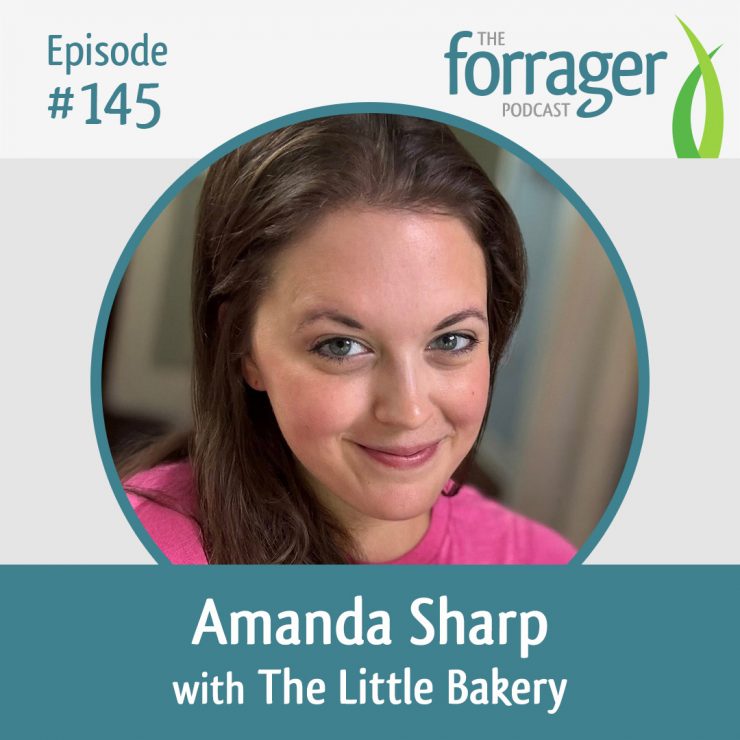
David Crabill: Welcome to the Forrager Podcast, where I talk with cottage food entrepreneurs about their strategies for running a food business from home. I’m David Crabill, and today I am talking with Amanda Sharp.
But before we begin, I’d like to tell you about the Simply Bread Oven. As you’ll hear today, it’s the oven that Amanda chose for her cottage food bakery, and it is a pretty unique oven.
It combines traditional baking techniques with cutting edge technology, so it’s both practical and futuristic. You can use it to bake breads, desserts, and more, and it’s a workhorse. You can bake up to 15 loaves in just 40 minutes. You can connect it to wifi control. Each of its three baking decks separately from each other, plus many more features designed to help you get the perfect bake every single time.
And Simply Bread doesn’t just do ovens. They have a growing line of high-end baking accessories available because their mission is to make the world’s highest quality baking products accessible to everyone. So if you’re looking to upgrade your baking game from beginner to professional, they simply have the right products for you.
I encourage you to check them out, and I think you’ll be impressed too. To learn more, go to forrager.com/simplybread.
All right, so I have Amanda on the show today. She lives in McCalla, AL and sells sourdough bread and other baked goods with her cottage food business, The Little Bakery. Amanda always wanted to open her own bakery, but couldn’t practically do so for health related reasons.
During the pandemic, she discovered authentic sourdough, which got her baking and eating bread again, and in 2022, she finally fulfilled her lifelong dream of starting a bakery. Within her first year of business, she became well established at a market and often sold over $1,000 worth of baked goods each week.
But despite having a loyal customer base, she recently received heartbreaking news that changed everything and forced her to pivot on the fly. In this episode, Amanda shares how she built a very successful cottage food business and was able to adapt amidst adversity. And with that, let’s jump right into this episode.
Welcome to Amanda. Nice to have you here.
[00:02:12] Amanda Sharp: Thank you, David. I’m so excited.
[00:02:15] David Crabill: You know, Amanda, I know you’re a big fan of the podcast, so you know the drill. How did it all get started?
[00:02:21] Amanda Sharp: Yeah, so I’ve always baked, I’ve baked since I was very little. My sister and I used to go in the kitchen, grab one of my mom’s cookbooks and we always wanted to make chocolate chip cookies, and then she would end up watching me while I baked. So that’s where baking started for me.
And then the bakery I don’t know, I’ve just always said that I wanted to open a bakery and over the last 10, 15 years. I’ve just done little things to start working on that. I worked part-time at a bakery on the weekends for a while. I baked for friends and family.
And then on March 13th, 2020, actually, like basically right before the whole world shut down, I was quitting. I quit my job and I was going to start working at a bakery. It was gonna work full-time at a bakery and then part-time from home. and then, you know, it was covid. That was 2020. So that ended up not happening.
And then I had a baby and then. sometime in 2022, I, for whatever reason, decided I was, too bored with just a baby, so I needed to start a business. So I, you know, posted on my personal Facebook, different stuff that I was baking, sourdough bread and cookies and things like that. And people were just really interested.
So I went from there, you know, started a Facebook page and it just kind of organically took off. I got invited to do a little craft market nearby, and that I think it, I say it gave me like a bug, a market bug. I love doing markets. There’s so much fun. So from that market, I just kept going and kept building.
And now here we are.
[00:03:55] David Crabill: Yeah, so you had this kind of dream. Dream to start a bakery for a long time, and I know you said you were baking as a child. When do you feel like it went from just being kind of like a childhood dream to being something where you’re like, okay, this is something I’m actually gonna start someday.
[00:04:13] Amanda Sharp: Definitely as a teenager I’ve always, I love art. I love being creative and, as a younger teenager when I graduated high school, I thought maybe I would go into interior decorating or something. I loved doing that, but it just didn’t really work out. I didn’t really find what I was looking for, but I still loved baking and I loved baking for friends and family, so I just, it was just like a constant, I constantly did it.
And then, So many people kept saying, well, why don’t you open a bakery? And it was already in my head that, oh, I could, you know, maybe I could open a little bakery coffee shop type of thing. So it was always just theirs from a teenager, mid, like young twenties. I just loved the idea,
[00:04:55] David Crabill: So why did it take so long?
[00:04:58] Amanda Sharp: Well, when I was in my twenties I talked to, actually it was the baker in town who made my wedding cake. I talked to him and I thought about working for him, but then I needed health insurance and I have to have health insurance because I have an autoimmune disease, so I have to have medication and stuff like that.
So it was just, I needed a job that provided insurance. And then when I got married, I got married in 2018 and I was talking to my husband, I was like, I really just, I was in hr. I did not enjoy my job at all. And I was like, do I have to keep working? I’m on your insurance. Why do I. need to stay at this job that I don’t love.
And he’s like, you don’t just find something else. So I did. So I was, gonna go to a grain free bakery because I was grain free at the time. And then, that 2020 covid happened, so it just didn’t work out. And then with a baby, your brain is just not, or at least I was not prepared mentally to do, have a baby and a business.
I waited till he was at least 18 months.
[00:05:59] David Crabill: Yeah. You were, so you’re kind of like preparing for this. I understand the health insurance thing, you know, didn’t lie to start it sooner, but you know, even when you had a job, you did work at this bakery in 2015.
Right? Can you tell me a little bit about that?
[00:06:15] Amanda Sharp: At that time I was working full-time at a local credit union, and I, I just, you know, like I said, I just really wanted to bake, but I didn’t know anything about starting a bakery or owning a bakery or even like, I had no idea what it would entail. So I was, I thought maybe I should just, get a job.
So I, there was this new. Bakery downtown in downtown Birmingham, and it was, it’s Birmingham Bread Works, it’s still open. And they had great products, great bread. So I took, I made some cupcakes and took them over there and said, Hey, this is who I am. I want a job, can I get a job? So basically, I don’t remember if they hired me on the spot or emailed me back later, but, yeah, I worked there Saturdays front counter taking orders and stuff and then helping put out pastries and Sunday afternoons I would go and do sourdough and pastries and different things like that.
[00:07:06] David Crabill: And it looked like you worked there for about six months. I was just curious why you didn’t work longer.
[00:07:12] Amanda Sharp: I wanted to work longer, but like I said, I have an autoimmune disease and I was given some medical advice, told that it’s just not feasible to work seven days a week. It was really not smart to just constantly be going like that with, autoimmune issues. So I decided, you know, I couldn’t keep the bakery, they couldn’t provide the health insurance I needed, so I had to stay at the credit union at that time.
[00:07:33] David Crabill: Yeah. Well ’cause you’re essentially working two jobs, right? So
[00:07:37] Amanda Sharp: Which now I say, you know, what’s the difference? I’ve got a 4-year-old now and I’m doing the bakery. It’s way harder, it’s way more work now.
[00:07:45] David Crabill: Now I saw, it’s interesting, you know, you went grain free, you’ve worked at this bakery, but you were grain free for a little while and then you went back to not being grain free. Can you tell me a little bit about that?
[00:07:57] Amanda Sharp: So I got married in 2018 and I wanted to come off of my medicine for my disease. The only way I could consistently stay healthy off of my medicine was by changing my diet. So I did that and it kind of worked on and off. It didn’t work very well for me. So for three years I just didn’t eat grains or gluten or I tried to avoid it as much as possible. But then after having my son there was a point where I just started having too many issues and couldn’t get healthy and had to go back on the medicine and the grain free just wasn’t working like I thought it should.
And then I tried, some heritage flour. And sourdough, and I had no issues eating that, and I was just shocked. So I was like, well, maybe I don’t have to be grain free forever. I can have, bread again.
[00:08:51] David Crabill: Now, it’s interesting because you were going to start working at this bakery in 2020. Then of course the pandemic happened, everything changed, and then you ended up starting your bakery at the end of 2022. So I’m just curious as to why you didn’t choose to like go work at a bakery when you could.
I know you had a baby, you were busy, but what caused you to decide to start your own business instead of trying to work for someone else?
[00:09:19] Amanda Sharp: I really love the idea of being able to do it from home. I don’t have childcare. I’m the only one, I mean obviously like grandmothers and stuff, take care of my son when I can’t, or my husband, but I wanted to be the primary caregiver. For my son or any future children. So I wanted to be able to do something that allowed me to stay home and have that time with him and, you know, have my own schedule.
If you have a job where you go work for somebody else, they stay. These are your hours and you can work this time. Come in here. And I just wanted to work when I wanted and I also, I guess it keeps coming up. I have that disease and, you know, I need a lot of sleep, so I can’t be the one who wakes up at 1:00 AM or 3:00 AM or whatever crazy hours that some bakers do.
I have to have consistent sleep, and that is really hard with a child. So adding a business on top of that, I needed to be able to structure my business around the things I needed.
[00:10:13] David Crabill: What do you feel like you learned from. The bakery experience you got in 2015 that you brought into your own bakery.
[00:10:20] Amanda Sharp: A lot of skills like, just from shaping skills to customer service skills to, baking in very large quantities because we, we, you know, it’s a bakery. You, we had to bake a ton of pastries and tons of bread and huge batches. So that, at the beginning of my own bakery, I didn’t really need that.
But now I do a huge batches of sourdough. That helps me a lot.
[00:10:47] David Crabill: I know sourdough is what you primarily do now, did that bakery do sourdough?
[00:10:53] Amanda Sharp: They did a, I call it now a version of sourdough because they would add yeast and at the time I didn’t know any different. But I don’t consider that true sourdough now.
[00:11:04] David Crabill: Yeah, kind of like an American sourdough
[00:11:07] Amanda Sharp: Yeah. We were learning those same skills.
[00:11:11] David Crabill: So what is different about running a sourdough bakery in your opinion?
[00:11:17] Amanda Sharp: So there’s a lot of, you can’t just have it like cookies I guess, and things like that. They can be done fairly quickly. Sourdough is a process and it needs to have that good long process for it to be the best quality product. So you can’t just say, oh, I need whatever amount of cookies by tomorrow. You have to have like a certain timeframe. So there’s that aspect of it. And then, I don’t know, I feel like with sourdough it is, a health food more than anything. People don’t really look at it like that. They just kind of say, oh, it’s bread. But it is much better for you than your typical like sandwich bread or something like that.
And that’s, Before I started the bakery, I was doing this for my family, baking it for us. And I feel like it helped us a lot with, you know, we were, we had been eating some like, not great ingredient gluten-free bread. And then this sourdough, it is just such simple ingredients helped us with our gut health and with other stuff and I want to be able to give that to other people.
[00:12:19] David Crabill: It sounds like your autoimmune disease has definitely had a big impact on where you’ve gone with this bakery dream. If you didn’t have that issue, where do you think you’d be today? I don’t know. I was diagnosed when I was 16, so it’s been more than half my life at this point, so I honestly have no idea Everything would be so different. But having a disease, especially one that affects your, like gut health and other things like that, it really makes you think about what you’re putting into your body.
[00:12:54] Amanda Sharp: And that is what prompted me to, you know, like that’s why I care so much about the ingredients that I use and different [00:13:00] things like the amounts of sugar, stuff like that. It really matters to me.
[00:13:05] David Crabill: Does that come up in markets? Like do you talk a lot about that with your customers?
[00:13:10] Amanda Sharp: Yes, for sure. Some people don’t care at all. Some people find it really interesting. One of another, one of the things that I don’t use is artificial dyes. I have not used those in years and years. And especially now that I have my own son, I can see a huge difference if he does have something with artificial dye.
So we just avoid those at all costs. So I get a lot of. Praises from other moms or dads who see something like my Pop-Tarts might have a sprinkle on them sprinkles. But they always ask if those are dye-free. And if, you know, when I tell them, you know, I don’t use the, I use the super natural sprinkles, not the artificial dye ones.
And they are usually very glad
[00:13:50] David Crabill: And how old is your son now?
[00:13:52] Amanda Sharp: He’s four.
[00:13:54] David Crabill: So what has it been like running the bakery with him?
[00:13:57] Amanda Sharp: there are definitely ups and downs. There are days where I need to be working in the kitchen, but I would much prefer to be playing with him or doing something with him. And I also, I always say that, I need to be in the kitchen, but I really, I feel like I need to be with him. He’s my priority.
So it’s just finding a balance is really tricky, if not impossible.
[00:14:20] David Crabill: Do you feel like you’ve intentionally restricted your business in order to try to spend more time with him?
[00:14:28] Amanda Sharp: Oh yeah, for sure. There are lots of events and different things that I won’t do just because I know it’s just gonna take too much time away from him and I don’t, I just don’t want to. So maybe in the future we could, you know, add more or do more, or I could have more bake days or whatever. But right now I just want to enjoy my time with him.
[00:14:47] David Crabill: Is there any part of you that wishes that you’d waited until he was, say, in grade school before starting the business?
[00:14:55] Amanda Sharp: Sometimes I do think it might have been easier, but at the same time we are actually gonna homeschool, I was homeschool than we plan on doing the same with him. So I don’t know that it would really matter.
[00:15:06] David Crabill: So you decided to finally start in 2022. can you take me through how you started? Like what was the first month like?
[00:15:15] Amanda Sharp: Gosh. So I think when I very first started, I was just posting on my personal Facebook and I had already had like a few orders here and there from my husband’s coworkers or things like that. So I got on Canva and made like a really simple menu that had to just a couple of bread flavors and some cookies, and I posted it on my Facebook and I think I got a few orders, like maybe two or three, and then. I don’t know. I just went from there and I decided, you know, let me, not block up my personal Facebook page with the business. Let me just make a separate page. So I made the little bakery page and then some of my friends out of their own friends, and it just kept growing.
And then when I got invited to that first market, it really took off from there.
[00:15:58] David Crabill: Why did you choose to have the name The Little Bakery?
[00:16:03] Amanda Sharp: That is funny. So my husband, we were going back and forth and he’s like, why don’t you call it what did he say? La Petite Patisserie. And I was like, Jonathan, this is McCullough Alabama. No. First of all, I don’t speak French and I don’t think it’s gonna take off. So I just kind of, I couldn’t decide what to call it.
And then I was like, well, the little bakery is cute and this is Alabama. People understand what that means. It’ll be easy. So we went with that.
[00:16:29] David Crabill: And it is been a long time since I’ve had someone from Alabama on the show. What was the process like for you to get a cottage food permit?
[00:16:39] Amanda Sharp: So it was, fairly simple. First of all, I went to the, the Forrager website to get information, and then I found a form. I think I had to email somebody at the county to figure out what I needed to. I used the cottage application form, I put my information on that.
And then I also had to create labels. And there are very specific rules for the labels, like the font has to be a certain size and whatever. So I created my labels and sent those in along with the application. And you know, it took a couple of weeks. I did get denied one time because I didn’t include all of my labels.
I thought they just wanted an example, so I just sent one label. But they wanted every single label of everything I was gonna bake. So I sent in a second time. Oh, also you have to do the food handler. So I got my food handler certification, which only took like maybe an hour or two online. So all of that goes to the county and then they approve or deny.
And then once you’re approved, you can just go forward from there and bake from home.
[00:17:43] David Crabill: Was that a challenge? Like when you have to submit every single label you could potentially imagine selling.
[00:17:51] Amanda Sharp: Yeah, it was overwhelming. I get asked a lot like, how do I do this? How do I get to do what you’re doing? And I tell them, I spoke to somebody at the county and I don’t know if it’s a true requirement, if they actually really do want every single label, but they did for me.
So you can try sending in one. I know people who send in just one label and they were approved. But I think it was just that I got that one person who was being very thorough.
[00:18:16] David Crabill: Yeah, it, I, I see on my side it says that. The applications do vary by county, but typically they do want every single product. So it depends though uh, just on who your health inspector is. And it’s, it is so restricting when states have that requirement, you know, do you have to like send in more labels anytime you want to experiment with a flavor?
[00:18:39] Amanda Sharp: So I haven’t, so far I’ve just been, if I come up with a new flavor, it’s my new flavor. And then I have to reapply in January. So when I do that, I’m gonna send in all of my new labels I’ve figured they probably would rather me send it in now, but that’s just such a big process to do that all the time. And I have so many customers who want specific things that I just honestly. It might be a little bit under the table, but at the same time, I don’t know if it’s that big of a deal when my other labels with similar ingredients have already been approved.
[00:19:12] David Crabill: Yeah, and the health department might not care too much, you know, ’cause it’s just is a lot more work on their plate. And I do think it’s really impractical when states do require you to put in a new label every time you wanna experiment with something, especially a flavor. Like If you already have your base.
Product approved and they do just try and tweak the flavor.
[00:19:30] Amanda Sharp: Like it.
The biggest tweak I do is like, it’s usually with cookies. There’s so many cookie flavors and it’s like it goes from chocolate chip to white chocolate chip to white chocolate with blueberries. So it’s not like it would just be kind of redundant for them to keep approving over and over. And now if they asked me to, would I do it?
Absolutely. I would totally send in every one, every time I come up with something.
[00:19:50] David Crabill: Yeah. Well The whole concept of a cottage food business is kind of like a test bed, right? Like you’re kind of growing and so you kind of need to have that flexibility as you figure out what customers want. So when you started selling, what was your menu in the beginning?
[00:20:06] Amanda Sharp: It was pretty simple. It was, I had sourdough bread maybe a few flavors like blueberry, lemon and cheddar, jalapeño in the original, and then chocolate chip cookies. I had oatmeal cream pies, chocolate chip cream pies, and probably some muffins I think. And that was about it.
[00:20:23] David Crabill: And how has it changed over the last two and a half years?
[00:20:28] Amanda Sharp: So I still have all of those items and then I probably do way too much. I do croissants and I do Pop-Tarts. I guess the most part that it’s expanded is just the amount of the flavors that I offer more than anything.
[00:20:41] David Crabill: Yeah, I see you got like sourdough bagels. Sourdough poptarts. I think sourdough Pop-Tarts is the first time I’ve seen that. Is there any challenge when working with sourdough like to make a bagel or a Pop-Tart?
[00:20:56] Amanda Sharp: The bagels are definitely more challenging than the Pop-Tarts, the bagels. I usually do an overnight recipe, so I mix them a little bit later at night and they sit overnight and proof and they tend to be a tougher dough. It’s just tricky to get it just right. At least for me. So far, I’m still practicing that.
I love the bagels once they’re turned out, but it’s just with the sour dough taking the time it takes, it’s just a little. Hit and miss sometimes. So I play with them just about every week and don’t always sell them. I might just end up with a bunch that I eat from home. And then the Pop-Tarts. The Pop-Tarts are actually pretty simple.
It’s a basic, pie crust recipe sort of, but it’s, you know, you just shape it into a Pop-Tart and you fill it instead of making it a pie, it’s a Pop-Tart.
[00:21:39] David Crabill: And it looks like not all of your. Your baked goods are sourdough, is that correct?
[00:21:43] Amanda Sharp: Right?
[00:21:44] David Crabill: Yeah. So what went into that decision? ’cause of course you personally prefer eating sourdough for your own health reasons, but it seems like a conscious choice to have more than just sourdough on your menu.
[00:21:58] Amanda Sharp: So I really wanted to do the things that I love to bake. I love to bake chocolate chip cookies. That’s something I’ve baked since I was a kid. So I wanted those and I knew other people would like those as well. And then I tried a sourdough cookie recipe and they were okay the first time, but then the flavor, ’cause you usually use a, a sourdough discard in a cookie instead of it being like the fed sourdough product the, starter. And it just, the flavor varied too much for me. Sometimes it would be more sour or less sour, and I didn’t want to put out something that I didn’t know was gonna taste the same every time.
[00:22:33] David Crabill: Do you think that if you were just like, I’m a sourdough bakery like, and you just focused and niched down on that, do you think that that would work in your area?
[00:22:44] Amanda Sharp: I don’t know. My, I feel like my area is hard. We’re in, we live in an unincorporated part of town, so the markets that I go to are typically about 25 or 30 minutes away. So I think over there it would be fine, but if I wanna keep all of the customers I have here in town, then it needs to be a little more expanded, if that makes sense.
[00:23:05] David Crabill: Have you tried any products that just didn’t work?
[00:23:09] Amanda Sharp: I did a sourdough flavor that I absolutely loved, it was sourdough with golden raisins and pistachios and like some spices, like cardamom and stuff like that. I thought it was amazing. I don’t think I sold one of those.
Not one.
[00:23:23] David Crabill: Do you use sample products at markets?
[00:23:27] Amanda Sharp: I do not. I’m confused on the laws about sampling. I. Think you have to like label and, and package everything the same as you would if you were gonna sell it in Alabama. And I just don’t honestly wanna take the time. I don’t take the time to do that because it takes away from the other stuff I have to package and get ready.
And then also takes away time from my family to have to package that. I don’t usually get asked for samples, maybe like once or twice a market, otherwise people just, you know, they’d like what they see and they go for it. So I haven’t seen a need to have samples.
[00:24:01] David Crabill: well, I was just thinking with the golden raisin pistachio flavor, you know, sounds like it. It may not be good, right? But then you taste it and you’re like, oh, this is actually good. Like I could see it potentially, I. Working for that reason. But it sounds like for the most part, when you put out a product, it sells pretty well.
[00:24:19] Amanda Sharp: Yeah,
[00:24:21] David Crabill: and I see that you mill your own flour now.
[00:24:25] Amanda Sharp: Yes. That’s something I’ve been wanting to get into for a while. I actually used to do it before I went grain free. I had a, just a KitchenAid attachment, and we would make bread with that and I didn’t love it. The gr the, uh, KitchenAid attachment just didn’t grind it fine enough. But over the last year or two, I’ve really wanted to invest in a grain mill and I just didn’t. I, you know, I was kind of told, oh, people won’t wanna buy that. They won’t care. But I really wanted it for my family. So when I started talking about that with customers, they were so excited that I could possibly offer that. So that’s why I went ahead and decided to jump into it.
[00:25:02] David Crabill: Do you feel like it changes the flavor of your products?
[00:25:06] Amanda Sharp: Oh yeah. I think it makes it taste much more fresh, much better.
[00:25:11] David Crabill: And do you feel like milling your own flour has allowed you to sell more or allowed you to increase the price stuff? Obviously that’s adding a lot of labor to your process, right?
[00:25:23] Amanda Sharp: Well, Not a ton, just so you know. I just have to think, oh, I need a grind, whatever amount of flour I need for whatever recipe. So it’s not a whole lot of extra work. I didn’t increase prices. I didn’t feel the need based on the amount of. Grains I was buying and the cost, I just didn’t, I didn’t, I took on if there was any extra cost, I took it on.
Since I was gonna do it for my family anyway, I was gonna be buying these grains and making the food anyway, it just really didn’t add that much. Maybe like of 10 minutes more per like bake day.
[00:25:55] David Crabill: Well, It’s the other thing too, right? You might be able to get. Pre milled flour for a certain price that could potentially be lower than the cost of the actual grains.
[00:26:03] Amanda Sharp: Yes.
[00:26:04] David Crabill: Have you noticed that there’s any kind of difference there?
[00:26:08] Amanda Sharp: There’s a little bit of a difference in cost, the grains since I buy them in such large bulk amounts, it’s just not, it’s made like pennies. if anything,
[00:26:17] David Crabill: Let’s talk about pricing a little bit. What pricing did you start out with and how has it changed over time?
[00:26:24] Amanda Sharp: It’s changed a lot. I feel like I had a large loaf of sourdough bread, an original loaf. It was either $5 or $8. I think I started at $5 and now it’s $10. And my flavors, I don’t remember what they started at, but now they are $16 for a large and $9 for a small. And then my chocolate loaves are $18 for a large and $10 for a small.
[00:26:49] David Crabill: And then what about the pricing for your other products?
[00:26:52] Amanda Sharp: I think they’ve all just about doubled. So I think I had cookies for like a, maybe a $1 or a $1.50. And now the cookies are [00:27:00] $3 each. The cream pie cookies were $5 and now they’re $7. Pop-Tarts are $7. So I didn’t have Pop-Tarts in the beginning, but you know, they, it’s increased by a couple of dollars or by double.
And part of that was once I actually put everything into a spreadsheet, I realized I was not making any money at my original prices. So I did have to increase a little bit. And then once I took on more markets, you know, there’s a lot of overhead with markets with needing. Insurance and a tent and the fee and different things like that, and just the extra work it costs.
So the prices increased a bit because of all that.
[00:27:38] David Crabill: Those prices are pretty high. You have a cream pie cookie for $7 and you’ve got these, flavored bread loaves for $16 to $18. I mean, that’s a pretty, pretty high price. Is that typical in your area? Like are things pretty expensive generally speaking?
[00:27:56] Amanda Sharp: It depends on what it is. My area, not so much the area that I sell that I do markets in a little more higher income area. A little more expensive things. But I rarely ever get a complaint. Even in my area. I don’t usually get too many complaints about the cost.
[00:28:15] David Crabill: Do you find a lot of customers come by your booth and then look at the price and then, and then leave?
[00:28:21] Amanda Sharp: Not often. Not usually maybe for a cookie. I’ve had a couple people go, oh, $3, but they’re also like, you can get two for five and they’re very big. But I’ve built such a great customer base. One, they know my products, they know how, with the quality that I put out, and they have zero problem with the cost.
And really, I just haven’t had too many complaints. I have thought I’d go back and forth on how long that I want to continue doing markets, and I have thought if I stop, I would lower prices some so, you know, I don’t have all that overhead anymore. So there’s just no point in charging that much if I don’t do markets.
But I’m not certain what direction I wanna go yet.
[00:29:01] David Crabill: Do you sell anywhere else right now? Like other than markets?
[00:29:06] Amanda Sharp: No, just, I’ve got two markets right now and I sell from home. But that’s it.
[00:29:12] David Crabill: Well, When you say you sell from home, like are you just doing deliveries or something?
[00:29:18] Amanda Sharp: Yeah. I’ll, do like a delivery or meet up with somebody. And then like this week I’ve done a birthday cake and a smash cake for a 1-year-old, and then a really good customer ordered a lamington. I’ve never heard of it, but he requested a very specific type of cake. He saw a video on YouTube or something and asked me if I could make it. So I threw that together and they, both of those orders will be picked up from my home.
[00:29:42] David Crabill: So you’re doing custom orders too, like you’re actually doing designed cakes.
[00:29:48] Amanda Sharp: Yes. Sort like simple, not like amazing, huge cakes. Just simple like a strawberry cake.
[00:29:54] David Crabill: Is this related to, I don’t know, like a lot of times podcast guests say, I can’t say no. I have to say yes to anything. Do you feel like you fall into that trap?
[00:30:05] Amanda Sharp: Oh yeah, for sure. I’ve gotten actually a lot better at saying no or saying not right now. Especially since I’ve had my son, I’ve gotten a lot better at saying, no, I wanna do this instead. But yeah, sometimes I do have a hard time not accepting certain orders, but at the same time, you know, I didn’t this week with those two orders.
I didn’t have a market this week. I didn’t have anything else, and I was like, why not? I love making cake, so let’s do it.
[00:30:32] David Crabill: Well, It sounds like the bulk of your sales come from markets. How much do you typically sell at a market?
[00:30:38] Amanda Sharp: It’s varied a lot, especially this year because I’m not at the farmer’s market that I started at. So I’m at my AV Hills market, that’s every other Wednesday. Usually I think I did about 40 loaves of bread at my first market there. And I’ve only been there, I was there twice last year and once this year.
So I don’t really have a good gauge on that one yet. A bunch of cookies I sold about I think maybe 20 Pop-Tarts or something like that. And then I’m also at a market in another city nearby. And that market, I don’t take my bread, but I did a lot of croissants. I can’t remember how many, maybe like 30 croissants, something like that. I don’t know. yeah, it’s hard to figure out. Gauge. I think I’d usually take about 15 or 20 cookies 15 or 20, like cream cookies, different things like that. And then a Ton Pop-Tarts are really popular. So like, I think I did 27 Pop-Tarts, or 30 Pop-Tarts in Helena cinnamon rolls, things like that.
[00:31:34] David Crabill: Well, you mentioned the farmer’s market that you started at and I definitely wanted to talk about that ’cause that’s a pretty unique part of your story. Can you just talk a little bit about that market and what happened there?
[00:31:45] Amanda Sharp: I, I don’t even know, I’ve been praying about how to talk about this. So I had started at that market in 2023, not at the very beginning of their season, but about halfway, midway through. And that market goes from this year. It was supposed to go from February to November. So, I was basically promised that I would be the only bread vendor there if I booked as many Saturdays as possible. Which, I mean, who’s gonna turn that down? That’s like an amazing opportunity. and then don’t really know what happened. That was 2023 then 2024 was fine. I booked like every Saturday.
I only had a couple off, one for my husband and our anniversary and then another one to celebrate a family member’s birthday party. And the manager, the market manager was gonna bring in a second bread vendor when I wasn’t there. And I was totally fine with that. Had no issues. you know, like, that’s totally fine. But then this year she decided to, without telling me, I found it on Facebook that she wanted to bring in. Another bread fender while I was there. And normally I would just not have a problem with this except that I gave up every Saturday for this market because I was told I would be the only one.
And the foot traffic has just taken a huge dip in the last two years. And, you know, I’ve invested in my oven and other products and I just couldn’t, I can’t take that hit of having the competition at that market. So I told the manager like, you know, if you’re gonna bring another person in, I’m gonna have to look at my schedule.
I’m gonna have to, I can take off time to spend more time with Judah, my son, or I can just do other events and she’s on the phone. She seemed okay with that. And then, I had to mark it with the other bread vendor and that was okay. She told me she only broke even just because the foot traffic was just so, there’s just not enough.
And I was established there already. And I told, our manager, emailed me and asked me how it went. So I told her, you know, it was what it was. But like I said before, if you’re gonna have another brand vendor while I’m there, I’m gonna have to look at my schedule. I don’t, there’s no reason for us both to be there.
One of us can have all the foot traffic or the other, we can’t. This market just could not sustain two bread vendors. Not yet anyway. So maybe if we grew more, sure, but at this point there’s just no way two bread vendors could be at that market. So I told her I wanted to take 10 dates off. I sent her, you know, a specific list of dates based on different things I was doing.
Like tomorrow I would’ve been at the market. But my aunt asked me to make a birthday cake. So I was like well, I’ll take that date off. And then a couple more where I thought my family might wanna do something, or maybe if there was an event, I could get an event in town. So I sent her that list of events and she just was, I guess she didn’t like that.
I don’t know. So she told me basically that I could only come back once a month and some other stuff. And I was like, okay, that’s fine. I’ll just, she sent me a list of dates for once a month. I accepted the dates, and in the meantime I had some friends I, I told them like, I’ve just been cut off of all these dates.
Do y’all have anything going on? So they set me up at some other events and then I told my customers, I announced it on my Facebook page, told ’em what was going on that I only had, or at least the gist of it, that I was, you know, gonna be down to once a month. my last market there, I think was March 29th. Then the next weekend on April 5th, I was in Helena doing an event. And while I was at that event, I got an email that said I was no longer a good fit for that market and I basically was not gonna be allowed back. So, and I was blocked from all the Facebook pages and things like that.
[00:35:24] David Crabill: so I mean, you clearly were doing this once a week, and about how much were you selling each week at that market?
[00:35:34] Amanda Sharp: So in, in 2023 when I started, it was easily like 80 to 90 loaves every week. It was. ridiculous. And in 2023 I only had the Dutch ovens, which is crazy. I was making all that with Dutch ovens in 2024. My husband and I were really hoping it would be the same. So we invested in the Simply Bread Oven and the foot traffic just never picked up as much as it did in 2023.
[00:36:00] We, I maybe sold like between 50 and 70 loaves a week, usually 70, but often it was less than that. And then this year the foot traffic was down so much. Like I didn’t sell more than 40 or 45 loaves the few Saturdays that I was there this year.
[00:36:18] David Crabill: So, I mean, What was it like when you got notified that you could no longer be at the market?
[00:36:26] Amanda Sharp: it was sad. Because, oh, I might cry. Um, I had invested so much personally and financially, and then to be told, you know, you’re not a good fit after all the work I’d done, I just didn’t see it coming. I thought I would at least be allowed to, you know, work out the rest of the year. so I just, I hated it to not be able to say a true goodbye to my customers who I’d seen every week for like three years. It was hard. And the other vendors feeling like I couldn’t, you know, I was blocked. I was blocked from all the Facebook pages, both personally and. My business. So like, I don’t feel like I can go and shop at that market and see the other vendors. Oh my gosh.
[00:37:14] David Crabill: Well, I was thinking, you know, it’s, it’s, um, I don’t know if there’s been something quite like it on the podcast before and it’s just about as close as like, getting fired at a job.
[00:37:25] Amanda Sharp: Yeah. that’s what it felt like. And there’s actually like, I don’t wanna get too much into it, but you know, I’m not the first person who’s had this experience at that market. Unfortunately. There’s other vendors who have come and gone and, you know, they joke, the joke is that they’ve been like, quote unquote fired.
And, I was at a separate event when I got that email and I was like, oh, I can’t, it was hard to process. What was happening while also trying to work and do another event. And I was like, wow, I’m really, I’m really on that list now of these other people who have had the same experience and I [00:38:00] just didn’t see it coming.
[00:38:02] David Crabill: well, I mean we often talk about this with like Facebook, right? Like, You don’t own the platform, right? So, you know, you know, Facebook could do whatever, and so you don’t wanna rely on it heavily. But we have to always remember that that can be true of markets too.
You know? It’s their business. It’s not your business. And I mean, it sounds like, you know, some questionable decisions were made, but I know that religion is a big part of your life. What was your perspective, you know, I know it was hard in the moment, but like, what helped you get you through yeah,
[00:38:35] Amanda Sharp: I’m a Christian. I’m a big believer in, you know, I’ve been praying. From the time I started my business, you know, that’s the thing I do like, one of the things I hate doing is packaging my products. And so to get me through the process of packaging, I’m standing there praying for my business and the direction I need to go and praying for customers.
And I really believe that maybe God just decided, you know, this is not a right fit. It had been really stressful at that market. I think maybe it was just not a good fit anymore. And it was just a way to get me out of not the best situation for me and my family. That’s, you know, the way I view it. And, you know, trust the process that God has planned for me.
even being like. Sad about it. It was also so clear because of the way things happened and different doors opening and different opportunities just being basically handed to me in the process of also all of the drama of getting kicked out of this market. It was just clear that God had his hand either in it or just, guiding me.
He was, I was just comforted. I had a piece you know, I wasn’t really worried about. you know, I’m, you know, the thought might have popped up where I was like, oh my gosh, my business is gonna fail. What’s gonna happen without this market? But I knew, you know, that market didn’t make me. And you know, she’s not gonna break me either.
Like the market, just because I’m not there anymore does not mean it’s my business is gonna be ruined or gonna be messed up. I really feel like baking is a gift. And being able to make these products and making them with love and being able to share them with people is a gift that God’s given me.
And I think just having, I think he’s just guiding me in that if, if that makes sense.
[00:40:17] David Crabill: What were some of the opportunities that came up since that happened?
[00:40:21] Amanda Sharp: well, the podcast for one, this, So when I was asked to do this interview, I had been baking for some event. I cannot remember which one. It’s, the last month is kind of a blur. But I was doing something and I was really just feeling bummed out. I was, my schedule had been changed.
I think I was down to once a month. I had not been kicked out yet. And then I was telling my husband like, this is just not fun anymore. This doesn’t feel like it used to. I don’t like not being on good terms with people and I’m just not having fun and I don’t know what to do next. And then I get this message on Instagram, like inviting me to do this podcast, and it’s like, oh, wow.
Like that was just totally outta the blue. And then, um, different encouragement from customers have really, been a big part of that feeling like I have a piece. And then just getting in so easily at other markets and events. And then being emailed by, you know, there’s been so many like event coordinators and managers who’ve just emailed me like, oh, hey, I know you’re not doing that anymore, but would you like to do this?
Can you come out to our event? You know, I was not seeking all of that out. It just kind of happened, just kind of, presented itself, and I’ve just thought that was really cool and comforting. And then there’s a couple other things that haven’t happened yet that I don’t really know if they’re gonna happen, so I just haven’t put it out there yet.
But like there, I met somebody at my very last market at Brocks Gap and I, I haven’t shared that with anybody but my husband. But, but just the fact that she, that person was my last customer and the things that she told me, I was like, wow, there’s no way that wasn’t God.
[00:41:56] David Crabill: Well, One thing that I noticed is that you’re super duper open on social media and not just sharing things about your business. You share things about your personal life. So of course you’re very open about how this all happened. What has been the response from customers?
[00:42:12] Amanda Sharp: My customers have been amazing. I tried to be careful ’cause I didn’t want to, you know, I still have friends at that market. I didn’t want people to not go to it anymore. I didn’t want them to feel like it wasn’t a good market. I have a lot of vendor friends who still go, but a big part of the response was that, oh, we just won’t go to it anymore.
You know, And I’ve talked to my vendor friends since then, my different, you know, the people who own different businesses and they’re kinda like, you know, we understand you have to do what you have to do. You had to post something that was, that was my only market. That was the only place my customers could see me.
And so, posting about it was basically the only way I could let them know. And everybody else had other places they go to. So they understood that I needed to, let everybody know what was going on, at least to an extent. And then customers, they’ve just been so supportive. You know, they’ll, they’re willing to come pick up from here.
They wanna see me at whatever market I’m gonna be at. They place orders frequently. So it just, it hasn’t, nothing has stopped. It’s just been, you know, I have free Saturdays now, basically. Well, I don’t know if, this was one of those times, but
[00:43:19] David Crabill: have there been moments where you considered just stopping the whole thing or quitting your business?
[00:43:25] Amanda Sharp: Oh yeah, for sure. Especially in the last month, I thought why am I even doing this if it’s, this was a lot of stress and unnecessary drama to deal with and I just don’t have to deal with it. But, you know, I just, I still go back and forth about how I’m gonna continue after this year.
You know, I’ve, I’ve committed to these two markets for the rest of the year, and I’m gonna. For sure continue and work those days out. But as far as next year, I just don’t know what I’m gonna do. I might just do baking from home.
I don’t wanna give up baking, that’s for sure. And I just, my husband tells me I like my business too much to stop running it, so I probably won’t stop, but I don’t yet know what it’s gonna look like.
[00:44:10] David Crabill: Well, every business has up ands and downs and you know, has very challenging times. What do you feel like keeps you going through the challenges?
[00:44:20] Amanda Sharp: Definitely the joy I have just in baking, I just love it so much. And then knowing that my customers love it so much, my customers are so kind and supportive and they really love my product. Nothing has happened yet that has gotten me so down that I would want to stop.
[00:44:39] David Crabill: You mentioned that you invested in a simply breaded oven. Can you walk me through what went into that decision?
[00:44:48] Amanda Sharp: Yes. So that was, um, because I was at that market every Saturday and baking like 80 to 90 loaves a week in Dutch ovens. It was just, too much that I could only do four loaves at a time. I looked into maybe doing some open baking in my oven. It just, and it was just, the process was just, easier to invest in a true bread oven.
my husband is in finance. He’s, the money guy, so he knows I sent him a few options and told him what I was thinking. And then I kind of like backtracked, like I got very nervous. I was like, I cannot spend this money on this oven. This is crazy. I don’t need this. And then he really kind of pushed me and said, no, no, no, it’ll be great.
You’ll love it. It’ll be so much better. You’ll save so much time. and it has, it has given me so much time back into my life. I don’t have to spend hours and hours switching over Dutch ovens and changing lids and doing things like that. It’s helped so much. Totally worth it.
[00:45:42] David Crabill: Why did you decide on the Simply Bread oven as opposed to another oven?
[00:45:48] Amanda Sharp: I really liked first of all, that it has the automatic steam. That was a big factor. And it just really seemed it was pretty simple to use, user friendly. And I could just kind of, turn it on, let it go, and. Let it do its thing and you know, I only have to do a few things as opposed to like having Dutch ovens and you’ve gotta have the oven set and do a certain thing and take the lids off and blah, blah, blah.
And then some ovens, you know, with a, a young son he’s constantly following me around like a little duckling and so he wants to be right there. So if I didn’t, I was a little nervous to have an oven where I would have to open it and add steam manually. I wanted that, that was a big factor. And then really just I saw so many other bakers seeing its phrases on different Facebook groups and things like that, and I really felt confident that it was the right way to go.
[00:46:36] David Crabill: Is there other equipment that you. Have invested in your business?
[00:46:41] Amanda Sharp: I’ve got the grain mill, so we did the mock mill, grain mill. That was a big one. And then other than that, it’s usually my biggest investment is probably, other than the oven is ingredients.
[00:46:52] David Crabill: Well, we mentioned that you share a lot on social media. What do you feel like you’ve learned about social media and [00:47:00] growing your accounts?
[00:47:02] Amanda Sharp: I never thought it would grow, and it’s not huge by any means. They’re much larger Facebook and Instagram pages out there, but I started thinking it would just be for friends and family, so I was like just being open and then it’s what I got comfortable with.
And I really feel like your customers want to know you. They love your product, but they also really wanna know about you and your family and what you’ve got going on. Like, I’ve developed relationships with a lot of these people that I see every week. They wanna know about you and your.
Family and what you’ve got going on, not just, bread facts I guess, or, so it’s just, it helps a lot to make it a little more personal, to make people feel connected. People really want that connection. especially after Covid in 2020, I really enjoy having that connection with people.
[00:47:50] David Crabill: Do you feel like there are things that you’ve learned with Facebook or Instagram that have helped you get more likes or views on your posts?
[00:48:01] Amanda Sharp: Not really, I find it very annoying actually. Like it’s, I’m terrible at scheduling out posts. I don’t do it. I just post on a whim. So like, I do know that if you use a good photo that maybe it’ll get more attention or more likes. But other than that, I really don’t try that hard to be honest.
I just. Post you know, if I’ve got a bake day coming up, I’ll think, oh, I need a post to remind people they need to order or they, I’ve gotta market and they need to know where I’m gonna be. So I’ll do that. But it, I don’t put that much thought into it. Maybe I should, but it’s just, I kind of use it as it’s a business page, but it’s probably a little too personal to be honest.
[00:48:38] David Crabill: Well, a lot of people in your position, I mean you, you do a lot of markets, right? And in particular, you’re doing this one market exclusively or almost exclusively, a lot of people in that position might not put any effort into social media because they’ve got their traffic at the market, so you don’t really need social media.
So did you find that it was like essential for you to have that social media account when you basically got cut out of this market? Or did you have another way of communicating with them?
[00:49:08] Amanda Sharp: So I do have an email list. I find I get more, which is unusual. I get more feedback via Facebook than I do on my email list. So I do have that contact. But other than that, my biggest way of reaching out to people was Facebook and Instagram. And I do, you know, I have a few customers like phone numbers if I need to reach out to them that way or they wanna reach me.
But other than Facebook and the email list, that’s what I’ve got. So I did send an email when, when all this went down too. I kind of condensed my Facebook post and sent an email to let everybody know too. But really it’s my only way of communicating regularly with customers, especially now that I’m not at that market.
[00:49:46] David Crabill: Did you have most of your returning customers on your email list?
[00:49:51] Amanda Sharp: Yes, most of my really like, weekly customers, they’re on that list. They’re, um, on Facebook and on that list, there’s a few that [00:50:00] they don’t typically use one or the other, or they only use Instagram or they only use Facebook, or they may or may not see the email.
But I think the thing that I like about Facebook is that I get the automatic response that I get, I get comments or likes or that I know people have seen it. And with an email, you know, you see the list. I use MailChimp, I think. And how many people have read it or whatever.
But I’m honestly not great at being very consistent with emails. I’ll do it if I’m gonna have a market, I’ll say, Hey, I’m gonna be at this market. But it’s just easier with all the other things I’ve got going on to like, hop on Facebook and make a quick post and put it out there and let people know what’s going on.
[00:50:36] David Crabill: One thing I noticed is that you have done, obviously a lot of posting, a lot of videos, but it looks like you haven’t gone live yet on social media.
[00:50:45] Amanda Sharp: Yeah. It’s funny that you mentioned I hate going live so much, and I keep thinking, you know, I really probably should do that. It might boost the algorithm or something, and I just, I can’t, I like the idea of it, but the actual doing it, and then also with my son, I don’t, we don’t put his face on social media.
I don’t want to start alive and then to like, have him jump in. I’ve considered doing it a few times, especially after all this stuff went down. I was like, the quickest way to tell people what’s going on would be alive, but it gives me the ick.
[00:51:18] David Crabill: So for you, you know, you’ve obviously been baking since you were a child. You love baking. That’s what keeps you motivated. But a lot of times bakers don’t necessarily like the business side of things. Right. What have you learned about. This as a business.
[00:51:34] Amanda Sharp: I’ve learned that I hate it. It’s just not fun. It’s part of it, you know, there are things in life that are not the most fun. And the business side is definitely one of those things for me. I would much rather be in the kitchen than doing anything, like sending an email or doing tax stuff or figuring out the cost of something.
But it is just part of it and you just have to just do it. It’s just, one of those things. And my husband helps me a lot because he is, a finance money type guy. I don’t know how to explain his job. It’s complicated, but he can help a lot with figuring stuff like that out if I ever get stuck on something.
[00:52:11] David Crabill: So yeah, I mean, you don’t like the. Financial side and the accounting side. Right. But it sounds like you’re a pretty adept marketer though. Like you love doing markets, you love engaging with people. you know, so it’s not the social side or the customer acquisition side that’s bothersome to you.
[00:52:30] Amanda Sharp: It’s really just the sitting down and doing, doing anything in an Excel sheet or that actually is required of a business to keep it running, I guess other than baking.
[00:52:43] David Crabill: Do you ever think of like, oh, well I just love baking. Maybe I should just work at a bakery instead? Like, As your kid gets older, you know, maybe like you wouldn’t run the business. You don’t have to worry about the business aspects, but you’ll still get to bake.
[00:52:56] Amanda Sharp: I definitely have, but I also, you know, my dad was an entrepreneur and he’s always, as for as long as I can remember, has had his own business. And I think that’s just kind of in me where I just, I don’t want to be told what time to go somewhere, what time I need to be at work, and what time I need to do this.
I really love to have my own schedule laid out and to have my own time and to be able to say, you know what? I don’t wanna do this right now. I’m gonna actually cancel that or not do it and go over here instead and do whatever it is that I wanna do so I don’t see myself working for somebody else again,
[00:53:32] David Crabill: What would you recommend to someone who’s just getting started?
[00:53:37] Amanda Sharp: You definitely need to sit down with your recipes, with the cost of everything, including packaging and different things like that. Sit down, look at what it’s gonna cost, and I. Get your pricing done appropriately, as much as you can.
The first time. You may or may not have to go up or down eventually at some point, but it’s better to just have that done than to like kind of shock people when you realize you’re not making any money and you need to raise prices. So there’s that. And then, you know, just, just go for it. I was really hesitant to start for a long time.
I thought I needed to know everything. I’m definitely a person who thinks I can’t do this unless I know everything about it, and you just have to jump in and say, you know what? I didn’t know that before, but now I know it, and now I can keep running my business better because I know this now, and keep growing that way.
[00:54:27] David Crabill: So it sounds like pricing you feel like was a big mistake you made We’re not charging enough. And then you had to do a sharp increase. Right. So what was it like when you made that big jump?
[00:54:41] Amanda Sharp: I definitely got a lot of complaints, but, you know, it was the biggest jump was with the bread. People were buying sourdough bread for $5 a loaf, I believe is what it was. And that’s just, there’s really zero profit there. There’s, you’re not making any money. So to go from five, I think I went from five to eight, and then once I started doing markets, it was at 10 and a lot of people did not love that jump.
But at that time it was really just, I didn’t have a ton of customers outside of friends and family. So it was really just that, you know, you usually get more willingness from strangers to purchase. Than you do from friends and family? If I’m being honest,
[00:55:18] David Crabill: It’s interesting ’cause usually when people say they increase their prices, it’s like most customers don’t blink an eye. Right. But. Since you did this big jump in increase, it sounds like it actually made a big difference. So, you know, like getting your pricing right from the beginning, it sounds like that’s, that’s what you’d recommend,
[00:55:37] Amanda Sharp: yes, for sure. As much as you can. You know, you’re, you’re gonna make mistakes here and there with different things, or maybe you are just not gonna be sure. You might find that you have something priced at a certain amount and then, nobody will buy it. ’cause maybe it’s too high and you might need to lower it or raise it or whatever.
But you know, getting that adjusted and fixed at the beginning is better than having to go in at a, after a couple of months and realize you’re just not making any profit.
[00:56:03] David Crabill: But even though you did have to make that big jump, it sounds like a lot of customers didn’t leave you, they didn’t like it. Right. But it actually made your business more successful.
[00:56:13] Amanda Sharp: Yes, it did, it did. Partly because, you know, I was actually making a profit. If you’re not making a profit, eventually you’re gonna go, why am I doing this? I can’t keep going. I can’t buy packaging, I can’t buy, what else? So, you know, but it did, help me be able to continue to keep going and it helped me be able to, to add more markets and, you know, none of my market customers have ever complained about, well, I won’t say never. One of my continuing customers have complained about the price. They just know it just is what it is.
[00:56:41] David Crabill: You’ve been doing this for over two years now, and you have got really successful with that one market, then obviously that changed very recently for you. So as you look ahead, what are your plans for the future?
[00:56:56] Amanda Sharp: I’m still deciding on that. I really do love markets, I thought it, they would get easier as my son got older and it’s actually getting a little bit harder. He really misses me. But I’ve also last. He got to come to his first market with me, he got to work it with me. So it’s, what I do in 2026 is really gonna depend on how the rest of 2025 goes and where I feel like the Lord is leading me and where I go from there.
I don’t wanna say I’m never gonna do a market after this year because it’s probably not true. I just love them too much. But they, they might be less, or I might, find a new home market that I enjoy going to.
[00:57:33] David Crabill: Well, Thank you so much, Amanda, for coming on the show. Now, if someone would like to learn more about you, where can they find you or how can they reach out?
[00:57:43] Amanda Sharp: It’s The Little Bakery on Facebook and Instagram is @the.littlebakeryal and then they can always email me. It’s thelittlebakeryal@gmail.com and I’m pretty open and available if anybody wants to reach out.
[00:57:59] David Crabill: Great. Well, thank you so much for coming on the show and sharing with us today.
[00:58:03] Amanda Sharp: Thank you, David. It was a lot of fun.
[00:58:08] David Crabill: That wraps up another episode of the Forrager Podcast.
For more information about this episode, to go to forrager.com/podcast/145.
And if you feel like you’ve gotten a lot of value from this podcast, I have a favor to ask you. Could you take a quick moment right now and leave me either a review on Apple Podcasts or a rating on Spotify. It’s truly the best way to support this show and will help others like you find this podcast.
And finally, if you’re thinking about selling your own homemade food, check out my free mini course where I walk you through the steps you need to take to get a cottage food business off the ground. To get the course, go to cottagefoodcourse.com.
Thanks for listening, and I’ll see you in the next episode.