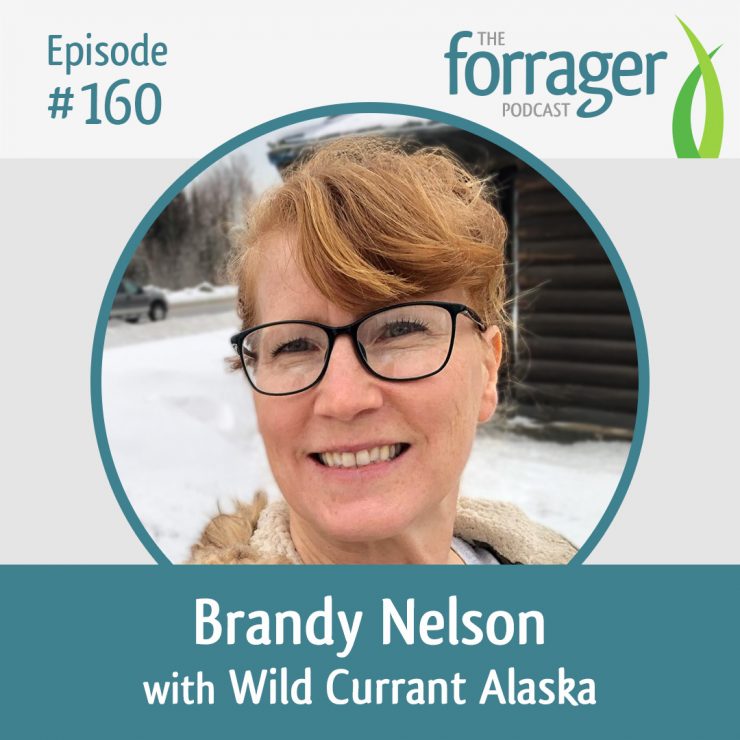
David Crabill: Welcome to the Forrager Podcast, where I talk with cottage food entrepreneurs about their strategies for running a food business from home. I’m David Crabill, and today I’m talking with Brandy Nelson.
But first I want to talk about your cottage food business website. I recently researched all of the free website builders out there and found that the best one for cottage food businesses is Square Online.
So I created a brand new free tutorial that walks you through the steps you need to take to build a nice and powerful e-commerce website for your cottage food business for free.
Now, you might be thinking, what’s the catch? There isn’t one Square Online is a really incredible tool that I personally use for my own business. And I’m constantly amazed that cottage food entrepreneurs still use other website builders like Wix, Squarespace, and GoDaddy. So if you wanna learn more, you can watch my free tutorial by going to forrager.com/website.
Alright, so I have Brandy on the show today. She lives in Soldotna, Alaska, and sells fermented foods and other healthy items with her cottage food business, Wild Currant Alaska. Brandy always loved making healthy food for her own family, but once her kids moved out of the house, she decided to turn her passion into a business.
She knew that it would be hard to build a business around her unique and healthy products, but with a few yards of persistent effort, she’s built an increasingly strong customer base and has reached her max capacity for what she can produce from home.
In this episode, Brandy shares, how she slowly built her business into the success that it is today, and the unique challenges she needs to consider to continue scaling it further.
And with that, let’s jump right into this episode.
Welcome to the show, Brandy. Nice to have you here.
[00:01:56] Brandy Nelson: Thank you. Thanks for having me.
[00:01:59] David Crabill: Well, Brandy, can you take me back? How did this journey get started for you?
[00:02:05] Brandy Nelson: Well, my husband and I had a little nest egg and we were trying to decide what to do with that. And I had time on my hands because I was a stay at home mom for many years and my children grew up and moved out of the house.
And after trying out a couple different ideas and really thinking them through, we finally, my husband and I decided that we would like to build our daughter a pottery studio. And I knew a great little lot in our town that we could invest in and then work on plans towards building that pottery shop.
And immediately when my husband and I decided that I knew in my mind, that the thing that went perfectly with a pottery studio would be a kombucha tap room. it just felt like a natural fit. And I had been making kombucha for our family for a long time, and I had people encouraged me to think about, scaling up my kombucha to sell.
And so I thought let’s give it a go. And from that time, I started scaling up my. Little personal kombucha collection And I included other foods that I love to make, like fermented vegetables and sourdough pretzels. And my theme has been to create and sell products that are, really nutritious and, gut friendly and have really clean, nourishing ingredients.
And also I wanted to include a lot of local ingredients. So that’s what we’re working towards today.
[00:03:38] David Crabill: Yeah, no, I’m excited to have you on the show because you sell a number of items that I don’t think I’ve had anyone on the show that sells the types of items that you do in particular kombucha. But it sounds like you have a pretty long history of making these items and being very interested in food.
[00:03:57] Brandy Nelson: Yes. And that’s part of kind of the longer story of how I got started. And My husband has had a history of having cancer and, in trying to help support him and his health, I started looking into nutrition and how powerful it can be to really support your body and your, health.
And I started really trying to create a food environment in our home that was nourishing. And so when we got married, I had Had a history of my mom had, always grown a garden and I belonged for a long time to a religion that really encouraged people to take care of their health.
And at one point I just realized that it was just super important and I really wanted my children to grow up with nutritious food.
And so at that point I became really committed and I saw great improvements in my own health as I changed what I was eating. And a lot of things that I didn’t even know were related to what you eat, like mental wellness and stuff. I started feeling those really positive effects and that kind of snowballed into trying to tell my friends and family about it.
Because I was so excited to learn about all these benefits that you could gain from just changing the way you ate. And. Not only did I feel better when I started to eat better, but I found it to be really stimulating to learn about like, learning to care for a sourdough starter and what all the nutritional benefits were from fermenting wheat.
And it just became a passion for me and it was something that not only did I love to do, but I love to tell people about it. So I would teach little informal classes, either just to family and friends, or sometimes through the church that I belong to.
And I even started teaching some classes in the community and I just love to do it. I just love to teach people about it. I love to have people ask me questions and kind of challenge where my knowledge was at so I could go back and, learn more. And I found really, really creative. So kind of became a passion for me.
But at the same time I would have friends and family like encourage me. They’re like, You need to open a restaurant or you need to sell these foods. And I would always tell them, no, you can’t make money in healthy food. It’s, it’s kind of something that doesn’t really work. And because I knew like the industrialized food system is built on fairly inexpensive ingredients and foods that are shelf stable, which doesn’t always mean it’s not nutritious, but often things that are shelf stable just aren’t really that nourishing.
because they’ve had some of their nutrients taken out to make them shelf stable or they’ve had ingredients put in that aren’t really good for our bodies that help them stay shelf stable. So it was always just something that I longed to like increase, the availability of healthy food in our community, but knew it would be really challenging.
But after my kids were up and out and when we decided to, try to build the pottery studio that our daughter could run I decided, I’m just going to give it a try and if it works, it works. If it doesn’t, I will have a really valuable experience. it’s been a really wonderful adventure that I’ve really enjoyed and it is really challenging to make it financially viable.
But it’s super fun, very creative, and it’s really rewarding.
[00:07:18] David Crabill: It’s interesting, like you were interested in starting this pottery studio for your daughter, and then you also wanted to tack on your own business at the same time. So do you have a background in business as well as food?
[00:07:34] Brandy Nelson: I do not. And fortunately my husband has been able to help me through some of the paperwork and some of the business side of things. We laugh because we call him my very best unpaid employee and he wins employee of the month every month.
And we have run into some significant challenges on the plan to build a pottery studio.
And we had to pull the plug on it because we knew that the way that I’m running my business it has really limited earning potential just because the kind of ingredients that I’m trying to use and the labor that it takes to put into the foods that I’m making, it just really limits the amount of revenue that we expect to make from it.
So we put the brakes on that for a little bit and it was heartbreaking and because we were really close to, moving forward in the next step of building that building. But after we had a little time to process and kind of emotionally, take in the reality of what we are trying to do, then we kind of just dusted ourselves off again and we’re working with the builder again.
And as of right now, we’re just planning to build just the Pottery Studio side of the building. And I’m having to pivot and think about the future a little bit differently because I can’t scale up without having a building.
I’m maxed out with the amount of kombucha that I can make in my home kitchen. And we haven’t quite figured out exactly which direction to go, but we have some ideas moving forward and we’re gonna button down plans for the pottery studio and see where our budget is.
It’s possible that I will just continue on what I’ve been doing, but I may need to buy like a food truck maybe or something. Because as of right now, in the summertime, I was holding a pop-up sale on our property and I have a trailer and I would bring the trailer that holds the keg and then I would set up a pop-up tent outside my trailer that, butted up against it.
And then I would set out a table and put all my baked goods and my coolers underneath and stuff. If we do build the pottery studio. I won’t be able to have my sales on the property, and so I’ll have to think of an alternative. There are some markets in our town. there’s a few problems with them, but for me they just are really challenging because I have a lot of space.
So I’d have to pay essentially two booth spaces to use my current setup, and that kind of makes it to where it’s not financially viable for me. I have limited ingredients because a lot of my ingredients, I either grow myself or I purchase them from my mom. My mom has a you pick berry farm and vegetable farm and she sells perennials and I trade her for some of my product.
She’ll trade me for. Some of the berries that I go out and pick and then some of my ingredients are wild harvested and I just have a limited supply of those. And so it’s been really important for my business to be able to stay viable that I don’t have a lot of expenses for the venue that I’m selling at.
And one of the biggest challenges is I can only make so much kombucha each week.
And the turnover is not super fast. because it’s a ferment that can take a while and trying to be ready for a large market every week that would be challenging. I would probably only be able to show up every other week to that market. But anyways, there’s just some, things like that I’m going to have to work through and come up with a plan.
And I think I can. I just need to really make a decision on, what’s next and then go from there.
[00:11:16] David Crabill: I saw on your initial post and your Facebook group that a big part of what got you into this was your love for gardening. And I know your mom has an actual farm. I don’t know if, if that’s somewhere that you grew up, but, how much of your product comes from things that you grow yourself?
[00:11:36] Brandy Nelson: Yes, I did grow up on the property that my mom now has her garden at, and when I started my business, the mindset for myself was that I had her as a resource to be able to go and pick berries. And I do get quite a bit of my produce from her I have actually put in quite a few plants in my yard, but they take a couple of years to really hit full production.
And so as my perennial garden matures, I do have more of my own produce that I am able to harvest and freeze and use throughout the winter. so like this last year, I grew quite a few cabbages, and those cabbages that I grew, I have used for pretty much all the sauerkraut that I’m offering.
It’s not a lot. I don’t do a huge production, just partially because I don’t have the space. It takes a lot of space and a lot of jars to hold sauerkraut, and then you have to refrigerate it. our garage, it’s getting pretty full of refrigerators and freezers. So I do what comes out of my garden.
That’s what I’ve been selling. But yeah, scaling up would be really tricky. So I’m kind of at max capacity for things like the sauerkraut that I offer. I think if I want to scale up my kombucha, I would probably need to get more berries from out at my mom’s and more wild harvesting and that would be really tricky, just because it’s really time consuming.
They’re all you pick and so I’m kind of limited by, the harvest season is only so long and you only have so much time to pick things and there aren’t In my area it’s a very small town and agriculture is really tricky because we have really cool weather. And my parents are actually getting fairly wise and elderly and I don’t know how many more years they’ve talked about selling their farm just because they’re getting to where they are gonna have to retire eventually.
So I’m trying to be careful not to commit to the food that I get from my mom’s garden too much and be overly reliant on it, on whatever. Business model I have moving forward. But while they’re running it and while I have access to it, I definitely really appreciate it. And I, I love the produce that they grow.
They grow amazing things and they use organic growing principles. So, would be hard for me to quantify exactly how much of my produce comes from my mom, but quite a bit. And if I grow it will be even more.
[00:14:07] David Crabill: So can I just get a sense for like, if you’re. Selling a 16 ounce bottle of kombucha. I mean obviously it depends on what kind of berries or whatever you’re using in it, but like how much produce do you actually need to create that?
[00:14:23] Brandy Nelson: Yeah, it definitely depends on the type of produce that I’m using. at least the berries that we grow here, a lot of them are really flavorful and they’re really high in polyphenols and antioxidants. And so you can really flavor quite a bit of kombucha with a fairly small amount of berries.
If I buy local cucumbers or something, I have to use more. And some of what I’m flavoring with like pine needles is one thing that I use. And devil’s Club is something that I use and those are gonna vary a lot, but if I’m flavoring, I flavor it in five gallon batches. I will take some of the finished kombucha and blend it with the berries, and then I’ll let it steep in the kombucha for a little while, and then I’ll strain it out.
Usually I’m using about a pound and a half of berries per five gallon batch. Like I said, that can vary. It can be a little bit more, and I usually try to taste it, and if I haven’t extracted enough flavor from the berries to really give it a nice flavor from whatever it is that I’m using, I will add more and it’s very difficult to get consistent flavors the way I’m doing it, but I, try my best, so I’ll try it and make sure I can taste those flavors coming through, and I’ll add more if I need, but that’s pretty close to the ratio that I’m using.
[00:15:45] David Crabill: Okay. So to me it doesn’t sound like a, huge quantity of produce that you need to incorporate the flavoring. So do you think that it would still be profitable to do that if you didn’t have your moms, you pick farm to buy from?
[00:16:01] Brandy Nelson: It potentially could be. It’s pretty tricky because when I was making it just for my family, making kombucha is very, very inexpensive. You don’t need fancy equipment. You don’t need a lot to make it for your family. But as I have scaled up. It’s more expensive to make, which if I had, been an experienced kombucha maker, I would know that.
But since I was just doing it a little at a time and growing and learning things a little at a time, that has been one of the things that’s been surprising to me. You need quite a bit of equipment and right now I’m, still doing it in small batches and I am using pretty minimal equipment.
But if I want to grow any bigger than I am now, I really do need some equipment that can make the process go a little easier. Like I’m pouring five gallons or even more of liquids is, it’s really heavy. So, it’s tricky for me to know if it could be profitable to use local ingredients as I scale up, because I’m still learning about the process and I do think of all the things that I make.
The kombucha has the best potential to have a profit margin. Some of the other things that I make are, I make them because I love to make them and I want to provide foods that I love to the community and to my family members, but they are definitely more challenging to make a profit from.
So, For instance, like I offer fruit leather sometimes, and that is just definitely not something that I could scale up. Because it’s like pure fruit, but the kombucha does have the potential to, you can really stretch flavors like, if I really needed to, I could probably pick three or four flavors and do them really well and do them on a large scale and still make money.
But it would be tricky. And I don’t have experience going up to the valley to, see what things I can buy. when you have to travel and then process the vegetables themselves or the fruits themselves. It just adds a lot of time. And I’m not exactly sure how that would go. I do think the potential is there, but it would be tricky for sure.
[00:18:11] David Crabill: So I know almost nothing about kombucha and how it’s made. So why is it that making kombucha in a very small quantity is very easy and inexpensive, but then, as you scale it up, you need more equipment.
[00:18:25] Brandy Nelson: Part of it is just the sheer volume When you scale up and you’re talking about five gallon batches and lots of five gallon batches. You need refrigeration eventually. And if you want it to be shelf stable at all, you have to filter out the yeast, and that requires like pumps and.
Lots of filtration cartridges and stuff because you have to get the yeast to be such a small percentage of the finished kombucha that it won’t self carbonate on the shelf if it self carbonates on the shelf. You have the potential for explosions and you also have the potential for it to go from very trace amounts of alcohol to larger amounts of alcohol.
And you also have to force carbonate, so you have to buy CO2 and yeah, you just need a lot of refrigeration. Like when we were looking to build our building, a walk-in cooler was just a must, and that’s pretty expensive to build a walk-in cooler. So those are some of the reasons why it costs more.
When you do it for your family, you can reuse the same jars so you don’t have to buy bottles to sell. And buying bottles to sell the kombucha in in Alaska is particularly expensive. I think it was a lot less before COVID hit, but after COVID a lot of the companies that offered free shipping.
They, as far as I can tell, they don’t offer that anymore. So what people used to do is they would purchase the bottles in the states, have it free, shipped to Washington, and then they would pay for the freight forwarding. But I have to pay for shipping both to get it to Washington and then I have to pay for shipping to get it to the town that I live in.
So that’s another pretty significant expense that when you’re making it for your family, you just reuse the bottles over and over. And I have to say, shout out to my local customers. They are really good at returning the bottles and I give them a really generous credit, more generous than I’ve ever seen.
And that’s because I really want those bottles back so I give them. Basically either half or more than half of the cost for me to buy it new. And then I take the bottles home and I wash and sanitize them and, then I can use ’em again. So that’s partially why it costs more. And then with your family, you know, you don’t need extra refrigeration and if you wanna self carbonate, you just close it, leave it on your counter for a few days, and it self carbonates.
And so it’s, pretty inexpensive. And I do offer kombucha starter for people who want to make their own. So I really want people to enjoy it and I love offering it. And if they wanna make it themselves, I think that’s great too.
[00:21:11] David Crabill: So what does your menu look like like what have you tried selling over the course of the last three years that you’ve run your business?
[00:21:20] Brandy Nelson: So my very first menu was kombucha, sauerkraut kefir. I do offer sourdough pretzels.
I think they pair really nicely with the kombucha for a nice snack or maybe a light lunch or something. My menu is pretty different in the summer than in the winter. because in the summer I am showing up to like a pop-up sale once a week and I can, bring things that I make.
Whereas in the winter, at my husband’s shop, he allowed me graciously to put a refrigerator in his shop office. So in the winter it’s just kombucha.
I offer kefir by special order, and then I have a few baked goods. But in the summer I really vary my menu and I try to let my customers know. But when vegetables are at their peak season, I’ll make little vegetable cups for people to grab with some little yogurt based dips. And I will sometimes offer like a, lentil salad that has fresh herbs and fresh vegetables in it.
And depending on the event or the type of venue that I’m at. Since they have liberalized the Alaska Cottage laws and allowed a lot more foods to be offered by cottage industry businesses. I’ve even offered some soups sometimes and different things like that. My daughter was a coach for the high school cross country team.
She was one of the coaches and she invited me to one of their cross country meets the first year that I was in business. And I went there and it was so fantastic. I just was in heaven. And it’s a very large meet in our little town. The people from the valley and from Anchorage come and people from all over the state come to this one meet.
And these were my kind of people. They gave just really nice compliments and they were really excited about the foods I offered and. So for that meet, I kind of have a different menu and I think about it. I’ve been to that meet three times and I try to think about my menu beforehand and plan.
because I have to plan quite a bit in advance to get ready for those. And the last one that I went to, I offered my usual kombucha and kefi and some fermented veggies and some fresh veggies, some carrots, things like that. And then I also offered, I made a black currant smoothie bowl. the inspiration for that would be the acai bowls, but I make it with black currants for that touch of local flavor.
I sweeten it with dates and the base of it is coconut milk. And then I just topped it with lots of fresh berries and things like bananas. And I had some local raw honey on it and people just loved that at the meet I sold out of that.
[00:24:00] So yeah, I vary my menu. That might be a little tricky for my customers because sometimes they, they want something that I won’t have there. But I think they also appreciate that I kind of have seasonal things and I try to, do a good job the day before of posting what my menu is gonna be. It’s not always perfectly accurate because I don’t always know what time I’ll, you know, the amount of time that I’ll have to prepare things.
but that way my regular customers, they can go look up what I am offering for the day and where I’m at. It varies a lot.
[00:24:33] David Crabill: Have you ever had any issues with having demand for your products or finding enough customers?
[00:24:40] Brandy Nelson: My customer base has been slowly growing. From the time that I first started to now I have a lot more regular customers, but when I first started out, I would have too much stuff and I wouldn’t sell everything. And so part of that is just because I wasn’t getting the word out.
And I also had very short hours that I was open on the day that I would be open for the week and, it was pretty slow. And the nice thing about that was, it was very part-time. Like I wasn’t spending 12 hours a day some days and things like that. It was just very casual and I was kind of enjoying it, but it also wasn’t financially doing well.
But out at my mom’s, my mom kept telling me out at her you pick garden, she kept telling me, you need to bring your stuff that you have left over from a sale over here, and I’ll just sell it for you and people can buy it.
So she set up a little area in a refrigerator where I could put kombucha and. She would just tell everybody about my stuff. A lot of people loved it that she had, snacks and, treats and refreshments that were really healthy and made from organic ingredients.
And a lot of it came from the stuff at her garden. And when she started doing that the customer base really picked up a lot for me and people learned about my business through going to her garden to shop for vegetables and fruits and for perennials. So from that time, it’s just been kind of a slow, steady, gain of customers whenever I would.
Sign up for an event. We have a Soldotna days parade and celebration in July, and I signed up for the after parade party where they did kind of a block party and had vendors. And that gained a lot more customers for me at that and got my name out there. And, and the whole time I’m keeping stuff in the summer out at my mom’s.
And now that my husband has a refrigerator in the office at his shop, people can stop there anytime. And so it really has steadily grown. And then last year my husband and I had to be gone for a month in the summer. He needed some medical care and so we left and I did see a big drop off of. That momentum that we were building because I was gone for four weeks, kind of in the middle of our really busy tourist season.
But I’m enjoying the process, so it’s all good, even though I don’t have it all figured out.
[00:27:05] David Crabill: As you think back to the beginning, is there anything that in retrospect, you would’ve done differently when you started your business?
[00:27:16] Brandy Nelson: You know, I knew that when I was starting my business that I had a lack of knowledge of food production. And in some ways it probably would’ve been very helpful for me to maybe go to a culinary school or something. But the types of foods that I am trying to bring to market and to provide my community with, they’re not really the types of foods that generally are taught in culinary schools and I’m pretty sure that if I would’ve talked to anybody about my business, who knew how, the food industry works, they probably would’ve talked me out of it.
because I, I knew intellectually that it was a very, very challenging business to choose and you know, challenging foods to choose, to try to market. So I think overall I’m pretty glad that I did it the way that I did and I just took my passion and put it out there and offered food to people that I want to make.
And the great thing about the way that I did it is I started so slow and, with very little advertising that I just didn’t have that much pressure to know what I was doing when I started out. So I’m really grateful for that because it allowed me to refine my recipes over time and build habits that helped me get in kind of a rhythm before my production ramped up and, So I think I’m glad that I did it the way I did. I can see that it would be helpful if you had some business experience or some experience in the food industry. But overall, I’m trying to do something really different. And actually my passion for doing what I’m doing comes out of frustration from not feeling like the currant food system is serving.
Like, I just remember wanting so badly to be able to take my family somewhere and buy a treat that I felt really good about them eating. And so I’m trying to kind of break free of some of the, maybe the inherent problems with the industrialized food system. And so. it kind of made sense to me that I would go in without knowing the challenges so that I could just do it and not talk myself out of it and just have this, you know, adventure that I’m having.
[00:29:28] David Crabill: Yeah. You know, as I said, a lot of the products that you make are pretty unique and, and different than what I have seen other cottage food producers making. And it’s likely because it is harder to monetize those products. It’s harder to make a profit on them. You’re putting a lot of labor and also some more expensive ingredients into creating these products.
so what would you recommend to somebody who feels the same way you do, like they’re frustrated with the industry. do you feel like. There is a sustainable business model in front of you, or do you feel like it’s mostly just something that is a passion project.
[00:30:12] Brandy Nelson: I’m torn between those two because I really want people to innovate and come up with ways to have a better food system, but it is so challenging that I would be really hesitant to tell someone to jump in with both feet.
And so when my children moved out, I just had this great opportunity. To where I could do a passion project and I didn’t need to make money. But the longer that I am doing this passion project and, being a part of the community and, being a part of this movement to try to revolutionize the food that are available to people I think I am finding ways to make it a little more sustainable financially.
And I do think that there are ways to do it, and part of that is the community support that is swelling up around people who are trying to do something similar to what I’m trying to do.
And so I think as people pioneer this, kind of a new way to see food and a new way to see the food system, I think there will be things that come out of it that are really good and positive and sustainable. And I see so much support in my personal community of people who are dedicated, they want a better food system, and they’re willing to do their part. They’re washing their bottles, and bringing them back to me so I can use them again, so we don’t have to fill up the landfill with, packaging and stuff.
And they’re they’re bringing their family and making it like a fun event for them to, get out of the house and, support a local business. So. It is really challenging. And if I had to make money the first year that I did this that would’ve been just a devastating blow to me because I didn’t make money the first year.
My expenses exceeded by just a little bit my income. And that was okay because it, it was very minimal and I knew that that was gonna happen because I had to invest in some equipment. I had to buy some kegerators and, different things. And then last year my expenses were basically I just came in at even, and then this year I, I saw a little bit of, improvement with my expenses and income.
But I do think there is a future and I think it’s gonna require cooperation between, customers and business owners. But I see a lot of hope in that area and I’ve been just really grateful for my customers.
And that’s actually one of the things that keeps me going and keeps me motivated to keep doing what I’m doing because. It’s just a really, positive relationship between me and the community.
[00:32:45] David Crabill: Do you feel like your passion for healthy food has been making an impact and changing some community members’ perspective or like opening their eyes? Or do you feel like you’re mostly just either reaching people who already were interested in all that stuff before and also reaching people who buy your stuff because they like it, but they don’t care?
[00:33:09] Brandy Nelson: I feel like my business has had a positive impact on some people who maybe didn’t think about food in the, the way that. I’m presenting it. I think there’s a real mix. There’s some people who are already in the space of wanting to eat really nutritious, and they support my business because of that.
But I hope that as I offer, foods that are probiotic that it will maybe create awareness or increase awareness of the impact that food has on all of us. And I know my mom actually called me a, couple of weeks ago and she said, I just have to tell you that someone came by my house and, they told me how much better they’re feeling.
And I guess the people like even stood up in church and talked about how healing, all these natural foods that we have available can really heal our bodies. And that was so encouraging to me just to hear that people are talking about it and they are making meaningful changes and I don’t expect everyone to, see my business and just, really have a life changing moment or anything, but any encouragement that I can offer people, that’s where I really feel like that’s what I’m doing is I’m encouraging people.
I’m trying to be a support or a resource for people who want to, eat better and feed their families better and, A lot of it is about. Eating better and just getting more nutrition into our diets. But some of it is also about the environment and supporting eco-friendly gardening practices and farming practices.
And so it’s, broader reaching than just any one idea. It’s kind of a whole new way to see the food system. And it’s not perfect, and I’m not perfect and I don’t expect, that I will eat perfect or that my customers are eating perfect. But if we can make just a little bit of progress at a time I think there could be potentially.
Big changes in a lot of people’s lives. so that’s kind of where I’m at. It’s whatever people want me to be, that I can be for them, I want to be that for them. And if it’s just a fun treat that they stop by and that’s fine. If it’s part of their health journey, then I’m super happy to be there.
If they just enjoy, unusual flavors, I like that too. So I’m not trying to be too pretentious or, narrow, what my business is about, but I just, wanna do stuff that I feel really good about and that can potentially, be a positive change.
[00:35:37] David Crabill: One thing that surprised me looking through your social media feed was just how many flavors do you offer of not just your kombucha, but all of your different products and also very unique flavors. What are some of the flavors that you offer, and what are some of the most popular ones that you’ve sold?
[00:35:58] Brandy Nelson: I do love variety. I remember my mom said that someone came by her farm or her garden, and they were looking for the same flavor that they had. The time before and, my mom said, you need to offer the same flavors so that people can, find their favorite one. And I had to explain to my mom, I said, mom, if I do that, I’ll only be able to have four flavors, but I can’t do that because there’s so many fun flavors that, you know, grow here.
So I just allow myself creative freedom to try out new things. And Alaska, like I said, is a very, tough agricultural place because of our short summers, but we have some really amazing, unique flavors and berries that grow really well here. We have our classic favorites.
the name of my business is called Wild Currant because I love currant so much and I grew up and we were harvesting currants from the time I was very little and we would make black currant jam and red currant jelly And so that is always gonna be one of my all time favorite flavors, is the black currant.
It’s a really, really unique flavor and it, it’s just so rich and has a lot of complexity to it. But honestly, I like trying new things. I like a variety and so. Every time I make several new flavors, I think, oh, this might be my favorite. And people will come and they’ll ask me, what’s your favorite?
And I have a really hard time telling them because I just really, it’s hard to go wrong, you know, like there’s just so many fun flavors and combinations. I’ve really, really had a fun time incorporating herbs into my berries and flavors. so adding mint has been amazing to pair with different berries, and Cardamom is the new flavor. Holy basil but any of the berries that we can grow here.
I have really strong childhood memories of picking berries. And they weren’t always. Positive memories. because we had to work really hard when I was younger and we were my mom’s head weeding crew. That wasn’t very fun. But now that I’m an adult and I get to grow my own and have creative control over my garden I love growing things.
I love tasting things. I will just get really creative ideas when I’m going about, my daily life. And I just have to try new flavor combinations for things. So making things like the marshmallows. I made some maple syrup marshmallows with black currants and those are just so, delicious and really unique and it’s kind of a fun.
Conversation piece. When people see that I have black currant marshmallows, they’re definitely one of the products that I do not make enough money to justify them. But I like making them so much that sometimes I just make ’em for the fun of it.
[00:38:48] David Crabill: Well, with the marshmallows it feels like that would deviate from your desire to offer healthy products,
[00:38:56] Brandy Nelson: Yeah, so it is probably one of the higher sugar contents, but I make it out of grassed gelatin organic maple syrup, and then the berries, and that’s pretty much, what the ingredients are. So while it’s definitely has a higher sugar content, for myself personally, I would consider it something that is okay to have as a treat for now and then,
[00:39:20] David Crabill: But even those are, are quite unique compared to, even the, homemade marshmallows that most people are making. Sounds like yours are pretty unique in a, big step, healthier.
[00:39:31] Brandy Nelson: Yes, and I actually, I tried really hard to avoid refined sugar because. Just, from what I’ve gathered from reading about the different nutritional properties of food, refined sugar has almost all of the nutrients taken out. And so that’s kind of why I try to avoid refined sugar. Although it is used in the kombucha and there is a little bit of refined sugar left in the kombucha by the time I serve it, but it’s pretty low.
But in general, for my baked goods, I try to avoid using refined sugar maple syrup I will use because it actually has quite a few minerals and different things that support health. I, you know, I’m like a moderation in most things kind of person. So, I know even maple syrup, marshmallows are not gonna fit into everyone’s idea of what a nutritious diet is.
But for people like me who are moderate and, like to eat a variety of things and allow for a sweet treat every once in a while, it’s a really good fit. And the reason I started making the marshmallows is because I have grandchildren whom I adore, and I like to take them camping and on adventures as much as we can.
And my little grandson was asking for marshmallows. And so I thought, okay marshmallows isn’t really something I normally would make, but for my grandson, I’m gonna make marshmallows and we’re gonna have a fun time on our camping trip with marshmallows so they don’t melt very well over a fire because of the maple syrup.
But my grandson loved them and my granddaughter loved them also. And so I thought, that’s a fun grandma treat that I can make and I can offer it to my customers. And while it, it is pretty high in sugar, it still passes the organic nutrient dense for a treat kind of litmus test that I have for the, products that I offer.
[00:41:24] David Crabill: Well, with all of your products being pretty highly specialized, they’re going to come at a higher price. So how have you figured out where to set your prices and have you made adjustments to those based on customer demand?
[00:41:42] Brandy Nelson: There are a few things that I have had to adjust the price upwards.
And so, when I first started I thought I need to make the price at least double what my ingredients are. And then I learned very quickly that that’s not a very sustainable model, especially when the foods are very labor intensive. I have tried to get down to where I am at least three times the ingredients price for some things, it is ending up being a little bit more if they’re really labor intensive. And for some things, if they’re pretty easy to make, sometimes I’ll edge closer to that 50%. And I’m going at this from the perspective that, again, it is not really super important for me to make a profit at the end of the year.
And so I’m just trying to keep my prices as close to covering expenses as I can. And it’s really tricky and I don’t think I have it perfectly figured out yet. And I’ve told myself that it’s okay to be a little bit off on my pricing until I get a building.
Once I get a building, if I have to make rent payments or utilities and if I have to pay wages for people that I hire, then I’ll have to get a little more serious about my pricing. But until then, I’m just doing the best I can to keep the prices as low as I can and still offer the items that I have for sale.
And I would say that in the three years that I’ve been operating, some of the ingredients costs have gone up for some of the things that I purchased. The price of flour has gone up. So since I offer sourdough pretzels, I did have to increase that price a little bit. And I don’t think I have the pricing perfectly figured out.
I’ve been able to keep my kombucha prices pretty stable because I took that price very seriously because I figured kombucha is probably going to be the thing that I offer the longest term if I’m able to expand my business. So I started out with a pretty good profit margin on that, and that actually the kombucha carries through the rest of my business and kind of helps me stay afloat.
But yeah, it’s an evolving process and as I create new items you know, recipes that I develop and then offer, I’m able to be a little bit more circumspect about the prices that I choose and that’s helping moving forward. I figure if anything is the wrong price, I can either raise the price a little bit or I can just drop it off my menu if it doesn’t work for me, and that’s kind of what I’m sticking with.
[00:44:16] David Crabill: Yeah, so kombucha is definitely your most profitable product. So what is that priced at currently?
[00:44:26] Brandy Nelson: It is $8 for a 16 ounce bottle and it is $24 for a 64 ounce growler. And just for perspective, the glass jar that I’m using for the 16 ounce bottle with the lid and the shipping, it costs $2. I think the glass bottles are actually more expensive than the price of the tea and the berries that I’m putting in them.
And then the cost of the actual tea and the sugar and the berries. It’s really hard to calculate because like I said, I’m handpicking a lot of the berries. I could easily figure the cost of the sugar and the tea, and that’s fairly minimal. And then I have other expenses such as the CO2 tanks that I have to refill now and then, and the electricity to keep everything chilled once it’s bottled up and stuff.
I’m not really perfect at calculating the cost of that. But I, do feel like that is sustainably priced so that if I did wanna scale up I would be able to probably make that work pretty well. And I know that if I visit a restaurant and they are offering kombucha on tap, and I know I’m not a restaurant, so it’s not exactly comparable, but their kombucha is usually a little more expensive than what I’m offering it at.
And you don’t get a glass bottle at the end. So I feel like I am probably pretty appropriately priced for that. But there is room for maybe a slightly higher price if I eventually have a building sometime, or, possibly lowering the price if I were to sell it. A couple of restaurants have asked, you know, if I ever scale up to where I can sell it by the keg.
I think certain flavors I could probably sell in the keg and lower the cost for kind of a wholesale sales situation.
[00:46:22] David Crabill: $2 for a bottle is, 25% of the total price of your product. So that from a percentage standpoint is a huge packaging cost and certainly much higher than that would be recommended. Do you have to put the kombucha in glass or is that just like an environmental choice?
[00:46:49] Brandy Nelson: That is definitely an environmental choice. Well, There is a, company up in Anchorage that makes kombucha and they can, there’s an aluminum cans and I actually don’t use aluminum very much at all for really anything. I would not personally feel good selling aluminum cans to my customers just for the possibility of bleaching.
So glass is better from that perspective, but also they are a larger outfit and they are probably screening out all of their yeast and so they don’t have the possibility of having explosions. Whereas I am screening out as much yeast as I can on a small scale, but some of my bottles do get a little bit over carbonated and the glasses are rated to really withstand quite a bit of pressure.
And occasionally people will have an exploding bottle of kombucha, but I’m, getting much better at, trying to make that less of a deal. But the glass helps with that because we can slightly burp the bottles if needed or we can. Teach the customers how to just let out a little bit of carbonation at a time if it’s a little bit over carbonated.
So it is the environmental impact is I appreciate that part of having glass bottles. But also I feel like glass is a better option for health. And then also I get to reuse them. So that’s an added bonus. And the more that I reuse, the more sustainable it is to have $2 glass bottles I know that there’s one tap room up in Palmer that my husband and I visited, and the owner was so nice and he hardly did any bottling at all. He just sold it on tap, and in the tap room that he had, he would sell flights and little. Canning jars. And so that’s, really sustainable.
when I sell in the summer, I do have some biodegradable cups that I offer to people at a discount or they can buy the bottle and, I’ve increased for the price of the bottle. So it’s not maybe the best financial decision, but I am glad to have them and I’ll continue to use them as long as I can.
And yeah, it’s just shipping to Alaska is really tricky and it just kind of is what it is. And I think most people kind of understand that and are pretty gracious about it. So it works.
[00:49:12] David Crabill: I see that you do offer your kombucha on tap when you set up on your property or when you sell an event which is very unique. I don’t know of any other cottage food business that does that, although, most cottage food laws don’t allow all the products that Alaska now does.
So, what did it take to be able to serve your kombucha on tap was like that, a fairly expensive piece of equipment.
[00:49:39] Brandy Nelson: Yeah, the first thing that I was using when I first started is I just purchased some used like mini kegerators and they’re like a little mini refrigerator, and then they have a tap coming out of the top. And those cost, actually quite a bit of money. I, paid $800 for the first one that I bought, and I had two of them.
And it was such a pain. I would have to load them into the trailer every week and then I would have to pull them down off the trailer. And it was a lot of work.
And, so we looked at different ideas and we bought a, freezer slash refrigerator. That’s like a chest. And my husband built it up.
My husband’s really good at working with wood and so he built it into a cator. You have to take off the lid and build a little support structure between the lid and the body of the chest freezer. And then he drilled holes and we attached taps. And now I can fit eight five gallon kegs in there and I can fit additionally, two mini kegs in there.
And then we have all the hosing. And the CO2 tank is on the outside with some hosing that goes into the cator. But with that we were able to load it into the little trailer that I’m using. It’s like six by 12. Little trailer. And we just set it to where the taps are by the side door.
And when we arrive at the location for the pop-up sale, we open up the door and we can just turn on the CO2 and it’s ready to dispense. And I have eight taps coming out and so I can have up to eight flavors at one time. And we set up a little mini generator to run it just every once in a while to keep everything chilled.
And overall it works really well and I don’t have to load it off.
And all the trailer, the time that I still have to load it on and off the trailer is if I do like a craft fair or something. I’ve just limited those to almost none because it’s so hard to do. The kegs themselves are heavy. And of course, if I’m doing a craft fair in the wintertime, there’s gonna be snow and ice.
And I have a lot of other things that I have to haul in like my table and, coolers and things. So I’m really grateful that I can use the little bit of office space at my husband’s workplace so that I have a place for customers to go. but at the same time I really miss interacting with my customers. because I love being at fairs and, at my pop-up location in the summer. because then I get to talk to people and I get to see people and you know, sometimes I’m in a hurry if there’s a lot of people there buying things, but sometimes.
We’re not in a hurry, and I get to catch up with people and hear about their lives. So I really miss that interaction with the customers. But it is very nice and convenient to be able to just, when my husband goes to work.
So I’ll load him up with the kombucha that I have ready, or sometimes he’ll even help me bottle it up and he takes it, puts it in the fridge, and then the customers can just stop anytime that’s convenient that they’re driving by. It’s a pretty central location, so it works pretty well. But yeah, the setup for the popup is it’s, it’s a lot.
[00:52:57] David Crabill: Yeah, it sounds pretty complicated to set up at a fair or something, and obviously you’re able to keep it in the trailer. But you’d mentioned to me that you need two booth spaces at venues to really set yourself up, I assume it’s because of the, trailer and the space that it takes up.
And you said that that prevents you from doing as many markets or events because you know it’s more cost prohibitive to buy to booth spaces, but why wouldn’t you just, do one booth space and just not do the tap setup and just have bottles and everything prepackaged and, limit what you bring to that one booth.
[00:53:38] Brandy Nelson: It would take an enormous amount of refrigeration or, coolers. So if I don’t have the keys, are there, it would just be really, really tricky and I couldn’t give samples and I couldn’t fill up people. Like a lot of my customers will bring their bottles just for refills and I give them the tap price so they get a discount.
My husband and I have talked about probably getting a small food truck that’s pretty small that could still be at markets and just qualify for one Boost space,
but until that happens, I’ll just keep enjoying what I’m doing and, keeping it in my awareness that I may have to pivot a little bit.
[00:54:17] David Crabill: Yeah, I mean with you saying that you have very little profit margin on your products, and then also talking about potentially building out this building or a food truck. I mean, This is pretty expensive investments for something that is not generating a ton of money. Right? And it’s not generating enough money to necessarily justify the investments.
So what do you feel like is your ultimate goal for this business?
[00:54:50] Brandy Nelson: Originally, like I said, we had hoped to work our way into a tap room, and now that’s put on hold, I’m in the place where I’m reevaluating. Like, I have to decide what is the future of my business? And we haven’t really settled on that yet. One of the possibilities is we focus on the Pottery Studio.
We get that done, we get it paid for. My daughter has a really good business plan on how that can be sustainable and she can pay us rent for that. And once that happens, then we can again talk about if I wanna have a building to scale up the kombucha. If we want to maybe save up and add on to the side of the pottery studio for a small tap room.
My husband has been at his job and, the shop that he works at for a really long time, and he would really love to in the next few years, retire from that. And if that happens, that will give us more opportunities to kind of explore. Maybe making it a more sustainable business and just making more decisions based on the long term sustainability of the building.
And, that will kind of look differently than what it’s looking like right now. But that would be really exciting because my husband’s just super good at a lot of things and I think we would make a really great team to take this business to the next level. But until that happens, we’re just keeping an open mind.
[00:56:17] David Crabill: Even finances aside, it’s a lot of time and effort, you know, the fermenting and lugging around five gallon buckets of things. And what do you feel like keeps you going to keep focusing on the business and to keep trying to see it grow?
[00:56:36] Brandy Nelson: It was pretty much instigated by some big life changes. Having my kids grow up and move away was really, that was a big change for me. because I had been pouring my heart into, doing things with my kids, doing things for them.
And so when they moved out, I was like I can either scale back what I’m cooking for our family and the garden that I have and I can move on to something else, or I can scale it up and just continue doing what I love and instead of just offering it to my kids, I can, you know, offer it in the community to see if there’s, people who would appreciate it.
And, it’s felt very rewarding to me to do that. It’s what I love to do. It’s, the way that I deal with some of the health challenges that my husband’s had. That’s kind of the way that I deal with the stress of that it makes me feel like, I can’t solve everything about it, but this is what I can do and I can, make nutritious food and just we can do the best that we can.
And if it ends up turning into a long-term thing that has a sustainable business model, then that will be great. But if it doesn’t, I still really enjoy it and I love talking to people about ferments and gardening and stuff.
So provides me an opportunity to meet people and visit with like-minded people and, the only thing that I don’t love about it is. When I get in the middle of a very difficult situation or when, maybe if I lose a batch of kombucha because something went wrong and then I don’t have enough kombucha, then it’s really stressful and I start questioning like, why am I doing this?
But it’s something that I really love doing. And so, regardless of whether or not it does turn into a financially stable career path for me in the future I will still have loved almost everything about it. And so it’s definitely been worth it and I would do it again in a heartbeat for sure.
And it’s been really positive.
[00:58:32] David Crabill: Well, thank you so much, Brandy. Now if someone would like to learn more about you, where can they find you or how can they reach out?
[00:58:41] Brandy Nelson: I have two business pages. One is on Instagram and one is on Facebook, and they’re both under the business name, Wild Currant Alaska. And that’s how people can find where I’m selling product and how to get ahold of me and what kind of products I am currently selling.
[00:59:00] David Crabill: Awesome. Well, thank you so much for coming on the show and sharing with us today.
[00:59:05] Brandy Nelson: Thank you. It was great to be here.
[00:59:09] David Crabill: That wraps up another episode of the Forrager Podcast.
For more information about this episode, go to forrager.com/podcast/160.
And if you feel like you’ve gotten a lot of value from this podcast, I have a favor to ask you could you take a quick moment right now and leave me either a view on Apple Podcasts or a rating on Spotify. It’s truly the best way to support this show and will help others like you find this podcast.
And finally, if you are thinking about selling your own homemade food, check out my free mini course where I walk you through the steps you need to take to get a cottage food business off the ground to get the course. Go to cottagefoodcourse.com.
Thanks for listening, and I’ll see you in the next episode.